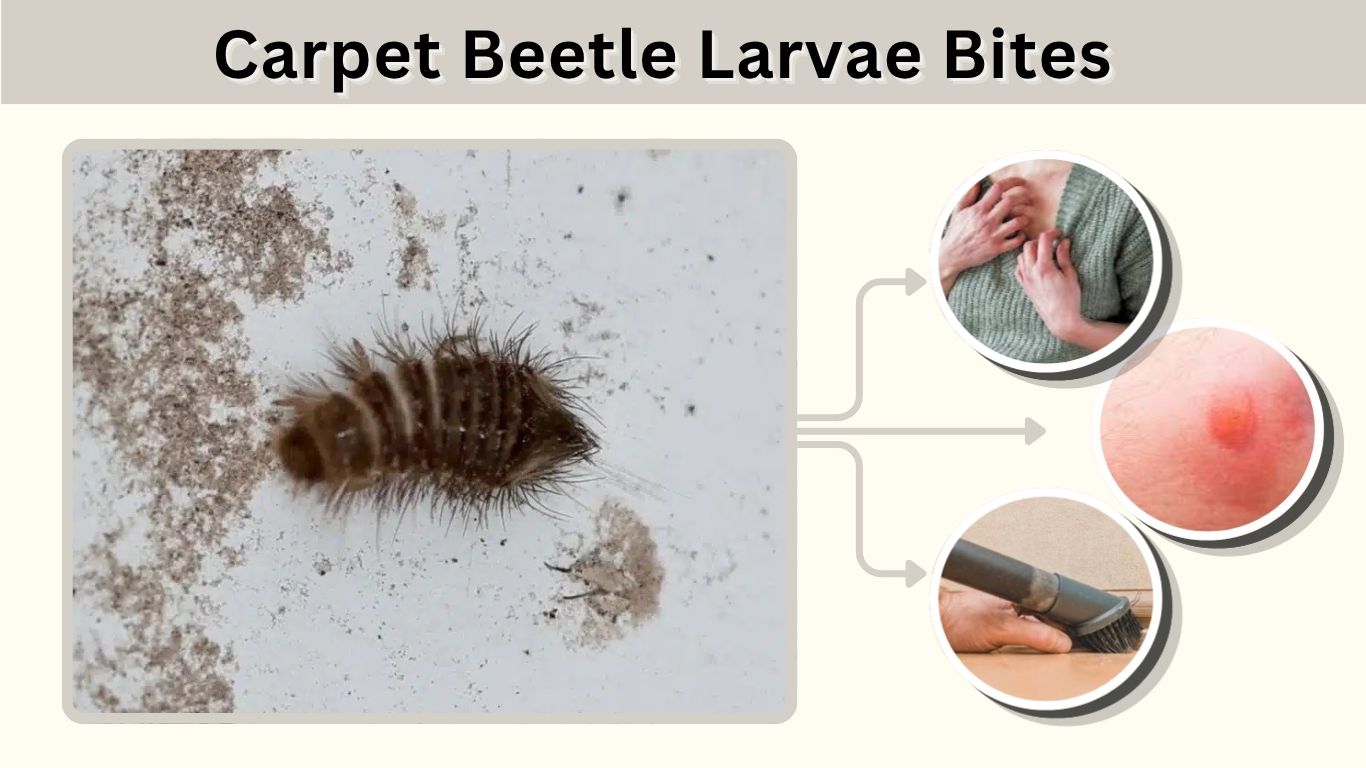
Carpet beetle larvae do not bite or sting humans. The red, itchy bumps commonly called “carpet beetle larvae bites” are usually an allergic skin reaction to the larvae’s tiny hairs or shed skins. These bristles can come into contact with the body through bedding, clothing, carpets, or upholstered furniture. The resulting rash can resemble mosquito or bed bug bites, making the source difficult to identify from skin marks alone. Removing the larvae, shed hairs, and infested materials is essential for lasting relief.
Do Carpet Beetle Larvae Bite?
Carpet beetle larvae do not have the feeding behavior or mouthparts needed to bite people for blood. Instead, they eat animal-based materials and organic debris such as wool, silk, fur, feathers, pet hair, lint, and dead insects.
Their bodies are covered with stiff hairs or bristles. Some of these hairs can break away and remain in bedding, carpets, clothing, or furniture. Sensitive people may develop an allergic reaction after their skin contacts the hairs.
Therefore, the term “carpet beetle bite” is misleading. The problem is usually carpet beetle dermatitis, not an actual insect bite.
Do Black Carpet Beetle Larvae Bite?
Black carpet beetle larvae do not bite humans either. These larvae are elongated, golden brown to dark brown, and have a noticeable tuft of long hairs at the rear of the body. Their bristles may cause irritation, but they do not pierce skin or consume blood.
Varied and furniture carpet beetle larvae can produce similar reactions because they are also covered with defensive hairs.
What Do Carpet Beetle Larvae “Bites” Look Like?
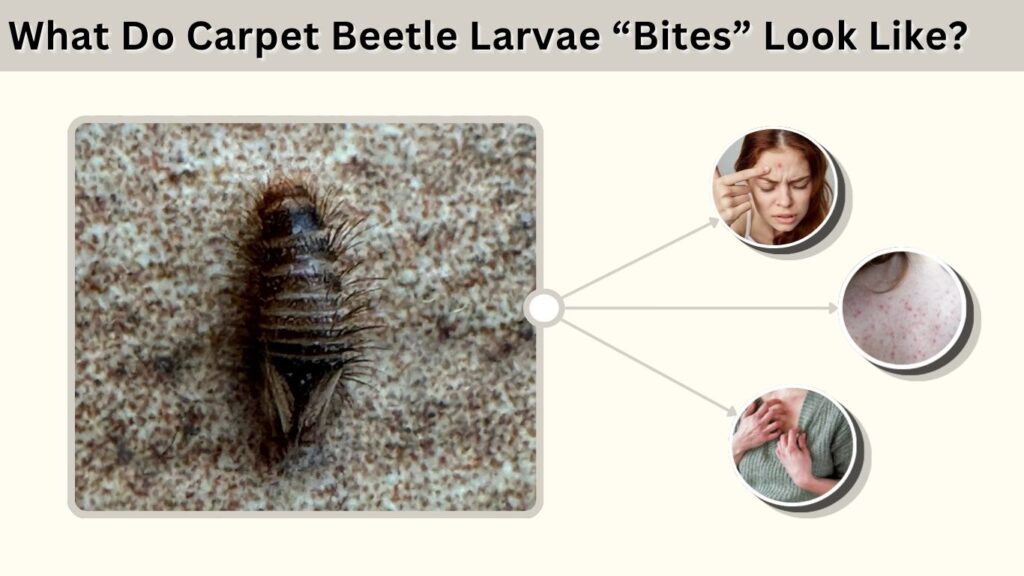
A carpet beetle rash can vary considerably between individuals. Some people have no reaction, while sensitive individuals may develop intense itching and small raised bumps.
Possible symptoms include:
- Small red, pink, or discolored bumps
- Intense itching
- Scattered patches of irritation
- Tiny blister-like eruptions
- Inflamed or swollen skin
- Irritation beneath clothing
- Eye or respiratory irritation in sensitive people
Penn State Extension reports that contact with carpet beetle larval hairs can produce itchy, papular, or blister-like eruptions. Long-term exposure may increase sensitivity in some individuals.
The rash may appear on the arms, legs, neck, back, or other areas exposed to contaminated fabrics. However, its appearance cannot confirm the cause because eczema, hives, mites, mosquitoes, bed bugs, and other conditions may look similar.
Can Carpet Beetle Larvae Cause Mosquito-Like Bites?
Contact with larval hairs can produce raised, itchy bumps that resemble mosquito bites. However, carpet beetle larvae are not puncturing the skin. The bumps are part of an inflammatory or allergic reaction.
Mosquito bites usually develop after an insect directly pierces the skin. Carpet beetle dermatitis may occur after contact with contaminated clothing, sheets, blankets, rugs, or furniture—even when no living larva is currently touching the person.
Carpet Beetle Larvae Rash vs. Bed Bug Bites
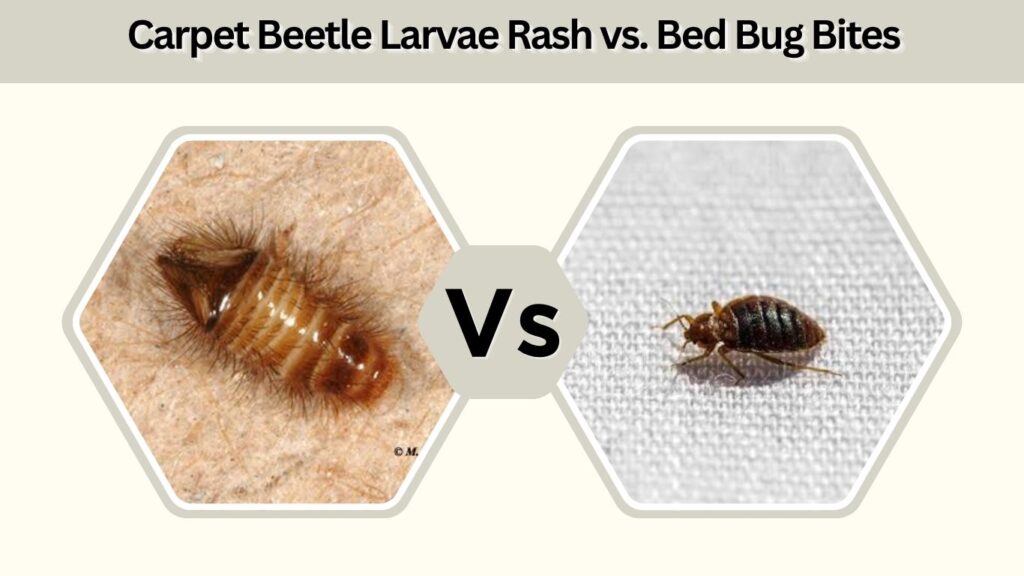
Bed bugs and carpet beetle larvae create completely different problems. Bed bugs feed on blood, while carpet beetle larvae feed on fabrics and organic material.
| Feature | Carpet Beetle Larvae | Bed Bugs |
| Do they bite? | No | Yes |
| Cause of skin reaction | Contact with larval hairs | Blood-feeding bite |
| Body appearance | Elongated, hairy, and tapered | Flat, oval, and smooth |
| Common evidence | Hairy larvae, shed skins, fabric damage | Dark spots, blood stains, eggs, live bugs |
| Food source | Wool, feathers, fur, hair, and dead insects | Human or animal blood |
| Typical hiding areas | Carpets, closets, fabrics, lint, and furniture | Mattress seams, bed frames, and nearby cracks |
Young bed bugs are called nymphs, not larvae. They are pale, flattened, and oval, while carpet beetle larvae are visibly hairy and often carrot-shaped.
Skin marks alone are a poor way to identify bed bugs. More reliable signs include live bugs, dark fecal spots, reddish stains, pale eggs, and shed nymphal skins around mattresses and bed frames.
How Carpet Beetle Hairs Reach Your Skin
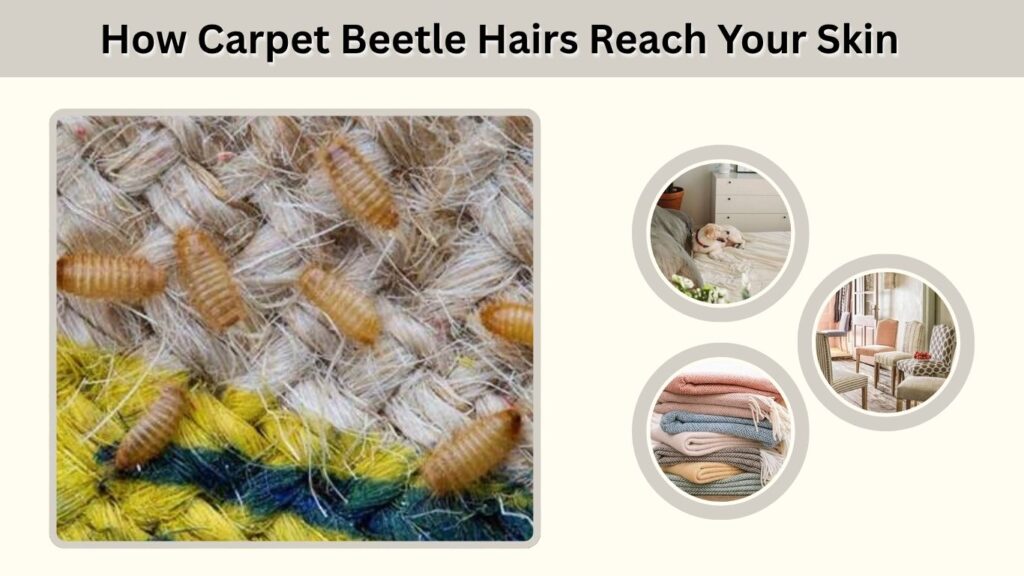
The larvae generally remain in dark, undisturbed places containing suitable food. Common sources include:
- Wool rugs and blankets
- Feather or down pillows
- Natural-fiber clothing
- Upholstered furniture
- Pet bedding and accumulated pet hair
- Lint beneath beds and along baseboards
- Dead insects in window frames or wall spaces
- Bird or rodent nests near the building
- Stored fabrics, leather, fur, or silk
Larvae may wander away from their food when searching for a place to molt or pupate. Their shed skins and hairs can remain behind even after the larvae have moved elsewhere.
Finding a larva on a bed does not necessarily mean it is living inside the mattress. It may have crawled from a blanket, carpet, closet, upholstered headboard, or debris beneath nearby furniture.
Carpet Beetle Larvae Rash Treatment
The most important step is to stop contact with the larval hairs. Continuing exposure can cause the irritation to return even after the original rash begins improving.
Clean the Skin and Clothing
Wash exposed skin gently with lukewarm water and a mild cleanser. Change clothing and wash any garments that may contain larval hairs.
Avoid vigorous scrubbing because it may further irritate inflamed skin. Try not to scratch, as scratching can damage the skin and increase the risk of infection.
Relieve Itching
A cool compress may temporarily calm itching and inflammation. A pharmacist or healthcare professional may recommend an appropriate moisturizer, antihistamine, or topical corticosteroid depending on the person’s age, medical history, and severity of symptoms.
Topical corticosteroids can be effective for contact dermatitis when used as directed by a healthcare professional. Evidence supporting herbal or alternative dermatitis treatments is limited.
When to Seek Medical Care
Consult a healthcare professional when:
- The rash is severe or spreading
- Symptoms continue despite avoiding exposure
- The skin becomes increasingly painful or warm
- Pus, crusting, or other signs of infection appear
- The eyes or breathing are affected
- You are unsure whether the marks are dermatitis or true bites
Severe reactions or suspected skin infection require prompt medical advice.
How to Stop Carpet Beetle Larvae Irritation
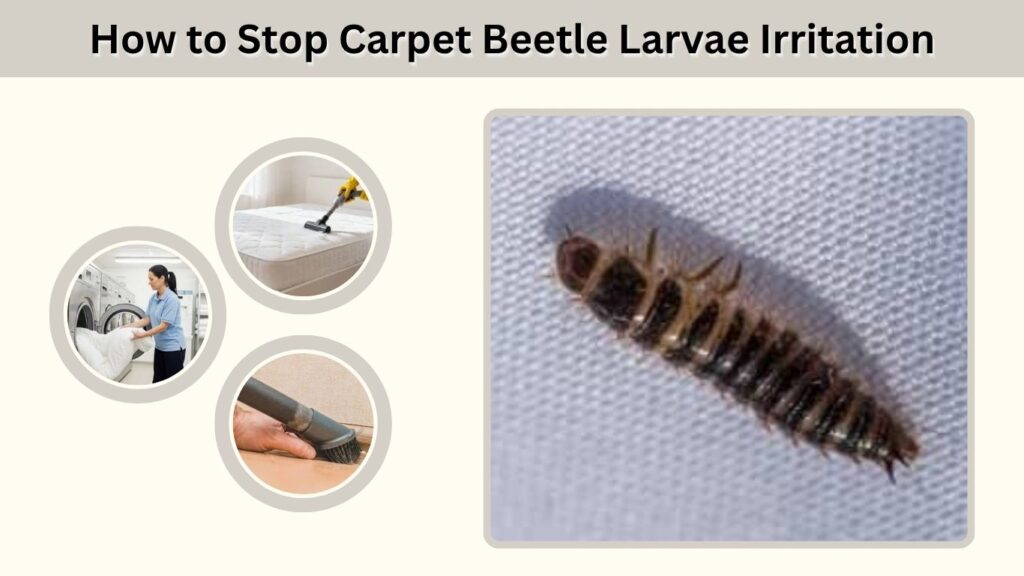
Treating the rash without addressing the infestation may provide only temporary relief.
Vacuum Thoroughly
Vacuum carpets, mattress edges, bed frames, baseboards, closets, upholstered furniture, air vents, and spaces beneath furniture. Pay special attention to areas where lint, hair, and dead insects accumulate.
Dispose of the vacuum contents in a sealed bag outside the home.
Clean Infested Fabrics
Wash or dry-clean susceptible bedding, clothing, curtains, rugs, and stored fabrics according to their care labels. Inspect wool, silk, leather, feathers, fur, and animal-hair products for holes, thinning, larvae, or hairy shed skins.
Remove the Food Source
Successful carpet beetle management depends on finding and removing the material supporting larval development. Thorough cleaning and disposal or treatment of infested items can often control the problem without insecticides.
Pesticides should not be sprayed directly on bedding, clothing, or skin. When chemical treatment is necessary, use only a product labeled for carpet beetles and the intended indoor location, or consult a licensed pest-control professional.
FAQs
Can carpet beetle larvae bite humans?
No. Carpet beetle larvae do not bite humans or feed on blood. Their stiff body hairs and shed skins can trigger an allergic reaction that creates itchy bumps, redness, or blister-like irritation resembling insect bites.
Do carpet beetle larvae bite or sting?
They do neither. Carpet beetle larvae have no stinger and do not intentionally attack people. Symptoms occur when sensitive skin contacts their detachable hairs, contaminated fabrics, or shed larval skins.
How long does a carpet beetle rash last?
The duration varies according to sensitivity and continued exposure. Symptoms may persist or return when larval hairs remain in bedding, clothing, or furniture. Removing the source is essential. A persistent or worsening rash should be evaluated by a healthcare professional.
Do carpet beetle larvae cause bed bug-like bites?
They can cause a rash that looks similar, but the mechanisms differ. Bed bugs bite and consume blood. Carpet beetle larvae cause irritation through contact with their hairs. Inspect the room for physical pest evidence instead of identifying the cause from skin marks alone.
Can carpet beetle larvae live in a bed?
They may wander onto beds or hide around seams, frames, and nearby fabrics, but they do not live there to feed on people. They are usually attracted to feathers, wool, hair, lint, dead insects, or other organic material in or around the bedroom.