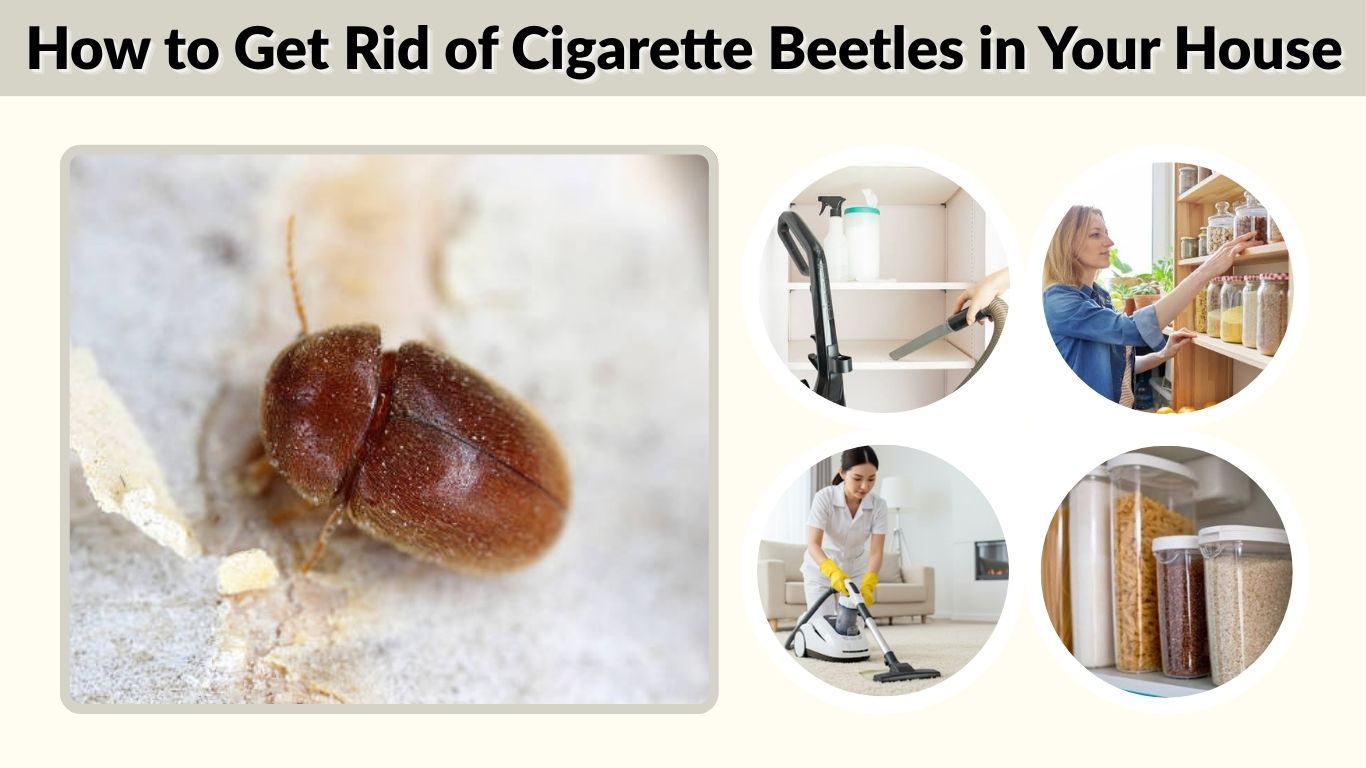
Cigarette beetles are tiny reddish-brown pantry pests that infest tobacco, spices, flour, cereal, dried fruit, pet food, birdseed, and many other stored products. Adult beetles can fly, so they may appear in bedrooms, bathrooms, windows, or other areas far from the original infestation.
The most effective way to get rid of cigarette beetles is to find and remove the infested product. Killing visible adults will not solve the problem if eggs and larvae remain hidden inside food packages.
How to Identify Cigarette Beetles
Adult cigarette beetles are approximately 2–3 millimeters long. Their small, rounded bodies may look like tiny brown seeds.
Identification Features
- Light brown or reddish-brown body
- Oval, humpbacked appearance
- Head hidden beneath the upper body
- Fine hairs covering the wing cases
- Smooth-looking wing covers
- Saw-like antennae
- Ability to fly
Cigarette beetle larvae are small, cream-colored grubs with brown heads. The larvae feed inside stored products and cause most of the damage.
1. Find the Infested Product
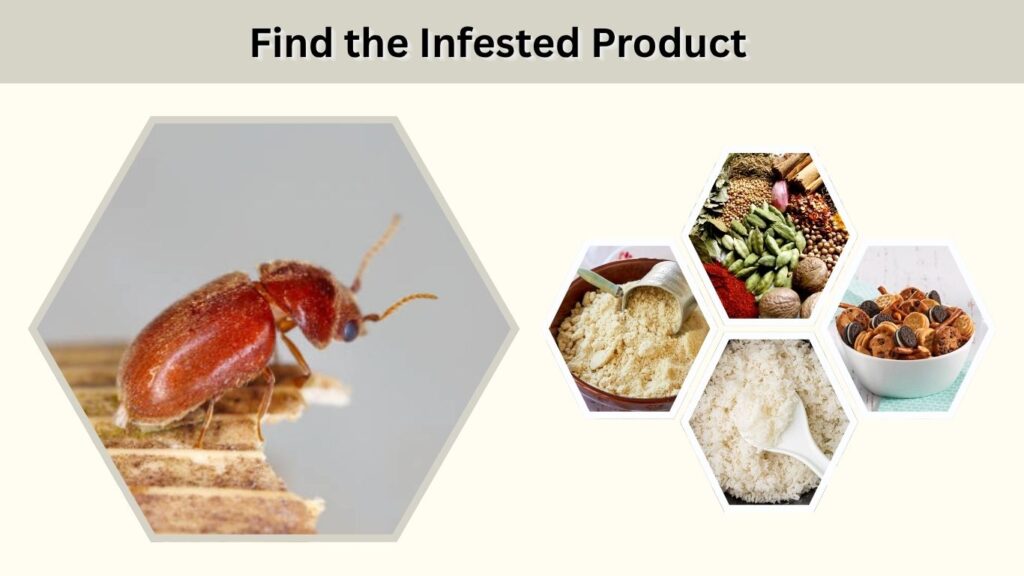
Finding the source is the most important control step. Cigarette beetles usually enter homes inside packaged food, spices, tobacco, pet products, or decorative plant materials.
Empty the affected pantry, cabinet, or storage area and inspect every item.
Products to Check
- Flour and baking mixes
- Rice, pasta, and cereal
- Crackers and cookies
- Herbs and spices
- Tea and coffee
- Chocolate and cocoa
- Nuts and seeds
- Dried fruit
- Dry pet food
- Birdseed and fish food
- Cigarettes, cigars, and loose tobacco
- Dried flowers and potpourri
Pay special attention to rarely used spices such as paprika, chili powder, cayenne pepper, and turmeric. A forgotten container may support an infestation for months.
2. Inspect Opened and Unopened Packages
Do not assume that sealed or unopened food is safe. Cigarette beetles may enter through folds, seams, and small packaging gaps. They can also emerge from food that was already infested before purchase.
Look for:
- Live adult beetles
- Small cream-colored larvae
- Tiny round holes in packages
- Powdery residue
- Damaged or clumped food
- Shed skins
- Small pupal cells
- Unusual web-like material
Pour questionable food onto a white tray or baking sheet. The light background makes small beetles and larvae easier to see.
3. Discard Infested Items
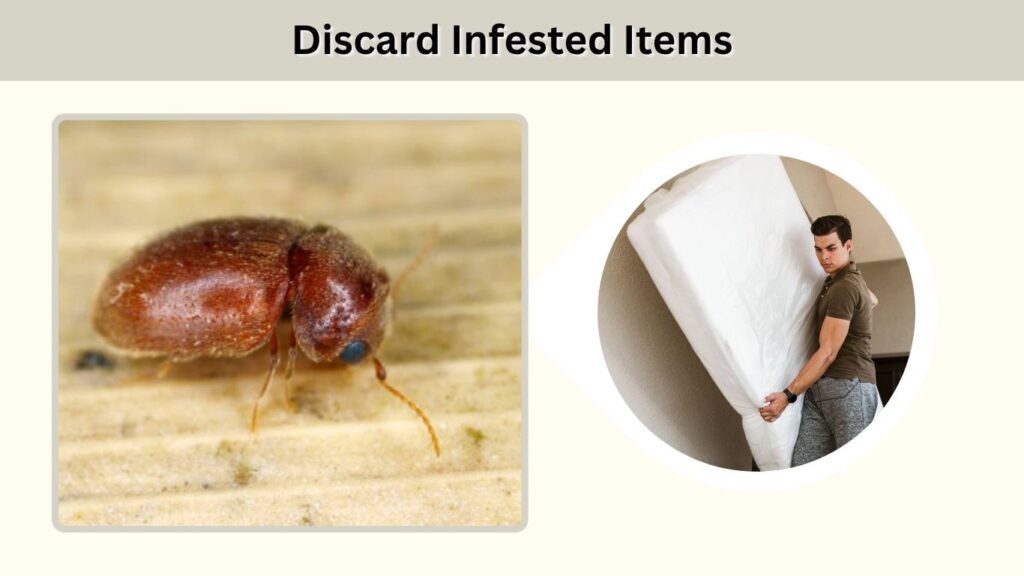
Place infested products inside a strong plastic bag and seal it securely. Take the bag outside immediately rather than leaving it in an indoor trash bin.
Discard products containing live insects, larvae, exit holes, unusual powder, or obvious contamination. Do not try to remove visible beetles and continue using heavily infested food.
Inspect all nearby packages because insects can spread from one product to another.
4. Vacuum and Clean the Pantry
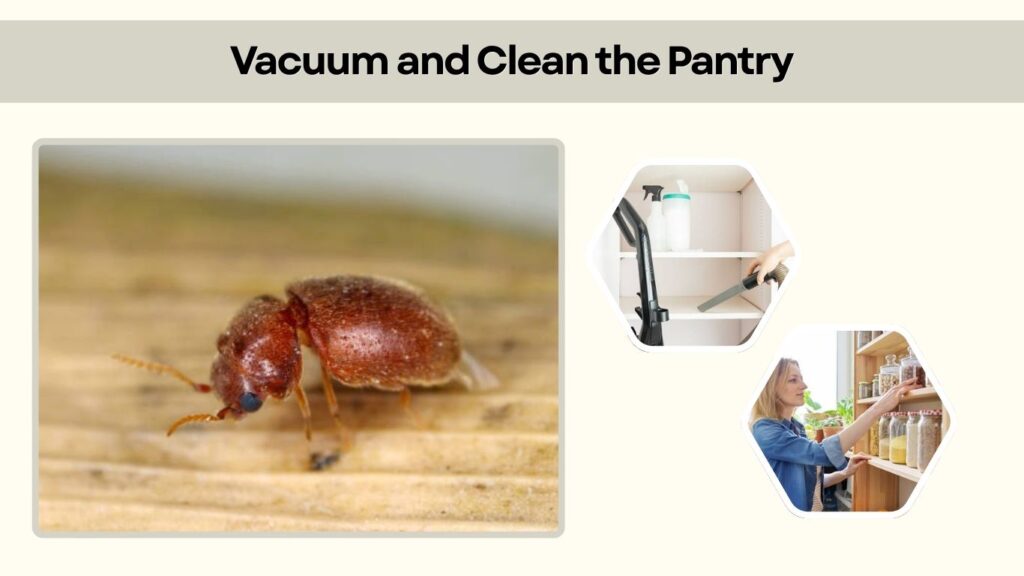
After removing the products, vacuum the entire cabinet or pantry carefully.
Clean:
- Shelves
- Corners
- Cracks and crevices
- Shelf-support holes
- Drawer tracks
- Cabinet hinges
- Floor edges
- Areas beneath shelf liners
- Gaps behind appliances
Vacuuming removes food crumbs, larvae, adults, eggs, and debris that may support surviving beetles. Empty the vacuum outside or seal and discard the vacuum bag.
Wash the shelves with ordinary soap and water, then allow them to dry completely. Strong disinfectants are usually unnecessary because cleaning alone does not kill insects hidden in overlooked food.
5. Freeze Questionable Dry Products
Freezing can kill cigarette beetle eggs, larvae, pupae, and adults in suitable products.
Place the item inside a sealed freezer-safe bag or container and freeze it at approximately 0°F or −18°C for at least four days. Larger packages may need additional time for the center to freeze completely.
After treatment, allow the sealed product to return to room temperature before opening it. This helps prevent moisture from forming inside the food.
Discard the item instead when its safety or condition is uncertain.
6. Use Heat on Suitable Products
Controlled heat may also kill cigarette beetles in certain dry foods. Spread the product in a shallow oven-safe container and heat it at approximately 130°F or 54°C for at least 30 minutes.
Do not heat:
- Medicines
- Vitamins or supplements
- Seeds intended for planting
- Chocolate or products that melt
- Flammable materials
- Tobacco products
- Items that may become unsafe when heated
Freezing or disposal is usually easier when you cannot control the temperature accurately.
7. Store Food in Airtight Containers
After cleaning, transfer dried foods into containers made from glass, metal, or thick rigid plastic.
Thin bags, cardboard boxes, and loosely folded packages do not provide dependable protection. Airtight containers prevent beetles from entering clean products and stop an unnoticed infestation from spreading.
Clear containers are especially useful because insects can be noticed before the package is opened.
Label containers with purchase dates and use older products first. Avoid storing large amounts of dry food for long periods.
How to Get Rid of Cigarette Beetles in a Bedroom
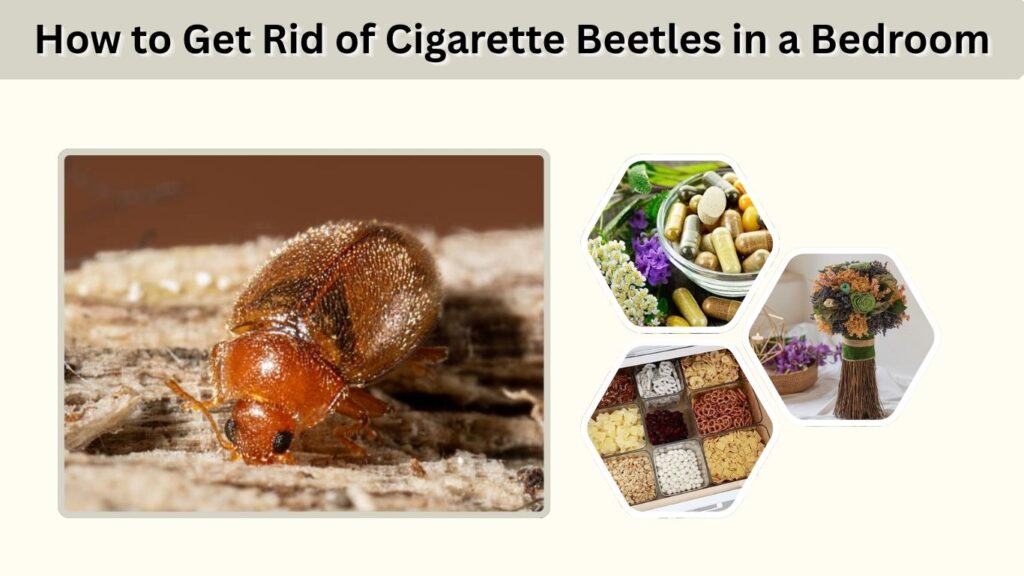
Finding cigarette beetles in a bedroom does not necessarily mean they are breeding in the bed. Adult beetles can fly toward windows, lamps, and other light sources.
Check the bedroom for:
- Snacks stored in drawers
- Dry pet treats
- Tobacco products
- Dried flower arrangements
- Decorative seeds
- Herbal products
- Potpourri
- Forgotten food beneath furniture
- Pet or bird food nearby
Vacuum the room, including baseboards, window frames, furniture cracks, and areas beneath the bed. Wash bedding if beetles have been crawling on it, but replacing the mattress is normally unnecessary.
If you continue seeing beetles in the bedroom, inspect the kitchen, pantry, and neighboring rooms for the real source.
Do Pheromone Traps Get Rid of Cigarette Beetles?
Cigarette beetle pheromone traps attract adult males. They can help confirm the insect’s identity, show where activity is strongest, and monitor whether the infestation is decreasing.
However, traps do not attract eggs, larvae, females, or pupae inside food. They should not replace inspection, disposal, cleaning, and secure storage.
Place traps according to the manufacturer’s instructions. Continued catches usually indicate that an infested product remains somewhere in the building.
Can You Get Rid of Cigarette Beetles Naturally?
The best nonchemical control methods are:
- Removing infested products
- Vacuuming cabinets and cracks
- Freezing suitable foods
- Applying controlled heat
- Using airtight storage containers
- Cleaning food spills promptly
- Monitoring with pheromone traps
Essential oils, bay leaves, vinegar, and homemade sprays are not dependable solutions. They may temporarily repel some adult insects, but they cannot reach larvae developing inside food packages.
Should You Use Cigarette Beetle Spray?
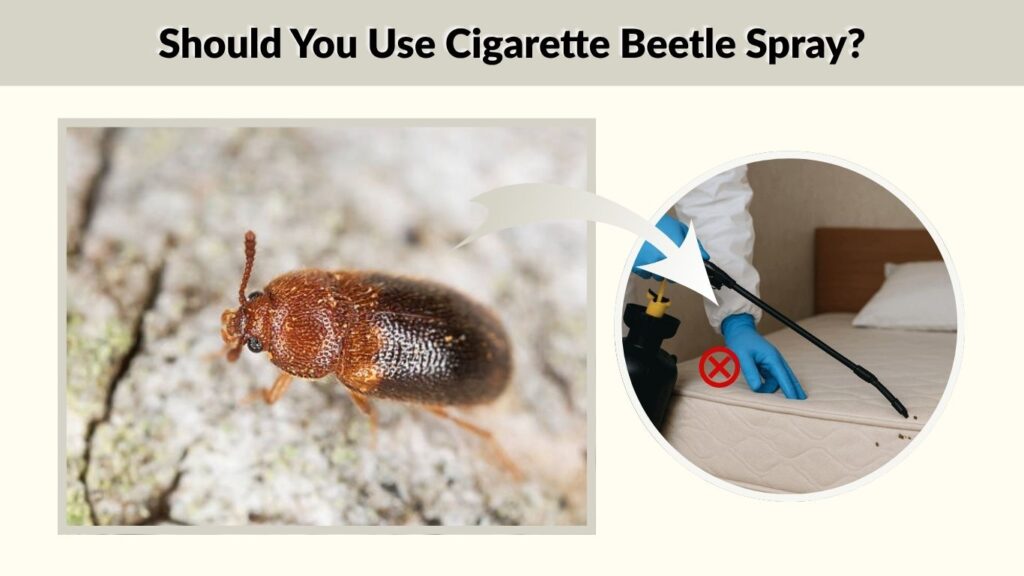
Insecticide sprays are rarely the first choice for a pantry infestation. Spraying visible adults may reduce their number temporarily, but it will not kill insects protected inside food.
Never spray pesticides directly on:
- Food
- Dishes
- Cooking utensils
- Food-preparation surfaces
- Pet food
- Open pantry products
When chemical treatment is necessary, use only a product specifically labeled for cigarette beetles and the intended indoor location. Remove food and utensils before treatment and follow all label directions.
Professional treatment may involve carefully targeted crack-and-crevice applications after all contaminated products have been removed.
Why Cigarette Beetles Keep Coming Back
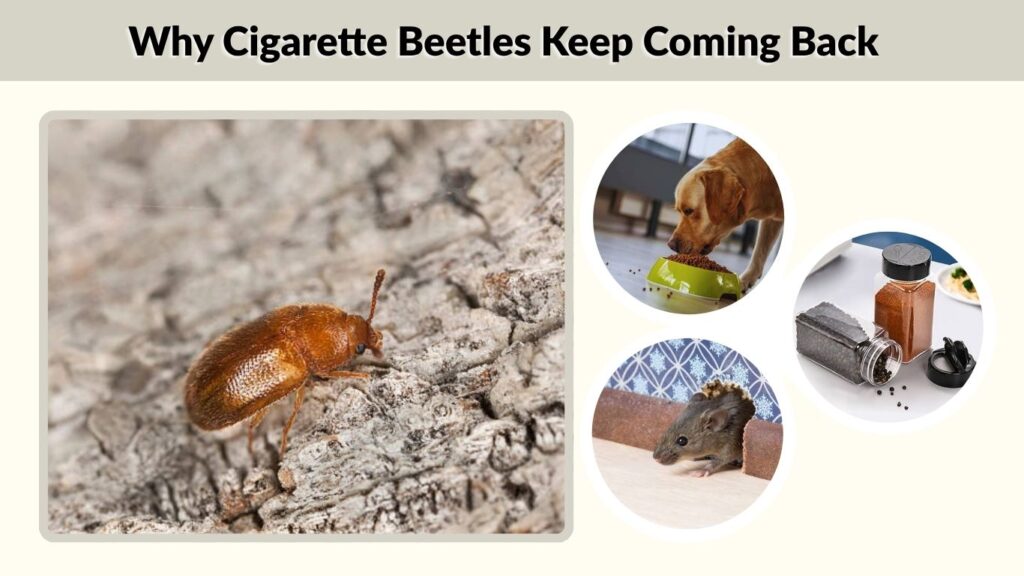
Recurring cigarette beetles usually mean that one or more breeding sources were missed.
Common hidden sources include:
- An unopened spice container
- Old pet food
- Birdseed in a garage
- Rodent food stored inside walls
- Dried flowers
- Forgotten snacks
- Tobacco products
- Decorative seed arrangements
- Food beneath cabinets or appliances
Adults may also continue emerging for several weeks after the main source is removed. Continue monitoring, cleaning, and inspecting stored products.
How to Prevent Cigarette Beetles
Prevent another infestation by following these steps:
- Inspect dried products before storing them.
- Transfer food into airtight containers.
- Buy only the amount you can use within a few months.
- Clean pantry spills immediately.
- Rotate food and use older packages first.
- Check spices, pet food, and birdseed regularly.
- Avoid keeping expired or forgotten products.
- Seal cracks around cabinets and storage areas.
When to Call Pest Control
Contact a licensed pest-control professional when beetles continue appearing after you have inspected and removed all possible food sources.
Professional help may be necessary when:
- Beetles appear throughout several rooms.
- The source may be inside a wall or ceiling.
- A commercial food-storage area is affected.
- You cannot identify the beetle correctly.
- Beetles return after repeated cleaning.
- Infested materials are difficult to access.
Ask the technician to identify and locate the source instead of simply spraying visible beetles.
FAQs
How quickly can you get rid of cigarette beetles?
Visible beetles may decrease soon after the infested product is removed. However, adults can continue emerging for several weeks if hidden larvae or pupae remain. Regular inspection and monitoring are important.
Do cigarette beetles bite people?
No. Cigarette beetles do not bite, sting, or feed on blood. Their main concern is contamination and damage to stored food, tobacco, spices, and similar products.
Can cigarette beetles live in a mattress?
They do not normally breed in mattresses. A beetle found on a bed has usually flown from an infested food, tobacco, dried flower, or pet product elsewhere in the home.
Are cigarette beetles hard to get rid of?
They can be difficult when the breeding source is small or hidden. Once every infested product is found and removed, thorough cleaning and airtight storage usually provide effective control.
Will vinegar kill cigarette beetles?
Vinegar may clean cabinet surfaces but cannot eliminate larvae living inside food packages. Source removal, vacuuming, freezing, heat treatment, and sealed storage are more effective.