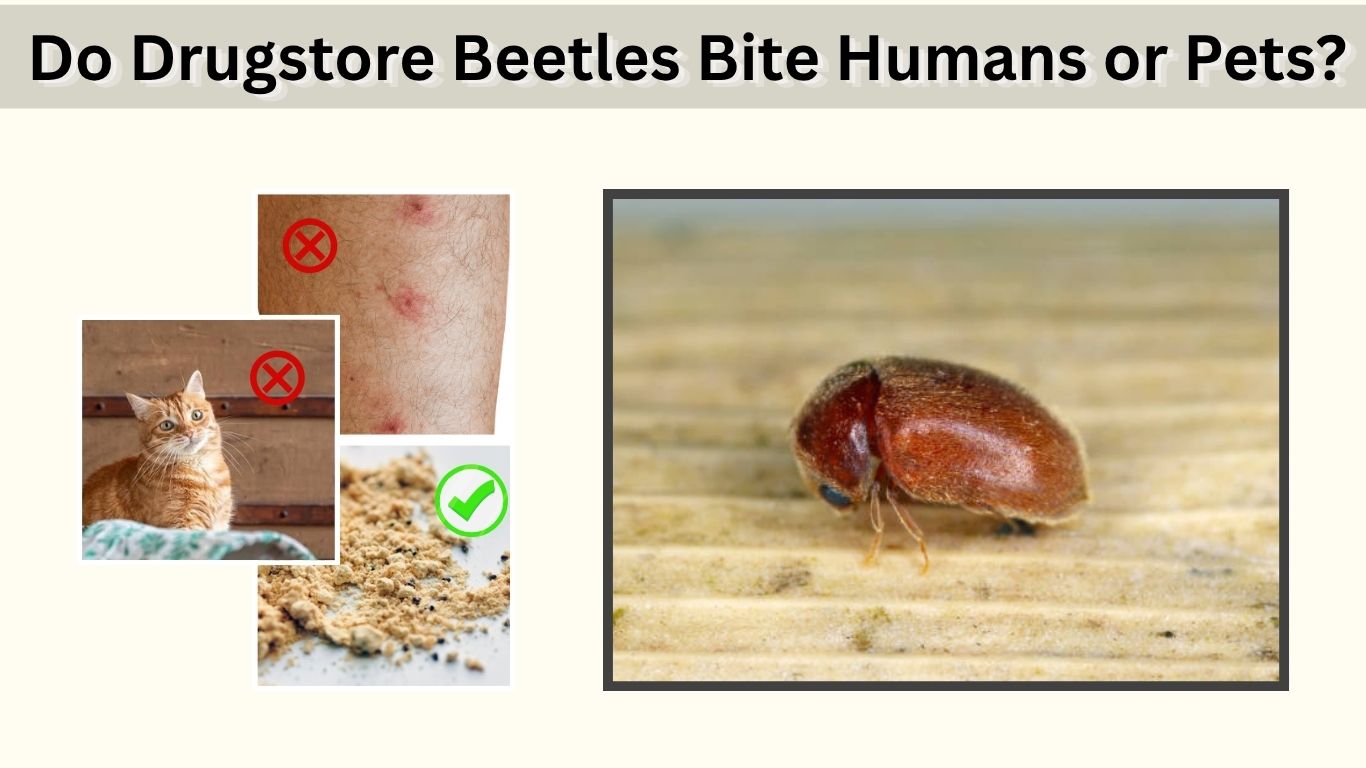
Drugstore beetles do not bite humans or pets. These tiny brown insects are pantry pests that feed on dried foods and other stored materials rather than blood or skin. They may crawl across beds, clothing, countertops, or a person’s body, but they are not equipped to use humans as a food source. When itchy red marks appear around the same time as drugstore beetles, another insect, an allergic reaction, or an unrelated skin condition is usually responsible.
Can Drugstore Beetles Bite?
No, drugstore beetles do not normally bite or sting. They are stored-product insects whose larvae feed on flour, crackers, cereal, spices, pet food, birdseed, dried plants, and similar materials.
Pantry pests, including drugstore beetles, are not considered biting insects and do not feed on people, pets, or buildings.
Adult drugstore beetles have chewing mouthparts, but they use them to escape packaging and other infested materials. They may chew through paper, cardboard, foil, or thin plastic, but this does not mean they use those mouthparts to bite people.
Do Drugstore Beetles Bite Humans?
Drugstore beetles do not seek human blood, live on the body, or intentionally pierce the skin. Their presence in a bedroom may be disturbing, but it does not mean they are feeding on the sleeping person.
Unlike bed bugs and fleas, drugstore beetles are interested in dry stored products. Their appearance near a bed is usually caused by adults flying or crawling away from an infested food source.
Can Drugstore Beetles Bite Pets?
Drugstore beetles do not normally bite dogs, cats, birds, or other pets. However, they frequently infest dry pet food, birdseed, animal treats, and rodent food.
Seeing beetles around a pet bowl usually indicates that the food should be inspected. Throw away products containing adult beetles, larvae, shed skins, powdery residue, or damaged packaging.
What Does a Drugstore Beetle Bite Look Like?
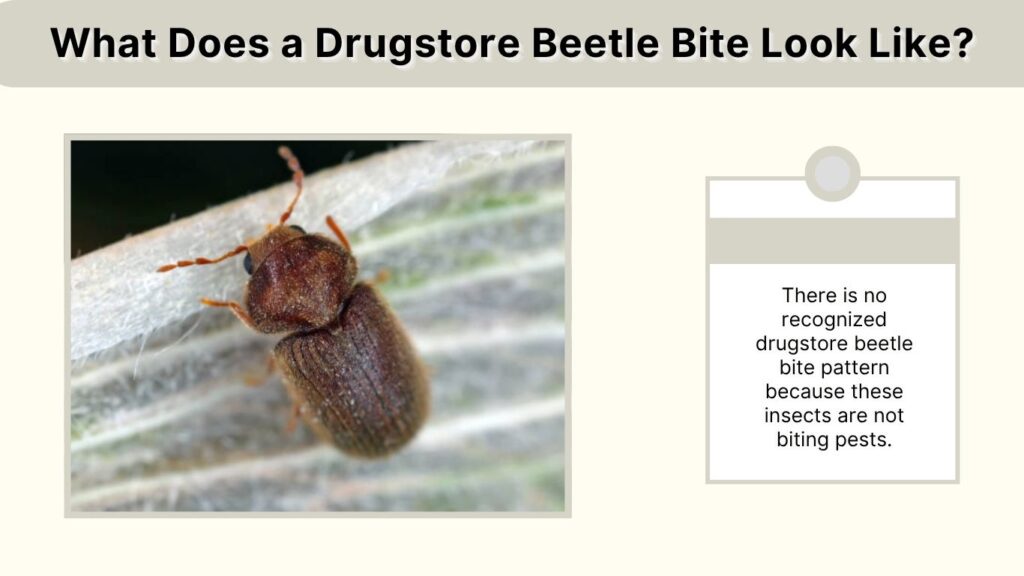
There is no recognized drugstore beetle bite pattern because these insects are not biting pests. Therefore, there is no typical drugstore beetle bite size, shape, color, or arrangement.
A red bump found after seeing one of these beetles does not prove that the beetle caused it. Skin marks alone are often insufficient to identify the responsible pest. Even genuine bed bug reactions can vary from no visible reaction to red spots, rashes, or hives.
Common causes of unexplained skin marks include:
- Bed bugs
- Fleas
- Mosquitoes
- Bird or rodent mites
- Carpet beetle larval hairs
- Contact dermatitis
- Heat rash
- Allergic reactions
- Irritation from household products
The insect should be identified separately rather than diagnosed from a skin mark alone.
Why Do People Think Drugstore Beetles Bite?
Drugstore beetles may appear in bedrooms, bathrooms, beds, or clothing even though they usually originate from stored food.
They Wander Away From Food
Adult beetles may leave an infested package and travel throughout the house. They are often noticed near windows or artificial lights.
A beetle found on a bedsheet may have flown there from the kitchen, pantry, pet-food container, or dried flower arrangement. It is not necessarily living or breeding in the bed.
They Are Confused With Biting Pests
Drugstore beetles are extremely small and reddish brown. Without close inspection, they may be mistaken for bed bugs, fleas, ticks, or other household insects.
However, adult drugstore beetles have hard wing covers and a rounded, cylindrical body. Bed bugs are flatter, broader, wingless, and shaped more like apple seeds.
Another Pest May Be Present
It is possible to have drugstore beetles and a biting pest in the same house. For example, drugstore beetles may be infesting pantry food while bed bugs or fleas cause the actual skin irritation.
Bird mites are another possibility, particularly when bird nests are attached to or located near the building. Bird mites can temporarily bite people while searching for a suitable host, although they cannot reproduce on human blood.
Carpet Beetle Hairs Can Irritate Skin
Carpet beetles do not feed on people, but the hairs from their larvae can cause allergic skin irritation that resembles insect bites. Carpet beetle dermatitis may produce itching, bumps, or a rash after contact with contaminated fabrics or larval skins.
A hairy carpet beetle larva is different from a drugstore beetle larva. Carpet beetle larvae are usually elongated and covered with noticeable bristles, while drugstore beetle larvae are small, pale, curved grubs generally hidden inside food.
Drugstore Beetle vs Bed Bug
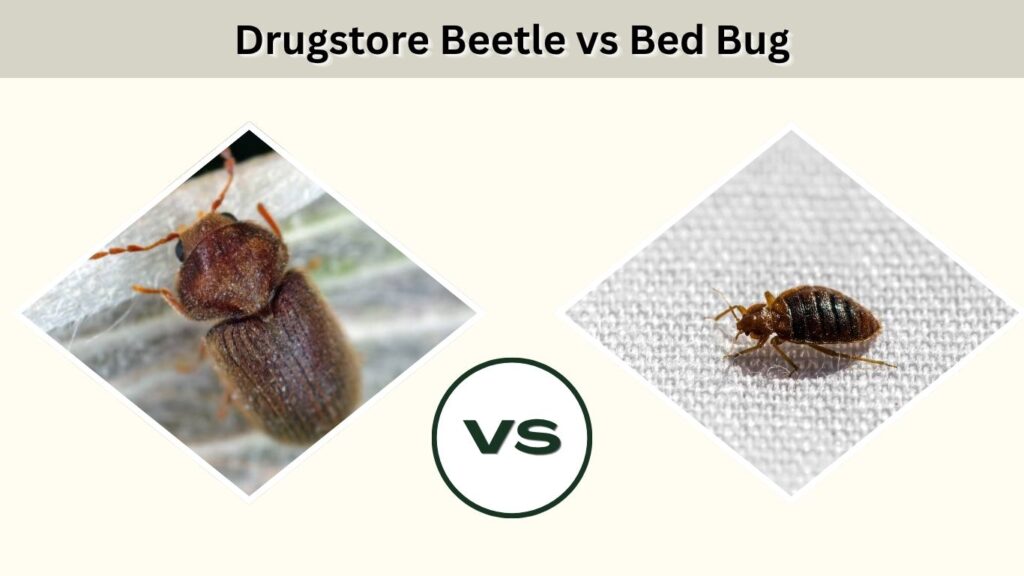
Drugstore beetles are sometimes mistaken for bed bugs because both may be found in bedrooms.
| Feature | Drugstore beetle | Bed bug |
| Body shape | Rounded and cylindrical | Broad, oval and flattened |
| Size | About 1/10 to 1/7 inch | Usually about 1/5 inch as an adult |
| Color | Light to reddish brown | Reddish brown |
| Wings | Has hardened wing covers | Wingless |
| Food | Dried foods and stored products | Blood |
| Bites humans | No | Yes |
| Common location | Pantry, food packages and windows | Mattress seams, bed frames and furniture |
Bed bugs hide close to sleeping areas and feed on blood. Drugstore beetles usually develop inside dried food or other stored organic material.
Finding blood spots, dark fecal marks, shed bed bug skins, eggs, or flat insects in mattress seams suggests that bed bugs—not drugstore beetles—may be responsible.
Drugstore Beetle vs Flea
Fleas are much better jumpers and have narrow bodies that appear flattened from side to side. Drugstore beetles have rounded bodies and do not move by repeatedly jumping.
Flea bites often occur around the ankles or lower legs, although they may appear elsewhere. Homes with cats, dogs, rodents, or wildlife may be more likely to develop flea problems. Fleas can bite people and cause itching and skin irritation.
Are Drugstore Beetles Harmful?
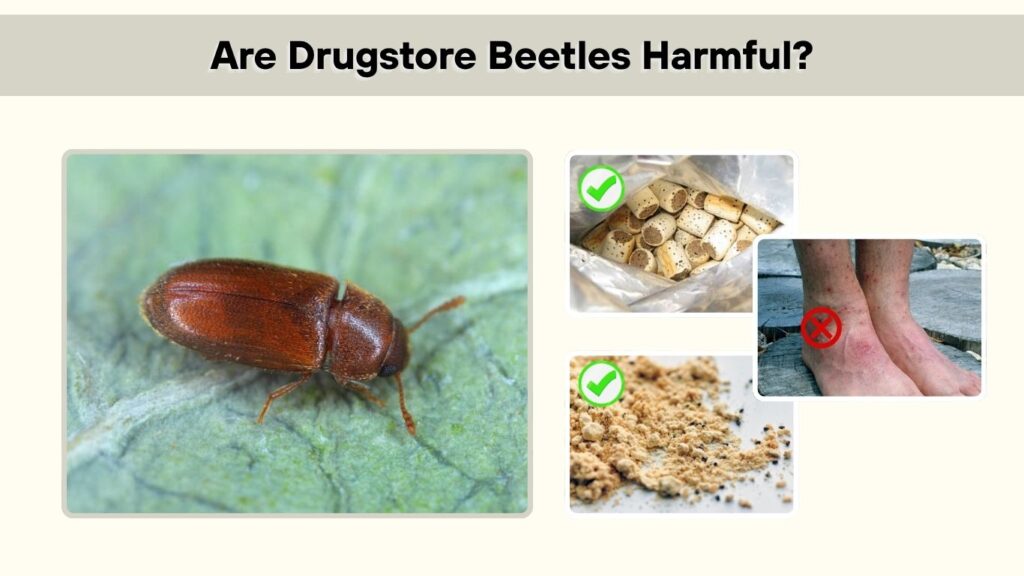
Drugstore beetles are not considered harmful to humans, pets, or the structure of a house. Alabama Cooperative Extension describes them as harmless to people, animals, and buildings.
However, they can become serious food pests. Infested products may contain larvae, insect waste, shed skins, damaged particles, and exit holes.
Drugstore beetles may infest:
- Flour and baking mixes
- Biscuits and crackers
- Rice and pasta
- Breakfast cereal
- Spices and dried herbs
- Chocolate and candy
- Dry pet food
- Birdseed
- Dried flowers
- Herbal medicines
- Books and paper products
Discard visibly infested food rather than trying to remove the insects and use the product.
What to Do When You Find Drugstore Beetles in Bed
A drugstore beetle in the bed is usually a wandering adult rather than evidence of a mattress infestation.
Inspect the Bedroom
Check for possible food sources, including:
- Snacks in drawers
- Crumbs under furniture
- Pet treats
- Dry pet food
- Birdseed
- Dried flowers
- Potpourri
- Herbal products
- Seed-filled heating pads
- Old rodent bait
Vacuum the mattress surface, bed frame, baseboards, furniture gaps, and floor. Washing the bedding will remove wandering insects, but it will not solve the problem unless the breeding source is found.
Inspect the Kitchen and Pantry
Search every dried product, including unopened packages. Drugstore beetles can infest many plant-based foods and may chew their way out through packaging.
Look for:
- Live brown beetles
- Cream-colored larvae
- Small round exit holes
- Powdery food
- Shed skins
- Damaged packaging
University of Minnesota Extension recommends correctly identifying insects that are not directly associated with food because different household pests require different treatments.
How to Get Rid of Drugstore Beetles
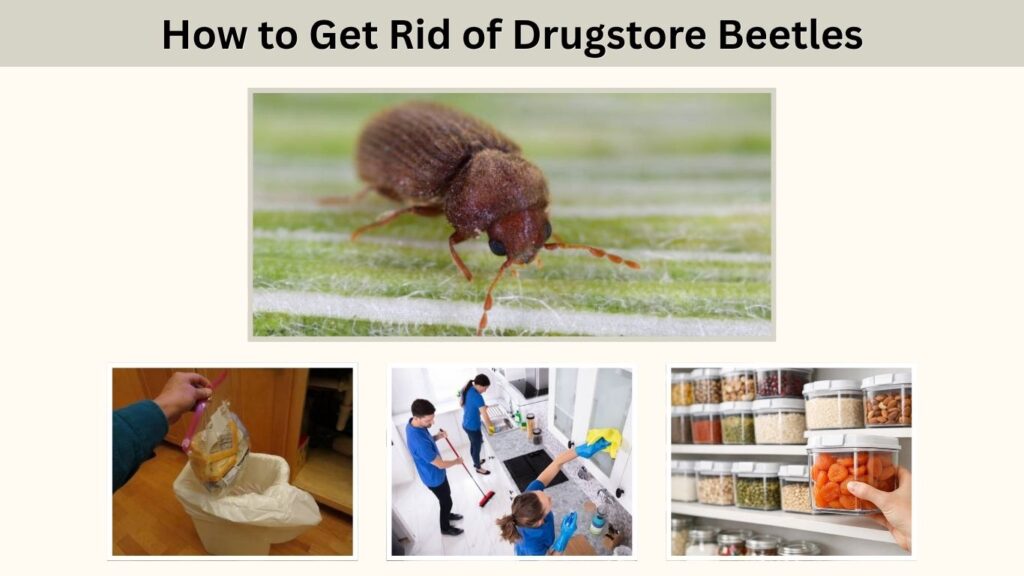
Removing the source is more effective than treating individual adult beetles.
Remove Infested Products
Seal contaminated food in a sturdy bag and take it outside immediately. Inspect nearby packages because the infestation may have spread.
Vacuum and Clean
Empty affected cabinets and vacuum the shelves, cracks, peg holes, corners, hinges, and drawer tracks. Dispose of the vacuum contents outside.
Wash the empty storage area with warm, soapy water and allow it to dry completely.
Use Airtight Containers
Store flour, cereal, spices, pet food, birdseed, and other vulnerable products in glass, metal, or thick plastic containers with tight lids.
Avoid Spraying Food Areas
Do not spray insecticide directly on food, dishes, pantry products, utensils, or food-preparation surfaces. University of Maryland Extension advises against spraying food-storage areas for kitchen and pantry pests.
Pheromone traps may help monitor adult beetles, but traps alone will not eliminate larvae developing inside food packages.
When to Seek Medical Advice
Because drugstore beetles do not bite, continuing or severe skin symptoms should not automatically be blamed on them.
Consider consulting a healthcare professional when:
- Itching or swelling is severe
- The rash continues to spread
- The skin becomes painful or infected
- You develop breathing difficulties
- The reaction involves the face, mouth, or throat
- The cause remains unclear
A pest-management professional or local insect identification service can examine a captured specimen and determine whether it is a drugstore beetle or another household pest.
FAQs
Can a drugstore beetle bite you accidentally?
Drugstore beetles are not known to bite people accidentally or intentionally. They may crawl on the skin, but their normal feeding behavior involves dried food and stored organic products.
Do drugstore beetles live in mattresses?
Drugstore beetles do not normally breed in mattresses. An adult may wander onto a bed, but the infestation is more likely connected to dried food, pet food, seeds, herbs, or decorative plant material.
Do drugstore beetles cause itching?
Drugstore beetles are not a recognized cause of bites. Itching may result from another pest, an allergy, contact dermatitis, or another skin condition. Carpet beetle larval hairs can also produce bite-like irritation.
Are drugstore beetles dangerous to babies?
Drugstore beetles do not bite babies or feed on humans. However, contaminated food should be discarded, and beetles should be kept away from infant formula, cereal, snacks, and other stored products.
What tiny brown bug looks like a drugstore beetle but bites?
Bed bugs, fleas, bird mites, and some other small arthropods can bite people. Carpet beetles can cause irritation without biting. Capture the insect for identification rather than relying only on the appearance of skin marks.