Drugstore beetles are tiny pantry pests that can infest an extraordinary range of dried foods and household materials. They commonly enter homes inside contaminated groceries, pet food, spices, birdseed, or decorative plant products. Once established, their larvae remain hidden inside the infested material while adult beetles spread to other rooms. Fortunately, drugstore beetles do not bite people, and most infestations can be eliminated by locating the source, discarding contaminated products, cleaning thoroughly, and improving food storage.
What Is a Drugstore Beetle?
The drugstore beetle, scientifically known as Stegobium paniceum, is a small stored-product pest found worldwide. It is also called the biscuit beetle or bread beetle because it frequently attacks flour, bread, crackers, cereals, and other dry foods.
Its unusual common name comes from its historical habit of infesting medicinal herbs, pharmaceutical products, and materials stored in old drugstores. However, modern household infestations are more commonly connected to pantry foods, spices, pet food, birdseed, and dried plant products.
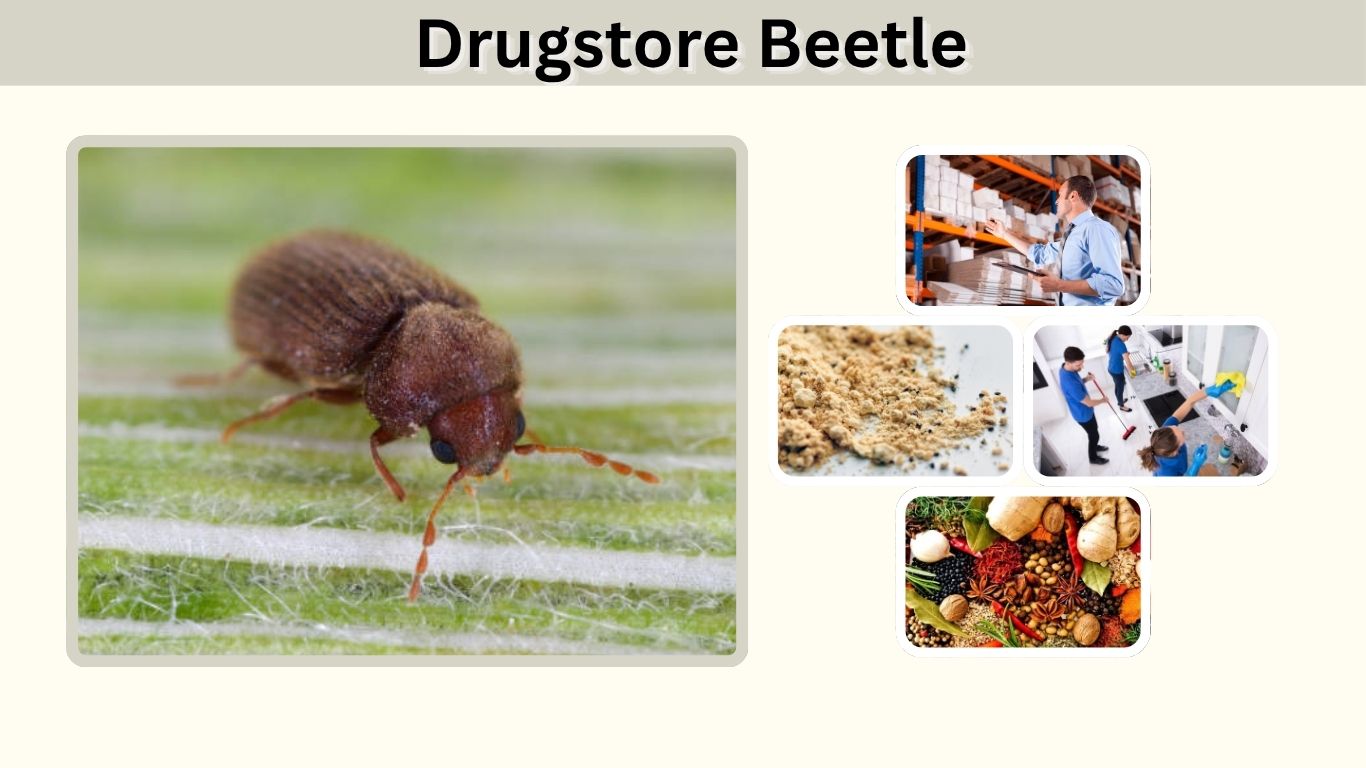
Drugstore Beetle Identification
Adult drugstore beetles have several recognizable features:
- Approximately 1/10 to 1/7 inch long
- Cylindrical or slightly oval body
- Light brown to reddish-brown color
- Head bent downward and difficult to see from above
- Fine, lengthwise grooves on the wing covers
- Antennae ending in a three-segmented club
- Short yellowish hairs covering the body
Their small size means a magnifying glass may be needed to see the grooved wing covers and clubbed antennae clearly.
What Do the Larvae Look Like?
Drugstore beetle larvae are small, creamy white, C-shaped grubs. They have a brownish head and fine hairs covering the body. Unlike adults, the larvae usually remain hidden inside food, packaging, cracks, or other infested materials.
Larvae cause most of the feeding damage. Finding adult beetles often means larvae are already developing somewhere nearby.
Where Do Drugstore Beetles Come From?
Drugstore beetles usually enter homes through an infested product rather than arriving from outdoors. A package may contain eggs or larvae when it is purchased, even when the exterior appears undamaged.
Common sources include:
- Flour, cereal and cake mixes
- Rice, pasta and crackers
- Spices and dried herbs
- Chocolate and candy
- Dried fruits and vegetables
- Dry dog or cat food
- Birdseed and rodent food
- Tea and powdered drinks
- Old rodent bait
- Dried flowers and potpourri
They can also infest books, leather, wool, museum specimens, paper products, and other dry organic materials.
Drugstore Beetles in the Bedroom
A drugstore beetle in a bedroom does not necessarily mean the infestation began there. Adult beetles can fly and may travel away from their food source, especially toward lamps, windows, and other light sources.
Check the bedroom for snacks, herbal products, dried flowers, pet treats, seed-filled heating pads, forgotten food, or rodent activity. Also inspect the kitchen and pantry because the original source may be in another room.
Drugstore Beetles in the Bathroom
Bathrooms rarely provide a suitable primary food source. Beetles found there may have flown toward a light or entered through gaps from another area.
Inspect nearby cabinets for medicines, herbal products, cosmetics containing plant material, dried decorations, and stored pet products. Continue searching other rooms until the actual breeding source is found.
What Do Drugstore Beetles Eat?
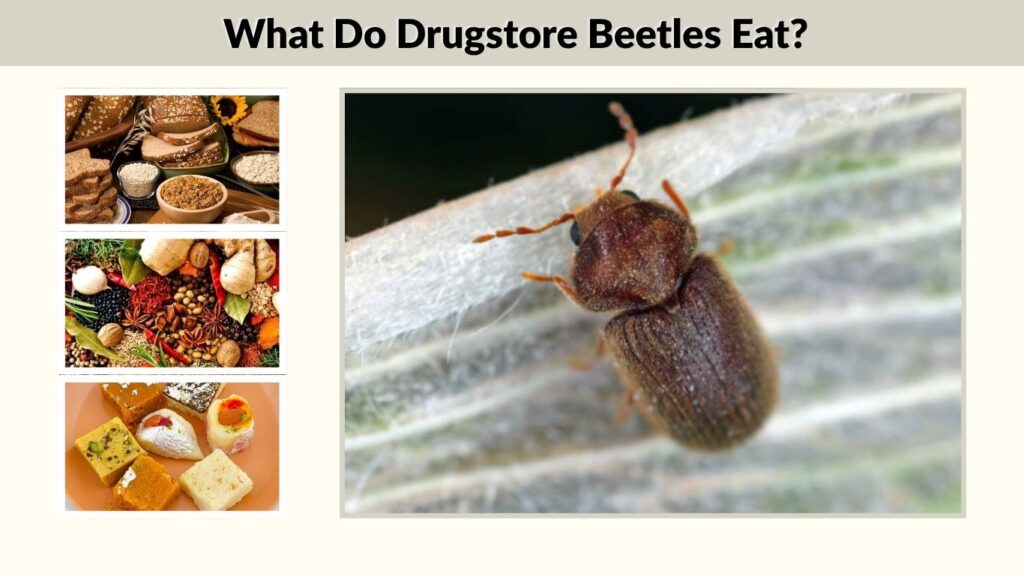
Drugstore beetle larvae are broad feeders. They prefer dry, starchy products but can survive on many plant- and animal-based materials.
| Food category | Common examples |
| Grain products | Flour, cereal, pasta, bread and crackers |
| Spices | Paprika, chili powder, pepper and dried herbs |
| Sweets | Chocolate, cookies and candy |
| Animal products | Dry pet food, leather and wool |
| Seeds | Birdseed, grass seed and rodent food |
| Household materials | Books, paper, dried flowers and plant specimens |
Adults are not responsible for most of the feeding damage, but they may chew through packaging while leaving an infested product. Drugstore beetles can penetrate paper, cardboard, foil, and some thin plastic packages.
Are Drugstore Beetles Harmful?
Drugstore beetles are not considered dangerous to people. They do not live on humans, drink blood, or behave like bed bugs.
Do Drugstore Beetles Bite?
Drugstore beetles do not normally bite humans or pets. Their mouthparts are adapted for feeding on dry stored products rather than skin.
A person who discovers an itchy mark while seeing beetles nearby should consider other possible causes, such as mosquitoes, fleas, bed bugs, mites, skin irritation, or an allergic reaction.
Can Drugstore Beetles Make You Sick?
The beetles themselves are not known as important disease transmitters. However, infested food may contain larvae, shed skins, waste, web-like material, damaged particles, or mold caused by poor storage conditions.
Discard visibly infested products rather than attempting to remove the insects and eat the food. This is especially important for heavily contaminated foods or products with unpleasant odors, moisture, or mold.
Signs of a Drugstore Beetle Infestation
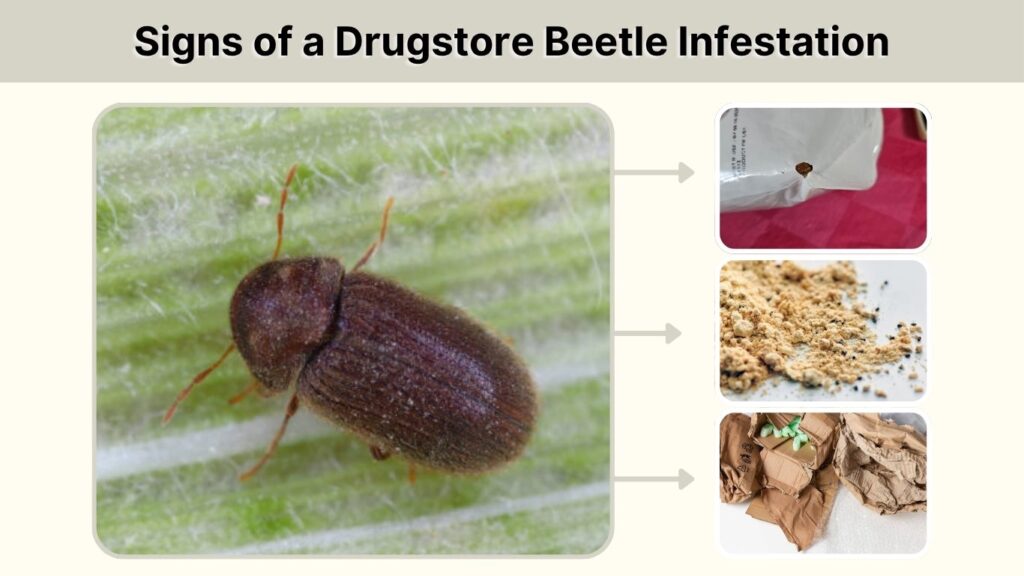
The first noticeable sign is often a group of tiny brown beetles near windows, countertops, pantry shelves, or ceiling lights.
Other signs include:
- Small round holes in food packaging
- Beetles crawling inside flour or spices
- White larvae inside dry products
- Powdery food mixed with insect waste
- Shed larval skins
- Damaged cardboard or paper containers
- Beetles appearing repeatedly after cleaning
Drugstore beetles do not build a visible nest. Eggs are laid in or near suitable food, and the larvae develop within that material.
Drugstore Beetle Life Cycle
The life cycle includes egg, larva, pupa, and adult stages. Females lay small whitish eggs directly in suitable food materials. After hatching, the larvae feed and grow through several developmental stages.
Mature larvae form protective cells or cocoons inside the infested material before becoming pupae. Adults later emerge by chewing small, round exit holes through the food or packaging.
The complete cycle may take several weeks under ideal warm conditions, but it often lasts a few months at normal indoor temperatures. Development can take longer when food quality or temperature is unsuitable.
How to Get Rid of Drugstore Beetles
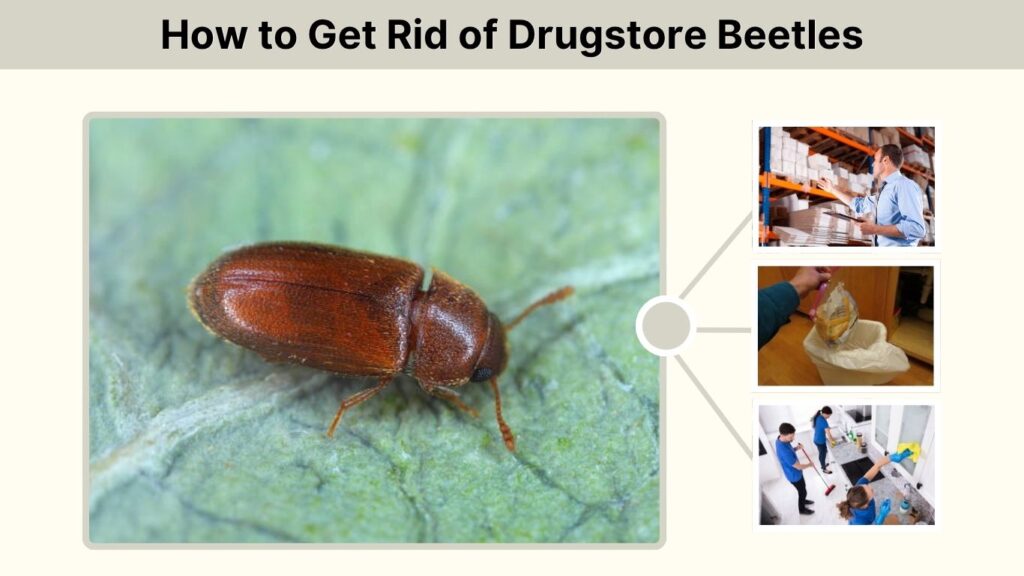
Successful control depends on removing the breeding source. Killing visible adult beetles will not eliminate eggs and larvae hidden in food.
1. Inspect Every Dry Product
Empty the affected cabinet and examine every package. Pay special attention to opened products, spices, pet food, birdseed, dried herbs, old baking supplies, and items that have remained unused for months.
Look inside folds, seams, cardboard boxes, and plastic bags. A package may be infested even when only one or two holes are visible.
2. Discard Infested Products
Place infested food in a strong plastic bag, seal it, and remove it from the home immediately. Do not leave contaminated products in an indoor trash bin.
When the infestation is widespread, discarding several inexpensive products is often more effective than trying to save them.
3. Vacuum and Clean the Storage Area
Vacuum shelves, corners, peg holes, drawer tracks, cracks, and spaces beneath shelf liners. Remove spilled flour, crumbs, seeds, and food dust that larvae could use.
Empty the vacuum outside or discard the vacuum bag afterward. Wash shelves with warm, soapy water and let them dry completely before returning food.
Vinegar may help clean shelves, but it is not a dependable treatment for larvae hidden inside packages or cracks.
4. Store Food in Sealed Containers
Transfer susceptible foods into airtight containers made from glass, metal, or thick plastic. Cardboard boxes and thin bags do not provide reliable protection.
Proper storage prevents surviving beetles from reaching clean food and makes future infestations easier to detect.
5. Use Pheromone Traps for Monitoring
Drugstore beetle pheromone traps attract certain adult beetles and help identify areas of activity. They are useful for monitoring but usually cannot eliminate an infestation alone because eggs and larvae remain inside food.
Place traps near suspected storage areas, following the manufacturer’s directions. Avoid placing too many traps, as this may make it harder to determine where the infestation began.
6. Use Insecticides Carefully
Insecticides are usually unnecessary when all infested materials have been removed. Never spray insecticide directly onto food, dishes, preparation surfaces, or pantry products.
A pesticide specifically labeled for pantry pests may sometimes be applied to cracks and crevices after all food has been removed. Follow the entire product label. Persistent or widespread infestations may require a licensed pest-control professional.
Drugstore Beetle vs Cigarette Beetle
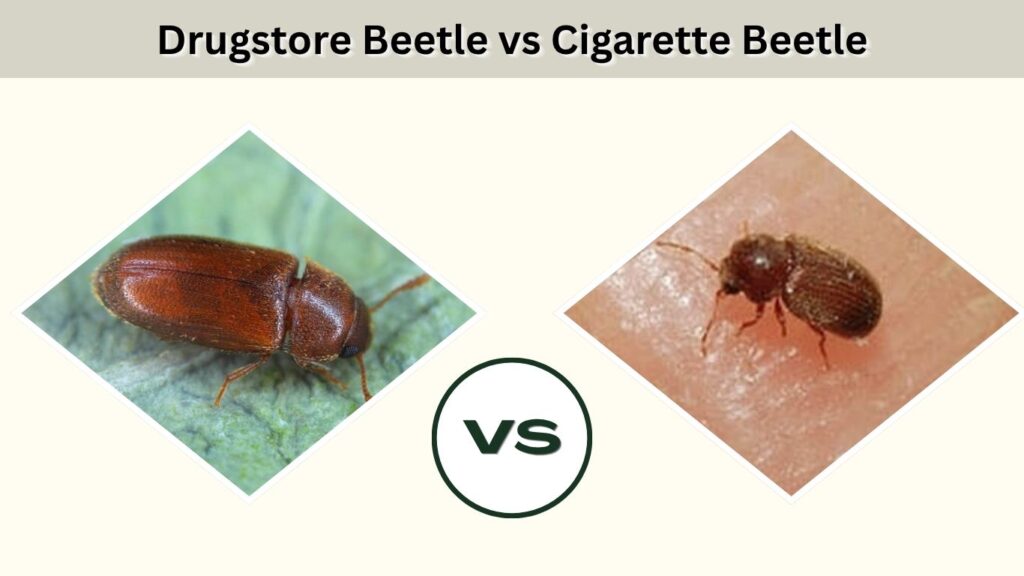
These two pantry pests are similar, but close examination reveals several differences.
| Feature | Drugstore beetle | Cigarette beetle |
| Body shape | More elongated | More rounded |
| Wing covers | Grooved or lined | Smooth |
| Antennae | Three-segmented club | Saw-like |
| Common foods | Flour, spices, medicine and pet food | Tobacco, spices and dried foods |
| Color | Brown to reddish brown | Yellowish to reddish brown |
Both species require similar control: locate the infested product, discard it, clean the area, and protect remaining foods in sealed containers.
FAQs
Can drugstore beetles fly?
Yes. Adult drugstore beetles have wings and are capable of flying. They frequently gather around windows and lights, sometimes far from the infested product. This behavior can make the original food source difficult to locate.
Do drugstore beetles eat clothes?
They are not typical clothing pests, but their larvae may feed on certain animal-based or organic materials, including wool, leather, hair, and feathers. Damage to ordinary synthetic or cotton clothing is less common.
Can drugstore beetles eat through plastic?
Adults may chew through thin plastic, paper, cardboard, and foil packaging. Store flour, spices, pet food, and similar products in sturdy containers with tight-fitting lids rather than relying on their original bags.
Does vinegar kill drugstore beetles?
Direct contact may kill or remove some exposed insects, but vinegar cannot reach eggs and larvae hidden inside food. Use it as a shelf cleaner, not as the main treatment. Finding and discarding the infested product is essential.
How long does it take to eliminate drugstore beetles?
Adult activity should decline after contaminated products are removed and the area is cleaned. A few adults may continue appearing for one or two weeks. Continued activity usually means another infested product has not yet been found.