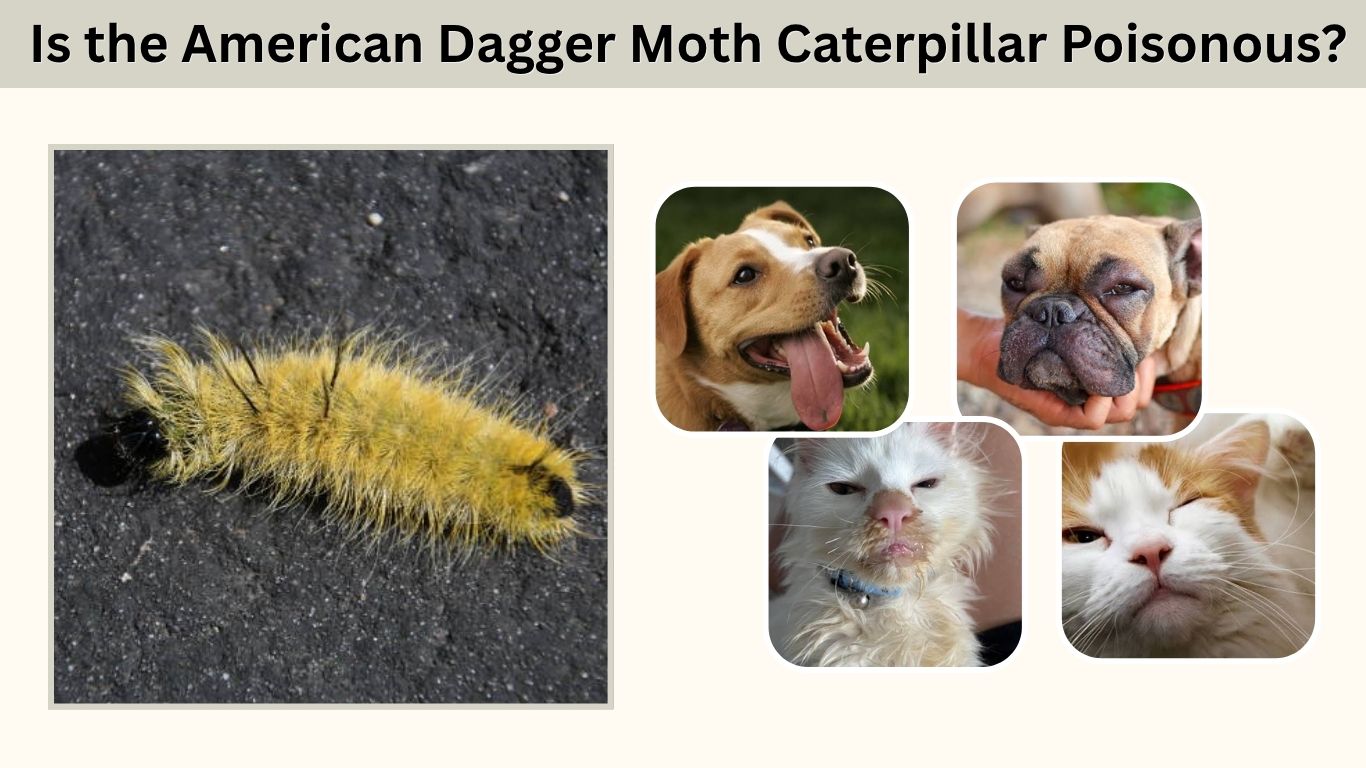
The American dagger moth caterpillar is a fuzzy yellow-and-black caterpillar that should be observed rather than handled. It is not usually considered dangerously poisonous, but its hairs can become embedded in skin and cause burning, itching, redness, swelling, or a rash. Dogs and cats may also experience irritation if they touch, lick, or swallow one.
Is the American Dagger Moth Caterpillar Poisonous to Humans?
The most accurate answer is that the caterpillar is potentially irritating rather than highly poisonous. Its scientific name is Acronicta americana. The caterpillar does not inject venom through a stinger or bite people, but contact with its hairs may produce an uncomfortable skin reaction.
NC State Extension notes that toxins are reportedly present in the hairs, although the exact nature of this reaction is not described with certainty. Kansas State University advises avoiding direct contact because the hairs can cause skin irritation, rashes, and occasional allergic reactions.
What Makes the Caterpillar Irritating?
The body is covered with yellow, yellow-green, or white hairs called setae. It also has five longer black tufts, sometimes described as hair pencils.
These hairs may break loose when touched and become embedded in the skin. The reaction can result from mechanical irritation, substances associated with the hairs, or an individual allergic response.
This is why describing the caterpillar simply as “poisonous” can be misleading. It is not normally associated with severe systemic poisoning, but touching it can still be painful and unpleasant.
Symptoms After Touching One
A person who handles or brushes against the caterpillar may develop symptoms within minutes or several hours.
Possible symptoms include:
- Burning or stinging
- Itching
- Redness
- Small raised bumps or welts
- Localized swelling
- A spreading rash
- Skin tenderness
- Blisters in stronger reactions
Caterpillar hairs can also irritate the eyes, nose, or mouth. Severe allergic reactions are uncommon, but breathing or swallowing difficulties require urgent medical attention.
What Should You Do After Touching One?
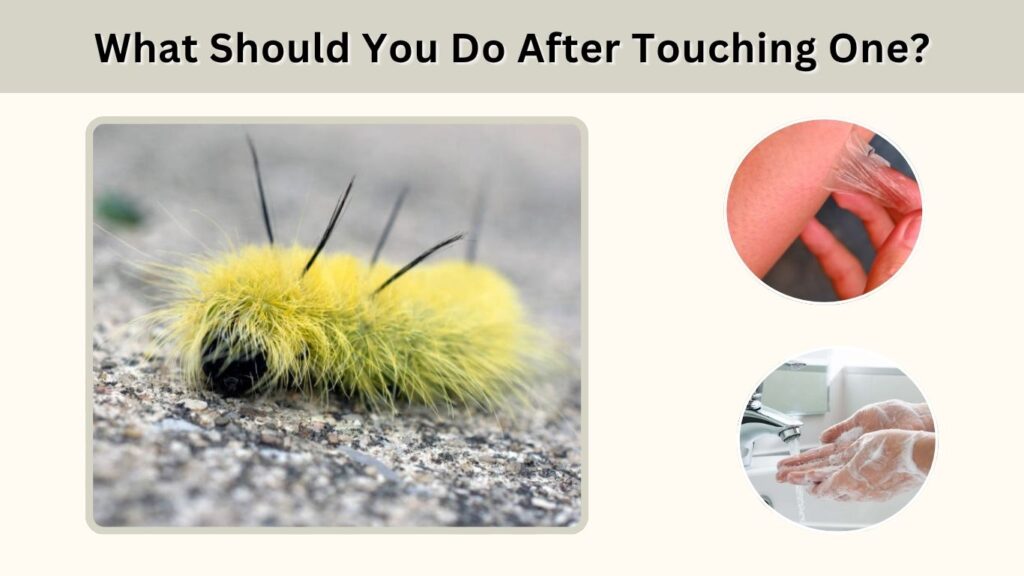
Do not rub or scratch the affected skin. Rubbing can push loose hairs deeper into the skin or spread them to another area.
First-Aid Steps
- Remove the caterpillar with a tool, leaf, or stick rather than your bare fingers.
- Place sticky tape gently over the affected skin.
- Pull the tape away to remove embedded hairs.
- Repeat with fresh tape several times.
- Wash the area gently with soap and water.
- Apply a wrapped cold pack to reduce discomfort.
Poison Control recommends using tape before washing because water alone may not remove all the tiny hairs. A mild hydrocortisone product may help itching, but medication suitability depends on the person’s age, health, and location of the rash.
When to Get Medical Help
Contact a medical professional or poison-information service when the reaction is severe, continues to worsen, or involves a young child.
Seek urgent care for:
- Difficulty breathing or swallowing
- Swelling of the face, lips, mouth, or throat
- Caterpillar hairs in the eye
- Severe or spreading swelling
- Extensive blistering
- Dizziness, weakness, or vomiting
- A history of serious allergic reactions
Avoid touching your face or eyes before washing your hands and removing possible hairs from your clothing.
Is the American Dagger Moth Caterpillar Poisonous to Dogs?
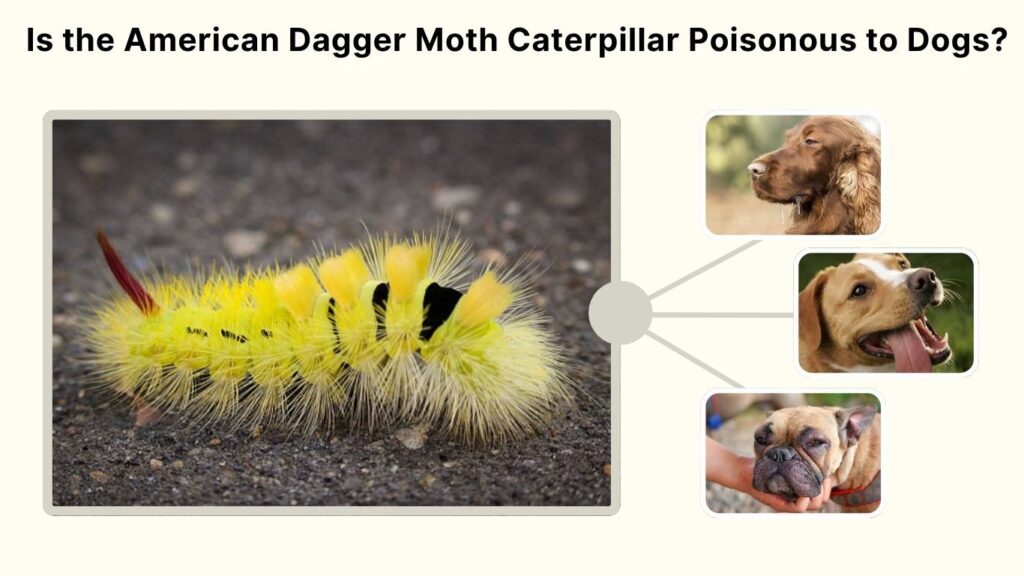
There is limited species-specific veterinary research showing that the American dagger moth caterpillar causes systemic poisoning in dogs. However, its irritating hairs may become lodged in a dog’s lips, tongue, gums, throat, nose, paws, or skin.
Dogs are more likely to experience problems when they sniff, lick, chew, or swallow the caterpillar. General veterinary guidance warns that hairy caterpillars can cause oral irritation even when ingestion is not normally life-threatening.
Symptoms in Dogs
After contact, a dog may show:
- Excessive drooling
- Pawing at the face or mouth
- Head shaking
- Lip or tongue swelling
- Difficulty eating
- Vomiting or diarrhea
- Whining or signs of pain
- Redness around the mouth
- Repeated licking
- Difficulty swallowing
A dog experiencing facial swelling, weakness, breathing trouble, or severe distress needs immediate veterinary attention.
What to Do if Your Dog Touches or Eats One
Move the dog away from the caterpillar and prevent further licking. Wear gloves before inspecting the mouth, muzzle, paws, or coat.
When the dog is alert and cooperative, gently rinse its mouth with clean water. Do not force water toward the back of the throat. Visible hairs on the skin may sometimes be lifted with sticky tape, but do not place tape inside the mouth or near the eyes.
Contact a veterinarian for instructions, particularly when the dog chewed or swallowed the caterpillar. Do not induce vomiting or give antihistamines, pain relievers, or other human medications unless a veterinarian specifically instructs you to do so.
Is It Poisonous to Cats?
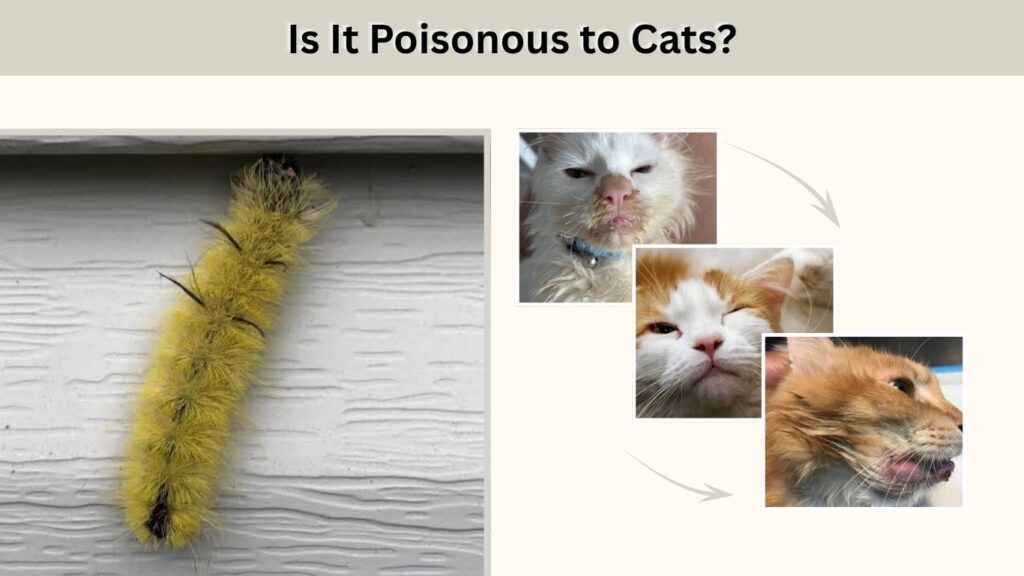
Cats face risks similar to dogs, although their cautious behavior may make direct encounters less frequent. A curious cat may bat at the caterpillar, step on it, lick it, or attempt to eat it.
The hairs may irritate a cat’s paw pads, skin, eyes, lips, or mouth. A thick coat offers some protection, but hairs can still become trapped in the fur and later transfer to the tongue during grooming. ASPCA guidance notes that caterpillar exposure in pets may produce skin inflammation, mouth irritation, drooling, swallowing difficulty, vomiting, and discomfort.
Warning Signs in Cats
Watch for:
- Sudden drooling
- Pawing at the mouth
- Repeated grooming
- Refusal to eat
- Vomiting
- Swollen lips or tongue
- Squinting or watery eyes
- Vocalizing when touched
- Difficulty breathing
Contact a veterinarian promptly when symptoms appear. Cats should never receive human pain relievers because several common medications are highly dangerous to them.
How to Identify an American Dagger Moth Caterpillar
Correct identification is helpful, but all unfamiliar fuzzy caterpillars should be treated cautiously.
Color and Markings
The caterpillar is usually bright yellow, pale yellow, yellow-green, or nearly white. Its body is densely covered with soft-looking hairs.
The most recognizable features are:
- A shiny black head
- A thick coat of pale hairs
- Four long black tufts along the front and middle
- One additional black tuft near the rear
- A mature length of up to approximately two inches
The bright color and long black hairs make it look distinctive, but coloration can vary between individuals and developmental stages.
Where Is It Found?
The American dagger moth occurs mainly east of the Rocky Mountains and is especially common in eastern parts of the United States. Caterpillars may be seen in forests, parks, yards, school grounds, gardens, and other places containing hardwood trees.
They feed on the leaves of:
- Maple
- Oak
- Elm
- Ash
- Willow
- Alder
- Birch
- Poplar
- Other hardwood trees
Mature caterpillars sometimes leave their host trees and crawl across lawns, sidewalks, decks, walls, or playground equipment while searching for places to pupate.
How to Remove the Caterpillar Safely
American dagger moth caterpillars rarely occur in numbers large enough to require major control. A single caterpillar can usually be moved without insecticide.
Wear gloves and use a leaf, small container, garden tool, or stiff piece of cardboard to move it away from areas used by children and pets. Do not crush it with bare feet because hairs may remain on shoes, flooring, or surrounding surfaces.
Check low branches, outdoor furniture, toys, pet areas, and walkways before children or animals play outside. Clothing that may contain caterpillar hairs should be handled carefully and washed separately.
FAQs
Can an American dagger moth caterpillar kill you?
The American dagger moth caterpillar is not generally regarded as deadly to humans. Most reported problems involve localized pain, itching, redness, or a rash. However, a serious allergic reaction is possible, and breathing or swallowing difficulties require emergency medical attention.
Does the American dagger caterpillar sting?
It does not sting like a bee or wasp. Its hairs may break off and become embedded in the skin, producing a stinging or burning sensation. Therefore, a person may describe the experience as a sting even though there is no active stinger.
What happens if a dog eats one?
A dog may develop mouth pain, drooling, head shaking, pawing at its face, vomiting, or swallowing difficulty. Move the dog away, gently rinse the mouth when safe, and contact a veterinarian. Breathing trouble or significant swelling is an emergency.
Can you pick up an American dagger moth caterpillar?
It should not be picked up with bare hands. Use gloves, a leaf, cardboard, or a container to move it. Its pale hairs and longer black tufts may cause irritation even when the caterpillar initially appears soft and harmless.
Is the adult American dagger moth poisonous?
The adult moth is not known for stinging or poisoning people or pets. The contact concern is primarily associated with the caterpillar’s hairs. Adult moths can usually be left alone when found resting near outdoor lights or on buildings.