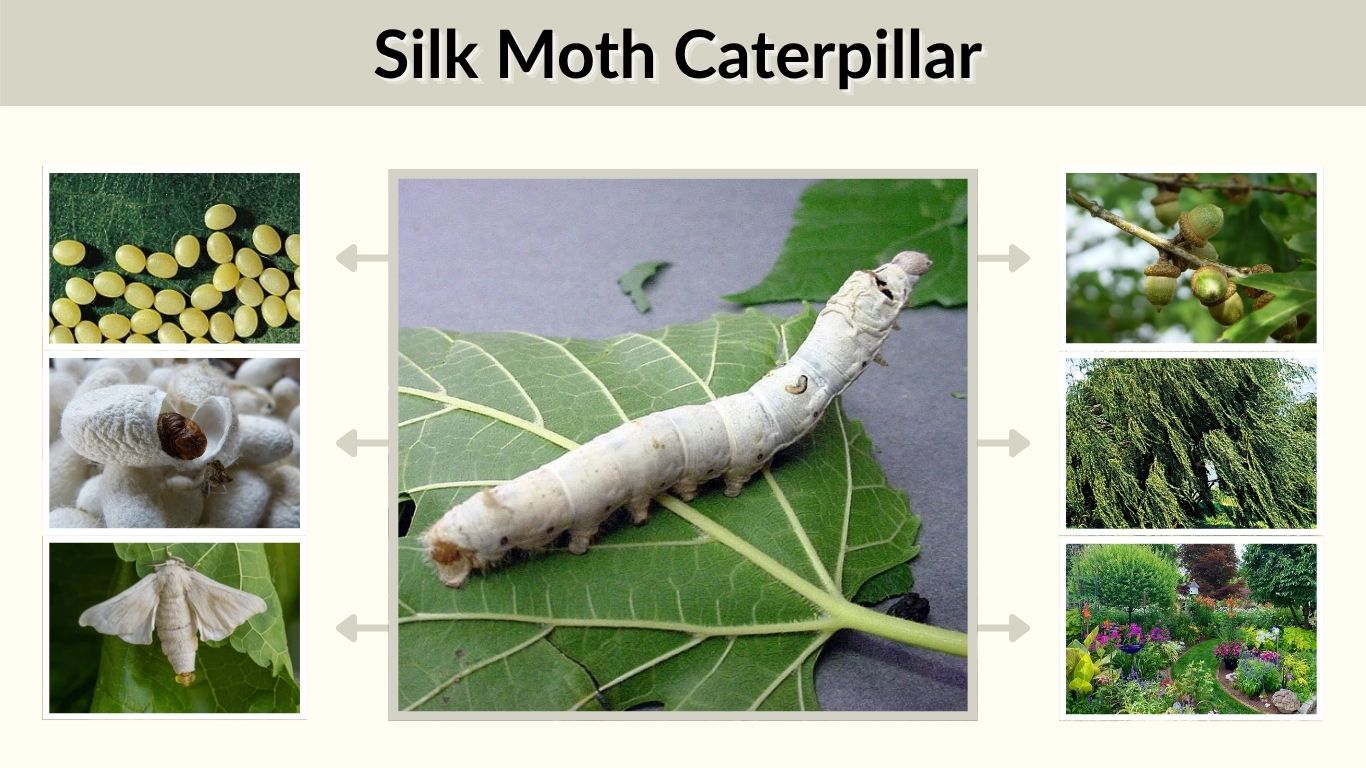
Silk moth caterpillars are leaf-eating larvae that eventually spin protective cocoons before becoming adult moths. The name can describe the domesticated silkworm used in commercial silk production or the large, colorful caterpillars of wild giant silk moths. Species such as the cecropia, luna, Polyphemus and promethea moth produce some of North America’s largest caterpillars. Most are harmless, although a few silk moth species possess irritating or stinging spines.
What Is a Silk Moth Caterpillar?
A silk moth caterpillar is the larval stage of a moth capable of producing silk from specialized glands. The silk is used primarily to construct a cocoon that protects the insect during its pupal stage.
The term commonly refers to two different groups:
- The domesticated silkworm, Bombyx mori
- Wild giant silk moths belonging mainly to the family Saturniidae
Commercial mulberry silk comes primarily from the cocoons of Bombyx mori. Wild silk moth caterpillars also produce strong cocoons, but they are usually valued more for their ecological importance and spectacular adult forms than for commercial silk production.
Silk Moth Caterpillar Identification
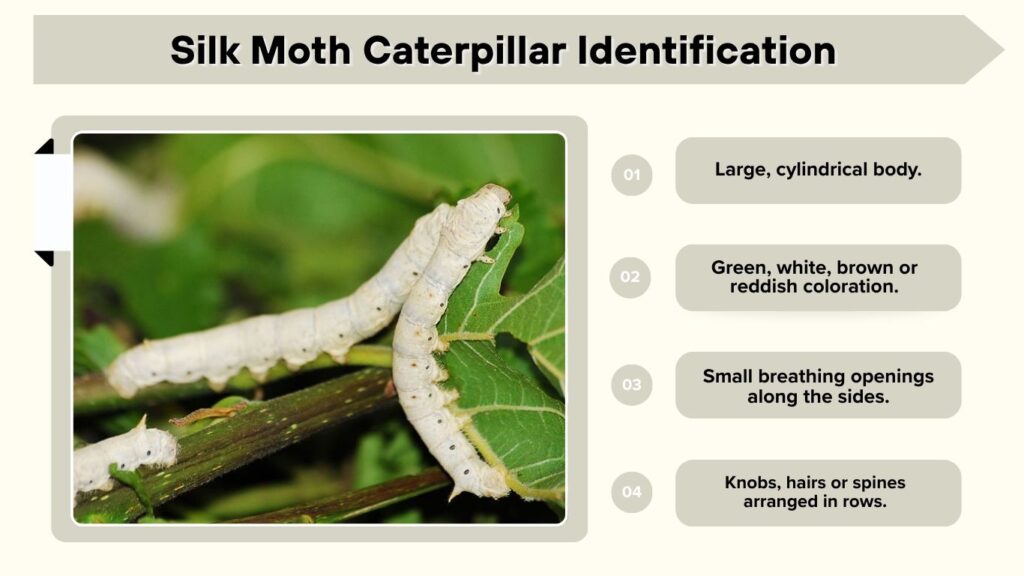
Silk moth caterpillars vary considerably in color, size and texture. Many giant species are thick-bodied, green and several inches long. Depending on the species, they may have colorful knobs, small hairs, stripes, spots or branching spines.
Common Identification Features
- Large, cylindrical body
- Green, white, brown or reddish coloration
- Small breathing openings along the sides
- Knobs, hairs or spines arranged in rows
- Strong chewing mouthparts
- Presence on trees or shrubs
- A silk cocoon produced when fully grown
Young caterpillars may look very different from mature ones. As a caterpillar grows, it periodically sheds its skin. Each developmental period between molts is called an instar, and its colors or markings may change after every molt.
Common Types of Silk Moth Caterpillars
| Caterpillar | Typical appearance | Common food plants |
| Cecropia | Green with red, yellow and blue knobs | Maple, cherry, birch, willow and apple |
| Polyphemus | Pale green with sparse hairs | Oak, maple, birch, willow and grape |
| Luna | Green with small reddish or yellowish spots | Walnut, hickory, sweetgum and persimmon |
| Promethea | Green or bluish-green with colored knobs | Cherry, sassafras, spicebush and tulip tree |
| Domestic silkworm | Smooth, pale cream or white body | Mulberry leaves |
| Io moth | Green with clusters of branching spines | Oak, willow, corn and several other plants |
Cecropia caterpillars can reach approximately four inches long and have prominent reddish-orange knobs near the head, followed by smaller yellow and blue knobs. Polyphemus caterpillars are also large but are more uniformly pale green with sparse, non-stinging hairs.
Giant Silk Moth Caterpillars
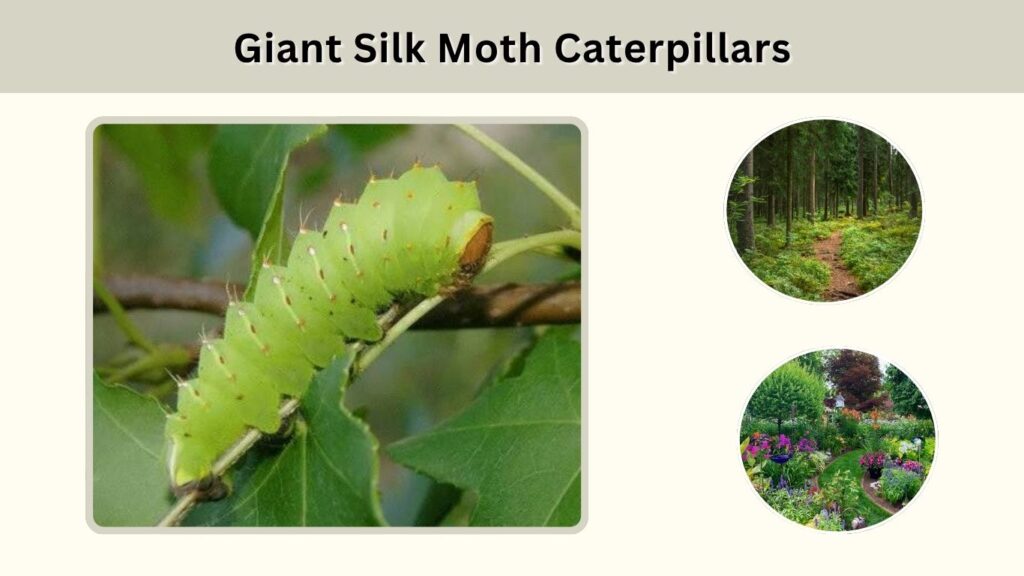
Giant silk moths are members of the Saturniidae family. Their mature caterpillars are among the largest encountered in gardens, forests and wooded neighborhoods. Despite their size, they are generally solitary and rarely occur in numbers high enough to seriously injure healthy trees.
Cecropia Giant Silk Moth Caterpillar
The cecropia caterpillar is one of the most recognizable species. Its mature body is light green or bluish-green with a dusty appearance. Red or orange knobs occur behind the head, while yellow and blue knobs run along the remaining body segments.
It feeds on many deciduous plants, including maple, willow, birch, boxelder, cherry, lilac and apple. Its strange-looking knobs do not sting or harm people.
Polyphemus Silk Moth Caterpillar
A Polyphemus caterpillar has a stout, pale-green body with sparse hairs and faint diagonal markings. Mature individuals may reach about three and a half inches long.
They feed on oak, ash, birch, maple, dogwood, willow and grape. After completing their growth, they generally spin a tough cocoon among leaves, sometimes falling to the ground with the foliage.
Luna Silk Moth Caterpillar
Luna moth caterpillars are plump and green, often with small reddish, orange or yellow spots along their sides. Their appearance can resemble a Polyphemus caterpillar, so the host plant and finer markings may be necessary for identification.
Common food plants include walnut, hickory, sweetgum, birch, persimmon and sumac. The caterpillar eventually produces a papery brown silk cocoon, often among fallen leaves.
Are Silk Moth Caterpillars Poisonous?
Most familiar giant silk moth caterpillars, including cecropia and Polyphemus caterpillars, are not poisonous and do not sting. Their knobs or sparse hairs may appear threatening, but they are generally harmless.
However, not every member of the silk moth family is safe to handle. The Io moth caterpillar has clusters of hollow or venom-bearing spines that can produce immediate burning, redness and a temporary rash when they contact skin. For this reason, an unidentified spiny caterpillar should never be picked up with bare hands.
Can You Touch a Giant Silk Moth Caterpillar?
Known non-stinging species can usually be moved carefully, but unnecessary handling should be avoided. Caterpillars are delicate, and pressure can injure their bodies or damage their gripping legs.
Never touch a caterpillar covered in branching, sharp-looking spines. When identification is uncertain, photograph it without handling it or move it with a leaf or small container.
If contact with a stinging caterpillar causes irritation, wash the area without rubbing it. Adhesive tape may help remove loose spines. Seek medical attention for severe swelling, breathing trouble, eye exposure or a widespread reaction.
What Do Silk Moth Caterpillars Eat?
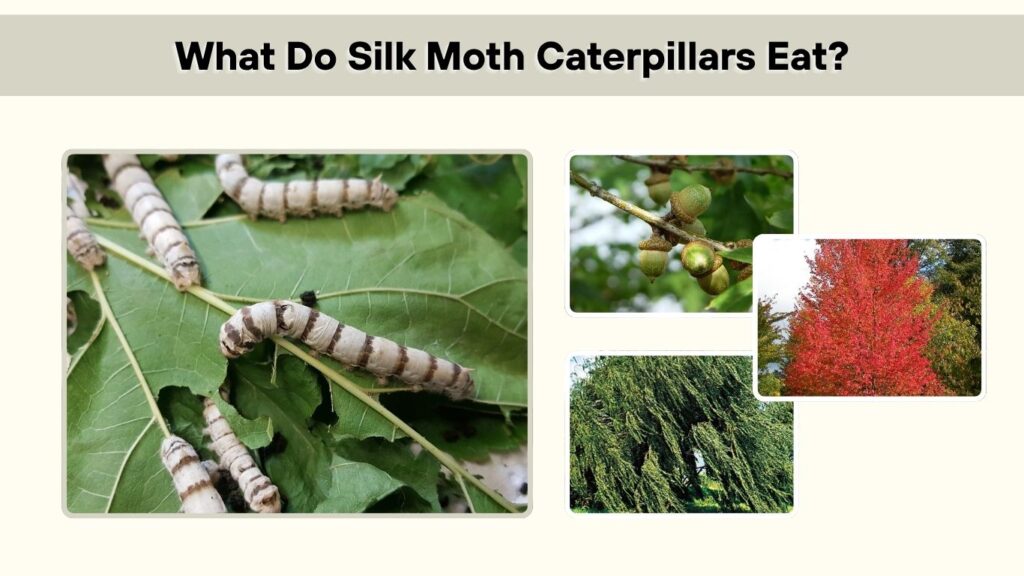
Silk moth caterpillars are herbivores that feed primarily on fresh leaves. Different species prefer different host plants, and many do poorly when moved to an unfamiliar kind of foliage.
Giant silk moth caterpillars may eat:
- Oak
- Willow
- Maple
- Birch
- Cherry
- Apple
- Hickory
- Walnut
- Sweetgum
- Sassafras
- Persimmon
- Grape
Cecropia and Polyphemus caterpillars consume foliage from numerous hardwood trees. Luna caterpillars commonly use walnut, hickory, sweetgum and related trees, while promethea caterpillars may be found on sassafras, spicebush, cherry and tulip tree.
Domestic Silk Moth Caterpillar Food
The domesticated silkworm, Bombyx mori, feeds predominantly on fresh mulberry leaves. Generations of domestication have made this species much more dependent on humans than wild silk moths.
Silkworms raised for silk require a steady supply of clean, pesticide-free mulberry foliage. Giving a wild silk moth caterpillar mulberry simply because it is called a “silkworm” may not work; its correct host plant depends on its species.
Silk Moth Caterpillar Life Cycle
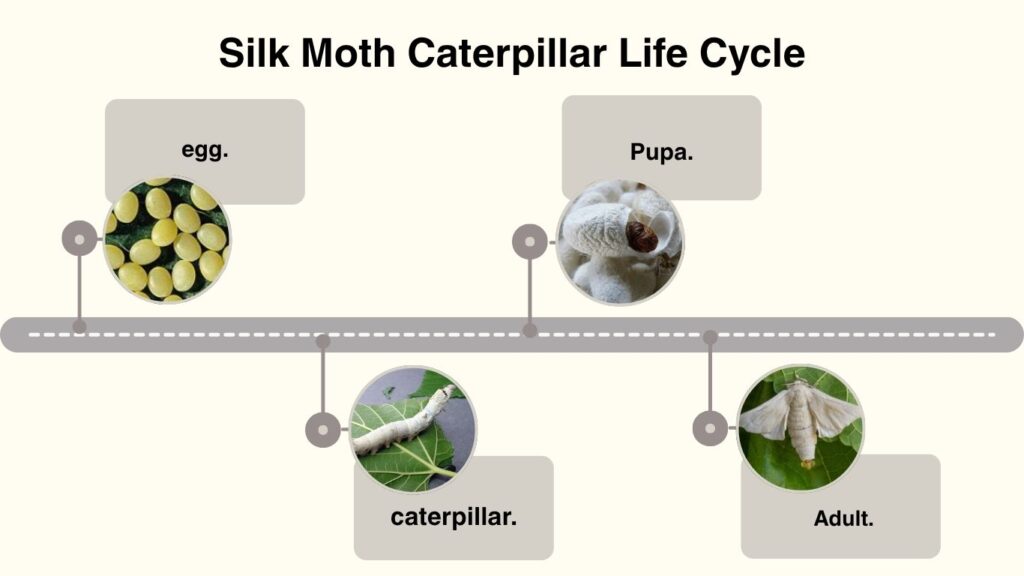
Silk moths undergo complete metamorphosis with four stages: egg, caterpillar, pupa and adult moth. The caterpillar is the primary feeding and growing stage.
Egg and Young Larva
A female moth lays eggs on or near an appropriate host plant. After hatching, the tiny caterpillars begin feeding and pass through several instars. Their skin cannot expand indefinitely, so they molt repeatedly as they become larger.
Mature Caterpillar and Cocoon
Once fully grown, the caterpillar stops eating and searches for a protected pupation site. It releases liquid silk that hardens when exposed to air, gradually building a cocoon around itself.
Cecropia cocoons are commonly attached to branches or trunks. Polyphemus cocoons may occur among leaves or on the ground, while promethea caterpillars strengthen a leaf stalk with silk before spinning a cocoon inside a curled leaf.
Pupa and Adult Moth
Inside the cocoon, the caterpillar becomes a pupa and undergoes its transformation into an adult. Species living in cold climates commonly spend winter in this protected stage and emerge when conditions become warmer.
Many adult giant silk moths have reduced mouthparts and do not feed. Their short adult lives are devoted mainly to finding a mate and laying eggs, using energy stored during the caterpillar stage.
Silk Moth Caterpillar in the Garden
Finding one large caterpillar does not normally indicate a damaging infestation. Cecropia and Polyphemus caterpillars may consume entire leaves, but they are seldom abundant enough to cause lasting injury to established trees.
Avoid spraying a caterpillar before identifying it. Wild giant silk moths are native insects that provide food for predators and contribute to local biodiversity. When relocation is necessary, move the caterpillar to another branch of the same tree species rather than placing it on an unfamiliar plant.
FAQs
Do all silk moth caterpillars make silk?
Yes. They produce silk during the larval stage, primarily to construct a cocoon around the pupa. Some species also use small amounts of silk to secure leaves, attach themselves to surfaces or strengthen the location where the cocoon will remain.
Is a silk moth caterpillar the same as a silkworm?
The terms sometimes overlap, but they are not always identical. “Silkworm” most commonly refers to the domesticated Bombyx mori. “Silk moth caterpillar” may also describe wild species such as cecropia, Polyphemus, luna and promethea caterpillars.
Do giant silk moth caterpillars bite?
They have chewing mouthparts for eating leaves but do not normally bite people. The greater concern is contact with a stinging species such as the Io moth caterpillar, whose sharp spines can cause pain and skin irritation.
Why did my silk moth caterpillar stop eating?
A mature caterpillar often stops eating shortly before it spins a cocoon. However, a young caterpillar may stop because it is preparing to molt, has been given the wrong host plant, has encountered pesticide residue or is experiencing unsuitable conditions.
What does a silk moth caterpillar turn into?
It becomes an adult moth determined by its species. A cecropia caterpillar becomes a cecropia moth, a Polyphemus caterpillar becomes a Polyphemus moth, and a domestic silkworm becomes a usually pale, flightless domesticated silk moth.