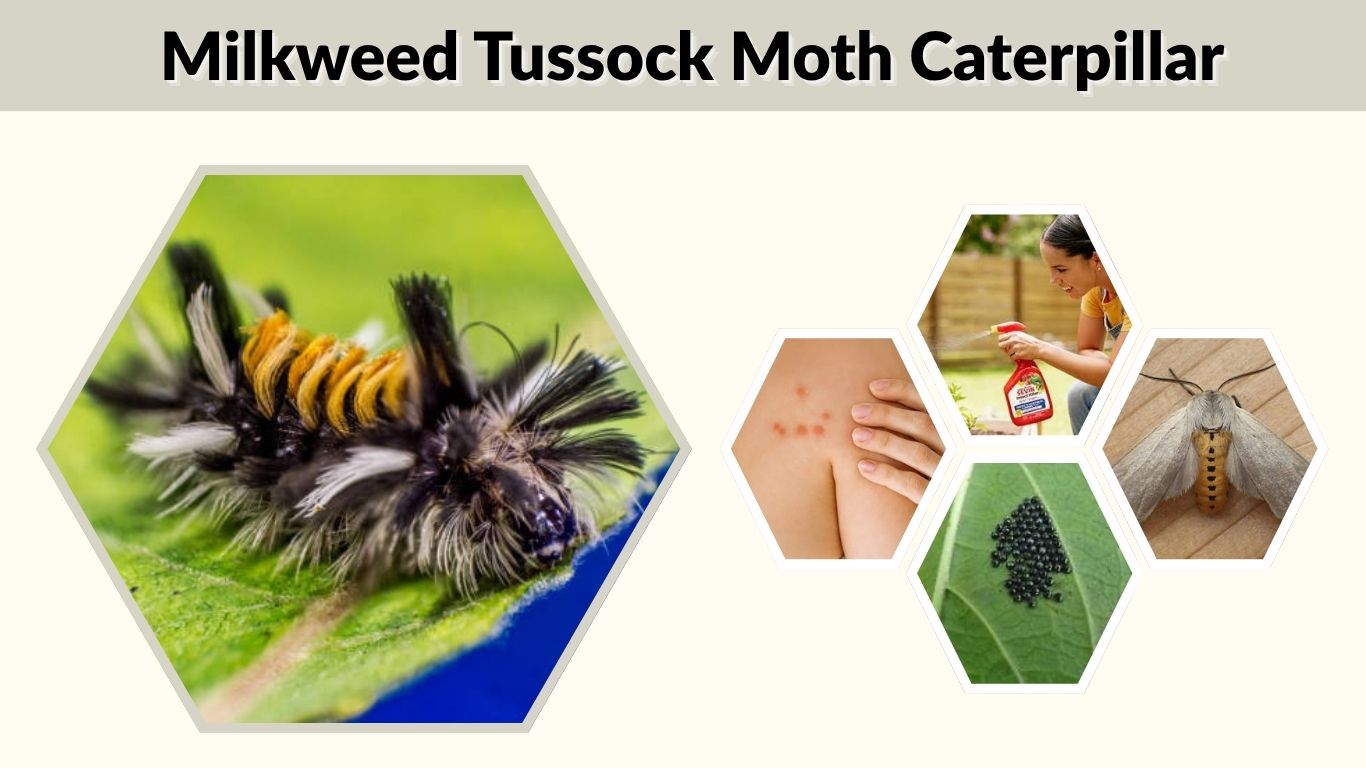
The milkweed tussock moth caterpillar (Euchaetes egle) is a shaggy, brightly colored caterpillar commonly found eating milkweed. Its black, white, and orange tufts make it easy to recognize, but they also raise questions: Is it poisonous? Can it sting? Should it be removed? This native caterpillar is an important member of the milkweed ecosystem. However, its hairs can irritate human skin, and large groups may temporarily strip leaves from milkweed plants.
Milkweed Tussock Moth Caterpillar Quick Facts
Also called the milkweed tiger moth caterpillar, this species specializes in milkweeds and dogbanes. The adult is a comparatively plain gray moth with a yellow-orange abdomen marked by black spots.
| Feature | Description |
| Scientific name | Euchaetes egle |
| Primary food plants | Milkweeds and dogbanes |
| Caterpillar colors | Black, white, orange, and sometimes yellow |
| Active season | Mainly summer through early fall |
| Human risk | Hairs may cause itching, redness, or a rash |
| Garden status | Native milkweed feeder |
| Adult appearance | Gray wings with a spotted orange abdomen |
How to Identify a Milkweed Tussock Moth Caterpillar
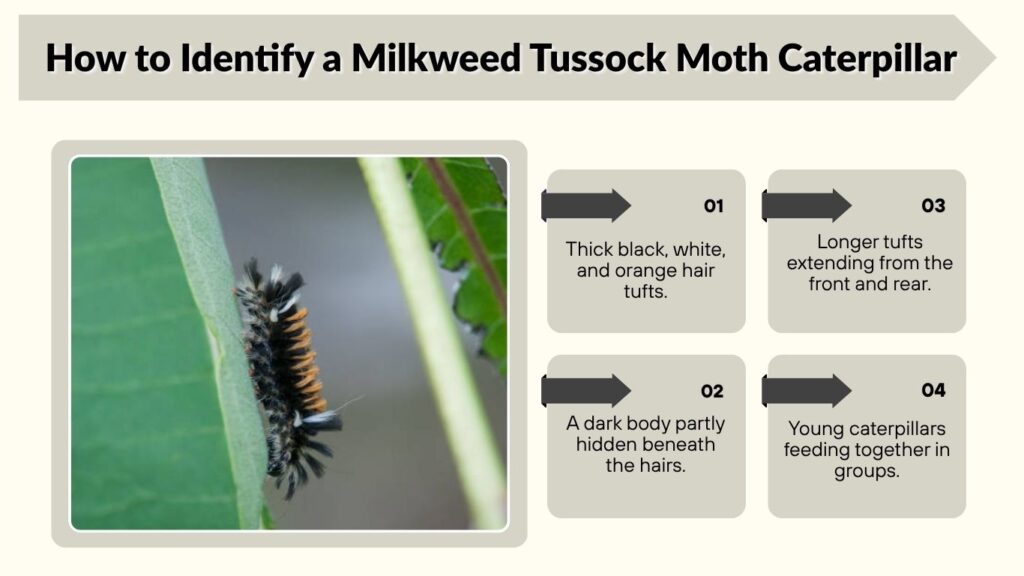
Its appearance changes significantly as it develops. Newly hatched larvae may look completely different from the colorful, hairy caterpillars commonly shown in photographs.
Key Identification Features
- Thick black, white, and orange hair tufts
- A dark body partly hidden beneath the hairs
- Longer tufts extending from the front and rear
- Young caterpillars feeding together in groups
- Skeletonized milkweed leaves
- Older caterpillars feeding alone or in pairs
Newly hatched caterpillars are pale or cream-colored with black heads. Their first stages have few noticeable hairs. By approximately the third instar, they develop the thick, multicolored tufts characteristic of the species. Older larvae usually separate from the group and begin wandering around the host plant.
Where Are They Found?
Milkweed tussock moths occur throughout much of eastern North America, including areas of the Midwest and Northeast. They inhabit fields, meadows, roadsides, gardens, and woodland edges where milkweed or dogbane grows. Caterpillars generally begin appearing during summer.
Is the Milkweed Tussock Moth Caterpillar Dangerous?
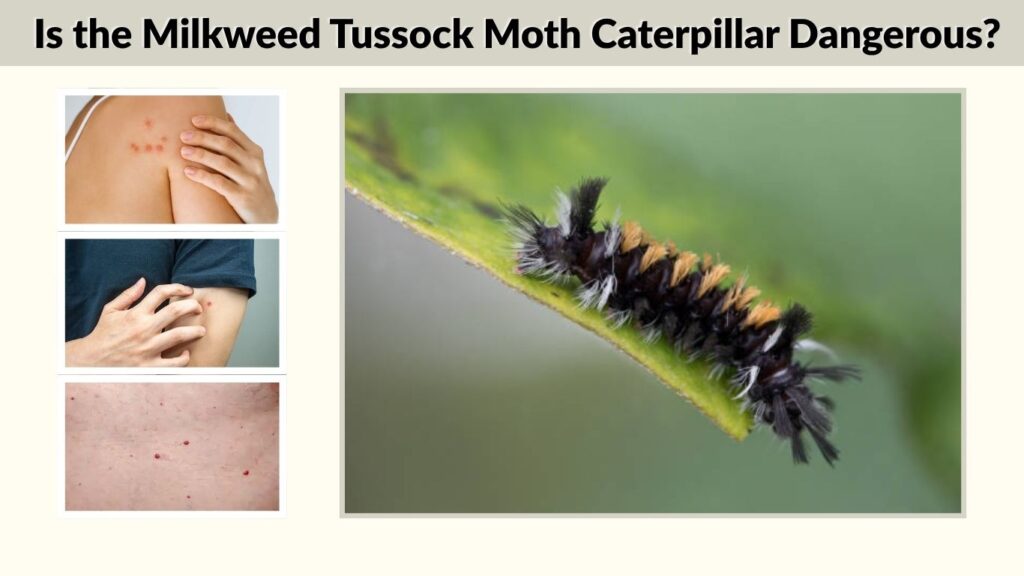
Milkweed tussock moth caterpillars are not considered a serious danger to humans, but they should not be handled with bare hands. Their fine urticating hairs can cause an uncomfortable skin reaction in some people.
Can It Sting or Bite?
This caterpillar does not possess a bee-like stinger and is not known for biting people. However, its hairs may create a prickling or burning sensation when they contact skin.
Possible symptoms include:
- Itching
- Redness
- Mild swelling
- Burning or stinging
- A localized skin rash
Reactions vary depending on skin sensitivity and the amount of contact. Children should be taught to observe the caterpillars without touching them.
Is It Poisonous or Toxic?
Milkweed tussock moth caterpillars accumulate cardiac glycosides from the milkweed leaves they consume. These plant-derived chemicals make them distasteful or toxic to many predators. Their orange-and-black coloring acts as a warning that they are an unpleasant meal.
This does not mean a caterpillar poisons people simply by being nearby. The primary human concern is irritation from its hairs. It should not be eaten, handled unnecessarily, or placed near the eyes or mouth.
Can You Touch a Milkweed Tussock Moth Caterpillar?
Touching one with bare skin is not recommended. Although the hairs may look soft, they can irritate the skin and may remain embedded after contact.
When accidental contact causes irritation:
- Do not rub or scratch the area.
- Place sticky tape over the skin and lift it away to remove loose hairs.
- Wash the affected area gently with soap and water.
- Apply a cool compress to reduce discomfort.
- Seek medical help for serious swelling, breathing difficulty, eye exposure, severe pain, or a spreading reaction.
Wear gloves and long sleeves when moving a caterpillar. Its cocoon should also be handled cautiously because hairs from the larva may be incorporated into it.
Milkweed Tussock Moth Caterpillar Stages
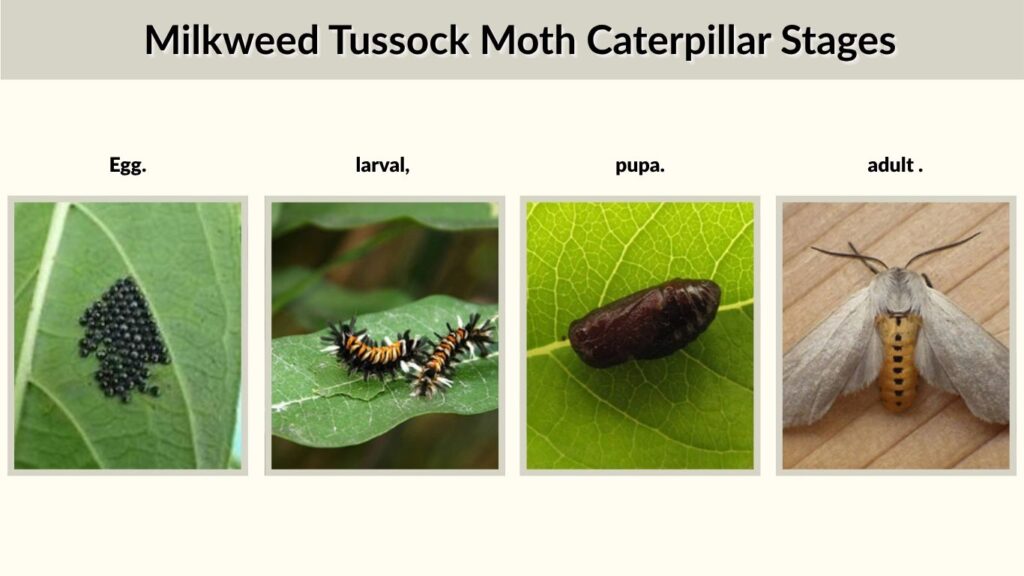
The milkweed tussock moth undergoes complete metamorphosis, developing through egg, larval, pupal, and adult stages.
Egg Stage
Female moths lay fuzzy masses or rafts of pale eggs, usually on the undersides of milkweed leaves. This differs from monarch butterflies, which normally place their eggs individually.
Early Caterpillar Stages
After hatching, the small larvae remain together and feed as a group. They eat the softer tissue between the leaf veins, leaving behind a skeletonized leaf. Early caterpillars are pale, relatively smooth, and easy to overlook.
Third Instar and Later Stages
The caterpillars molt several times as they grow. By the third instar, their black, white, and orange hair tufts are clearly visible. Mature larvae consume entire leaf sections, separate from their original group, and eventually wander away to find a pupation site.
Cocoon and Pupal Stage
A mature caterpillar drops or crawls toward the ground and spins a grayish cocoon containing some of its body hairs. In northern areas, it may spend the winter inside the cocoon before emerging as an adult. The species generally has one annual generation in northern regions but may produce additional generations farther south.
Adult Moth
The adult milkweed tussock moth has mostly gray, unmarked wings. Beneath them is a yellow-orange abdomen covered with black spots. Adults mate during the warmer months, and females return to suitable host plants to lay egg masses.
Is the Caterpillar Good or Bad for Milkweed?
The milkweed tussock moth caterpillar is a native plant-eater rather than an invasive pest. Milkweed supports an entire community of specialized insects—not only monarch butterflies. Tussock moths evolved alongside milkweed and contribute to the biodiversity of fields and gardens.
Large groups can consume most of the foliage on one or several stems. This may look severe in a small garden, but the feeding is generally temporary. Tussock moth caterpillars also tend to use older foliage, while monarch caterpillars commonly prefer younger growth, reducing direct competition.
Should You Control Milkweed Tussock Moth Caterpillars?
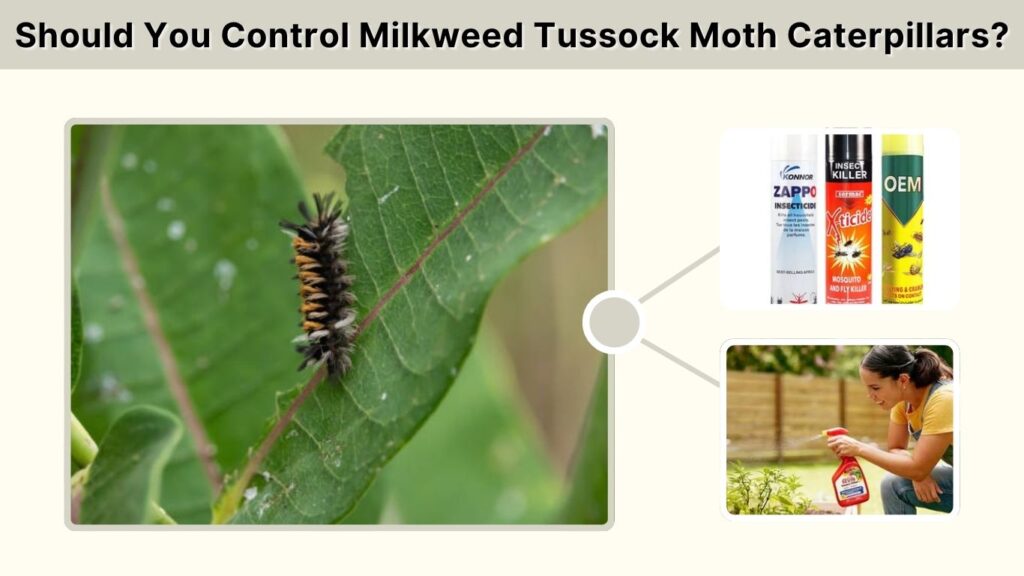
Control is usually unnecessary. Leaving the caterpillars in place helps support a diverse native insect community. Established milkweed patches can normally accommodate both monarchs and milkweed tussock moths.
Limited intervention may be appropriate when numerous caterpillars are completely consuming a very small milkweed planting. Wear gloves and gently relocate some of them to another healthy milkweed patch.
Avoid broad-spectrum insecticides. Any pesticide capable of killing tussock moth caterpillars may also kill monarch caterpillars and other beneficial insects using the plants. Growing additional native milkweed is generally a better long-term solution.
Predators and Natural Defenses
Bright colors, dense hairs, and stored milkweed chemicals help protect the caterpillars from predators. Nevertheless, predatory insects, parasitoids, birds, diseases, and other natural pressures may reduce their population.
Adult moths retain chemical defenses and can produce ultrasonic clicks associated with their unpleasant taste. These sounds help warn bats, which hunt at night by using echolocation.
FAQs
Are milkweed tussock moth caterpillars poisonous to humans?
They contain defensive chemicals obtained from milkweed, but they do not normally poison humans through ordinary contact. Their hairs are the main concern because they may cause itching, redness, burning, or a rash. Avoid handling them and never allow children or pets to put one in their mouths.
Does a milkweed tussock moth caterpillar sting?
It does not have a true stinger. However, contact with its fine hairs may create a stinging or burning sensation. The reaction is skin irritation caused by the hairs rather than a deliberate sting like one delivered by a bee or wasp.
Do milkweed tussock caterpillars harm monarchs?
They do not attack monarch eggs or caterpillars. Both species consume milkweed and may share a limited food supply, but tussock moth caterpillars often use older foliage while monarchs prefer younger growth. Planting more native milkweed provides sufficient food and habitat for both species.
What does the milkweed tussock moth caterpillar turn into?
It becomes a milkweed tussock moth, also known as a milkweed tiger moth. The adult is less colorful than the caterpillar, with mostly gray wings and a hairy yellow-orange abdomen decorated with rows of black spots.
Should I remove milkweed tussock moth caterpillars?
Usually, no. They are native insects and a natural part of the milkweed ecosystem. Leave them alone when sufficient foliage is available. When relocation is necessary, wear gloves and move them gently to another milkweed plant rather than applying insecticides.