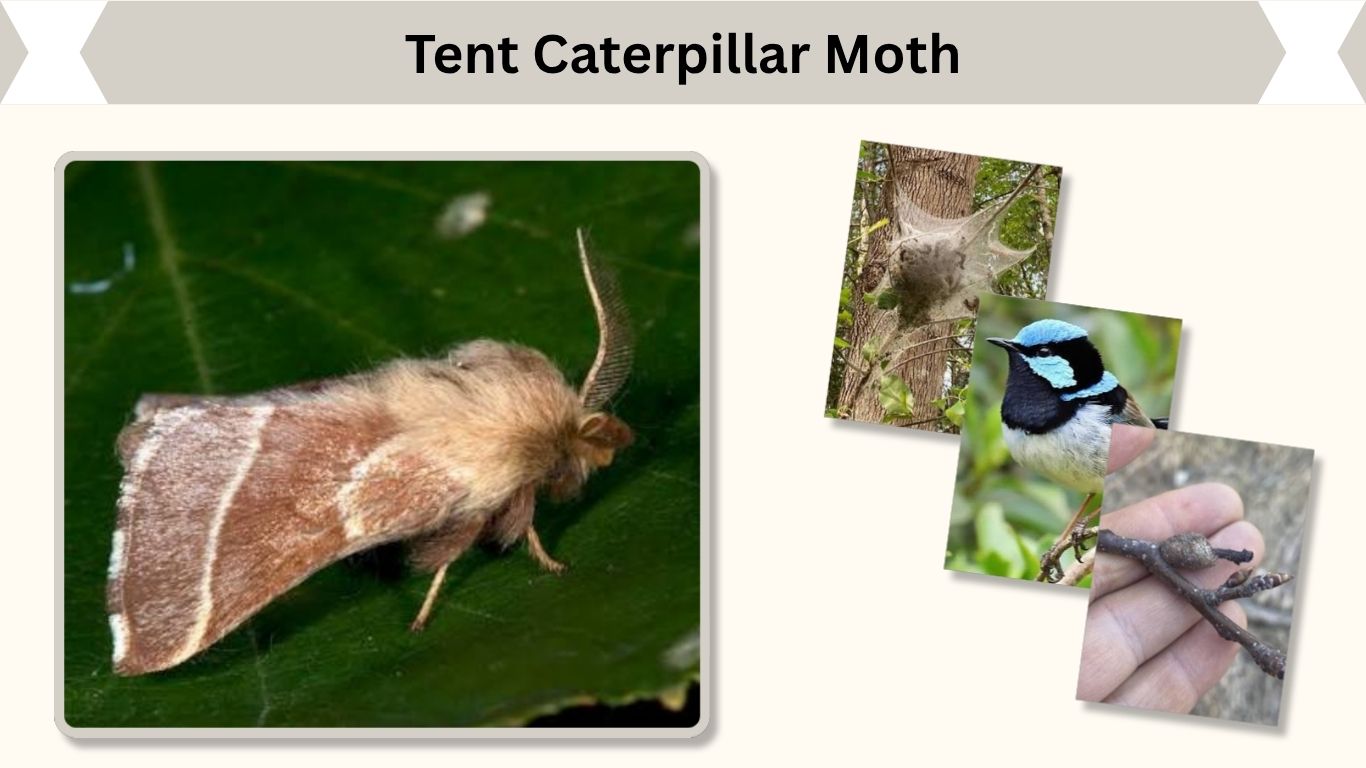
The tent caterpillar moth is best known for its larval stage, when caterpillars gather in groups and feed on tree leaves. These caterpillars are often noticed in spring because some species build visible silk tents in tree branches. Common types include the eastern tent caterpillar moth, forest tent caterpillar moth, western tent caterpillar moth, and southwestern tent caterpillar moth. They are often confused with spongy moth caterpillars, formerly called gypsy moth caterpillars.
What Is a Tent Caterpillar Moth?
A tent caterpillar moth is an adult moth in the genus Malacosoma. The moth stage is usually less noticeable than the caterpillar stage because the adults are plain brownish moths and live briefly. The caterpillars are the stage that feeds heavily, forms groups, and causes visible tree damage.
Eastern tent caterpillars create silken tents in branch forks, where they rest between feeding periods. The tent protects the colony from weather and some predators.
Common Types of Tent Caterpillar Moths
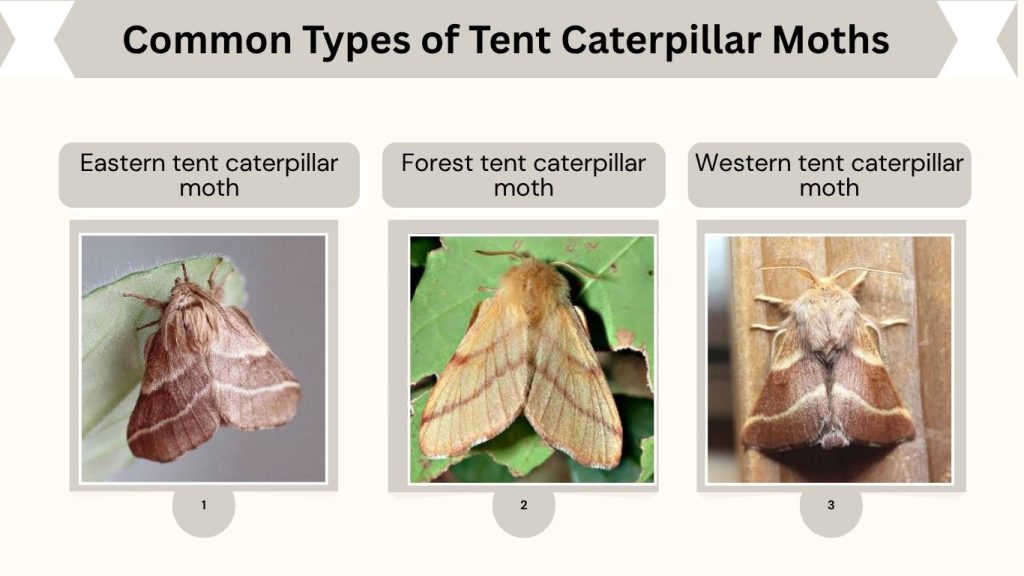
Several tent caterpillar species occur in North America. They look similar, but their habits and host plants can differ.
| Type | Scientific Name | Main Feature |
| Eastern tent caterpillar moth | Malacosoma americanum | Builds tents in branch forks |
| Forest tent caterpillar moth | Malacosoma disstria | Does not make a true tent |
| Western tent caterpillar moth | Malacosoma californicum | Common in western regions |
| Southwestern tent caterpillar moth | Malacosoma incurva | Often linked with desert or southwestern hosts |
The forest tent caterpillar name is confusing because this species does not build a true tent. Instead, larvae gather on silken mats on trunks and branches.
Eastern Tent Caterpillar Moth
The eastern tent caterpillar moth is one of the most familiar species. The caterpillars usually appear in early spring and build white silk nests in the forks of cherry, apple, crabapple, and related trees.
Identification
- Black, hairy caterpillar body
- White stripe down the back
- Blue and yellow markings along the sides
- White silk tent in a tree fork
- Often found on cherry, apple, and crabapple trees
The adult eastern tent caterpillar moth is brown to reddish-brown with two pale diagonal lines on the forewings.
Forest Tent Caterpillar Moth
The forest tent caterpillar moth is another common species, but it behaves differently from the eastern tent caterpillar. It feeds on many hardwood trees, including oak, poplar, aspen, willow, elm, and others.
Instead of making a tent, forest tent caterpillars rest together on silk patches. Their caterpillars often have pale keyhole-shaped or footprint-like marks along the back, which helps separate them from eastern tent caterpillars.
Tent Caterpillar Moth Life Cycle
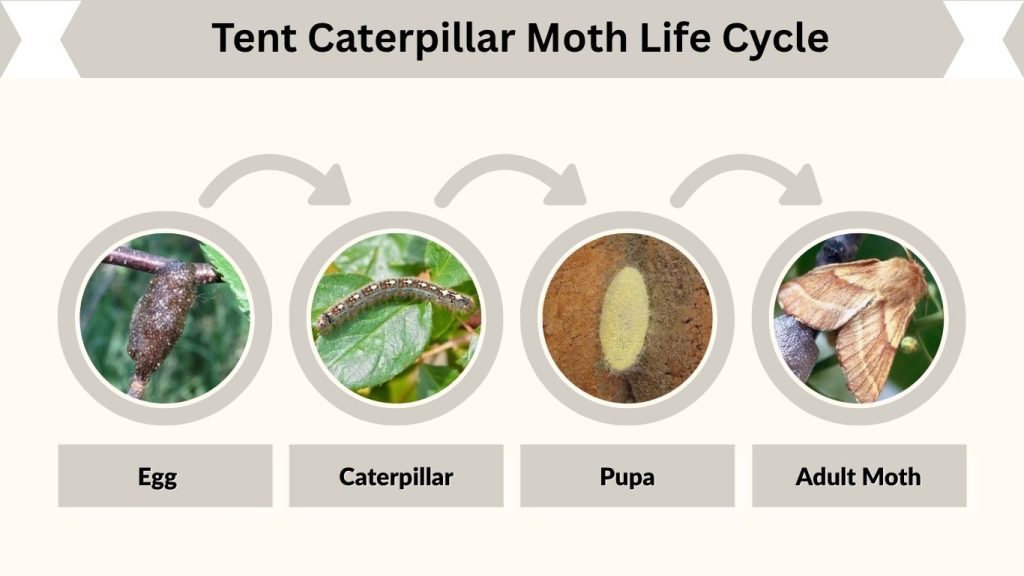
Tent caterpillar moths have one generation each year. Eggs overwinter on twigs, hatch in spring, and the young caterpillars begin feeding as leaves appear. After feeding for several weeks, mature caterpillars leave the tree to spin cocoons and pupate. Adult moths emerge later, mate, and lay eggs for the next season.
| Life Stage | What Happens |
| Egg | Overwinters on twigs or branches |
| Caterpillar | Feeds on leaves and grows in groups |
| Cocoon/Pupa | Changes into adult moth |
| Adult moth | Mates and lays eggs |
Eastern tent caterpillar egg masses may contain about 150–300 eggs and overwinter as shiny, dark bands around small branches.
What Do Tent Caterpillar Moths Eat?
Adult tent caterpillar moths do not cause tree damage. The caterpillars do the feeding. They eat young leaves, especially in spring, and may partially or heavily defoliate trees during outbreaks.
Eastern tent caterpillars prefer plants in the rose family, especially cherry, apple, and crabapple. Forest tent caterpillars feed on a wider range of hardwood trees.
Tent Caterpillar Moth Damage
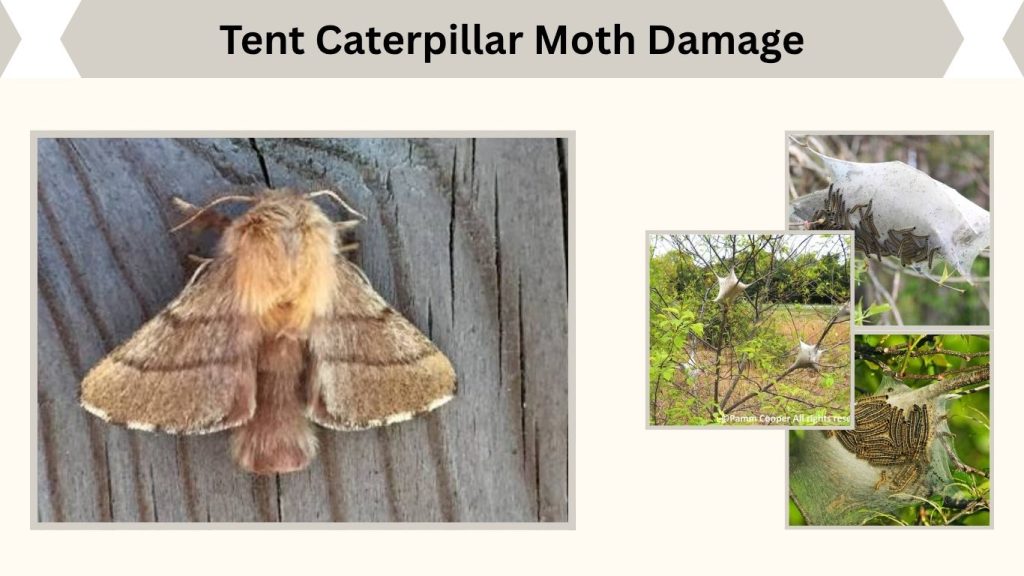
Tent caterpillar damage is usually most visible as missing leaves, chewed foliage, and silk nests in trees. Healthy mature trees often recover after light to moderate feeding, especially if damage happens early in the season.
Young trees, stressed trees, or trees repeatedly defoliated may suffer more. Heavy outbreaks can make trees look bare for a short time, but the long-term risk depends on tree health, species, drought, disease, and repeated feeding.
Tent Caterpillar vs Gypsy Moth or Spongy Moth
Many people search for tent caterpillars vs gypsy moths, but the current official common name for Lymantria dispar is spongy moth. The name was adopted by the Entomological Society of America in 2022.
| Feature | Tent Caterpillar | Spongy Moth |
| Nest | Eastern species makes tents | Does not make silk tents |
| Feeding | Often spring feeding | Heavy defoliator of many trees |
| Caterpillar marks | Stripes or keyhole marks | Blue and red dot pairs |
| Egg masses | On twigs or branches | Sponge-like egg masses |
| Status | Often native species | Invasive in North America |
Spongy moth caterpillars feed on more than 300 species of trees and shrubs, making them a major forest pest in North America.
Tent Caterpillar vs Browntail Moth
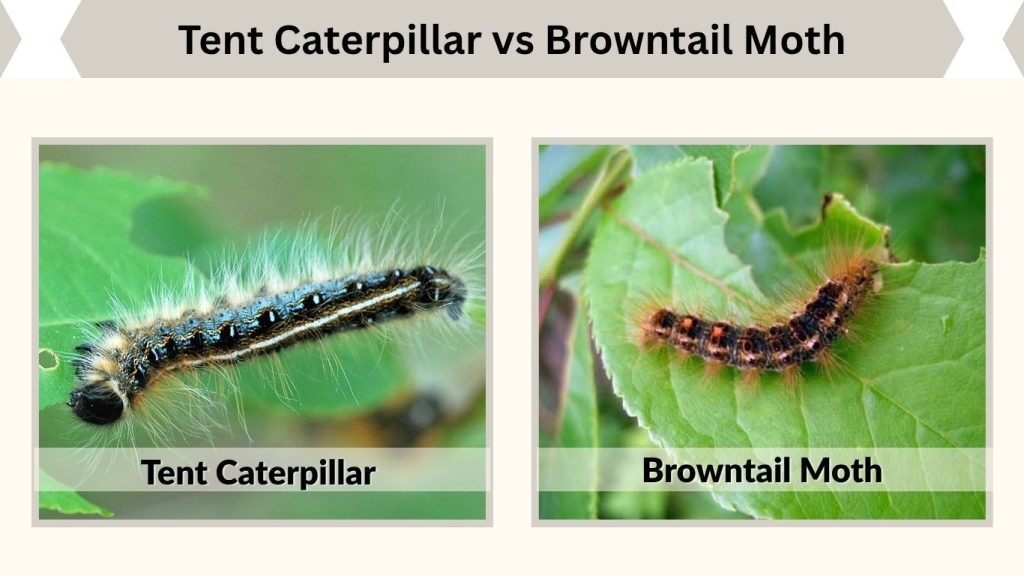
Browntail moth caterpillars are different from tent caterpillars. Browntail moth caterpillars can cause skin irritation from toxic hairs, while tent caterpillars are mainly known as leaf-feeding pests. If you see webbing, do not rely only on the nest shape. Check caterpillar markings, host tree, season, and local extension guidance before choosing control.
Tent Caterpillar Moth Control
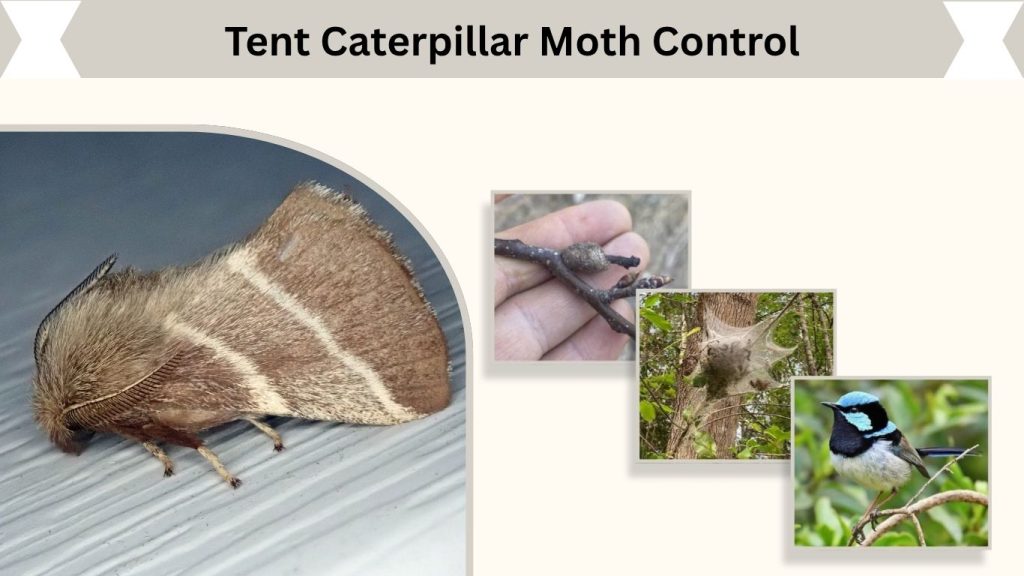
Control is easiest when nests are small and caterpillars are young. In many cases, light infestations do not need chemical treatment.
Control Methods
- Prune out small tents when practical
- Remove egg masses from twigs in winter
- Avoid burning nests in trees
- Encourage birds and natural predators
- Use targeted treatment only when needed
- Contact a local arborist for heavy outbreaks
Do not spray broadly without identifying the caterpillar first. Tent caterpillars, fall webworms, spongy moth caterpillars, and browntail moth caterpillars need different management decisions.
Are Tent Caterpillar Moths Poisonous?
Tent caterpillar moths are not usually treated as dangerous stinging caterpillars like puss caterpillars. However, it is still better not to handle hairy caterpillars with bare hands because hairs, frass, or webbing may irritate sensitive skin.
Pets and livestock should be kept away from heavy caterpillar activity. If a tree has a major infestation near animals, ask a local extension office or veterinarian for region-specific advice.
FAQs
What does a tent caterpillar moth look like?
The adult tent caterpillar moth is usually brown, tan, or reddish-brown and may have pale bands or lines on the wings. The caterpillar stage is more noticeable because it is hairy, patterned, and often gathers in groups on trees.
Do tent caterpillar moths make nests?
The eastern tent caterpillar makes visible silk tents in branch forks. However, the forest tent caterpillar does not make a true tent, even though its name suggests it does. It rests on silk mats instead.
Are tent caterpillars the same as gypsy moths?
No. Tent caterpillars are different from spongy moth caterpillars, formerly called gypsy moth caterpillars. Tent caterpillars may form silk tents, while spongy moth caterpillars do not. Spongy moths are also invasive forest pests in North America.
What trees do tent caterpillars eat?
Eastern tent caterpillars commonly feed on cherry, apple, crabapple, and related trees. Forest tent caterpillars feed on many hardwoods, including oak, aspen, poplar, willow, and elm. Host plants can vary by species and region.
How do you get rid of tent caterpillars?
Remove small tents or egg masses by hand or pruning when practical. Avoid burning nests because it can damage trees. For heavy infestations, identify the species first and ask a local extension office or arborist about safe treatment options.