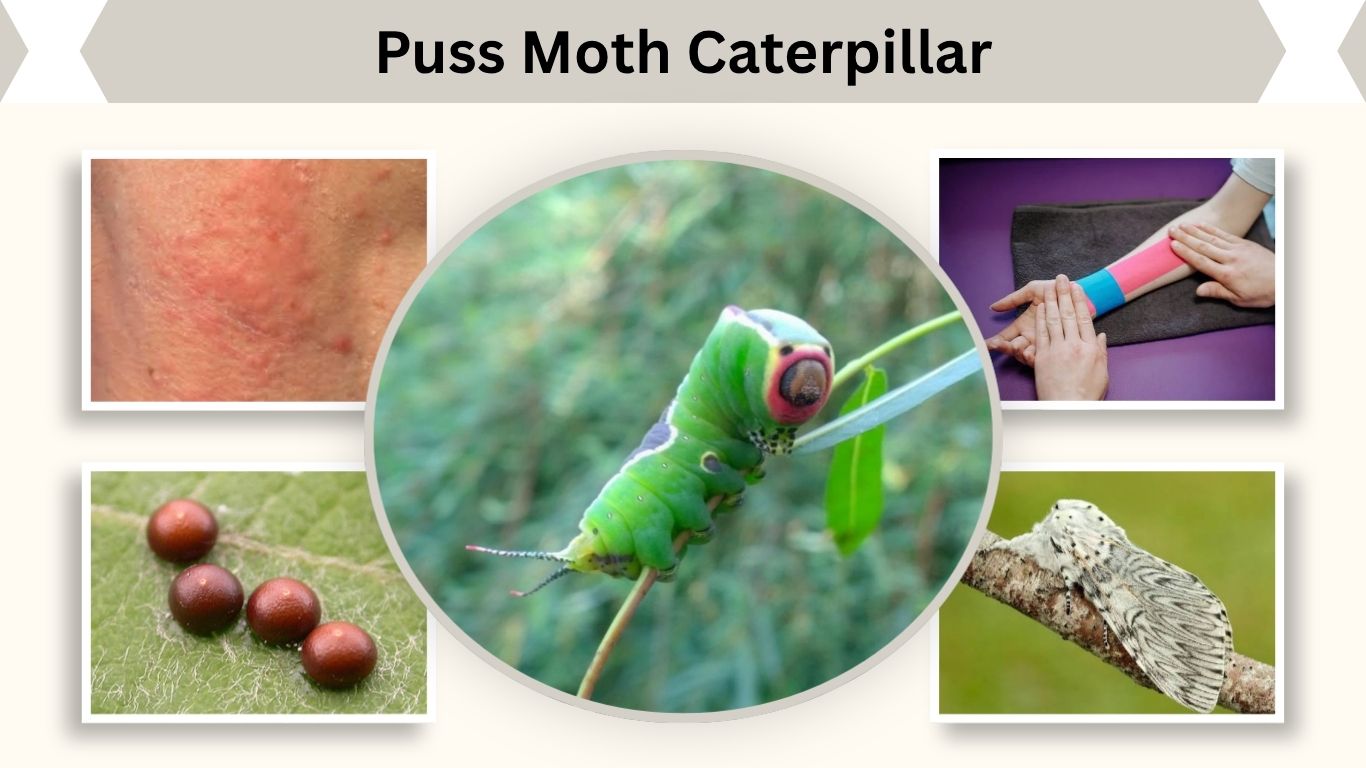
The name “puss moth caterpillar” can refer to two different caterpillars. In North America, it usually means the furry puss caterpillar, the larva of the southern flannel moth. This caterpillar looks soft, but it hides venomous spines under its hair. In the UK and Europe, “puss moth caterpillar” usually refers to the green caterpillar of Cerura vinula, known for its defensive posture and ability to squirt formic acid when threatened.
What Is a Puss Moth Caterpillar?
A puss moth caterpillar is best known for its unusual appearance. The North American puss caterpillar looks like a tiny furry patch, while the European puss moth caterpillar looks green, bold, and almost cartoon-like.
Because the same common name is used for different species, location matters. In Texas, Florida, Louisiana, and other southern U.S. states, people usually mean the venomous southern flannel moth caterpillar. In the UK, “puss moth caterpillar” more often means the European puss moth caterpillar.
Puss Moth Caterpillar Identification
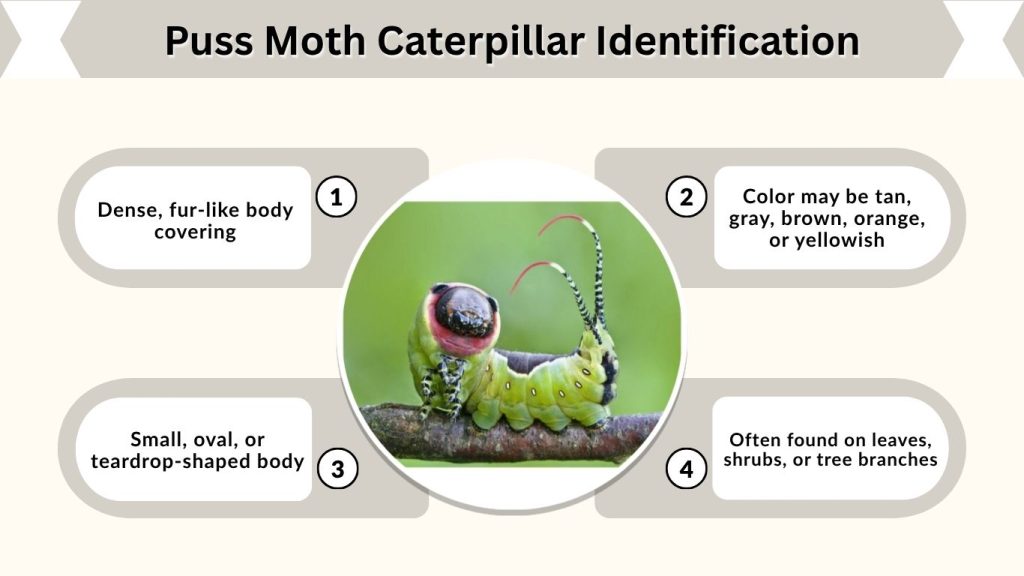
The North American puss caterpillar is easy to mistake for something harmless because it looks soft and fluffy. However, the dangerous spines are hidden beneath the outer hairs.
Key Identification Features
- Dense, fur-like body covering
- Color may be tan, gray, brown, orange, or yellowish
- Small, oval, or teardrop-shaped body
- Often found on leaves, shrubs, or tree branches
- Venomous spines hidden under the “fur”
- Larva of the southern flannel moth
The European puss moth caterpillar looks very different. It is usually green, has a large-looking head area, and raises the front of its body when disturbed. It can also wave twin tail-like structures as a warning.
Is the Puss Moth Caterpillar Poisonous?
The North American puss caterpillar is venomous, not poisonous in the usual sense. That means it causes harm through contact with venomous spines rather than by being eaten. When the caterpillar is pressed against the skin, the hairs can embed venomous spines and cause intense pain.
The adult southern flannel moth does not sting like the caterpillar. The danger is mainly during the larval stage, when the caterpillar carries its defensive spines.
Puss Moth Caterpillar Sting
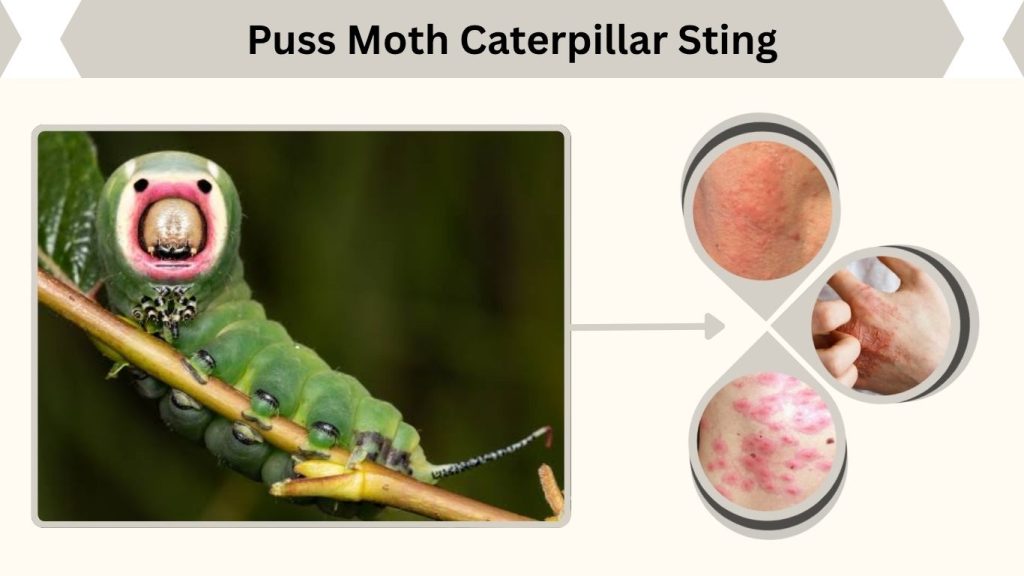
A puss moth caterpillar sting can be very painful. Many people describe it as an immediate burning sensation. A rash, swelling, redness, or a grid-like pattern may appear where the spines touched the skin.
Common Sting Symptoms
- Severe burning pain
- Redness or rash
- Swelling around the sting area
- Itching or irritation
- Headache
- Nausea
- Fever in some cases
- Difficulty breathing in severe reactions
Merck notes that pain often improves within about an hour, but some reactions can be more serious, including swelling, nausea, and breathing difficulty.
Puss Moth Caterpillar Sting Treatment
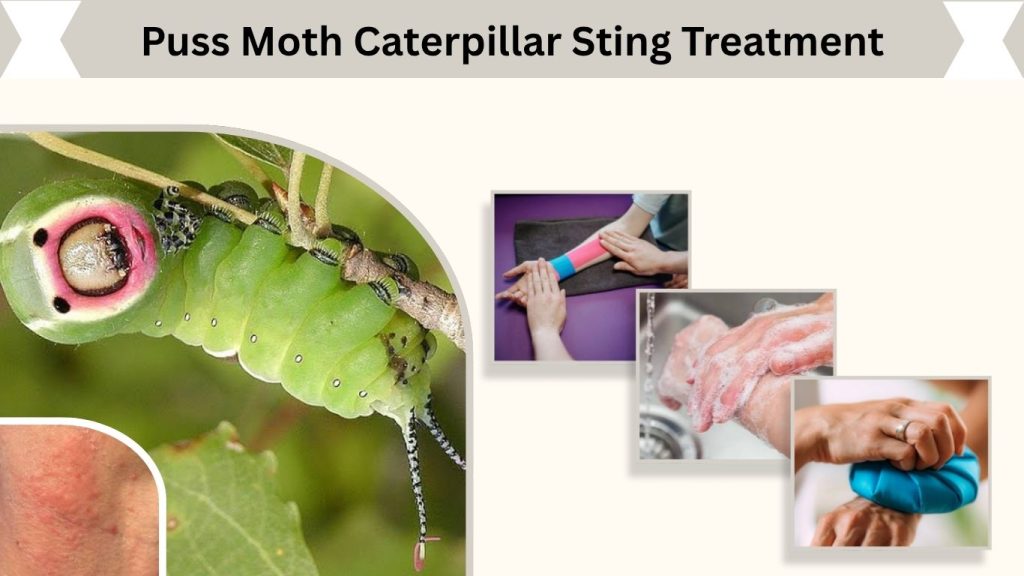
If someone touches a puss caterpillar, avoid rubbing the area because that may push spines deeper into the skin. Basic first aid focuses on removing spines and reducing pain.
What to Do After a Sting
- Use tape to gently lift spines from the skin
- Wash the area with soap and water
- Apply an ice pack to reduce pain
- Use an oral antihistamine for itching or burning
- Seek medical help if symptoms worsen
- Get urgent care for breathing trouble or widespread allergic symptoms
Texas A&M AgriLife recommends using tape to remove irritating spines and applying an ice pack. It also advises seeing a physician immediately for allergic reactions such as generalized itching or difficulty breathing.
Where Do Puss Moth Caterpillars Live?
The North American puss caterpillar is most commonly associated with the southern United States. It is often reported in places like Texas, Florida, Louisiana, and nearby warm regions.
It may be found on trees and shrubs in yards, parks, gardens, and wooded areas. People often encounter it while gardening, trimming plants, or walking under trees.
The European puss moth caterpillar is found in parts of Europe and the UK. Butterfly Conservation notes that its caterpillars can be found from July to September and may feed on host plants before pupating in a hard cocoon.
Life Cycle of the Puss Moth Caterpillar
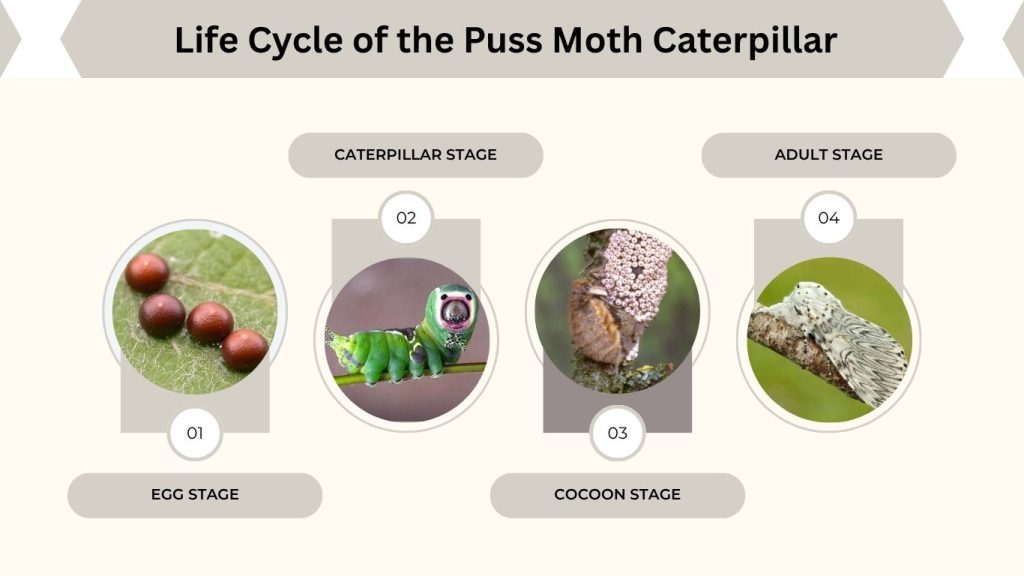
The life cycle includes egg, caterpillar, cocoon or pupa, and adult moth. The caterpillar stage gets the most attention because it is the stage most likely to be noticed by people.
| Stage | What Happens |
| Egg | Adult moth lays eggs on host plants |
| Caterpillar | Larva feeds and grows |
| Cocoon/Pupa | Caterpillar changes inside a protective case |
| Adult moth | Moth emerges and reproduces |
The North American puss caterpillar turns into the southern flannel moth. The European puss moth caterpillar turns into the adult puss moth, Cerura vinula.
Puss Moth Caterpillar Cocoon
The cocoon is part of the transformation from caterpillar to adult moth. The European puss moth caterpillar forms a hard cocoon on a tree trunk or post, using material that includes wood chewed by the larva.
For the southern flannel moth, the caterpillar also pupates before emerging as an adult moth. The adult moth is fuzzy, but it is not the same danger as the venomous caterpillar stage.
Puss Moth Caterpillar vs European Puss Moth Caterpillar
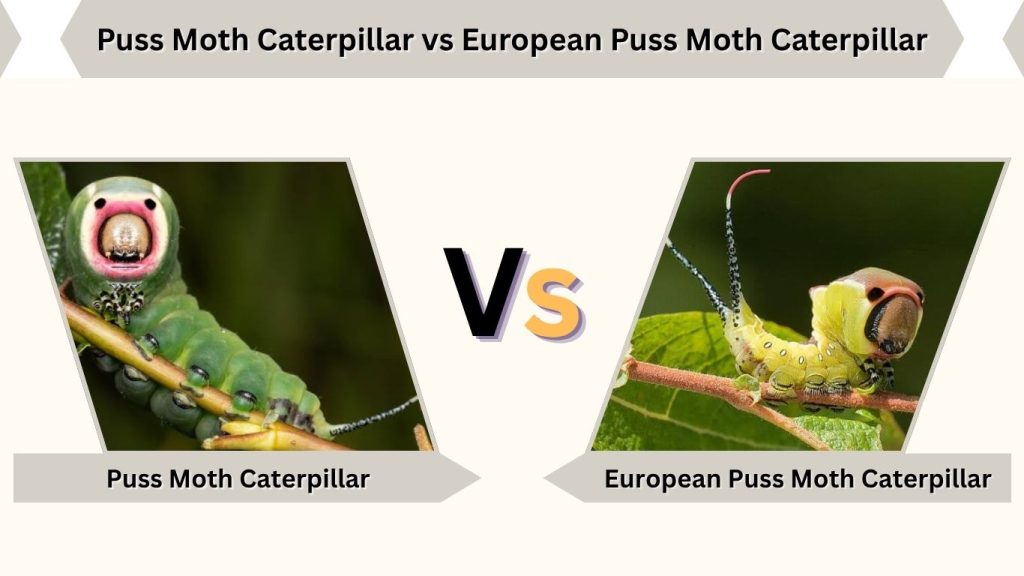
These two caterpillars are often confused because of the shared common name.
| Feature | North American Puss Caterpillar | European Puss Moth Caterpillar |
| Adult moth | Southern flannel moth | Puss moth |
| Scientific name | Megalopyge opercularis | Cerura vinula |
| Appearance | Furry, tan to brown | Green, bold-looking |
| Main defense | Venomous spines | Warning pose and formic acid |
| Common region | Southern U.S. | UK and Europe |
How to Avoid Puss Moth Caterpillars
Avoid touching any furry, unusual, or brightly colored caterpillar. Children should be taught not to pick up caterpillars, even if they look soft. Gardeners should wear gloves when trimming trees, shrubs, or plants in areas where puss caterpillars may occur.
Safety Tips
- Do not touch furry caterpillars barehanded
- Wear gloves while gardening
- Check outdoor chairs, railings, and plants
- Teach children to observe, not handle
- Keep pets away from unknown caterpillars
- Contact pest control if many appear around a home
FAQs
What does a puss moth caterpillar turn into?
In North America, the puss caterpillar turns into the southern flannel moth. In the UK and Europe, the green puss moth caterpillar turns into the adult puss moth, Cerura vinula. The exact answer depends on the region and species.
Is a puss moth caterpillar sting dangerous?
A puss moth caterpillar sting can be very painful and may cause burning, rash, swelling, nausea, or headache. Most cases are localized, but severe allergic reactions can happen. Breathing difficulty, worsening symptoms, or widespread reaction needs urgent medical care.
Can a puss moth caterpillar bite?
People often say “bite,” but the North American puss caterpillar usually injures through venomous spines, not true biting. When the hairs touch skin, hidden spines can break off and inject venom, causing pain and irritation.
Where are puss moth caterpillars found?
The North American puss caterpillar is commonly reported in the southern United States, including states such as Texas and Florida. The European puss moth caterpillar is found in the UK and parts of Europe, especially around suitable host plants.
Does the European puss moth caterpillar spit acid?
Yes, the European puss moth caterpillar can squirt formic acid as a defense when threatened. It may first raise its head and wave tail-like structures as a warning before using this stronger defense.