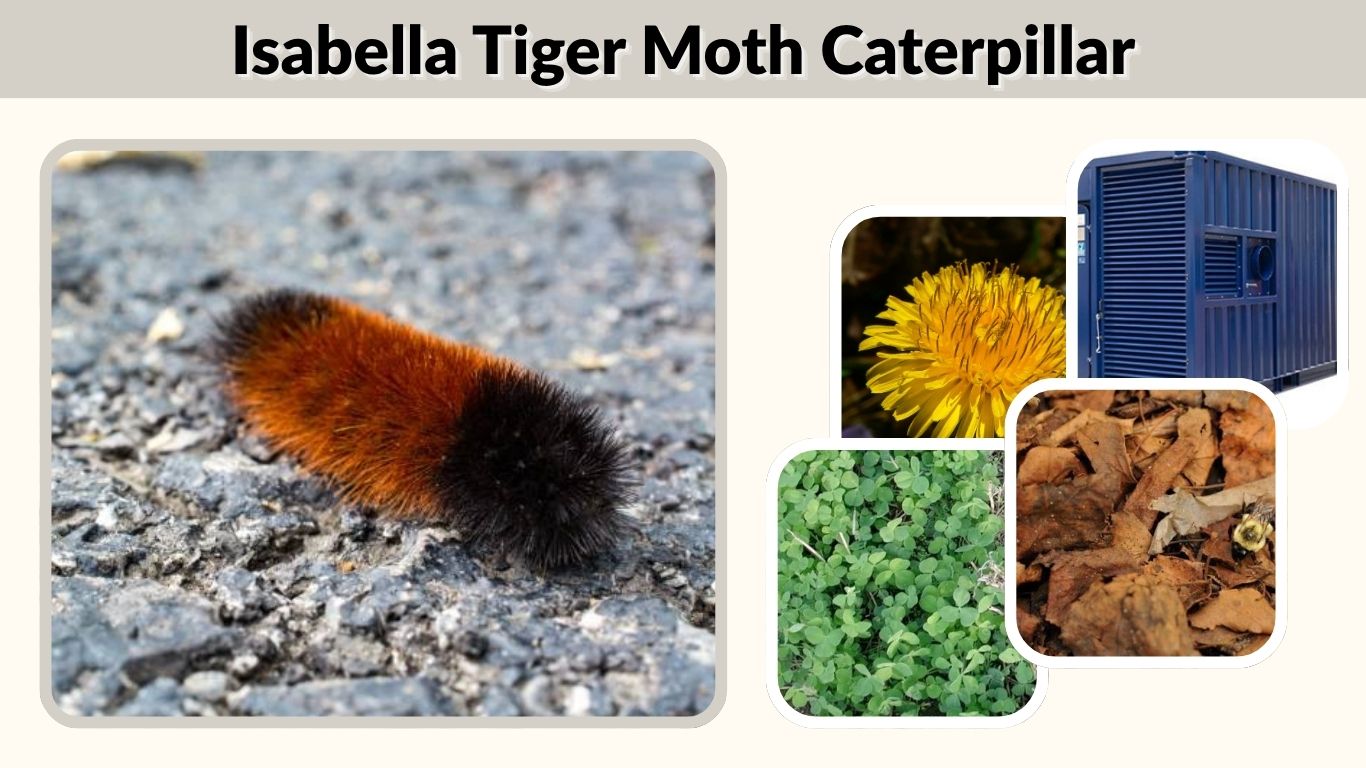
The Isabella tiger moth caterpillar is better known as the banded woolly bear caterpillar or simply the woolly bear. It is the larval stage of the Isabella tiger moth, Pyrrharctia isabella. This fuzzy caterpillar is famous for its black ends and rusty brown middle band. Many people notice it crawling across roads, lawns, gardens, and leaf litter in fall. Although it looks spiny, it is generally harmless, and its winter-predicting reputation is more folklore than science.
What Is an Isabella Tiger Moth Caterpillar?
The Isabella tiger moth caterpillar is the young stage of the Isabella tiger moth. It belongs to the family Erebidae, a group that includes many tiger moths and woolly bear caterpillars.
This caterpillar is common in much of the United States and Canada. It is often seen in late summer and fall when it searches for shelter before winter. The larval form is called the banded woolly bear because of its fuzzy body and dark-brown color pattern.
Category of Organism
- Common name: Isabella tiger moth caterpillar
- Other names: Banded woolly bear, woolly bear caterpillar, woolly worm
- Scientific name: Pyrrharctia isabella
- Order: Lepidoptera
- Family: Erebidae
- Adult form: Isabella tiger moth
- Type: Insect larva
Isabella Tiger Moth Caterpillar Identification
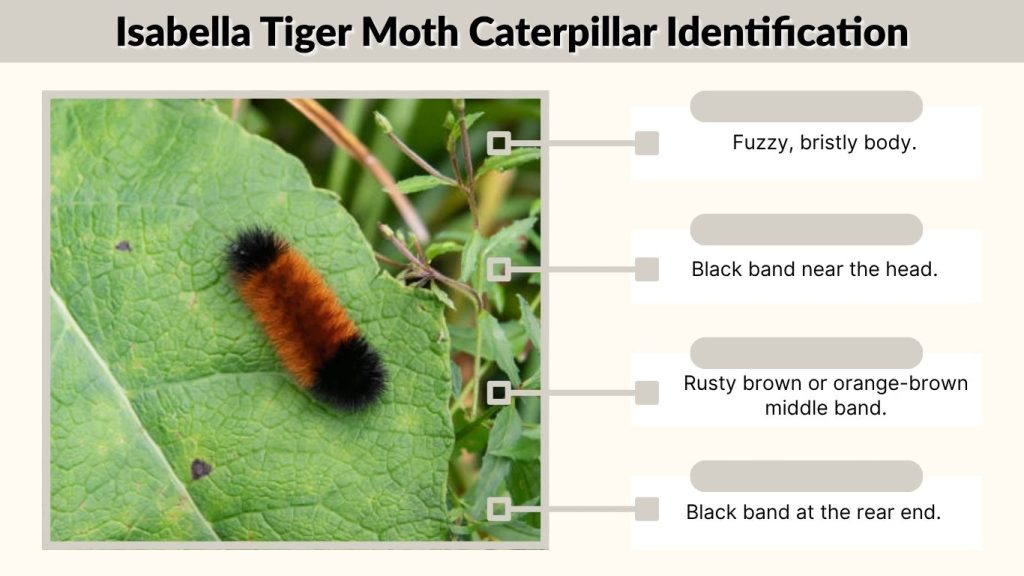
The Isabella tiger moth caterpillar is one of the easiest woolly bear caterpillars to recognize. It has a fuzzy body with black bands at both ends and a reddish-brown or rusty band across the middle.
The amount of black and brown can vary between individuals. Younger caterpillars may look darker, while older caterpillars may show a wider brown band. This color change is one reason the winter prediction myth is unreliable.
Identification Features
- Fuzzy, bristly body
- Black band near the head
- Rusty brown or orange-brown middle band
- Black band at the rear end
- Cylindrical body shape
- Curls into a ball when disturbed
- Usually seen crawling on the ground in fall
| Feature | Description |
| Body color | Black at both ends, rusty brown in the middle |
| Texture | Hairy or woolly-looking |
| Size | Usually medium-sized for a caterpillar |
| Defense behavior | Curls into a tight ball |
| Adult form | Yellow-orange Isabella tiger moth |
Is the Isabella Tiger Moth Caterpillar Poisonous?
The Isabella tiger moth caterpillar is not considered poisonous to humans. It does not inject venom, and its hairs are not the same as the irritating hairs of some dangerous caterpillars. North Carolina State Extension describes banded woolly bear caterpillars as harmless.
However, people with sensitive skin may still feel mild irritation after handling fuzzy caterpillars. The bristles can feel prickly, especially if rubbed against the skin. It is better to observe the caterpillar gently instead of handling it often.
Safety Notes
- It does not sting.
- It does not bite people.
- It is not venomous.
- It is not a dangerous household pest.
- Sensitive skin may react to the bristles.
- Children should be taught to observe it gently.
What Does an Isabella Tiger Moth Caterpillar Eat?
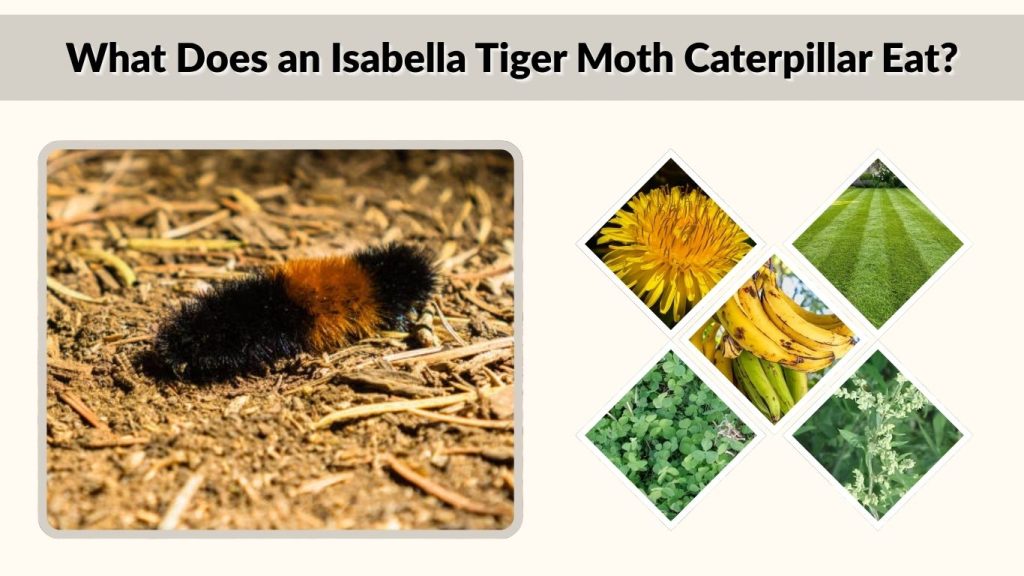
The Isabella tiger moth caterpillar is a generalist feeder, which means it can eat many kinds of plants. It commonly feeds on low-growing weeds, herbs, grasses, and leaves from various plants. The species is known to consume many plant species, which helps explain why it can live in many habitats.
It usually does not need one exact host plant like some butterfly caterpillars. This makes it easier to survive in fields, gardens, meadows, roadsides, and open woodland edges.
Common Food Plants
- Dandelion
- Plantain
- Clover
- Grass
- Nettles
- Dock
- Lamb’s quarters
- Asters
- Goldenrod
- Low-growing herbaceous plants
- Some tree and shrub leaves
Isabella Tiger Moth Caterpillar Habitat
Isabella tiger moth caterpillars live in many open and semi-open habitats. They are often found where weeds, grasses, and low plants grow. Their flexible diet allows them to survive in different environments across North America.
They are especially noticeable in fall when they leave feeding areas and crawl across open ground in search of protected places to overwinter.
Common Habitats
- Meadows
- Gardens
- Lawns
- Roadsides
- Fields
- Pastures
- Forest edges
- Weedy areas
- Leaf litter
- Parks and yards
Habitat Range in the United States
The Isabella tiger moth caterpillar is widespread in the United States and also occurs through Canada. It is especially familiar in cooler and temperate regions, where people often see woolly bears in autumn.
It can appear in many states because it is not limited to one rare habitat. As long as there are suitable food plants and places to hide for winter, the caterpillar can survive.
Isabella Tiger Moth Caterpillar in Arizona
In Arizona, Isabella tiger moth caterpillars may be less commonly noticed than in cooler northern states, but woolly bear-type caterpillars can still occur in suitable habitats. They are more likely to be found where there is enough vegetation and moisture, such as gardens, higher elevations, irrigated areas, or seasonal growth after rain.
Because Arizona has many different habitats, from desert valleys to mountain forests, caterpillar sightings can vary by location and season.
Isabella Tiger Moth Caterpillar Life Cycle
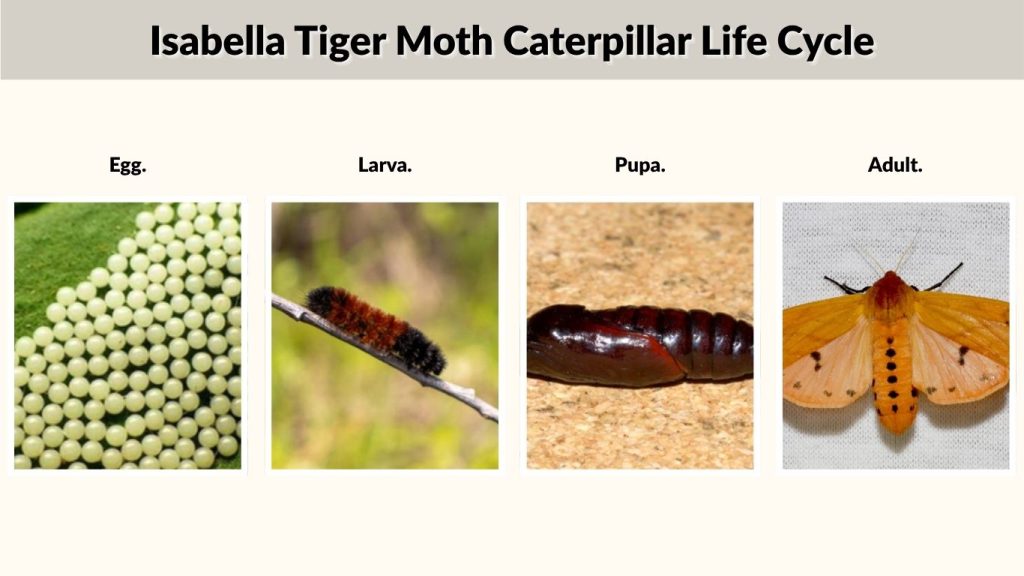
The Isabella tiger moth has a complete life cycle: egg, larva, pupa, and adult. The caterpillar stage is the stage people notice most often.
| Life Stage | What Happens |
| Egg | Female moth lays eggs on or near host plants |
| Caterpillar | Woolly bear feeds and grows |
| Winter stage | Caterpillar hides and survives cold weather |
| Cocoon/pupa | Caterpillar forms a cocoon and pupates |
| Adult moth | Isabella tiger moth emerges, mates, and lays eggs |
Egg Stage
Female Isabella tiger moths lay eggs on or near suitable food plants. According to North Carolina State Extension, Isabella moths may lay eggs in batches of 100 or more.
Caterpillar Stage
The caterpillar feeds on different plants and grows through several molts. By fall, it is often seen crawling across paths, driveways, and roads. At this time, it may be looking for a sheltered winter site.
Cocoon and Pupa
After overwintering, the caterpillar becomes active again in spring. It later forms a cocoon using silk and its own hairs. Inside the cocoon, it changes into a pupa before emerging as an adult moth.
Isabella Tiger Moth Caterpillar Adaptations
The Isabella tiger moth caterpillar has several useful adaptations. Its curled defensive posture makes it harder for predators to attack soft body parts. Its bristly hairs may also make it less appealing to some predators.
One of its most impressive adaptations is cold tolerance. Research notes that Pyrrharctia isabella overwinters in leaf litter and can survive freezing conditions.
Helpful Adaptations
- Fuzzy hairs for protection
- Curling behavior when disturbed
- Flexible diet
- Ability to overwinter as a caterpillar
- Cold-hardiness in freezing conditions
- Dark coloration that may absorb warmth
Can Isabella Tiger Moth Caterpillars Predict Winter?
The woolly bear caterpillar is famous in folklore for “predicting” winter. Some people believe a wider black band means a harsh winter, while a wider brown band means a milder winter.
Scientifically, this is not a reliable weather forecast. The National Weather Service explains that woolly bear winter predictions are folklore, with different versions of the belief depending on the band pattern or travel direction.
The caterpillar’s color can be affected by age, growth stage, and individual variation. Older caterpillars may show more brown, so the band pattern is not a dependable winter signal.
Isabella Tiger Moth Caterpillar Care
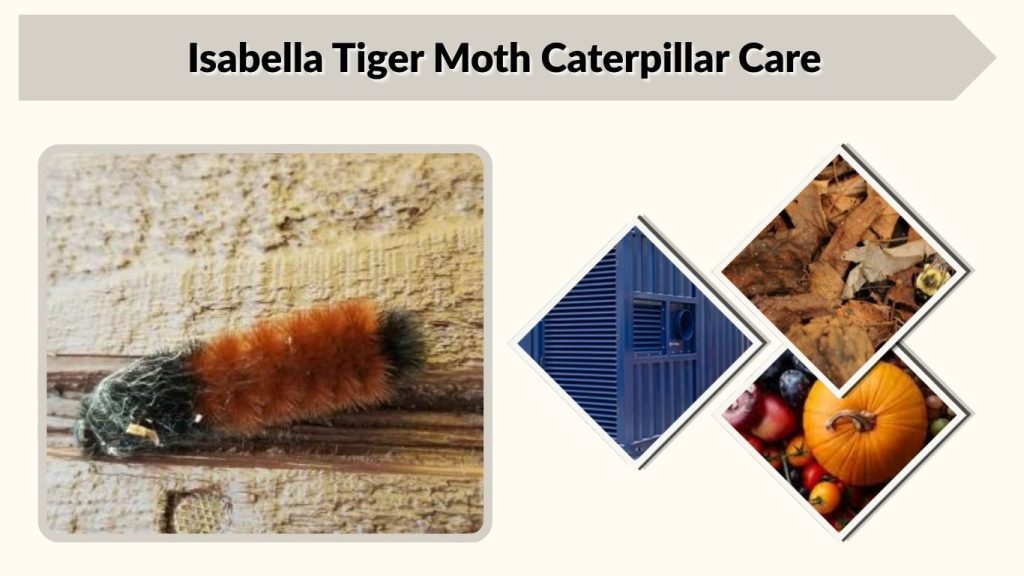
If you find a woolly bear caterpillar, the best option is usually to leave it outside where it can continue its natural life cycle. If you temporarily observe one, use a ventilated container with leaves from the area where you found it.
Do not keep it in a dry, warm indoor space for a long time during fall or winter. Warm indoor conditions can interrupt its natural overwintering cycle.
Basic Care Tips
- Use a ventilated container.
- Add leaves from the collection area.
- Include dry leaf litter for hiding.
- Keep it cool if found in fall.
- Avoid overhandling.
- Release it near where you found it.
- Do not feed processed foods.
Meaning of Isabella Tiger Moth Caterpillar
The Isabella tiger moth caterpillar often symbolizes autumn, seasonal change, and winter folklore. In many areas, seeing a woolly bear crossing a road is a classic sign of fall.
Its “meaning” is mostly cultural rather than scientific. People connect it with changing weather because it appears during the season when temperatures drop and winter approaches.
FAQs
Is the Isabella tiger moth caterpillar poisonous?
No, the Isabella tiger moth caterpillar is not considered poisonous or venomous. It does not sting or inject toxins. However, its bristly hairs may irritate sensitive skin, so it is best to observe it gently instead of handling it repeatedly.
What does the Isabella tiger moth caterpillar eat?
It eats many low-growing plants, including dandelion, clover, grass, plantain, dock, asters, goldenrod, and other weeds or herbaceous plants. It is a generalist feeder, so it does not depend on only one host plant.
What does an Isabella tiger moth caterpillar become?
It becomes the Isabella tiger moth, a yellowish to orange moth with dark spots. Before becoming an adult, the caterpillar overwinters, forms a cocoon, pupates, and then emerges as a moth when conditions are suitable.
Can woolly bear caterpillars predict winter?
No, woolly bear caterpillars cannot reliably predict winter weather. The black and brown band pattern is part of folklore. The color pattern can change with age, growth, and individual variation, so it should not be used as a true forecast.
Where do Isabella tiger moth caterpillars live?
They live in fields, gardens, meadows, lawns, roadsides, forest edges, parks, and other places with weeds and low plants. They are widespread across much of the United States and Canada, especially in temperate regions.