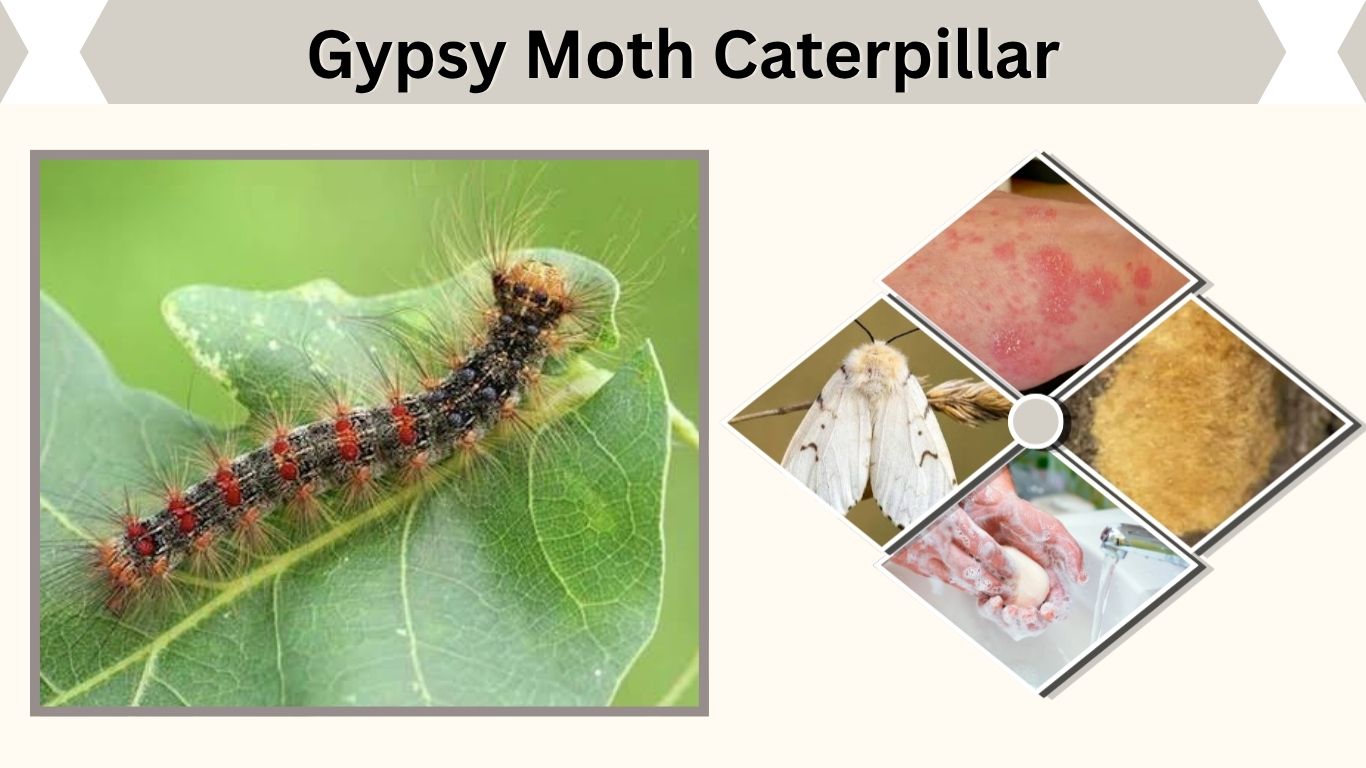
The gypsy moth caterpillar is now officially called the spongy moth caterpillar. Its scientific name is Lymantria dispar. Many people still search for “gypsy moth caterpillar,” so this article uses both names for clarity. These hairy caterpillars are serious tree pests because they feed on hundreds of tree and shrub species. They can also cause skin irritation in some people. This guide covers identification, life cycle, rash, damage, look-alikes, and control.
Gypsy Moth Caterpillar New Name
The common name “gypsy moth” has been replaced by spongy moth. In 2022, the Entomological Society of America adopted “spongy moth” as the official common name for Lymantria dispar. USDA APHIS also replaced “gypsy moth” with “spongy moth” for regulated Lymantria moths.
The new name refers to the insect’s sponge-like egg masses. Because many older articles, pest guides, and search terms still use the old name, homeowners may see both names online.
What Is a Gypsy Moth Caterpillar?
A gypsy moth caterpillar, or spongy moth caterpillar, is the larval stage of the invasive moth Lymantria dispar. The caterpillar stage is the most destructive stage because larvae chew leaves from trees and shrubs.
Spongy moth caterpillars are known for outbreak years, when thousands of caterpillars may cover tree trunks, decks, walls, outdoor furniture, and wooded areas. During heavy infestations, they can defoliate large trees.
The University of Minnesota Extension notes that spongy moth caterpillars are voracious feeders and can feed on more than 300 species of trees and woody plants.
What Does a Gypsy Moth Caterpillar Look Like?
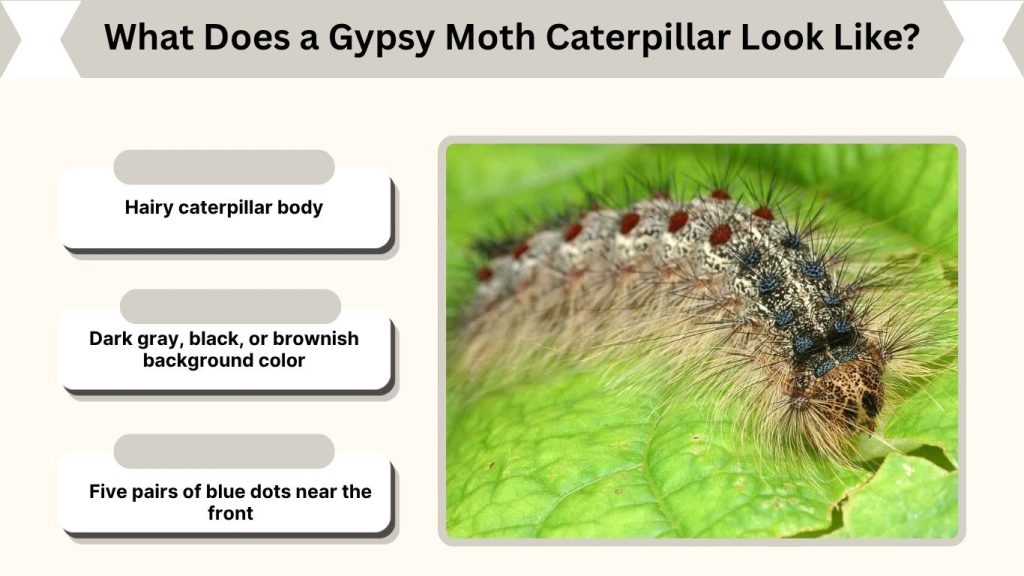
Gypsy moth caterpillars are hairy, dark-colored caterpillars with a very recognizable pattern of colored dots. Young larvae are darker and smaller, while mature larvae become large, hairy, and easier to identify.
Gypsy Moth Caterpillar Identification
Look for these features:
- Hairy caterpillar body
- Dark gray, black, or brownish background color
- Five pairs of blue dots near the front
- Six pairs of red dots toward the back
- Long, thin hairs along the body
- Mature size often around 1.5–3 inches
- Usually found on tree trunks, branches, leaves, walls, or outdoor objects
The red and blue dot pattern is one of the best identification clues. Michigan State University notes that first-instar larvae are black, and the distinct red and blue dots become visible when larvae reach later instars.
Gypsy Moth Caterpillar Size
Spongy moth caterpillar size changes as the larvae grow through several stages, called instars. Young caterpillars may be tiny and easy to miss. Mature female caterpillars are usually larger than males.
| Stage | Appearance | Approximate Size |
| Newly hatched larva | Tiny, dark, hairy | Very small |
| Young caterpillar | Blackish with hairs | Under 1 inch |
| Middle stage | Dots become visible | Around 1–1.5 inches |
| Mature male larva | Hairy with blue/red dots | About 1.5–2 inches |
| Mature female larva | Larger, hairy, blue/red dots | About 2.5–3 inches |
Gypsy Moth Caterpillar Life Cycle
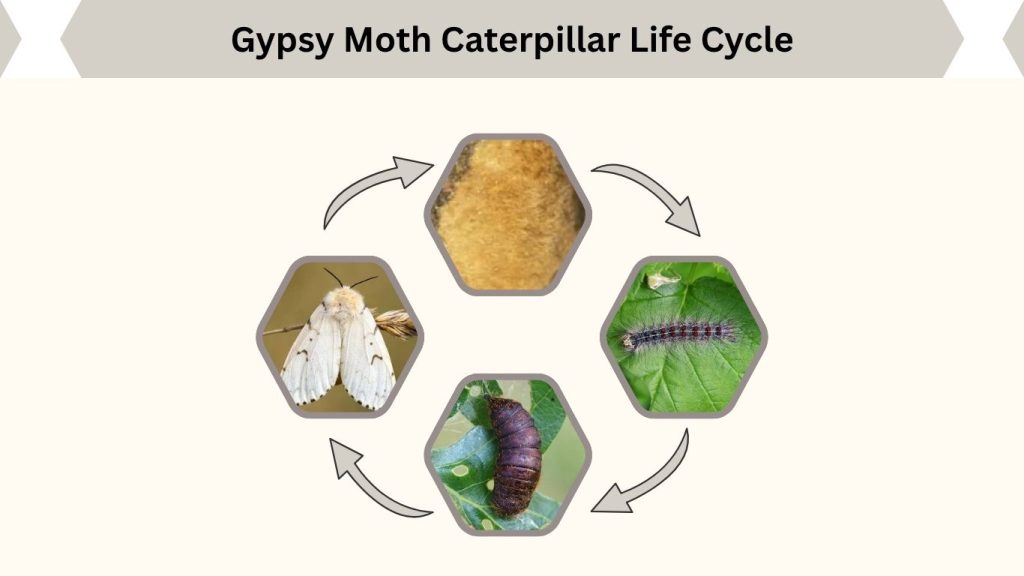
The spongy moth has four main life stages: egg, caterpillar, pupa, and adult moth. The caterpillar stage is the feeding stage and causes most tree damage.
Life Cycle Stages
- Egg masses: Laid on trees, rocks, vehicles, firewood, outdoor furniture, and other surfaces.
- Larvae: Caterpillars hatch and feed on leaves.
- Pupae: Caterpillars transform into pupae in protected places.
- Adults: Moths emerge, mate, and females lay egg masses.
Female moths lay egg masses on many outdoor surfaces, including firewood, trailers, grills, lawn furniture, and toys. USDA APHIS warns that moving these items can spread spongy moth eggs to new areas.
Gypsy Moth Caterpillar Season
Gypsy moth caterpillar season usually begins in spring when eggs hatch. Young caterpillars climb into trees and start feeding on fresh leaves. Feeding continues into early summer, then mature caterpillars pupate.
In many northern areas, caterpillars are most noticeable from late spring into early summer. Outbreak timing depends on weather, region, and local population levels.
Gypsy Moth Caterpillar Eggs
Spongy moth egg masses are tan, fuzzy, and sponge-like. This is where the new name “spongy moth” comes from. Egg masses may be found on tree bark, stones, outdoor furniture, vehicles, campers, boats, firewood, and building surfaces.
Where Egg Masses Are Found
- Tree trunks and branches
- Undersides of outdoor furniture
- Firewood piles
- Fences
- Decks and sheds
- Trailers and campers
- Vehicles
- Rocks and logs
- Playground equipment
Egg masses are important for control because removing them before hatch can reduce caterpillar numbers.
Gypsy Moth Caterpillar Damage
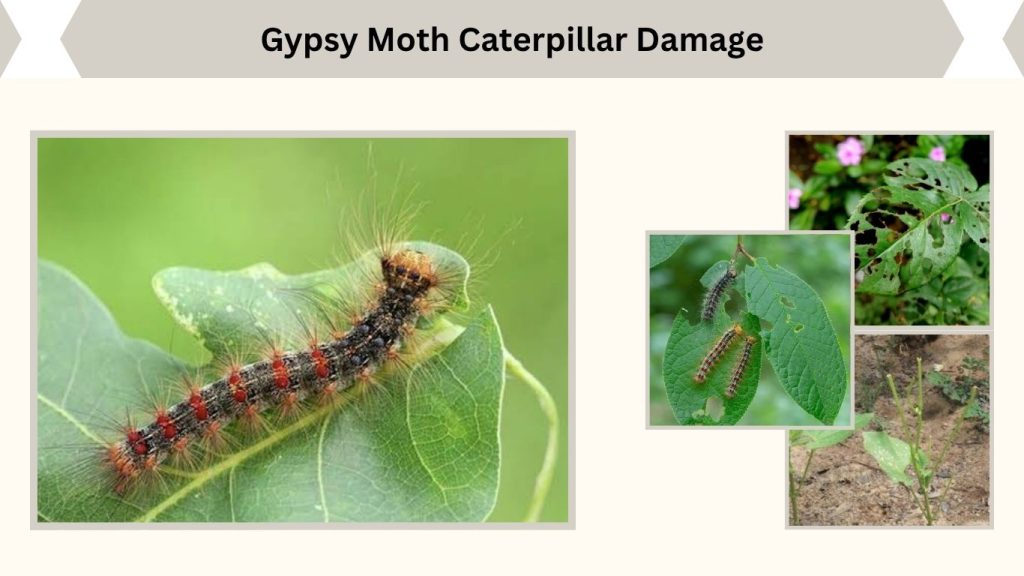
Gypsy moth caterpillars damage trees by eating leaves. During light feeding, leaves may have holes or ragged edges. During heavy infestations, whole trees may be stripped of leaves.
Spongy moth is considered a destructive invasive insect that threatens North American forests. USDA APHIS says caterpillars feed on leaves of more than 300 species of trees and shrubs.
Signs of Damage
Look for these signs around trees:
- Ragged leaf edges
- Holes in leaves
- Heavy leaf loss
- Bare branches in late spring or early summer
- Caterpillar droppings, also called frass
- Caterpillars crawling on trunks, walls, decks, and furniture
- Egg masses on outdoor surfaces
- Dead or stressed trees after repeated defoliation
Healthy deciduous trees can sometimes grow a second set of leaves after defoliation. However, repeated defoliation weakens trees and can make them more vulnerable to drought, disease, and other pests.
What Do Gypsy Moth Caterpillars Eat?
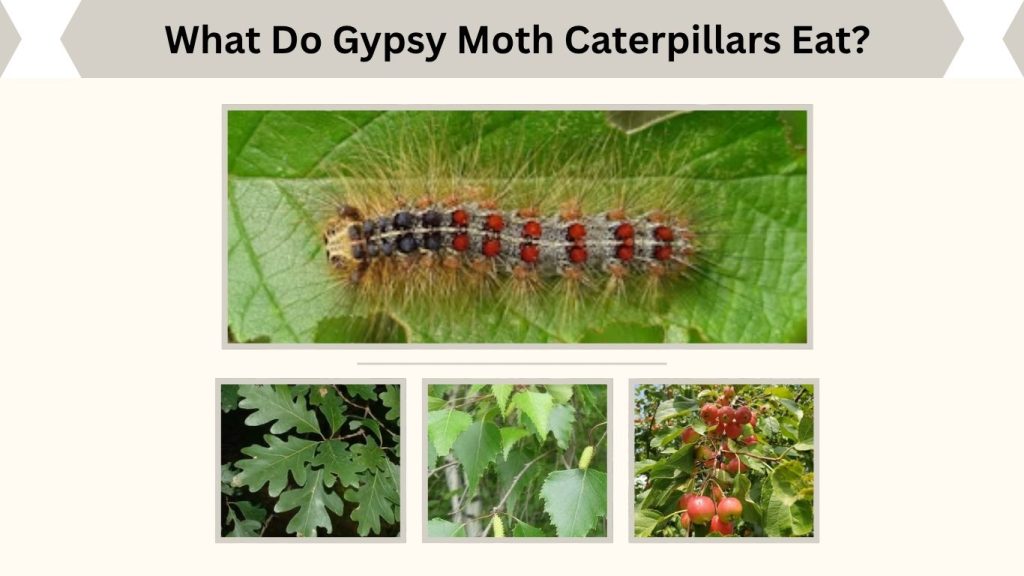
Gypsy moth caterpillars feed on many trees and shrubs. Oaks are among their favorite hosts, but they may feed on many hardwoods and some conifers.
Common Host Plants
- Oak
- Aspen
- Birch
- Willow
- Apple
- Crabapple
- Alder
- Basswood
- Hawthorn
- Poplar
- Maple
- Serviceberry
- Some spruce and pine species during outbreaks
The University of Minnesota Extension describes spongy moth caterpillars as adaptable feeders that eat more than 300 species of trees and woody plants.
Gypsy Moth Caterpillar Rash
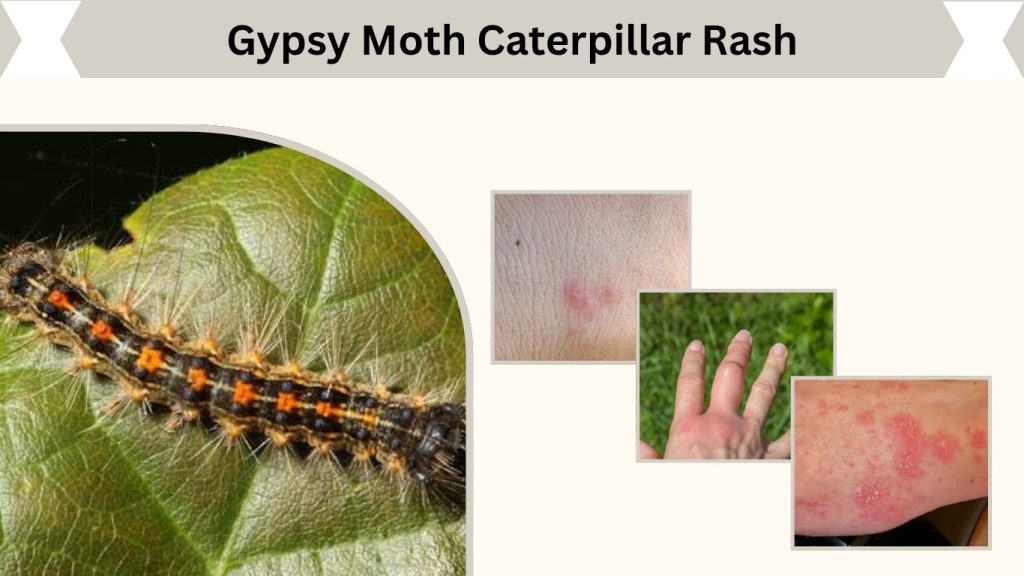
A gypsy moth caterpillar rash can happen when tiny caterpillar hairs contact the skin. The irritation is not usually from a true bite. Instead, the hairs can trigger itching, redness, bumps, or a mild allergic reaction in some people.
Rash Symptoms
A rash from gypsy moth caterpillar hairs may include:
- Itchy red bumps
- Mild swelling
- Burning or prickly feeling
- Skin irritation on arms, neck, face, or hands
- Eye irritation if hairs get near the eyes
- Worse symptoms in sensitive people
Rash risk is higher during outbreak years when caterpillars, shed skins, and airborne hairs are abundant.
Gypsy Moth Caterpillar Bites and Sting
Gypsy moth caterpillars do not bite like mosquitoes, and they do not sting like bees or wasps. However, their hairs can irritate the skin.
People often search for “gypsy moth caterpillar bites” because the rash may look like small bites. In most cases, the reaction comes from contact with hairs, not from biting.
Is the Gypsy Moth Caterpillar Poisonous?
Gypsy moth caterpillars are not poisonous in the same way that venomous insects are. They do not inject venom. However, their hairs can cause skin irritation or allergic reactions in some people.
For pets, the caterpillars are not usually considered highly poisonous, but dogs may get mouth irritation, drooling, vomiting, or discomfort if they chew or swallow hairy caterpillars. Contact a veterinarian if a pet shows strong symptoms.
Gypsy Moth Caterpillar Rash Treatment
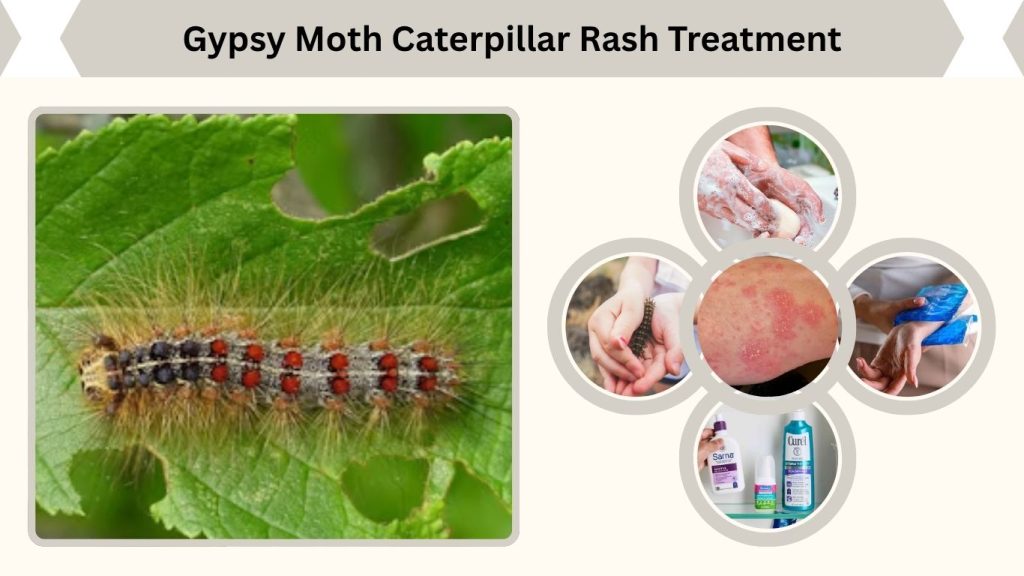
For mild skin irritation, basic home care may help. Avoid scratching because scratching can worsen irritation or cause infection.
What to Do
- Wash the area with soap and cool water.
- Use tape to gently lift remaining hairs from the skin.
- Apply a cold compress.
- Use an anti-itch lotion if needed.
- Avoid touching caterpillars with bare hands.
- Wash clothing that may contain hairs.
Seek medical advice if the rash is severe, spreads quickly, affects the eyes, causes breathing problems, or does not improve.
Gypsy Moth Caterpillar Nest
People often search for “gypsy moth caterpillar nest,” but spongy moth caterpillars do not make large silk tents like tent caterpillars. Instead, they may gather on tree trunks, under bark, in crevices, or on shaded surfaces during the day.
Egg masses can look like fuzzy patches, but they are not nests. Caterpillars may also rest in groups, which can make people think they have built a nest.
Gypsy Moth Caterpillar Web
Spongy moth caterpillars may produce silk threads, especially young larvae that use silk to disperse by wind. However, they do not create the obvious branch tents made by eastern tent caterpillars.
If you see a large white webbed tent in a tree fork, it is more likely from tent caterpillars, not gypsy moth caterpillars.
Tent Caterpillar vs Gypsy Moth Caterpillar
Tent caterpillars and gypsy moth caterpillars are commonly confused. Both are hairy caterpillars that feed on tree leaves, but they are not the same.
| Feature | Gypsy/Spongy Moth Caterpillar | Tent Caterpillar |
| Scientific group | Lymantria dispar | Several Malacosoma species |
| Nest/web | Does not make large tents | Makes visible silk tents |
| Body pattern | Blue and red dot pairs | Stripe or keyhole markings |
| Feeding | Many trees, especially oak | Often cherry, apple, crabapple, and others |
| Main clue | Five blue dot pairs and six red dot pairs | Web tent in branch crotch |
Eastern Tent Caterpillar vs Gypsy Moth
Eastern tent caterpillars build silk tents in tree branch forks. Gypsy moth caterpillars do not make these tents. Eastern tent caterpillars also have a white stripe down the back, while gypsy moth caterpillars have blue and red dots.
Forest Tent Caterpillar vs Gypsy Moth
Forest tent caterpillars do not make large tents like eastern tent caterpillars, so they can be more confusing. They often have pale keyhole-shaped marks down the back. Gypsy moth caterpillars have the red and blue dot pattern.
Gypsy Moth Caterpillar Look-Alikes
Several hairy caterpillars may be mistaken for gypsy moth caterpillars. Correct identification matters before using control methods.
Common Look-Alikes
- Eastern tent caterpillar
- Forest tent caterpillar
- Fall webworm
- Browntail moth caterpillar
- Tussock moth caterpillar
- Woolly bear caterpillar
- Large tiger moth caterpillars
Browntail moth caterpillars are especially important because their toxic hairs can cause stronger skin reactions in some regions. Gypsy moth caterpillars can irritate skin, but they are a different pest.
Gypsy Moth Caterpillar Infestation
A gypsy moth caterpillar infestation may include large numbers of caterpillars crawling on trees, homes, decks, cars, and outdoor furniture. You may also hear droppings falling from trees during heavy feeding.
Infestation Signs
- Many caterpillars on tree trunks
- Heavy leaf loss
- Droppings under trees
- Egg masses on outdoor objects
- Caterpillars crawling on siding or decks
- Skin irritation after working outdoors
- Trees repeatedly defoliated over several years
Outbreaks often rise and fall naturally. Diseases, predators, weather, and food availability can reduce populations over time.
How to Get Rid of Gypsy Moth Caterpillars
Control works best when you target the correct stage. Egg masses, young caterpillars, older caterpillars, pupae, and adult females require different methods.
Remove Egg Masses
Scrape egg masses into a container of soapy water. Do not simply knock them onto the ground because many eggs may still survive.
Best places to check:
- Tree trunks
- Firewood
- Outdoor furniture
- Sheds
- Fences
- Campers
- Trailers
- Boats
- Play equipment
Use Burlap Bands
Burlap bands can trap caterpillars that move down tree trunks during the day. Wrap burlap around the trunk and fold it to create a hiding place. Check the bands daily and remove caterpillars into soapy water.
Use Sticky Barrier Bands Carefully
Sticky bands can stop some caterpillars from climbing trees. However, sticky products can also trap birds, beneficial insects, or small animals if used poorly. Always follow product instructions and protect bark from direct sticky material.
Handpick Caterpillars
For small trees or light infestations, handpicking may help. Wear gloves and long sleeves to avoid skin irritation. Drop caterpillars into soapy water.
FAQs
What does a gypsy moth caterpillar look like?
A gypsy moth caterpillar, now called a spongy moth caterpillar, is hairy and dark with five pairs of blue dots near the front and six pairs of red dots toward the back. Mature caterpillars may reach about 1.5–3 inches long.
Is a gypsy moth caterpillar poisonous?
It is not venomous and does not inject poison, but its hairs can irritate skin. Some people develop an itchy rash, red bumps, or mild allergic symptoms after touching the caterpillars or contacting airborne hairs.
What is the difference between a tent caterpillar and a gypsy moth caterpillar?
Tent caterpillars usually make visible silk tents in tree branches. Gypsy moth caterpillars do not make large tents. Gypsy moth caterpillars have blue and red dot pairs, while eastern tent caterpillars usually have a pale stripe down the back.
How do you get rid of gypsy moth caterpillars?
You can scrape egg masses into soapy water, use burlap bands, handpick caterpillars with gloves, and treat young caterpillars with labeled products such as Btk when appropriate. Large tree infestations may need professional treatment.
Do gypsy moth caterpillars kill trees?
One year of defoliation may not kill a healthy deciduous tree, but repeated defoliation can weaken trees and may lead to death, especially during drought or when trees are already stressed.