Hawk moth caterpillars are fascinating insects known for their large size, vibrant colors, and unique defensive adaptations. Popular species include the Elephant Hawk Moth, Death’s Head Hawk Moth, and Lime Hawk Moth. These caterpillars feed on specific host plants and play an important ecological role. Some species mimic snakes or display eye spots to deter predators, while others can be mildly toxic. Understanding their identification, behavior, habitats, and lifecycle helps enthusiasts, gardeners, and researchers observe them safely and appreciate their diversity.
Types of Hawk Moth Caterpillars
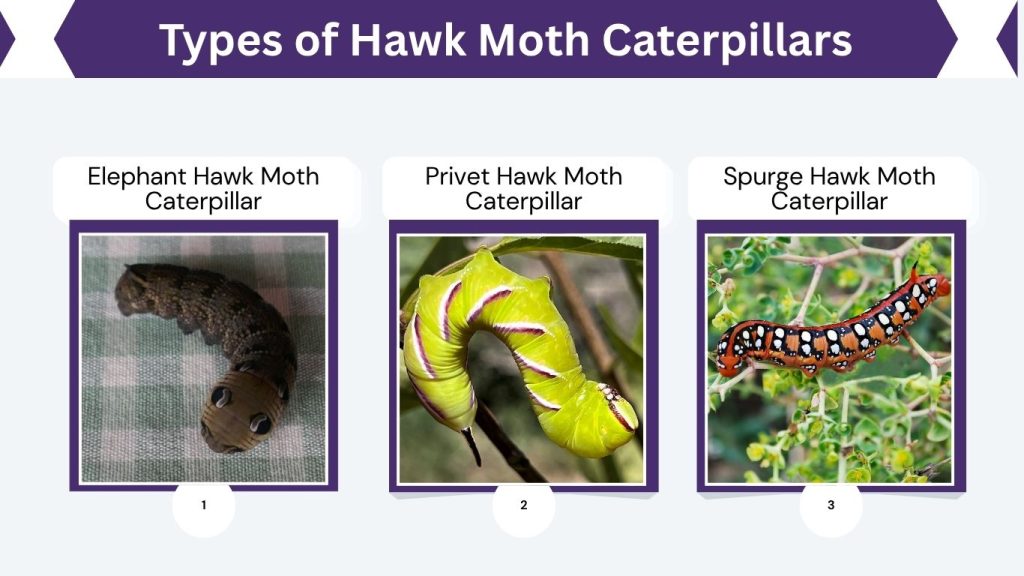
Hawk moth caterpillars vary widely in size, color, and host plants. Some are large and brightly colored, while others blend into their environment for protection. Knowing the common types allows easier identification and a better understanding of their ecological roles and defensive behaviors.
Popular Species
- Elephant Hawk Moth Caterpillar
- Death’s Head Hawk Moth Caterpillar
- Lime Hawk Moth Caterpillar
- Privet Hawk Moth Caterpillar
- Oleander Hawk Moth Caterpillar
- Hummingbird Hawk Moth Caterpillar
- Spurge Hawk Moth Caterpillar
- Bedstraw Hawk Moth Caterpillar
- Five-Spotted Hawk Moth Caterpillar
- Pink-Spotted Hawk Moth Caterpillar
Hawk Moth Caterpillars Identification Features
Hawk moth caterpillars have distinctive physical traits that help identify species. They range from small, camouflaged green caterpillars to large, brightly colored larvae with horns. Some have eye spots or snake-like patterns to deter predators. Recognizing poisonous species, such as the Oleander or Spurge Hawk Moth caterpillars, is important for safe handling. Caterpillar size, body color, horn shape, and markings are key identification factors, and observing changes across larval stages can help distinguish closely related species.
Hawk Moth Caterpillars Habitat and Distribution
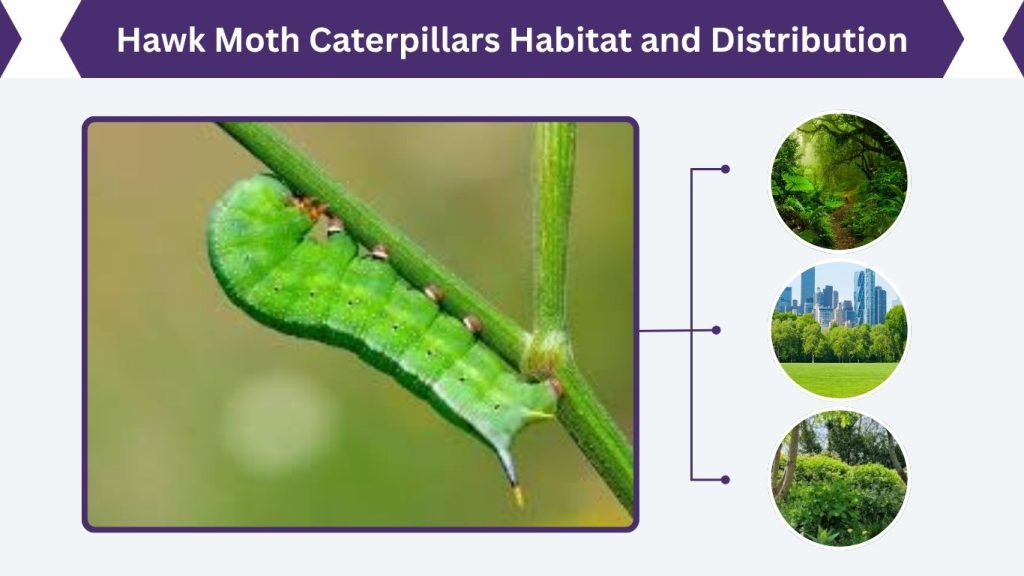
Hawk moth caterpillars are found across Europe, North America, Asia, and Australia, inhabiting forests, gardens, and shrublands. Each species prefers specific host plants, which influences its range. For example, the Elephant Hawk Moth feeds on willowherb and bedstraw, while the Oleander Hawk Moth specializes in oleander leaves. Caterpillars thrive in areas with moderate humidity and temperatures suitable for growth. Urban gardens can attract species that feed on common ornamental plants, whereas wild forests support larger populations of native hawk moths.
Common Habitats
- Deciduous and tropical forests
- Gardens and urban green spaces
- Shrublands and woodland edges
Host Plants
- Willowherb and bedstraw (Elephant Hawk Moth)
- Lime trees (Lime Hawk Moth)
- Privet (Privet Hawk Moth)
- Oleander (Oleander Hawk Moth)
- Spurge (Spurge Hawk Moth)
Hawk Moth Caterpillars Behavior and Diet
Hawk moth caterpillars are primarily nocturnal feeders. They eat leaves of their host plants and may feed alone or in small groups. Defensive behaviors include curling into a spiral, displaying eye spots, or mimicking snakes. Some species are mildly poisonous, which deters predators. Caterpillars grow rapidly, molting several times before pupation. Adults emerge as moths that do not feed, focusing solely on reproduction. Seasonal activity ensures caterpillars coincide with optimal leaf availability for feeding, while cocoon formation protects the pupae during development.
Hawk Moth Caterpillars Lifecycle and Metamorphosis
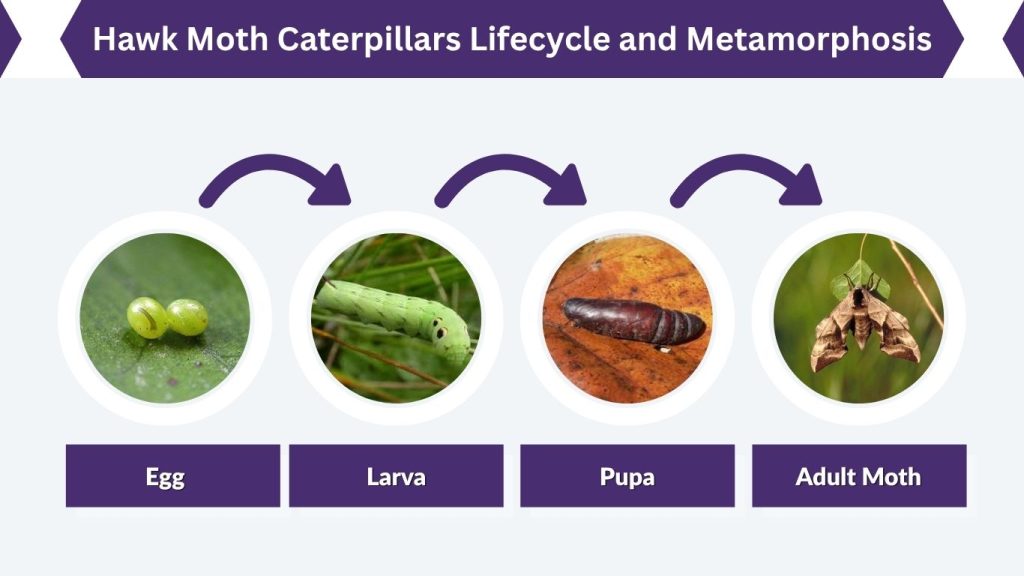
Hawk moth caterpillars undergo complete metamorphosis, which includes four main stages: egg, larva, pupa, and adult moth. Eggs are typically laid on host plant leaves, hatching into caterpillars that begin feeding immediately. Larvae molt several times as they grow, developing distinctive features such as horns or eye spots. Once mature, they spin silk cocoons on branches, leaves, or in the soil. Inside the cocoon, the caterpillar pupates, undergoing transformation into an adult moth. Adults emerge briefly to mate, lay eggs, and continue the life cycle, completing their metamorphosis within weeks.
Lifecycle Stages
- Egg: Laid singly or in clusters on host plant leaves
- Larva: Feeds on host leaves, molts multiple times
- Pupa: Spins cocoon and undergoes metamorphosis
- Adult Moth: Emerges, mates, lays eggs, dies shortly after
Hawk Moth Caterpillars Poisonous and Dangerous Species
Some hawk moth caterpillars acquire mild toxicity from the plants they consume, which deters predators. Examples include the Oleander Hawk Moth and Spurge Hawk Moth. While not deadly to humans, handling these species should be done with caution. Elephant Hawk Moth caterpillars may also contain mild toxins that make them unpalatable to predators. Recognizing poisonous species helps prevent accidental ingestion by children or pets and ensures safe observation for hobbyists.
Species to Watch
- Oleander Hawk Moth Caterpillar
- Spurge Hawk Moth Caterpillar
- Elephant Hawk Moth Caterpillar (mildly toxic)
Hawk Moth Caterpillars as Pets and Study Subjects
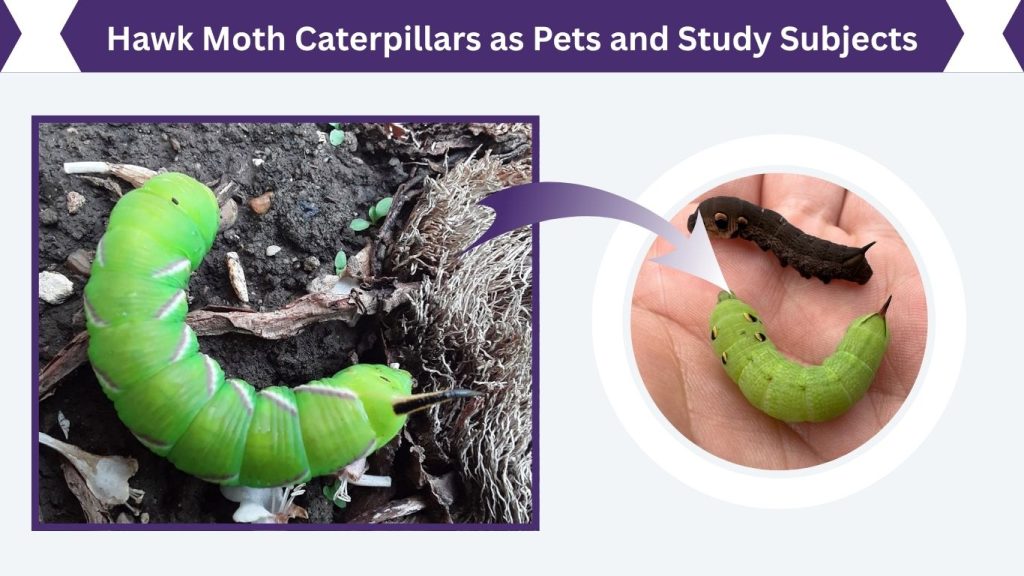
Many enthusiasts and researchers raise hawk moth caterpillars to study metamorphosis or observe their unique behaviors. Raising caterpillars requires providing appropriate host plants, maintaining suitable humidity and temperature, and monitoring growth. Some species are exotic or protected, so ethical and legal considerations must be followed. Observing the transformation from larva to adult moth can be a rewarding educational experience, offering insight into insect development, defensive adaptations, and ecological interactions.
Care Guidelines
- Provide fresh host plant leaves regularly
- Maintain adequate humidity and temperature
- Avoid handling poisonous species directly
- Observe cocoon formation and adult emergence
FAQs
What do hawk moth caterpillars eat?
They feed on leaves of specific host plants, such as willowherb, bedstraw, oleander, lime, and spurge, depending on species.
Are hawk moth caterpillars poisonous to humans or pets?
Some species are mildly toxic, like Oleander and Spurge Hawk Moths, deterring predators. Avoid direct handling by children or pets.
How long does a hawk moth caterpillar take to pupate?
Larvae typically pupate after several weeks of feeding, with timing varying by species and environmental conditions.
How can I identify different species of hawk moth caterpillars?
Identification relies on size, body color, horn or tail structures, eye spots, and feeding plants. Observing larval stages helps distinguish similar species.
Do hawk moth caterpillars mimic snakes to scare predators?
Yes. Some species, such as the Elephant Hawk Moth caterpillar, curl and display eye spots or snake-like patterns as a defense mechanism.