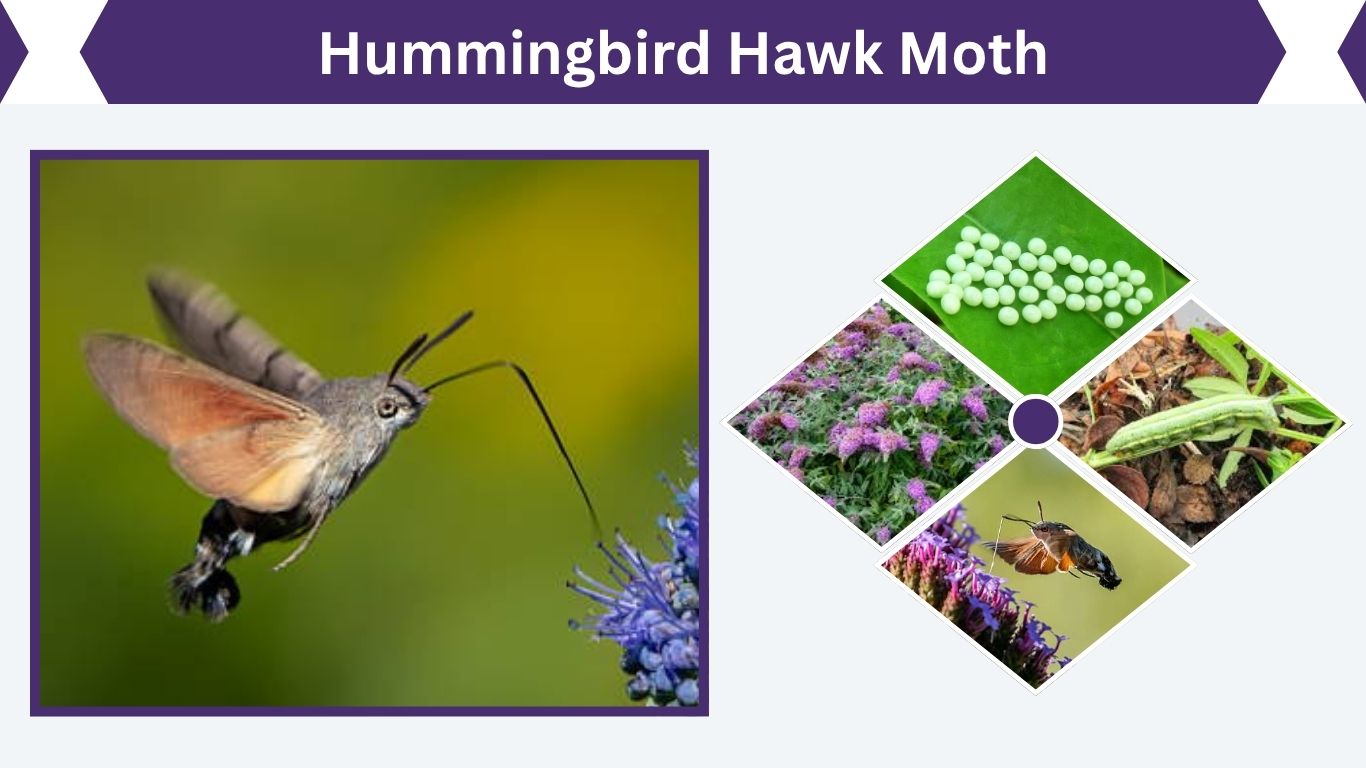
The hummingbird hawk moth (Macroglossum stellatarum) is an intriguing insect often mistaken for a hummingbird due to its unique behavior. Unlike most moths, it is active during the day, hovering in front of flowers while feeding on nectar using its long proboscis. The moth’s quick wingbeats and ability to hover in one place give it a hummingbird-like appearance. However, despite its name, the hummingbird hawk-moth is not a bird at all but a species of hawk moth. Interestingly, many sightings in North America, particularly those labeled as “hummingbird moths,” might actually refer to different species such as clearwing moths from the Hemaris genus, further adding to the confusion.
What Is a Hummingbird Hawk Moth?
The hummingbird hawk moth is a remarkable member of the Sphingidae family, also known as hawk moths. Its scientific name, Macroglossum stellatarum, literally translates to “large-tongue starry,” which refers to its long proboscis used for feeding. As its name suggests, the moth shares some characteristics with a hummingbird, especially its ability to hover in front of flowers while feeding on nectar. It’s primarily found across Europe, North Africa, and parts of Asia.
The moth’s most distinct feature is its flight pattern: it hovers in front of flowers, moving quickly and rapidly, similar to a hummingbird. This behavior allows it to feed on long-tubed flowers without perching, using its elongated proboscis to extract nectar. The moth’s wings, while not as fast as a hummingbird’s, beat rapidly enough to allow it to stay suspended in midair, often darting from flower to flower, and it typically feeds on a wide variety of nectar-rich flowers. Despite this bird-like behavior, it is still very much an insect, with a lifecycle typical of other hawk moth species.
Hummingbird Hawk Moth Size and Appearance
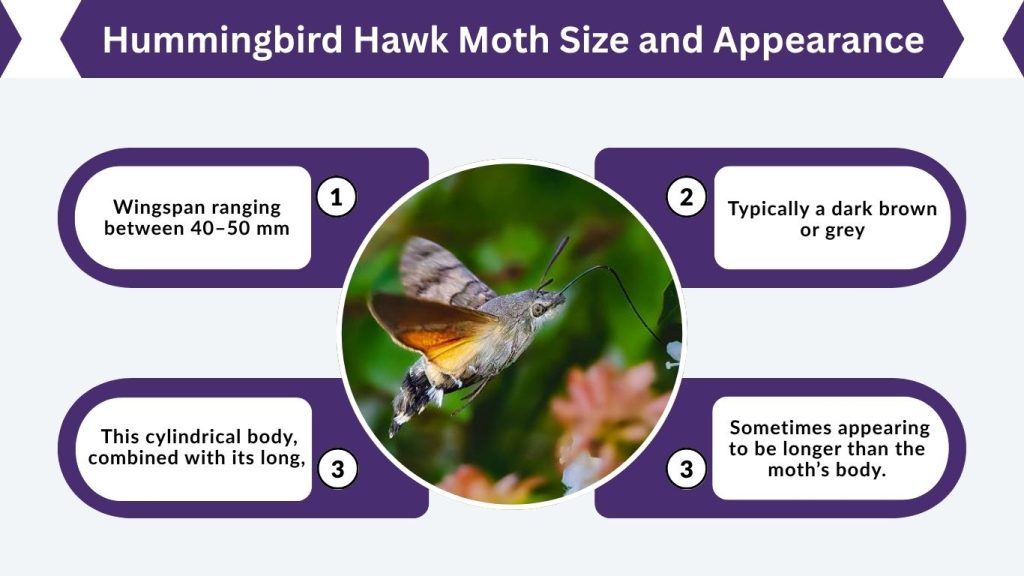
The hummingbird hawk moth is a small to medium-sized moth, with a wingspan ranging between 40–50 mm, though some sources report a slightly larger size. The moth’s body is robust and cylindrical, tapering into a thin tail at the rear, which adds to its hummingbird-like silhouette. Its forewings are a brownish hue, often marked with darker veins, while the hindwings are a striking orange color, providing a contrast that is easily noticeable when the moth is in flight.
Body Shape
The body of the hummingbird hawk moth is relatively stout compared to other moths, giving it a robust appearance. This cylindrical body, combined with its long, thin tail, helps it maintain stability while hovering. It uses its body to support the long proboscis, which is used to access nectar deep within flowers. This combination of features makes the moth appear remarkably similar to a tiny bird when viewed in motion.
Wings
The hummingbird hawk moth’s wings are another defining characteristic. Its forewings are typically a dark brown or grey, with visible dark veins running through them. The hindwings, however, stand out with their bright orange coloration. These orange hindwings are typically visible when the moth hovers in front of flowers, and they contribute to the moth’s striking appearance. The moth’s wings beat rapidly during flight, allowing it to hover in place, and they are almost transparent when seen from certain angles, adding to its resemblance to a hummingbird.
Proboscis
The hummingbird hawk moth has an incredibly long and flexible proboscis, an essential feature for feeding. This proboscis is used to extract nectar from flowers, especially those with deep, tubular blooms that other insects cannot access. This feeding behavior allows the moth to pollinate a wide variety of plants as it moves from one flower to another. The proboscis is coiled up when not in use and extends when feeding, sometimes appearing to be longer than the moth’s body.
Where Do Hummingbird Hawk Moths Live?
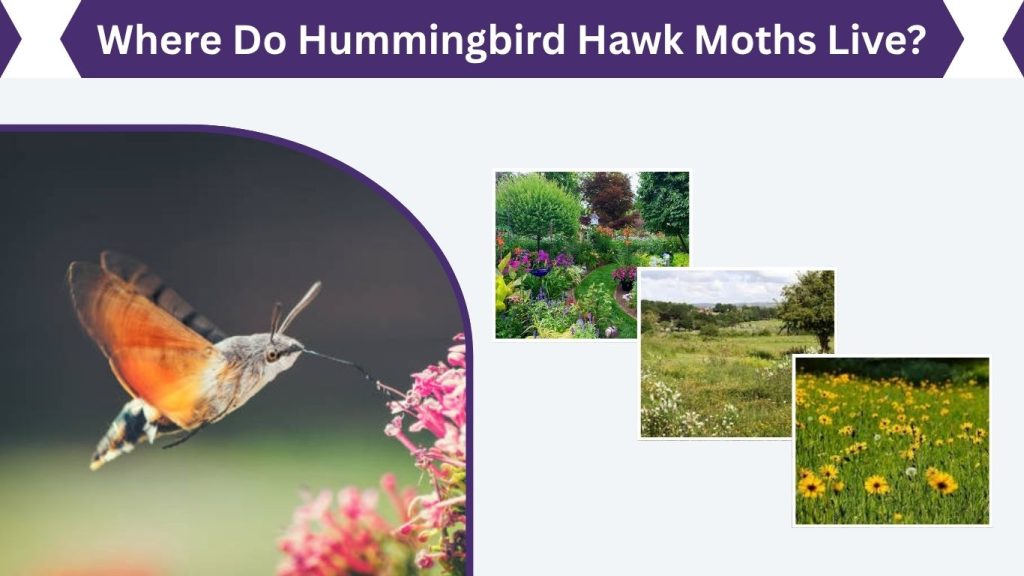
The hummingbird hawk moth is primarily found in regions across Europe, North Africa, and parts of Asia. It is a migratory species, often moving to different areas depending on the season. In Europe, it is most commonly found in warmer regions, especially in the Mediterranean, where it thrives in gardens, fields, and meadows. It is also seen in southern parts of the UK during the summer months, though its presence there is more sporadic and migratory in nature.
Hummingbird Hawk Moth in the UK
In the UK, the hummingbird hawk moth is considered a migrant species. While it is not native, it appears in the country during the warmer months, typically from late spring to early autumn. It can often be spotted in gardens and parks, especially those with a variety of nectar-rich flowers like buddleia, honeysuckle, and lavender. The moth is more common in southern parts of the UK, but sightings have been reported as far north as Scotland in warmer years.
Hummingbird Hawk Moth in the USA
In the United States, many sightings labeled “hummingbird hawk moth” actually refer to other species, such as the clearwing moths from the genus Hemaris. These North American species share similar behavior and appearance, including hovering in front of flowers like hummingbirds. However, Macroglossum stellatarum itself is not commonly found in the USA, except in rare cases during migration.
Common Habitats
The hummingbird hawk moth can be found in a variety of habitats, including gardens, woodland edges, meadows, and even coastal areas. It favors areas where flowers are abundant, and it is often seen in places where there is a mix of open ground and shrubs or low plants. The moth’s preference for sunny, sheltered spots makes it a common sight in flower-rich environments, particularly those that bloom during the day.
Hummingbird Hawk Moth Diet: What Do They Eat?
The hummingbird hawk moth feeds primarily on nectar, which it extracts from a wide variety of flowers. Its long proboscis enables it to reach deep into tubular flowers, where it sips nectar much like a hummingbird. These moths are particularly attracted to flowers with long, narrow tubes, where they can hover while feeding without landing.
Preferred Flowers
Some of the moth’s favorite flowers include buddleia, red valerian, honeysuckle, verbena, and viper’s bugloss, all of which provide nectar that the moths are able to reach easily. These plants also serve as important nectar sources for a variety of pollinators. The moth typically visits flowers that bloom during the day, as it is a diurnal species, making it an excellent pollinator for daytime-blooming plants.
Feeding Behavior
The hummingbird hawk moth feeds by hovering in front of flowers, using its long proboscis to feed on nectar. This behavior is similar to that of hummingbirds, which is why the moth is often mistaken for one. The moth moves quickly from flower to flower, feeding on the nectar while also pollinating the plants it visits. It does not damage the flowers, as its feeding behavior is very efficient and helps support the plants’ reproductive processes.
Hummingbird Hawk Moth Caterpillar and Host Plants
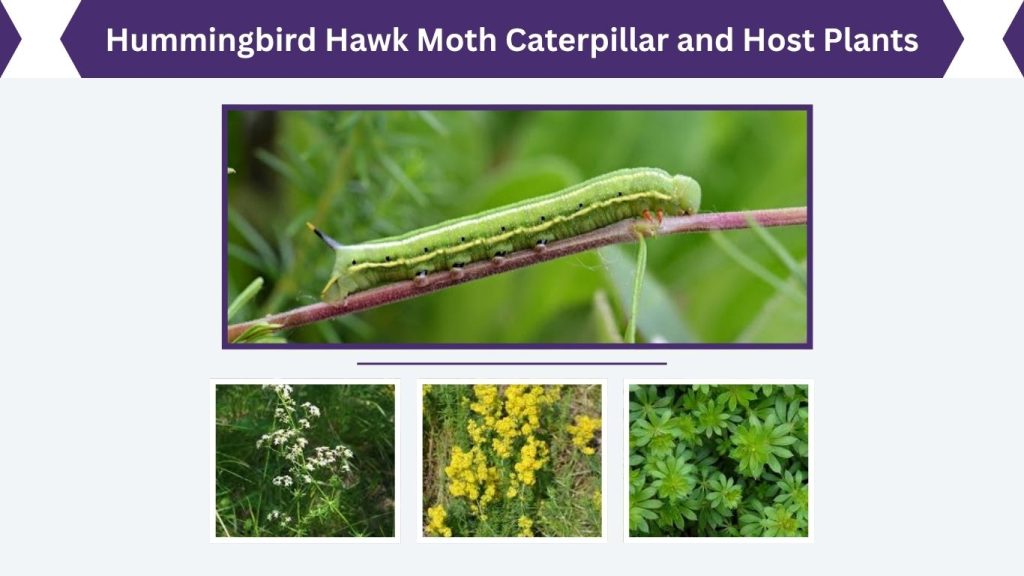
The caterpillar of the hummingbird hawk moth undergoes a fascinating transformation as it feeds on specific host plants. These caterpillars are typically green, with side stripes and a rear horn, which is characteristic of many hawk moth larvae. During their early stages, the larvae feed on plants that provide essential nutrients for their growth.
What Does the Caterpillar Look Like?
The hummingbird hawk moth caterpillar is typically bright green with a dark line running along each side. The caterpillar also has a horn-like projection at the rear, which is a common feature of many hawk moth larvae. These larvae are capable of growing quite large, reaching lengths of up to 7 cm. As they grow, they may change color, becoming more yellow or brown before pupating.
What Do the Larvae Eat?
The hummingbird hawk moth larvae are herbivorous and feed primarily on plants from the Galium genus, commonly known as bedstraws. These plants are important hosts for the caterpillars and provide the necessary nutrients for their development. The larvae also feed on related species in the same family, which can be found in various regions across their range.
Are the Caterpillars Harmful?
Despite their large size and striking appearance, hummingbird hawk moth caterpillars are not harmful to humans. They are not known to sting or bite, and they do not pose any danger to people. The main impact of these caterpillars is on the plants they feed on, but they typically do not cause significant harm to the host plants.
Keywords:
- hummingbird hawk moth caterpillar
- hummingbird hawk moth larvae
- caterpillar of hummingbird hawk moth
- hummingbird hawk moth caterpillar food plant
- hummingbird hawk moth host plant
Hummingbird Hawk Moth Life Cycle
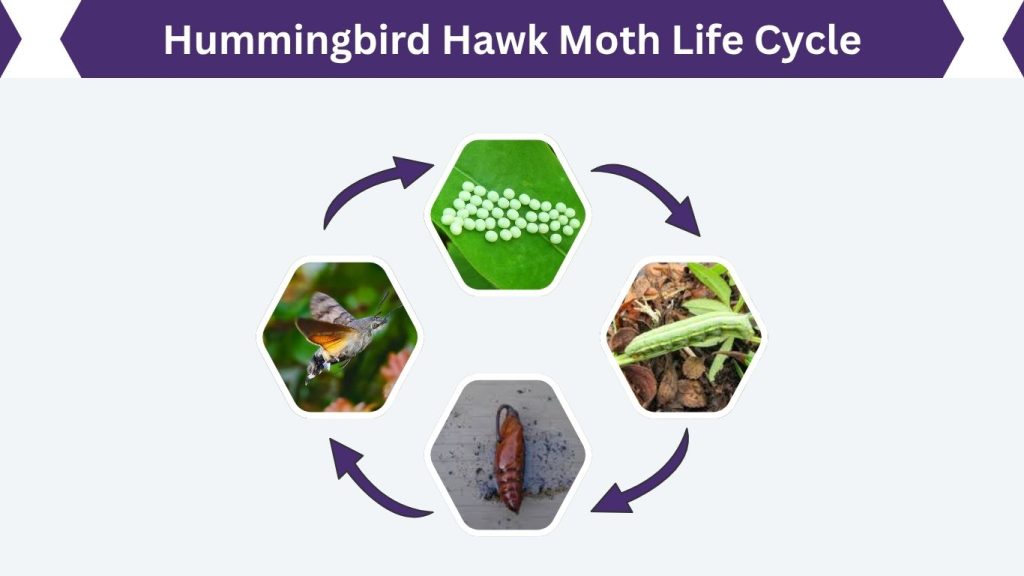
The hummingbird hawk moth undergoes a complete metamorphosis, beginning as an egg, moving through the larval stage, and then transitioning into a pupa before emerging as an adult moth. Each stage in its life cycle plays an essential role in its development and ensures that the species continues to thrive in its habitats.
Eggs
Female hummingbird hawk moths lay small, white eggs on the undersides of suitable host plants, particularly bedstraws (Galium species). The eggs hatch after a short incubation period, giving way to small caterpillars.
Larvae
The larvae, or caterpillars, begin feeding immediately after hatching. They are green with distinct side stripes and a rear horn, feeding on the host plants until they grow large enough to pupate. The caterpillars are voracious eaters, consuming large amounts of plant material to fuel their growth.
Pupa or Cocoon
Once the larvae reach maturity, they stop feeding and search for a suitable place to pupate. The pupa is typically brown or green and is often hidden in leaf litter or other debris on the ground. The pupa undergoes metamorphosis, eventually transforming into an adult moth.
Adult Moth
Once the transformation is complete, the adult hummingbird hawk moth emerges from the cocoon. It is fully formed and ready to begin its nectar-feeding behavior. Adults are diurnal and can often be seen hovering in front of flowers during the day. After mating, females lay eggs on suitable host plants, completing the cycle.
Keywords:
- hummingbird hawk moth eggs
- hummingbird hawk moth life cycle
- hummingbird hawk moth pupa
- hummingbird hawk moth chrysalis
- hummingbird hawk moth cocoon
- hummingbird hawk moth lifespan
Are Hummingbird Hawk Moths Dangerous?
The hummingbird hawk moth is not dangerous to humans. Unlike bees or wasps, it does not sting or bite. Its long proboscis is solely used for feeding on nectar, which it extracts from flowers by hovering. It is not an aggressive moth and is generally harmless to humans and pets.
Are They Dangerous to Plants?
The hummingbird hawk moth’s feeding behavior involves hovering in front of flowers and using its long proboscis to suck nectar, which does not harm the plant. However, as with any pollinator, its presence can help improve the reproduction of flowering plants by pollinating them.
Potential Risks to Gardens
While the hummingbird hawk moth is not harmful to humans, its larvae feed on certain plants, particularly bedstraws. If these plants are important to gardeners, the presence of caterpillars could cause damage to the plants, though this is usually not severe.
Keywords:
- hummingbird hawk moth bite
- hummingbird hawk moth sting
- do hummingbird hawk moths sting
- are hummingbird hawk moths dangerous
- hummingbird hawk moth dangerous
Hummingbird Moth vs Hummingbird
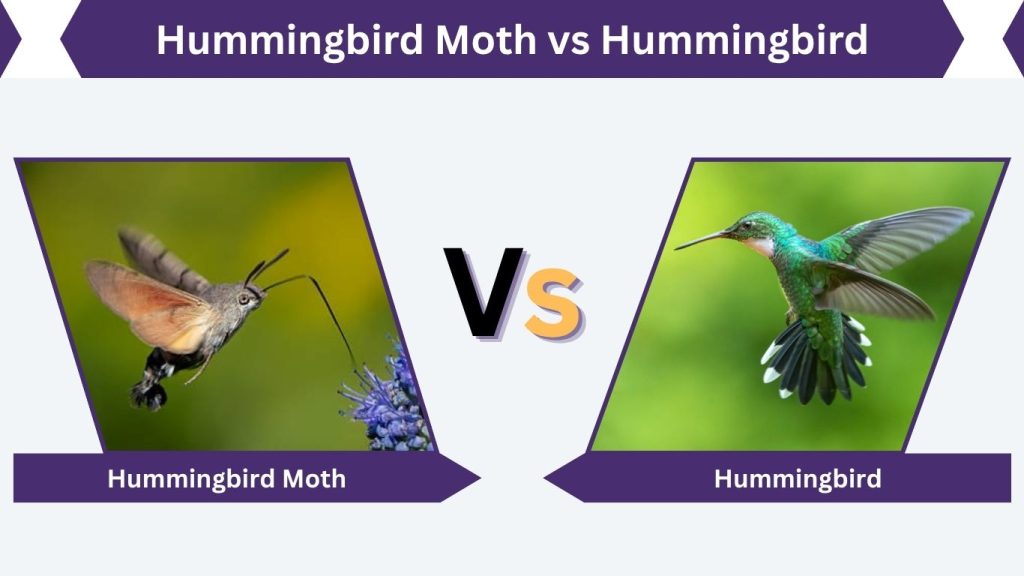
There is often confusion surrounding the hummingbird hawk moth, hummingbird moth, and actual hummingbirds, as they all share similar characteristics, such as hovering flight and the ability to feed on nectar. However, these three creatures are distinct and belong to different categories.
Hummingbird Hawk Moth vs Hummingbird
While the hummingbird hawk moth shares some similarities with hummingbirds, they are two entirely different species. Hummingbirds are small, colorful birds that are found mainly in the Americas, whereas hummingbird hawk moths are insects in the hawk moth family. The moth’s behavior of hovering and feeding on nectar is similar to that of a hummingbird, which is why it is often mistaken for one.
Hummingbird Hawk Moth vs Hummingbird Moth
The term hummingbird moth is commonly used in North America to describe various species of moths that exhibit hummingbird-like feeding behavior. However, these “hummingbird moths” are not true hummingbird hawk moths. In fact, many of the moths referred to as “hummingbird moths” in the USA are actually members of the Hemaris genus, also known as clearwing moths, which resemble the hummingbird hawk moth but are a different species altogether.
Hawk Moth vs Hummingbird Moth
Both the hummingbird hawk moth and the hummingbird moth belong to the Sphingidae family, also known as hawk moths. However, the hummingbird moth is a broader term and may refer to any hawk moth that exhibits similar hovering behavior, regardless of genus. Hummingbird hawk moths are a specific species within this group, characterized by their unique flight style and nectar-feeding behavior.
Keywords:
- hawk moth vs hummingbird moth
- hummingbird moth vs hummingbird hawk moth
- hummingbird hawk moth vs hummingbird
- hummingbird moth vs hawk moth
- hawk moth or hummingbird moth
Is the Hummingbird Hawk Moth Rare?
The hummingbird hawk moth is not considered rare, but its presence can vary depending on the region and time of year. In Europe and parts of Asia, it is a fairly common species, especially in regions with abundant nectar-rich plants. In the UK, sightings are often seasonal, with the moth appearing in gardens and flower beds during warmer months. However, the moth’s migratory nature means it may not always be present in the same locations year-round.
In North America, where hummingbird moths are often confused with hummingbird hawk moths, these insects are generally less common. The true hummingbird hawk moth (Macroglossum stellatarum) is primarily found in Europe and parts of North Africa and Asia, but it occasionally migrates to the United States during certain seasons.
Keywords:
- are hummingbird hawk moths rare
- hummingbird hawk moth rare
- how rare is a hummingbird hawk moth
How to Attract Hummingbird Hawk Moths to Your Garden
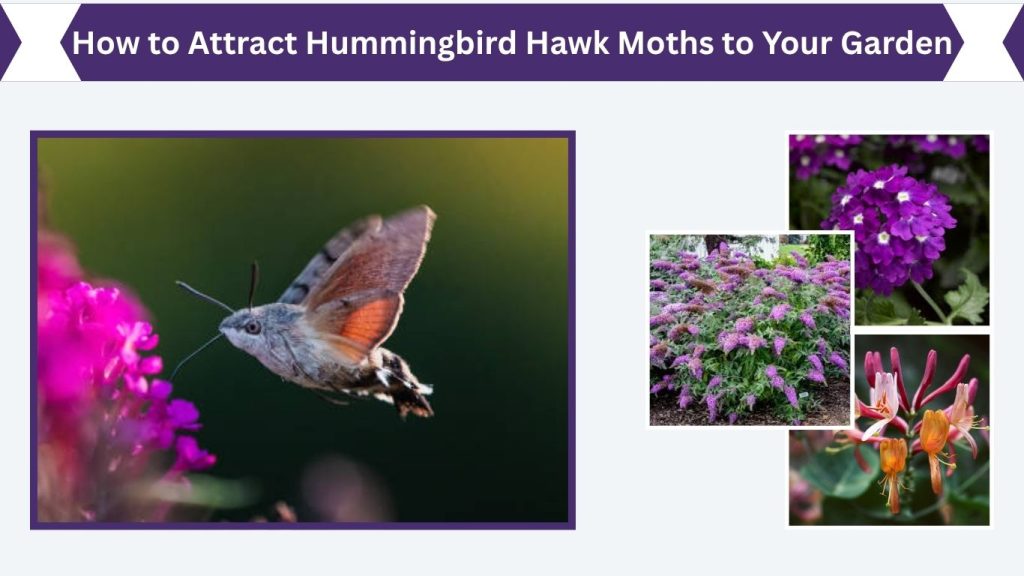
Attracting hummingbird hawk moths to your garden can be a rewarding experience, as these moths are excellent pollinators. To attract them, focus on planting nectar-rich flowers that they are particularly drawn to.
Plant Nectar-Rich Flowers
Hummingbird hawk moths are especially attracted to flowers with long, tubular blooms. Some of the best flowers to plant include buddleia, verbena, honeysuckle, and viper’s bugloss. These plants provide ample nectar that the moths can access using their long proboscis.
Choose a Sunny, Sheltered Location
Hummingbird hawk moths are diurnal and prefer sunny areas where they can feed during the day. Planting flowers in a sunny spot will increase the chances of attracting these moths. Additionally, creating sheltered spaces in your garden can provide them with areas to rest and hide from predators.
Keywords:
- how to attract hummingbird hawk moth
- hummingbird hawk moth flowers
- hummingbird hawk moth diet
- hummingbird hawk moth host plant
Hummingbird Hawk Moth Meaning and Symbolism
In some cultures, the hummingbird hawk moth is viewed as a symbol of energy, speed, and transformation. Its rapid, darting movements resemble the characteristics of a hummingbird, making it a representation of vitality and life. The moth’s association with flowers and nectar also makes it a symbol of beauty and nature’s interconnectedness.
In spiritual symbolism, the hummingbird hawk moth can be seen as a messenger of change, transformation, and renewal, due to its life cycle and feeding habits. Some people interpret its appearance as a sign of personal growth or renewal. However, these meanings are cultural and subjective.
Keywords:
- hummingbird hawk moth meaning
- hummingbird hawk moth spiritual meaning
- hummingbird hawk moth symbolism
- hummingbird hawk moth tattoo
Quick Facts About the Hummingbird Hawk Moth
Here are a few quick facts about the hummingbird hawk moth:
- Scientific name: Macroglossum stellatarum
- Type: Hawk moth / Sphinx moth
- Feeding style: Hovering nectar feeding
- Main adult food: Nectar from flowers
- Larval food: Bedstraws (Galium) and related plants
- Active time: Daytime, often seen in gardens
- Common confusion: Often mistaken for a hummingbird due to its flight style
Keywords:
- hummingbird hawk moth facts
- hummingbird hawk moth interesting facts
- hummingbird hawk moth information
FAQs
Do hummingbird hawk moths bite?
No, they are not known for biting people. Their proboscis is used for nectar feeding.
Do hummingbird hawk moths sting?
No, they do not sting.
What is the size of a hummingbird hawk moth?
They are small to medium hawk moths, commonly described around 40–50 mm in wingspan by UKMoths.
What do hummingbird hawk moth caterpillars eat?
The caterpillars commonly feed on bedstraws such as Galium.
Are hummingbird hawk moths found in the USA?
The true Macroglossum stellatarum is mainly associated with Europe, North Africa, and parts of Asia. In the USA, people often use similar names for clearwing hummingbird moths.
Are hummingbird hawk moths rare?
It depends on region and season. They may be regular seasonal visitors in some areas and unusual in others.
What flowers attract hummingbird hawk moths?
Nectar-rich tubular flowers are best, such as buddleia, red valerian, honeysuckle, verbena, and similar blooms.