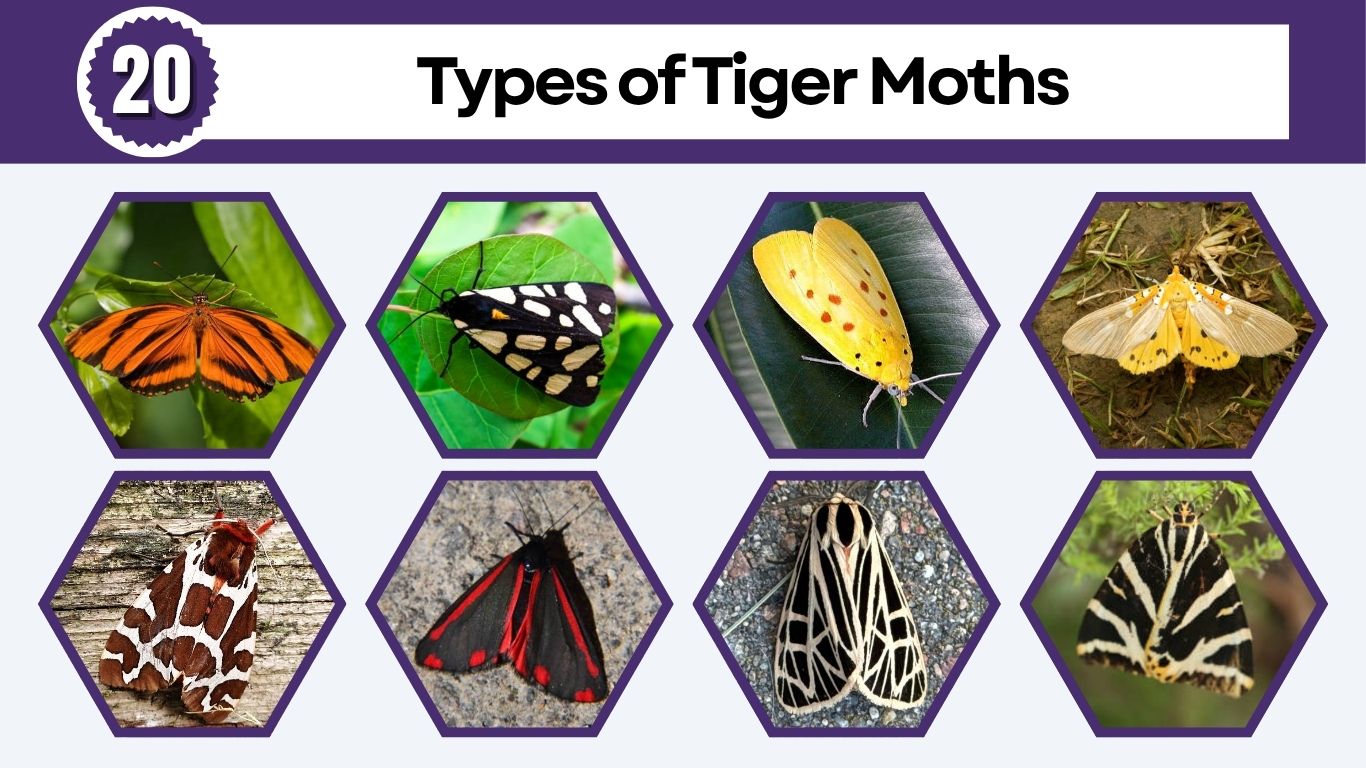
Tiger moths are a diverse and colorful group of moths known for their striking wing patterns and vivid warning colors. Found across Europe, Asia, and the Americas, these moths inhabit meadows, grasslands, gardens, and woodland edges. Their larvae, often called “woolly bears,” feed on a variety of herbaceous plants, contributing to their adaptability. Tiger moths play important ecological roles, including acting as prey for predators while using chemical defenses to protect themselves. This article explores 20 notable tiger moth species, highlighting identification, habitat, behavior, and lifecycle.
1. Garden Tiger Moth
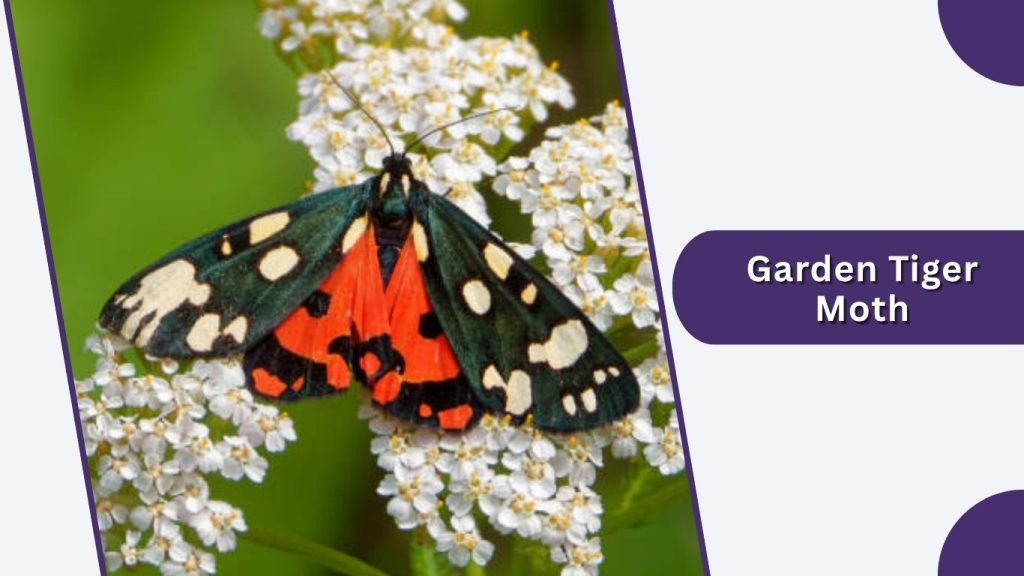
The Garden Tiger Moth (Arctia caja) is a strikingly patterned moth found throughout Europe, North America, and parts of Asia. It is known for its bold coloration, which serves as a warning to predators about its toxicity. This moth is most active at night and is commonly seen in gardens, meadows, and woodland edges. Its larvae, commonly called woolly bears, are covered in dense hair and feed on a wide variety of herbaceous plants, contributing to its adaptability across habitats.
Identification
- Forewings brown with white markings forming a patchy pattern
- Hindwings bright orange with blue-black spots
- Large, furry caterpillars known as woolly bears
- Adults have a wingspan of 45–65 mm
Habitat and Distribution
The Garden Tiger Moth inhabits gardens, meadows, grasslands, and forest edges. It is widely distributed across Europe, North America, and northern Asia, favoring areas where host plants for its larvae are abundant.
Behavior and Diet
Adult moths are nocturnal and feed on nectar from various flowers, while the larvae consume a wide range of herbaceous plants. The bright coloration of adults serves as a warning to predators about their unpalatability.
Lifecycle
The lifecycle begins with eggs laid on host plants. Caterpillars (woolly bears) feed and grow throughout the summer, then overwinter in leaf litter or soil. Pupation occurs in early spring, and adults emerge to mate and continue the cycle.
2. Isabella Tiger Moth

The Isabella Tiger Moth (Pyrrharctia isabella) is widely recognized for its woolly bear caterpillar stage, which is often seen crossing roads in fall. This species is native to North America and thrives in open fields, meadows, and gardens. The adult moth displays muted orange and brown coloration, while its caterpillars are known for their dense, bristly hairs, which help protect them from predators and harsh weather conditions.
Identification
- Adults have orange-brown wings with small black spots
- Woolly bear caterpillars are densely hairy with black and brown bands
- Wingspan ranges from 32–50 mm
- Furry caterpillars serve as a warning to predators
Habitat and Distribution
Isabella Tiger Moths are commonly found in meadows, fields, gardens, and open woodlands throughout the United States and southern Canada. They prefer areas with abundant low-growing vegetation for larvae feeding.
Behavior and Diet
Adult moths are nocturnal and feed on nectar from flowers. Woolly bear larvae feed on a variety of low-growing plants, including grasses, clover, and dandelions. Their dense hair protects them from predators and helps them survive cold temperatures.
Lifecycle
The moth lays eggs on host plants, which hatch into woolly bear caterpillars. These caterpillars feed through the summer and overwinter under leaf litter or soil. Pupation occurs in spring, and adults emerge to mate and continue the life cycle.
3. Salt Marsh Moth

The Salt Marsh Moth (Estigmene acrea) is a colorful tiger moth native to North and Central America. It is commonly found in salt marshes, fields, gardens, and open grasslands. This moth is well-known for its striking white wings with black spots and vibrant orange hindwings. Its caterpillars, often called “yellow woolly bears,” feed on a wide variety of plants, making them adaptable and widespread.
Identification
- White forewings with scattered black spots
- Bright orange hindwings with black markings
- Woolly caterpillars are yellow to orange with black bristles
- Wingspan ranges from 45–65 mm
Habitat and Distribution
Salt Marsh Moths inhabit salt marshes, grasslands, gardens, and open fields throughout North and Central America. They prefer areas with abundant herbaceous plants for their larvae to feed on.
Behavior and Diet
Adults are nocturnal and are attracted to light sources. Caterpillars feed on many plants including crops, weeds, and garden vegetation. Their bright coloration serves as a warning to predators about potential toxicity.
Lifecycle
Eggs are laid on host plants and hatch into woolly caterpillars, which feed through the summer. Larvae overwinter in leaf litter or soil. Pupation occurs in spring, and adults emerge to mate, continuing the species’ life cycle.
4. Scarlet Tiger Moth
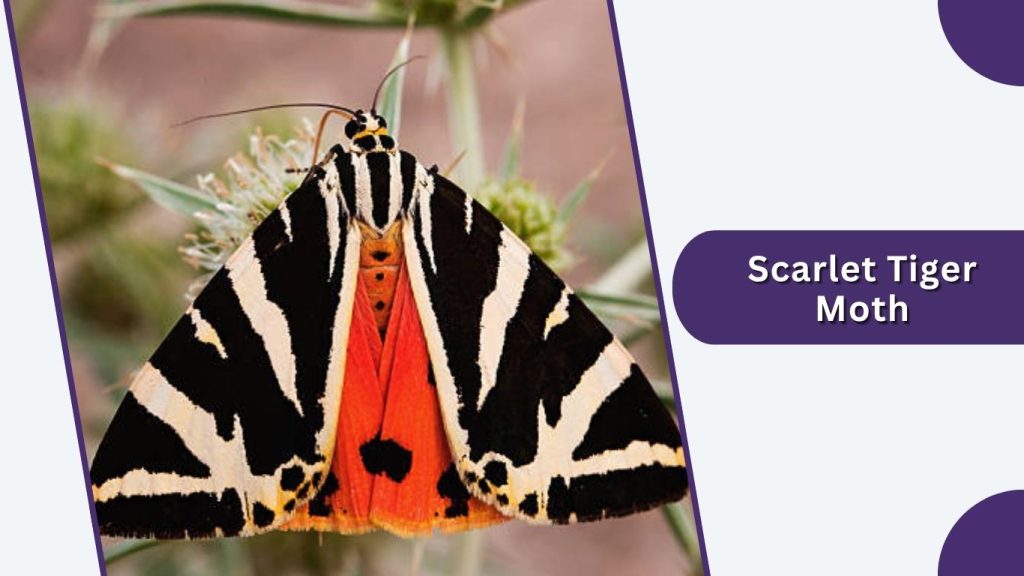
The Scarlet Tiger Moth (Callimorpha dominula) is a visually striking moth native to Europe and parts of western Asia. Known for its bold coloration, this moth features black forewings with white and yellow spots and bright red hindwings with black markings. It inhabits meadows, woodland edges, and gardens. The larvae, covered in dense hairs, feed on a variety of herbaceous plants, contributing to their adaptability and survival in different habitats.
Identification
- Black forewings with white and yellow spots
- Bright red hindwings with black markings
- Caterpillars are hairy and black with yellow stripes
- Wingspan ranges from 45–55 mm
Habitat and Distribution
Scarlet Tiger Moths are commonly found in meadows, woodland edges, and gardens across Europe and western Asia. They prefer areas with diverse herbaceous vegetation for larval feeding.
Behavior and Diet
Adults are nocturnal and feed on nectar from flowers. Caterpillars consume a variety of low-growing plants such as nettles and comfrey. Bright coloration in both larvae and adults warns predators of their unpalatability.
Lifecycle
Eggs are laid on host plants, hatching into hairy caterpillars. Larvae feed through summer and overwinter in protective shelters. Pupation occurs in spring, and adults emerge to mate and continue the life cycle.
5. Virgin Tiger Moth
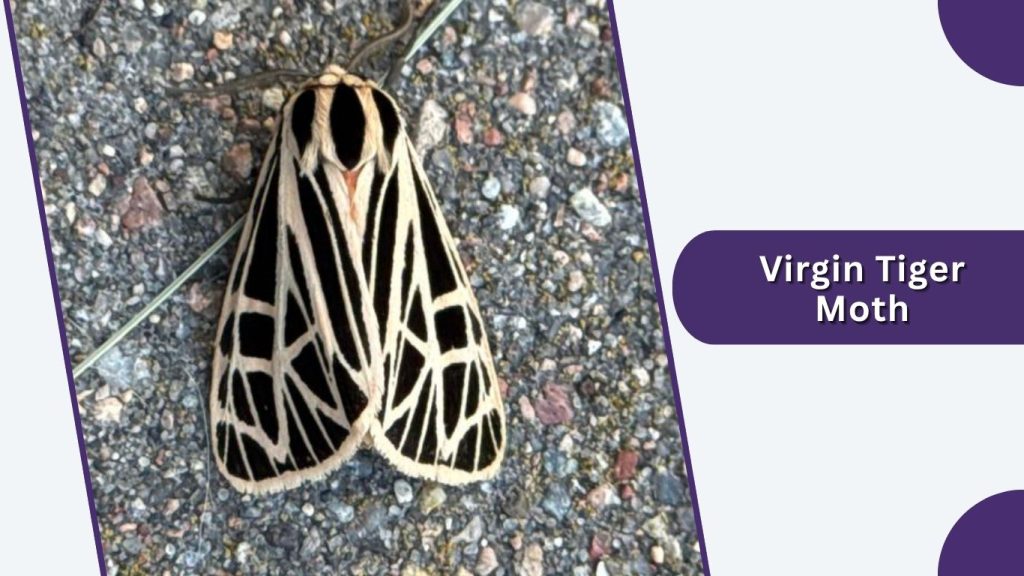
The Virgin Tiger Moth (Grammia virgo) is a North American species known for its bold, contrasting wing patterns. Adults display white or cream forewings with black markings and bright orange hindwings. This moth favors open fields, meadows, and forest edges. Its caterpillars, often referred to as “woolly bears,” feed on a variety of low-growing plants and grasses, making the species highly adaptable to different habitats.
Identification
- Cream or white forewings with black spots and lines
- Bright orange hindwings with black markings
- Woolly bear caterpillars are brown and densely hairy
- Wingspan ranges from 35–50 mm
Habitat and Distribution
Virgin Tiger Moths inhabit meadows, open fields, and forest edges across much of North America. They prefer areas with abundant herbaceous vegetation for larval feeding.
Behavior and Diet
Adults are nocturnal and attracted to lights at night. Caterpillars feed on a wide variety of herbaceous plants and grasses, using their hairs as protection against predators.
Lifecycle
Eggs are laid on host plants, hatching into woolly bear caterpillars. Larvae feed throughout the summer and overwinter in leaf litter. Pupation occurs in early spring, and adults emerge to mate, continuing the life cycle.
6. White Tiger Moth

The White Tiger Moth (Arctia nivea) is a visually striking species found in parts of Europe and Asia. It is recognized for its mostly white forewings with subtle black markings and vivid orange-red hindwings with black spots. This moth prefers alpine meadows, grasslands, and forest edges. Its caterpillars, covered in dense hairs, feed on a variety of herbaceous plants, allowing the species to thrive in diverse habitats.
Identification
- Forewings predominantly white with black speckling
- Hindwings bright orange-red with black spots
- Caterpillars are hairy and brownish with lighter bands
- Wingspan ranges from 40–55 mm
Habitat and Distribution
White Tiger Moths inhabit alpine meadows, grasslands, and woodland edges across Europe and parts of Asia. They favor areas where host plants for larvae are plentiful.
Behavior and Diet
Adults are nocturnal and feed on flower nectar, while larvae consume various low-growing plants. Their bright colors warn predators of potential toxicity, a common trait among tiger moths.
Lifecycle
Eggs are laid on host plants, hatching into hairy caterpillars. Larvae feed through summer, overwintering in leaf litter. Pupation occurs in spring, and adults emerge to mate and continue the life cycle.
7. Jersey Tiger Moth

The Jersey Tiger Moth (Euplagia quadripunctaria) is a striking moth native to Europe, particularly southern England, France, and the Mediterranean region. It is known for its bold black-and-white striped forewings and bright red hindwings with black spots. This species prefers open woodland edges, meadows, and gardens. Its caterpillars feed on various herbaceous plants, allowing the species to adapt to multiple habitats.
Identification
- Forewings black with white or cream stripes
- Hindwings bright red or orange with black spots
- Caterpillars are dark with fine hairs
- Wingspan ranges from 45–60 mm
Habitat and Distribution
Jersey Tiger Moths inhabit woodland edges, meadows, and gardens across southern Europe and parts of the Mediterranean. They are often found in areas with abundant herbaceous vegetation for larvae.
Behavior and Diet
Adults are diurnal and may feed on nectar, while larvae consume a variety of herbaceous plants. Their vivid hindwing coloration acts as a warning to predators.
Lifecycle
Eggs are laid on host plants, hatching into hairy caterpillars. Larvae feed during summer and pupate in soil or leaf litter. Adults emerge to mate, continuing the species’ lifecycle.
8. Cinnabar Tiger Moth
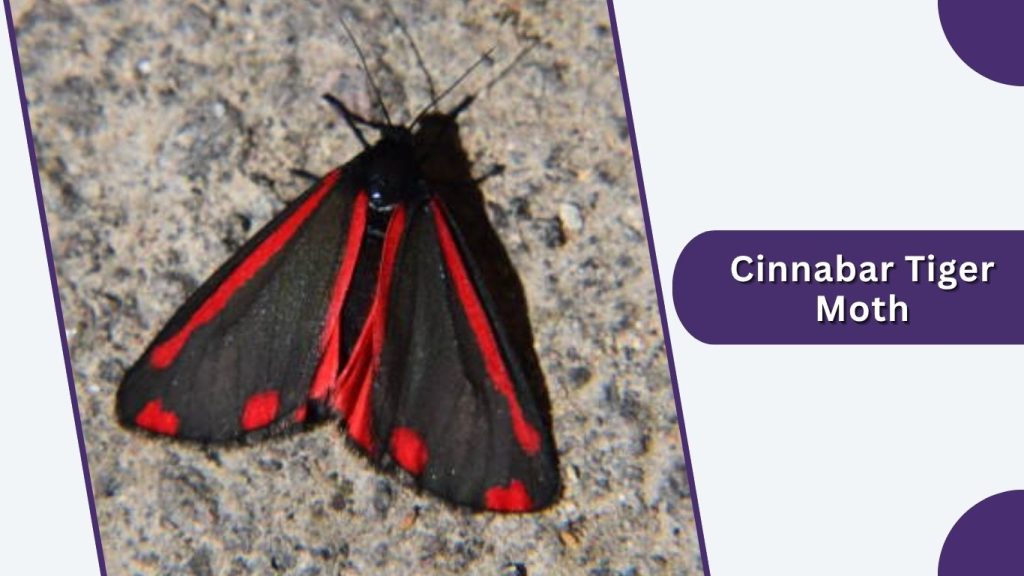
The Cinnabar Tiger Moth (Tyria jacobaeae) is a well-known species native to Europe and introduced to North America for ragwort control. It is recognized for its black forewings with red markings and bright red hindwings. This moth inhabits grasslands, meadows, and disturbed areas. Its larvae, commonly called cinnabar caterpillars, feed primarily on ragwort, making them important biological control agents.
Identification
- Black forewings with bright red markings
- Red hindwings with black spots
- Larvae are yellow and black striped
- Wingspan ranges from 30–50 mm
Habitat and Distribution
Cinnabar Tiger Moths are found in grasslands, meadows, and areas where ragwort grows across Europe and parts of North America. They thrive in habitats with host plants available for larvae.
Behavior and Diet
Adults are primarily nocturnal and feed on nectar. Caterpillars feed almost exclusively on ragwort, which contains toxic alkaloids, making them unpalatable to predators.
Lifecycle
Eggs are laid on ragwort plants, hatching into striped caterpillars that feed heavily on leaves. They overwinter as larvae and pupate in soil or leaf litter in spring. Adults emerge to mate, continuing the lifecycle.
9. Crimson Speckled Moth

The Crimson Speckled Moth (Utetheisa pulchella) is a striking moth found across Europe, North Africa, and parts of Asia. It is known for its vibrant pinkish-red forewings covered in white and black speckles, while the hindwings are pale with subtle markings. This species inhabits grasslands, coastal areas, and open fields. Its caterpillars feed on various herbaceous plants, particularly those in the borage family, making it well-adapted to different habitats.
Identification
- Pinkish-red forewings with white and black speckles
- Pale hindwings with faint markings
- Caterpillars are green with light stripes
- Wingspan ranges from 30–45 mm
Habitat and Distribution
Crimson Speckled Moths are found in grasslands, coastal regions, and open fields across Europe, North Africa, and parts of western Asia. They prefer areas with herbaceous host plants.
Behavior and Diet
Adults are nocturnal and may feed on nectar. Caterpillars feed on various herbaceous plants, often accumulating toxins that make them unpalatable to predators.
Lifecycle
Eggs are laid on host plants, hatching into green caterpillars. Larvae feed through summer and pupate in soil or leaf litter. Adults emerge to mate and continue the species’ lifecycle.
10. Wood Tiger Moth

The Wood Tiger Moth (Parasemia plantaginis) is a colorful moth native to Europe and parts of northern Asia. It is easily recognized by its contrasting white or yellow forewings with black markings and bright orange or red hindwings. This species inhabits meadows, woodland edges, and grasslands. Its caterpillars feed on a variety of herbaceous plants, making them adaptable to multiple habitats. The moth’s vivid coloration acts as a warning to predators about its chemical defenses.
Identification
- White or yellow forewings with bold black patterns
- Orange or red hindwings with black spots
- Hairy caterpillars, often black with yellow bands
- Wingspan ranges from 35–50 mm
Habitat and Distribution
Wood Tiger Moths are found in meadows, woodland edges, and grasslands across Europe and northern Asia. They prefer areas rich in herbaceous plants for larval feeding.
Behavior and Diet
Adults are primarily nocturnal and feed on nectar. Caterpillars feed on a variety of low-growing plants. Their bright coloration signals chemical defenses to potential predators.
Lifecycle
Eggs are laid on host plants, hatching into hairy caterpillars. Larvae feed throughout summer and overwinter in leaf litter. Pupation occurs in spring, and adults emerge to mate and continue the species’ lifecycle.
11. Scarlet-winged Tiger Moth
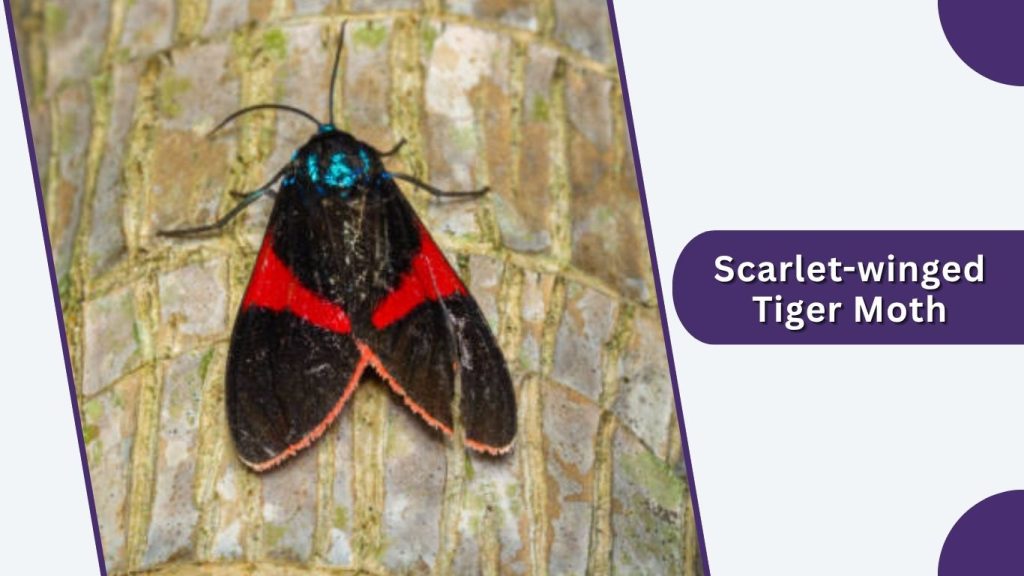
The Scarlet-winged Tiger Moth (Diacrisia sannio) is a striking moth found in Europe and parts of western Asia. Its forewings are pale with subtle markings, while the hindwings are bright scarlet with black spots. This moth inhabits meadows, forest edges, and gardens. Its caterpillars feed on a variety of herbaceous plants, making it adaptable to different habitats. The bright hindwings serve as a warning to predators about the moth’s unpalatability.
Identification
- Pale forewings with faint markings
- Bright scarlet hindwings with black spots
- Hairy caterpillars, often dark-colored
- Wingspan ranges from 35–50 mm
Habitat and Distribution
Scarlet-winged Tiger Moths are found in meadows, gardens, and woodland edges across Europe and parts of western Asia. They prefer areas with abundant host plants for larvae.
Behavior and Diet
Adults are nocturnal and feed on nectar, while caterpillars feed on herbaceous plants. The bright coloration of the hindwings warns predators of chemical defenses.
Lifecycle
Eggs are laid on host plants, hatching into hairy caterpillars. Larvae feed through summer and overwinter in leaf litter. Pupation occurs in spring, and adults emerge to mate and continue the life cycle.
12. Rosy Footman
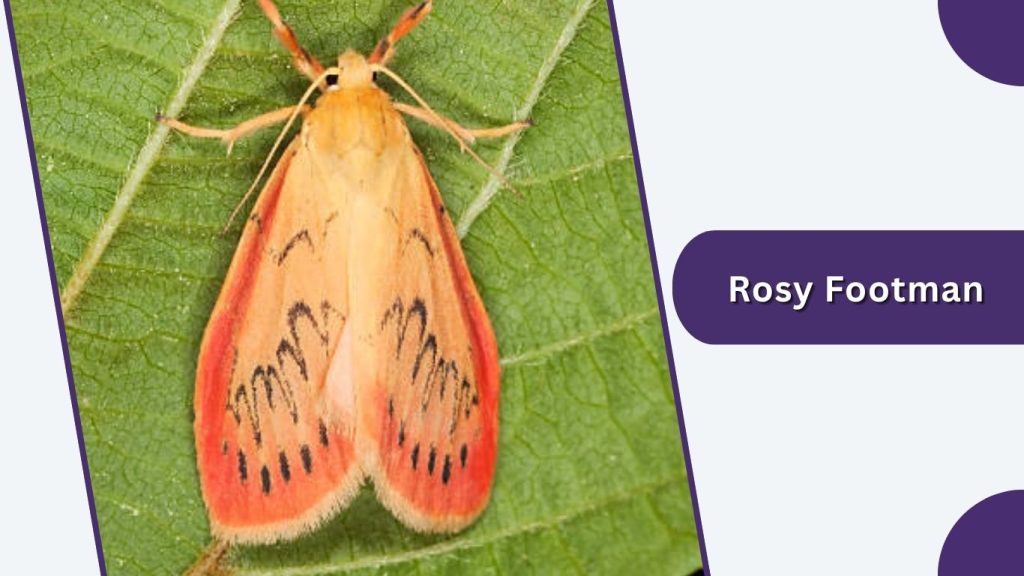
The Rosy Footman (Miltochrista miniata) is a small but colorful tiger moth found across Europe and parts of Asia. Its forewings are pale pink to rosy with subtle darker markings, while the hindwings are lighter with faint patterns. This species inhabits woodland edges, meadows, and gardens. The caterpillars feed on lichens and mosses, which allows the species to thrive in a variety of habitats and contributes to its ecological role.
Identification
- Forewings pale pink or rosy with darker markings
- Hindwings lighter with faint patterns
- Caterpillars feed on lichens and mosses
- Wingspan ranges from 25–35 mm
Habitat and Distribution
Rosy Footman moths are found in woodland edges, meadows, and gardens across Europe and parts of Asia. They prefer areas where lichens and mosses are abundant for larval feeding.
Behavior and Diet
Adults are nocturnal and feed on nectar or do not feed much at all. Caterpillars graze on lichens and mosses, making them relatively easy to maintain in natural habitats.
Lifecycle
Eggs are laid on suitable substrates, hatching into caterpillars that feed on lichens and mosses. Larvae overwinter and pupate in spring, with adults emerging to mate and continue the lifecycle.
13. Red-dotted Tiger Moth
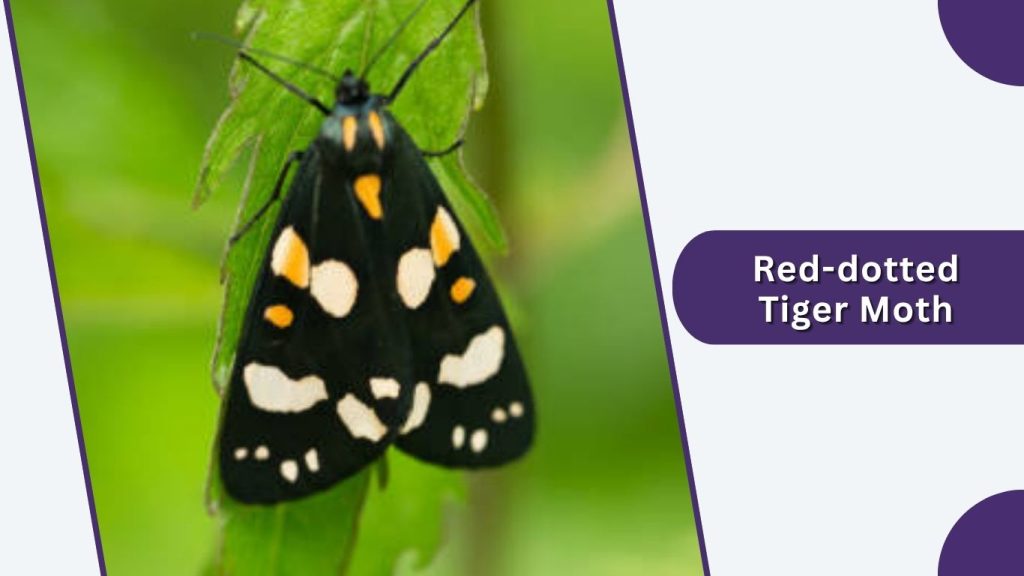
The Red-dotted Tiger Moth (Creatonotos gangis) is a colorful species found in South and Southeast Asia, including India, Thailand, and Indonesia. It is famous for its striking forewings patterned in brown and white and bright red hindwings with black dots. Males possess inflatable coremata, which release pheromones to attract females. Its caterpillars feed on a variety of herbaceous plants, allowing the species to thrive in diverse habitats such as grasslands, gardens, and forest edges.
Identification
- Brown and white patterned forewings
- Bright red hindwings with black dots
- Caterpillars are hairy and feed on herbaceous plants
- Wingspan ranges from 40–60 mm
Habitat and Distribution
Red-dotted Tiger Moths inhabit grasslands, gardens, and forest edges across South and Southeast Asia. They prefer areas with abundant host plants for larval feeding.
Behavior and Diet
Adults are nocturnal and are attracted to light. Caterpillars feed on herbaceous plants. Male coremata inflate during mating displays, releasing pheromones to attract females.
Lifecycle
Eggs are laid on host plants, hatching into hairy caterpillars that feed through summer. Larvae pupate in soil or leaf litter, and adults emerge to mate and continue the life cycle.
14. Spilosoma Moth

The Spilosoma Moth (Spilosoma lubricipeda), also known as the White Ermine, is a widely distributed species across Europe and parts of Asia. Adults have creamy white forewings with black spots, while their hindwings are pale. This moth inhabits meadows, gardens, woodland edges, and grasslands. Caterpillars are densely hairy and feed on a wide range of herbaceous plants, contributing to the moth’s adaptability across various habitats.
Identification
- Creamy white forewings with black spots
- Pale hindwings
- Hairy caterpillars, often brown or black with lighter bristles
- Wingspan ranges from 34–48 mm
Habitat and Distribution
Spilosoma Moths are found in meadows, gardens, woodland edges, and grasslands across Europe and parts of Asia. They prefer areas rich in herbaceous host plants for their larvae.
Behavior and Diet
Adults are nocturnal and may feed on nectar. Caterpillars feed on a wide variety of low-growing plants, including nettles, docks, and dandelions. Their dense hairs provide protection from predators.
Lifecycle
Eggs are laid on host plants, hatching into hairy caterpillars that feed during the summer. Larvae overwinter and pupate in spring, with adults emerging to mate and continue the life cycle.
15. Large Tiger Moth

The Large Tiger Moth (Arctia caja) is a bold and colorful species found across Europe, North America, and northern Asia. It is renowned for its striking forewings patterned in brown and white and bright orange hindwings with blue-black spots. This moth inhabits meadows, gardens, woodland edges, and grasslands. Caterpillars, commonly called woolly bears, feed on a wide variety of herbaceous plants, making the species highly adaptable to different environments.
Identification
- Forewings brown with white patchy patterns
- Hindwings bright orange with blue-black spots
- Woolly bear caterpillars densely hairy
- Wingspan ranges from 45–65 mm
Habitat and Distribution
Large Tiger Moths are found in meadows, gardens, woodland edges, and grasslands across Europe, North America, and northern Asia. They prefer areas with abundant herbaceous host plants for their larvae.
Behavior and Diet
Adults are nocturnal and feed on nectar, while caterpillars consume a wide range of low-growing plants. Bright coloration acts as a warning to predators about their toxicity.
Lifecycle
Eggs are laid on host plants, hatching into woolly bear caterpillars. Larvae feed through summer and overwinter in leaf litter. Pupation occurs in spring, and adults emerge to mate, continuing the species’ lifecycle.
16. Small Tiger Moth

The Small Tiger Moth (Phragmatobia fuliginosa) is a widely distributed species in Europe, Asia, and North America. It features reddish-brown forewings with small black spots and bright orange hindwings. The moth inhabits grasslands, meadows, heathlands, and woodland edges. Its caterpillars, often called “woolly bears,” feed on a variety of herbaceous plants, making them adaptable to different habitats.
Identification
- Reddish-brown forewings with small black spots
- Orange hindwings with black markings
- Hairy caterpillars, brown or black with light stripes
- Wingspan ranges from 30–45 mm
Habitat and Distribution
Small Tiger Moths inhabit grasslands, heathlands, meadows, and woodland edges across Europe, Asia, and North America. They prefer areas rich in herbaceous plants for larvae feeding.
Behavior and Diet
Adults are nocturnal and feed on nectar. Caterpillars consume a wide variety of low-growing plants. Their dense hairs provide protection against predators and harsh weather.
Lifecycle
Eggs are laid on host plants, hatching into hairy caterpillars. Larvae feed during summer and overwinter in leaf litter. Pupation occurs in spring, and adults emerge to mate and continue the life cycle.
17. Crimson Tiger Moth

The Crimson Tiger Moth (Phragmatobia cribraria) is a striking species found across Europe and parts of Asia. It has reddish-brown forewings with scattered black spots and bright crimson hindwings. This moth inhabits grasslands, meadows, and woodland edges. Its caterpillars feed on a variety of herbaceous plants, allowing the species to thrive in diverse habitats. The bright coloration warns predators of the moth’s chemical defenses.
Identification
- Reddish-brown forewings with black spots
- Bright crimson hindwings
- Hairy caterpillars, dark with lighter bristles
- Wingspan ranges from 35–50 mm
Habitat and Distribution
Crimson Tiger Moths are found in grasslands, meadows, and woodland edges across Europe and parts of Asia. They prefer areas with abundant host plants for larval feeding.
Behavior and Diet
Adults are nocturnal and feed on nectar. Caterpillars feed on a wide range of low-growing herbaceous plants. Their bright coloration warns predators of toxicity.
Lifecycle
Eggs are laid on host plants, hatching into hairy caterpillars. Larvae feed throughout summer and overwinter in leaf litter. Pupation occurs in spring, and adults emerge to mate and continue the lifecycle.
18. Four-spotted Tiger Moth
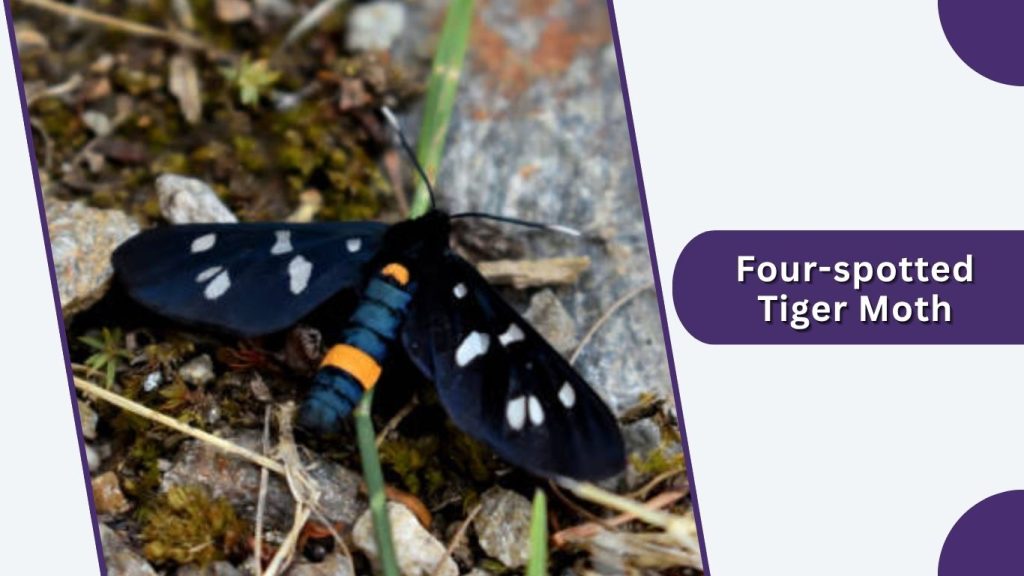
The Four-spotted Tiger Moth (Creatonotos gangis) is a vibrant species found in South and Southeast Asia. It is known for its distinctive forewings with four prominent spots and bright orange-red hindwings. This moth inhabits grasslands, open fields, and gardens. Caterpillars feed on a variety of herbaceous plants, making the species highly adaptable. Male moths possess inflatable coremata, which release pheromones to attract females during mating displays.
Identification
- Forewings with four prominent black spots
- Bright orange-red hindwings
- Hairy caterpillars feeding on herbaceous plants
- Wingspan ranges from 40–55 mm
Habitat and Distribution
Four-spotted Tiger Moths are found in grasslands, gardens, and open fields across South and Southeast Asia. They prefer areas rich in host plants for larval feeding.
Behavior and Diet
Adults are nocturnal and may feed on nectar. Caterpillars feed on herbaceous plants. Males use inflatable coremata to release pheromones to attract females.
Lifecycle
Eggs are laid on host plants. Larvae feed and grow during summer, overwintering as needed. Pupation occurs in soil or leaf litter, and adults emerge to mate and continue the species’ lifecycle.
19. Orange Tiger Moth

The Orange Tiger Moth (Arctia mendica) is a brightly colored species found in Europe and parts of Asia. It is recognized for its striking orange hindwings with black spots and patterned forewings in shades of brown and cream. This moth inhabits meadows, grasslands, and woodland edges. Its caterpillars are hairy and feed on a variety of herbaceous plants, which allows the species to adapt to different environments.
Identification
- Forewings brown and cream patterned
- Bright orange hindwings with black spots
- Hairy caterpillars feeding on herbaceous plants
- Wingspan ranges from 35–50 mm
Habitat and Distribution
Orange Tiger Moths are found in meadows, grasslands, and woodland edges across Europe and parts of Asia. They prefer areas with abundant host plants for their larvae.
Behavior and Diet
Adults are nocturnal and feed on nectar. Caterpillars feed on a variety of low-growing plants. Bright coloration serves as a warning to predators about potential toxicity.
Lifecycle
Eggs are laid on host plants, hatching into hairy caterpillars. Larvae feed during summer and overwinter in leaf litter. Pupation occurs in spring, and adults emerge to mate and continue the species’ lifecycle.
20. Yellow Tiger Moth

The Yellow Tiger Moth (Spilosoma flavidum) is a striking species found in parts of Europe, Asia, and North America. Its forewings are pale yellow with subtle dark markings, while the hindwings are brighter yellow with small black spots. This moth inhabits meadows, grasslands, gardens, and woodland edges. Caterpillars are hairy and feed on a wide variety of herbaceous plants, which contributes to the species’ adaptability across different habitats.
Identification
- Pale yellow forewings with faint dark markings
- Bright yellow hindwings with small black spots
- Hairy caterpillars feeding on herbaceous plants
- Wingspan ranges from 30–45 mm
Habitat and Distribution
Yellow Tiger Moths are found in meadows, grasslands, gardens, and woodland edges across Europe, Asia, and North America. They prefer areas with abundant host plants for larval feeding.
Behavior and Diet
Adults are nocturnal and may feed on nectar. Caterpillars consume various herbaceous plants. The bright coloration warns predators of their chemical defenses.
Lifecycle
Eggs are laid on host plants, hatching into hairy caterpillars that feed through the summer. Larvae overwinter in leaf litter. Pupation occurs in spring, and adults emerge to mate, continuing the lifecycle.
FAQs
What do tiger moths eat?
Adult tiger moths generally feed on nectar from flowers, while their caterpillars consume a wide variety of low-growing herbaceous plants, including grasses, clover, nettles, and ragwort. The diet of the larvae helps determine the moth’s habitat and distribution.
Are tiger moths poisonous or harmful?
Tiger moths are not harmful to humans, but many species have chemical defenses that make them distasteful to predators. Their bright coloration, particularly on hindwings, acts as a warning signal to birds and other predators.
Where are tiger moths found?
Tiger moths are widely distributed across Europe, Asia, North America, and parts of South America, inhabiting meadows, grasslands, gardens, and woodland edges. Each species prefers areas with abundant host plants for their caterpillars.
What is the lifecycle of a tiger moth?
Tiger moths go through a complete metamorphosis: eggs are laid on host plants, hatching into hairy caterpillars. Caterpillars feed during the summer and overwinter if necessary. Pupation occurs in soil or leaf litter, and adults emerge to mate, continuing the cycle.
How do tiger moths protect themselves from predators?
Tiger moths use aposematic coloration, bright wing patterns, and sometimes chemical toxins to deter predators. Some species’ caterpillars are hairy, which also serves as a physical deterrent against birds and small mammals.