The Virginia tiger moth is a fluffy white moth known for its fuzzy caterpillar stage called the yellow woolly bear. This insect is common across North America and often appears in gardens, forests, and fields during warmer months. Many people search for the Virginia tiger moth because they want to identify its caterpillar, learn if it is poisonous, or understand its life cycle.
The species is scientifically known as Spilosoma virginica. Its soft white wings and hairy caterpillar make it one of the easier tiger moths to recognize. Although the caterpillar may look dangerous, this moth is usually harmless and plays an important role in nature.
What Is the Virginia Tiger Moth?
The Virginia tiger moth is a medium-sized moth from the tiger moth family. It is famous for its bright white appearance and fuzzy caterpillar called the yellow woolly bear. This moth is active mostly at night and is often attracted to porch lights. The species can survive in many habitats and feeds on a wide variety of plants during its caterpillar stage.
Scientific Classification
- Scientific name: Spilosoma virginica
- Family: Erebidae
- Common names:
- Virginia tiger moth
- Virginian tiger moth
- Yellow woolly bear moth
Why Is It Called a Tiger Moth?
Tiger moths are named for the bold colors and patterns found in many species within this group. The Virginia tiger moth is less colorful than some relatives, but it still belongs to the same family. Its white wings sometimes contain small black dots, while the caterpillar is covered in thick fuzzy hairs that help protect it from predators.
Virginia vs Virginian Tiger Moth
Both “Virginia tiger moth” and “Virginian tiger moth” refer to the same insect species. The two spellings are commonly used online and in field guides. However, “Virginian tiger moth” is slightly more traditional in scientific references, while “Virginia tiger moth” is often searched more frequently by the public.
Virginia Tiger Moth Identification
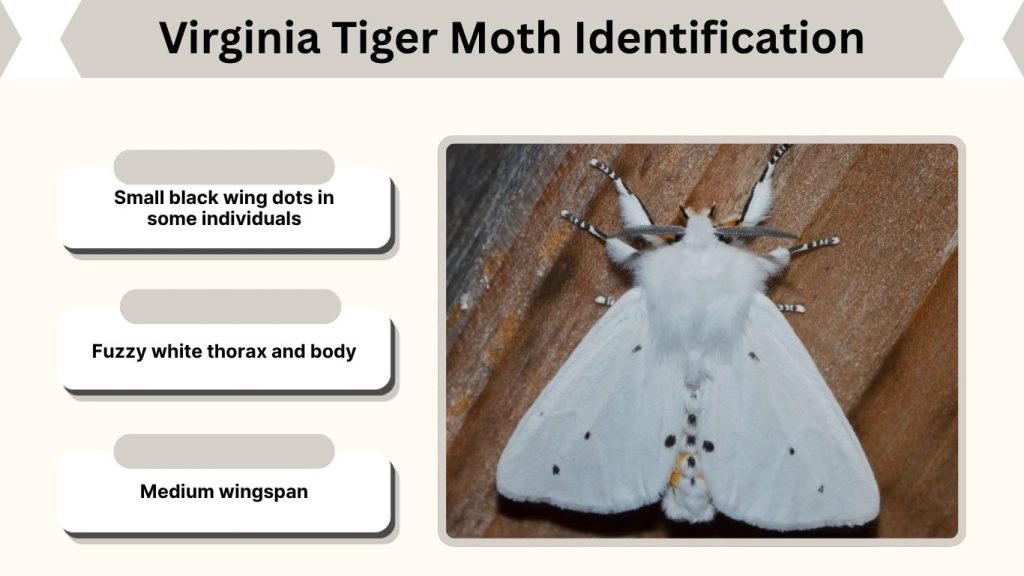
The Virginia tiger moth changes greatly as it grows from a caterpillar into an adult moth. Many people first notice the fuzzy caterpillar before seeing the white moth later in the season. Learning the identifying features of both stages helps prevent confusion with other hairy caterpillars and tiger moth species.
Adult Virginia Tiger Moth Appearance
- Bright white wings
- Small black wing dots in some individuals
- Fuzzy white thorax and body
- Medium wingspan
- Slender antennae
- Active mainly at night
Virginia Tiger Moth Caterpillar Identification
The caterpillar is commonly called the yellow woolly bear. It has a thick covering of soft hairs that may appear yellow, orange, cream, or even white depending on age and location. Some caterpillars also develop darker patches along the body. Unlike dangerous stinging caterpillars, the hairs are mostly harmless, though sensitive skin may become irritated after contact.
Look-Alike Caterpillars and Moths
Several fuzzy caterpillars are mistaken for the Virginia tiger moth caterpillar. The salt marsh caterpillar and banded woolly bear are common examples. Adult moths may also resemble agreeable tiger moths because of their pale wing colors. Careful observation of wing markings and caterpillar hair color can help identify the correct species.
Virginia Tiger Moth Caterpillar
The caterpillar stage is the most active feeding period in the Virginia tiger moth’s life cycle. These fuzzy larvae spend much of their time eating leaves and growing rapidly before forming a cocoon. Because they can feed on many plants, they are commonly seen in home gardens and natural habitats.
What Does the Caterpillar Eat?
- Cabbage
- Clover
- Dandelion
- Sunflower
- Maple leaves
- Plantain weeds
- Garden vegetables
- Wildflowers
- Willow leaves
Virginia Tiger Moth Host Plants
Virginia tiger moth caterpillars are not picky eaters. They use many host plants found in gardens, meadows, forests, and farms. This ability helps the species survive in different environments across North America. Young caterpillars often feed on low-growing plants, while larger larvae may climb shrubs and small trees in search of food.
Are Virginia Tiger Moth Caterpillars Poisonous?
Many people worry that the fuzzy hairs are poisonous or dangerous. In most cases, Virginia tiger moth caterpillars are not poisonous. However, the hairs may cause mild itching or skin irritation in sensitive individuals. It is best to avoid touching them with bare hands, especially for children or people with allergies.
Do Virginia Tiger Moth Caterpillars Sting?
The caterpillars do not have venomous stingers like bees or wasps. Their hairs mainly serve as protection against predators. Some people may experience redness or itching after handling them, but serious reactions are uncommon. Washing the skin after contact is usually enough to prevent discomfort.
Virginia Tiger Moth Life Cycle

The Virginia tiger moth goes through a complete metamorphosis that includes egg, caterpillar, pupa, and adult stages. Each stage looks very different and serves a special purpose in the insect’s development. The caterpillar stage focuses on feeding and growth, while the adult moth stage is mainly for reproduction and spreading the species into new habitats.
Egg Stage
Female Virginia tiger moths lay small clusters of eggs on leaves and stems of host plants. The eggs are tiny, pale in color, and usually hatch within several days during warm weather. Newly hatched caterpillars begin feeding almost immediately after emerging from the eggs.
Caterpillar Stage
The caterpillar passes through several growth stages called instars. During this period, it eats constantly and sheds its skin multiple times. Younger caterpillars may appear lighter in color, while older ones develop thicker and darker hairs. This stage lasts the longest in the moth’s life cycle because the caterpillar must store enough energy for pupation.
Cocoon and Pupa Stage
- The caterpillar spins a silk cocoon
- Body hairs are mixed into the cocoon
- Cocoons are often hidden under leaves
- Some pupae overwinter in cold regions
- Adult moths emerge after development finishes
Adult Moth Stage
Adult Virginia tiger moths are mostly nocturnal and become active during warm evenings. They are strongly attracted to outdoor lights and may rest on walls, tree trunks, or windows during the day. Their main goal is reproduction, and females begin laying eggs shortly after mating.
Virginia Tiger Moth Range and Habitat
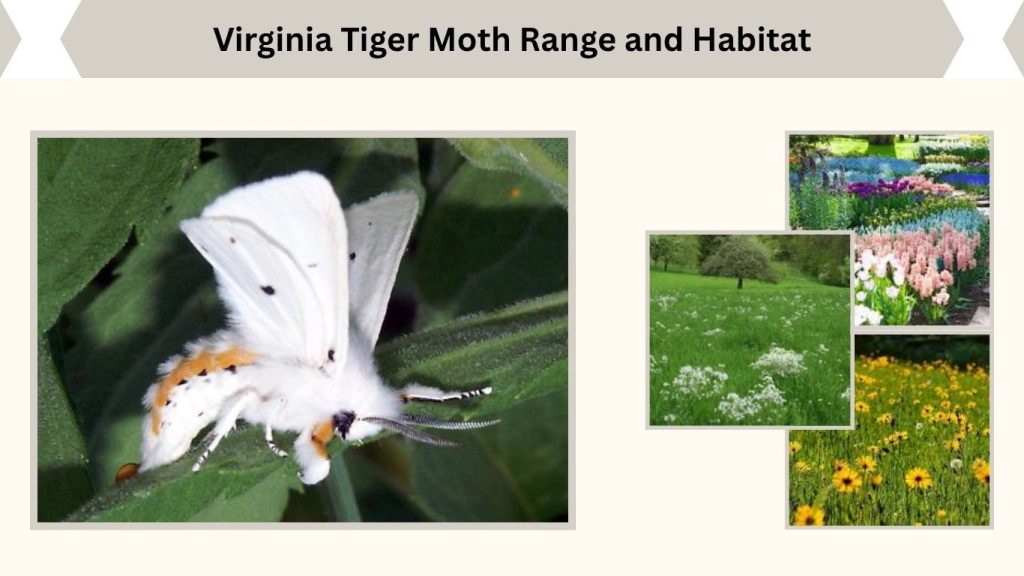
The Virginia tiger moth is widely distributed across North America and adapts well to many environments. Its ability to use different host plants allows it to survive in forests, farms, suburban gardens, and open grasslands. The species is especially common in areas with abundant vegetation and warm seasonal weather.
Geographic Distribution
- United States
- Southern Canada
- Florida
- Texas
- Midwest states
- Eastern woodlands
Preferred Habitat
Virginia tiger moths are commonly found in meadows, roadsides, gardens, and woodland edges. Caterpillars prefer areas with low plants and leafy vegetation where food is easy to find. Adults are often seen near porch lights because they fly mostly at night.
Seasonal Activity
The first caterpillars usually appear during spring or early summer. In warmer states, multiple generations may develop each year. Adult moths are most active from late spring through early fall, depending on climate and local temperatures.
Are Virginia Tiger Moths Good or Bad?
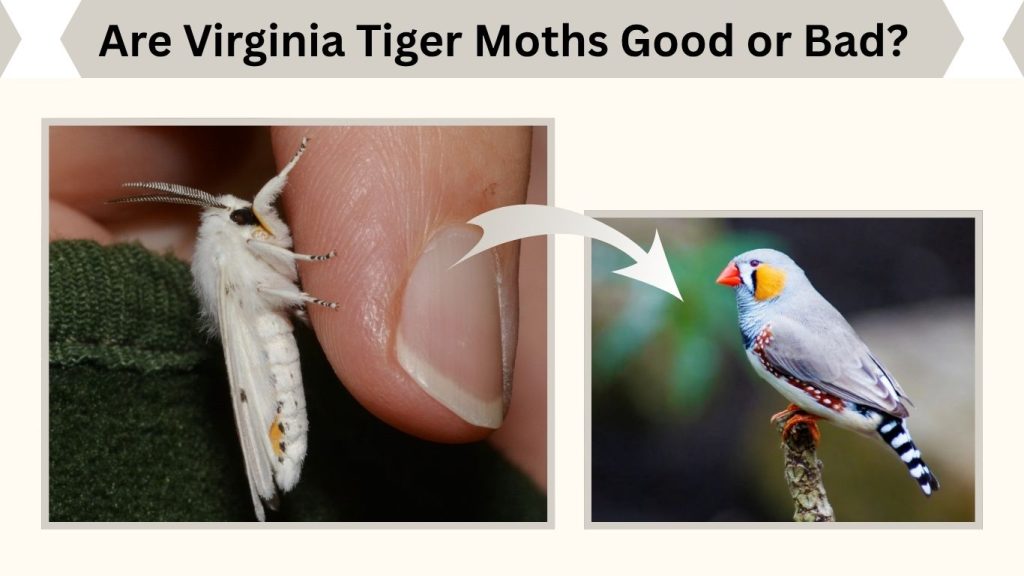
Virginia tiger moths are generally considered beneficial parts of the ecosystem. Although caterpillars may occasionally nibble garden plants, they rarely cause serious damage. These insects also provide food for birds and other wildlife, making them important members of natural food chains.
Benefits of Virginia Tiger Moths
- Help support local biodiversity
- Serve as prey for birds
- Contribute to food chains
- Part of healthy ecosystems
- Adults may assist with pollination
Can They Damage Gardens?
Caterpillars sometimes feed on vegetables, flowers, and leafy plants. However, large infestations are uncommon, and most gardens experience only minor feeding damage. Natural predators usually keep their populations under control without the need for pesticides.
Are They Destructive Pests?
Virginia tiger moths are not considered major agricultural pests. Their caterpillars feed on many plants, but they rarely appear in numbers large enough to destroy crops or landscapes. In most cases, they are harmless insects that simply pass through gardens while searching for food.
Interesting Virginia Tiger Moth Facts
The Virginia tiger moth has several unique traits that make it popular among insect watchers and nature enthusiasts. Its fuzzy caterpillar, white adult wings, and wide host plant range help it stand out from many other moth species found in North America.
Unique Facts
- The caterpillar is called the yellow woolly bear
- Adults are bright white in color
- Caterpillars can survive cold weather
- The species feeds on many different plants
- Adult moths are active mainly at night
Why Are They Attracted to Lights?
Like many nocturnal moths, Virginia tiger moths use natural light sources such as the moon for navigation. Artificial lights can confuse them, causing moths to circle around porch lights, street lamps, and windows at night.
Role in Nature
Virginia tiger moths are important parts of local ecosystems. Caterpillars recycle plant material by feeding on leaves, while adults provide food for bats and birds. Their presence also helps scientists measure environmental health and insect diversity.
FAQs
Are Virginia tiger moth caterpillars poisonous?
No, they are not truly poisonous. However, their fuzzy hairs can sometimes cause mild itching or skin irritation in sensitive individuals. Serious reactions are very rare, but it is still best to avoid handling them directly with bare hands.
What does a Virginia tiger moth caterpillar turn into?
The yellow woolly bear caterpillar transforms into the adult Virginia tiger moth. After forming a cocoon and completing the pupal stage, a white moth with small black markings eventually emerges.
What do Virginia tiger moth caterpillars eat?
These caterpillars eat a wide variety of plants, including cabbage, clover, dandelions, maple leaves, sunflowers, and many garden vegetables. Their broad diet helps them survive in different habitats across North America.
Are Virginia tiger moths harmful to gardens?
Virginia tiger moths are usually not considered harmful pests. Although the caterpillars may chew on leaves and vegetables, they rarely appear in numbers large enough to cause serious garden damage.
Where are Virginia tiger moths found?
Virginia tiger moths are found throughout much of the United States and southern Canada. They commonly live in gardens, meadows, woodland edges, farms, and grassy areas with plenty of plants.