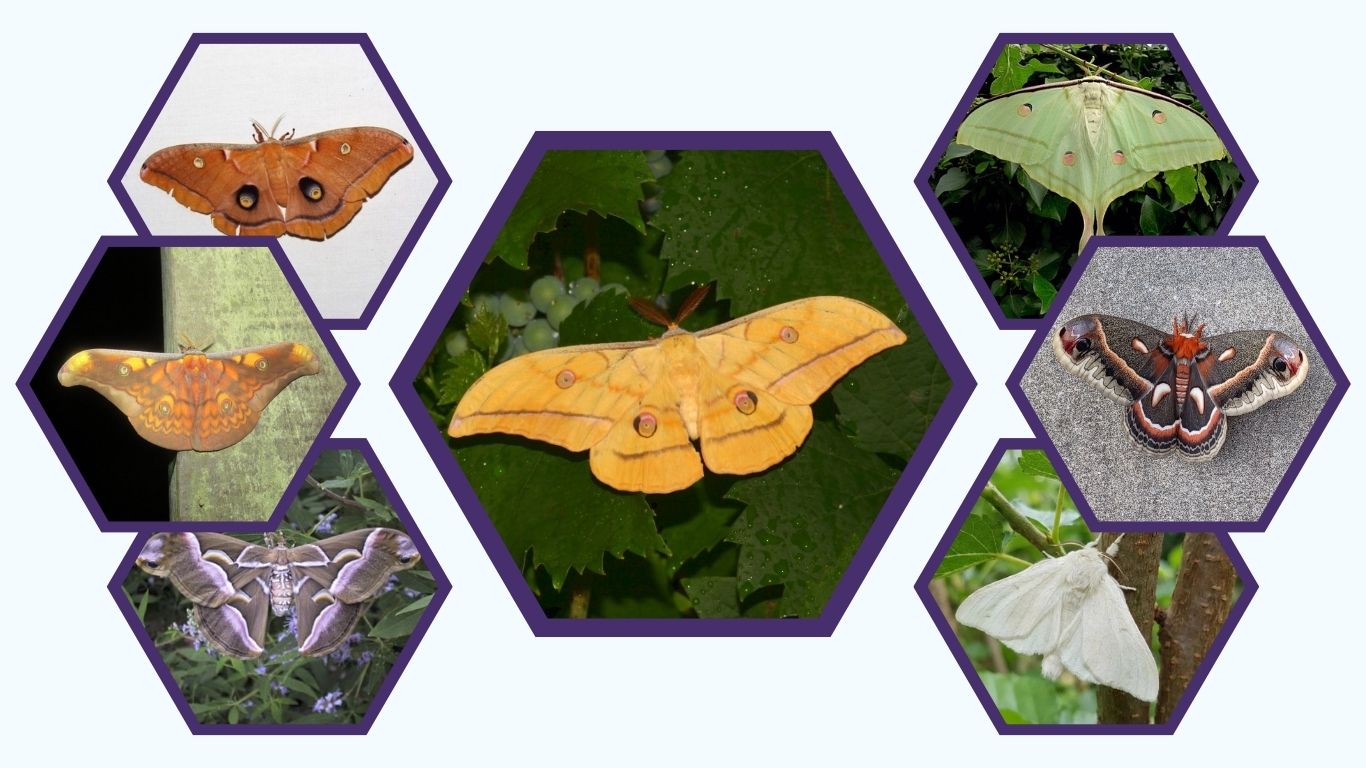
Silk moths are a fascinating group of insects known for their ability to produce silk, ranging from domesticated species like the Mulberry Silk Moth to wild varieties such as the Tasar and Muga moths. Found across Asia, Europe, and North America, these moths differ in size, color, host plants, and silk quality. Caterpillars feed on specific leaves, while adults focus on reproduction. Understanding their identification, habitats, behaviors, and lifecycles provides insight into silk production, ecological roles, and the diversity of this remarkable insect family.
1. Mulberry Silk Moth

The Mulberry Silk Moth (Bombyx mori) is the most well-known silk-producing moth. Domesticated for thousands of years, it is entirely dependent on humans for survival. Native to China, this species feeds exclusively on mulberry leaves and has been bred for high-quality silk production. Its gentle nature and predictable lifecycle make it ideal for sericulture.
Identification
- Size: 3–5 cm wingspan
- Color: White or cream-colored
- Antennae: Short and feathery in males, slender in females
- Body: Plump, hairy caterpillars
- Wings: Broad, triangular, smooth edges
Habitat and Distribution
Mulberry Silk Moths are cultivated worldwide in controlled environments. In the wild, their ancestors were native to China. They require abundant mulberry leaves, moderate humidity, and protection from predators and extreme temperatures.
Behavior and Diet
Adult moths do not feed; they rely on energy stored from their caterpillar stage. Caterpillars feed exclusively on mulberry leaves and grow rapidly, molting several times before spinning cocoons. Adults are mostly nocturnal and have a short lifespan.
Lifecycle
The Mulberry Silk Moth undergoes complete metamorphosis: egg → larva (caterpillar) → pupa (cocoon) → adult moth. Caterpillars spin silk cocoons over 3–4 days, which are harvested for silk threads. Adults emerge, mate, lay eggs, and die within a week.
2. Tasar Silk Moth
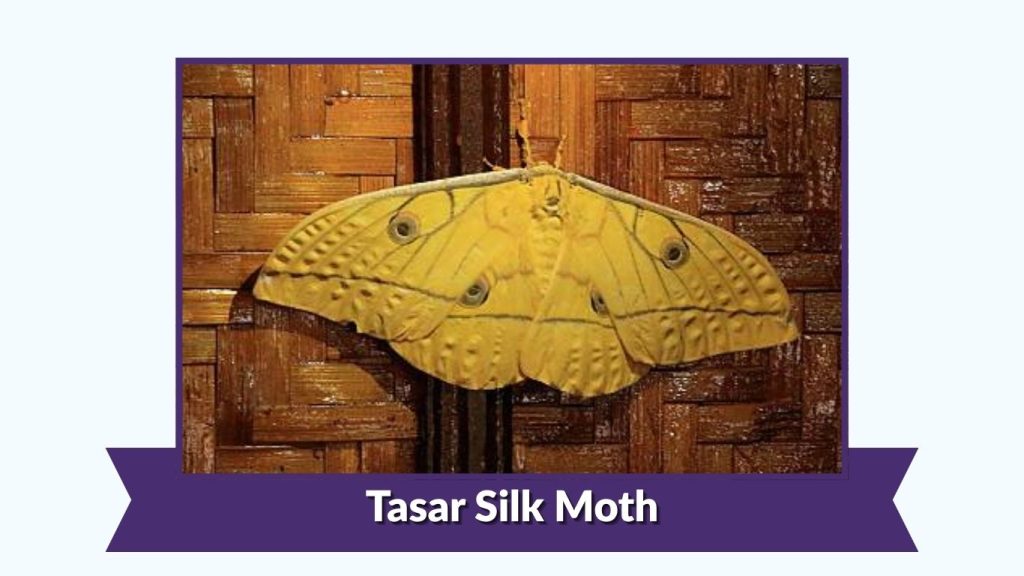
The Tasar Silk Moth (Antheraea mylitta) is a wild silk-producing moth native to India. Unlike the domesticated mulberry silk moth, it thrives in forests and feeds on various host plants such as Arjun, Asan, and Terminalia species. Tasar silk is valued for its coarse texture and natural golden-brown color, widely used in handloom textiles and traditional clothing.
Identification
- Size: 8–12 cm wingspan
- Color: Brownish with golden tints
- Antennae: Broad and feathery in males
- Wings: Patterned with eye-like spots
- Body: Stout and hairy caterpillars
Habitat and Distribution
Tasar Silk Moths are found in forested regions across central and eastern India, including Odisha, Jharkhand, and Chhattisgarh. They require host trees for caterpillar feeding and prefer warm, humid climates with ample foliage.
Behavior and Diet
Caterpillars feed on leaves of host trees, growing in small groups. Adults are nocturnal, short-lived, and do not feed. The moths exhibit seasonal breeding, usually coinciding with monsoon periods for optimal cocoon development.
Lifecycle
The Tasar Silk Moth undergoes complete metamorphosis. Eggs hatch into caterpillars, which feed and molt several times before spinning cocoons on tree branches. Pupation lasts for weeks, after which adults emerge, mate, lay eggs, and die within a short lifespan.
3. Eri Silk Moth
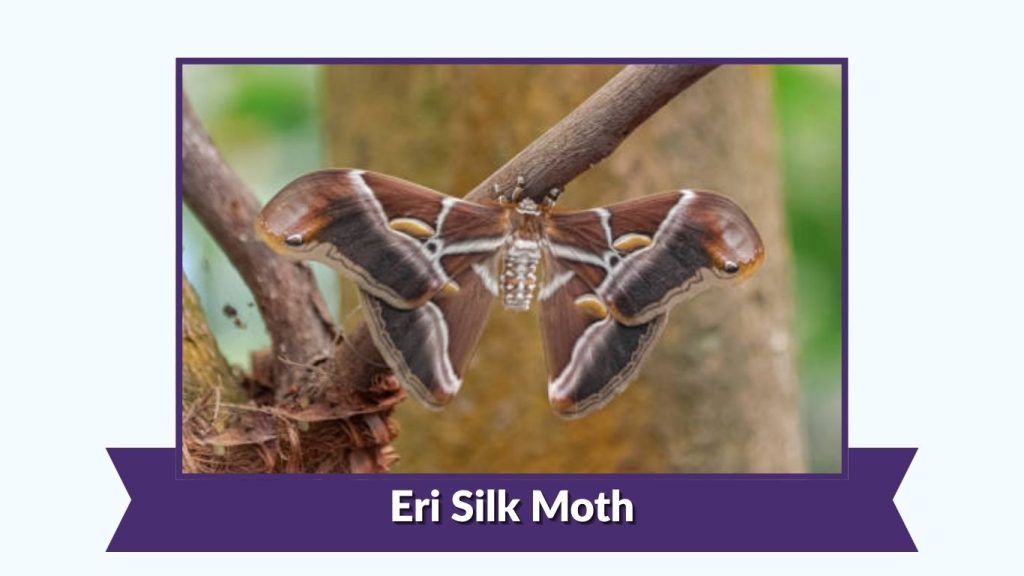
The Eri Silk Moth (Samia ricini) is a domesticated silk-producing moth primarily found in India and parts of Southeast Asia. Unlike the mulberry silk moth, it feeds on castor leaves and produces a soft, durable silk often used for non-woven textiles and warm clothing. It is adaptable to semi-wild conditions, making it popular for commercial eri silk production.
Identification
- Size: 7–10 cm wingspan
- Color: Creamy white to light brown
- Antennae: Feathered in males, slender in females
- Wings: Broad with subtle patterns, rounded edges
- Caterpillars: Thick, greenish, and hairy
Habitat and Distribution
Eri Silk Moths are cultivated in India, Thailand, and China. They thrive in areas with abundant castor plants, moderate humidity, and mild temperatures. Unlike fully domesticated species, they can survive semi-wild conditions.
Behavior and Diet
Caterpillars feed exclusively on castor leaves and grow in clusters. Adults do not eat and focus solely on reproduction. They are nocturnal and exhibit seasonal breeding, with cocoon production aligned to the growth of castor foliage.
Lifecycle
The moth completes a full metamorphosis: egg → caterpillar → cocoon → adult. Caterpillars spin open-ended cocoons, allowing easy silk harvesting without killing the pupae. Adults emerge, mate, lay eggs, and die within 5–10 days.
4. Muga Silk Moth
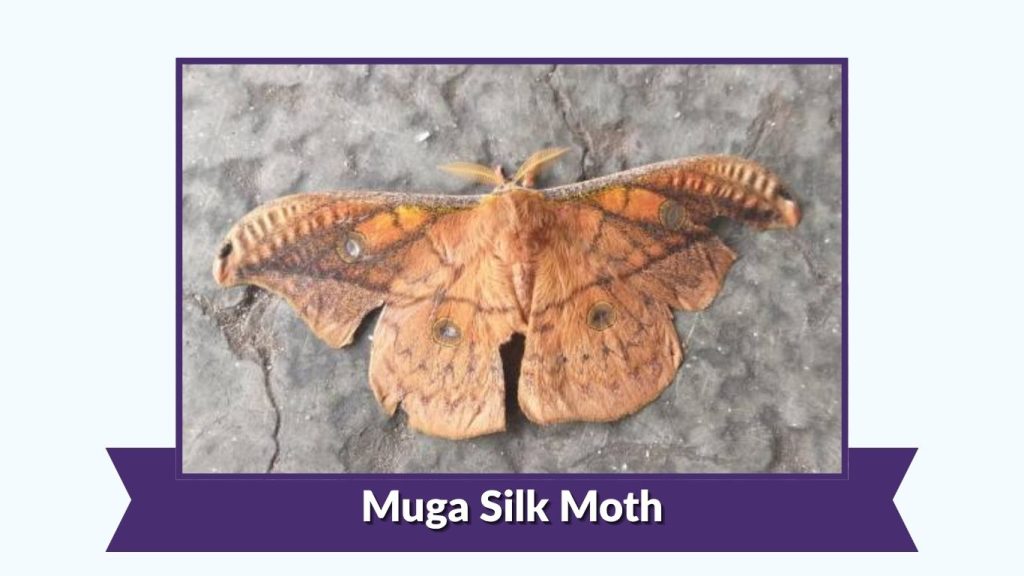
The Muga Silk Moth (Antheraea assamensis) is a wild silk-producing moth native to Assam, India. It produces natural golden silk known for its durability and sheen, highly prized in traditional Assamese textiles. This species feeds primarily on som and soalu leaves and is reared in semi-wild forest conditions, making it unique among silk moths.
Identification
- Size: 10–12 cm wingspan
- Color: Golden-brown with eye spots on wings
- Antennae: Broad and feathered in males
- Wings: Strong, triangular, patterned
- Caterpillars: Thick, hairy, greenish with white spots
Habitat and Distribution
Muga Silk Moths are found in Assam and nearby northeastern Indian states. They inhabit forests with host plants like som and soalu trees. Warm, humid conditions with partial shade are essential for cocoon development.
Behavior and Diet
Caterpillars feed on leaves of host plants, growing in small clusters. Adults do not feed and live only for reproduction. Breeding is seasonal, synchronized with the availability of fresh foliage for larvae.
Lifecycle
The Muga Silk Moth undergoes complete metamorphosis. Caterpillars spin silk cocoons on leaves and branches. Pupation lasts a few weeks, after which adults emerge, mate, lay eggs, and die shortly thereafter.
5. White Mulberry Silk Moth

The White Mulberry Silk Moth (Bombyx mori) is a domesticated species widely cultivated for its high-quality silk. It feeds exclusively on white mulberry leaves and has been bred for thousands of years for silk production. This moth produces smooth, long fibers that are ideal for weaving luxurious fabrics and is fully dependent on human care for survival.
Identification
- Size: 3–5 cm wingspan
- Color: Pure white or cream
- Antennae: Feathered in males, slender in females
- Wings: Broad, smooth edges
- Caterpillars: Plump, greenish-white, and hairy
Habitat and Distribution
White Mulberry Silk Moths are cultivated worldwide in controlled environments. They require abundant white mulberry leaves and moderate humidity. In the wild, their ancestors were native to northern China, but they are now entirely domesticated.
Behavior and Diet
Caterpillars feed exclusively on mulberry leaves and grow rapidly, molting several times. Adults are nocturnal and do not eat, focusing solely on reproduction. They have a short lifespan of about 5–10 days.
Lifecycle
The moth completes a full metamorphosis: egg → larva → cocoon → adult. Caterpillars spin silk cocoons over 3–4 days. Adults emerge, mate, lay eggs, and die shortly after, relying entirely on stored larval energy.
6. Tropical Tasar Moth

The Tropical Tasar Moth (Antheraea mylitta variant) is a wild silk moth found in India’s tropical forests. It produces coarse, durable silk used for handloom textiles. Unlike domesticated silk moths, it thrives in semi-wild conditions and feeds on host plants like Arjun, Asan, and Terminalia species, making it valuable for regional sericulture.
Identification
- Size: 8–12 cm wingspan
- Color: Brown with golden or rust-colored tones
- Antennae: Broad and feathered in males
- Wings: Patterned with eye-like spots
- Caterpillars: Thick, hairy, green to brown
Habitat and Distribution
Tropical Tasar Moths are found in forested regions of central and eastern India, including Odisha and Chhattisgarh. They require host trees and moderate humidity for optimal cocoon production.
Behavior and Diet
Caterpillars feed in groups on leaves of host plants. Adults do not feed and are nocturnal. Breeding occurs seasonally, aligned with the monsoon for optimal leaf availability.
Lifecycle
The moth undergoes complete metamorphosis: egg → larva → cocoon → adult. Caterpillars spin cocoons on tree branches. Adults emerge briefly to mate, lay eggs, and die within a few days.
7. Chinese Oak Tasar Moth

The Chinese Oak Tasar Moth (Antheraea pernyi) is a silk-producing moth native to China and widely cultivated in Asia. It feeds on oak leaves and produces coarse silk used in textiles. Known for its adaptability, this species thrives in both wild and semi-domesticated conditions, making it important for commercial tasar silk production.
Identification
- Size: 9–12 cm wingspan
- Color: Brownish-yellow with eye spots
- Antennae: Feathered in males, slender in females
- Wings: Triangular with prominent patterns
- Caterpillars: Thick, greenish with spiny hairs
Habitat and Distribution
Chinese Oak Tasar Moths are found in oak forests and cultivated areas in China and parts of Asia. They prefer warm, humid climates with abundant host leaves for caterpillar feeding.
Behavior and Diet
Caterpillars feed on oak leaves, growing in clusters. Adults do not eat and focus solely on reproduction. They are nocturnal and breed seasonally, with cocoon production synchronized to host plant leaf growth.
Lifecycle
The moth undergoes complete metamorphosis: egg → caterpillar → cocoon → adult. Caterpillars spin cocoons on branches or leaves. Adults emerge, mate, lay eggs, and die shortly afterward, completing the lifecycle within a few weeks.
8. Indian Tasar Moth
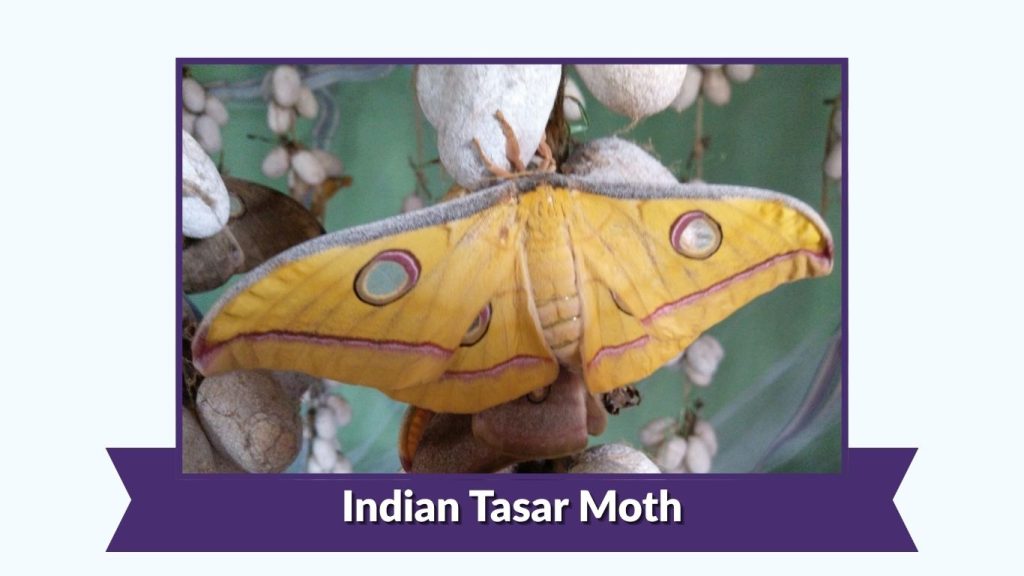
The Indian Tasar Moth (Antheraea mylitta) is a wild silk-producing moth native to India. It produces golden-brown silk highly valued in traditional handloom textiles. Caterpillars feed on trees like Arjun, Asan, and Terminalia species. This moth thrives in semi-wild forested areas, making it a key species for regional sericulture.
Identification
- Size: 8–12 cm wingspan
- Color: Golden-brown with eye spots
- Antennae: Broad and feathery in males
- Wings: Triangular, patterned with subtle eye-like markings
- Caterpillars: Thick, hairy, green with white markings
Habitat and Distribution
Indian Tasar Moths are found in central and eastern India, including Odisha, Jharkhand, and Chhattisgarh. They require host trees for feeding and prefer warm, humid forested areas for cocoon production.
Behavior and Diet
Caterpillars feed in clusters on host tree leaves. Adults are nocturnal, short-lived, and do not eat. Breeding is seasonal, usually aligned with the monsoon for optimal leaf availability.
Lifecycle
The moth completes metamorphosis: egg → caterpillar → cocoon → adult. Caterpillars spin cocoons on tree branches. Adults emerge briefly to mate, lay eggs, and die within a few days, continuing the cycle.
9. Antheraea Paphia

The Antheraea Paphia, also known as the Tasar Silk Moth of India, is a wild silk-producing moth valued for its rich golden silk. Native to tropical and subtropical forests, it feeds on host plants such as Arjun and Asan. Its silk is coarse, durable, and widely used in handloom and traditional textiles.
Identification
- Size: 8–12 cm wingspan
- Color: Golden-brown with faint eye spots
- Antennae: Broad and feathered in males
- Wings: Triangular with subtle patterned markings
- Caterpillars: Thick, hairy, greenish with white streaks
Habitat and Distribution
Found in tropical forests of central and eastern India, Antheraea Paphia thrives on host trees with broad leaves. Prefers warm, humid climates and moderate shade for cocoon spinning.
Behavior and Diet
Caterpillars feed on Arjun and Asan leaves, growing in clusters. Adults do not feed and focus on reproduction. Nocturnal activity dominates, with breeding aligned to seasonal foliage availability.
Lifecycle
Undergoes complete metamorphosis: egg → larva → cocoon → adult. Caterpillars spin cocoons on branches, after which adults emerge, mate, lay eggs, and die within a week.
10. Antheraea Pernyi

The Antheraea Pernyi is a silk-producing moth native to China, known for its coarse, golden-brown silk. It feeds primarily on oak leaves and is cultivated both in the wild and semi-domesticated conditions for commercial silk production. Its adaptability makes it a valuable species for regional sericulture.
Identification
- Size: 9–12 cm wingspan
- Color: Golden-brown with eye spots
- Antennae: Broad and feathered in males
- Wings: Triangular with distinct markings
- Caterpillars: Thick, greenish, and hairy
Habitat and Distribution
Antheraea Pernyi is found in oak forests of China and nearby regions. It prefers warm, humid climates with abundant host leaves for larval feeding and cocoon spinning.
Behavior and Diet
Caterpillars feed in groups on oak leaves. Adults do not eat and live only to reproduce. Nocturnal activity predominates, with seasonal breeding timed to host plant leaf growth.
Lifecycle
The moth undergoes complete metamorphosis: egg → caterpillar → cocoon → adult. Caterpillars spin cocoons on leaves or branches. Adults emerge, mate, lay eggs, and die within a few days, continuing the cycle.
11. Antheraea Mylitta

The Antheraea Mylitta, commonly known as the Indian Tasar Silk Moth, is a wild silk-producing moth found in India’s forested regions. It produces strong, golden-brown silk used in handloom and traditional textiles. Caterpillars feed on trees like Arjun, Asan, and Terminalia, making it a key species for regional sericulture.
Identification
- Size: 8–12 cm wingspan
- Color: Golden-brown with faint eye spots
- Antennae: Broad and feathery in males
- Wings: Triangular with subtle patterns
- Caterpillars: Thick, hairy, green with white markings
Habitat and Distribution
Antheraea Mylitta is found in central and eastern India, particularly in Odisha, Jharkhand, and Chhattisgarh. It inhabits forested areas with abundant host trees and moderate humidity for optimal cocoon production.
Behavior and Diet
Caterpillars feed in clusters on host tree leaves. Adults do not feed and focus solely on reproduction. They are nocturnal and breed seasonally, timed with the monsoon and fresh leaf availability.
Lifecycle
The moth undergoes complete metamorphosis: egg → larva → cocoon → adult. Caterpillars spin cocoons on tree branches. Adults emerge, mate, lay eggs, and die within a few days, continuing the life cycle.
12. Antheraea Proylei

The Antheraea Proylei is a hybrid silk-producing moth developed by crossing Antheraea Mylitta and Antheraea Pernyi. It produces high-quality golden silk used in handloom and commercial textiles. This species is semi-domesticated and primarily cultivated in India for its superior silk yield and adaptability to varied forest conditions.
Identification
- Size: 8–12 cm wingspan
- Color: Golden-brown with subtle eye spots
- Antennae: Broad and feathery in males
- Wings: Triangular with faint patterns
- Caterpillars: Thick, green, and slightly hairy
Habitat and Distribution
Antheraea Proylei is cultivated in semi-wild forested areas of India. It requires host trees like Arjun and Asan, moderate humidity, and warm climates for optimum cocoon production.
Behavior and Diet
Caterpillars feed in small clusters on host tree leaves. Adults do not eat and are nocturnal. Seasonal breeding aligns with the growth of fresh foliage for larval development.
Lifecycle
The moth undergoes complete metamorphosis: egg → larva → cocoon → adult. Caterpillars spin cocoons on tree branches. Adults emerge briefly to mate, lay eggs, and die within a few days, completing the cycle.
13. Antheraea Assama
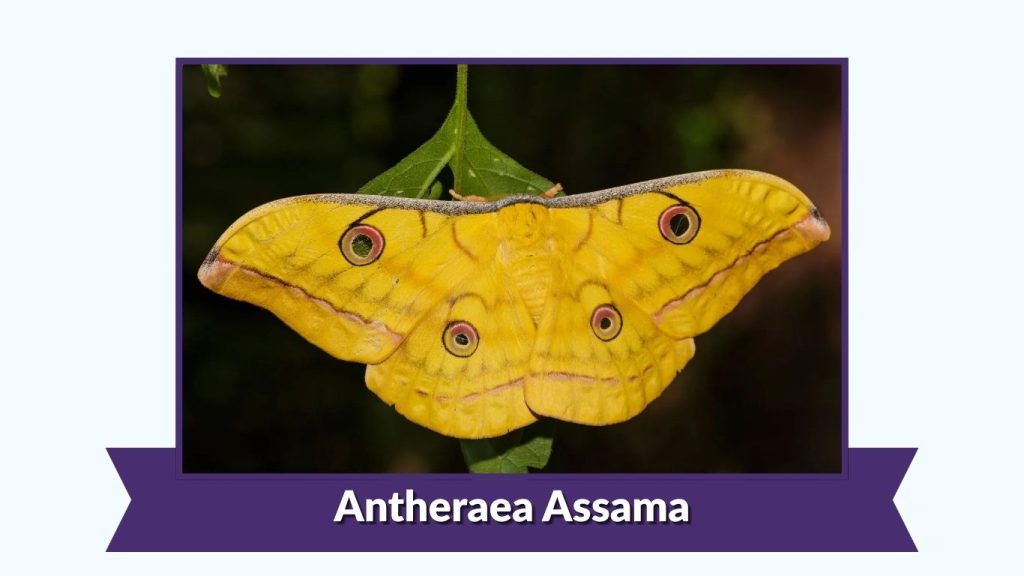
The Antheraea Assama, commonly known as the Muga Silk Moth, is native to Assam, India. It produces natural golden silk highly valued in traditional Assamese textiles. Caterpillars feed primarily on som and soalu leaves. This species is semi-wild, thriving in forested conditions, and plays a crucial role in regional sericulture.
Identification
- Size: 10–12 cm wingspan
- Color: Golden-brown with eye spots
- Antennae: Broad and feathered in males
- Wings: Triangular with patterned markings
- Caterpillars: Thick, greenish, and hairy
Habitat and Distribution
Found in Assam and northeastern India, this moth inhabits forests with som and soalu trees. Prefers warm, humid climates with partial shade for cocoon development.
Behavior and Diet
Caterpillars feed on host leaves in clusters. Adults do not eat and focus solely on reproduction. Seasonal breeding coincides with the availability of fresh foliage.
Lifecycle
The moth undergoes complete metamorphosis: egg → caterpillar → cocoon → adult. Caterpillars spin cocoons on leaves or branches. Adults emerge, mate, lay eggs, and die within a short lifespan.
14. Antheraea Polyphemus
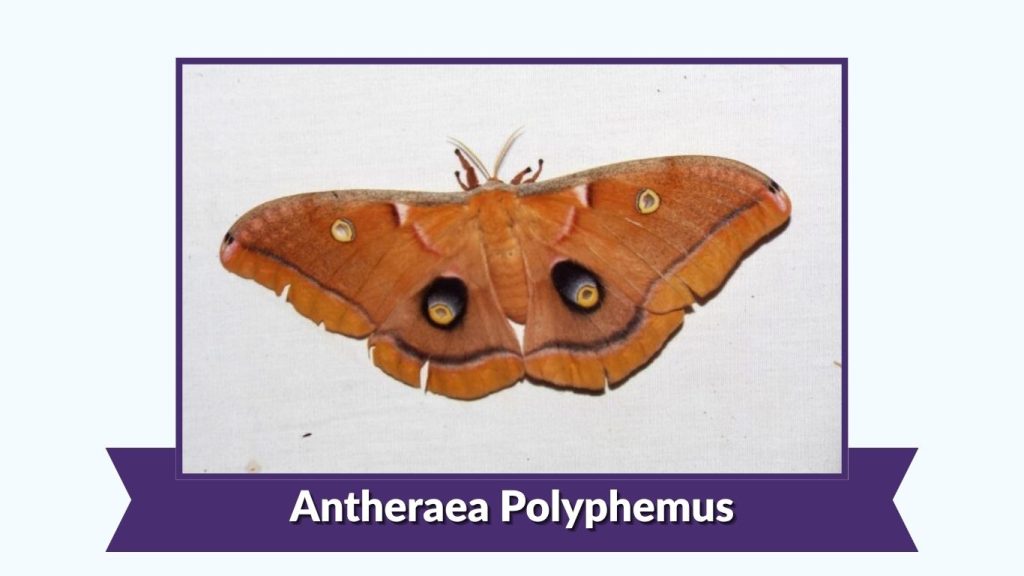
The Antheraea Polyphemus, also known as the Polyphemus Moth, is a large silk-producing moth native to North America. It is recognized for its impressive wingspan and distinctive eye spots, which help deter predators. While not commonly used for commercial silk, it is an important species in ecological studies and natural silk production.
Identification
- Size: 12–15 cm wingspan
- Color: Brown with prominent eye spots on wings
- Antennae: Broad and feathery in males
- Wings: Large, rounded, with subtle patterned markings
- Caterpillars: Green with yellow stripes and spiny hairs
Habitat and Distribution
Antheraea Polyphemus inhabits deciduous forests and wooded areas across North America. Prefers trees like oak, maple, and birch for caterpillar feeding and cocoon spinning.
Behavior and Diet
Caterpillars feed in groups on host tree leaves. Adults do not feed and are nocturnal. Breeding occurs seasonally, with cocoon formation timed to leaf availability.
Lifecycle
The moth undergoes complete metamorphosis: egg → larva → cocoon → adult. Caterpillars spin silk cocoons on branches. Adults emerge briefly to mate, lay eggs, and die within a week.
15. Antheraea Yamamai

The Antheraea Yamamai, also known as the Japanese Oak Silk Moth, is native to Japan and parts of East Asia. It produces high-quality silk with a natural creamy color. Caterpillars feed primarily on oak leaves, and the moth is valued for both silk production and its ecological role in temperate forests.
Identification
- Size: 10–14 cm wingspan
- Color: Creamy white to light brown with subtle eye spots
- Antennae: Broad and feathery in males
- Wings: Large, triangular, smooth edges
- Caterpillars: Green with fine hairs and yellow markings
Habitat and Distribution
Found in Japan, Korea, and parts of China, Antheraea Yamamai inhabits oak forests. Prefers moderate humidity, warm temperate climates, and abundant oak foliage for feeding and cocoon spinning.
Behavior and Diet
Caterpillars feed on oak leaves in small clusters. Adults are nocturnal and do not eat, focusing solely on reproduction. Breeding is seasonal, timed with leaf growth for larval development.
Lifecycle
The moth undergoes complete metamorphosis: egg → caterpillar → cocoon → adult. Caterpillars spin silk cocoons on leaves or branches. Adults emerge briefly to mate, lay eggs, and die within a few days.
16. Antheraea Pernyi Hybrid

The Antheraea Pernyi Hybrid is a crossbred silk moth derived from Antheraea Pernyi. It is cultivated for high-quality golden silk and exhibits traits from both parent species. Caterpillars feed on oak leaves, and the moth is reared in semi-wild or controlled environments to optimize silk production.
Identification
- Size: 9–12 cm wingspan
- Color: Golden-brown with faint eye spots
- Antennae: Broad and feathery in males
- Wings: Triangular with subtle patterned markings
- Caterpillars: Thick, greenish, and slightly hairy
Habitat and Distribution
Antheraea Pernyi Hybrids are primarily cultivated in China and parts of Asia. They require oak trees for larval feeding and moderate humidity for cocoon development.
Behavior and Diet
Caterpillars feed in clusters on oak leaves. Adults do not feed and focus solely on reproduction. Breeding is seasonal, aligned with leaf growth for optimal cocoon production.
Lifecycle
The moth undergoes complete metamorphosis: egg → larva → cocoon → adult. Caterpillars spin silk cocoons on branches or leaves. Adults emerge, mate, lay eggs, and die within a few days.
17. Samia Cynthia
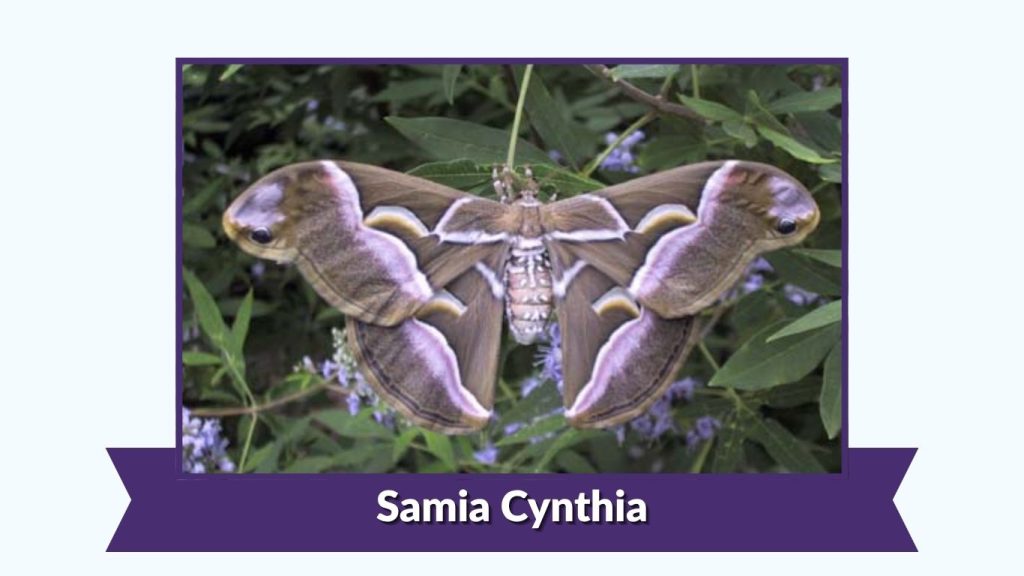
The Samia Cynthia, commonly known as the Ailanthus Silk Moth, is native to East Asia and produces durable silk used in textiles. Caterpillars feed primarily on Ailanthus leaves, and the species has been introduced in several regions for silk research and production.
Identification
- Size: 10–12 cm wingspan
- Color: Brown with pale markings and subtle eye spots
- Antennae: Broad and feathery in males
- Wings: Triangular with smooth edges
- Caterpillars: Green with black stripes and small spines
Habitat and Distribution
Samia Cynthia inhabits forests and urban areas with abundant Ailanthus trees in China, Japan, and Korea. Prefers moderate humidity and warm temperate climates for larval growth.
Behavior and Diet
Caterpillars feed in clusters on Ailanthus leaves. Adults do not feed and are nocturnal. Seasonal breeding is synchronized with leaf availability for optimal cocoon production.
Lifecycle
Undergoes complete metamorphosis: egg → larva → cocoon → adult. Caterpillars spin silk cocoons on leaves. Adults emerge, mate, lay eggs, and die within a few days.
18. Samia Ricini

The Samia Ricini, also called the Eri Silk Moth, is native to India and Southeast Asia. It feeds on castor leaves and produces soft, durable silk used in non-woven textiles and warm fabrics. This species is semi-domesticated and widely cultivated for commercial eri silk production.
Identification
- Size: 7–10 cm wingspan
- Color: Creamy white to light brown
- Antennae: Feathered in males, slender in females
- Wings: Broad with rounded edges and subtle patterns
- Caterpillars: Thick, greenish, and hairy
Habitat and Distribution
Samia Ricini is cultivated in India, Thailand, and China. Prefers areas with abundant castor plants, moderate humidity, and mild temperatures. Can survive semi-wild conditions.
Behavior and Diet
Caterpillars feed exclusively on castor leaves, growing in clusters. Adults do not eat and focus solely on reproduction. Breeding is seasonal, timed to castor leaf growth.
Lifecycle
The moth undergoes complete metamorphosis: egg → caterpillar → cocoon → adult. Caterpillars spin open-ended cocoons for easy silk harvesting. Adults emerge, mate, lay eggs, and die within 5–10 days.
19. Hyalophora Cecropia
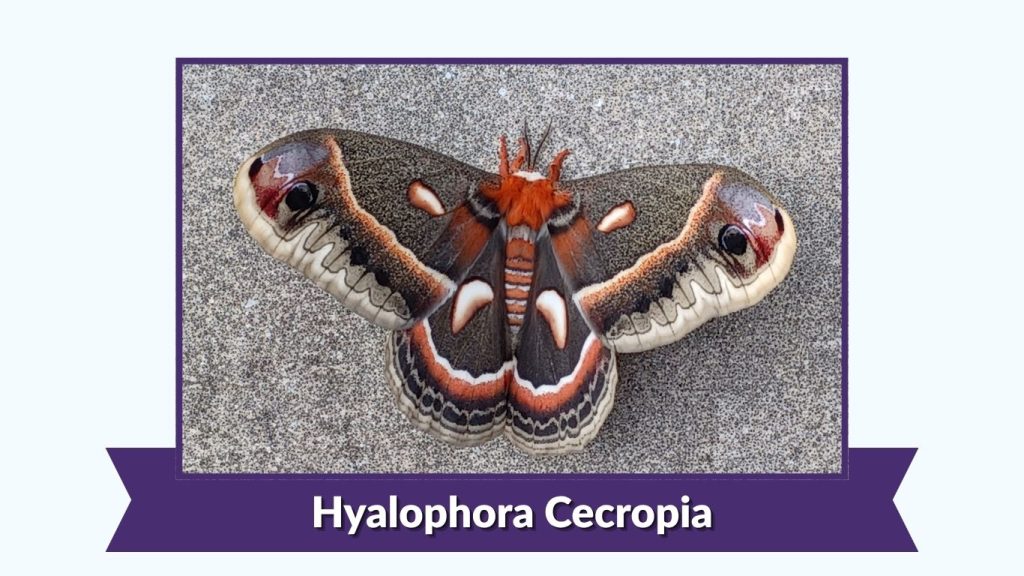
The Hyalophora Cecropia, commonly known as the Cecropia Moth, is native to North America and is one of the largest silk moths in the region. It produces coarse silk, primarily for ecological purposes rather than commercial production. Its striking wing patterns with eye spots make it easily recognizable.
Identification
- Size: 12–15 cm wingspan
- Color: Brownish-red with white and black markings and eye spots
- Antennae: Broad and feathery in males
- Wings: Large, rounded with distinct patterns
- Caterpillars: Green with yellow and blue tubercles
Habitat and Distribution
Hyalophora Cecropia inhabits deciduous forests across North America. Prefers trees like maple, birch, and cherry for caterpillar feeding and cocoon attachment.
Behavior and Diet
Caterpillars feed on host tree leaves, often in small groups. Adults do not eat and are nocturnal. Seasonal breeding is synchronized with host plant leaf availability.
Lifecycle
The moth undergoes complete metamorphosis: egg → larva → cocoon → adult. Caterpillars spin cocoons on tree branches. Adults emerge, mate, lay eggs, and die within a few days.
20. Hyalophora Columbia

The Hyalophora Columbia, or Columbia Silkmoth, is a large North American silk moth known for its impressive wingspan and vibrant patterns. It produces coarse silk, primarily of ecological interest rather than commercial use. Its caterpillars feed on various hardwood trees, supporting forest biodiversity.
Identification
- Size: 12–15 cm wingspan
- Color: Brown with white and reddish markings, eye spots on wings
- Antennae: Broad and feathery in males
- Wings: Large, rounded with intricate patterns
- Caterpillars: Green with yellow and orange tubercles
Habitat and Distribution
Hyalophora Columbia inhabits forests across North America, feeding on trees like willow, maple, and cherry. Prefers temperate climates with abundant foliage for larval development.
Behavior and Diet
Caterpillars feed on host tree leaves in small groups. Adults do not feed and are nocturnal, living only to reproduce. Seasonal breeding is timed to leaf growth of host trees.
Lifecycle
The moth undergoes complete metamorphosis: egg → larva → cocoon → adult. Caterpillars spin cocoons on branches. Adults emerge, mate, lay eggs, and die within a few days.
21. Hyalophora Euryalus

The Hyalophora Euryalus, commonly known as the Euryalus Silkmoth, is a large silk-producing moth native to western North America. It produces coarse silk and is recognized for its distinctive wing patterns with eye spots that help deter predators. This species plays a role in forest ecology.
Identification
- Size: 12–14 cm wingspan
- Color: Brown with red, white, and black markings
- Antennae: Broad and feathery in males
- Wings: Rounded with prominent eye spots
- Caterpillars: Green with yellow and orange bumps
Habitat and Distribution
Hyalophora Euryalus inhabits western North American forests, preferring trees such as maple, alder, and willow. Thrives in temperate climates with adequate foliage for caterpillar feeding and cocoon development.
Behavior and Diet
Caterpillars feed on host tree leaves in small clusters. Adults do not eat and focus solely on reproduction. Nocturnal activity predominates, with seasonal breeding aligned to leaf growth.
Lifecycle
The moth undergoes complete metamorphosis: egg → larva → cocoon → adult. Caterpillars spin silk cocoons on branches. Adults emerge briefly to mate, lay eggs, and die within days.
22. Hyalophora Gloveri

The Hyalophora Gloveri, also known as Glover’s Silkmoth, is a large silk moth native to western North America. It produces coarse silk and is notable for its striking wing patterns with eye spots. While not used commercially, it plays an important ecological role in forest ecosystems.
Identification
- Size: 12–14 cm wingspan
- Color: Brown with red, white, and black markings
- Antennae: Broad and feathery in males
- Wings: Rounded with eye spots
- Caterpillars: Green with yellow and orange tubercles
Habitat and Distribution
Hyalophora Gloveri inhabits forests in western North America. It prefers temperate climates and trees such as willow, alder, and maple for caterpillar feeding and cocoon attachment.
Behavior and Diet
Caterpillars feed on host tree leaves, often in small groups. Adults do not feed and are nocturnal. Breeding is seasonal, synchronized with leaf availability for larval development.
Lifecycle
The moth undergoes complete metamorphosis: egg → larva → cocoon → adult. Caterpillars spin cocoons on branches. Adults emerge, mate, lay eggs, and die within a few days.
23. Actias Luna

The Actias Luna, commonly known as the Luna Moth, is a North American silk moth famous for its large, pale green wings and long tail-like extensions. It produces a small amount of silk and is primarily valued for its striking appearance rather than commercial silk production.
Identification
- Size: 11–12 cm wingspan
- Color: Pale green with translucent eye spots
- Antennae: Broad and feathery in males
- Wings: Crescent-shaped with long tails
- Caterpillars: Bright green with yellow spots
Habitat and Distribution
Luna Moths inhabit deciduous forests across North America, feeding on leaves of walnut, hickory, and sweetgum trees. Prefers humid, temperate environments with ample foliage.
Behavior and Diet
Caterpillars feed on host tree leaves in isolation or small groups. Adults do not feed and are nocturnal. Mating is seasonal, timed with host plant leaf availability.
Lifecycle
The moth undergoes complete metamorphosis: egg → larva → cocoon → adult. Caterpillars spin silk cocoons on branches or tree trunks. Adults emerge, mate, lay eggs, and die within a week.
24. Actias Selene

The Actias Selene, commonly known as the Indian Moon Moth, is a large silk moth native to South and Southeast Asia. It is admired for its pale green wings with long tails and subtle eye spots. This species produces small amounts of silk but is primarily valued for its ornamental and ecological significance.
Identification
- Size: 10–12 cm wingspan
- Color: Pale green with eye spots on forewings and hindwings
- Antennae: Broad and feathery in males
- Wings: Crescent-shaped with long tails
- Caterpillars: Green with yellow and white markings
Habitat and Distribution
Actias Selene inhabits tropical and subtropical forests in India, Sri Lanka, and Southeast Asia. Prefers humid, leafy environments with host plants like guava, walnut, and liquidambar.
Behavior and Diet
Caterpillars feed on host tree leaves in small clusters. Adults do not feed and are nocturnal, with seasonal breeding timed to leaf availability.
Lifecycle
The moth undergoes complete metamorphosis: egg → larva → cocoon → adult. Caterpillars spin silk cocoons on leaves or branches. Adults emerge, mate, lay eggs, and die within days.
25. Actias Sinuosa
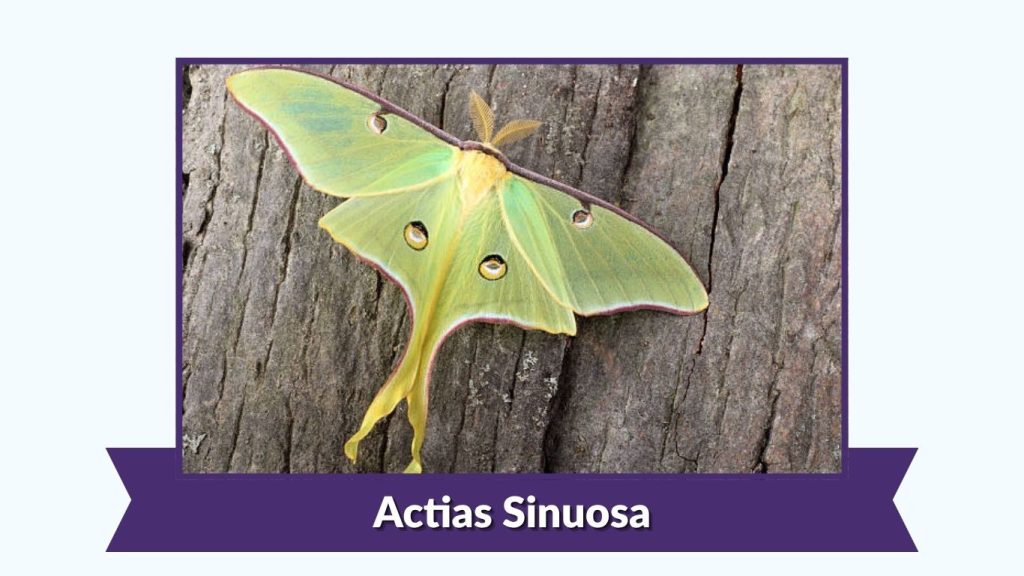
The Actias Sinuosa, or Sinuous Moon Moth, is a silk moth native to parts of Southeast Asia. It is known for its pale green wings with long, wavy tails and delicate eye spots. While it produces minimal silk, it is valued for ecological studies and its ornamental appeal.
Identification
- Size: 10–12 cm wingspan
- Color: Pale green with subtle eye spots
- Antennae: Broad and feathery in males
- Wings: Crescent-shaped with long, wavy tails
- Caterpillars: Green with fine yellow or white markings
Habitat and Distribution
Actias Sinuosa inhabits tropical forests of Southeast Asia, including Malaysia and Indonesia. Prefers humid, leafy environments with host trees like guava and walnut.
Behavior and Diet
Caterpillars feed on host plant leaves in small groups. Adults do not feed and are nocturnal. Breeding occurs seasonally, synchronized with leaf growth for larval development.
Lifecycle
The moth undergoes complete metamorphosis: egg → larva → cocoon → adult. Caterpillars spin silk cocoons on branches or leaves. Adults emerge briefly to mate, lay eggs, and die within a few days.
26. Saturnia Pyri
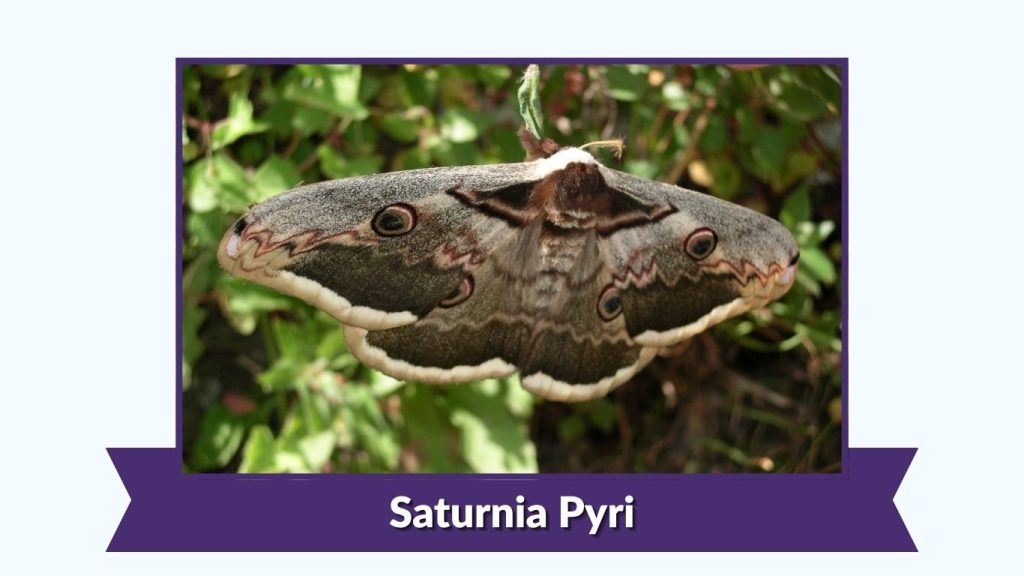
The Saturnia Pyri, commonly known as the Giant Peacock Moth, is native to southern Europe and the Middle East. It is the largest European silk moth, recognized for its striking brown wings with large eye spots. Though it produces silk, it is primarily valued for its ecological role and impressive size.
Identification
- Size: 15–20 cm wingspan
- Color: Brown with prominent eye spots on forewings and hindwings
- Antennae: Broad and feathery in males
- Wings: Large, rounded with eye spots
- Caterpillars: Green with black and yellow spines
Habitat and Distribution
Saturnia Pyri inhabits forests, orchards, and shrublands across southern Europe and parts of the Middle East. Prefers temperate climates with abundant foliage for caterpillar feeding and cocoon spinning.
Behavior and Diet
Caterpillars feed on a variety of deciduous tree leaves. Adults do not feed and live only to reproduce. Breeding is seasonal, typically in late spring or early summer.
Lifecycle
The moth undergoes complete metamorphosis: egg → larva → cocoon → adult. Caterpillars spin silk cocoons on branches. Adults emerge briefly to mate, lay eggs, and die within a week.
27. Saturnia Carpini

The Saturnia Carpini, commonly known as the European Horned Silk Moth, is a medium-sized silk moth native to Europe. It is recognized for its brown wings with eye spots and short tails. While it produces silk, its primary significance is ecological, supporting forest biodiversity.
Identification
- Size: 8–12 cm wingspan
- Color: Brown with subtle eye spots
- Antennae: Broad and feathered in males
- Wings: Rounded with short tails
- Caterpillars: Green with yellow markings and small spines
Habitat and Distribution
Saturnia Carpini inhabits deciduous forests across Europe, particularly oak and hornbeam woodlands. Prefers temperate climates with ample leaves for larval feeding.
Behavior and Diet
Caterpillars feed on host tree leaves in small clusters. Adults do not feed and are nocturnal. Seasonal breeding coincides with leaf availability for optimal cocoon development.
Lifecycle
The moth undergoes complete metamorphosis: egg → larva → cocoon → adult. Caterpillars spin silk cocoons on tree branches. Adults emerge, mate, lay eggs, and die within a few days.
28. Saturnia Mandarina

The Saturnia Mandarina, commonly known as the Japanese Silk Moth, is native to Japan and parts of East Asia. It is valued for its striking brown wings with eye spots and the moderate amount of silk it produces. This species contributes to ecological diversity in temperate forests.
Identification
- Size: 10–14 cm wingspan
- Color: Brown with prominent eye spots on forewings and hindwings
- Antennae: Broad and feathery in males
- Wings: Rounded with subtle patterns
- Caterpillars: Green with small spines and yellow markings
Habitat and Distribution
Saturnia Mandarina inhabits deciduous and mixed forests in Japan and East Asia. Prefers temperate climates with abundant host trees such as oak and cherry for feeding and cocoon spinning.
Behavior and Diet
Caterpillars feed on host tree leaves, often in clusters. Adults do not eat and are nocturnal. Breeding occurs seasonally, aligned with leaf growth for larval development.
Lifecycle
The moth undergoes complete metamorphosis: egg → larva → cocoon → adult. Caterpillars spin silk cocoons on leaves or branches. Adults emerge briefly to mate, lay eggs, and die within a week.
29. Saturnia Spini
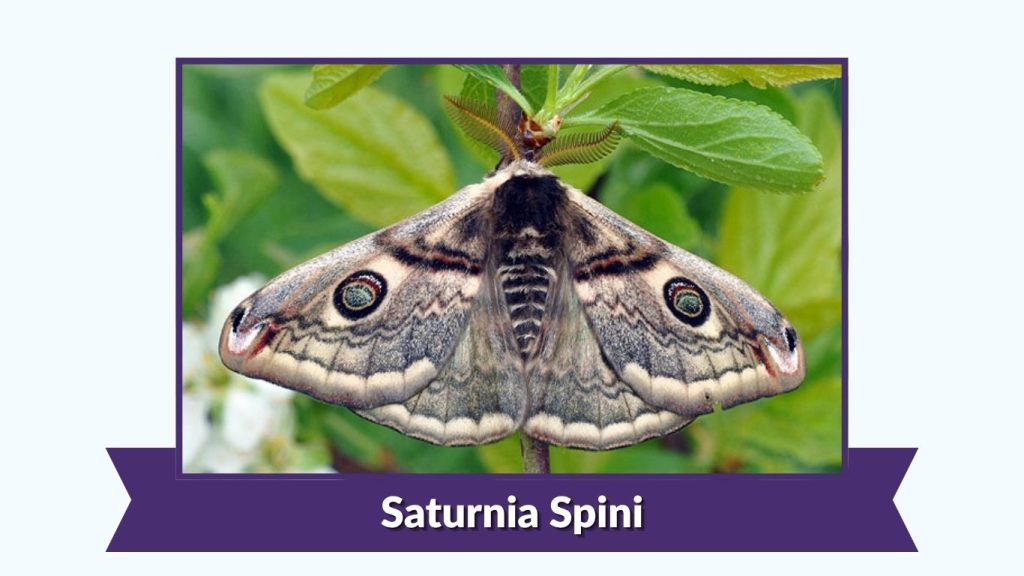
The Saturnia Spini, commonly known as the Spiny Silk Moth, is native to Europe and western Asia. It is recognized for its brown wings with small eye spots and short tails. While it produces silk, its primary significance is ecological, contributing to forest biodiversity.
Identification
- Size: 8–12 cm wingspan
- Color: Brown with subtle eye spots
- Antennae: Broad and feathery in males
- Wings: Rounded with short tails
- Caterpillars: Green with yellow stripes and small spines
Habitat and Distribution
Saturnia Spini inhabits deciduous forests, scrublands, and woodland edges in Europe and western Asia. Prefers temperate climates with abundant foliage for caterpillar feeding and cocoon development.
Behavior and Diet
Caterpillars feed on leaves of host trees in small groups. Adults do not feed and are nocturnal. Breeding is seasonal, timed with the availability of fresh leaves.
Lifecycle
The moth undergoes complete metamorphosis: egg → larva → cocoon → adult. Caterpillars spin silk cocoons on branches or leaves. Adults emerge, mate, lay eggs, and die within a few days.
30. Samia Cynthia Ricini

The Samia Cynthia Ricini, commonly known as the Eri Silk Moth Hybrid, is a silk-producing moth cultivated in India and Southeast Asia. It feeds on castor leaves and produces soft, durable silk used for non-woven textiles and warm fabrics. This hybrid combines traits from Samia ricini and related species for improved silk yield.
Identification
- Size: 7–10 cm wingspan
- Color: Creamy white to light brown
- Antennae: Feathered in males, slender in females
- Wings: Broad with rounded edges and subtle patterns
- Caterpillars: Thick, greenish, and hairy
Habitat and Distribution
Samia Cynthia Ricini is cultivated in India, Thailand, and China. Prefers areas with abundant castor plants, moderate humidity, and mild temperatures. Semi-wild cultivation is possible due to its hardy nature.
Behavior and Diet
Caterpillars feed exclusively on castor leaves and grow in clusters. Adults do not feed and focus solely on reproduction. Breeding is seasonal, timed to castor leaf availability.
Lifecycle
The moth undergoes complete metamorphosis: egg → larva → cocoon → adult. Caterpillars spin open-ended cocoons for easy silk harvesting. Adults emerge, mate, lay eggs, and die within 5–10 days.
FAQs
What do Mulberry Silk Moth caterpillars eat?
Mulberry Silk Moth caterpillars feed exclusively on mulberry leaves. Proper nutrition is essential for healthy growth and high-quality silk production.
How long does the lifecycle of a silk moth last?
The complete lifecycle of silk moths—egg, larva, pupa, adult—typically lasts 6–8 weeks, depending on species and environmental conditions.
Can wild silk moths survive without human care?
Some wild silk moths, like Tasar or Muga, thrive in forests, while domesticated species like the Mulberry Silk Moth depend entirely on human cultivation.
Are all silk moths used for commercial silk production?
No. While species like Mulberry, Eri, and Tasar moths are cultivated for silk, others, such as Polyphemus or Luna moths, are primarily ecological or ornamental species.
How can I identify silk moth caterpillars?
Silk moth caterpillars are generally thick, hairy, and brightly colored, with specific patterns or markings depending on species. They often feed in clusters on their host plants.