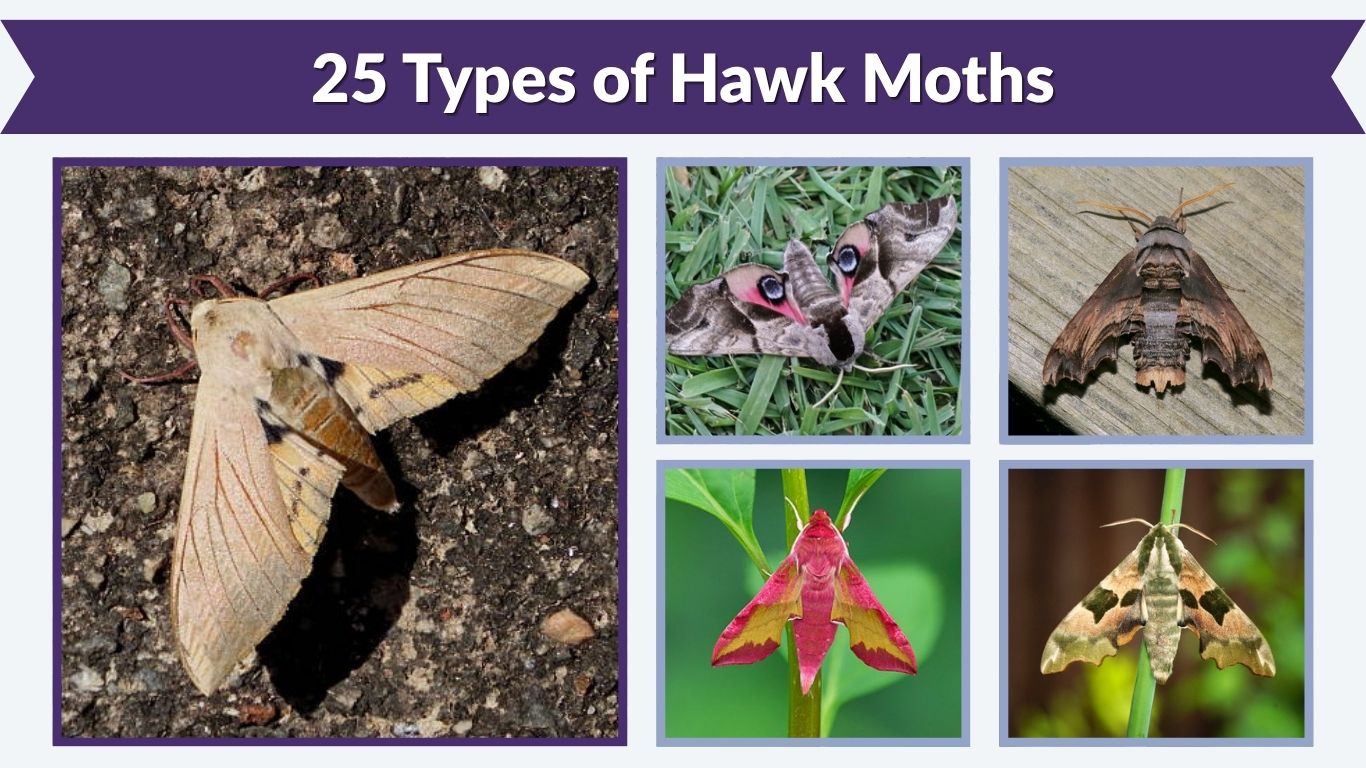
Hawk moths are some of the most fascinating and diverse insects in the world, known for their incredible flight abilities and striking appearances. With a variety of species spread across different continents, these moths exhibit remarkable features such as hovering while feeding, vibrant colors, and distinct patterns. From the well-known Hummingbird Hawk-moth to the rare Pandorus Sphinx, explore 25 unique hawk moth species and learn about their characteristics, behaviors, and habitats.
1. Elephant Hawk-moth

The Elephant Hawk-moth (Deilephila elpenor) is one of the most recognizable species within the hawk moth family. Known for its striking appearance and large size, this moth is found across Europe and parts of Asia. It is especially prominent in gardens and woodlands, where it feeds on nectar and plays a key role in pollination.
Characteristics
- Size: Wingspan ranges from 45-55 mm.
- Coloration: Its body and wings have a distinctive pink and greenish hue, with darker markings.
- Flight: Capable of hovering in mid-air, similar to a hummingbird.
- Larvae: The caterpillar resembles an elephant’s trunk in shape, which is where the name “elephant” comes from.
Life Cycle
The Elephant Hawk-moth goes through a complete metamorphosis, from egg to larva (caterpillar), pupa (chrysalis), and adult moth. The caterpillars are often seen feeding on various species of plants, particularly those in the willowherb and fuchsia family. After they mature, they form a pupa to undergo transformation into an adult moth.
Behavior
Elephant Hawk-moths are nocturnal and typically active at night, although they may be attracted to light sources. Their flight is slow and graceful, and their ability to hover makes them an efficient nectar feeder. They are not aggressive and are often observed feeding on flowers, especially in the evenings when the flowers release their nectar.
Habitat
Elephant Hawk-moths are adaptable to various environments but are commonly found in gardens, meadows, and woodland clearings. They prefer areas with abundant nectar sources, such as honeysuckle, fuchsia, and other tubular-flowered plants.
2. Small Elephant Hawk-moth
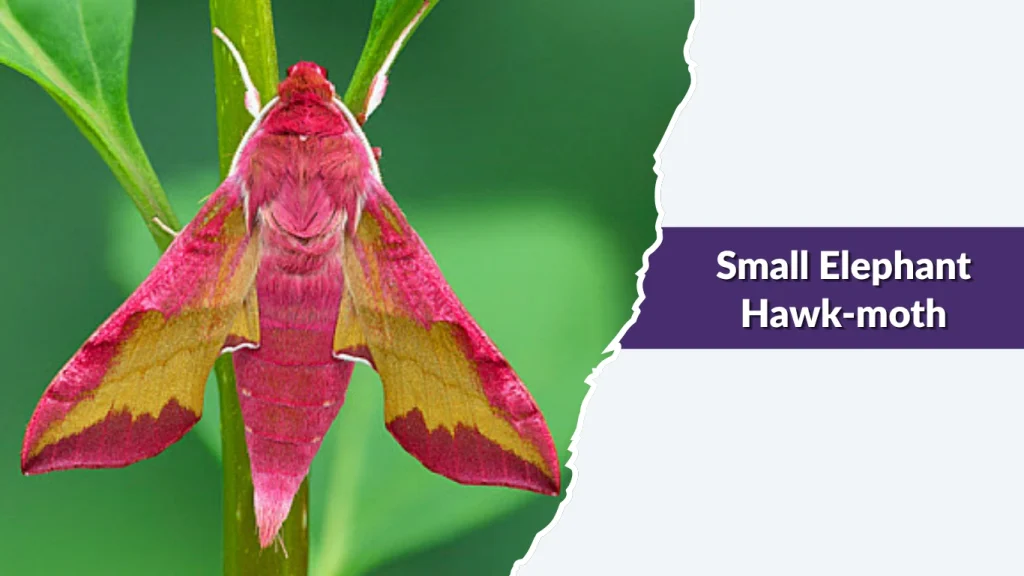
The Small Elephant Hawk-moth (Deilephila porcellus) is a close relative of the Elephant Hawk-moth, distinguished by its slightly smaller size and a more subdued color palette. Found mainly in Europe and parts of Asia, this species shares similar habits but has a few unique characteristics that set it apart.
Characteristics
- Size: Wingspan ranges from 30-45 mm.
- Coloration: Light pinkish-brown with pale greenish areas.
- Flight: Quick and agile, but not as hovering as the larger elephant hawk-moth.
- Larvae: Caterpillars are green with a prominent “trumpet” shape resembling the adult’s name.
Life Cycle
The Small Elephant Hawk-moth undergoes a similar life cycle to its larger cousin, transitioning from egg to caterpillar, then pupa, and finally adult. The larvae prefer to feed on plants like bedstraw and willowherb. Once mature, they pupate in the soil or leaf litter, emerging as adults during the warmer months.
Behavior
Like the Elephant Hawk-moth, the Small Elephant Hawk-moth is nocturnal. While it may be attracted to artificial light, it is more elusive and less likely to hover mid-air compared to the larger species. Its flight is fast and direct, making it a less efficient nectar feeder but still an important pollinator.
Habitat
This moth prefers open, dry habitats such as heathlands, gardens, and woodland edges. Its habitat selection is often influenced by the availability of its host plants, with bedstraw being a key food source for its larvae.
3. Lime Hawk-moth
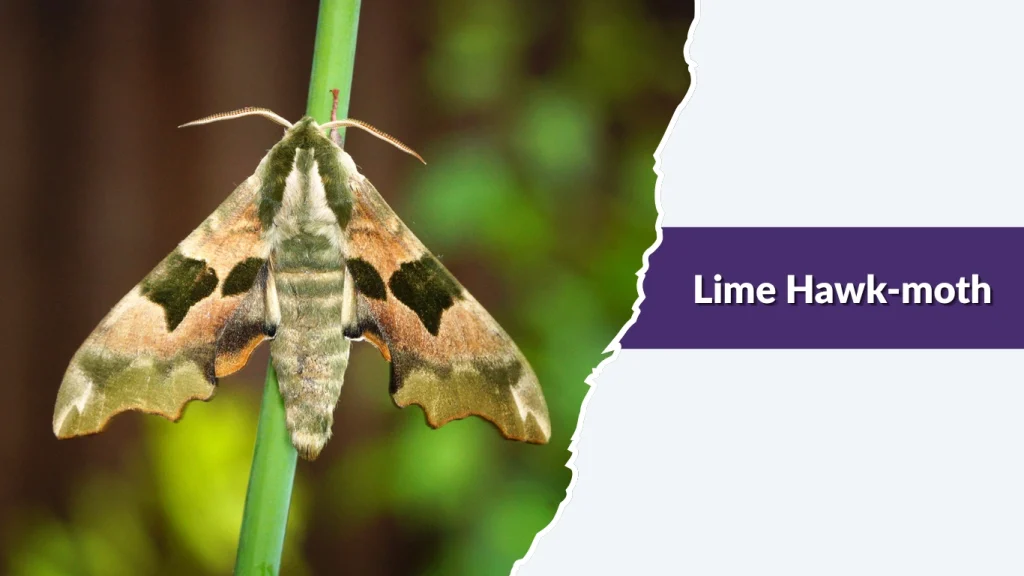
The Lime Hawk-moth (Mimas tiliae) is a beautiful and large species of moth, easily recognized by its lime-green wings and contrasting black-and-white markings. It is found in woodlands across Europe, especially where lime trees, its preferred host plant, grow abundantly.
Characteristics
The Lime Hawk-moth’s vibrant lime green color with darker markings on its wings makes it a striking insect. Its size and color pattern help it blend into the foliage of trees, particularly lime trees, making it harder for predators to spot.
Lime Hawk-moths have a powerful flight, often covering long distances to search for food sources or mates. They are primarily nocturnal and active during late spring and summer.
Life Cycle
Lime Hawk-moths are known to have a relatively long larval stage. The caterpillars feed voraciously on lime trees and related species, growing significantly before pupating in the soil. The adult moth emerges from the pupa after undergoing metamorphosis and is active primarily during the night, seeking out flowers to feed on.
Behavior
Lime Hawk-moths are attracted to both natural and artificial light sources. They are strong fliers and are known for covering great distances. Unlike many other moths, they are often seen in large numbers when conditions are right.
Habitat
These moths prefer environments with abundant lime trees, particularly woodlands and parks. They are often found in areas where these trees grow in close proximity to each other, providing both food and shelter for the larvae.
4. Poplar Hawk-moth

The Poplar Hawk-moth (Laothoe populi) is a large and distinctive moth that is commonly found across Europe, Asia, and parts of North America. Named after its preferred host tree, the poplar, this moth is known for its powerful flight and striking coloration, which aids in camouflage.
Characteristics
- Size: Wingspan ranges from 50-65 mm.
- Coloration: Brown wings with darker patterns and a prominent pale streak running diagonally.
- Flight: Strong, fast fliers that cover significant distances.
- Larvae: The caterpillar is green with a distinctive yellowish stripe running along its body.
Life Cycle
The Poplar Hawk-moth goes through a complete metamorphosis from egg to larva, pupa, and adult. The larvae feed on the leaves of poplar, aspen, and willow trees. After growing sufficiently, they pupate in the soil, where they remain until emerging as adults in late spring or summer.
Behavior
Poplar Hawk-moths are active primarily at night and are known for their swift flight. They are attracted to light sources, often flying near them in search of mates or food. Unlike some moths, they tend to be more elusive and less likely to hover.
Habitat
This species thrives in woodlands, forests, and parks where poplar trees are abundant. These moths are more common in areas with dense tree cover, which provides both food for the larvae and suitable shelter for adults.
5. Eyed Hawk-moth

The Eyed Hawk-moth (Smerinthus ocellata) is one of the most striking hawk moth species due to its distinctive “eye spots” on its hindwings. These eye spots serve as an excellent defense mechanism, deterring potential predators by confusing them with false eyes.
Characteristics
- Size: Wingspan ranges from 50-60 mm.
- Coloration: Pale brown or grey with prominent eye spots on the hindwings.
- Flight: Slow and erratic, but capable of hovering.
- Larvae: The caterpillar is green with a distinctive black horn at its rear.
Life Cycle
The Eyed Hawk-moth undergoes a complete life cycle, from egg to larva, pupa, and adult. Its larvae feed on a variety of deciduous trees, including willows and poplars. The adult moth emerges after pupating in the soil and is most active in summer.
Behavior
The Eyed Hawk-moth is a nocturnal species, primarily active at night. It can hover in mid-air while feeding on nectar, much like a hummingbird. The moth uses its eye spots to deter predators, particularly birds, that might mistake it for a larger, more dangerous animal.
Habitat
This species is commonly found in woodlands, forests, and gardens with a variety of deciduous trees. Its preference for these habitats provides plenty of food sources for the larvae and suitable places for the moths to rest during the day.
6. Privet Hawk-moth

The Privet Hawk-moth (Sphinx ligustri) is a large and powerful moth species found across Europe and parts of Asia. Known for its impressive size and fast flight, it is one of the most common hawk moths in gardens and woodlands where its primary food sources—privet and lilac plants—are abundant.
Characteristics
- Size: Wingspan ranges from 60-80 mm.
- Coloration: Pale brown or grey wings with dark markings and a distinctive white stripe.
- Flight: Strong and fast fliers that are capable of long-distance travel.
- Larvae: The caterpillar is green, with a curved tail resembling a horn at its rear end.
Life Cycle
The Privet Hawk-moth has a complete metamorphosis, starting from the egg laid on host plants such as privet, lilac, and ash. The larvae feed on these plants before pupating in the soil, emerging as moths during the summer months. The moths are usually active during the night, feeding on nectar from various flowers.
Behavior
Privet Hawk-moths are nocturnal and typically fly in search of flowers to feed on, especially at dusk and night. They are known to be very fast and agile in flight, making them efficient nectar feeders. The larvae have a defensive mechanism in which they curl into a “C” shape when disturbed, attempting to scare off predators.
Habitat
This species is commonly found in gardens, woodlands, and hedgerows with an abundance of its preferred host plants, particularly privet and lilac. These habitats provide both food for the larvae and nectar sources for the adults.
7. Convolvulus Hawk-moth

The Convolvulus Hawk-moth (Agrius convolvuli) is one of the largest and most widely distributed hawk moth species, found across Europe, Asia, and parts of North Africa. Recognized by its impressive wingspan and speed, this moth is often seen feeding on garden plants, particularly those in the morning glory family.
Characteristics
- Size: Wingspan ranges from 70-90 mm.
- Coloration: Greyish-brown with darker markings and pale, almost translucent hindwings.
- Flight: Very fast and direct flight, capable of long migrations.
- Larvae: The caterpillar is large, green, with a prominent horn at its rear end.
Life Cycle
The Convolvulus Hawk-moth has a typical moth life cycle, transitioning from egg to larva, pupa, and adult. The larvae feed primarily on plants from the morning glory family, particularly bindweed. After completing their larval stage, they pupate in the soil and emerge as adults during late summer or autumn.
Behavior
As a nocturnal species, the Convolvulus Hawk-moth is attracted to bright flowers, especially those that release nectar at night. It has a strong flight and can cover large distances, migrating across regions in search of food. The moth is also known for its ability to hover while feeding on nectar.
Habitat
This moth species thrives in a variety of habitats, including gardens, meadows, and agricultural areas. It is particularly attracted to areas where morning glory plants or related species grow, providing ample feeding opportunities for both larvae and adults.
8. Death’s-head Hawk-moth
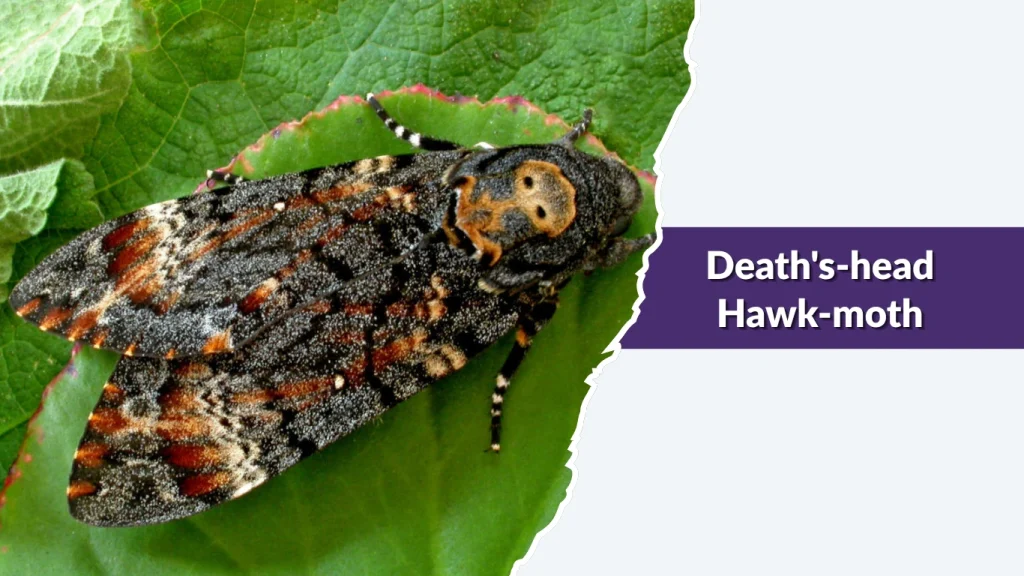
The Death’s-head Hawk-moth (Acherontia atropos) is one of the most famous and easily recognizable hawk moths, primarily due to its large size and distinctive skull-shaped pattern on its thorax. This species is found across Europe, Asia, and parts of North Africa, and has been known to have a mysterious and almost eerie reputation in folklore.
Characteristics
- Size: Wingspan ranges from 90-120 mm.
- Coloration: Dark brown wings with yellowish markings, and a skull-like pattern on the thorax.
- Flight: Strong fliers with erratic movements.
- Larvae: The caterpillar is green with a distinctive horn at its rear, and it feeds primarily on tobacco and tomato plants.
Life Cycle
The Death’s-head Hawk-moth undergoes a complete metamorphosis, starting from egg to larva, pupa, and adult. The larvae feed on a variety of plants, particularly those in the nightshade family, such as tobacco and tomato. After pupating in the soil, they emerge as adults in late summer, typically during warmer months.
Behavior
This moth is nocturnal and has a strong, erratic flight pattern. It is also known for its ability to emit a high-pitched squeak, which is believed to deter predators. The moth is often attracted to honey bee hives, and it is sometimes able to infiltrate them to steal honey.
Habitat
Death’s-head Hawk-moths prefer woodland clearings, gardens, and agricultural areas where their host plants are abundant. These moths are commonly found in areas with open fields or hedgerows, providing ample space for the larvae to feed and the adults to rest during the day.
9. Hummingbird Hawk-moth

The Hummingbird Hawk-moth (Macroglossum stellatarum) is known for its remarkable ability to hover in mid-air while feeding, a behavior similar to that of a hummingbird. This moth is found throughout Europe, Asia, and parts of North Africa, and is often seen in gardens and meadows.
Characteristics
- Size: Wingspan ranges from 30-40 mm.
- Coloration: Brownish-grey with white and orange markings on the hindwings.
- Flight: Hummingbird-like flight, able to hover in place and dart from flower to flower.
- Larvae: The caterpillar is green, often found on bedstraw and other herbaceous plants.
Life Cycle
The Hummingbird Hawk-moth undergoes a complete metamorphosis, from egg to larva, pupa, and adult. The larvae feed on a variety of plants, especially those in the bedstraw and honeysuckle families. After feeding, the caterpillars pupate in the soil, emerging as adults during the summer months.
Behavior
This moth is active during the day, often feeding on nectar from tubular flowers while hovering in mid-air. It has a rapid, hummingbird-like flight and is especially attracted to flowers such as buddleia, honeysuckle, and thistles. Its ability to hover while feeding makes it one of the most fascinating moth species to observe.
Habitat
The Hummingbird Hawk-moth is commonly found in gardens, meadows, and open woodlands. It thrives in areas with abundant nectar sources and is particularly attracted to brightly colored flowers. This moth is often seen in late spring and summer when flowering plants are in bloom.
10. Broad-bordered Bee Hawk-moth

The Broad-bordered Bee Hawk-moth (Hemaris fuciformis) is a fascinating species known for its striking resemblance to a bumblebee. It is a robust and fast-flying moth commonly found in gardens and woodlands throughout Europe and parts of North America.
Characteristics
- Size: Wingspan ranges from 40-50 mm.
- Coloration: A distinct yellow-brown and orange coloration, with a clear, broad band across its hindwings.
- Flight: Capable of hovering while feeding, similar to a hummingbird.
- Larvae: The caterpillar is green with a brownish head, and it primarily feeds on honeysuckle and other woody plants.
Life Cycle
The Broad-bordered Bee Hawk-moth undergoes a complete life cycle, starting as eggs laid on host plants. The larvae feed on plants like honeysuckle, viburnum, and snowberry, growing larger before pupating in the soil. Once metamorphosis is complete, the adult moth emerges and is typically active during the summer months.
Behavior
This moth is primarily active during the day, often seen feeding on flowers while hovering in place. It mimics the behavior of a bumblebee, darting from flower to flower in search of nectar. While feeding, it is capable of hovering in front of the flower, similar to its bee counterpart.
Habitat
The Broad-bordered Bee Hawk-moth is found in gardens, woodland clearings, and hedgerows where its host plants are present. These environments provide the moth with ample food sources and places to rest during the day. It is also attracted to flowers in both wild and cultivated areas, including honeysuckle, ivy, and currants.
11. Narrow-bordered Bee Hawk-moth

The Narrow-bordered Bee Hawk-moth (Hemaris tityus) is closely related to the Broad-bordered Bee Hawk-moth but differs in its more slender body and narrower wing borders. It is found throughout Europe and parts of Asia, thriving in areas rich in flowering plants.
Characteristics
- Size: Wingspan ranges from 35-45 mm.
- Coloration: A pale yellow-green hue with a narrow black line across the hindwings.
- Flight: Similar to its relative, it is capable of hovering while feeding, mimicking a bumblebee.
- Larvae: The caterpillar is green with a dark head and primarily feeds on honeysuckle and other plants from the Caprifoliaceae family.
Life Cycle
Like most hawk moths, the Narrow-bordered Bee Hawk-moth has a complete life cycle. The larvae feed on honeysuckle and other plants during their growth stages before pupating in the soil. Once the adult moth emerges, it is typically active from late spring to early autumn, depending on the region.
Behavior
This moth exhibits a similar behavior to that of bumblebees. It feeds during the day, often hovering in front of flowers to feed on nectar. The moth is highly efficient in its feeding habits, darting quickly from flower to flower, typically in gardens and meadows.
Habitat
The Narrow-bordered Bee Hawk-moth prefers open, sunny habitats such as gardens, meadows, and woodland clearings. It is particularly attracted to areas with an abundance of honeysuckle, which is a key food source for its larvae. These habitats provide both food and resting areas for the moths during the day.
12. Pine Hawk-moth
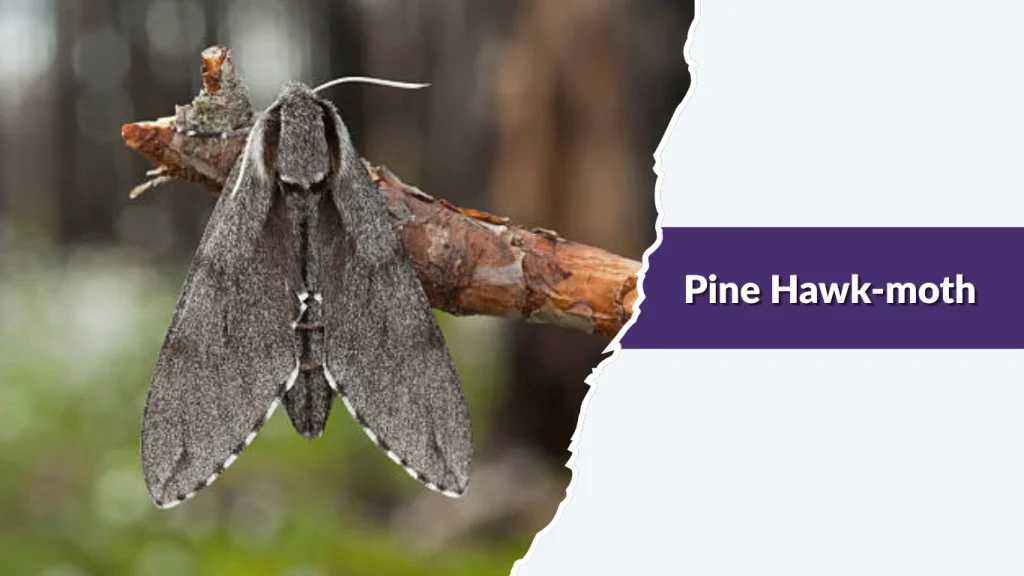
The Pine Hawk-moth (Sphinx pinastri) is a robust and striking moth species found in pine forests across Europe and parts of Asia. Known for its impressive size and strong flight, it is closely associated with pine trees, which serve as the primary host for its larvae.
Characteristics
- Size: Wingspan ranges from 60-75 mm.
- Coloration: Light brown and olive green with darker markings, and a characteristic pale stripe across its wings.
- Flight: Fast and powerful flight, capable of long migrations.
- Larvae: The caterpillar is green, with a distinctive horn at its tail and is found on pine and other coniferous trees.
Life Cycle
The Pine Hawk-moth follows a complete metamorphosis, from egg to larva, pupa, and adult. Its larvae feed on pine, larch, and spruce trees, where they grow to a considerable size before pupating in the soil. The adult moths emerge in late spring or early summer and are active primarily at night.
Behavior
The Pine Hawk-moth is nocturnal, and like other hawk moths, it is capable of hovering in front of flowers while feeding. Its flight is fast and direct, often covering large distances. This moth is known for its ability to navigate effectively at night, making it a skilled nectar feeder.
Habitat
This species is typically found in pine forests, woodlands, and coniferous plantations. The presence of its host trees, such as pine, larch, and spruce, makes these habitats ideal for both the larvae and the adults, providing ample food sources and suitable resting places.
13. Oleander Hawk-moth
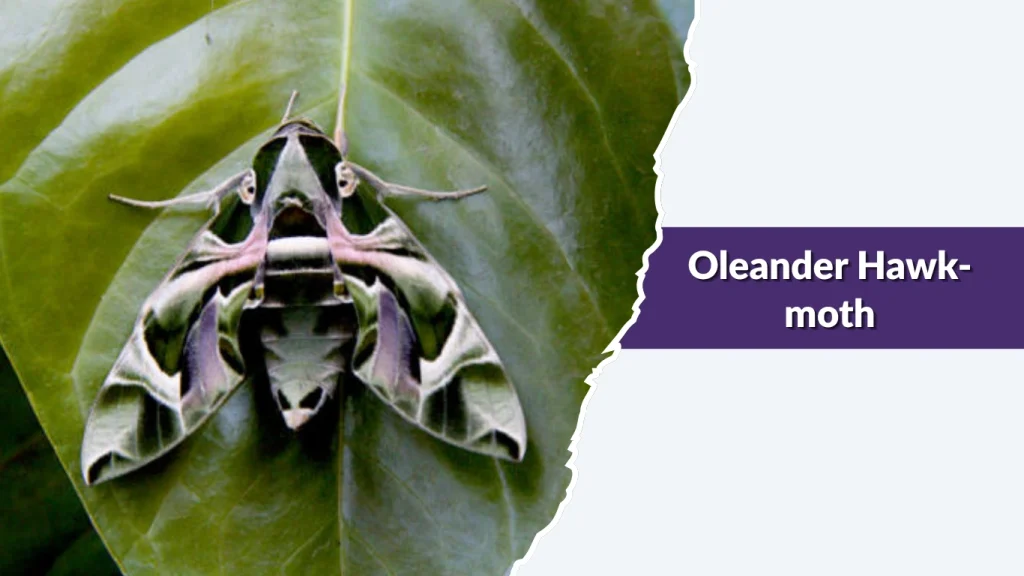
The Oleander Hawk-moth (Daphnis nerii) is a stunning and large moth species primarily found in parts of Southern Europe, Asia, and Africa. Its large, colorful wings and swift flight make it one of the most striking hawk moths. It is named after its primary host plant, oleander, although it feeds on various plants in the dogbane family.
Characteristics
- Size: Wingspan ranges from 80-100 mm.
- Coloration: Greenish-grey with dark green and pink markings, and a characteristic pale stripe along its wings.
- Flight: Swift and graceful, capable of hovering in front of flowers.
- Larvae: The caterpillar is green with a spiny texture and feeds on oleander, nerium, and other related plants.
Life Cycle
The Oleander Hawk-moth undergoes a complete metamorphosis, from egg to larva, pupa, and adult. The larvae feed on oleander, nerium, and other plants in the dogbane family. After pupating in the soil, the adult moth emerges in late spring or summer.
Behavior
Active mostly at night, the Oleander Hawk-moth is an expert nectar feeder, capable of hovering in front of flowers to feed. It is attracted to a variety of fragrant flowers, especially those with a tubular structure, which allow for easy access to nectar. The moth also has a rapid and direct flight.
Habitat
The Oleander Hawk-moth is most commonly found in warm, dry regions with an abundance of its host plants. It thrives in gardens, woodlands, and coastal areas where oleander and other related plants grow, providing the larvae with an essential food source and ample nectar sources for the adults.
14. Vine Hawk-moth

The Vine Hawk-moth (Protoparce cupressi) is a large moth species native to parts of Europe and Asia. It is often found in areas with abundant vine and shrubbery, where it feeds on a variety of plants. Known for its strong flight and nocturnal behavior, this moth is also a skilled nectar feeder.
Characteristics
- Size: Wingspan ranges from 60-80 mm.
- Coloration: Olive green and brown with darker bands across the wings and a yellowish tinge along the body.
- Flight: Strong, rapid flight with an ability to travel great distances.
- Larvae: The caterpillar is large and green with a reddish-brown horn at its tail and feeds on vines and other climbing plants.
Life Cycle
The Vine Hawk-moth has a typical life cycle, transitioning from egg to larva, pupa, and adult. The larvae primarily feed on climbing plants such as ivy and grapevines. After completing their larval stage, they pupate in the soil, emerging as moths during the late spring and summer months.
Behavior
Vine Hawk-moths are nocturnal and are typically attracted to light sources. Their flight is swift and powerful, allowing them to cover large distances in search of food and mates. They are efficient nectar feeders, often hovering in front of flowers, making them effective pollinators.
Habitat
This moth species is often found in gardens, orchards, and wooded areas where climbing plants and vines are abundant. Its preference for habitats with ample food sources makes it particularly common in areas with abundant grapevines, ivy, and other related plants.
15. Bedstraw Hawk-moth
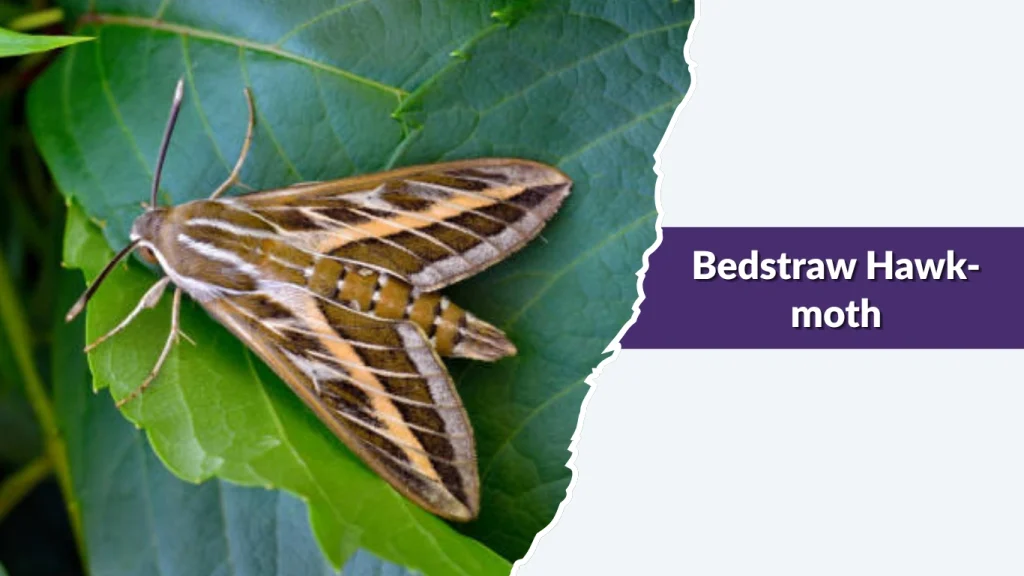
The Bedstraw Hawk-moth (Hyles gallii) is a medium-sized hawk moth species commonly found in Europe, Asia, and parts of North Africa. This moth is known for its distinctive appearance and active behavior, often seen hovering in front of flowers. It is especially attracted to plants in the bedstraw family, from which it derives its name.
Characteristics
- Size: Wingspan ranges from 40-50 mm.
- Coloration: Greenish-brown wings with a pale central stripe and orange markings on the hindwings.
- Flight: Hovering flight, similar to a hummingbird, which it uses to feed on nectar.
- Larvae: The caterpillar is green with black markings and feeds on bedstraw and other herbaceous plants.
Life Cycle
The Bedstraw Hawk-moth undergoes a complete life cycle, from egg to larva, pupa, and adult. The larvae are typically found feeding on plants from the bedstraw and willowherb families. After feeding and growing, they pupate in the soil, emerging as adults during the warmer months.
Behavior
Bedstraw Hawk-moths are nocturnal and primarily active at night, although they can occasionally be seen during the day in search of nectar. They have a rapid, hummingbird-like flight and are highly efficient at hovering to feed on tubular flowers, making them key pollinators.
Habitat
This species prefers areas with abundant herbaceous plants such as bedstraw, as well as hedgerows, gardens, and meadows. These habitats provide ample food sources for both larvae and adults, and the moth is particularly attracted to areas with a diverse range of flowering plants.
16. Striped Hawk-moth

The Striped Hawk-moth (Hyles livornica) is a striking species native to parts of Europe, Africa, and Asia. Known for its characteristic striped pattern on its wings, this moth is a strong and agile flier, often seen in open fields and gardens. Its appearance and flight behavior make it a notable species within the hawk moth family.
Characteristics
- Size: Wingspan ranges from 45-55 mm.
- Coloration: Dark brown wings with pale yellow or white stripes running across the wings, creating a distinctive pattern.
- Flight: Quick, direct flight with the ability to hover while feeding.
- Larvae: The caterpillar is green with brown markings, and it primarily feeds on plants like honeysuckle and tobacco.
Life Cycle
The Striped Hawk-moth follows a complete metamorphosis, with eggs laid on its host plants. The larvae feed on honeysuckle, tobacco, and related species, growing significantly before pupating in the soil. After undergoing metamorphosis, the adult moth emerges in late spring or summer and is active primarily during the night.
Behavior
This moth is nocturnal and feeds mainly at night, hovering in front of tubular flowers. The Striped Hawk-moth uses its long proboscis to feed on nectar while hovering, much like a hummingbird. It is known for its fast and direct flight, capable of traveling long distances in search of nectar.
Habitat
The Striped Hawk-moth is found in a variety of habitats, including gardens, meadows, and woodlands, where plants like honeysuckle and tobacco are abundant. These areas provide ample food sources for both the larvae and adult moths, as well as places for resting during the day.
17. Spurge Hawk-moth
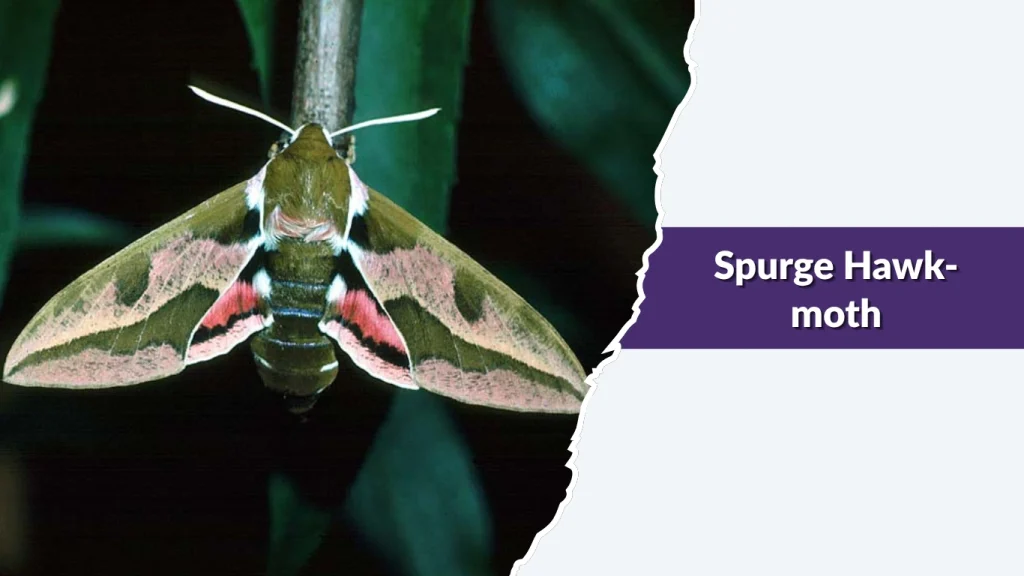
The Spurge Hawk-moth (Hyles euphorbiae) is a medium-sized moth native to Europe, with a preference for regions where spurge plants grow. Known for its dramatic appearance and strong flight, it is one of the more recognizable species in the hawk moth family.
Characteristics
- Size: Wingspan ranges from 40-50 mm.
- Coloration: Yellow-brown wings with greenish and orange markings.
- Flight: Capable of fast, direct flight and hovering in front of flowers.
- Larvae: The caterpillar is green with black markings, and it feeds mainly on spurge plants, which are toxic to many other species.
Life Cycle
The Spurge Hawk-moth follows the typical hawk moth life cycle. The larvae feed on spurge, growing larger before they pupate in the soil. The adults emerge in the summer months and are nocturnal, spending most of their time feeding on nectar from flowers.
Behavior
Spurge Hawk-moths are nocturnal, feeding primarily at night. They are strong fliers and are particularly adept at hovering in front of flowers while feeding. Like other hawk moths, they are often seen darting between flowers in search of nectar and are important pollinators.
Habitat
The Spurge Hawk-moth prefers dry, open habitats with an abundance of spurge plants. It is commonly found in coastal areas, heathlands, and dry meadows where spurge grows in large quantities. These environments provide ample food for the larvae and suitable conditions for the adults to rest and feed.
18. Silver-striped Hawk-moth

The Silver-striped Hawk-moth (Hyles nicaea) is a distinctive moth known for its silver and grey-colored wings, creating a striking contrast with darker patterns along the edges. This species is found in parts of Europe and Asia, particularly in regions with an abundance of its host plants, making it a notable species among hawk moths.
Characteristics
- Size: Wingspan ranges from 40-50 mm.
- Coloration: Grey and silver wings with contrasting dark stripes running across the forewings.
- Flight: Capable of hovering while feeding, similar to other hawk moths.
- Larvae: The caterpillar is green with brownish or black markings and feeds on various plants, particularly those from the tobacco and spurge families.
Life Cycle
The Silver-striped Hawk-moth goes through the usual hawk moth life cycle, from egg to larva, pupa, and adult. The larvae primarily feed on host plants like tobacco and spurge before pupating in the soil. The adult moth emerges after the pupal stage and is active during the warmer months.
Behavior
This moth is nocturnal and feeds primarily at night. It has strong and fast flight, capable of covering large distances to find food and mates. Like other hawk moths, it is known for its ability to hover while feeding on flowers, making it an effective pollinator.
Habitat
The Silver-striped Hawk-moth is often found in woodland edges, gardens, and meadows, particularly in regions with abundant host plants like tobacco and spurge. These areas provide both food for the larvae and nectar for the adult moths.
19. Five-spotted Hawk-moth
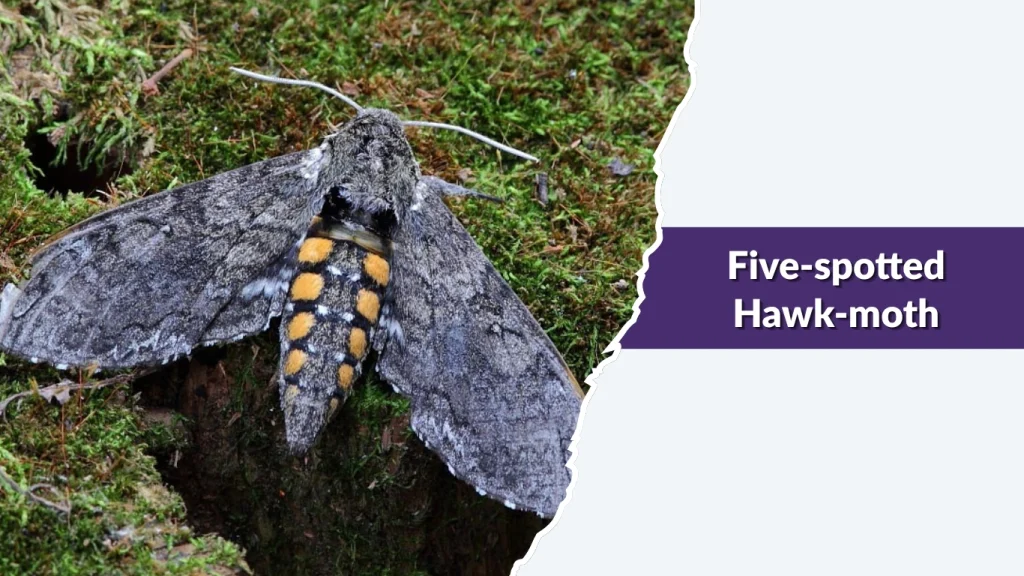
The Five-spotted Hawk-moth (Sphinx quinquemaculata) is a relatively large hawk moth species found in North America. It is easily recognizable due to its distinctive markings and its bold, erratic flight pattern. Known for its association with trees and shrubs, this moth plays a significant role in pollination.
Characteristics
- Size: Wingspan ranges from 55-65 mm.
- Coloration: Dark brown wings with five prominent white spots on the forewings.
- Flight: Fast, direct flight, capable of covering long distances.
- Larvae: The caterpillar is green, with a curved horn at the rear, and feeds on plants like willows, poplars, and elms.
Life Cycle
The Five-spotted Hawk-moth undergoes a complete life cycle from egg to larva, pupa, and adult. The larvae feed on trees like willow and poplar, growing large before pupating in the soil. The adult moth emerges during late spring or early summer and is typically active at night.
Behavior
This moth is nocturnal, and like most hawk moths, it is attracted to light sources. Its flight is strong and erratic, often flying over long distances in search of food. The Five-spotted Hawk-moth is particularly known for its fast, powerful flight and its ability to hover while feeding on nectar from flowers.
Habitat
The Five-spotted Hawk-moth prefers woodlands, gardens, and parks where its host trees grow. These habitats provide the larvae with abundant food sources, while the adults have access to nectar-rich flowers for feeding. It is commonly found in areas with a variety of deciduous trees and shrubs.
20. Carolina Sphinx Moth
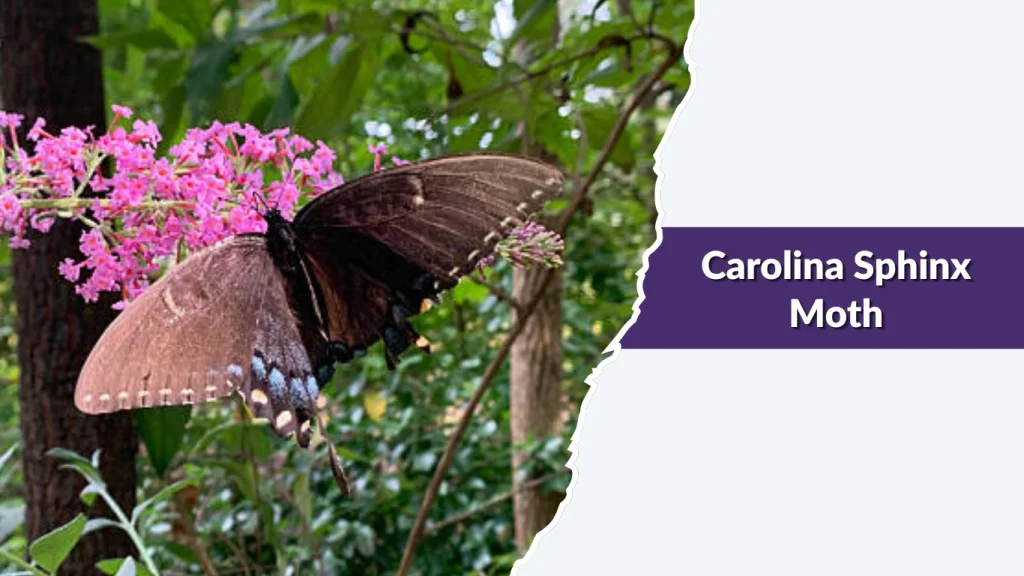
The Carolina Sphinx Moth (Manduca sexta) is a large and robust species native to the southeastern United States. Known for its impressive size and powerful flight, this moth is often spotted in gardens and agricultural fields, particularly in areas where its host plants are abundant.
Characteristics
- Size: Wingspan ranges from 90-110 mm.
- Coloration: Dark brown forewings with a pale stripe running diagonally, and light-colored hindwings.
- Flight: Fast and capable of hovering, similar to a hummingbird.
- Larvae: The caterpillar is large, green with black markings, and feeds primarily on tobacco, tomato, and related plants.
Life Cycle
The Carolina Sphinx Moth follows a typical hawk moth life cycle, transitioning from egg to larva, pupa, and adult. The larvae feed on solanaceous plants, including tobacco and tomato, before pupating in the soil. The adult moth emerges and is active at night, often attracted to bright flowers and lights.
Behavior
Carolina Sphinx Moths are nocturnal, and like other hawk moths, they are capable of hovering in mid-air while feeding on nectar. Their flight is powerful and direct, allowing them to travel great distances in search of food and mates.
Habitat
This species is typically found in gardens, agricultural fields, and woodlands with an abundance of its host plants. It is particularly common in areas with tobacco, tomato, and other solanaceous plants, which provide essential food sources for the larvae.
21. White-lined Sphinx Moth
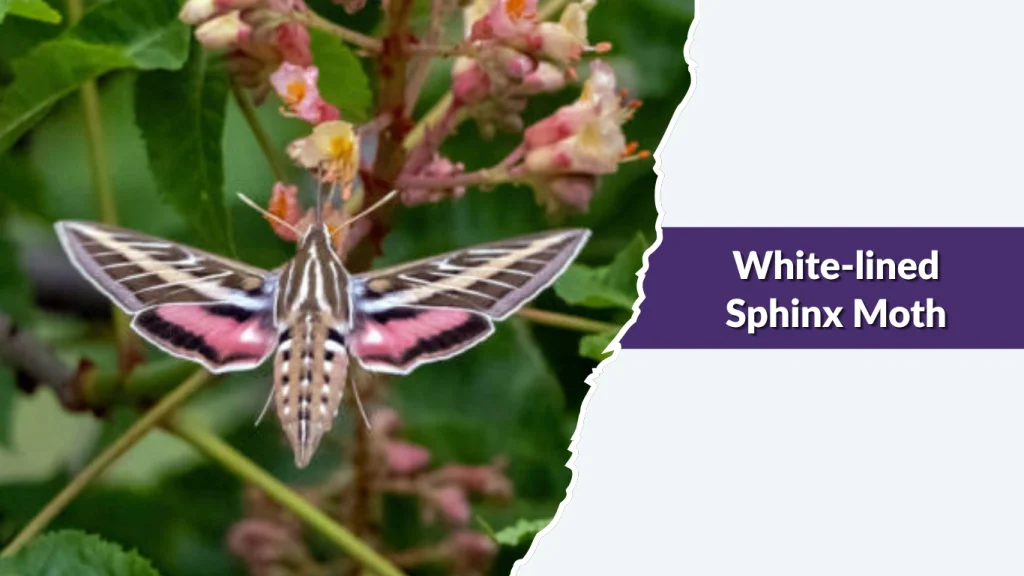
The White-lined Sphinx Moth (Hyles lineata) is a prominent species found across North America, particularly in the southwestern United States. Known for its bright white and green markings, this moth is one of the most recognizable hawk moths, often seen hovering in front of flowers in gardens and meadows.
Characteristics
- Size: Wingspan ranges from 60-80 mm.
- Coloration: A combination of brown, white, and green with bold, distinct white lines running diagonally across the body.
- Flight: Hummingbird-like flight, capable of hovering in front of flowers to feed on nectar.
- Larvae: The caterpillar is green with yellow markings and feeds on a variety of plants, including those from the evening primrose family.
Life Cycle
The White-lined Sphinx Moth goes through a complete metamorphosis. Its larvae feed on plants such as evening primrose and other herbaceous species before they pupate in the soil. The adult moth emerges in late spring or early summer and is active primarily during the night.
Behavior
White-lined Sphinx Moths are nocturnal and are often seen feeding at night. They are highly efficient at hovering while feeding on flowers, similar to hummingbirds. Their rapid flight enables them to travel long distances in search of food and mates.
Habitat
This moth species is commonly found in gardens, meadows, and open fields, where there is an abundance of flowers and host plants for the larvae. It thrives in areas with warm climates and often frequents areas with nectar-rich plants, such as evening primrose, honeysuckle, and petunias.
22. Abbott’s Sphinx Moth

The Abbott’s Sphinx Moth (Sphecodina abbottii) is a large, distinctive moth found in the southeastern United States, known for its nocturnal habits and its ability to hover while feeding. Its vibrant coloration and impressive size make it an interesting species among hawk moths.
Characteristics
- Size: Wingspan ranges from 80-100 mm.
- Coloration: Dark brown forewings with pale, almost white hindwings and a distinctive, curved stripe along its body.
- Flight: Strong, capable of hovering like a hummingbird to feed on nectar.
- Larvae: The caterpillar is green, often with faint markings, and feeds on a variety of plants, including those from the grapevine and morning glory families.
Life Cycle
Abbott’s Sphinx Moth follows the typical hawk moth life cycle, starting from eggs laid on host plants, transitioning through larval and pupal stages, and emerging as adults during the warmer months. The larvae feed primarily on vines such as grapevines and morning glories, growing large before pupating in the soil.
Behavior
Abbott’s Sphinx Moths are nocturnal and are active at night, seeking out flowers with nectar. Their hovering flight is remarkable, and they feed on various flowers by hovering in front of them, much like a hummingbird. They are also known for their rapid, direct flight patterns.
Habitat
This moth is found in gardens, woodlands, and agricultural areas, especially those with abundant vines and flowering plants. Its host plants, including grapevine and morning glory, are common in these habitats, making them ideal environments for both larvae and adults.
23. Tersa Sphinx Moth

The Tersa Sphinx Moth (Xylophanes tersa) is a medium to large moth found in parts of Central and South America. Recognizable by its unique markings and strong, fast flight, it is often spotted in tropical and subtropical regions, where it feeds on various nectar-rich flowers.
Characteristics
- Size: Wingspan ranges from 50-70 mm.
- Coloration: Pale green and brown wings with diagonal dark stripes and a characteristic white line running across its body.
- Flight: Strong, fast, and capable of hovering in place.
- Larvae: The caterpillar is green with orange markings, feeding on plants from the cashew and sumac families.
Life Cycle
The Tersa Sphinx Moth has a complete metamorphosis. Its larvae feed on various host plants, particularly those from the cashew and sumac families. After feeding and growing, they pupate in the soil, emerging as moths in late spring or summer.
Behavior
Tersa Sphinx Moths are nocturnal, feeding mostly at night. Their strong flight allows them to cover long distances in search of nectar. They are capable of hovering while feeding, similar to other hawk moths, and are attracted to a wide variety of flowers.
Habitat
This species is found in tropical and subtropical environments, particularly in regions with abundant flowering plants. It is commonly seen in gardens, meadows, and forest clearings where its host plants are prevalent. The moth thrives in these areas due to the abundance of both food sources and suitable places for pupation.
24. Rustic Sphinx Moth

The Rustic Sphinx Moth (Manduca rustica) is a large moth species found in the southeastern United States, Central America, and parts of South America. Known for its powerful flight and large size, this moth is particularly attracted to gardens and open fields where its host plants grow.
Characteristics
- Size: Wingspan ranges from 70-100 mm.
- Coloration: Dark brown wings with light, pale yellowish markings on the forewings and hindwings, creating a rustic appearance.
- Flight: Fast and powerful, capable of covering large distances.
- Larvae: The caterpillar is green with a characteristic horn at the tail and feeds on plants from the nightshade family, including tobacco and tomato.
Life Cycle
The Rustic Sphinx Moth undergoes a complete metamorphosis, starting from egg to larva, pupa, and adult. The larvae feed on plants like tobacco and tomato before pupating in the soil. The moths emerge during the late spring or summer months and are active primarily at night.
Behavior
Rustic Sphinx Moths are nocturnal and are attracted to bright flowers and artificial lights. Their flight is strong and swift, making them efficient nectar feeders. Like other hawk moths, they are capable of hovering while feeding on nectar from tubular flowers.
Habitat
This species is commonly found in gardens, agricultural fields, and meadows where plants like tobacco, tomato, and other solanaceous species grow. These environments provide both food for the larvae and nectar sources for the adult moths.
25. Pandorus Sphinx Moth

The Pandorus Sphinx Moth (Eumorpha pandorus) is a large moth species found in the southeastern United States and parts of Central America. Known for its distinct green and brown coloration, this moth is often spotted in woodland areas and gardens where its host plants are abundant.
Characteristics
- Size: Wingspan ranges from 70-90 mm.
- Coloration: Green forewings with a pale brown stripe and dark markings, and light-colored hindwings.
- Flight: Capable of strong, swift flight with the ability to hover while feeding.
- Larvae: The caterpillar is green with a horn-like structure on the tail and feeds on plants like grapevines, trumpet vine, and other climbing plants.
Life Cycle
The Pandorus Sphinx Moth follows a typical hawk moth life cycle, transitioning from egg to larva, pupa, and adult. The larvae feed on climbing plants such as grapevines and trumpet vines before pupating in the soil. The adult moth emerges in late spring or summer and is primarily active at night.
Behavior
Pandorus Sphinx Moths are nocturnal and are attracted to light sources. They are excellent fliers, capable of hovering while feeding on nectar from flowers. Their flight is quick and direct, allowing them to travel long distances in search of food.
Habitat
This moth species is typically found in gardens, woodlands, and areas with abundant host plants like grapevines and trumpet vines. These habitats provide essential food sources for the larvae and nectar-rich flowers for the adult moths.
FAQs
How many types of hawk moths are there in the world?
There are over 1,400 known species of hawk moths worldwide, found across almost every continent except Antarctica.
Why are hawk moths called “sphinx moths”?
Many hawk moths belong to the family Sphingidae, and some caterpillars rest in a raised “sphinx-like” posture, which gives them the name.
When are hawk moths most active?
Most hawk moths are nocturnal and are active at night, though some species (like hummingbird hawk-moths) also fly during the day.
What attracts hawk moths to gardens?
They are attracted to sweet-smelling, nectar-rich flowers such as jasmine, honeysuckle, petunia, and evening-blooming plants.
What is special about hawk moth flight?
Hawk moths are strong flyers capable of rapid movement and hovering in place while feeding, similar to hummingbirds.