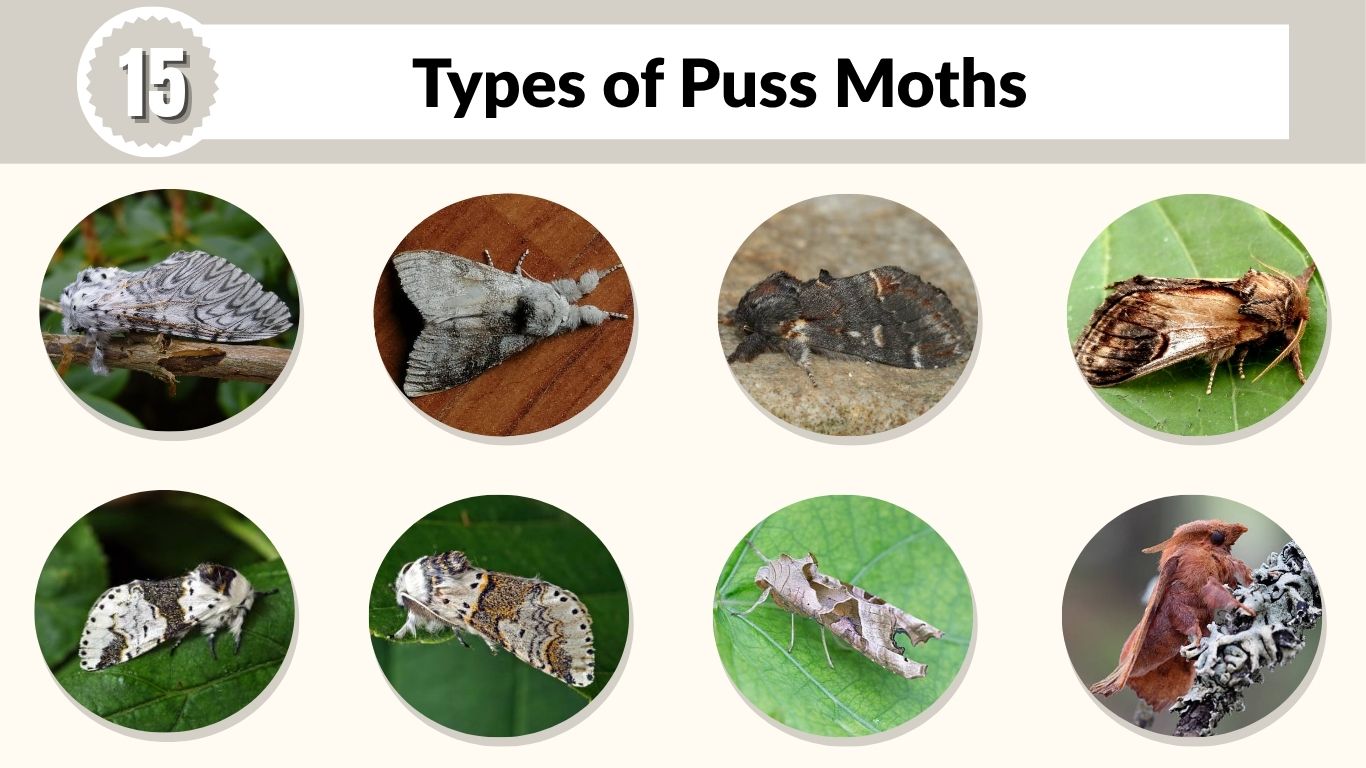
Puss moths and related prominent moths are fascinating insects known for their unusual caterpillars, fuzzy bodies, and striking wing patterns. Many of these moths belong to the prominent moth family, which includes species with unique defensive behaviors and excellent camouflage. Some caterpillars even raise their bodies or wave tail-like appendages to scare predators away.
This guide explores 15 different types of Puss Moths and related species, including their identification, habitat, behavior, and life cycle. You will also learn about their caterpillars, host plants, and the special features that make these moths so interesting in the insect world.
1. Puss Moth

The Puss Moth is a large and striking moth species known for its unusual caterpillar and bold wing patterns. Despite its soft name, the caterpillar has a unique defensive posture and can spray irritating fluid when threatened. This moth belongs to the prominent moth family and is commonly found near forests, wetlands, and riverbanks.
Identification
- Large white and gray wings
- Black wavy wing markings
- Thick furry thorax
- Caterpillar with forked tail appendages
- Bright green caterpillar coloration
Habitat and Distribution
Puss Moths are widely distributed across Europe and parts of Asia. They prefer moist habitats with poplar and willow trees because these plants serve as important food sources for the caterpillars. The species is often seen near woodlands, marshes, and riversides.
Behavior and Diet
Adult Puss Moths are mainly nocturnal and are attracted to lights at night. Caterpillars feed mostly on willow and poplar leaves. When disturbed, the caterpillar raises its front body and waves its tail-like appendages to scare predators away.
Life Cycle
Females lay eggs on the leaves of host trees during warm months. After hatching, caterpillars feed and grow through several stages before forming a tough cocoon attached to bark or tree trunks. The adult moth later emerges after completing metamorphosis.
2. Aspen Puss Moth

The Aspen Puss Moth is a beautiful prominent moth species closely related to the common Puss Moth. It is known for its pale wings, furry body, and striking caterpillar with tail-like extensions. This moth is commonly associated with aspen and poplar trees in woodland habitats.
Identification
- White or pale gray wings
- Fine black wing markings
- Thick furry thorax
- Green caterpillar with forked tail
- Medium to large moth size
Habitat and Distribution
Aspen Puss Moths are found across parts of Europe and Asia, especially in woodland regions where aspen and poplar trees grow. They prefer forests, riverbanks, and moist habitats with abundant deciduous vegetation.
Behavior and Diet
Adult moths are mostly active at night and may fly toward lights after sunset. Caterpillars feed mainly on aspen, poplar, and willow leaves. When threatened, the caterpillar raises its body and displays defensive tail appendages to frighten predators.
Life Cycle
Females deposit eggs on host tree leaves during the warmer months. The caterpillars hatch and feed through several growth stages before spinning a strong cocoon on bark or branches. After pupation, the adult moth emerges to continue the reproductive cycle.
3. Poplar Kitten
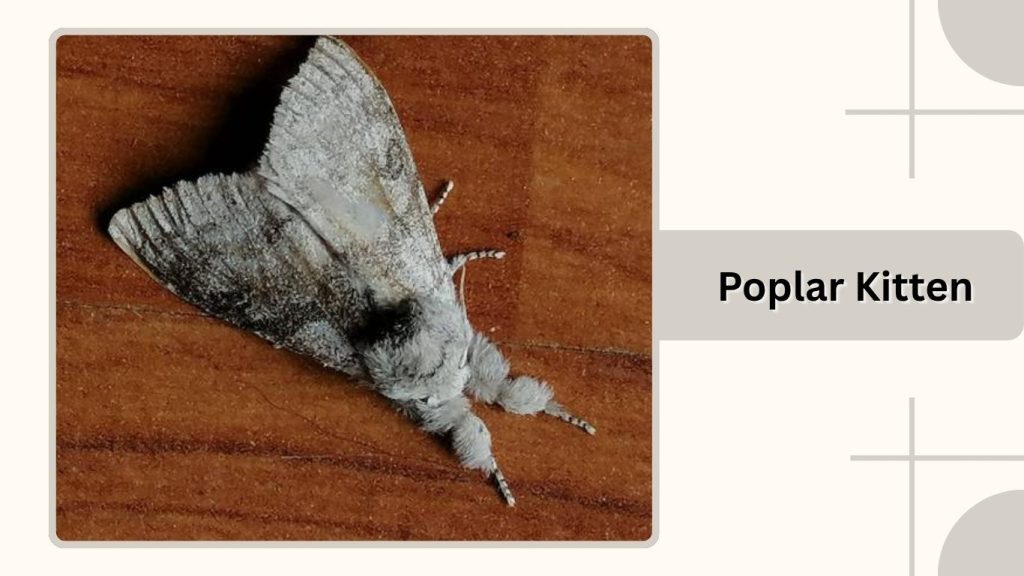
The Poplar Kitten is a small prominent moth species related to the Puss Moth family. It is recognized for its soft gray wing patterns and distinctive caterpillar with forked tail projections. This moth is commonly associated with poplar and willow trees in woodland and riverside habitats.
Identification
- Gray and white wing coloration
- Thin dark wing markings
- Small to medium body size
- Furry thorax
- Caterpillar with forked tail appendages
Habitat and Distribution
Poplar Kittens are found throughout Europe and parts of Asia in areas where poplar and willow trees grow. They commonly inhabit forests, wetlands, parks, and wooded riverbanks with moist environmental conditions.
Behavior and Diet
Adult moths are nocturnal and are frequently attracted to lights during warm evenings. Caterpillars feed mainly on poplar and willow leaves while remaining hidden among foliage during the daytime. Their body posture helps them blend into branches and leaves.
Life Cycle
Females lay eggs on the leaves of host trees during spring and summer. Caterpillars hatch and feed through several growth stages before creating cocoons attached to bark or plant material. After pupation, adult moths emerge and begin the next generation.
4. Sallow Kitten
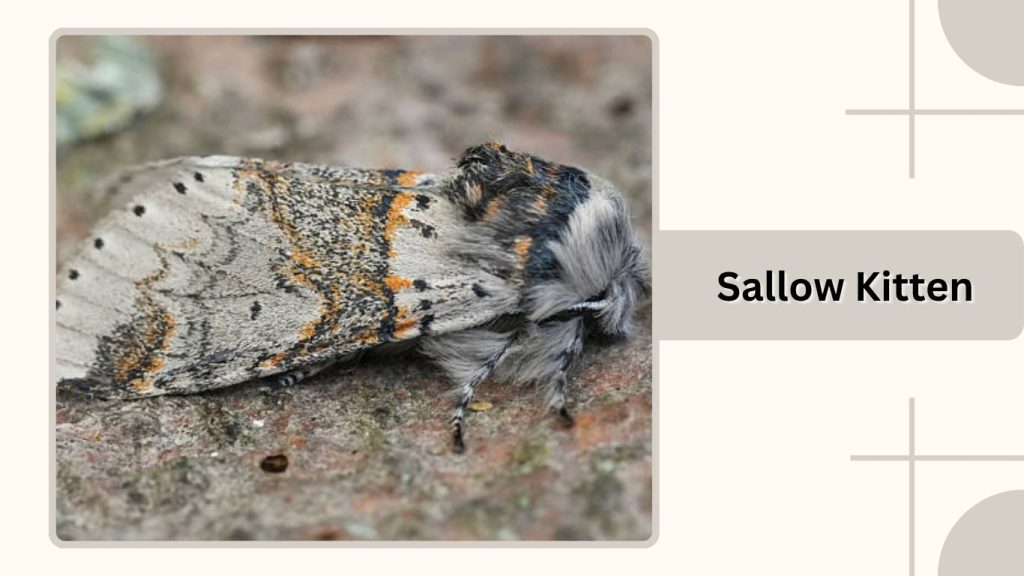
The Sallow Kitten is a small prominent moth closely related to the Puss Moth group. It is known for its soft gray wing coloration and slender caterpillar with forked tail structures. This moth is usually found in woodland habitats where willow and poplar trees are abundant.
Identification
- Pale gray and white wings
- Thin black wing markings
- Small furry body
- Narrow wing shape
- Caterpillar with forked tail appendages
Habitat and Distribution
Sallow Kittens are distributed across Europe and parts of Asia in forests, wetlands, and woodland edges. They are especially common near riversides and moist habitats containing willow and poplar trees.
Behavior and Diet
Adult moths are nocturnal and may fly toward artificial lights at night. Caterpillars feed mainly on willow and poplar leaves while resting quietly along stems and branches during the daytime. Their coloration helps them blend into natural surroundings.
Life Cycle
Females lay eggs on host plant leaves during warm seasons. Caterpillars hatch and pass through several feeding stages before spinning cocoons attached to bark or twigs. After pupation, adult moths emerge and begin the reproductive cycle again.
5. Coxcomb Prominent

The Coxcomb Prominent is a distinctive prominent moth species recognized for its raised wing tufts that resemble a rooster’s comb. Although not a true Puss Moth, it belongs to the same larger group of prominent moths and shares similar fuzzy features and nocturnal habits.
Identification
- Brown and gray wing coloration
- Raised crest-like wing tufts
- Thick furry thorax
- Medium-sized body
- Hairy caterpillar with pale markings
Habitat and Distribution
Coxcomb Prominents are widely distributed across Europe and parts of Asia. They are commonly found in deciduous woodlands, parks, hedgerows, and forest edges where host trees are available for caterpillars.
Behavior and Diet
Adult moths are active mostly at night and are often attracted to outdoor lights. Caterpillars feed on leaves from oak, birch, willow, and other deciduous trees. Their body coloration helps them remain camouflaged against bark and dead leaves.
Life Cycle
Females lay eggs on host plants during spring and summer. The caterpillars hatch and feed while growing through several stages before forming cocoons in sheltered locations. After pupation, adult moths emerge and continue the life cycle during warmer months.
6. Iron Prominent
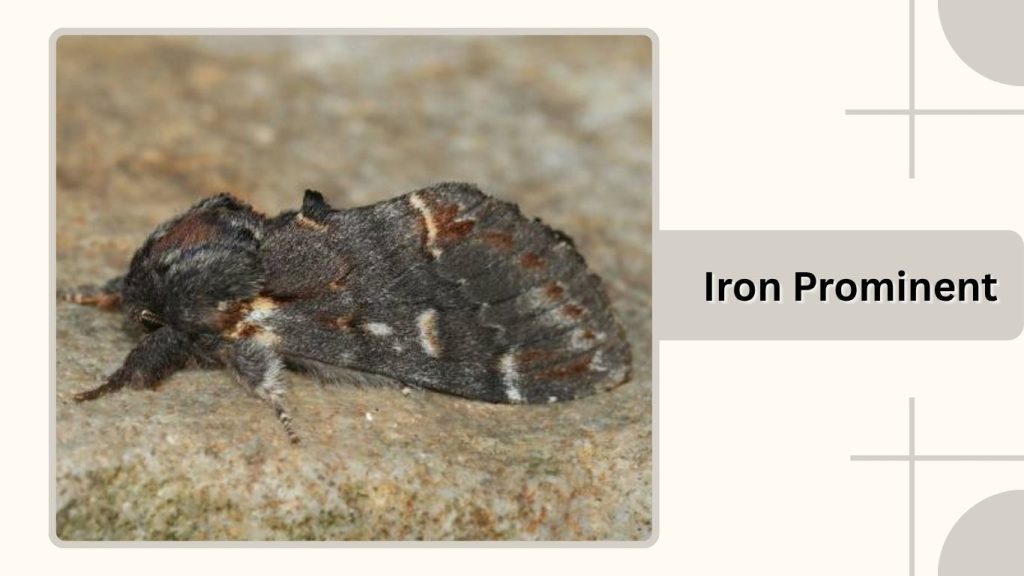
The Iron Prominent is a rugged-looking prominent moth species known for its gray-brown wing coloration and raised wing patterns. It belongs to the same broader family group as the Puss Moth and is commonly found in woodland habitats throughout Europe and Asia.
Identification
- Gray and rusty brown wings
- Raised wing tufts and markings
- Medium-sized furry body
- Camouflaged bark-like appearance
- Hairy caterpillar with subtle striping
Habitat and Distribution
Iron Prominents are found across Europe and parts of Asia in forests, woodland edges, parks, and hedgerows. They are especially common in areas with birch and alder trees, which provide important food sources for caterpillars.
Behavior and Diet
Adult moths are nocturnal and frequently visit lights during warm evenings. Caterpillars feed mainly on birch and alder leaves while remaining hidden among foliage during the daytime. Their camouflage helps protect them from birds and other predators.
Life Cycle
Females lay eggs on suitable host plants during spring and early summer. Caterpillars hatch and feed through multiple growth stages before forming cocoons in leaf litter or bark crevices. Adult moths later emerge after completing metamorphosis.
7. Pebble Prominent
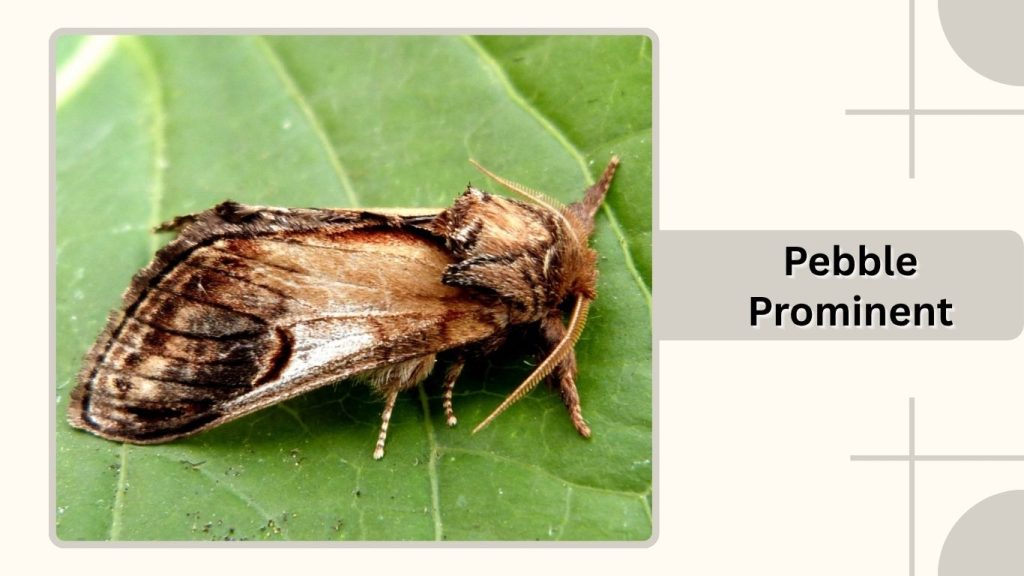
The Pebble Prominent is a well-camouflaged prominent moth species known for its bark-like wing patterns and fuzzy body. It belongs to the same larger moth family as the Puss Moth and is often found resting on tree trunks where its coloration helps it remain nearly invisible.
Identification
- Gray and brown bark-like wings
- Zigzag wing markings
- Medium-sized furry body
- Rounded resting posture
- Hairy caterpillar with green coloration
Habitat and Distribution
Pebble Prominents are widely distributed across Europe and parts of Asia. They are commonly found in woodlands, riverbanks, parks, and gardens where willow and poplar trees are present.
Behavior and Diet
Adult moths are nocturnal and are frequently attracted to lights at night. Caterpillars feed mainly on willow and poplar leaves while staying hidden among branches during the daytime. Their camouflage helps reduce the risk of predation.
Life Cycle
Females lay eggs on host plant leaves during spring and summer. Caterpillars hatch and grow through several feeding stages before pupating in leaf litter or sheltered bark areas. Adult moths later emerge after completing metamorphosis.
8. Lesser Swallow Prominent

The Lesser Swallow Prominent is a striking moth species recognized for its black-and-white wing markings and streamlined appearance. Although not a true Puss Moth, it belongs to the same prominent moth family and shares similar nocturnal habits and fuzzy body features.
Identification
- White wings with dark markings
- Sleek triangular wing shape
- Medium-sized furry body
- Black streaks across the forewings
- Hairy green caterpillar
Habitat and Distribution
Lesser Swallow Prominents are found across Europe and parts of Asia, especially in woodland habitats with birch trees. They also occur in parks, gardens, and forest edges where host plants are available.
Behavior and Diet
Adult moths are mainly active at night and are often attracted to artificial lights. Caterpillars feed mostly on birch leaves while remaining hidden among branches during the day. Their coloration helps them blend into leaves and bark.
Life Cycle
Females lay eggs on birch leaves during warmer months. Caterpillars hatch and pass through several growth stages before forming cocoons in sheltered locations. After pupation, adult moths emerge and continue the reproductive cycle.
9. Chocolate-Tip Moth

The Chocolate-Tip Moth is a small prominent moth species named for the rich brown coloring near the tips of its wings. It belongs to the same larger moth family as the Puss Moth and is known for its soft furry body and nocturnal activity.
Identification
- Gray wings with dark brown tips
- Small furry thorax
- Slender body shape
- Subtle wing markings
- Hairy caterpillar with striped patterns
Habitat and Distribution
Chocolate-Tip Moths are found across Europe and parts of Asia in forests, woodlands, parks, and riverside habitats. They are especially common in areas with poplar and willow trees.
Behavior and Diet
Adult moths are active mainly at night and are often attracted to outdoor lights. Caterpillars feed on willow and poplar leaves while remaining hidden among foliage during daylight hours. Their coloration helps provide camouflage from predators.
Life Cycle
Females lay eggs on host plant leaves during spring and summer. Caterpillars hatch and grow through several stages before creating cocoons in sheltered locations such as bark crevices or leaf litter. Adult moths later emerge after metamorphosis.
10. White Furcula Moth

The White Furcula Moth is a pale-colored prominent moth species related to the Puss Moth group. It is recognized for its soft white-gray wing coloration and distinctive caterpillar with tail-like extensions. This moth is commonly found in woodland habitats where poplar and willow trees grow.
Identification
- White or pale gray wings
- Thin dark wing markings
- Furry thorax
- Medium-sized body
- Caterpillar with forked tail appendages
Habitat and Distribution
White Furcula Moths are distributed across Europe and parts of Asia. They prefer forests, woodland edges, wetlands, and riverside habitats with abundant willow and poplar trees.
Behavior and Diet
Adult moths are nocturnal and frequently visit lights during warm nights. Caterpillars feed mainly on poplar and willow leaves while hiding among foliage during the daytime. Their body shape and coloration help them blend into tree branches.
Life Cycle
Females lay eggs on host plant leaves during spring and summer. After hatching, caterpillars feed through several growth stages before forming cocoons attached to bark or sheltered surfaces. Adult moths emerge after completing metamorphosis.
11. Alder Kitten

The Alder Kitten is a small prominent moth closely related to the Puss Moth and other kitten moth species. It is known for its pale gray wing coloration and slender caterpillar with tail-like projections. This moth is commonly associated with alder, willow, and poplar trees in damp woodland habitats.
Identification
- Pale gray and white wings
- Thin dark wing markings
- Small furry thorax
- Narrow wing shape
- Caterpillar with forked tail appendages
Habitat and Distribution
Alder Kittens are found throughout Europe and parts of Asia in forests, wetlands, riversides, and woodland edges. They are especially common near areas with alder and willow trees.
Behavior and Diet
Adult moths are nocturnal and are frequently attracted to lights at night. Caterpillars feed mainly on alder, willow, and poplar leaves while remaining hidden among branches during the day. Their camouflage helps them avoid predators.
Life Cycle
Females lay eggs on host plants during warmer months. Caterpillars hatch and feed through several growth stages before forming tough cocoons on bark or plant stems. After pupation, adult moths emerge and continue the life cycle.
12. Lobster Moth
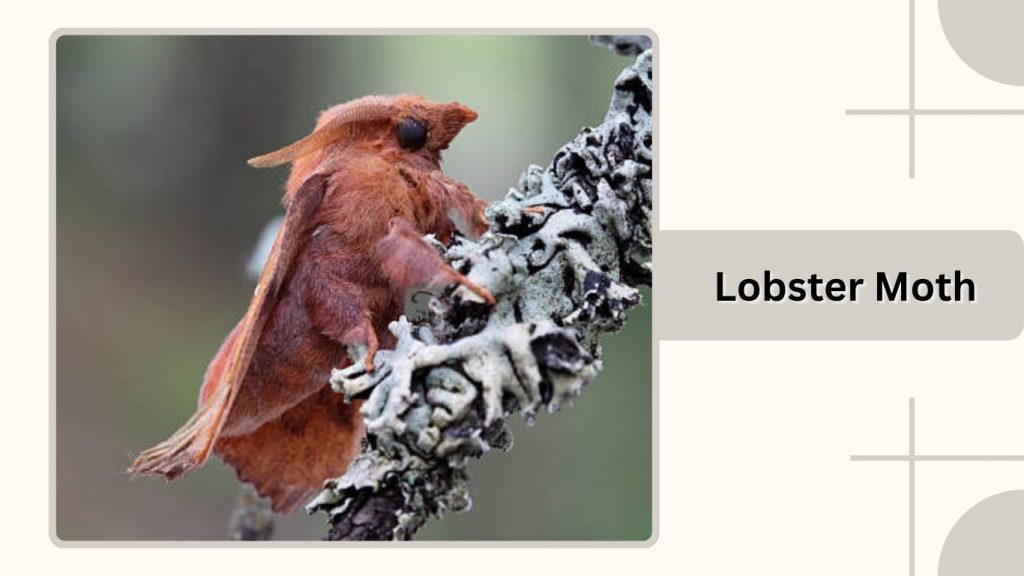
The Lobster Moth is one of the strangest-looking prominent moth species because of its unusual caterpillar shape. The larva resembles a tiny lobster or spider, with long legs and an arched body posture used to scare predators. This species belongs to the same broader moth family as the Puss Moth and is widely known for its bizarre appearance.
Identification
- Brown and gray wing coloration
- Furry thorax and body
- Medium-sized moth
- Caterpillar with long leg-like appendages
- Curved lobster-shaped larva posture
Habitat and Distribution
Lobster Moths are found across Europe and parts of Asia in deciduous forests, woodlands, parks, and wooded gardens. They prefer habitats containing beech, oak, birch, and hazel trees.
Behavior and Diet
Adult moths are nocturnal and commonly fly around lights during warm nights. Caterpillars feed on leaves from broadleaf trees while remaining hidden among branches during the daytime. When threatened, the larva raises its body and waves its long front legs defensively.
Life Cycle
Females lay eggs on host tree leaves during spring and summer. Caterpillars hatch and feed through several growth stages before spinning cocoons among leaves or bark. After pupation, adult moths emerge and begin the next generation.
13. Angle Shades Puss Moth
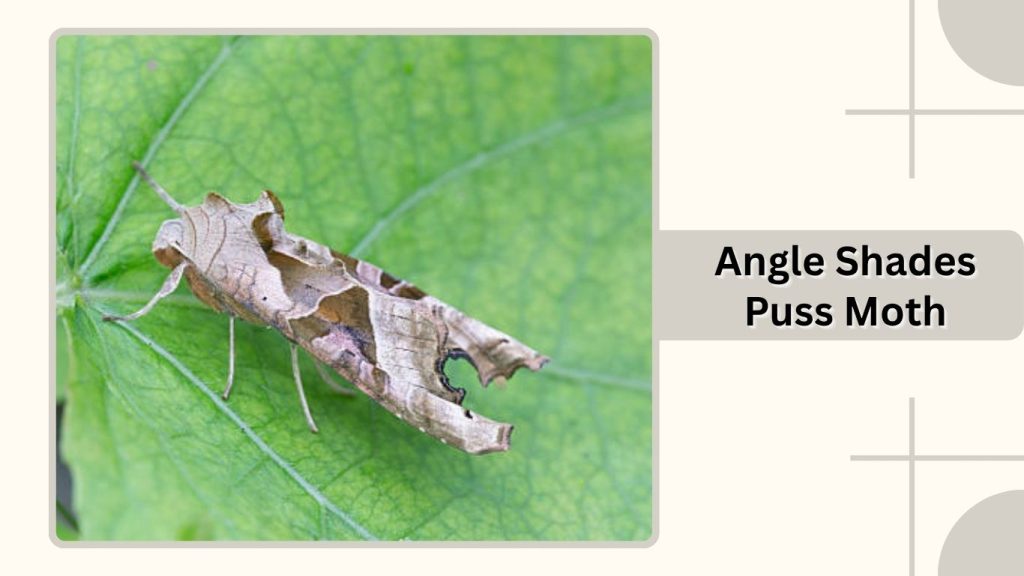
The Angle Shades is a uniquely shaped moth often grouped with prominent and puss-like moth species because of its folded wing posture and fuzzy body. It is well known for its leaf-like camouflage that helps it blend into dead foliage during the daytime.
Identification
- Brown and tan leaf-like wings
- Deep angled wing shape
- Furry thorax
- Medium-sized moth body
- Camouflaged resting posture
Habitat and Distribution
Angle Shades moths are found across Europe, parts of Asia, and some regions of North Africa. They commonly inhabit gardens, forests, hedgerows, parks, and farmland with dense vegetation.
Behavior and Diet
Adult moths are nocturnal and are strongly attracted to lights at night. Caterpillars feed on a wide variety of herbaceous plants, shrubs, and garden vegetation. Their camouflage allows them to rest unnoticed among leaves and bark during daylight hours.
Life Cycle
Females lay eggs on suitable host plants during warmer months. Caterpillars hatch and feed through several growth stages before pupating in soil or leaf litter. Adult moths emerge after metamorphosis and may produce multiple generations in warmer climates.
14. Maple Prominent

The Maple Prominent is a fuzzy prominent moth species known for its soft gray-brown coloration and raised wing tufts. It belongs to the same larger family group as the Puss Moth and is commonly associated with maple-rich woodland habitats.
Identification
- Gray and brown wing coloration
- Raised crest-like wing tufts
- Thick furry thorax
- Medium-sized moth body
- Hairy caterpillar with pale striping
Habitat and Distribution
Maple Prominents are found across Europe and parts of Asia in deciduous forests, woodland edges, parks, and gardens. They are especially common in habitats where maple trees grow abundantly.
Behavior and Diet
Adult moths are nocturnal and often fly toward lights during warm evenings. Caterpillars feed mainly on maple leaves while staying hidden among branches and foliage during the daytime. Their muted coloration helps them blend into bark and dried leaves.
Life Cycle
Females lay eggs on maple leaves during spring and summer. Caterpillars hatch and grow through several feeding stages before creating cocoons in sheltered locations such as bark crevices or leaf litter. Adult moths later emerge after completing metamorphosis.
15. Tawny Prominent

The Tawny Prominent is a woodland prominent moth species recognized for its warm brown coloration and furry body. It belongs to the same broader moth family as the Puss Moth and is commonly found resting on tree bark where its camouflage helps it avoid predators.
Identification
- Tawny brown wing coloration
- Dark streaks and markings
- Thick furry thorax
- Medium-sized body
- Hairy caterpillar with subtle striping
Habitat and Distribution
Tawny Prominents are distributed across Europe and parts of Asia in forests, woodland edges, wetlands, and riverside habitats. They are often associated with poplar and willow trees.
Behavior and Diet
Adult moths are nocturnal and commonly fly around outdoor lights during warm nights. Caterpillars feed mainly on willow and poplar leaves while staying hidden among branches during the daytime. Their camouflage helps protect them from birds and other predators.
Life Cycle
Females lay eggs on host plant leaves during spring and summer. Caterpillars hatch and feed through several growth stages before forming cocoons in bark crevices or leaf litter. Adult moths later emerge after completing metamorphosis and continue the reproductive cycle.
FAQs
What is a Puss Moth?
A Puss Moth is a large prominent moth species known for its striking caterpillar with forked tail appendages. The caterpillar uses defensive behaviors to scare predators and is commonly found on willow and poplar trees.
Are Puss Moth caterpillars dangerous?
Puss Moth caterpillars are not considered highly dangerous, but they can spray irritating fluid when threatened. Some related prominent moth caterpillars may also have defensive hairs or mild irritants.
What do Puss Moth caterpillars eat?
Puss Moth caterpillars mainly feed on the leaves of willow, poplar, and aspen trees. Different related species may feed on birch, alder, maple, or other deciduous plants.
Where are Puss Moths found?
Puss Moths and related prominent moth species are commonly found across Europe and parts of Asia. They usually live in forests, woodland edges, parks, wetlands, and riverside habitats.
Are adult Puss Moths harmful?
Adult Puss Moths are harmless to humans and do not sting or bite. The caterpillar stage is more notable because of its unusual defensive posture and protective behaviors.