Tiger moth caterpillars are fuzzy, colorful larvae known for their hairy bodies and interesting defense behaviors. Many species are commonly called woolly bears and are found in forests, gardens, grasslands, and woodland habitats around the world. People often search for information about tiger moth caterpillar identification, poisonous species, food, care, and life cycle stages. While most species are harmless, some may cause mild skin irritation because of their bristles. Understanding their appearance, behavior, and habitat can help people safely identify and care for these fascinating caterpillars.
What Is a Tiger Moth Caterpillar?
Tiger moth caterpillars are the larval stage of tiger moths, which belong to a large group of colorful moth species. These caterpillars are usually covered with thick hairs that help protect them from predators. Their fuzzy appearance and unique colors make them some of the most recognizable caterpillars found in nature.
Why Tiger Moth Caterpillars Are So Popular
Many people are fascinated by tiger moth caterpillars because of their soft woolly appearance and bright colors. Woolly bear caterpillars, in particular, are well known and often connected to folklore about winter weather predictions. Their fuzzy bodies and slow movement also make them easy to observe in gardens and outdoor spaces.
Common Features of Tiger Moth Caterpillars
- Thick fuzzy or hairy body covering
- Black, brown, orange, white, or striped colors
- Segmented soft body structure
- Slow crawling movement
- Hair-like bristles used for defense
Difference Between Caterpillars and Adult Tiger Moths
Tiger moth caterpillars look very different from adult tiger moths. Caterpillars are fuzzy crawling larvae that focus mainly on eating and growing. Adult tiger moths develop colorful wings and become active mostly at night. Many adult moths are attracted to lights and use their wing patterns to warn predators or blend into their surroundings.
Tiger Moth Caterpillar Identification
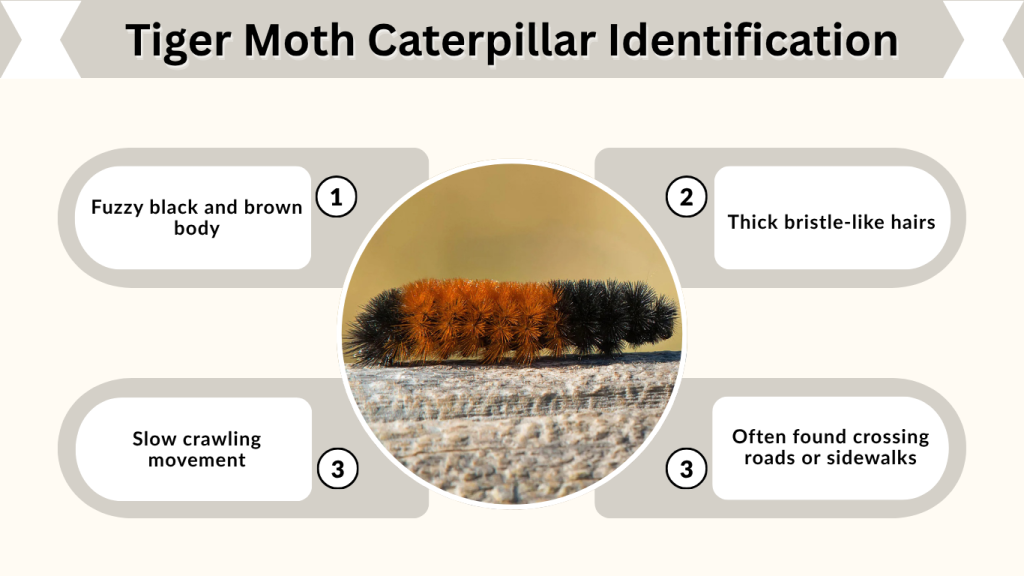
Tiger moth caterpillars come in many different shapes and colors depending on the species. Some are dark and heavily covered in hairs, while others may have bright stripes or colorful markings. Identification is important because certain species may have irritating hairs or special habitat preferences.
Tiger Moth Caterpillar Colors and Patterns
Some tiger moth caterpillars are completely black, while others display orange bands, yellow hairs, or white fuzzy bodies. Woolly bear caterpillars often have black ends with a reddish-brown middle section. Bright colors may warn predators that the caterpillar could taste bad or cause irritation if touched.
Woolly Bear Caterpillar Identification
- Fuzzy black and brown body
- Thick bristle-like hairs
- Slow crawling movement
- Often found crossing roads or sidewalks
- Commonly linked to Isabella tiger moths
How to Identify Poisonous Species
Most tiger moth caterpillars are not truly poisonous, but some species have irritating hairs or mild toxins. Species with brightly colored hairs, spines, or thick bristles may cause itching or skin irritation when touched. It is always safest to avoid handling unknown fuzzy caterpillars directly with bare hands.
Types of Tiger Moth Caterpillars
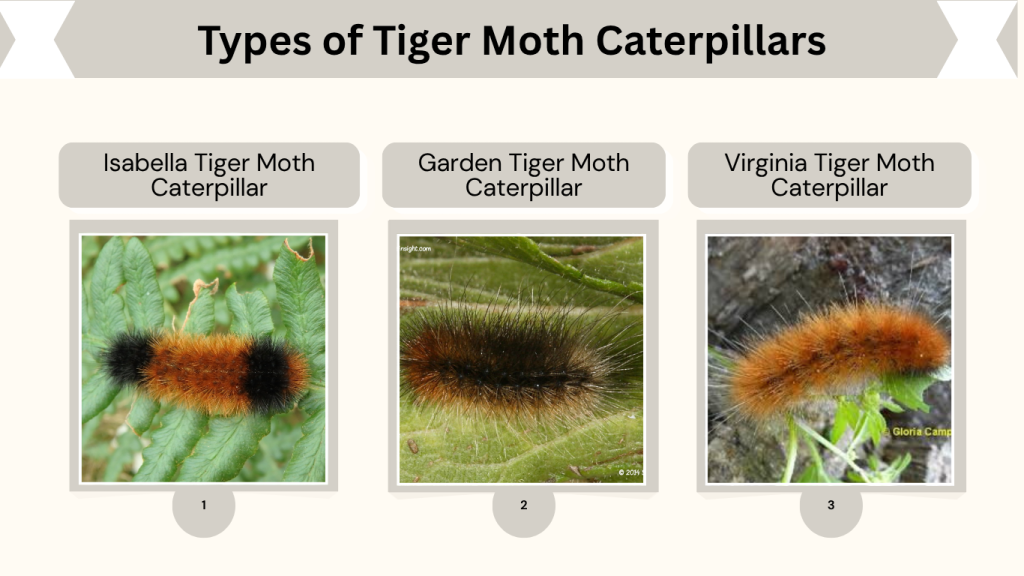
There are many species of tiger moth caterpillars found worldwide. Some are common garden species, while others are known for unusual colors, poisonous hairs, or unique feeding habits. Several species are especially popular in online searches because of their appearance and behavior.
Isabella Tiger Moth Caterpillar
The Isabella tiger moth caterpillar, also known as the woolly bear caterpillar, is one of the most recognized tiger moth larvae. It has black ends with a rusty-brown middle band and is commonly seen during autumn. This species later transforms into the Isabella tiger moth.
Garden Tiger Moth Caterpillar
Garden tiger moth caterpillars are large fuzzy larvae covered with dark hairs. They are commonly found in gardens, meadows, and woodland habitats where they feed on low-growing plants. Their thick hairs help protect them from birds and predators.
Virginia Tiger Moth Caterpillar
- White fuzzy body covering
- Thick soft-looking hairs
- Common in gardens and forests
- May cause mild skin irritation
- Later transforms into a white tiger moth
Are Tiger Moth Caterpillars Poisonous?
Many people search online to learn whether tiger moth caterpillars are dangerous to touch. Most species are harmless, but certain caterpillars may have irritating hairs that trigger mild allergic reactions or itching. These defensive hairs help protect the caterpillars from predators in the wild.
Species With Irritating Hairs
Some tiger moth caterpillars may cause skin irritation when handled roughly or touched directly. Species such as the garden tiger moth caterpillar and milkweed tiger moth caterpillar are known for their defensive hairs. Symptoms are usually mild and disappear after washing the affected skin.
Tiger Moth Caterpillar Diet and Food
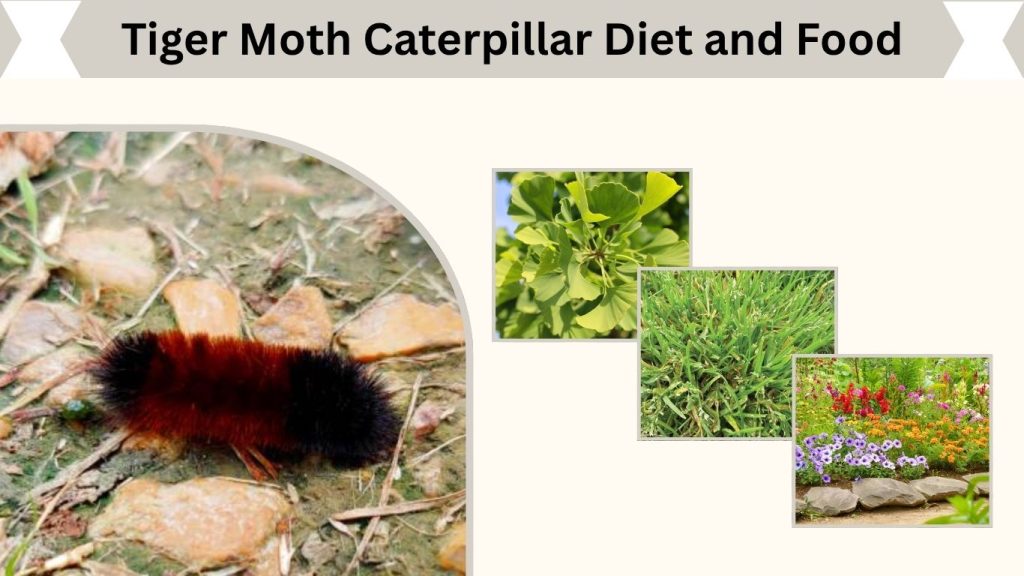
Tiger moth caterpillars spend most of their lives feeding and growing before transforming into moths. Their diet mainly consists of leaves, grasses, flowers, and soft plant material. Different species prefer different host plants, and many caterpillars eat heavily to store energy for the pupal and adult stages.
What Tiger Moth Caterpillars Eat
- Leaves from shrubs and trees
- Wild grasses and weeds
- Garden plants and flowers
- Dandelions and clover
- Milkweed in some species
Common Host Plants
Many tiger moth caterpillars feed on a wide range of plants, making them adaptable to different habitats. Woolly bear caterpillars commonly eat grasses, dandelions, and low-growing plants, while milkweed tiger moth caterpillars prefer milkweed species. Some caterpillars also feed on tree leaves and garden vegetation.
Best Plants for Raising Caterpillars
Fresh untreated leaves are the best food source for captive caterpillars. The safest option is usually the same plant where the caterpillar was originally found. Clean leaves without pesticides help support healthy growth and successful development into adult moths.
Tiger Moth Caterpillar Life Cycle
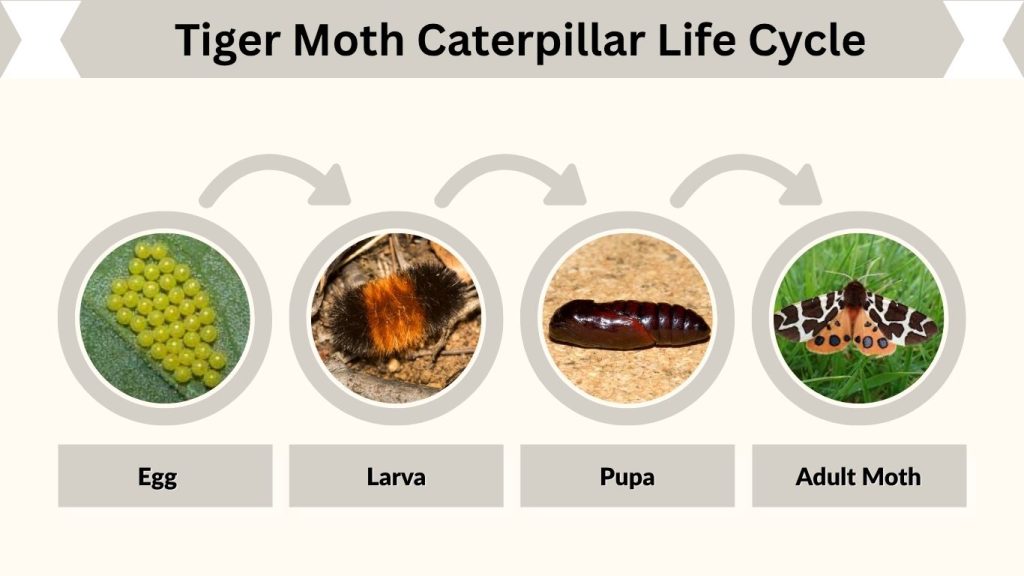
Tiger moth caterpillars go through several stages before becoming fully developed moths. Like all moths, they experience complete metamorphosis, which includes egg, larva, pupa, and adult stages. Each stage plays an important role in the insect’s development and survival.
Egg Stage
Female tiger moths lay clusters of tiny eggs on host plants where caterpillars will have immediate access to food after hatching. The eggs are usually attached to leaves and protected in hidden areas away from predators and harsh weather.
Caterpillar Growth Stages
- Caterpillars shed their skin several times
- Body size increases after each stage
- Hair and color patterns may change
- Feeding activity becomes more intense
- Final stage prepares for cocoon formation
Cocoon and Pupa Stage
Once fully grown, tiger moth caterpillars form cocoons using silk and body hairs. Inside the cocoon, the caterpillar transforms into a pupa where major body changes occur. This stage may last several weeks depending on species, temperature, and environmental conditions.
How to Care for a Tiger Moth Caterpillar
Some people keep tiger moth caterpillars temporarily for observation, photography, or educational purposes. Proper care is important because caterpillars need fresh food, clean living space, and stable conditions to develop successfully into adult moths.
Basic Caterpillar Care Tips
- Provide fresh leaves every day
- Keep the container clean and ventilated
- Avoid direct sunlight and overheating
- Add small twigs or leaves for climbing
- Handle caterpillars gently and minimally
Best Containers for Caterpillar Care
Clear plastic or glass containers with air holes work well for temporary caterpillar care. The container should be large enough for movement and cocoon building. Paper towels or leaves can be added to the bottom to help maintain cleanliness and absorb moisture.
Common Care Mistakes to Avoid
Overhandling, poor ventilation, and incorrect food plants are common mistakes that can harm tiger moth caterpillars. Dirty containers may also increase the risk of mold or disease. Observing the caterpillar carefully and keeping its environment clean can greatly improve survival and healthy development.
Tiger Moth Caterpillar vs Other Fuzzy Caterpillars
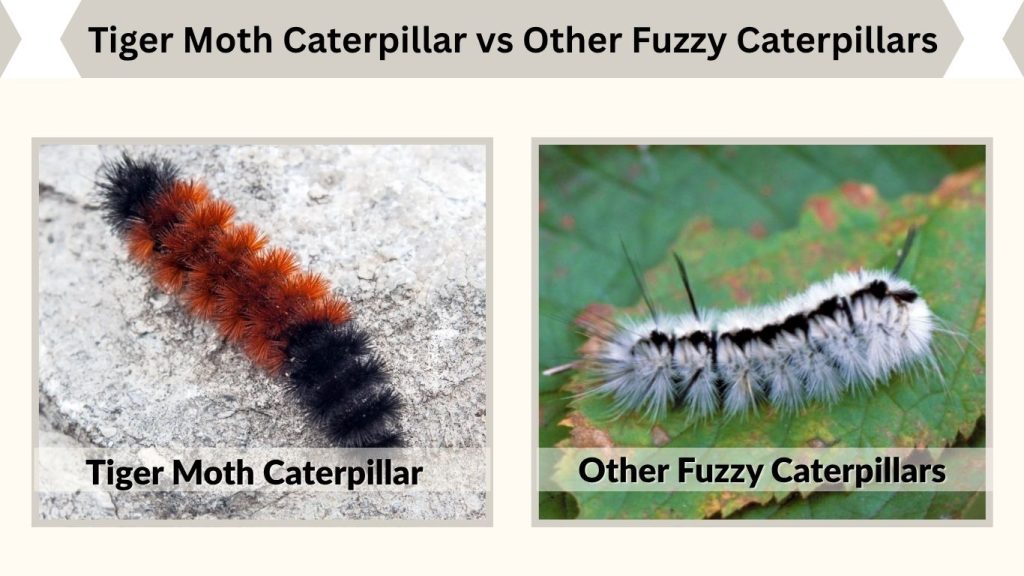
Tiger moth caterpillars are often confused with other hairy caterpillars because many species share similar fuzzy appearances. However, tiger moth larvae usually have thicker hair coverings and more varied color patterns compared to many other moth and butterfly caterpillars.
| Tiger Moth Caterpillar | Other Fuzzy Caterpillars |
| Often called woolly bears | May belong to different moth families |
| Thick hairy body covering | Hair density varies |
| Usually harmless but irritating | Some may be highly venomous |
| Common in gardens and forests | Habitat depends on species |
FAQs
Are tiger moth caterpillars poisonous?
Most tiger moth caterpillars are not truly poisonous, but some species have irritating hairs or mild toxins that can cause itching, redness, or skin irritation. Sensitive people may react more strongly after touching them. It is always safest to avoid handling fuzzy caterpillars directly with bare hands.
What does a tiger moth caterpillar eat?
Tiger moth caterpillars mainly feed on leaves, grasses, flowers, weeds, and low-growing plants. Different species prefer different host plants. Some popular food sources include dandelions, clover, milkweed, and broadleaf plants commonly found in gardens and woodland habitats.
What does a tiger moth caterpillar turn into?
Tiger moth caterpillars eventually transform into adult tiger moths through complete metamorphosis. After forming a cocoon and entering the pupal stage, the adult moth later emerges with fully developed wings, colorful patterns, and nighttime flying abilities.
Can you keep tiger moth caterpillars as pets?
Yes, many people temporarily keep tiger moth caterpillars for observation and educational purposes. They need fresh food, ventilation, clean containers, and gentle handling. Proper care helps the caterpillar develop safely into an adult moth before it is released back into nature.
How long does a tiger moth caterpillar live?
The caterpillar stage usually lasts several weeks to a few months depending on the species, temperature, and food availability. After pupating inside a cocoon, the adult moth may only live for a short period, often just a few days or weeks.