The Garden Tiger Moth is one of the most colorful and recognizable moth species found in gardens, meadows, and woodland edges. Known for its patterned wings and hairy caterpillar, this moth has fascinated insect lovers for generations. Its bright hindwings help scare predators, while the woolly bear caterpillar survives through cold seasons. Garden Tiger Moths are mostly active at night and play an important role in local ecosystems. In this guide, you will learn about their identification, habitat, life cycle, feeding habits, and interesting behaviors found in nature.
What Is a Garden Tiger Moth?
The Garden Tiger Moth is a striking nocturnal moth belonging to the tiger moth group. It is admired for its colorful hindwings and furry caterpillars known as woolly bears. This species is commonly found in cool temperate regions and is active mainly during summer nights. Although beautiful, its population has declined in some areas because of habitat changes and pesticide use.
Scientific Classification
- Scientific name: Arctia caja
- Family: Erebidae
- Subfamily: Arctiinae
- Commonly grouped with tiger moth species
- Native to Europe and parts of Asia
Why It Is Called the Garden Tiger Moth
The name comes from its bold wing patterns that resemble tiger stripes and patches. The species is often found near gardens, grassy fields, and woodland edges, which explains the “garden” part of its common name. Its colorful appearance makes it one of the easiest tiger moths to recognize.
Garden Tiger Moth Identification
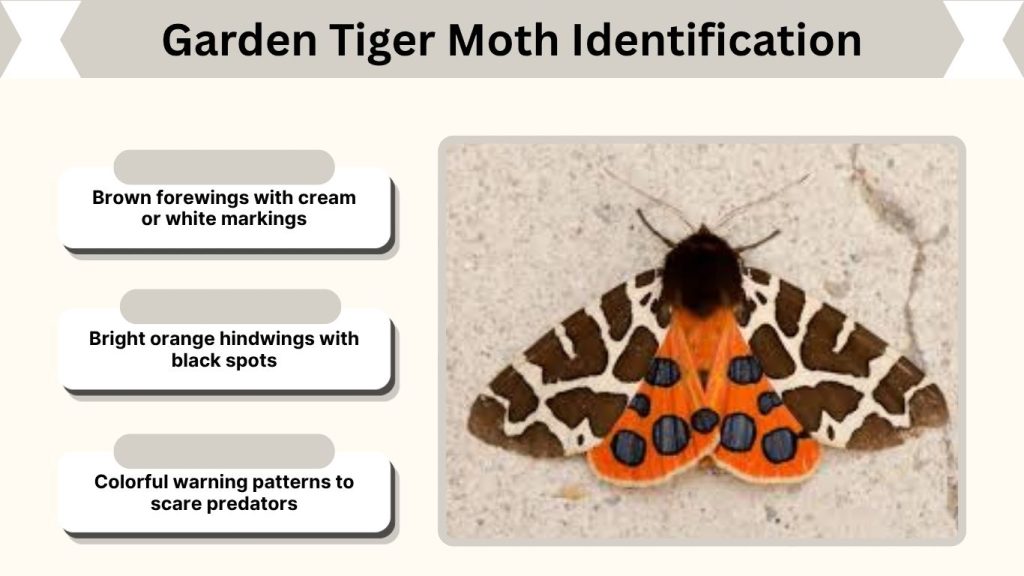
The Garden Tiger Moth has a unique appearance that makes it stand out from many other moth species. Adults have patterned brown and white forewings hiding bright orange hindwings with dark spots. The caterpillars are equally noticeable because of their thick hairy bodies. These features help protect the moth from predators in the wild.
Adult Garden Tiger Moth Appearance
- Brown forewings with cream or white markings
- Bright orange hindwings with black spots
- Thick furry body
- Medium to large wingspan
- Feather-like antennae in males
- Colorful warning patterns to scare predators
Garden Tiger Moth Caterpillar Identification
The caterpillar of the Garden Tiger Moth is commonly called a woolly bear. It has a dark hairy body that provides protection from predators and cold weather. The caterpillar may appear black or dark brown with rusty hairs depending on age and environment. These larvae are often seen crawling across paths and gardens during cooler months.
Male vs Female Garden Tiger Moth
Male Garden Tiger Moths are usually smaller and more active fliers than females. Males also have more feathery antennae that help detect female scents in the air. Females tend to have broader bodies because they carry eggs before reproduction.
Garden Tiger Moth Habitat and Distribution
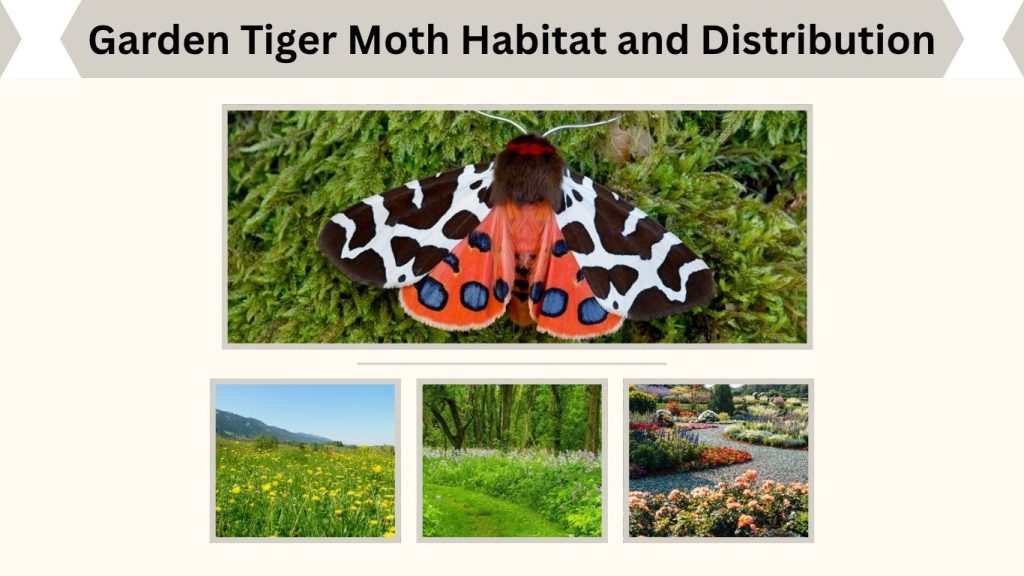
Garden Tiger Moths live in a variety of natural habitats with plenty of vegetation and cool conditions. They are commonly found in meadows, gardens, woodland edges, and grassy countryside areas. These habitats provide food for caterpillars and safe shelter for adults. The species prefers moist regions where plants grow densely throughout the warmer months.
Natural Habitat
- Meadows and grasslands
- Woodland edges
- Gardens and parks
- Heathlands
- Shrub-covered countryside areas
Geographic Distribution
The Garden Tiger Moth is widely distributed across Europe and parts of Asia. In some places, it has also been recorded in colder regions with suitable vegetation. However, populations have declined in several countries due to environmental changes and habitat destruction.
Preferred Climate Conditions
This moth prefers cool and moist climates with healthy plant growth. Areas with moderate rainfall and natural vegetation are ideal for its survival. Caterpillars can survive cold winters, allowing the species to thrive in temperate regions.
Garden Tiger Moth Life Cycle
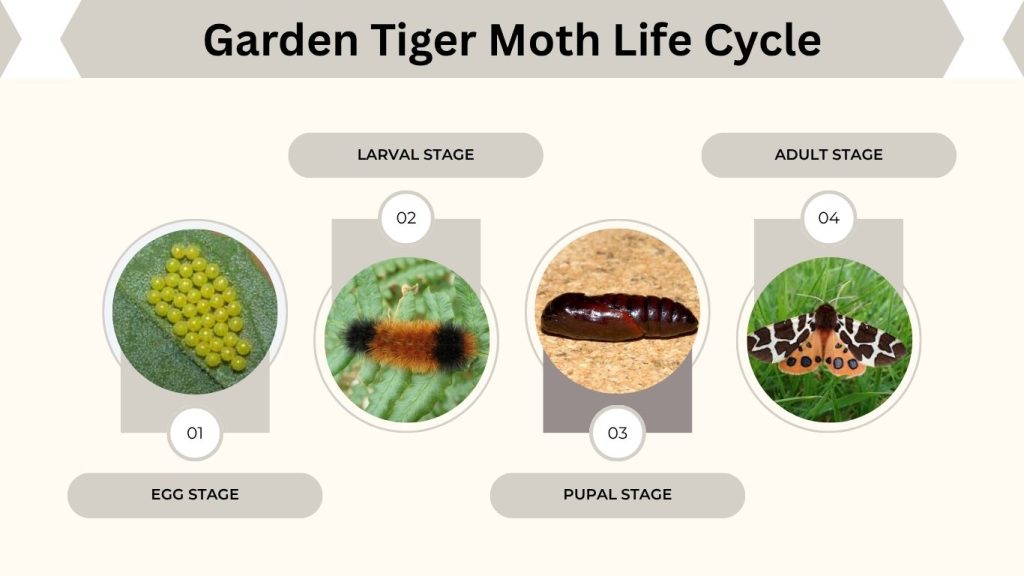
The life cycle of the Garden Tiger Moth includes four stages: egg, caterpillar, pupa, and adult moth. Most of its life is spent as a caterpillar feeding and growing before transforming into a colorful adult. Seasonal weather strongly affects its development and activity patterns.
Egg Stage
Female Garden Tiger Moths lay clusters of tiny eggs on leaves and low vegetation. The eggs usually hatch within a few weeks depending on temperature and environmental conditions. Newly hatched caterpillars immediately begin feeding on nearby plants.
Caterpillar Stage
The woolly bear caterpillar is the longest stage of the life cycle. It feeds on leaves, grasses, and wild plants while storing energy for adulthood. During winter, the caterpillar may enter dormancy and survive freezing temperatures before becoming active again in spring.
Pupa Stage
The caterpillar creates a protective cocoon using silk and body hairs gathered during the larval stage. Inside the cocoon, it transforms into a pupa hidden among leaves, soil, or garden debris. This stage may last several weeks before the adult moth fully develops and emerges.
Adult Moth Stage
Adult Garden Tiger Moths are mainly active at night and are attracted to outdoor lights. Their primary goal is reproduction because adult moths live only a short time. After mating, females lay eggs on vegetation and begin the next generation.
What Do Garden Tiger Moths Eat?

Garden Tiger Moths have different diets during their caterpillar and adult stages. Caterpillars feed heavily on plants to support growth, while adults mostly consume nectar for energy. Their feeding habits help them survive in gardens, grasslands, and woodland habitats.
Caterpillar Diet
- Dandelions
- Nettles
- Dock plants
- Plantains
- Wild grasses
- Garden vegetation
Adult Moth Feeding Habits
Adult Garden Tiger Moths feed on nectar from flowers during nighttime activity. They are especially attracted to night-blooming plants with strong scents. Nectar provides quick energy for flying, mating, and reproduction during their short adult lifespan.
Garden Tiger Moth Behavior
The Garden Tiger Moth displays several interesting behaviors that help it survive in the wild. From nighttime flight to defensive warning colors, this species uses both appearance and behavior to avoid predators. Its caterpillars are also known for surviving harsh winter conditions.
Nocturnal Activity
Garden Tiger Moths are mostly nocturnal and become active after sunset. They fly around gardens, fields, and woodland edges searching for mates and flowers. Artificial lights may attract them during warm summer nights.
Defense Mechanisms
The bright orange hindwings of the Garden Tiger Moth act as warning colors to frighten predators. If disturbed, the moth suddenly reveals these bright colors to startle birds and small animals. The hairy woolly bear caterpillar also gains protection from its thick body hairs.
Seasonal Behavior
The caterpillar stage often survives through winter by hiding under leaves, logs, or soil. As temperatures rise in spring, feeding activity increases again. Adult moths usually appear during summer when conditions are best for mating and egg-laying.
Garden Tiger Moth Predators and Threats
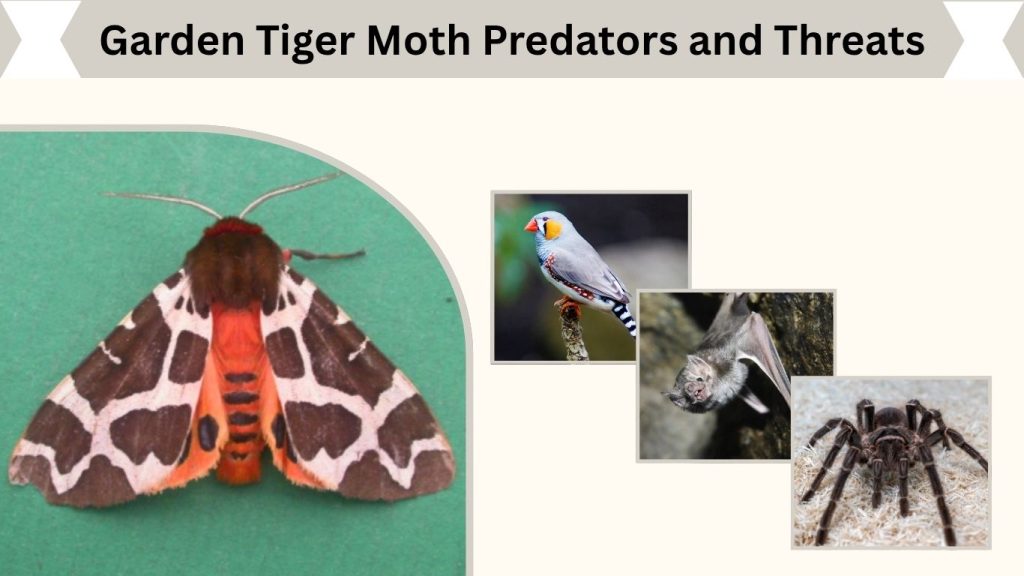
Like many insects, Garden Tiger Moths face threats from both natural predators and environmental changes. Their colorful appearance helps with defense, but they still remain vulnerable to birds, bats, and habitat destruction. Human activities have also affected their population in some regions.
Natural Predators
- Birds
- Bats
- Small mammals
- Spiders
- Predatory insects
Environmental Threats
Habitat loss is one of the biggest threats to Garden Tiger Moths. The removal of wild vegetation reduces food sources and breeding areas. Pesticide use can also harm caterpillars and adult moths. Climate change and pollution may further affect survival rates in certain regions.
Are Garden Tiger Moths Rare?
Garden Tiger Moth populations have declined in several countries over recent decades. Although still common in some areas, they are considered less frequent in places where natural habitats have been reduced. Conservation efforts aim to protect the species and improve moth-friendly environments.
Population Decline
Changes in farming practices, pesticide use, and habitat destruction have contributed to lower population numbers. Urban development has also reduced the natural grassy areas needed by caterpillars and adult moths.
Conservation Efforts
Creating wildlife-friendly gardens can help support Garden Tiger Moth populations. Leaving wild plant areas, reducing chemical use, and planting native flowers provide food and shelter for both caterpillars and adult moths.
FAQs
Are Garden Tiger Moths harmful?
Garden Tiger Moths are harmless to humans and pets. Adult moths do not bite or sting, and they mainly feed on nectar. Their caterpillars may eat garden plants, but they rarely cause serious damage.
What do Garden Tiger Moth caterpillars eat?
The woolly bear caterpillars feed on a variety of plants including dandelions, nettles, dock leaves, grasses, and other low-growing vegetation commonly found in gardens and meadows.
Are Garden Tiger Moths rare?
Garden Tiger Moths are still found in many regions, but their populations have declined in some countries due to habitat loss, pesticides, and environmental changes affecting natural ecosystems.
Do Garden Tiger Moths come out during the day?
Garden Tiger Moths are mainly nocturnal insects. They are most active after sunset and are often attracted to outdoor lights during warm summer nights.
How long do Garden Tiger Moths live?
Adult Garden Tiger Moths usually live for only a few weeks. However, the caterpillar stage lasts much longer and may continue through winter before the moth becomes an adult.