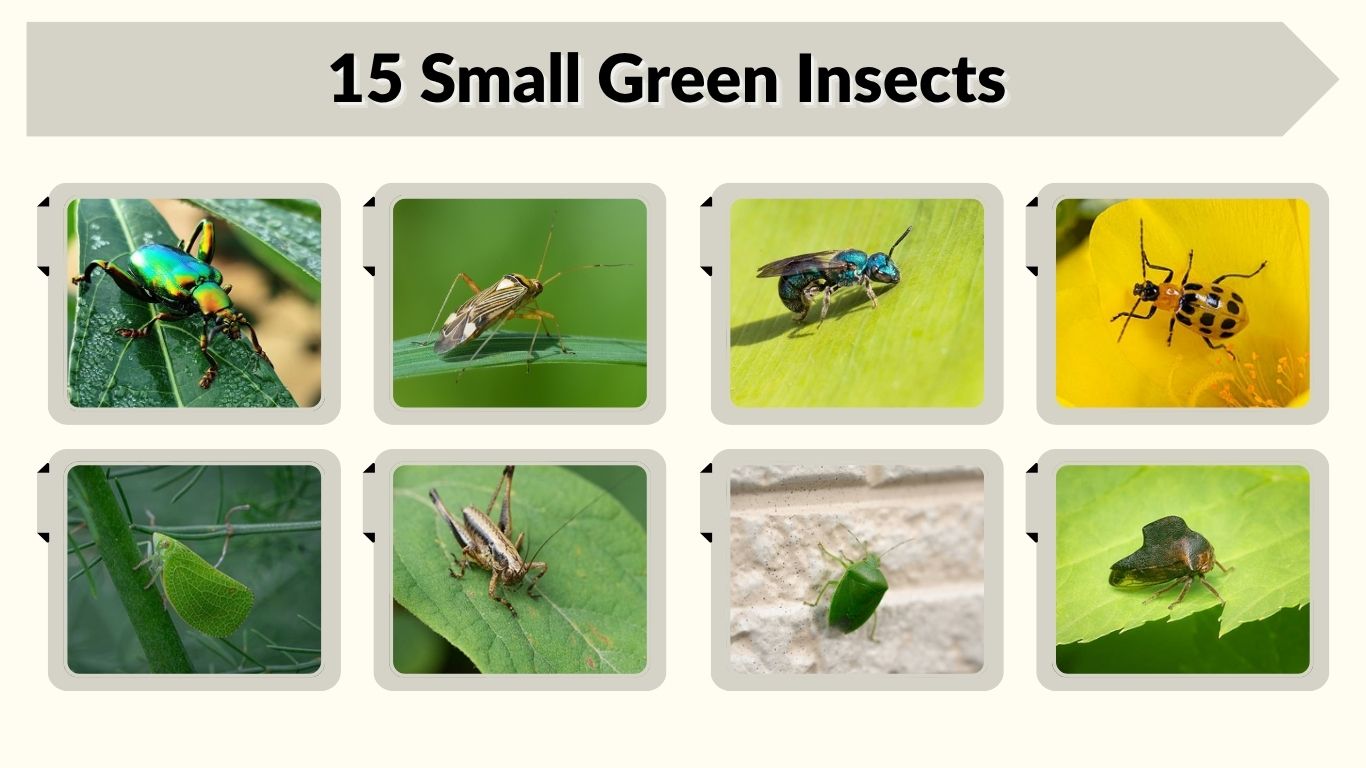
Small green insects can appear on houseplants, garden flowers, vegetables, windows, or indoor walls. Some fly, jump, or resemble tiny leaves, while others gather in groups and feed on plant sap. Common examples include green lacewings, aphids, leafhoppers, stink bugs, thrips, and green sweat bees. Although most are harmless to people, a few may sting, pinch, or irritate the skin. Identifying their body shape, wings, movement, and feeding habits can help you determine whether the insect is beneficial, harmless, or damaging to plants.
1. Green Lacewing
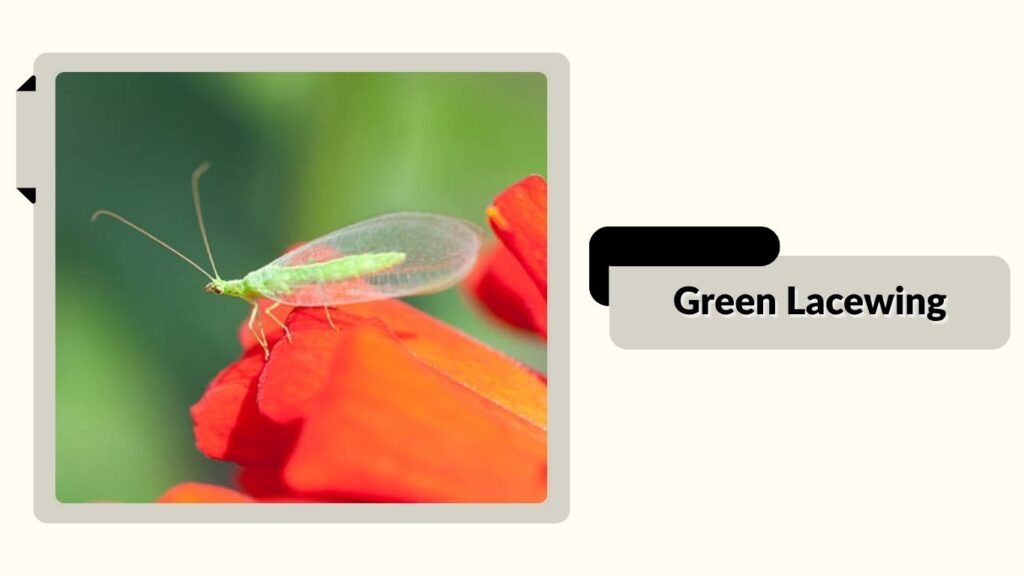
Green lacewings are delicate flying insects commonly found in gardens, around porch lights, and near indoor plants. Adults are easy to recognize by their pale green bodies and transparent wings. They are beneficial insects because their larvae feed on aphids and other plant pests.
Identification
- Slender, light green body
- Two pairs of clear, net-veined wings
- Long antennae
- Large golden or reddish eyes
- Usually 10–20 millimeters long
Where Green Lacewings Are Found
Green lacewings usually live around flowers, shrubs, vegetable gardens, and trees. Adults are strongly attracted to lights and may enter homes through open windows or doors at night. They are also sometimes found resting on curtains, walls, or ceilings.
Do Green Lacewings Bite?
Adult green lacewings do not normally bite or sting people. Their larvae have curved jaws for catching small insects and may occasionally pinch human skin if handled. The pinch is usually mild and does not cause serious harm.
Are Green Lacewings Helpful?
Green lacewing larvae are valuable natural predators. They consume aphids, whiteflies, thrips, mites, and small caterpillars. Gardeners often encourage them because they reduce harmful insect populations without damaging plants.
2. Green Aphid
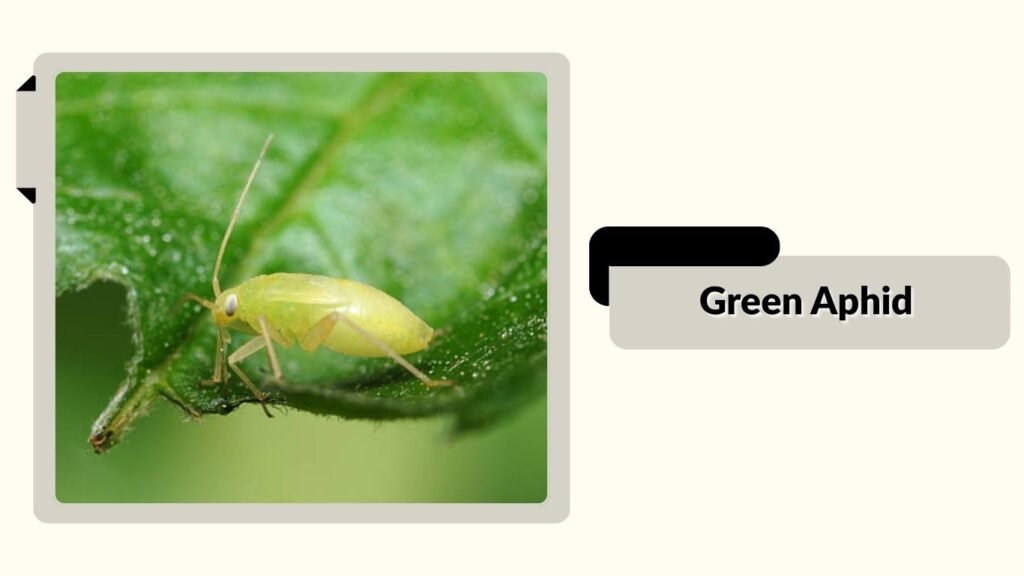
Green aphids are tiny, soft-bodied insects that gather on plant stems, leaves, and flower buds. They feed by sucking plant sap and may reproduce rapidly in warm conditions. Large infestations can weaken plants and cause curled, yellow, or distorted leaves.
Identification
- Small, pear-shaped body
- Usually pale green or yellow-green
- About 1–4 millimeters long
- Long legs and antennae
- Two small tube-like projections on the abdomen
Where Green Aphids Are Found
Green aphids commonly appear on roses, vegetables, herbs, fruit trees, and indoor plants. They usually cluster on tender new growth, leaf undersides, and flower buds. Winged adults may fly to nearby plants when colonies become crowded.
Do Green Aphids Bite?
Green aphids do not bite or sting people. Their mouthparts are designed to pierce plant tissue and drink sap. They may crawl on skin or clothing, but they are harmless to humans and pets.
How Green Aphids Affect Plants
Aphids remove sap from young plant tissue, causing curling, wilting, and slow growth. They also release a sticky substance called honeydew, which can encourage black sooty mold. Ladybugs, lacewing larvae, and water sprays can help control them.
3. Leafhopper
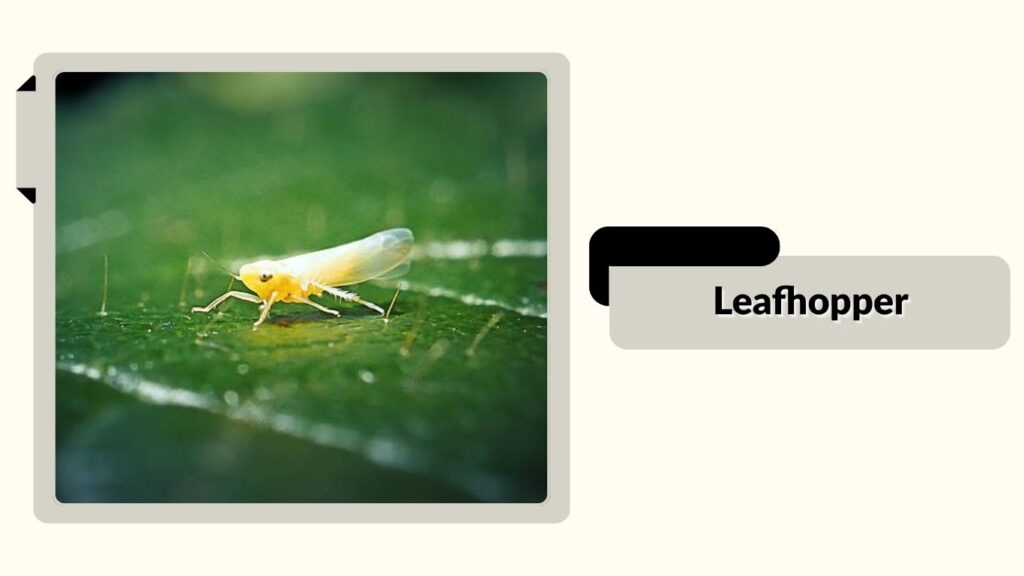
Leafhoppers are small, wedge-shaped insects that jump or fly quickly when disturbed. Many species are green, yellow-green, or marked with stripes. They feed on plant sap and are commonly seen on grass, vegetables, flowers, shrubs, and trees.
Identification
- Small, wedge-shaped body
- Usually 3–15 millimeters long
- Green, yellow, brown, or patterned
- Powerful hind legs for jumping
- Wings held roof-like over the back
Where Leafhoppers Are Found
Leafhoppers usually rest on plant stems and the undersides of leaves. They are common in gardens, fields, lawns, and greenhouses. Some may enter homes through windows, especially when attracted to indoor lighting.
Do Leafhoppers Bite?
Most leafhoppers do not bite people. Their piercing mouthparts are adapted for feeding on plant sap. Rarely, one may probe human skin, causing a brief pinprick sensation, but this is not considered dangerous.
How Leafhoppers Damage Plants
Leafhoppers can cause pale spots, yellowing, curled leaves, or reduced growth. Some species also spread plant diseases while feeding. Removing weeds, spraying plants with water, and using insecticidal soap can reduce small infestations.
4. Green Stink Bug
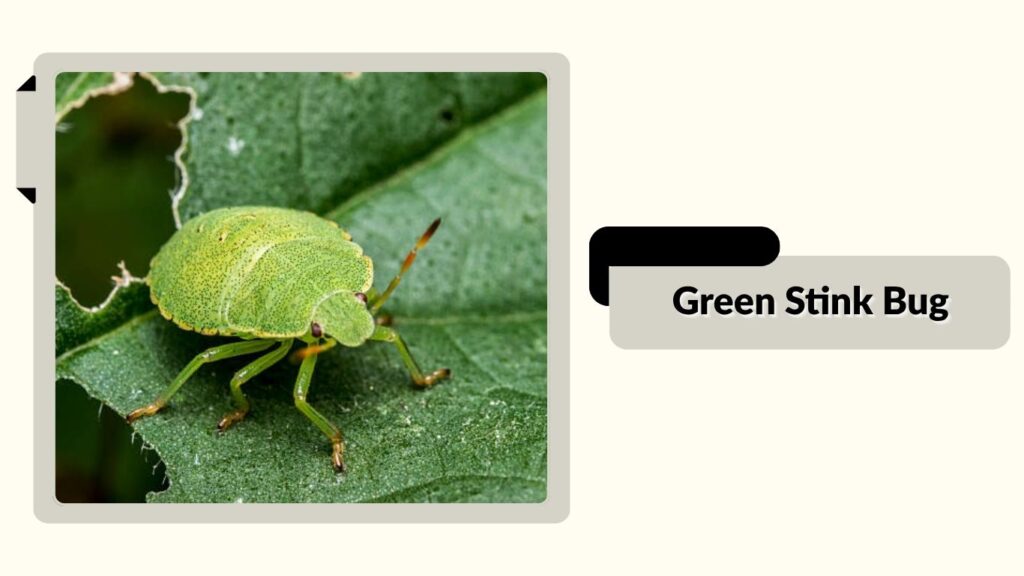
The green stink bug is a shield-shaped insect commonly found on vegetables, fruit trees, weeds, and ornamental plants. It is known for releasing a strong odor when disturbed or crushed. Adults may also fly into homes during cooler weather.
Identification
- Broad, shield-shaped body
- Bright green coloration
- Usually 12–18 millimeters long
- Small triangular section on the back
- Long antennae and six legs
Where Green Stink Bugs Are Found
Green stink bugs live in gardens, farms, orchards, and wooded areas. They feed on fruits, seeds, leaves, and plant stems. In autumn, adults may enter buildings through cracks around windows, doors, roofs, and siding.
Do Green Stink Bugs Bite?
Green stink bugs do not usually bite or sting people. They may release an unpleasant odor as a defense mechanism. Their mouthparts are designed to pierce plants, although careless handling may occasionally cause a mild prick.
How Green Stink Bugs Affect Plants
These insects puncture fruits, vegetables, and seeds to suck out plant fluids. Feeding may create discolored spots, dents, scars, or misshapen produce. Hand-picking, removing weeds, and protecting plants with fine netting can help reduce damage.
5. Treehopper
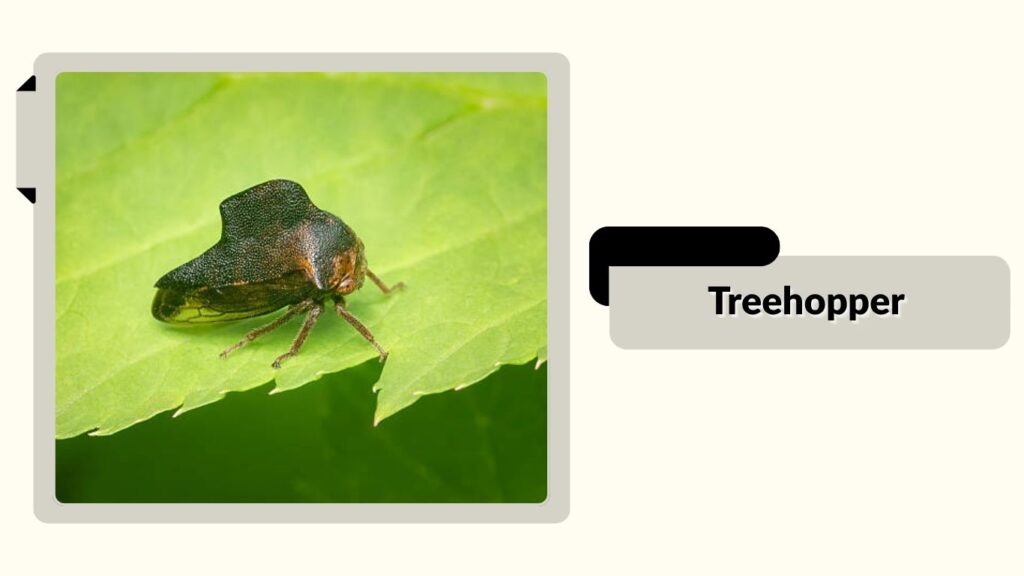
Treehoppers are small sap-feeding insects known for their unusual body shapes. Many have enlarged, thorn-like structures that help them blend with plant stems. Green treehoppers may resemble tiny leaves, thorns, or triangular pieces of plant material.
Identification
- Small, triangular or hump-backed body
- Green, brown, or patterned coloration
- Enlarged helmet-like structure behind the head
- Usually 3–15 millimeters long
- Strong legs for jumping
Where Treehoppers Are Found
Treehoppers commonly live on shrubs, vines, trees, and herbaceous plants. They often gather along stems and branches where they feed on sap. Some species are protected by ants that collect the sweet honeydew treehoppers produce.
Do Treehoppers Bite?
Treehoppers do not normally bite or sting humans. Their piercing mouthparts are adapted for feeding on plants. They may jump onto clothing or skin but are not considered harmful to people or pets.
How Treehoppers Affect Plants
Small numbers usually cause little damage. Heavy feeding can weaken young stems, reduce plant growth, or cause wilting. Egg-laying may also create tiny scars in plant tissue. Natural predators and regular plant inspection usually keep populations under control.
6. Thrips
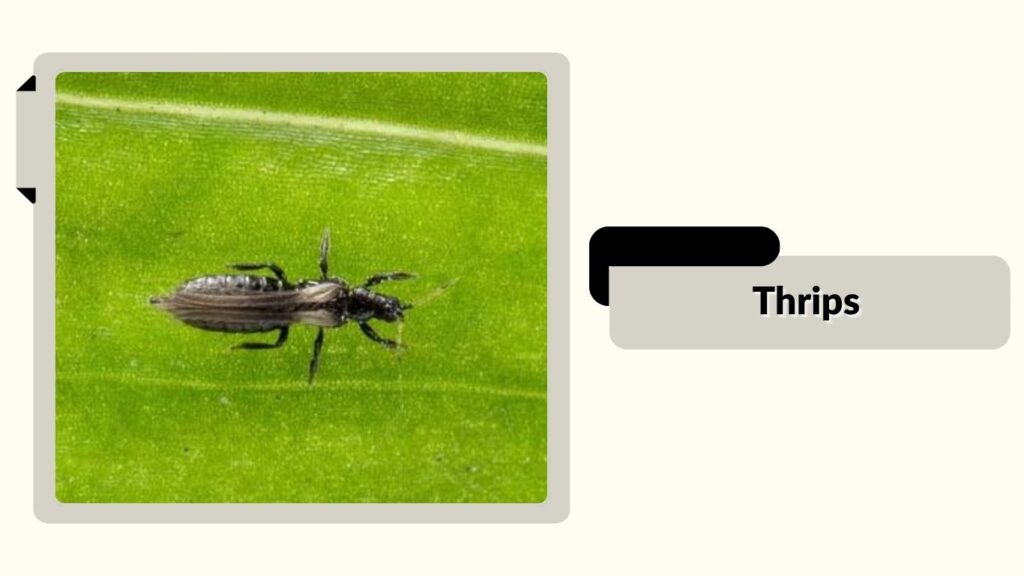
Thrips are extremely small, slender insects that may appear green, yellow, brown, or black. They are commonly found on flowers, vegetables, houseplants, and garden plants. Most thrips feed on plant tissue, although some species prey on other tiny insects.
Identification
- Very narrow, elongated body
- Usually 1–2 millimeters long
- Pale green, yellow, brown, or black
- Narrow wings with fringed edges
- Move quickly when disturbed
Where Thrips Are Found
Thrips usually hide inside flowers, leaf folds, buds, and the undersides of leaves. They may also gather near windows or lights after entering a house. Indoor plants and fresh-cut flowers are common sources of thrips indoors.
Do Thrips Bite?
Some thrips may briefly probe human skin, causing a small prick or mild irritation. They do not feed on blood and usually do not remain on people. Most encounters are harmless and end quickly.
How Thrips Affect Plants
Thrips scrape plant surfaces and suck up the released fluids. Their feeding may cause silver streaks, pale spots, curled leaves, or damaged flowers. Washing leaves and using sticky traps can help manage small infestations.
7. Green Shield Bug
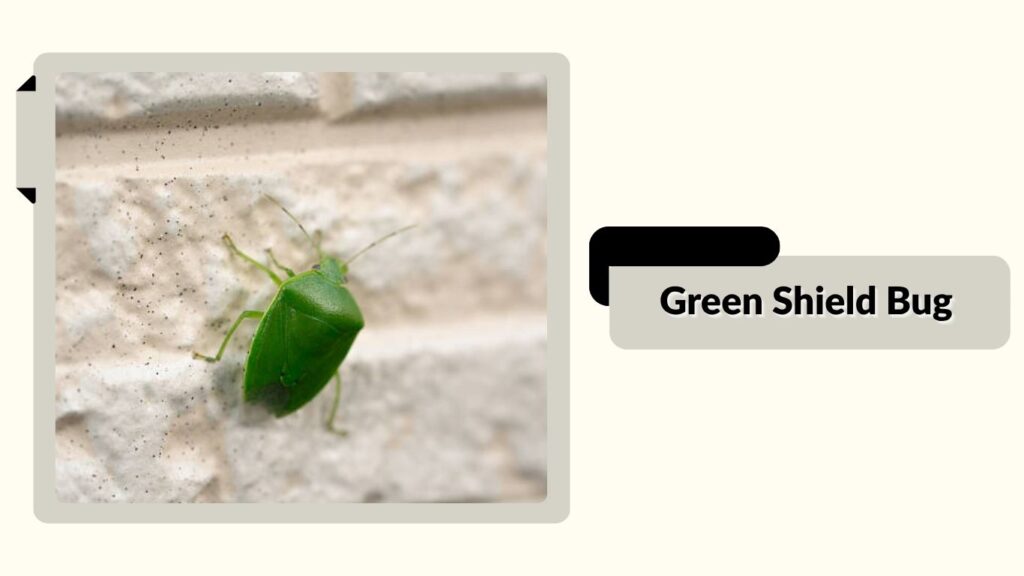
Green shield bugs are broad, flattened insects closely related to stink bugs. Their bright green color helps them blend with leaves and stems. They commonly feed on plant juices and may enter homes while searching for shelter.
Identification
- Wide, shield-shaped body
- Bright or olive-green color
- Usually 10–15 millimeters long
- Long antennae
- Wings lie flat over the back
Where Green Shield Bugs Are Found
These insects are common in gardens, fields, hedges, and wooded areas. They often rest on vegetables, fruit trees, shrubs, and weeds. Adults may enter houses through windows and doors, especially during colder weather.
Do Green Shield Bugs Bite?
Green shield bugs rarely bite people. Their mouthparts are designed for piercing plant tissue rather than skin. When disturbed, they may release a strong odor that can remain on hands, clothing, or indoor surfaces.
How Green Shield Bugs Affect Plants
They feed on fruits, leaves, seeds, and stems. Heavy feeding may leave small scars, pale spots, or misshapen fruits. Removing weeds and hand-picking visible bugs can reduce their numbers in small gardens.
8. Katydid Nymph
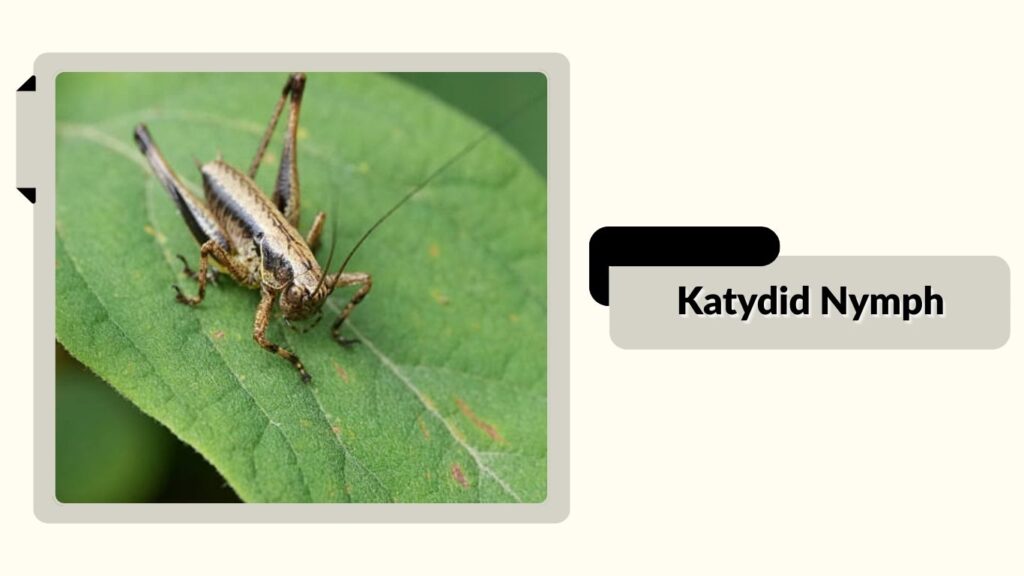
Katydid nymphs are young katydids that often look like tiny green grasshoppers. They do not yet have fully developed wings, but they can jump quickly and hide well among leaves. Most feed on plant material, although some species also eat small insects.
Identification
- Bright green body
- Very long, thread-like antennae
- Strong hind legs
- Small wing pads instead of full wings
- Leaf-like appearance
Where Katydid Nymphs Are Found
Katydid nymphs live in grass, shrubs, vegetable gardens, trees, and flowering plants. They are most active during warm weather. Some may enter homes through open windows or become attached to clothing or cut plants.
Do Katydid Nymphs Bite?
They do not normally bite people. However, a larger nymph may pinch with its mouthparts if handled roughly. The bite is usually minor and does not require treatment beyond washing the area.
How Katydid Nymphs Affect Plants
Most katydid nymphs chew leaves, flowers, and soft plant tissue. Light feeding rarely causes serious harm. Large populations may leave ragged holes or damaged buds, particularly on young garden plants.
9. Green Planthopper
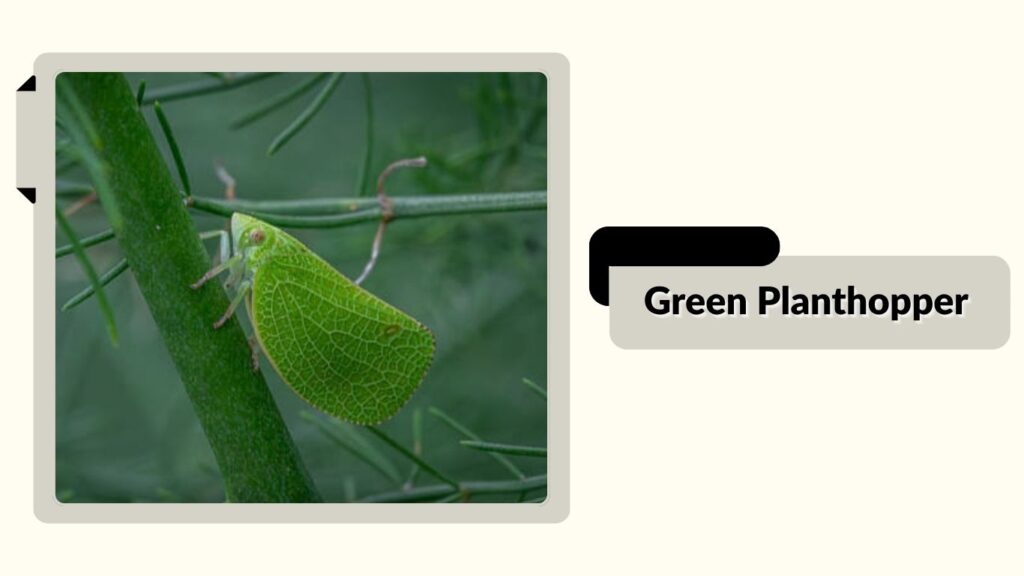
Green planthoppers are small sap-feeding insects that jump rapidly when disturbed. Their bodies may be bright green, pale green, or partly transparent. They are commonly seen resting on grass, crop plants, shrubs, and garden leaves.
Identification
- Small, wedge-shaped body
- Green or yellow-green coloration
- Strong hind legs for jumping
- Wings held over the back
- Usually 2–10 millimeters long
Where Green Planthoppers Are Found
Planthoppers live on stems, grasses, leaf undersides, and young plant growth. They are common in gardens, fields, wetlands, and lawns. Some are attracted to lights and may accidentally fly indoors at night.
Do Green Planthoppers Bite?
Green planthoppers do not usually bite or sting humans. Their piercing mouthparts are designed to suck plant sap. They may land on skin, but they generally jump or fly away when disturbed.
How Green Planthoppers Affect Plants
Small numbers cause little noticeable damage. Heavy feeding may weaken plants, cause yellowing, or reduce growth. Some species can also spread plant diseases. Weed control and natural predators help keep them under control.
10. Green June Beetle
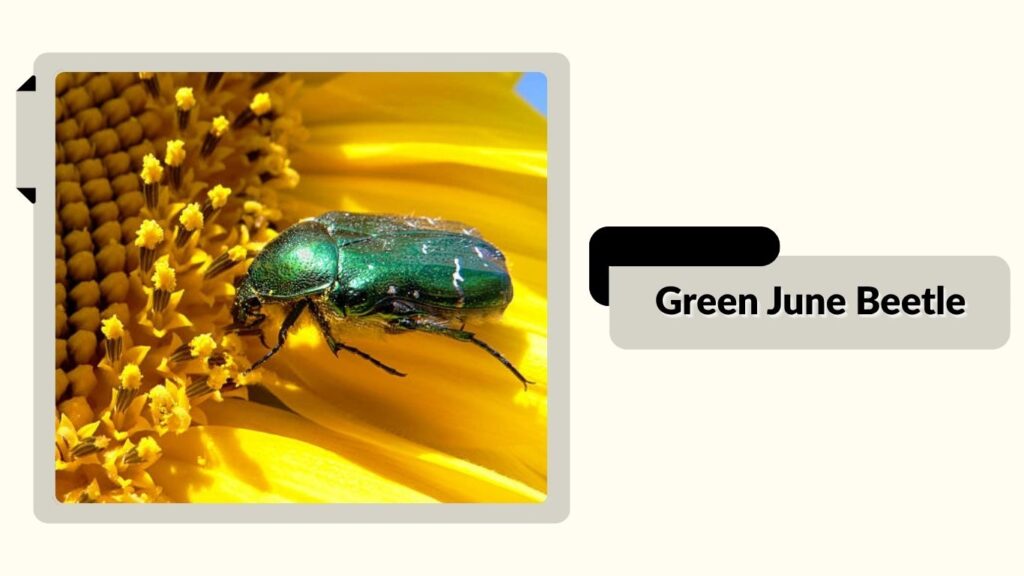
Green June beetles are shiny green insects often seen flying low over lawns during summer. Adults feed on ripe or damaged fruit, while their larvae develop in soil and consume decaying organic matter and grass roots.
Identification
- Oval, heavy-bodied beetle
- Metallic green upper surface
- Golden or brown edges
- Usually 15–25 millimeters long
- Loud, clumsy flight
Where Green June Beetles Are Found
Adults are common around lawns, gardens, orchards, compost piles, and fruit trees. They may gather near peaches, grapes, figs, or other soft fruit. Occasionally, they fly into homes through open doors or windows.
Do Green June Beetles Bite?
Green June beetles do not normally bite or sting people. Their size and buzzing flight may seem intimidating, but they are generally harmless. Their legs may feel slightly scratchy when they land on skin.
How Green June Beetles Affect Plants
Adults can damage ripe fruit by chewing the surface and feeding on juices. Larvae may loosen turf while moving through soil. Removing fallen fruit and improving lawn care can reduce local beetle activity.
11. Cucumber Beetle
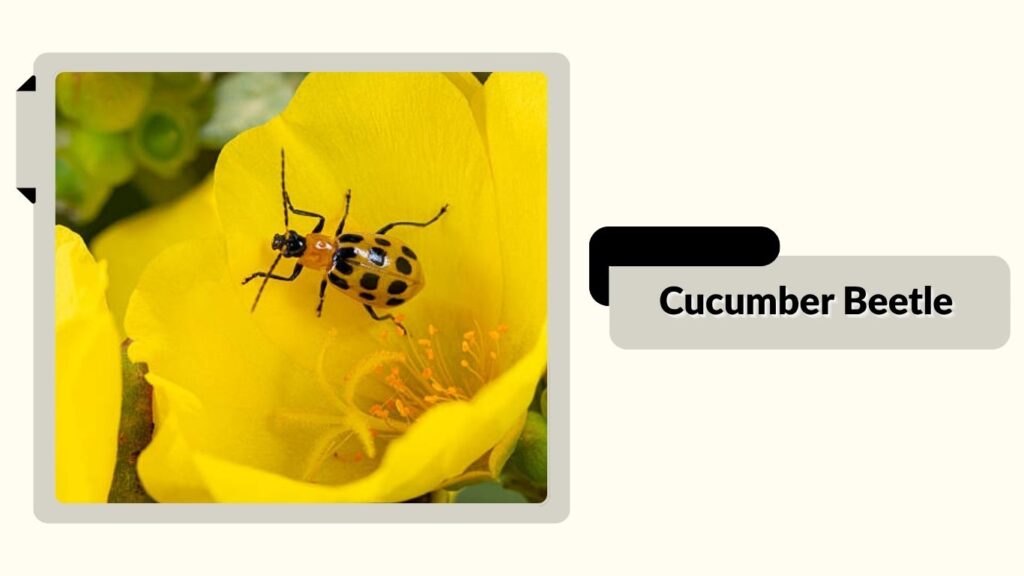
Cucumber beetles are small yellow-green insects commonly found on cucumbers, squash, melons, pumpkins, and related plants. Depending on the species, they may have black spots or dark stripes. Both adults and larvae can damage crops, and some adults spread bacterial plant diseases.
Identification
- Small oval body
- Yellow-green coloration
- Black spots or dark stripes
- Usually 5–7 millimeters long
- Long antennae and six legs
Where Cucumber Beetles Are Found
Cucumber beetles usually live on leaves, flowers, stems, and fruits of garden plants. Adults may hide beneath leaves or in plant debris. They are most common during warm weather when young vegetable plants are actively growing.
Do Cucumber Beetles Bite?
Cucumber beetles do not normally bite or sting people. They may land on clothing or skin while flying between plants, but they are considered harmless to humans and pets.
How Cucumber Beetles Affect Plants
Adults chew holes in leaves, flowers, and young fruits. Larvae may feed on plant roots below the soil. Heavy infestations can stunt seedlings, reduce harvests, and spread bacterial wilt among cucumber-family plants.
12. Green Sweat Bee
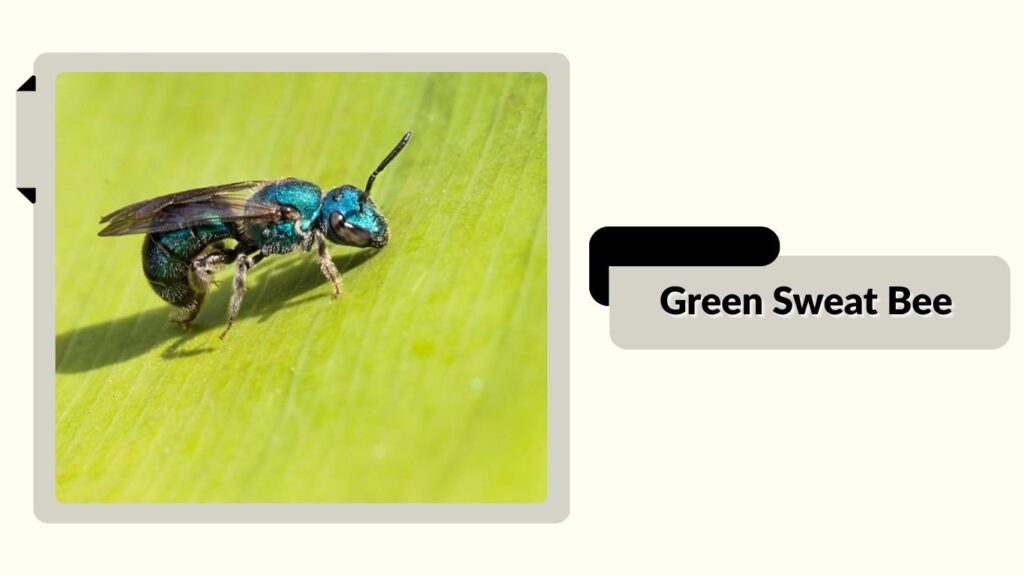
Green sweat bees are small metallic bees with bright green, blue-green, or golden bodies. They are attracted to flowers and sometimes to perspiration on human skin. Most species are solitary and play an important role in pollinating wildflowers, vegetables, and garden plants.
Identification
- Shiny metallic green body
- Slender bee-like shape
- Clear or lightly tinted wings
- Usually 4–10 millimeters long
- Fine hairs on the legs and body
Where Green Sweat Bees Are Found
These bees are commonly seen in gardens, meadows, parks, and flowering fields. Many nest in small holes in the ground, while a few use wood or plant stems. They may enter homes accidentally through open windows.
Do Green Sweat Bees Sting?
Females can sting, but they usually do so only when trapped, squeezed, or handled. The sting is generally mild. Males cannot sting. Sweat bees may land on skin to drink moisture and salts from perspiration.
Are Green Sweat Bees Helpful?
Green sweat bees are valuable pollinators. They visit flowers to collect nectar and pollen, helping many plants reproduce. Because they are generally peaceful, they should usually be left alone unless nesting creates a serious problem.
13. Green Fruit Fly
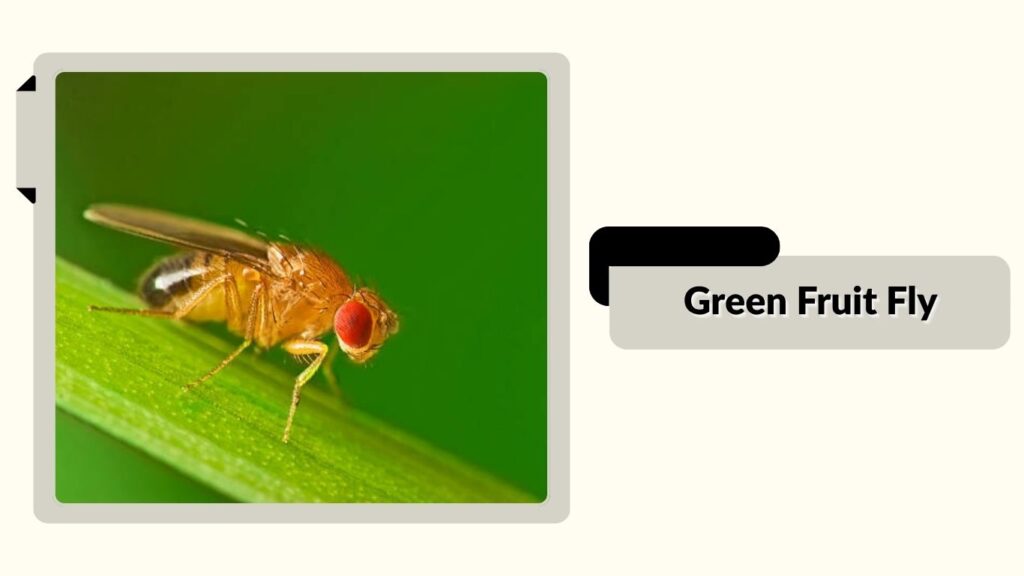
Green fruit flies are small flying insects that may have greenish, yellow-green, or metallic bodies. They are often found around ripe fruit, decaying plant material, compost, or damaged vegetables. Some species are harmless decomposers, while others may affect fruit crops.
Identification
- Small fly-like body
- Green, yellow-green, or metallic color
- Clear wings
- Large reddish or dark eyes
- Usually 2–6 millimeters long
Where Green Fruit Flies Are Found
These flies gather near overripe fruit, kitchen waste, compost bins, fallen fruit, and fermenting liquids. Outdoors, they may be found in orchards, vegetable gardens, and around damaged crops. Indoors, they often stay near food sources.
Do Green Fruit Flies Bite?
Green fruit flies do not usually bite or sting people. Their mouthparts are adapted for feeding on liquids, decaying material, or plant juices. They may be annoying indoors but are not considered dangerous.
How to Control Green Fruit Flies
Discard overripe fruit, clean spills, empty bins, and wash food containers. Store fruit in the refrigerator when possible. Cleaning drains and removing fermenting organic matter can help prevent repeated indoor activity.
14. Green Mirid Bug
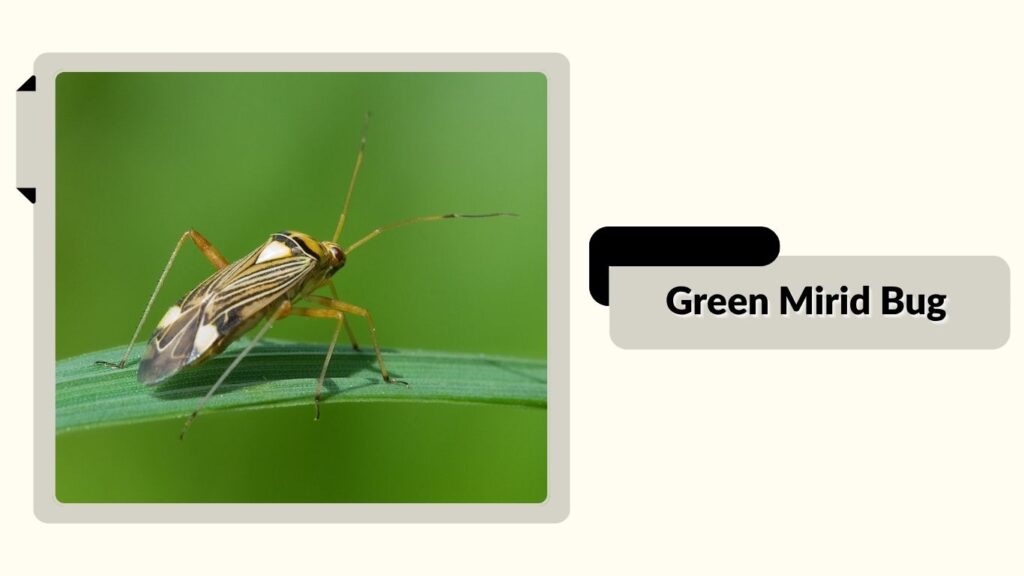
Green mirid bugs are small, soft-bodied plant bugs that feed on leaves, buds, flowers, and young fruits. Many species are green and blend easily with vegetation. Some damage crops, while others are beneficial predators that consume aphids, mites, and insect eggs.
Identification
- Slender, oval-shaped body
- Bright or pale green color
- Long legs and antennae
- Soft wings folded over the back
- Usually 3–10 millimeters long
Where Green Mirid Bugs Are Found
Mirid bugs are commonly found on flowers, vegetables, weeds, shrubs, and crop plants. They often hide beneath leaves or around tender new growth. Some may fly indoors after being attracted to lights.
Do Green Mirid Bugs Bite?
Most green mirid bugs do not intentionally bite people. Occasionally, one may probe the skin and cause a brief sharp sensation. Such incidents are uncommon and usually do not result in serious symptoms.
How Green Mirid Bugs Affect Plants
Plant-feeding species can cause pale spots, distorted leaves, damaged buds, or scarred fruits. Predatory species may reduce harmful pest populations. Correct identification is important before deciding whether control is necessary.
15. Green Leaf Beetle
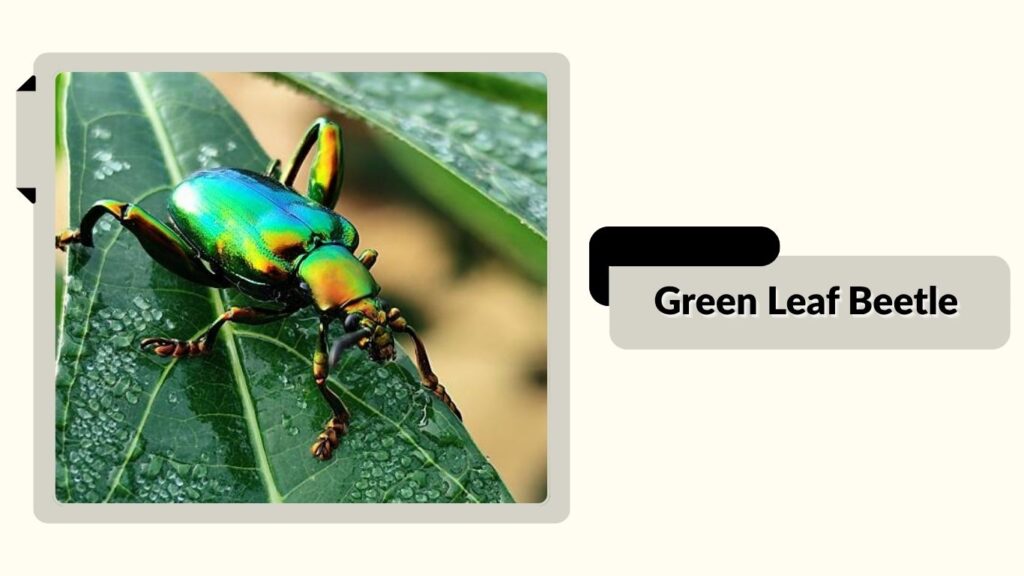
Green leaf beetles are small beetles with shiny or matte green bodies. They feed mainly on leaves and may be found on vegetables, flowers, shrubs, or trees. Many species cause only minor damage, though large groups can remove significant amounts of foliage.
Identification
- Small oval or elongated body
- Bright, dark, or metallic green color
- Hard wing covers
- Short to medium-length antennae
- Usually 3–12 millimeters long
Where Green Leaf Beetles Are Found
These beetles live on plant leaves, stems, flowers, and nearby soil. Adults often rest on the upper surface of leaves, while larvae may feed on foliage or roots. Some species are attracted to lights at night.
Do Green Leaf Beetles Bite?
Green leaf beetles do not normally bite or sting people. They may cling to skin or clothing with their legs, but they are generally harmless. Their main impact is on plants rather than humans.
How Green Leaf Beetles Affect Plants
Adults and larvae may chew round holes, irregular edges, or skeletonized patches in leaves. Small populations are usually manageable by hand-picking. Heavy infestations may require protective netting, garden cleanup, or insecticidal soap.