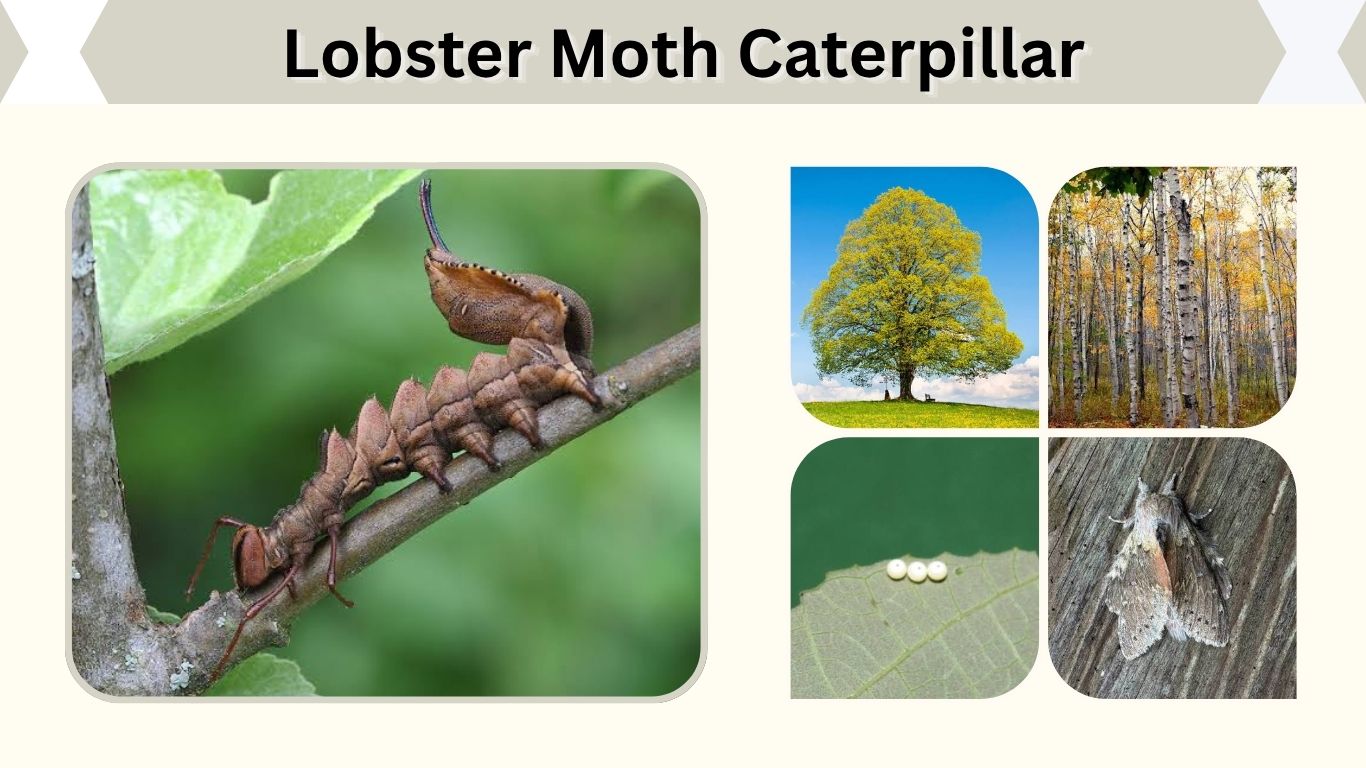
The lobster moth caterpillar is one of Europe’s most unusual-looking insects. With its oversized head, long front legs, raised tail, and angular brown body, it resembles a tiny lobster, spider, or creature from another world. Despite its alarming posture, this strange caterpillar is simply the larval stage of the lobster moth, scientifically known as Stauropus fagi. It lives mainly in deciduous woodlands, where it feeds on the leaves of beech, oak, birch, hazel, and other trees.
What Is a Lobster Moth Caterpillar?
The lobster moth caterpillar belongs to the prominent moth family, Notodontidae. Its common name comes entirely from the caterpillar’s crustacean-like appearance rather than from the adult moth, which is comparatively plain and gray-brown. It is also sometimes called the prominent lobster.
The species is native across a broad part of Europe and Asia. In Britain, it is found mainly in southern areas and is associated with established deciduous woodland. Although locally present, it is not considered an especially common moth in much of its British range.
| Feature | Description |
| Scientific name | Stauropus fagi |
| Family | Notodontidae |
| Caterpillar length | Up to about 70 mm |
| Main colors | Tan, reddish brown or dark brown |
| Primary habitat | Mature deciduous woodland |
| Food plants | Beech, oak, birch, hazel and other trees |
| Overwintering stage | Pupa |
Lobster Moth Caterpillar Identification
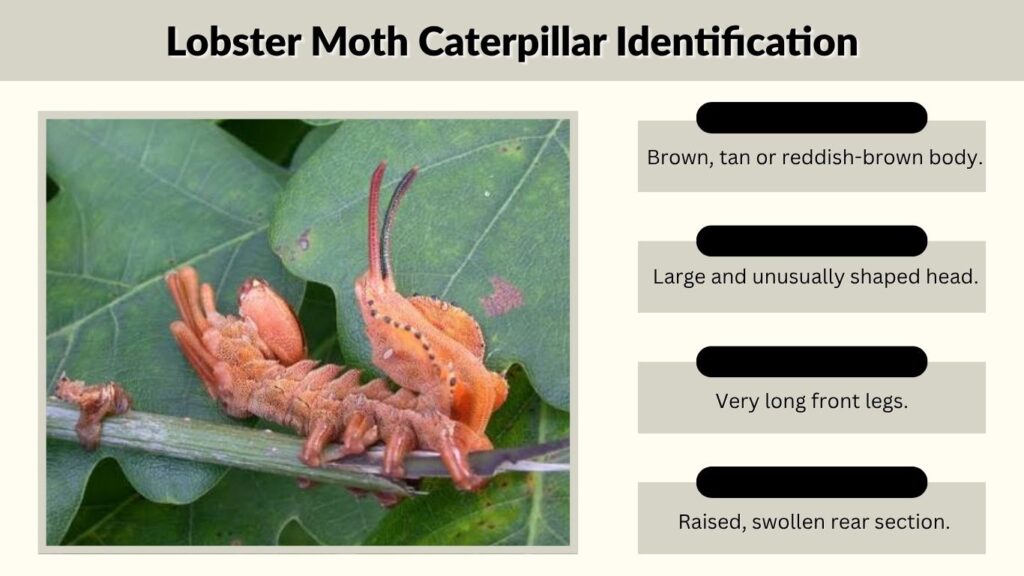
The caterpillar changes noticeably as it grows. Young larvae are smaller and may resemble ants or spiders, while mature individuals develop the bulky, lobster-like shape for which the species is famous.
Key Identification Features
- Brown, tan or reddish-brown body
- Large and unusually shaped head
- Very long front legs
- Raised, swollen rear section
- Two slender projections at the tail
- Angular humps along the middle body segments
- Rough, textured-looking skin
- Defensive posture with both ends raised
A mature caterpillar may reach approximately 70 millimetres in length. However, its raised posture and expanded rear section can make it appear much larger. The body’s irregular outline also helps break up its shape while it rests among dry leaves, bark and branches.
Young Lobster Moth Caterpillars
Newly hatched larvae look very different from fully grown caterpillars. They have long legs and actively moving rear appendages that may make them resemble ants or small spiders.
This resemblance may discourage certain predators or cause them to hesitate before attacking. After later moults, the larva becomes thicker, browner and increasingly crustacean-like.
Why Does It Look Like a Lobster?
The caterpillar’s strange body is part camouflage and part defensive display. At rest, its uneven brown shape can blend with dead foliage, bark and damaged plant material. When threatened, it raises its swollen rear end and arches its head backwards while extending or moving its long front legs.
This pose makes the caterpillar look larger and more difficult to attack. It may resemble a lobster, spider, ant or other potentially troublesome animal rather than a soft-bodied caterpillar. The common name “lobster moth” refers specifically to this remarkable larval appearance.
Although the posture may appear aggressive, its purpose is to discourage predators. The caterpillar may also shake, kick or move its legs rapidly when disturbed.
What Do Lobster Moth Caterpillars Eat?
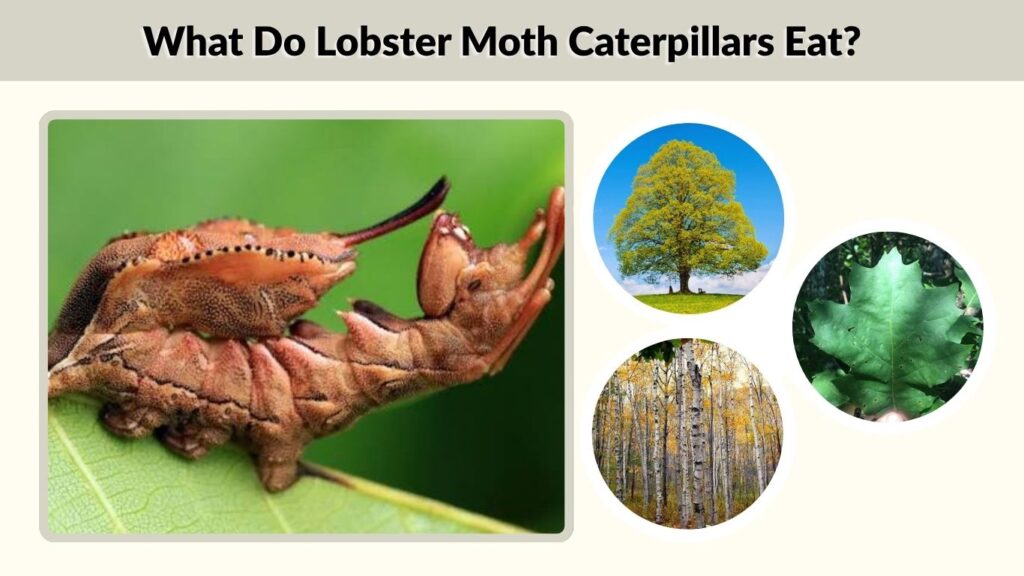
Lobster moth caterpillars feed on the leaves of deciduous trees and shrubs. Beech is one of their most closely associated food plants, but the larvae can use several other tree species.
Common Food Plants
- Beech
- Oak
- Birch
- Hazel
- Willow
- Apple
- Blackthorn
- Bird cherry
- Hornbeam
- Sweet chestnut
British records commonly associate the caterpillar with beech, oak, birch and hazel. In Hampshire and the Isle of Wight, it is particularly connected with beech woodland, although it also occurs at lower levels in oak- and birch-dominated areas.
Young caterpillars begin feeding after hatching and continue eating leaves through several growth stages. Like other caterpillars, they periodically shed their skin as their bodies increase in size.
Lobster Moth Caterpillars Habitat and Distribution
The lobster moth is primarily a woodland species. It prefers habitats containing mature deciduous trees and is less frequently encountered in parks and gardens.
Typical Habitats
- Beech woodland
- Oak woodland
- Mixed deciduous forests
- Moist, shady woodland edges
- Mature parks
- Tree-filled gardens
- Riverbank woodland
The caterpillars are often associated with shaded, humid places where their food trees grow. Their brown coloring and irregular body shape make them difficult to notice among branches and leaves.
Lobster Moth Caterpillar in the UK
In Britain, the lobster moth is mainly distributed across southern counties. It is sometimes locally common in suitable mature woodland but remains uncommon or absent from many other areas. Adult records are concentrated mainly between May and July.
The phrase “Dutch lobster moth caterpillar” sometimes appears in online captions, but it generally refers to a lobster moth caterpillar photographed in the Netherlands rather than a separate species. The recognized European species is Stauropus fagi.
Lobster Moth Life Cycle
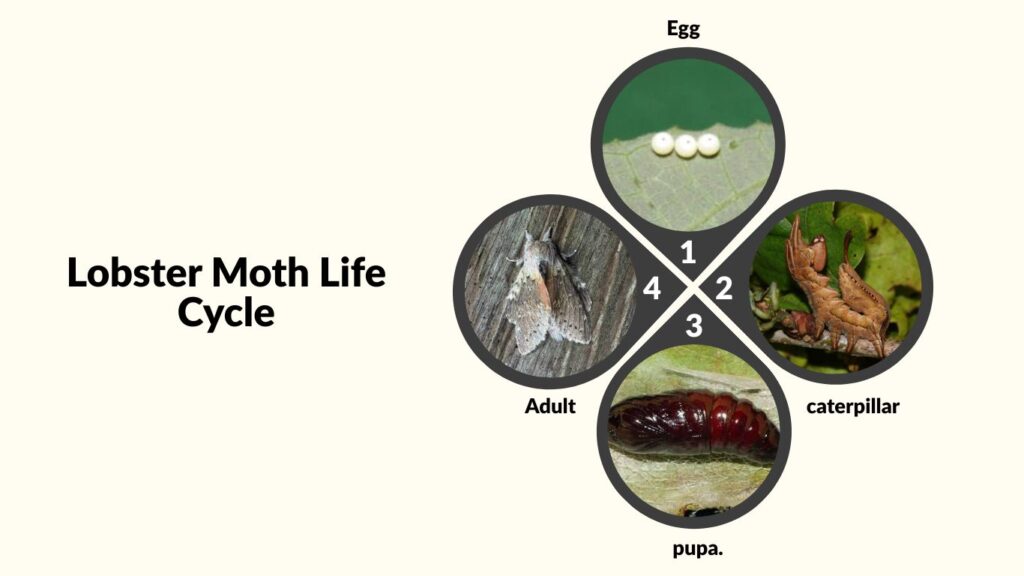
Like other moths, the lobster moth undergoes complete metamorphosis. Its development includes egg, caterpillar, pupa and adult stages.
1. Egg
Female moths deposit relatively large brown eggs on or near suitable host-tree leaves. After hatching, the young caterpillar may consume material from its eggshell before beginning to feed on foliage.
2. Caterpillar
The larva eats leaves and passes through several moults. Its appearance becomes increasingly unusual with age as the head enlarges, the middle segments develop humps, and the rear section becomes swollen.
Young larvae can look ant-like or spider-like. Mature larvae display the more recognizable lobster shape and dramatic defensive posture.
3. Pupa and Cocoon
Once fully grown, the caterpillar stops feeding and finds a sheltered place to pupate. It creates a strong cocoon, often among spun dead leaves or close to the ground.
The species normally spends winter as a pupa. This protected stage allows the developing moth to survive until suitable conditions return.
4. Adult Lobster Moth
The adult usually emerges the following spring or early summer. It is a grayish-brown moth with wavy markings that provide camouflage against bark and dead vegetation.
Adults have a wingspan of roughly 45–70 millimetres, with measurements varying between individuals and references. They are mainly nocturnal and can sometimes be attracted to artificial lights.
Is the Lobster Moth Caterpillar Dangerous?
Its raised tail, long legs and sudden movements can make the caterpillar appear threatening. However, these features form a visual defensive display intended to frighten predators.
It should still be treated gently and observed without unnecessary handling. Caterpillars can be injured by squeezing, dropping or repeatedly disturbing them. Anyone with sensitive skin should avoid direct contact with unfamiliar insects and wash their hands after accidental handling.
When one is found in a dangerous position, allow it to walk onto a leaf or twig and move it to a nearby deciduous tree or sheltered woodland vegetation.
Interesting Lobster Moth Caterpillar Facts
Its Name Comes From the Larva
The adult moth does not strongly resemble a lobster. The entire common name is based on the caterpillar’s unusual legs, swollen rear section and defensive posture.
Young and Mature Caterpillars Look Different
A young larva may resemble an ant or spider. The familiar lobster-like form develops gradually as the caterpillar grows and moults.
It Uses More Than One Defensive Strategy
The larva combines camouflage, an irregular body outline, sudden movement and an intimidating posture. These defenses may make predators hesitate long enough for the caterpillar to escape injury.
It Spends Winter as a Pupa
After finishing its caterpillar stage, the insect pupates in a cocoon among leaves or near the ground. The adult moth normally emerges the following year.
FAQs
How big is a lobster moth caterpillar?
A fully grown lobster moth caterpillar can reach approximately 70 millimetres, or about 2.75 inches, in length. Its raised head, extended front legs and enlarged rear section may make it look substantially bigger than its actual measurements.
What does a lobster moth caterpillar eat?
It eats leaves from deciduous trees and shrubs. Beech is an important food plant, while oak, birch, hazel, willow, apple and several other broad-leaved trees may also support its development.
Is a lobster moth caterpillar rare in the UK?
It is not equally distributed across Britain. The species occurs mainly in southern counties and may be found locally in suitable mature woodland, but it is generally described as not especially common.
Why does the caterpillar raise its tail?
Raising the swollen rear section is part of its defensive display. The caterpillar may simultaneously arch its head and extend its front legs, making its body resemble a larger, more threatening animal.
What does a lobster moth caterpillar turn into?
It becomes the adult lobster moth, Stauropus fagi. The adult is a nocturnal, gray-brown moth with camouflaged wings and looks much less unusual than its remarkable caterpillar.