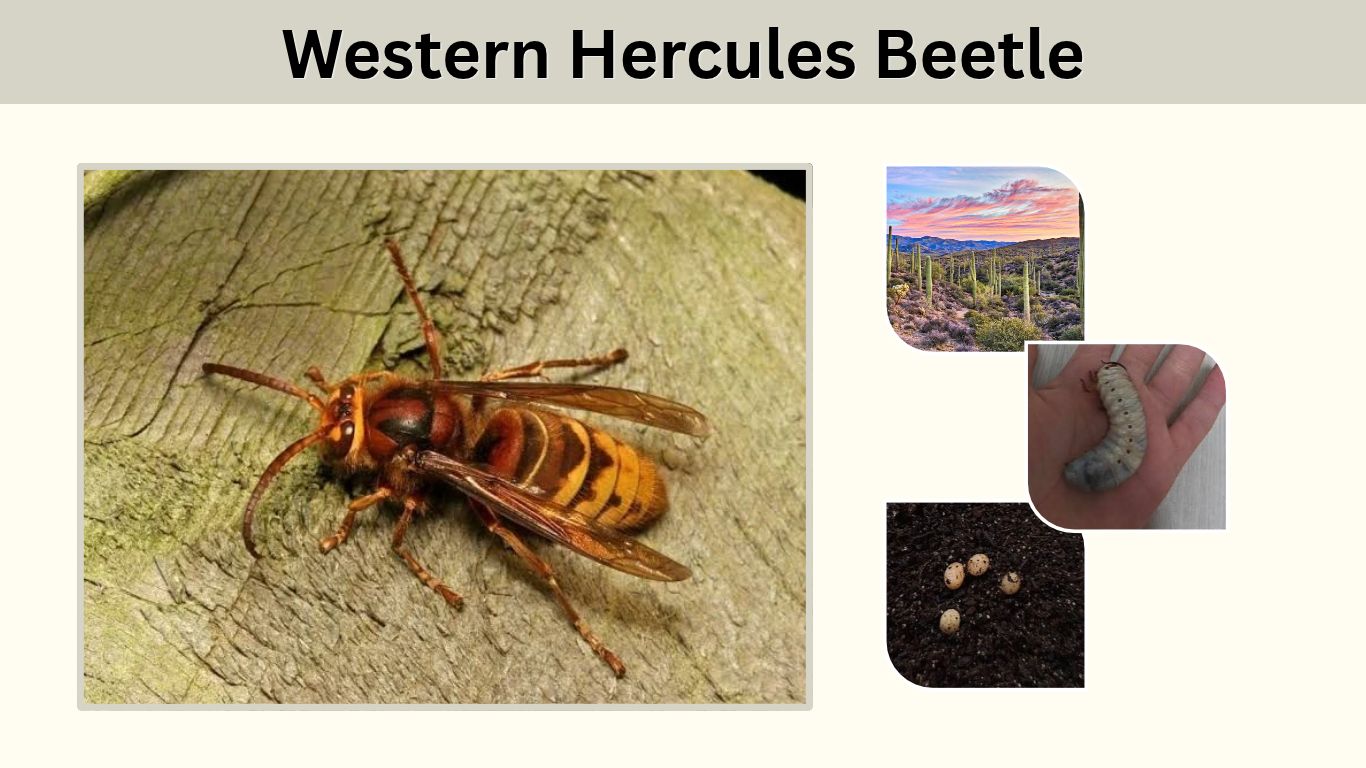
The Western Hercules beetle (Dynastes grantii) is one of the largest and most fascinating beetles found in North America. Known for its impressive horns, powerful body, and unusual appearance, this beetle belongs to the rhinoceros beetle group. It primarily inhabits mountainous regions of the southwestern United States, especially Arizona. Despite its intimidating appearance, the Western Hercules beetle is generally harmless to humans. Understanding its identification, size, habitat, diet, life cycle, and lifespan can help nature enthusiasts recognize this remarkable insect and appreciate its importance in forest ecosystems.
What Is a Western Hercules Beetle?
The Western Hercules beetle, scientifically known as Dynastes grantii, is a large scarab beetle belonging to the family Scarabaeidae. It is also called Grant’s Hercules beetle and is closely related to the Eastern Hercules beetle.
These insects are famous for their enormous strength and the prominent horns found on males. Although they appear aggressive, they are generally peaceful creatures that spend much of their lives feeding, developing, and reproducing.
Western Hercules Beetle Identification
Western Hercules beetles have several distinctive physical characteristics that make them relatively easy to recognize.
- Scientific name: Dynastes grantii
- Family: Scarabaeidae
- Color: Pale gray, greenish-gray, or tan with dark spots
- Body shape: Large, oval, and heavily built
- Male appearance: Two prominent, forward-facing horns
- Female appearance: Rounded body without large horns
- Activity: Primarily active at night
- Habitat: Mountain forests and wooded environments
Their hardened wing covers, called elytra, sometimes become darker under humid conditions.
Western Hercules Beetle Size and Appearance
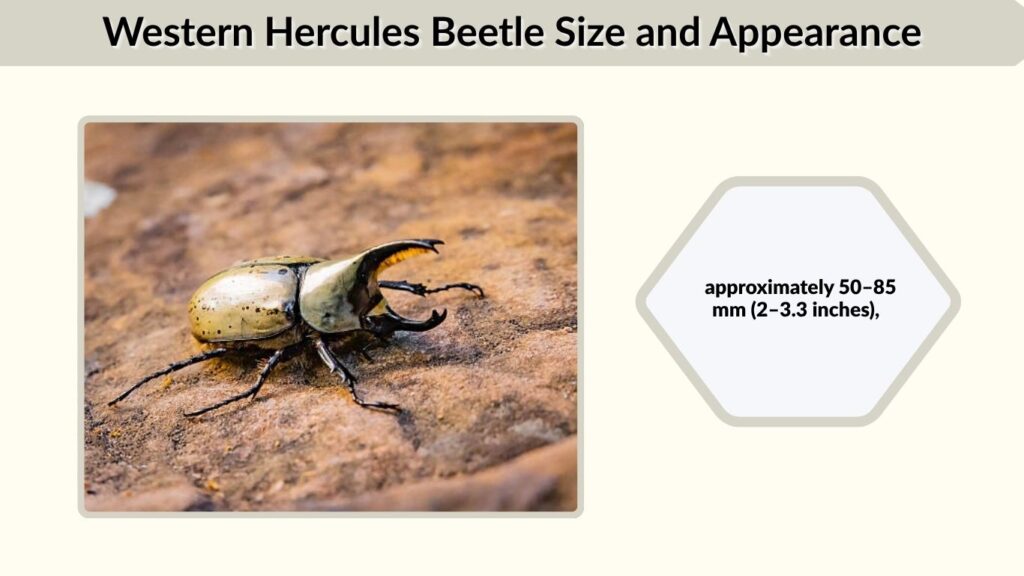
Western Hercules beetles are among the largest scarab beetles in the western United States. Their size varies depending on sex, nutrition during larval development, and individual growth conditions.
Male beetles are particularly noticeable because their horns create an impressive appearance. However, females have broader, rounded bodies without the same exaggerated structures.
Male Western Hercules Beetle
Male Western Hercules beetles generally measure approximately 50–85 mm (2–3.3 inches), including their horns.
They possess two distinctive horns, one extending from the head and another from the thorax. These structures work together like pincers during competition with other males.
Larger males typically have more developed horns, although some individuals naturally possess shorter ones.
Female Western Hercules Beetle
Female Western Hercules beetles are generally smaller than large males and lack prominent horns.
Their bodies are rounded, with pale gray or greenish wing covers and scattered dark markings. Females have strong legs suited for moving through soil, decomposing wood, and forest debris.
They spend considerable time searching for suitable locations to deposit eggs.
Where Do Western Hercules Beetles Live?
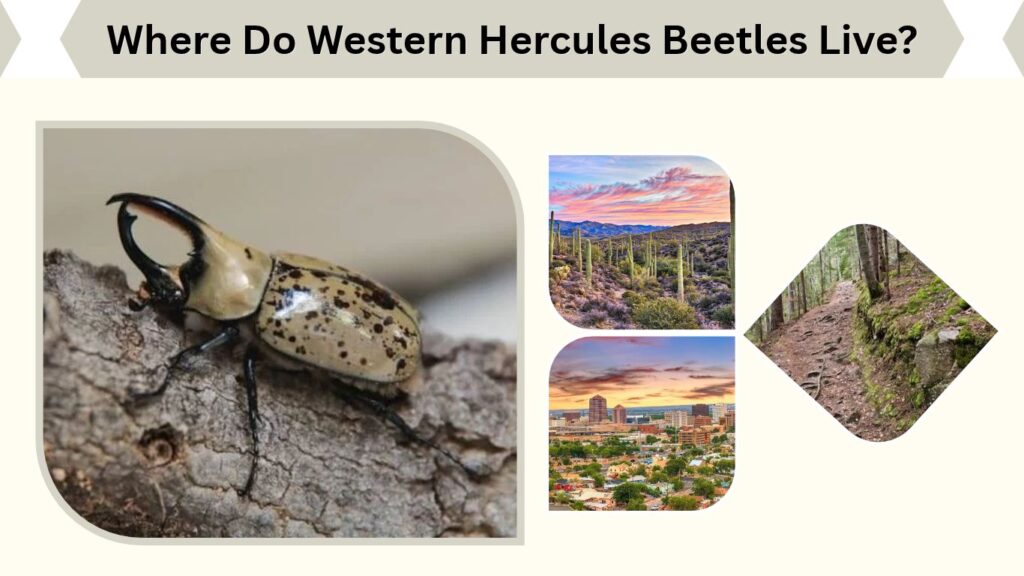
The Western Hercules beetle is native to the southwestern United States and parts of northwestern Mexico. It is particularly associated with mountainous areas containing healthy trees and decaying wood.
Its distribution is influenced by elevation, available food sources, moisture, and suitable breeding habitats.
Western Hercules Beetle Range
Western Hercules beetles occur primarily in:
- Arizona: One of the main areas where the species is encountered.
- New Mexico: Found in suitable mountainous habitats, particularly in the south.
- Utah: Recorded in southwestern parts of the state.
- Northwestern Mexico: Present in suitable forest habitats.
In Arizona, beetles may be observed around Flagstaff, Prescott, Payson, and other mountainous locations.
Natural Habitat
Western Hercules beetles inhabit forests, wooded slopes, and areas where mature trees provide food and shelter.
Adults are frequently associated with Arizona ash trees, where they feed on sap. Meanwhile, larvae develop inside decaying logs, stumps, and decomposing hardwood.
Adult beetles are most frequently observed from late summer into early autumn, particularly during August and September.
What Do Western Hercules Beetles Eat?
Western Hercules beetles consume different foods depending on their developmental stage. Adult beetles primarily seek sugary plant materials, while larvae depend on decomposing organic matter.
Their feeding activities contribute to forest nutrient cycling and the breakdown of dead wood.
Adult Western Hercules Beetle Diet
Adult Western Hercules beetles feed mainly on tree sap. They may scrape or feed around damaged bark, particularly on ash trees.
In captivity, adults also accept soft fruits such as bananas and apples. Commercial beetle jelly provides another convenient source of sugary food.
Unlike many agricultural pests, Western Hercules beetles are not generally considered serious threats to healthy crops.
Western Hercules Beetle Grub Diet
Western Hercules beetle grubs primarily consume decomposing wood and organic material.
Their digestive activities help break down dead plant matter, supporting natural decomposition in forest environments.
The larvae require suitable decayed hardwood rather than fresh wood or living plant roots. Their feeding habits make them beneficial contributors to woodland ecosystems.
Western Hercules Beetle Life Cycle
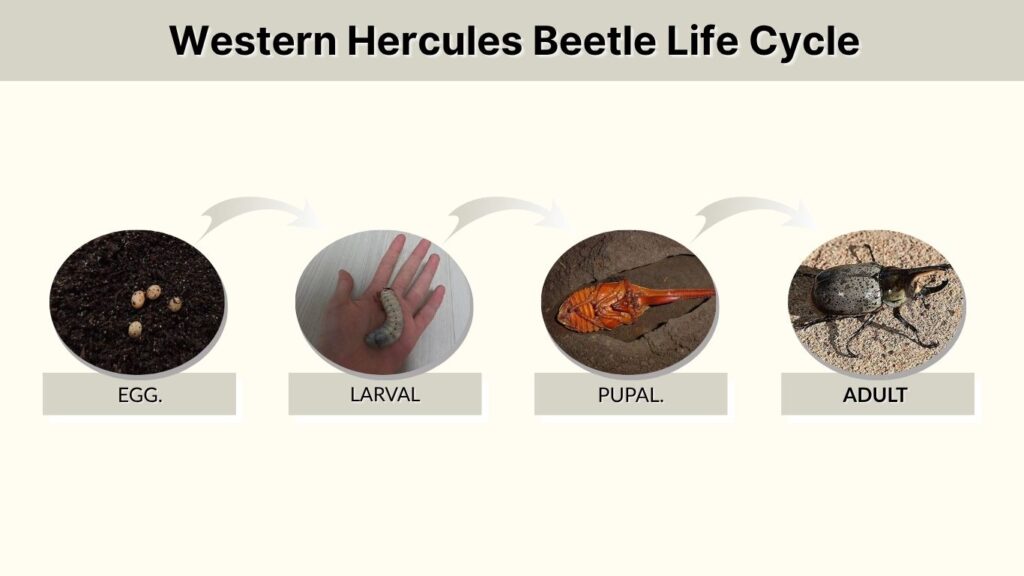
Western Hercules beetles undergo complete metamorphosis, progressing through four developmental stages: egg, larva, pupa, and adult.
The complete life cycle can take roughly one to several years, depending on environmental conditions. Much of this period is spent developing underground or inside rotting wood.
1. Egg Stage
Female Western Hercules beetles deposit eggs in suitable decomposing wood or organic substrates.
The eggs are pale and relatively small. Their incubation period depends heavily on temperature and moisture, and development may be prolonged under cooler conditions.
2. Western Hercules Beetle Larvae
Western Hercules beetle larvae are large, cream-colored grubs with brown heads and curved, C-shaped bodies.
They consume decomposing wood while gradually increasing in size. Larvae pass through three developmental stages, known as instars, before reaching maturity.
This is generally the longest period of their life cycle.
3. Pupal Stage
Once fully developed, larvae construct protective pupal chambers using surrounding decomposed material.
Inside these chambers, their bodies transform into adult beetles. The pupal period commonly lasts approximately one month under suitable conditions.
4. Adult Stage
Adult beetles eventually emerge and begin searching for food and mates.
Males use their horns during competition, while females locate suitable breeding sites. Their emergence is closely associated with seasonal conditions and moisture.
Western Hercules Beetle Lifespan
Western Hercules beetles spend most of their lives developing as immature insects. Their adult lifespan is considerably shorter than the total developmental period.
Growth rates vary with environmental conditions, food availability, and temperature.
How Long Do Western Hercules Beetles Live?
Adult Western Hercules beetles commonly live approximately two to four months, although individuals may survive longer in captivity.
A published scientific observation documented a male surviving approximately nine months without hibernation.
When the lengthy larval period is included, the beetle’s overall lifespan may extend to two years or more.
Eastern Hercules Beetle vs. Western Hercules Beetle
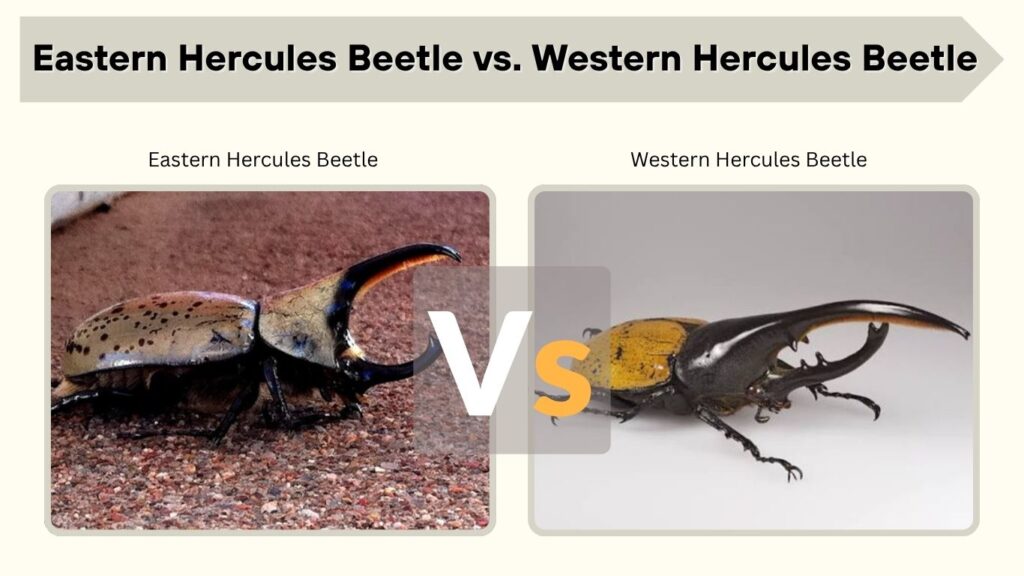
Eastern and Western Hercules beetles are closely related North American species. Both belong to the genus Dynastes and share similar physical features.
However, they differ primarily in geographic distribution, with some variation in appearance, seasonal activity, and development.
Key Differences
| Feature | Western Hercules Beetle | Eastern Hercules Beetle |
| Scientific name | Dynastes grantii | Dynastes tityus |
| Distribution | Southwestern US | Eastern US |
| Typical color | Pale gray or greenish-gray | Tan or greenish-gray |
| Male horns | Two prominent horns | Two prominent horns |
| Female horns | Absent | Absent |
| Larval food | Decaying wood | Decaying wood |
| Adult feeding | Tree sap and sugary foods | Tree sap and sugary foods |
| Human danger | Generally harmless | Generally harmless |
Which Hercules Beetle Is Bigger?
Both species can reach impressive sizes, and their measurements overlap considerably.
Western Hercules beetle males can reach approximately 85 mm including their horns, while Eastern Hercules beetles can also exceed 60 mm.
Individual growth conditions influence size, so neither species is always larger than the other.
Western Hercules Beetle Care as a Pet
Western Hercules beetles are sometimes maintained in captivity by insect enthusiasts. Their unusual appearance and generally manageable behavior make them interesting observation animals.
However, successful care requires appropriate housing, reliable food sources, and suitable conditions for the beetle’s developmental stage.
Housing and Temperature
A Western Hercules beetle enclosure should provide adequate ventilation, climbing surfaces, and a suitable substrate.
Recommended conditions include:
- Temperature: Approximately 68–77°F (20–25°C)
- Humidity: Moderate, without excessive moisture
- Substrate: Suitable decomposed hardwood material or beetle-rearing substrate
- Shelter: Bark, branches, and natural hiding areas
- Ventilation: Sufficient airflow to reduce mold growth
Avoid direct sunlight and extreme temperatures.
Feeding and Maintenance
Adult beetles can receive fresh banana, apple, or specially formulated beetle jelly.
Remove uneaten fruit regularly to prevent mold and unwanted insects. Provide a stable enclosure where the beetle can move naturally without frequent disturbance.
Larvae require specialized decomposing wood-based substrates, often sold as fermented flake soil. They should not be raised on ordinary garden soil alone.
Captive-bred specimens are preferable to collecting wild beetles, and local wildlife regulations should always be checked.
Are Western Hercules Beetles Dangerous?
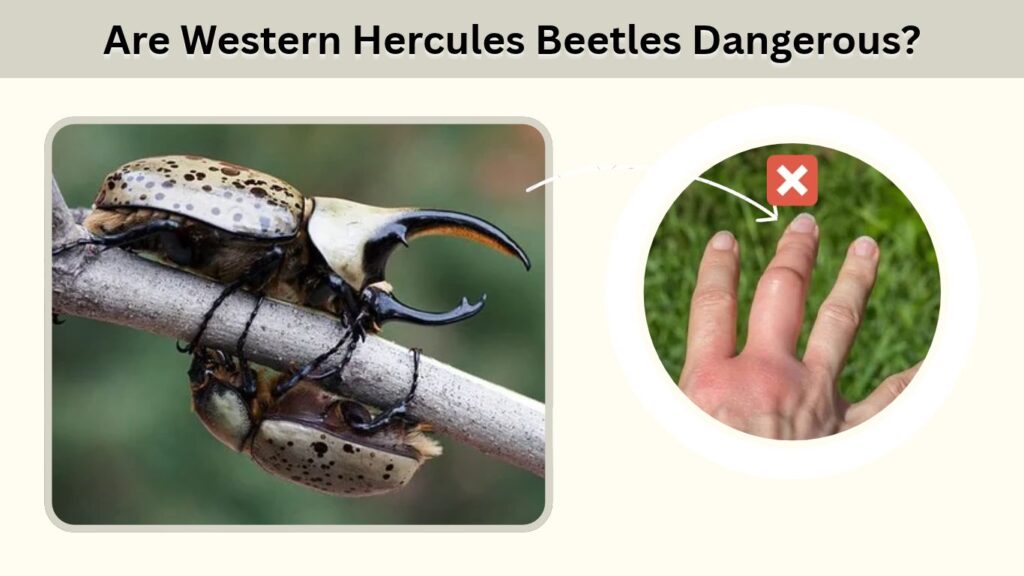
Despite their powerful appearance, Western Hercules beetles are not venomous and do not possess stingers.
Their horns are primarily used during competition between males rather than for attacking people.
However, their strong legs and claws may grip skin tightly, so handling should be gentle. Avoid squeezing the beetle or lifting it by its horns.
These insects are generally beneficial to their ecosystems because their larvae help decompose dead wood.
FAQs
1. Can Western Hercules Beetles Fly?
Yes, Western Hercules beetles can fly despite their heavy bodies. They possess functional hindwings protected beneath hardened wing covers. Adults are often active during the evening and nighttime and may be attracted to artificial lights.
2. Are Western Hercules Beetles Rare?
Western Hercules beetles are relatively uncommon in many areas, but they can be locally abundant in suitable Arizona habitats. Their populations depend on available forest environments, mature trees, and decaying wood needed for reproduction.
3. Do Female Western Hercules Beetles Have Horns?
No, female Western Hercules beetles lack the prominent horns found on males. They have rounded bodies and strong legs. Their appearance is less dramatic, but they remain relatively large compared with many other beetle species.
4. What Is the Best Food for Western Hercules Beetle Larvae?
The best food for Western Hercules beetle larvae is properly decomposed hardwood material or suitable fermented beetle-rearing substrate. These materials supply the organic nutrients required for development. Fresh wood and ordinary soil are not adequate substitutes.
5. Where Can You Find Western Hercules Beetles in Arizona?
Western Hercules beetles can be found in mountainous Arizona forests, particularly around Flagstaff, Prescott, Payson, and similar habitats. Adults are most commonly observed during late summer, often near ash trees or nighttime lights.