
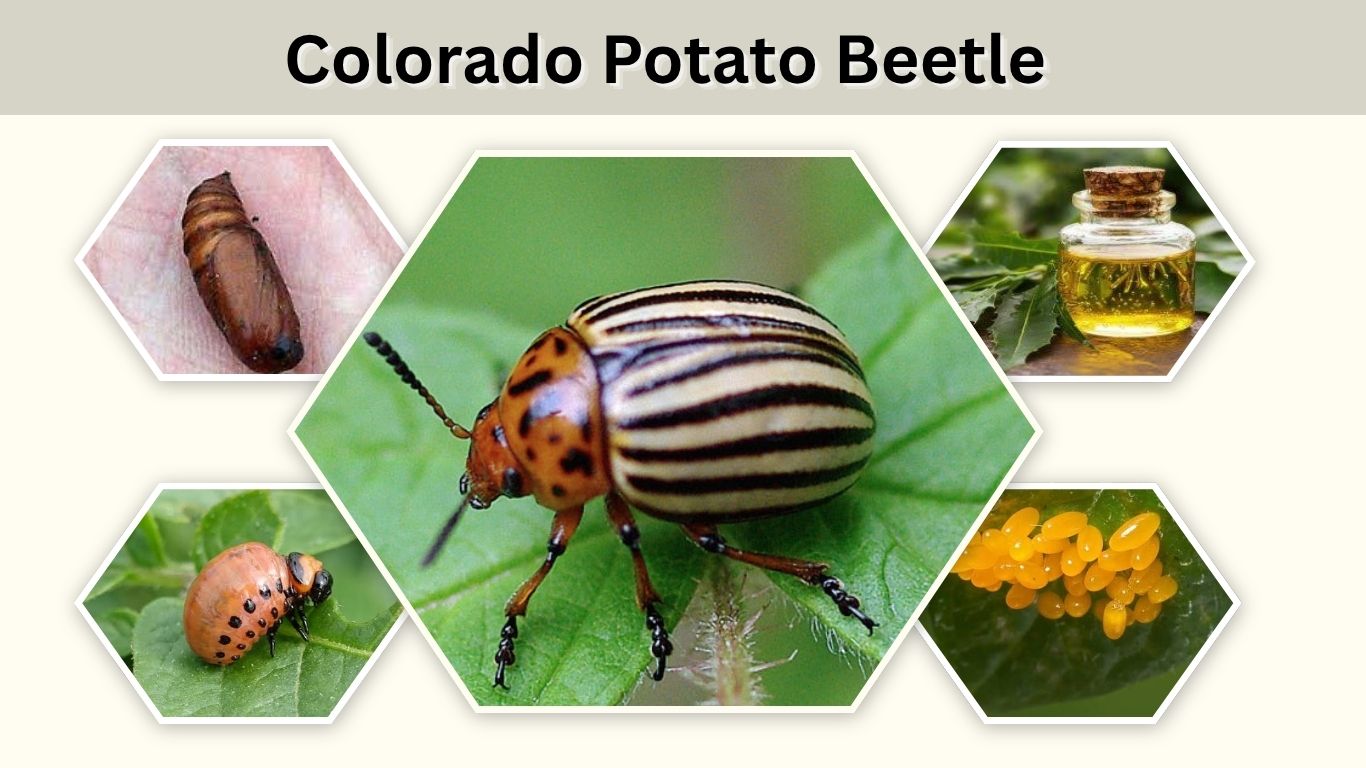
The Colorado potato beetle (Leptinotarsa decemlineata) is one of the most destructive pests affecting potato plants in North America and many other growing regions. Recognized by its yellow-and-black striped body, this beetle feeds on leaves and can quickly damage entire potato crops. Both adults and larvae are responsible for plant destruction, making early identification important. Fortunately, several organic and chemical control methods can help protect your garden. This guide explains Colorado potato beetle identification, eggs, larvae, life cycle, crop damage, prevention, and effective treatment options.
What Is a Colorado Potato Beetle?
The Colorado potato beetle is a leaf beetle belonging to the family Chrysomelidae. Its scientific name is Leptinotarsa decemlineata, referring to the ten dark stripes on its wing covers.
Originally associated with wild nightshade plants in North America, it became a major agricultural pest after adapting to cultivated potatoes. Today, it is found across much of North America and has spread into Europe and Asia.
Colorado Potato Beetle Facts
- Scientific name: Leptinotarsa decemlineata
- Family: Chrysomelidae
- Order: Coleoptera
- Adult size: Approximately 9–12 mm
- Color: Yellow-orange with black stripes
- Main food: Potato leaves
- Other hosts: Eggplant, tomato, and related nightshades
- Habitat: Potato fields, vegetable gardens, and agricultural landscapes
How to Identify a Colorado Potato Beetle
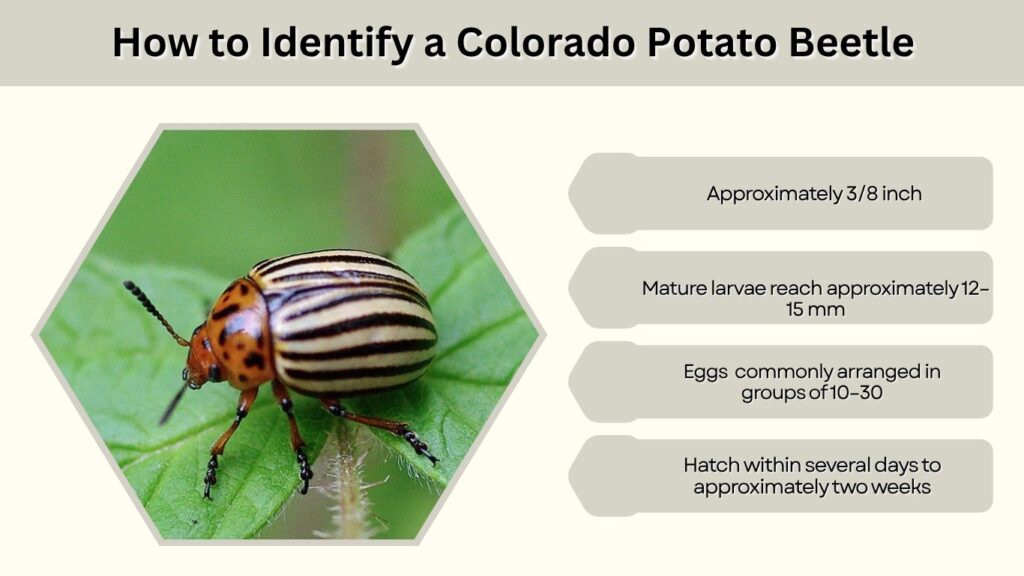
Colorado potato beetles have a distinctive appearance that makes adults relatively easy to recognize. Their oval bodies, striped wing covers, and orange thoraxes distinguish them from many common garden beetles.
However, identification becomes more challenging during their immature stages, especially when larvae resemble other leaf-feeding insects.
Adult Colorado Potato Beetle
Adult beetles measure approximately 3/8 inch long and have rounded, convex bodies.
Their hardened yellowish wing covers feature five black longitudinal stripes on each side, giving them ten stripes altogether.
The head and thorax are orange with irregular black spots, while the legs are comparatively short and dark.
Colorado Potato Beetle Larvae
Colorado potato beetle larvae are soft-bodied, humpbacked insects that initially appear reddish-orange.
As they grow, they become pinkish or salmon-colored and develop a noticeably swollen abdomen. Each side of the body has two rows of black spots.
Mature larvae reach approximately 12–15 mm long and feed aggressively on potato foliage.
Colorado Potato Beetle Eggs
Females lay clusters of bright yellow to orange eggs, usually on the undersides of potato leaves.
The eggs are elongated and commonly arranged in groups of 10–30. They hatch within several days to approximately two weeks, depending on temperature.
Recognizing these egg clusters provides an opportunity to interrupt infestations before larvae begin extensive feeding.
Colorado Potato Beetle Life Cycle
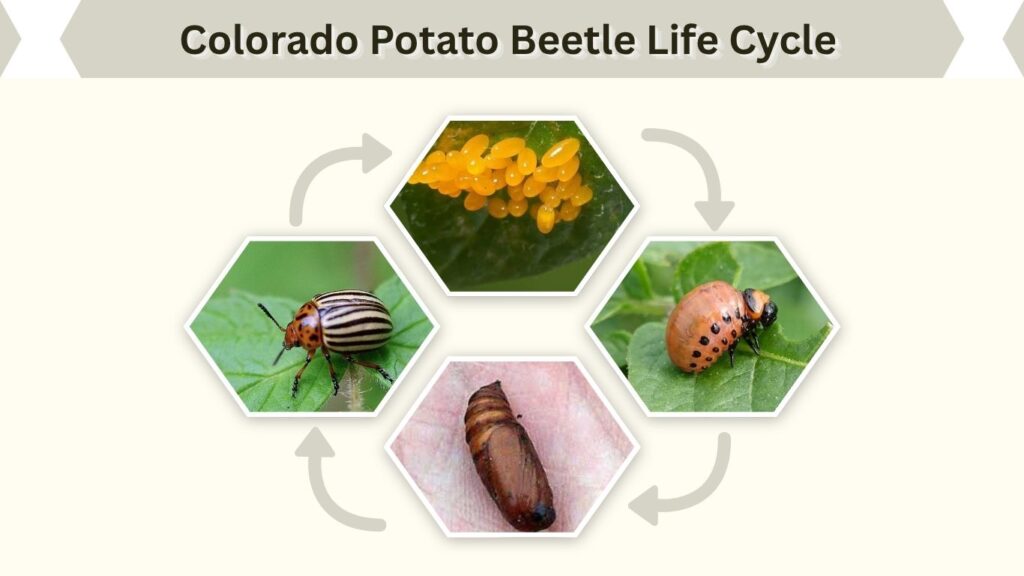
The Colorado potato beetle undergoes complete metamorphosis. Its four developmental stages include egg, larva, pupa, and adult.
Adults survive winter underground before emerging in spring to feed and reproduce. Depending on climate, multiple generations may develop within one growing season.
Four Stages of Development
- Egg stage: Females deposit orange egg clusters beneath host leaves. Eggs generally hatch within one to two weeks.
- Larval stage: Newly emerged larvae feed on leaves and pass through four growth stages called instars.
- Pupal stage: Mature larvae drop to the ground and burrow into soil, where they transform into pupae.
- Adult stage: New beetles emerge, begin feeding, and eventually reproduce or enter overwintering sites.
The entire active life cycle may be completed in about one month under favorable temperatures. Cooler conditions slow development considerably.
What Do Colorado Potato Beetles Eat?
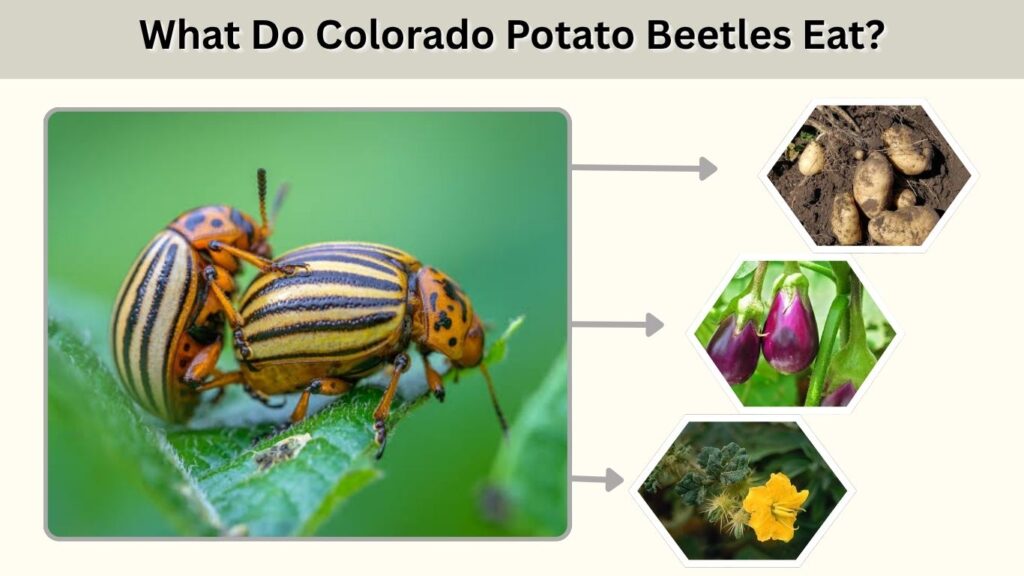
Colorado potato beetles primarily feed on plants belonging to the nightshade family, Solanaceae. Both adults and larvae consume foliage, although older larvae typically cause the most damage.
Their preferred host is the potato plant, but they can survive on several related crops and wild plants.
Colorado Potato Beetle Diet
Their food sources include:
- Potatoes: The preferred cultivated host.
- Eggplants: Another important crop vulnerable to feeding.
- Tomatoes: Occasionally attacked, especially when populations are high.
- Buffalobur: A wild nightshade associated with the beetle’s original host range.
- Other nightshades: Certain wild Solanum species can support populations.
Although beetles can feed on multiple crops, not every host is equally suitable for reproduction and larval development.
Colorado Potato Beetle Damage to Plants
Colorado potato beetles damage crops by chewing potato leaves and removing important photosynthetic tissue.
Small infestations may produce only scattered holes, while large populations can strip plants of most of their foliage. Severe defoliation reduces energy production and can result in smaller potato tubers.
Common Signs of Infestation
Early warning signs include:
- Irregular holes along leaf edges and surfaces.
- Orange egg clusters underneath leaves.
- Groups of reddish larvae feeding on foliage.
- Yellow-and-black striped adult beetles.
- Extensive leaf loss and reduced plant growth.
How Much Damage Can Potato Plants Tolerate?
Potatoes can generally tolerate approximately 30% defoliation before flowering. However, during early tuber development, plants become much more sensitive and may tolerate only about 10% defoliation without significant yield concerns.
This makes monitoring especially important around flowering and tuber formation.
How to Get Rid of Colorado Potato Beetles Organically
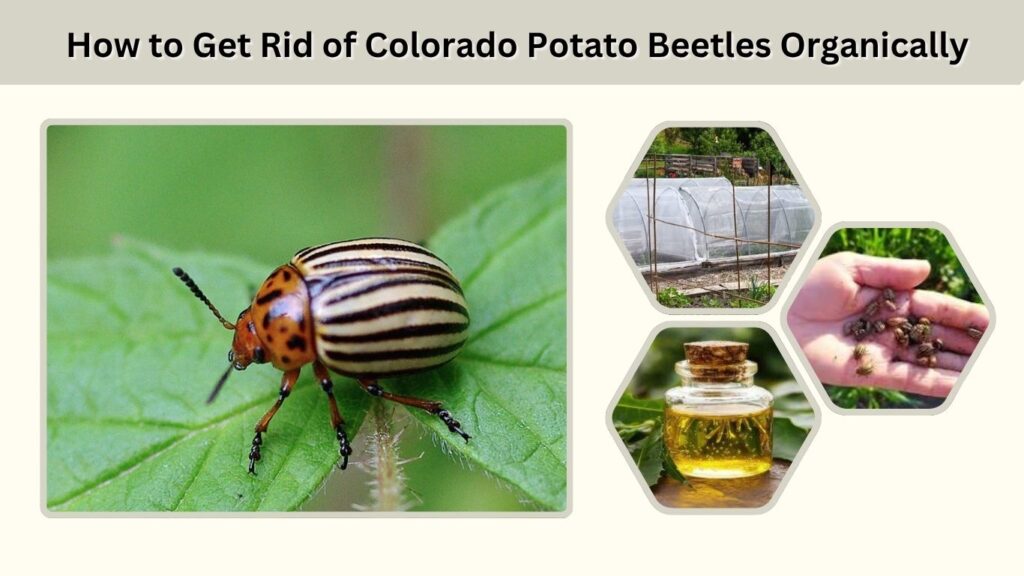
Organic Colorado potato beetle control focuses on early detection, physical removal, biological treatments, and prevention.
Small gardens often benefit from combining several techniques rather than depending on a single spray. Starting before beetle populations increase greatly improves the chances of success.
Handpick Adults and Larvae
Handpicking is one of the simplest methods for small potato gardens.
Inspect plants regularly, especially the undersides of leaves. Remove adult beetles, larvae, and visible egg clusters.
Drop collected insects into a bucket of soapy water. Repeat inspections throughout the growing season because additional adults may arrive from nearby areas.
Neem Oil for Colorado Potato Beetles
Neem-derived products can help suppress young Colorado potato beetle larvae.
Products containing azadirachtin interfere with insect feeding and development. Their effectiveness depends on the formulation, application timing, and insect growth stage.
Use only products labeled for Colorado potato beetles on edible crops. Apply according to label instructions to prevent plant damage and unnecessary exposure to beneficial insects.
Biological Control Using Bt
Certain formulations of Bacillus thuringiensis, particularly those developed for beetle larvae, can provide control.
Products containing B. thuringiensis subsp. tenebrionis target susceptible young beetle larvae when they consume treated foliage.
Not all Bt formulations work against Colorado potato beetles; products formulated for caterpillars should not be assumed effective.
Biological treatment is generally most useful before larvae become large.
Best Insecticides for Colorado Potato Beetle Control
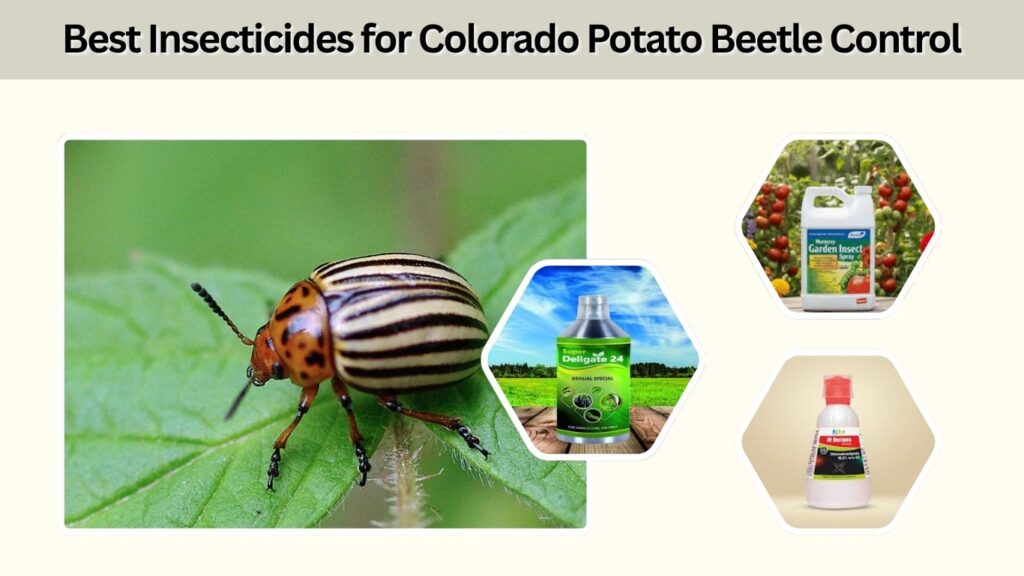
Insecticides may become necessary when infestations are severe and other management techniques cannot prevent excessive foliage damage.
However, Colorado potato beetles are particularly challenging because populations can develop resistance to commonly used insecticides.
Spinosad and Colorado Potato Beetle Sprays
Spinosad is a naturally derived insecticide that may control young Colorado potato beetle larvae.
Bonide Colorado Potato Beetle Beater is an example of a spinosad-based product historically labeled for this pest.
Spinosad can harm bees exposed to wet spray, so application timing and label restrictions are important.
Chemical Control and Pesticide Resistance
Colorado potato beetles have developed resistance to numerous pesticide groups, including some pyrethroids and neonicotinoids.
Consequently, repeatedly applying the same insecticide may eventually provide poor results.
Rotate different insecticide modes of action when treatment is necessary, and select only products currently registered for potatoes and this pest in your location.
Ledprona and RNA-Based Pest Control
Ledprona is a newer RNA-interference-based active ingredient designed to target Colorado potato beetles.
The U.S. Environmental Protection Agency lists ledprona in the registered product Calantha for Colorado potato beetle control on potatoes. Availability and permitted uses depend on the applicable label and jurisdiction.
The University of Minnesota Extension emphasizes that treatments generally work best against young larvae, not eggs, pupae, or mature adults.
Colorado Potato Beetle vs. False Potato Beetle
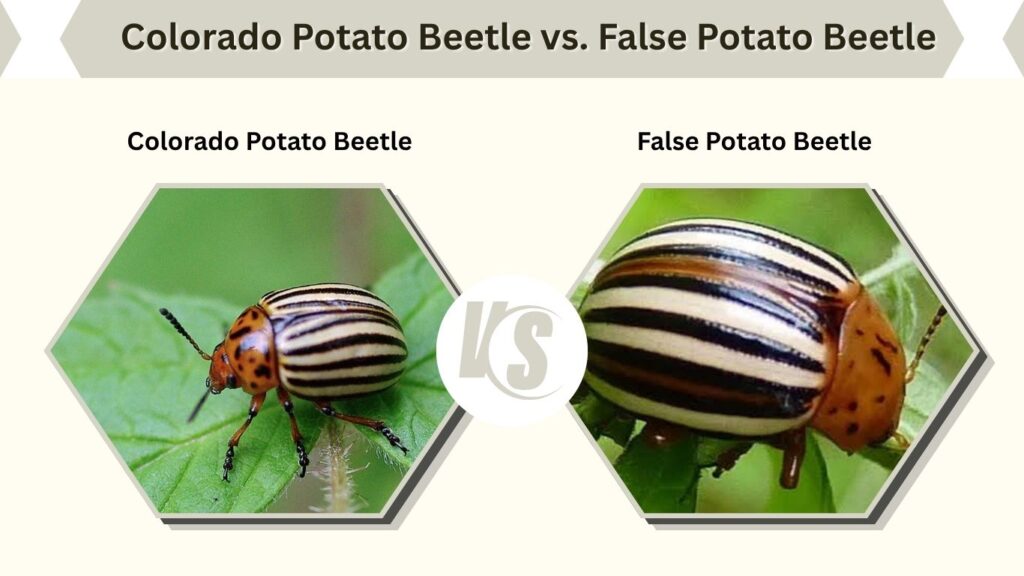
The false potato beetle (Leptinotarsa juncta) closely resembles the Colorado potato beetle and is sometimes mistaken for this destructive crop pest.
Both species have yellowish bodies with black markings, but their wing patterns and preferred host plants differ.
Key Identification Differences
| Feature | Colorado Potato Beetle | False Potato Beetle |
| Scientific name | L. decemlineata | L. juncta |
| Wing pattern | Ten distinct black stripes | Some stripes merge, with brownish areas |
| Larval spots | Two rows on each side | One row on each side |
| Main host | Potatoes | Carolina horsenettle |
| Potato pest status | Major pest | Usually minor |
The false potato beetle is primarily associated with wild nightshades and is generally less damaging to cultivated potatoes.
How to Prevent Colorado Potato Beetles
Preventing Colorado potato beetles involves interrupting their life cycle and reducing opportunities for overwintered adults to infest newly planted potatoes.
Combining crop management with regular inspections can significantly reduce pressure from developing populations.
Effective Prevention Methods
- Rotate crops: Avoid growing potatoes and eggplants in the same area every year.
- Use row covers: Install protective covers before adult beetles reach plants.
- Remove host weeds: Control nearby nightshade weeds that support beetle populations.
- Monitor plants: Inspect foliage frequently for eggs and newly hatched larvae.
- Encourage natural enemies: Protect lady beetles and predatory stink bugs that consume beetle eggs.
Crop rotation is particularly effective when potatoes can be moved a substantial distance from previously infested planting areas.
FAQs
1. Are Colorado Potato Beetles Poisonous?
Colorado potato beetles are not venomous and are not considered dangerous to humans through ordinary contact. However, they produce defensive chemicals, so avoid ingesting them or allowing pets to eat them.
2. Do Colorado Potato Beetles Bite?
Colorado potato beetles possess chewing mouthparts but rarely bite humans. Defensive pinching is possible when handled. They are agricultural pests rather than insects that actively attack people.
3. Can Colorado Potato Beetles Fly?
Yes. Adult Colorado potato beetles can fly and travel between potato fields and gardens. Their ability to disperse makes infestations possible even in newly planted areas.
4. What Kills Colorado Potato Beetles Naturally?
Handpicking, destroying eggs, and appropriately labeled neem-derived, spinosad, or beetle-specific Bt products can help control Colorado potato beetles. Young larvae are generally easier to manage than mature insects.
5. Are Colorado Potato Beetles Invasive?
Colorado potato beetles are native to North America but have spread into other continents, where they are seriously introduced agricultural pests. Their adaptability, reproductive capacity, and pesticide resistance make management challenging.
