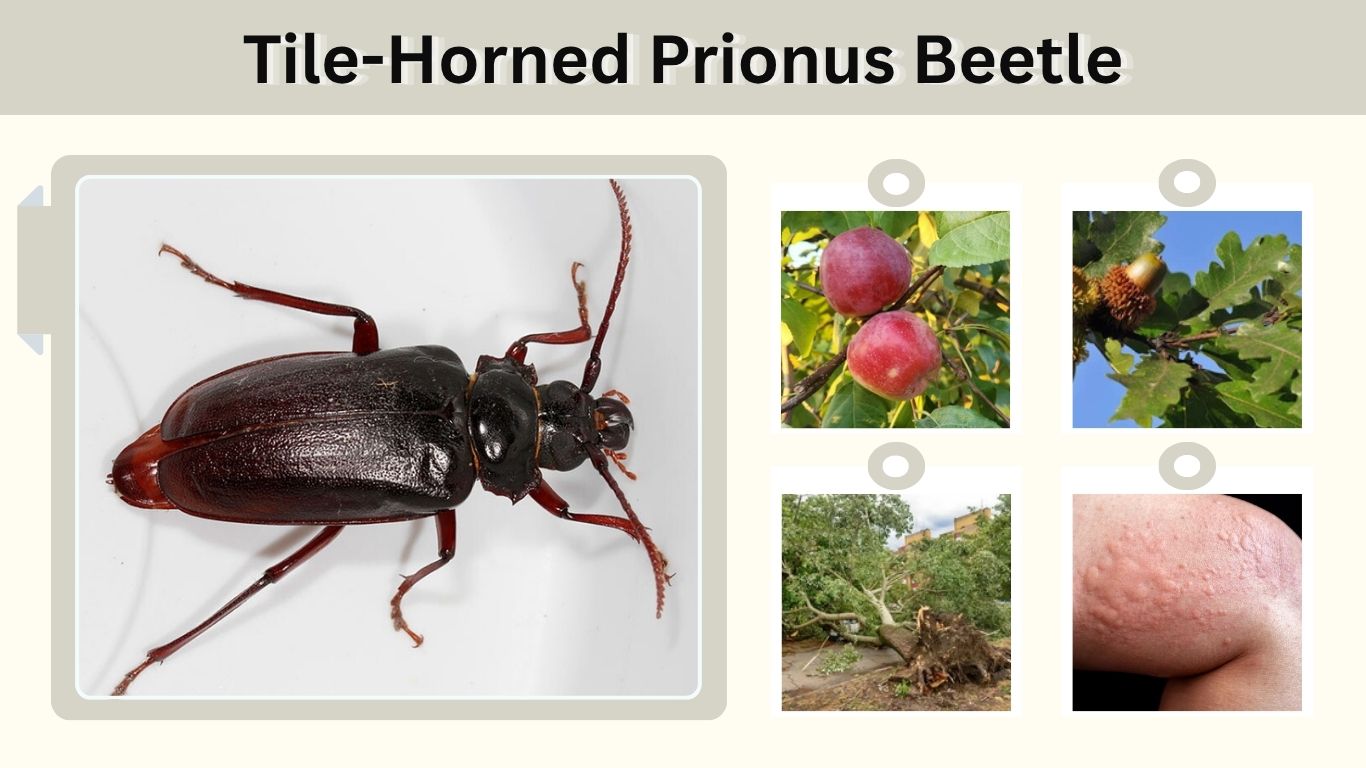
The tile-horned prionus beetle (Prionus imbricornis) is a large, dark-colored longhorn beetle found mainly in the eastern United States. Known for its powerful jaws, thick body, and distinctive segmented antennae, this beetle often attracts attention when it appears around outdoor lights. Although adults look intimidating, they are generally harmless to people. However, their larvae can damage trees by feeding on underground roots. Understanding the tile-horned prionus beetle’s appearance, habitat, diet, behavior, and potential dangers can help you identify and manage it properly.
What Is a Tile-Horned Prionus Beetle?
The tile-horned prionus is a longhorn beetle belonging to the family Cerambycidae. Its scientific name is Prionus imbricornis. It gets its common name from the distinctive overlapping, tile-like segments on its antennae.
These beetles are primarily nocturnal and are most frequently encountered during warmer months. Although adult beetles live above ground, much of their development occurs underground, where larvae feed on woody roots.
Scientific Classification
- Common name: Tile-Horned Prionus Beetle
- Scientific name: Prionus imbricornis
- Family: Cerambycidae
- Subfamily: Prioninae
- Order: Coleoptera
- Habitat: Deciduous forests, orchards, and wooded landscapes
- Distribution: Eastern and parts of central United States
How to Identify a Tile-Horned Prionus Beetle
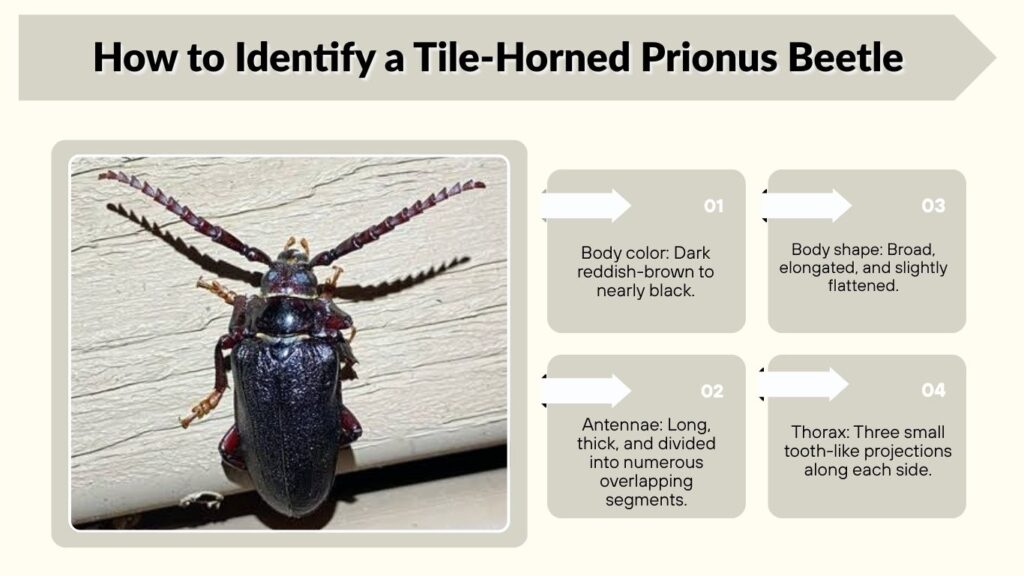
Tile-horned prionus beetles have a robust body, strong legs, and noticeable antennae. Their unusual appearance makes them relatively easy to recognize as large longhorn beetles, although several closely related species look similar.
Adults generally measure about 0.8–2.2 inches long, with females often growing larger than males.
Physical Appearance
Adult beetles have several recognizable features:
- Body color: Dark reddish-brown to nearly black.
- Antennae: Long, thick, and divided into numerous overlapping segments.
- Body shape: Broad, elongated, and slightly flattened.
- Thorax: Three small tooth-like projections along each side.
- Legs: Strong, dark-colored legs adapted for walking and climbing.
Their hard wing covers protect the abdomen, while functional wings underneath allow adults to fly.
Male vs. Female Tile-Horned Prionus
Male tile-horned prionus beetles generally have longer, more conspicuous antennae than females. These antennas help males detect chemical signals released by potential mates.
Females typically have broader bodies and shorter antennae. They also tend to be larger because they carry developing eggs.
Where Do Tile-Horned Prionus Beetles Live?
Tile-horned prionus beetles naturally inhabit deciduous forests and surrounding landscapes. Their larvae develop underground, particularly where suitable trees and shrubs provide abundant roots.
Adults are often encountered around wooded residential properties, agricultural fields, orchards, and outdoor lights during summer.
Geographic Distribution
The species occurs mainly in the eastern United States, from New York south to Florida and westward into parts of Kansas and Texas. It is also recorded in Virginia, Georgia, Mississippi, and North Carolina.
Tile-Horned Prionus Beetle in California
Despite occasional searches for this species in California, Prionus imbricornis is not considered a typical California beetle.
People in California are more likely to encounter the California prionus (Prionus californicus), a closely related species with a similar appearance.
Tile-Horned Prionus Beetle in Virginia
Tile-horned prionus beetles occur naturally in Virginia, where their larvae sometimes infest tree roots in orchards.
Virginia Tech reports that this species and the broad-necked root borer have caused localized damage to apple orchards, especially in mountainous areas.
What Do Tile-Horned Prionus Beetles Eat?
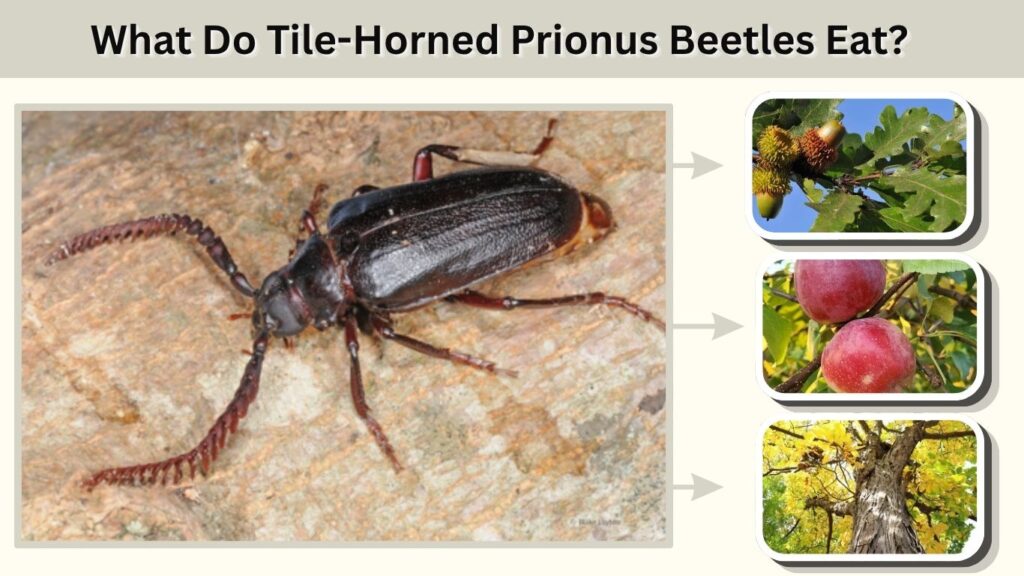
The tile-horned prionus beetle’s diet varies considerably between its larval and adult stages. Larvae are responsible for most feeding activity and can survive underground for several years.
Their powerful jaws allow them to chew woody roots and obtain nutrients from plant tissue.
Tile-Horned Prionus Larvae Diet
The larvae feed on underground roots of various hardwood trees and agricultural plants. Reported hosts include oak, hickory, pecan, apple, and other woody species.
As larvae grow, they tunnel deeper into roots, sometimes damaging the tissues responsible for transporting water and nutrients.
What Do Adult Tile-Horned Prionus Beetles Eat?
Adult tile-horned prionus beetles appear to feed very little, if at all. Their primary activities involve finding mates and reproducing.
Unlike the larvae, adults are not considered major feeding pests. Their brief above-ground life is focused largely on reproduction.
Do Tile-Horned Prionus Beetles Bite?
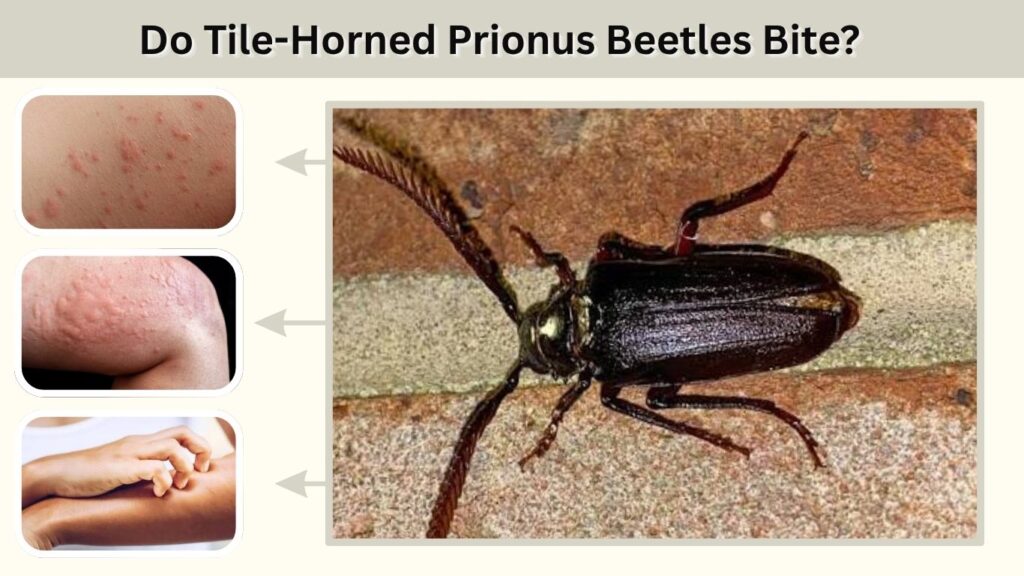
Yes, tile-horned prionus beetles can bite or pinch if handled roughly. They have strong mandibles designed for chewing, and they may use them defensively when threatened.
However, these beetles are not aggressive toward humans. They do not actively seek people to bite and usually attempt to escape when disturbed.
Is a Tile-Horned Prionus Beetle Bite Dangerous?
A defensive bite can cause temporary pain, redness, or minor skin irritation. Larger beetles may occasionally break the skin.
The tile-horned prionus is not venomous, and its bite is not known to transmit disease.
If bitten, wash the area with soap and water, apply a cold compress, and monitor for irritation. Seek medical assistance if significant swelling, signs of infection, or an allergic reaction develops.
Are Tile-Horned Prionus Beetles Poisonous to Dogs?
Tile-horned prionus beetles are not known to be poisonous to dogs or cats. Nevertheless, pets should not be encouraged to eat them.
Their hard body parts could cause choking or digestive irritation. Contact a veterinarian if your pet develops vomiting, difficulty swallowing, or other unusual symptoms after consuming a beetle.
Tile-Horned Prionus Beetle Life Cycle
Tile-horned prionus beetles undergo complete metamorphosis, passing through egg, larval, pupal, and adult stages.
Their development is unusually long because the larvae spend several years feeding and growing underground.
Four Stages of Development
- Egg: Females deposit eggs in soil near suitable host plants and tree roots.
- Larva: Cream-colored larvae hatch and begin feeding on underground roots.
- Pupa: Mature larvae construct protected chambers in the soil and transform into pupae.
- Adult: Fully developed beetles emerge, locate mates, and reproduce.
The larval stage commonly lasts around three to five years. Adults are generally active during late spring and summer, with emergence varying according to local temperatures.
Can Tile-Horned Prionus Beetles Damage Trees?
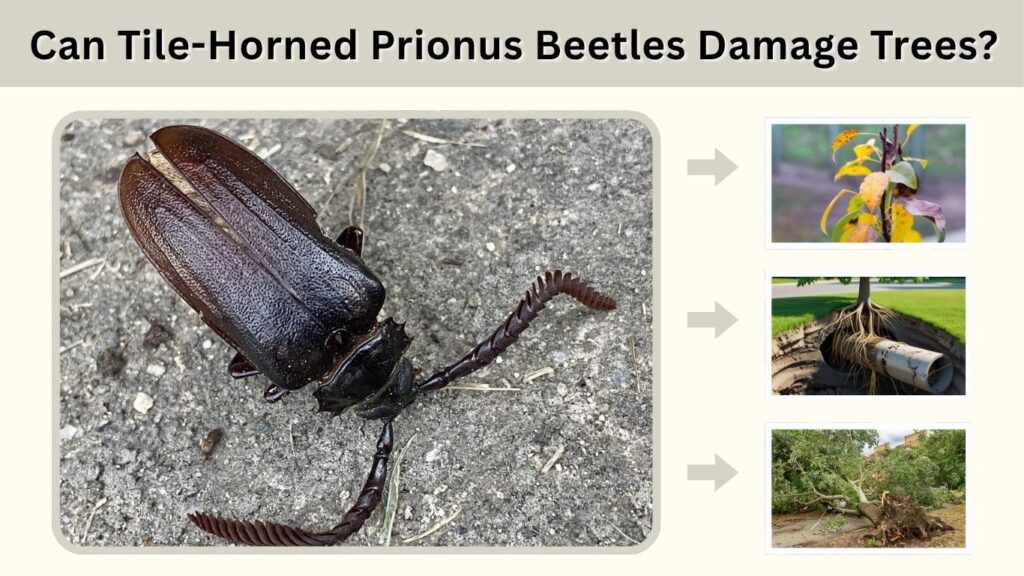
Tile-horned prionus larvae can seriously damage tree root systems when infestations become established.
They tunnel through large roots, reducing the tree’s ability to absorb moisture and nutrients. Severe damage may weaken trees and make them more vulnerable to windstorms.
Signs of Root Damage
Common warning signs include:
- Yellowing leaves: Reduced nutrient and water absorption can affect foliage.
- Thinning canopy: Branches may gradually lose leaves.
- Declining growth: Trees may become weaker over several growing seasons.
- Damaged roots: Large tunnels or hollow sections may appear in affected roots.
- Tree instability: Severely damaged roots may no longer support the tree properly.
These symptoms can also result from drought, root diseases, and other pests. Confirming the presence of larvae or their tunnels is important before deciding on treatment.
A 2026 study also confirmed P. imbricornis as a pest of cultivated highbush blueberries in North Carolina.
How to Get Rid of Tile-Horned Prionus Beetles
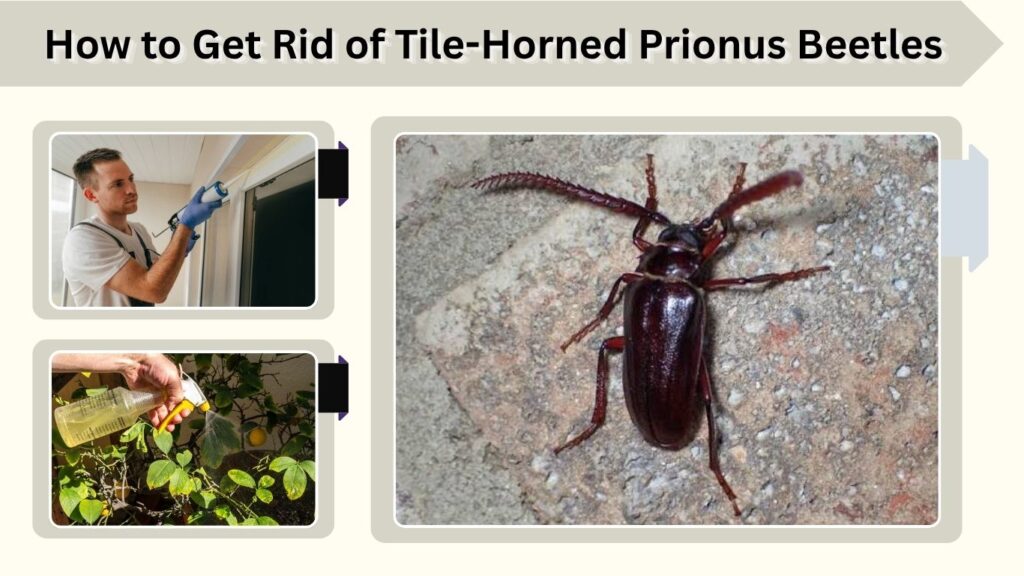
Managing tile-horned prionus beetles depends on whether you are dealing with occasional adults or larvae damaging trees.
Adult beetles entering homes generally present little danger. Established underground larvae are considerably more difficult to control.
How to Remove Adult Beetles
If you discover adult beetles around your house, try these methods:
- Reduce outdoor lighting: Turn off unnecessary lights that attract flying adults.
- Seal entry points: Repair window screens and close gaps around doors.
- Remove individual beetles: Use a container and stiff paper to capture and release them outdoors.
- Inspect outdoor areas: Watch for repeated beetle activity around vulnerable trees.
- Avoid unnecessary pesticides: Occasional adult sightings rarely justify chemical treatment.
How to Protect Trees From Prionus Larvae
Maintaining healthy trees is an important part of prevention. Provide appropriate watering, reduce soil compaction, and avoid damaging roots during landscaping.
If a tree is declining, inspect accessible roots carefully or consult an arborist or local extension specialist.
Pheromone traps can help monitor adult male populations, particularly in commercial orchards. However, trapping adults does not automatically eliminate larvae already established underground.
NC State Extension notes that effective control of established prionus infestations remains challenging, and conventional insecticide approaches have important limitations.
FAQs
1. Are Tile-Horned Prionus Beetles Dangerous?
Tile-horned prionus beetles are generally harmless to humans. They are not venomous or aggressive, although they can deliver a defensive bite when handled carelessly. Their larvae pose a greater risk to trees than adults do to people.
2. Can Tile-Horned Prionus Beetles Fly?
Yes. Adult tile-horned prionus beetles have functional wings and can fly. They are most active at night and may be attracted to porch lights, illuminated windows, and other artificial light sources.
3. How Big Do Tile-Horned Prionus Beetles Get?
Adult tile-horned prionus beetles can reach approximately two inches in body length, sometimes slightly more. Females are generally larger, while males usually have more prominent, longer antennae.
4. Why Are Tile-Horned Prionus Beetles Around My House?
They may appear around homes near wooded areas because adults are attracted to lights during their mating season. Finding one indoors does not necessarily mean your home has an infestation.
5. Do Tile-Horned Prionus Beetles Eat Wood?
Their larvae feed on living woody roots and can tunnel through root tissue. Unlike termites, they do not normally infest dry structural timber or wooden furniture inside homes.