
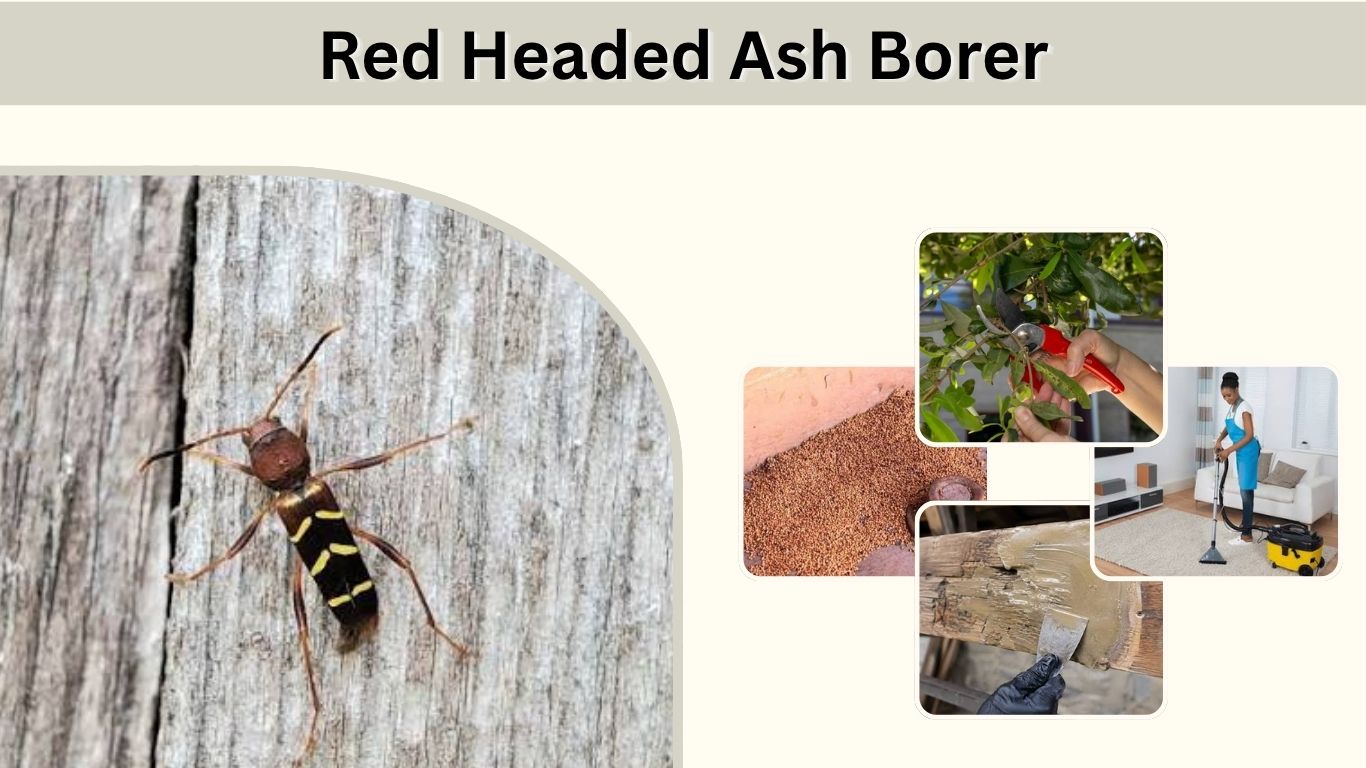
The red headed ash borer is a wood-boring beetle commonly found around dead trees, firewood, and hardwood logs. Its reddish head, yellow-striped body, and long legs make it easy to mistake for a wasp. Although this beetle is generally harmless to humans, its larvae can damage weakened trees and untreated wood. Understanding red headed ash borer identification, life cycle, damage, and control methods can help homeowners recognize infestations, protect vulnerable trees, and prevent unwanted beetles from appearing indoors.
What Is a Red Headed Ash Borer?
The red headed ash borer (Neoclytus acuminatus) is a species of longhorn beetle belonging to the family Cerambycidae. It is native to North America and commonly inhabits forests, woodlands, and areas containing dead or damaged hardwood trees.
Despite its name, this beetle does not exclusively attack ash trees. It also develops in oak, hickory, hackberry, persimmon, and several other hardwood species.
Adult beetles are frequently seen crawling over logs, tree trunks, and firewood during warmer months. Their larvae develop inside wood, where they create tunnels while feeding.
Unlike the destructive emerald ash borer, red headed ash borers generally prefer dead, dying, or severely stressed trees.
Red Headed Ash Borer Identification and Appearance
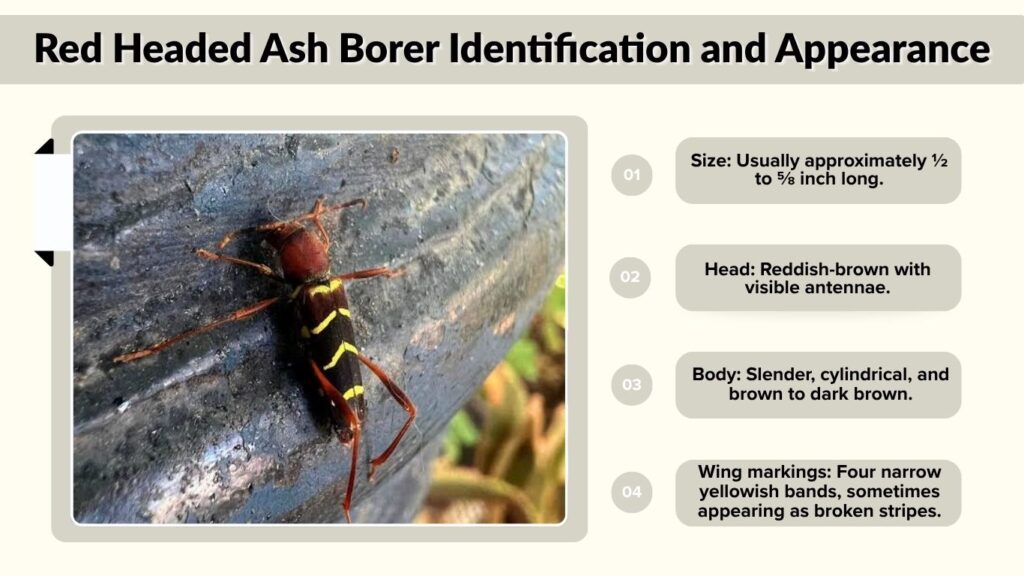
Red headed ash borer beetles have distinctive colors and body features that make them relatively easy to identify. Their appearance resembles certain wasps, but they are true beetles with hardened wing covers.
Adult Red Headed Ash Borer
Adult beetles have elongated bodies, reddish heads, and narrow yellow markings across their wings.
Identification features include:
- Size: Usually approximately ½ to ⅝ inch long.
- Head: Reddish-brown with visible antennae.
- Body: Slender, cylindrical, and brown to dark brown.
- Wing markings: Four narrow yellowish bands, sometimes appearing as broken stripes.
- Legs: Long, reddish legs that help distinguish the species.
- Antennae: Segmented and approximately half the body length.
Adults can fly and may be seen on hardwood trees or around outdoor lights.
Red Headed Ash Borer Larvae
Red headed ash borer larvae are creamy-white, legless grubs with darker head capsules. Their soft bodies have noticeable segments, and mature larvae can approach an inch in length.
Unlike adults, larvae remain hidden beneath bark or within wooden tunnels. They feed on wood tissues and produce sawdust-like waste called frass.
Finding larvae inside dead branches, hardwood logs, or weakened saplings may indicate an active infestation.
Red Headed Ash Borer Life Cycle
The red headed ash borer undergoes complete metamorphosis through four developmental stages: egg, larva, pupa, and adult.
1. Egg Stage: Female beetles deposit eggs in bark crevices or small notches, usually on recently dead, damaged, or stressed hardwood.
2. Larval Stage: After hatching, young larvae feed beneath the bark. As they grow, they tunnel deeper into the sapwood and sometimes the heartwood.
3. Pupal Stage: Mature larvae develop into pupae inside protected chambers within the wood.
4. Adult Stage: Adult beetles emerge through small, rounded holes and search for suitable locations to reproduce.
The species typically produces one generation annually in cooler northern regions, while warmer southern areas may support two or three generations.
Red Headed Ash Borer Damage and Signs of Infestation
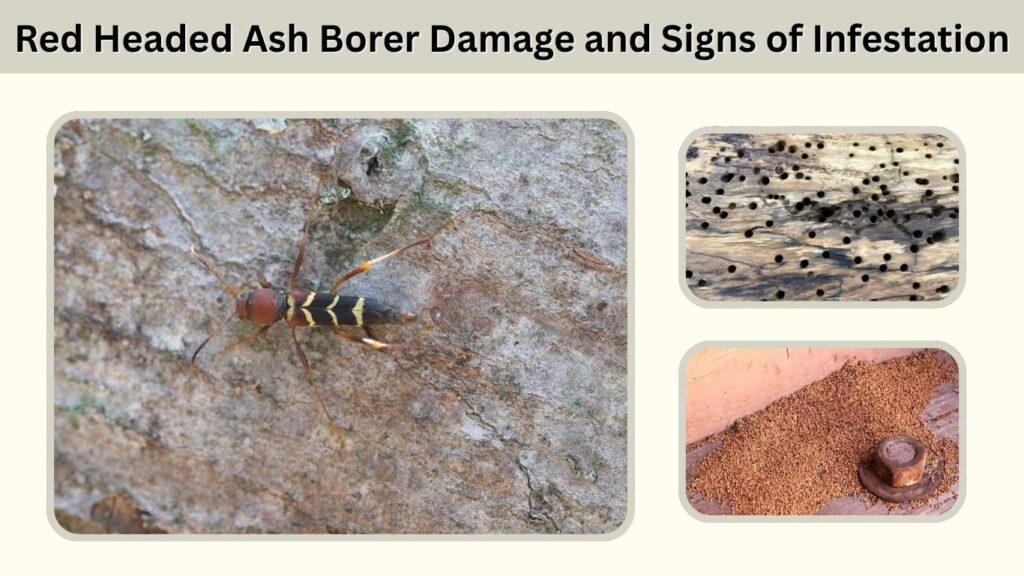
Red headed ash borer damage primarily occurs when larvae tunnel through dead or weakened hardwood. These tunnels can reduce the quality of lumber and occasionally weaken vulnerable trees.
Infestations are particularly common in freshly cut logs with their bark still attached.
Common Signs of Red Headed Ash Borer Damage
Several visible symptoms may indicate that these wood-boring beetles are developing inside a tree or log.
- Round exit holes: Small, rounded openings appear where adult beetles emerge.
- Sawdust-like material: Frass and wood particles collect inside tunnels or around openings.
- Internal galleries: Larvae create winding or lengthwise tunnels through wooden tissues.
- Weak branches: Heavily infested young trees may develop structurally weakened limbs or trunks.
- Adult beetles: Multiple adults emerging from the same logs or branches can indicate previous larval development.
Most established, healthy hardwood trees are not attractive hosts. However, newly planted or severely stressed trees can occasionally suffer considerable damage.
Are Red Headed Ash Borers Poisonous or Dangerous?
Red headed ash borers are not poisonous or venomous to humans. Despite their wasp-like appearance, they do not possess a stinger.
They are not aggressive insects and do not normally bite people. Like some other beetles, they may produce a minor pinch if handled roughly, but they are not considered medically significant biting pests.
Their primary concern is the damage their larvae can cause to vulnerable trees and certain types of wood.
A red headed ash borer found crawling on a person does not indicate a parasitic infestation or a serious health risk.
Why Are Red Headed Ash Borers in My House?
Finding a red headed ash borer inside your house can be surprising, especially during winter or early spring.
In most cases, the beetles entered as developing larvae or pupae inside firewood or infested lumber. Warm indoor temperatures encourage adults to emerge earlier than they would outdoors.
These beetles may subsequently crawl toward windows or other bright areas.
Fortunately, red headed ash borers do not ordinarily infest dry structural wood, reproduce indoors, or establish continuing household infestations.
If several beetles appear, inspect recently purchased firewood, decorative logs, or lumber used in renovation projects.
How to Get Rid of Red Headed Ash Borer Beetles
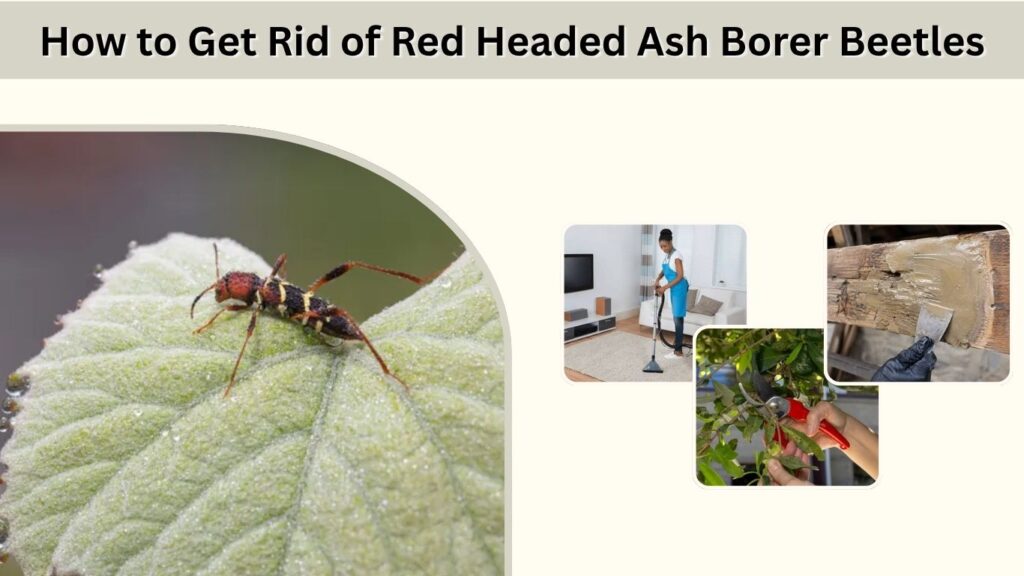
Controlling red headed ash borers depends on whether they are emerging indoors, infesting stored wood, or attacking vulnerable trees.
Removing suitable breeding material and preventing additional infestations are generally more effective than spraying insecticides.
1. Remove Infested Firewood
Inspect stored logs for exit holes, loose bark, and other evidence of wood-boring insects.
Keep infested firewood outdoors until needed, and avoid storing large quantities inside heated living spaces.
Use locally sourced firewood and follow restrictions on transporting untreated wood to prevent spreading pests.
2. Remove Adult Beetles Indoors
Capture individual beetles using a container or vacuum cleaner.
Inspect firewood and recently installed hardwood materials to identify where they emerged.
Household insecticide applications are usually unnecessary because the adults do not establish indoor breeding populations.
3. Manage Dead and Damaged Wood
Remove hazardous dead branches and appropriately dispose of heavily infested material.
Freshly cut logs should be processed, debarked, or dried promptly to reduce their attractiveness to egg-laying beetles.
Keep woodpiles away from vulnerable young trees.
4. Maintain Healthy Trees
Proper tree maintenance helps reduce the risk of infestation.
Water young trees during prolonged dry periods, protect trunks from mechanical injuries, and maintain suitable mulch around their root zones.
Avoid unnecessary fertilization because excessive nutrients do not automatically improve tree health.
5. Seek Professional Treatment When Necessary
If red headed ash borers are attacking a valuable living tree, consult a certified arborist or local extension specialist.
Preventive insecticide treatments may sometimes be appropriate, but they generally cannot reliably eliminate larvae already tunneling deep inside wood.
Always use products specifically labeled for the tree, pest, and application site.
Can You Save a Tree From Red Headed Ash Borers?
A tree’s chances of recovery depend on its overall health, age, and the extent of internal damage.
Healthy mature trees rarely suffer serious problems from this species. However, young trees with extensive trunk tunneling may experience disrupted water transport and increased breakage risks.
For a potentially recoverable tree, remove dead branches, correct watering problems, and avoid additional injuries.
An arborist can assess structural damage and determine whether pruning, continued monitoring, or removal is appropriate.
Because red headed ash borers often colonize trees already declining from other causes, identifying the original problem is essential.
Red Headed Ash Borer vs. Emerald Ash Borer
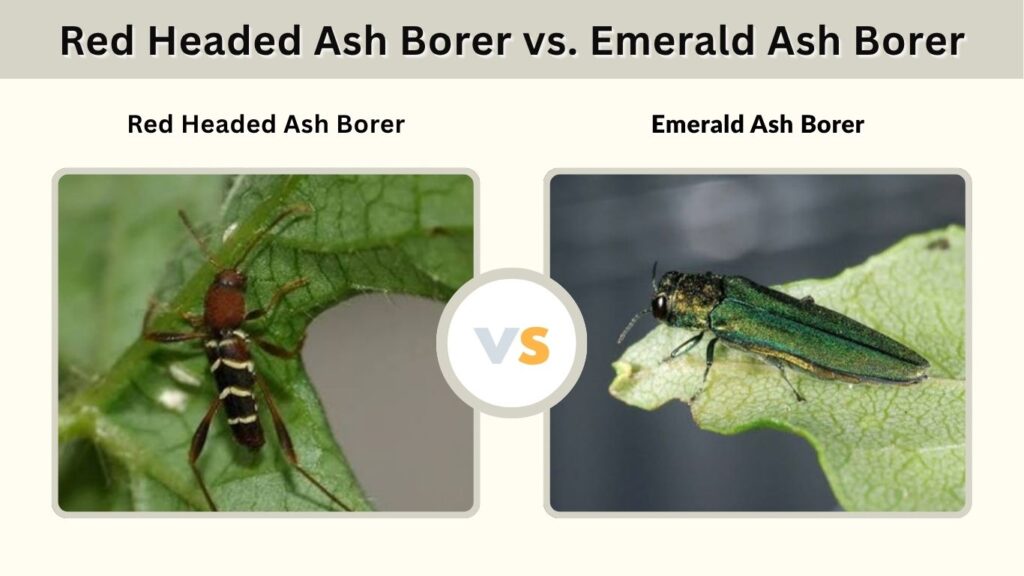
These two beetles have similar names but differ significantly in appearance, behavior, and their effects on trees.
| Feature | Red Headed Ash Borer | Emerald Ash Borer |
| Scientific name | Neoclytus acuminatus | Agrilus planipennis |
| Adult color | Reddish-brown with yellow bands | Metallic green |
| Preferred hosts | Multiple hardwood species | Primarily true ash trees |
| Tree condition | Mainly stressed, dying, or dead | Can attack healthy ash trees |
| Exit holes | Round to oval | Characteristically D-shaped |
| Tree threat | Usually secondary or localized | Highly destructive invasive pest |
Correct identification is important because emerald ash borers can kill otherwise healthy ash trees and often require a different management approach.
Red Headed Ash Borer Habitat and Range
Red headed ash borers occur across much of the United States, including eastern and central regions such as Missouri and Texas, with records extending into northern and western states.
They also occur in parts of Canada and have been introduced into some European regions.
Their preferred habitats include hardwood forests, recently cleared areas, lumber storage yards, and places containing dying trees.
Although ash trees are common hosts, larvae can develop in other hardwoods, including oak, hickory, hackberry, persimmon, and occasionally maple.
In natural ecosystems, these beetles help break down dead wood and recycle nutrients.
FAQs
1. Do Red Headed Ash Borers Bite or Sting?
Red headed ash borers do not sting because they lack stingers. They rarely bite humans, although rough handling could cause a minor pinch. They are generally harmless to people.
2. Can Red Headed Ash Borers Kill a Healthy Tree?
They rarely attack vigorous, mature trees. However, larvae may seriously damage newly planted, weakened, or severely stressed trees, especially when tunneling becomes extensive.
3. Can Red Headed Ash Borers Infest Furniture?
They may emerge from furniture or wood products made from previously infested lumber. However, they do not typically establish new infestations in properly dried indoor furniture.
4. Are Red Headed Ash Borers Invasive?
Red headed ash borers are native to North America, so they are not considered introduced invasive beetles there. However, they have spread to other parts of the world, including portions of Europe.
5. What Attracts Red Headed Ash Borers?
Adult beetles are attracted to recently cut hardwood, dying trees, weakened saplings, and suitable bark for egg-laying. Fresh logs with intact bark are especially attractive breeding sites.
