
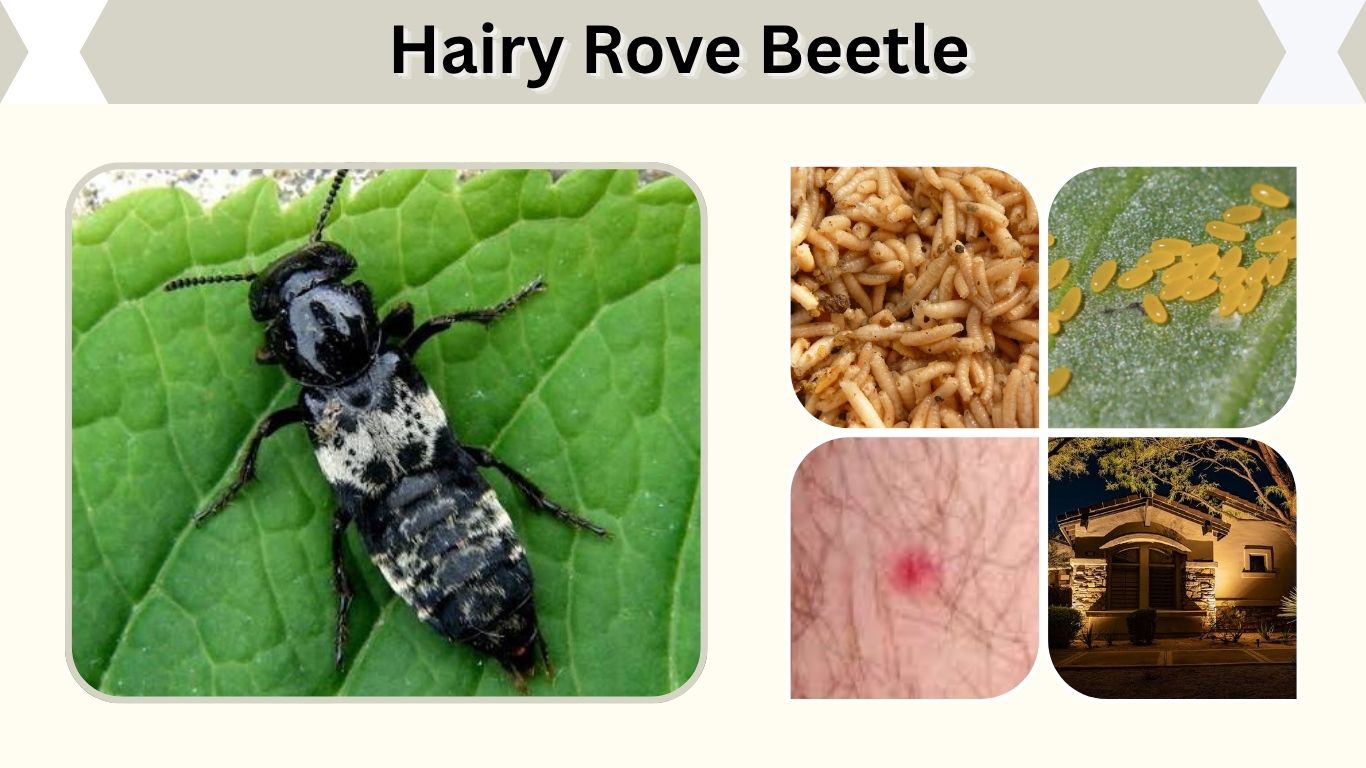
The hairy rove beetle (Creophilus maxillosus) is a fascinating predatory insect known for its black body, yellowish-gray hairs, and unusual appearance. Commonly found around decaying organic matter, this beetle helps control fly populations by feeding on maggots and other insects. Although its appearance can seem intimidating, it rarely threatens humans. Understanding hairy rove beetle identification, habitat, diet, bites, and life cycle can help you recognize this insect and appreciate its ecological importance. It also plays an interesting role in forensic entomology.
What Is a Hairy Rove Beetle?
The hairy rove beetle (Creophilus maxillosus) is a large species belonging to the Staphylinidae family. Unlike many other beetles, it has short wing covers that leave much of its flexible abdomen exposed.
These beetles are active predators that frequently inhabit areas containing decaying animals and insect larvae. Their powerful jaws allow them to capture maggots, flies, and other small arthropods.
Hairy Rove Beetle Facts
| Feature | Description |
| Common Name | Hairy Rove Beetle |
| Scientific Name | Creophilus maxillosus |
| Family | Staphylinidae |
| Genus | Creophilus |
| Adult Size | 12–23 mm |
| Color | Black with yellowish-gray hairs |
| Diet | Fly larvae, adult flies, and other arthropods |
| Habitat | Forests, grasslands, moist soil, and carrion |
| Distribution | North America, Europe, Asia, and other regions |
| Life Cycle | Egg, larva, pupa, and adult |
These characteristics make the hairy rove beetle relatively easy to recognize among larger rove beetle species.
Hairy Rove Beetle Identification and Appearance
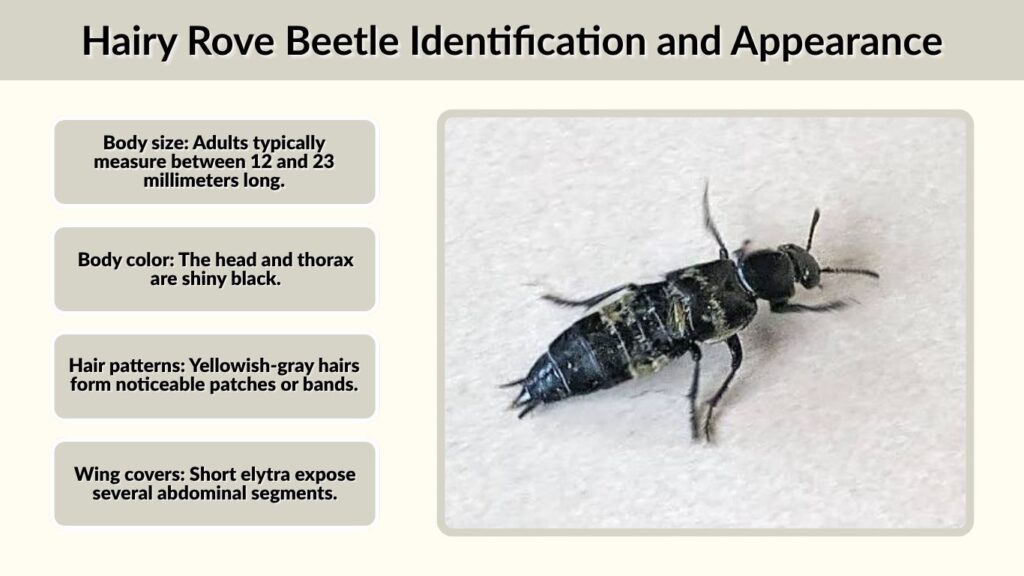
Hairy rove beetles have distinctive physical characteristics that separate them from many other beetles. Their unusual combination of glossy black body parts, pale hairs, and exposed abdominal segments makes identification easier.
How to Identify a Hairy Rove Beetle
Look for these identifying features:
- Body size: Adults typically measure between 12 and 23 millimeters long.
- Body color: The head and thorax are shiny black.
- Hair patterns: Yellowish-gray hairs form noticeable patches or bands.
- Wing covers: Short elytra expose several abdominal segments.
- Antennae: Thick, segmented antennae help detect their surroundings.
- Jaws: Strong mandibles are used to capture and consume prey.
When disturbed, hairy rove beetles may curl their bodies or raise their abdomens. Although this behavior resembles a scorpion’s posture, these insects do not possess stingers.
Hairy Rove Beetle Habitat and Distribution
Hairy rove beetles inhabit numerous environments where moisture, shelter, and suitable food sources are available. They are especially associated with decomposing organic material that attracts flies.
Where Do Hairy Rove Beetles Live?
Common habitats include:
- Forest floors containing decomposing leaves
- Grasslands and open wooded areas
- Beneath stones, logs, and tree bark
- Coastal areas and shorelines
- Areas containing animal carcasses
- Compost piles and decaying vegetation
Hairy rove beetles occur throughout much of North America, including numerous regions of the United States and Canada. They are also found in the United Kingdom, continental Europe, and parts of Asia.
Their populations are often more noticeable during warmer months when insect activity increases.
What Do Hairy Rove Beetles Eat?
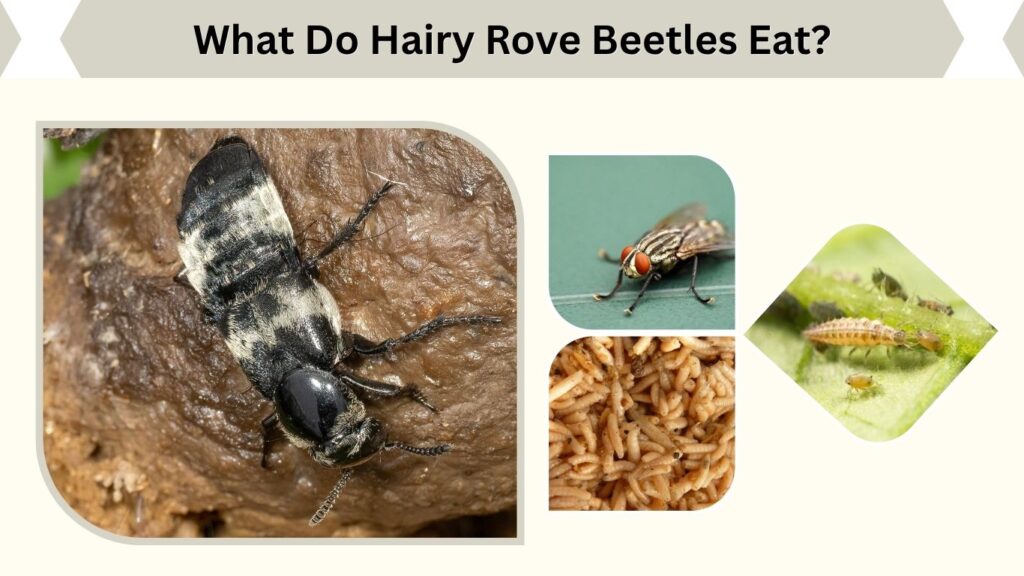
Hairy rove beetles are primarily predatory insects. Their feeding behavior contributes to the natural regulation of fly populations, particularly around decomposing organic material.
Hairy Rove Beetle Food Sources
Their diet includes several types of small animals:
- Fly maggots: One of their most important food sources.
- Adult flies: Captured when accessible.
- Other insect larvae: Consumed when suitable prey is available.
- Small arthropods: Additional prey found around their habitats.
Both adults and larvae actively hunt prey. Hairy rove beetles are frequently observed around carrion because decomposing animals attract large numbers of flies and maggots.
By consuming fly larvae, these beetles help reduce populations of certain nuisance flies and contribute to natural decomposition processes.
Hairy Rove Beetle Life Cycle and Development
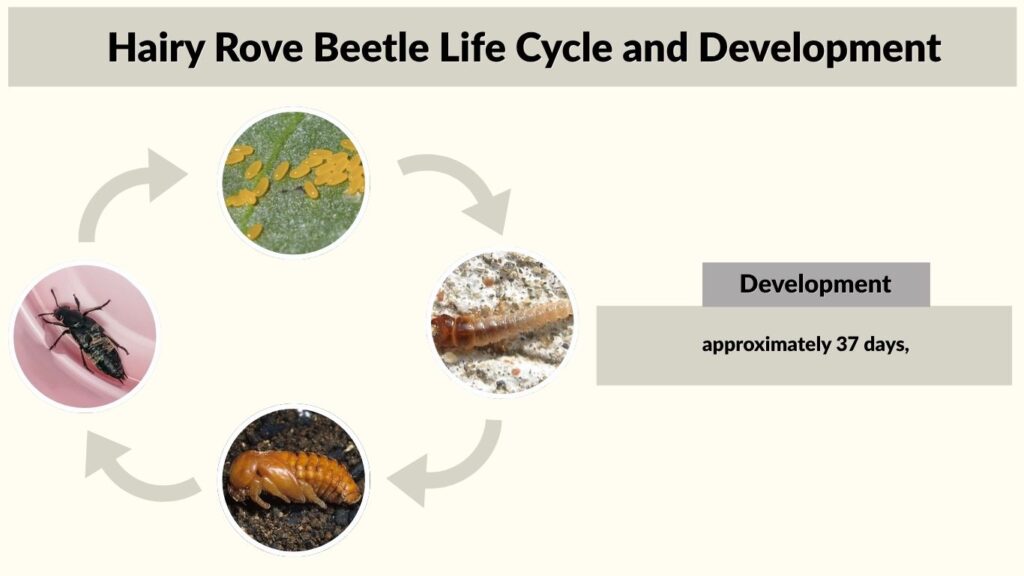
The hairy rove beetle undergoes complete metamorphosis, passing through four developmental stages: egg, larva, pupa, and adult.
Development depends heavily on environmental temperature and food availability. Under some studied conditions, the complete process takes approximately 37 days, although it can be considerably longer or shorter.
1. Egg Stage
Female hairy rove beetles deposit small, milky-white eggs in suitable environments associated with decomposing material.
The eggs measure approximately 2–3 millimeters long and generally hatch after three to four days under favorable conditions.
Well-fed females can produce numerous eggs throughout their adult lives, supporting population growth when food is abundant.
2. Larval Stage
Hairy rove beetle larvae have elongated, cylindrical bodies with well-developed legs and powerful jaws.
Their coloration ranges from brown to nearly black, depending on developmental stage and body region.
Larvae undergo three growth stages called instars. Mature larvae can reach approximately 25 millimeters in length.
Under some laboratory conditions, larval development takes around 14 days.
3. Pupal Stage
After completing larval development, the beetle enters the pupal stage.
During this period, its body transforms into the adult form. The insect generally remains inactive while its internal structures develop.
Pupal development may take approximately 16 days under certain conditions.
4. Adult Stage
After emerging from the pupa, the adult beetle develops its characteristic black coloration and pale hairy bands.
Adults actively search for food, reproduce, and disperse to suitable habitats.
The complete development period varies significantly. Research has recorded average development times ranging from about 22 days at 30°C to 122 days at 15°C. Therefore, the commonly cited 37-day life cycle is not universal.
Are Hairy Rove Beetles Poisonous or Dangerous?
Hairy rove beetles are not generally considered dangerous to humans. However, they possess defensive adaptations that protect them from predators.
These insects have abdominal glands that release defensive chemicals. The secretions can repel predators and may cause irritation through direct contact.
They should not be confused with certain Paederus rove beetles, which can cause significant skin irritation when crushed.
Can a Hairy Rove Beetle Bite?
Yes, a hairy rove beetle can bite if it is handled roughly, trapped against the skin, or threatened.
Its strong mandibles may produce a painful pinch, but the species is not known for injecting medically significant venom.
If bitten:
- Wash the affected area with soap and clean water.
- Apply a cold compress if swelling or discomfort develops.
- Avoid scratching or further irritating the skin.
- Seek medical attention if severe pain, spreading redness, or allergic symptoms occur.
The best prevention is to avoid handling these beetles with bare hands.
Why Are Hairy Rove Beetles in Your House?
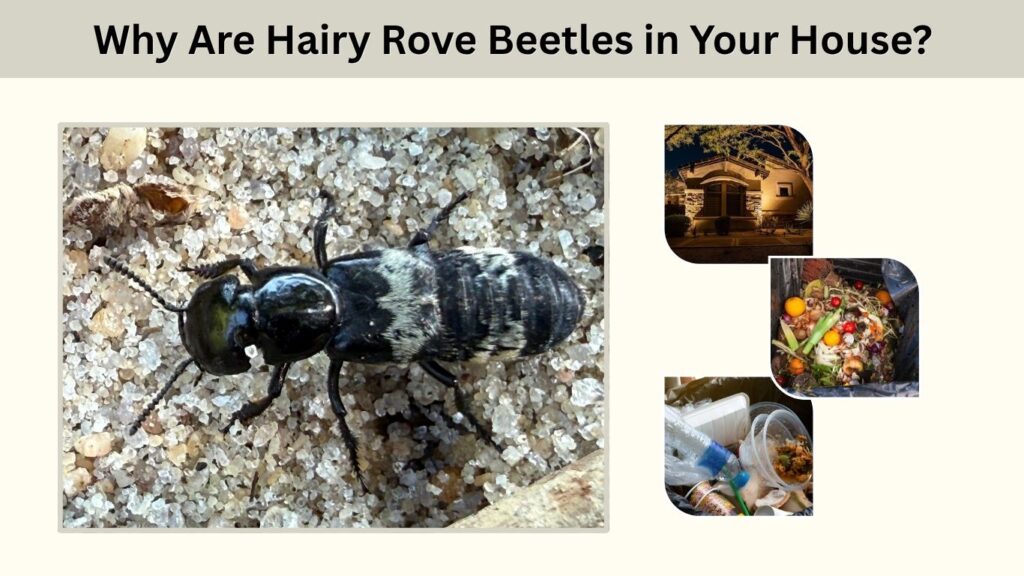
Occasionally, hairy rove beetles enter homes while searching for shelter or moving toward artificial lighting. Their presence does not automatically indicate a household infestation.
However, repeated sightings may suggest a nearby food source, particularly decomposing organic matter.
How to Get Rid of Hairy Rove Beetles in Your House
If you discover these insects indoors, consider these steps:
- Remove individual beetles: Capture them using a container and release them outdoors.
- Inspect possible food sources: Check for dead rodents or other decomposing animal material.
- Seal entry points: Repair damaged window screens and close gaps around doors.
- Manage outdoor lighting: Reduce unnecessary lights near entrances.
- Maintain cleanliness: Remove decaying organic waste near your property.
Hairy rove beetles generally do not damage furniture, clothing, or wooden structures. Eliminating the source attracting them is usually more effective than applying insecticides throughout the house.
Hairy Rove Beetle in Forensic Entomology
Hairy rove beetles are important in forensic entomology because they frequently appear around decomposing animal remains.
Scientists study their arrival patterns, feeding behavior, and development to gather information about decomposition and the insects associated with a body.
When Do Hairy Rove Beetles Arrive on a Corpse?
Hairy rove beetles may arrive after flies have colonized a body because fly larvae provide a valuable food source.
Under some warm-weather conditions, researchers have documented adults arriving as early as two days after death.
However, this is not a fixed timeline. Arrival depends on temperature, geographic location, habitat, season, and the accessibility of remains.
Why Are They Important in Forensic Investigations?
Forensic entomologists may examine hairy rove beetles to:
- Study insect succession during decomposition.
- Estimate developmental age using temperature-based models.
- Supplement estimates of the postmortem interval.
- Understand predator interactions within decomposing remains.
Their larvae can provide additional developmental evidence when early-arriving fly species are no longer present. Nevertheless, accurate estimates require multiple observations and environmental information rather than relying on beetle presence alone.
FAQs
1. Are Hairy Rove Beetles Harmful to Humans?
Hairy rove beetles are generally harmless when left undisturbed. They can deliver a painful bite and release defensive chemicals, so direct handling should be avoided.
2. Can Hairy Rove Beetles Fly?
Yes. Hairy rove beetles possess functional wings beneath their short wing covers. They can fly between habitats while searching for food and suitable breeding sites.
3. How Long Do Hairy Rove Beetles Live?
Their lifespan depends on environmental conditions and available food. Development from egg to adult may take around 37 days under some conditions, but this does not include the adult lifespan.
4. Why Are Hairy Rove Beetles Found Around Dead Animals?
Dead animals attract flies that lay eggs and produce maggots. Hairy rove beetles visit these environments primarily to hunt the abundant fly larvae.
5. Are Hairy Rove Beetles Beneficial?
Yes. Hairy rove beetles are beneficial predators that help control certain fly populations. They also contribute to decomposition ecosystems and provide useful evidence in forensic entomology.
