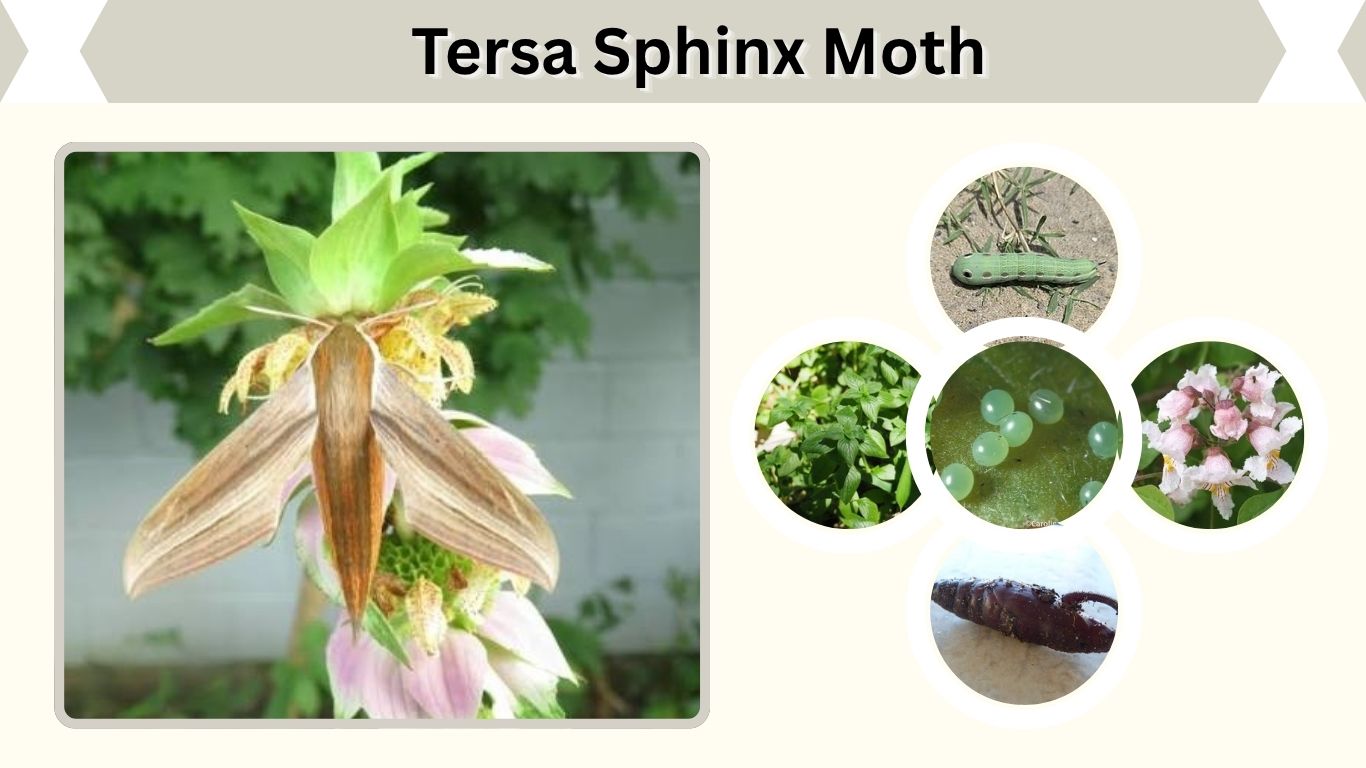
The Tersa Sphinx Moth (Xylophanes tersa) is a striking member of the sphinx moth family, famous for its streamlined adult shape and caterpillar covered with dramatic eye-like markings. It occurs widely through the Americas and is especially familiar in Florida, Texas, and other warm regions. Despite its intimidating caterpillar appearance, the Tersa Sphinx is not considered dangerous or poisonous. Its larvae feed on several garden and native plants, while adults visit flowers for nectar, often hovering in a way that resembles a tiny hummingbird.
What Is a Tersa Sphinx Moth?
The Tersa Sphinx belongs to the family Sphingidae, commonly known as sphinx or hawk moths. Its scientific name is Xylophanes tersa. Adults have long, narrow wings and a pointed abdomen that give them a fast, aerodynamic appearance.
Tersa Sphinx Moth Identification
Adult Tersa Sphinx moths typically have:
- A wingspan of about 2⅜–3⅛ inches (6–8 cm)
- Long, narrow forewings
- Pale brown forewings
- Several dark lengthwise lines
- Lavender-gray coloration near the wing bases
- Dark brown hindwings
- Pale wedge-shaped markings on the hindwings
- A long, tapered abdomen
- Rapid, powerful flight
Adults begin feeding around sunset and obtain nectar from flowers, including deep-throated blossoms.
Is the Tersa Sphinx Moth Rare?
The Tersa Sphinx is not considered globally rare. Its conservation ranking indicates that the species is secure overall.
However, it can appear uncommon in northern areas near the edge of its range. It is much more regularly encountered in warm southern regions such as Florida.
A sighting farther north may therefore seem unusual even though the species itself is not endangered.
Tersa Sphinx Moth Caterpillar
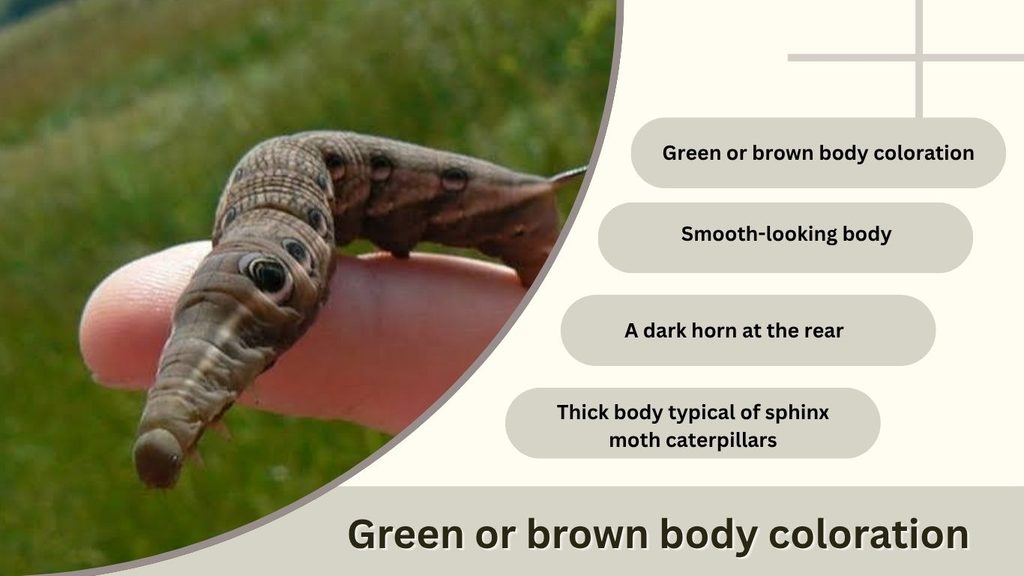
The Tersa Sphinx caterpillar is arguably more visually dramatic than the adult moth. Large eye-like markings along its sides can make the caterpillar appear much larger or more threatening to potential predators.
Caterpillars occur in both green and brown forms.
How to Identify the Caterpillar
Look for:
- Green or brown body coloration
- One especially large eyespot near the front
- Several smaller eyespots along each side
- Pale stripe running through the eyespots
- Smooth-looking body
- A dark horn at the rear
- Thick body typical of sphinx moth caterpillars
The large markings are false eyes rather than the caterpillar’s actual eyes.
When disturbed, the larva may pull its head inward, making the enlarged front section and eyespots resemble the head of a snake or another larger animal.
Is a Tersa Sphinx Caterpillar Poisonous?
No. The Tersa Sphinx caterpillar is not considered poisonous or venomous.
Its rear horn can look threatening, but it is not a stinger. The eyespots are also defensive visual markings rather than dangerous structures.
It is still better to avoid unnecessarily handling wildlife, but finding one on a garden plant is generally not a safety concern.
Tersa Sphinx Moth Host Plants and Diet
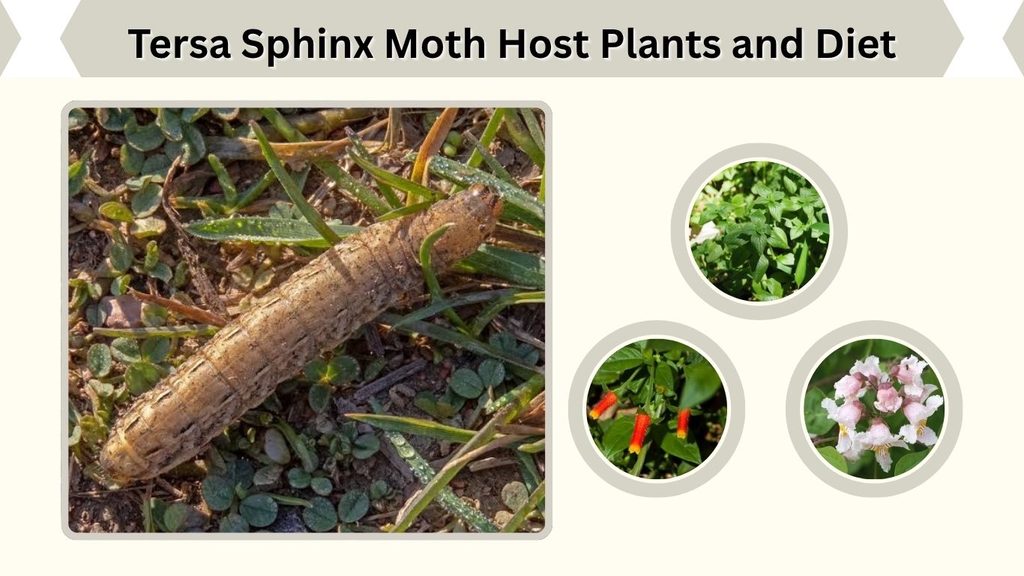
Tersa Sphinx caterpillars feed on specific host plants, while adults consume flower nectar. Gardeners frequently discover larvae on ornamental Pentas, making this species particularly noticeable in butterfly and pollinator gardens.
Tersa Sphinx Caterpillar Host Plants
Known host plants include:
- Pentas or starclusters
- Smooth buttonplant
- Borreria species
- Manettia species
- Catalpa
- Virginia buttonweed
Many of the caterpillar’s favored plants belong to the coffee or madder family, Rubiaceae.
What Do Adult Tersa Sphinx Moths Eat?
Adults drink nectar from flowers.
They are particularly suited to flowers with long or deep tubes because sphinx moths possess an elongated proboscis for reaching nectar.
Adults often begin feeding around dusk and may hover in front of flowers instead of landing completely. Honeysuckle is among the documented nectar sources.
Tersa Sphinx Moth Life Cycle
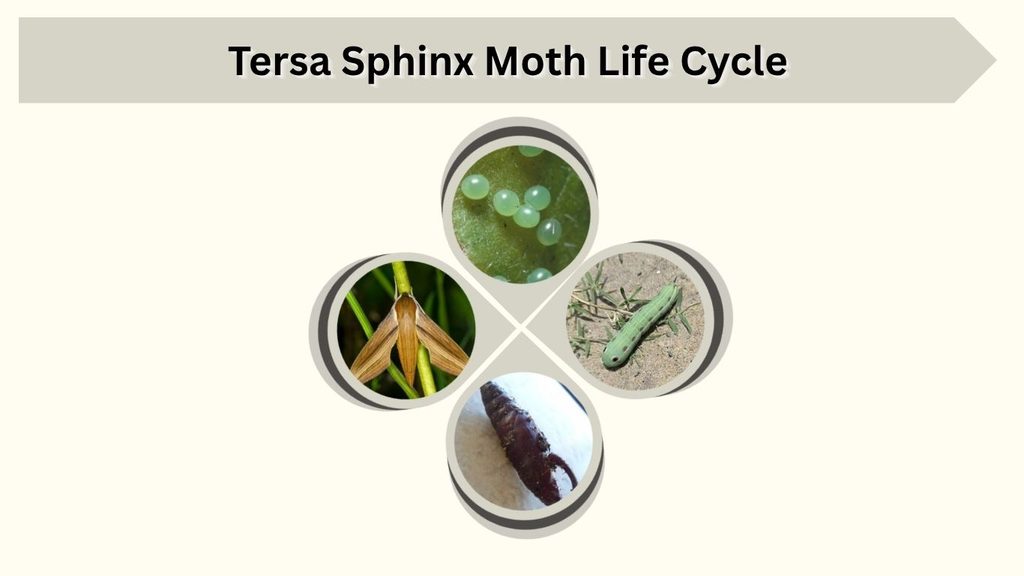
Like other moths, the Tersa Sphinx undergoes complete metamorphosis. Its development passes through four major stages before the adult moth emerges.
Warm climates may allow multiple generations within a single year.
Life Cycle Stages
The life cycle includes:
- Egg – A female places eggs on suitable host plants.
- Larva – The caterpillar feeds heavily and grows through several stages.
- Pupa – The mature caterpillar leaves its food plant and pupates.
- Adult moth – The moth emerges, mates, and begins another generation.
In northern parts of its range, there is generally one main brood during the warmer months. Florida and Louisiana can support several broods over a much longer season.
Tersa Sphinx Moth Pupa and Cocoon
When fully grown, the caterpillar leaves its host plant and pupates in loose soil.
People sometimes refer to this stage as a “cocoon,” but the pupa itself is more accurately described as a pupa rather than the prominent silken cocoon produced by some other moth families.
If you are raising a caterpillar, access to suitable loose substrate is important when it becomes ready to pupate.
Tersa Sphinx Moth Range
The species has an extensive range through the Americas. It is especially associated with warmer climates, although individuals can move considerably farther north during favorable seasons.
Where Are Tersa Sphinx Moths Found?
Their recorded range includes:
- Florida
- Texas
- Arizona
- New Mexico
- Much of the southeastern United States
- North Carolina
- Areas northward to Massachusetts
- Mexico
- West Indies
- Central America
- South America as far as Argentina
In the United States, the species is resident in warmer southern areas and can migrate north during the warmer months.
Tersa Sphinx Moth in Florida and Texas
Florida is one of the easiest places to encounter this moth because warm temperatures permit several generations.
Caterpillars are regularly found on Pentas in Florida gardens, and verified Florida sightings continue to be documented.
Texas also lies within its regular range. Warm conditions and abundant flowering plants provide habitat for both larvae and adults.
Is the Tersa Sphinx Moth Dangerous?
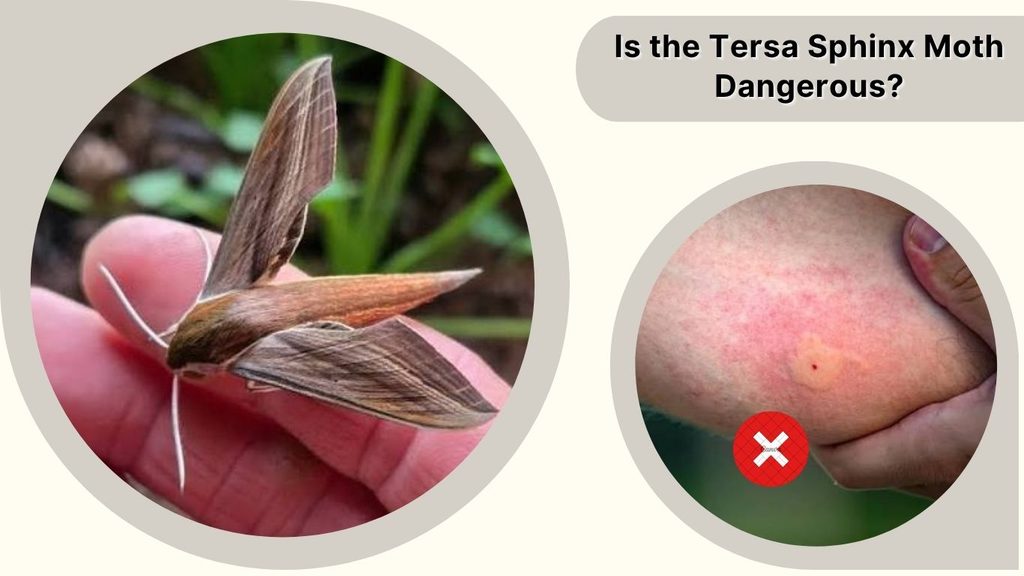
Despite its unusual appearance, the Tersa Sphinx presents little threat to people.
Adult moths do not have biting mouthparts designed to attack humans, and the caterpillar’s horn is harmless.
Does a Tersa Sphinx Moth Bite?
Tersa Sphinx moths:
- Do not normally bite humans
- Do not sting
- Are not venomous
- Are not considered poisonous
- Do not have a dangerous caterpillar horn
- Pose little risk when observed in gardens
The caterpillars can eat foliage from host plants, but small numbers normally cause only localized feeding damage.
Tersa Sphinx vs Hummingbird Moth
The Tersa Sphinx is sometimes informally compared with a hummingbird because of its rapid flight and hovering feeding style.
However, “hummingbird moth” is commonly used for certain clearwing sphinx moths, especially species in the genus Hemaris.
How They Differ
The Tersa Sphinx has long brown wings with strong lengthwise markings and usually becomes active around dusk.
Typical hummingbird clearwing moths have partially transparent wings and may be active during daylight.
Both belong to the sphinx moth family and can hover while drinking nectar, which explains the visual similarity.
Tersa Sphinx Moth Meaning and Symbolism
There is no scientifically established spiritual meaning associated with the Tersa Sphinx Moth. Symbolic interpretations come from personal beliefs, folklore, or modern spiritual traditions rather than entomology.
People sometimes associate sphinx moths with transformation, adaptation, change, persistence, or mystery because moths undergo dramatic metamorphosis from caterpillar to adult.
These interpretations are cultural or personal rather than biological facts.
FAQs
1. Is a Tersa Sphinx Moth dangerous?
No. Tersa Sphinx moths are not considered dangerous. Adults do not sting, and their caterpillars are neither venomous nor equipped with a dangerous horn.
2. Are Tersa Sphinx caterpillars poisonous?
No. Their dramatic eyespots and rear horn are defensive features that make them appear threatening, but they are not poisonous.
3. What do Tersa Sphinx caterpillars eat?
They feed on plants including Pentas, smooth buttonplant, Borreria, Manettia, Catalpa, and Virginia buttonweed.
4. Where does a Tersa Sphinx caterpillar pupate?
A mature caterpillar leaves its host plant and pupates in loose soil before eventually emerging as an adult moth.
5. Is the Tersa Sphinx Moth rare?
Not globally. The species is considered secure overall, although sightings can be uncommon near the northern limits of its range.