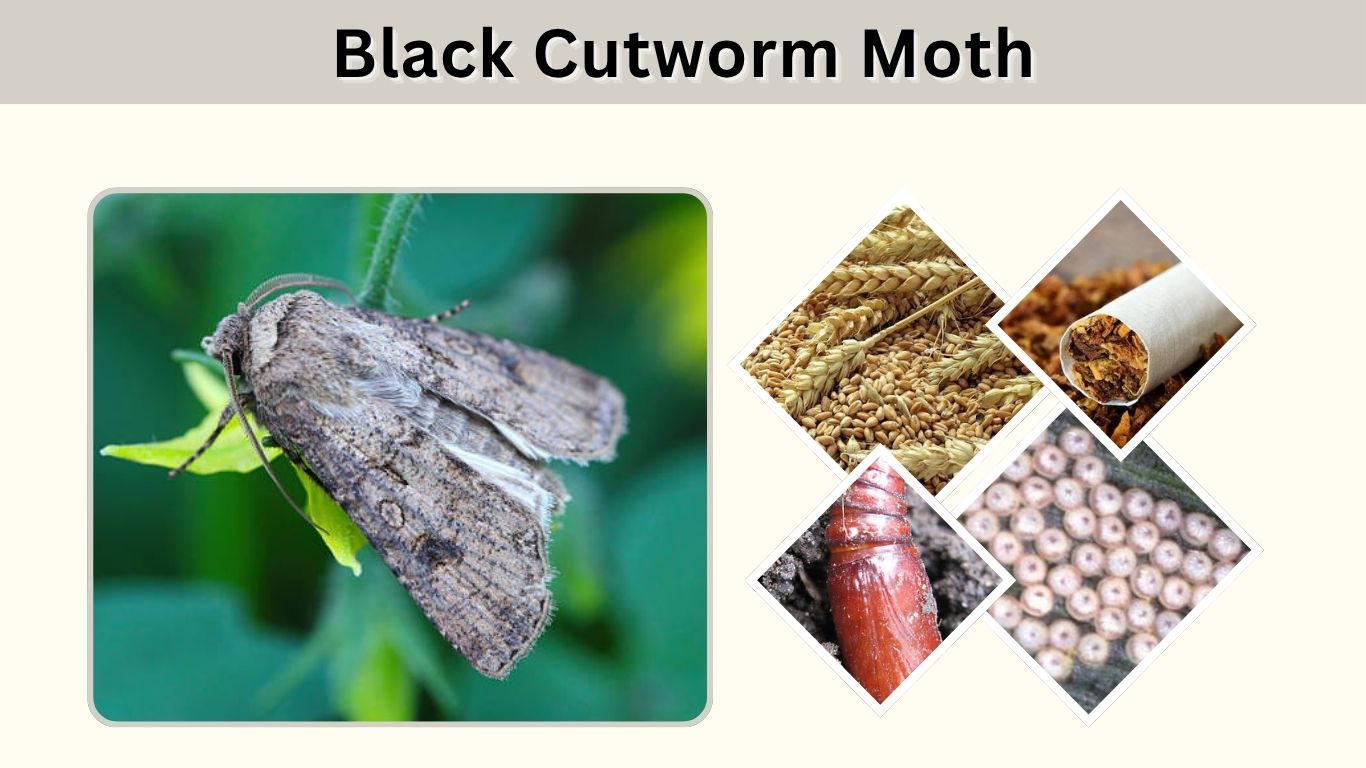
The black cutworm moth (Agrotis ipsilon) is a dark, nocturnal moth best known as the adult stage of the destructive black cutworm caterpillar. Adults themselves do not cut crops, but females lay eggs that develop into larvae capable of damaging corn, vegetables, grasses, and young seedlings. The moth is recognized by its brownish-black forewings, pale hindwings, and distinctive dagger-shaped wing markings. It is also a strong seasonal migrant. This guide covers identification, activity, caterpillars, migration, diet, reproduction, pheromone trapping, and life cycle.
What Is a Black Cutworm Moth?
The black cutworm moth is a member of the family Noctuidae and occurs across a remarkably broad geographic range. It is primarily active at night and often remains hidden during daylight. Agricultural interest focuses mainly on its caterpillars because older larvae can sever young plants near ground level, sometimes causing substantial losses in newly planted fields.
Black Cutworm Moth Identification
Look for these characteristics:
- Scientific name: Agrotis ipsilon
- Family: Noctuidae
- Dark brown to almost black forewings
- Paler outer portion of the forewing
- Small black dagger-shaped mark on each forewing
- Light-colored hindwings
- Brown tint near the hindwing margins
- Wingspan generally around 1.25–2 inches
- Wings folded over the body while resting
- Primarily nocturnal behavior
The dagger-like marking and contrast between darker inner and lighter outer portions of the forewings are particularly useful identification features.
Male vs. Female Black Cutworm Moth
Male and female black cutworm moths look broadly similar without close examination. Their most important behavioral difference concerns reproduction.
Females release sex pheromones that attract males and later deposit eggs on suitable vegetation or plant debris. Synthetic versions of these pheromones are used in agricultural traps to detect migrating male moths.
Black Cutworm Caterpillar Identification
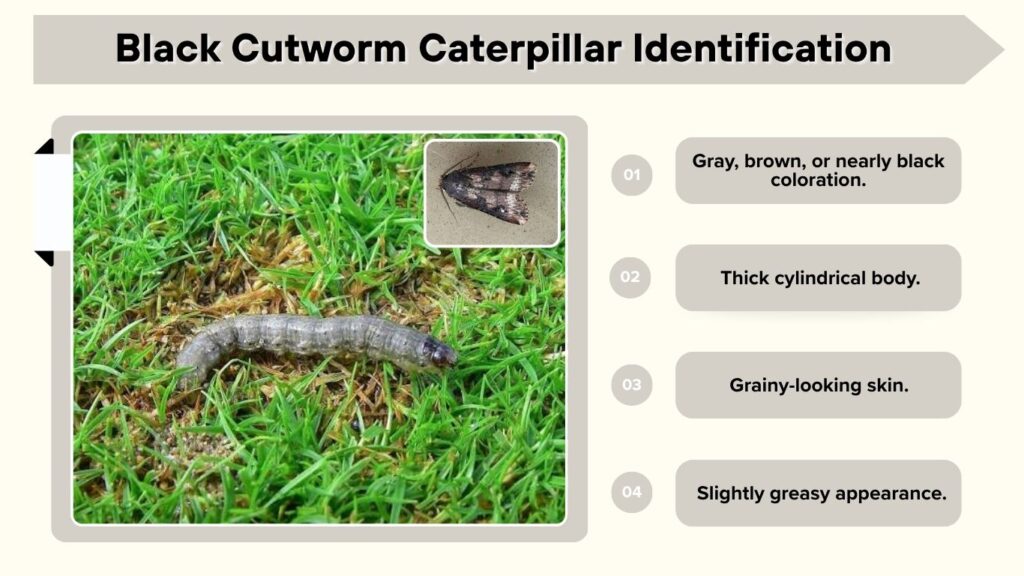
The black cutworm caterpillar is considerably more important as a crop pest than the adult moth. Young larvae initially feed on foliage, while larger caterpillars hide around the soil during daylight and emerge at night. Older larvae can chew through the stems of young plants near ground level, which gives cutworms their familiar name.
What Does a Black Cutworm Caterpillar Look Like?
Important features include:
- Gray, brown, or nearly black coloration
- Thick cylindrical body
- Grainy-looking skin
- Slightly greasy appearance
- Pale longitudinal stripes
- Numerous small dark bumps
- Up to roughly 1.5–2 inches when mature
- Usually curls into a C-shape when disturbed
- Often hides beneath soil or plant debris during daylight
Black cutworm larvae have paired bumps on each abdominal segment that can help distinguish them from similar cutworm species.
Why Are Black Cutworms Harmful?
Young cutworms may scrape or chew leaves without immediately killing a plant. As they become larger, their feeding behavior changes.
Older larvae frequently attack the stem near the soil line. A young corn or vegetable plant can consequently appear as though somebody clipped it with scissors. Severe damage is most likely when caterpillars and vulnerable seedlings occur together.
Black Cutworm Moth Activity and Migration
Black cutworm moths are capable migrants, and seasonal movement plays an important role in outbreaks. In northern parts of the United States, damaging spring populations often originate from moths arriving from warmer southern areas rather than from large numbers successfully overwintering locally. Their movement can cover long distances with favorable weather systems.
When Are Black Cutworm Moths Active?
Black cutworm moths are:
- Primarily active after dark
- More likely to fly during favorable warm conditions
- Attracted to certain lights
- Active during mating and egg-laying periods
- Capable of long-distance seasonal movement
- Monitored particularly carefully during spring migration
- Able to produce multiple generations in suitable climates
In northern agricultural areas, monitoring spring moth flights can help predict when damaging caterpillars may appear later.
Migrating Black Cutworm Moths
Long-distance migration is one of the most notable aspects of Agrotis ipsilon. Research has documented substantial migratory movement in North America and other regions.
Moths moving northward during spring can arrive in agricultural areas before crops have fully emerged. Females may then lay eggs around weeds, grasses, plant debris, and low vegetation, allowing larvae to develop as crops begin growing.
Why Are Black Cutworm Moths in My House?
An occasional black cutworm moth may enter through an open window or door, particularly when outdoor lights are nearby. This does not normally indicate that cutworm caterpillars are breeding inside the home.
Adults are outdoor insects. Turning off unnecessary exterior lights and checking window screens can reduce accidental moth entry.
Black Cutworm Moth Life Cycle
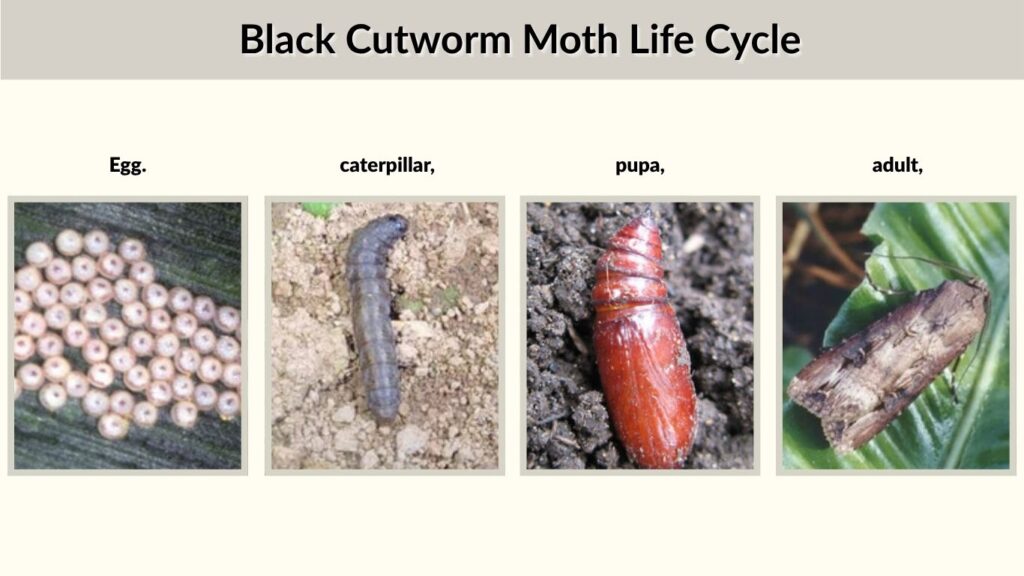
Like other moths, black cutworms undergo complete metamorphosis through egg, caterpillar, pupa, and adult stages. Temperature strongly influences developmental speed. Multiple generations can occur during favorable seasons, while seasonal migration influences when populations appear in cooler regions.
Life Cycle Stages
The development process includes:
- Egg: Females deposit pale eggs on vegetation, weeds, or plant debris.
- Young larva: Newly hatched caterpillars begin feeding on leaves.
- Older larva: Larger cutworms feed near ground level and may cut stems.
- Pupa: Mature larvae pupate in the soil.
- Adult moth: Moths emerge, mate, migrate, and reproduce.
- Next generation: Females deposit another group of eggs.
Females can produce large numbers of eggs, helping populations increase rapidly when environmental conditions are favorable.
Egg Laying
Female moths prefer locations offering suitable vegetation. Grasses, dense weeds, and plant debris can provide attractive egg-laying sites.
This can create problems when weedy fields are later planted or weeds disappear, forcing newly developed larvae to switch to crop seedlings.
Pupation
After completing several larval stages, mature black cutworms enter the soil and pupate. The adult moth eventually emerges from the pupa.
Developmental timing depends heavily on temperature, so the number of days required to complete the life cycle varies with environmental conditions.
What Do Black Cutworm Moths Eat?
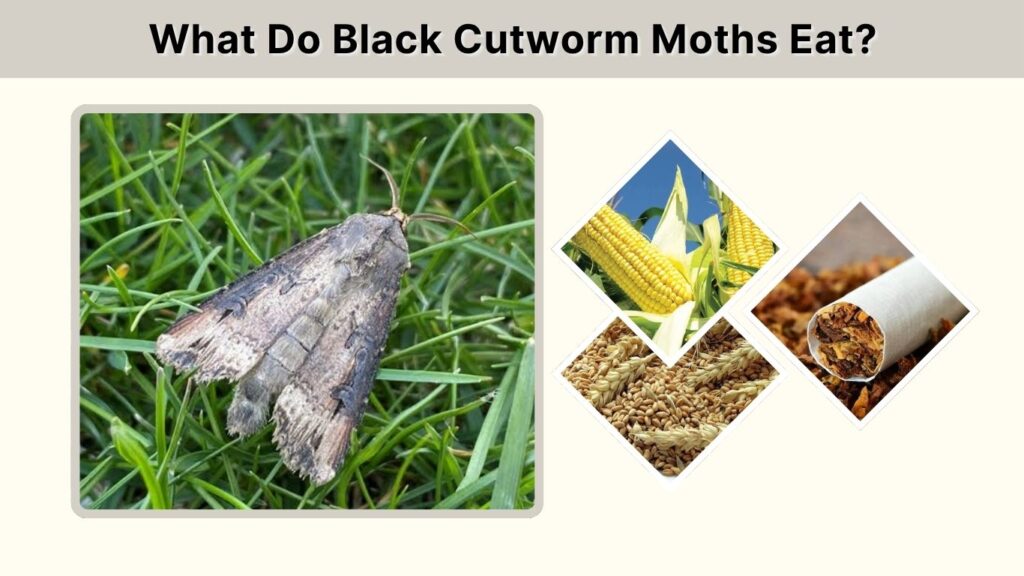
Adult and larval black cutworms have very different diets. Caterpillars possess strong chewing mouthparts and consume plant tissues, whereas adults obtain liquid food. This distinction explains why the caterpillar is considered the damaging agricultural stage while the moth is mainly important for migration and reproduction.
Common Caterpillar Host Plants
Black cutworm larvae may attack:
- Corn
- Wheat
- Tobacco
- Sweet corn
- Vegetable seedlings
- Turf grasses
- Weeds
- Grasses
- Beans
- Tomatoes
- Other tender young plants
The caterpillars are particularly damaging when large larvae encounter small, recently emerged plants.
What Do Adult Black Cutworm Moths Eat?
Adult moths consume liquid sources rather than chewing leaves like caterpillars. Their feeding behavior supports flight, reproduction, and migration.
Because adults do not cut seedlings, finding a moth near a plant does not mean it directly caused visible stem damage. The concern is that nearby females may lay eggs that eventually produce plant-feeding larvae.
How Are Black Cutworm Moths Attracted and Monitored?
Agricultural monitoring concentrates on adult males because their arrival can provide an early warning that larvae could appear later. Pheromone traps are particularly useful during spring migration. Blacklight traps can also collect moths, although their effectiveness and predictive value differ from pheromone trapping.
What Attracts Black Cutworm Moths?
Adults may respond to:
- Female sex pheromones
- Synthetic pheromone lures
- Blacklight traps
- Some outdoor lighting
- Suitable mating environments
- Vegetation favorable for egg laying
Pheromone traps specifically attract male black cutworm moths using a synthetic version of the female’s chemical signal.
Why Use Pheromone Traps?
Capturing migrating males allows growers to determine when significant moth flights occur. This information can then help estimate when eggs may hatch and when damaging larval stages could develop.
However, moths appearing in a trap do not automatically mean a field will suffer serious crop damage. Fields still need to be checked for caterpillars and actual plant injury.
FAQs
1. What is the scientific name of the black cutworm moth?
The scientific name is Agrotis ipsilon. It belongs to the moth family Noctuidae. The species occurs widely and is particularly important agriculturally because its caterpillars can damage corn, vegetables, grasses, and other young plants.
2. How do you identify a black cutworm moth?
Look for dark brown to black forewings with a lighter outer section and a distinctive dark dagger-shaped mark. The hindwings are much paler. Adults generally have a wingspan of roughly 1.25–2 inches.
3. Do black cutworm moths damage plants?
The adult moth itself does not produce the characteristic cutting damage. Its caterpillars are responsible. Large larvae hide near the soil during daylight and emerge to chew stems and other plant tissues, particularly on young seedlings.
4. Why do black cutworm moths migrate?
Migration allows black cutworm moth populations to seasonally colonize areas where winter conditions may prevent large local populations from surviving. Spring migrants can travel north from warmer regions and establish new generations in agricultural areas.
5. What attracts black cutworm moths?
Male black cutworm moths are strongly attracted to female sex pheromones, which is why synthetic pheromone lures are used for monitoring. Adults may also be caught in blacklight traps, although pheromone traps are particularly useful for detecting important spring flights.