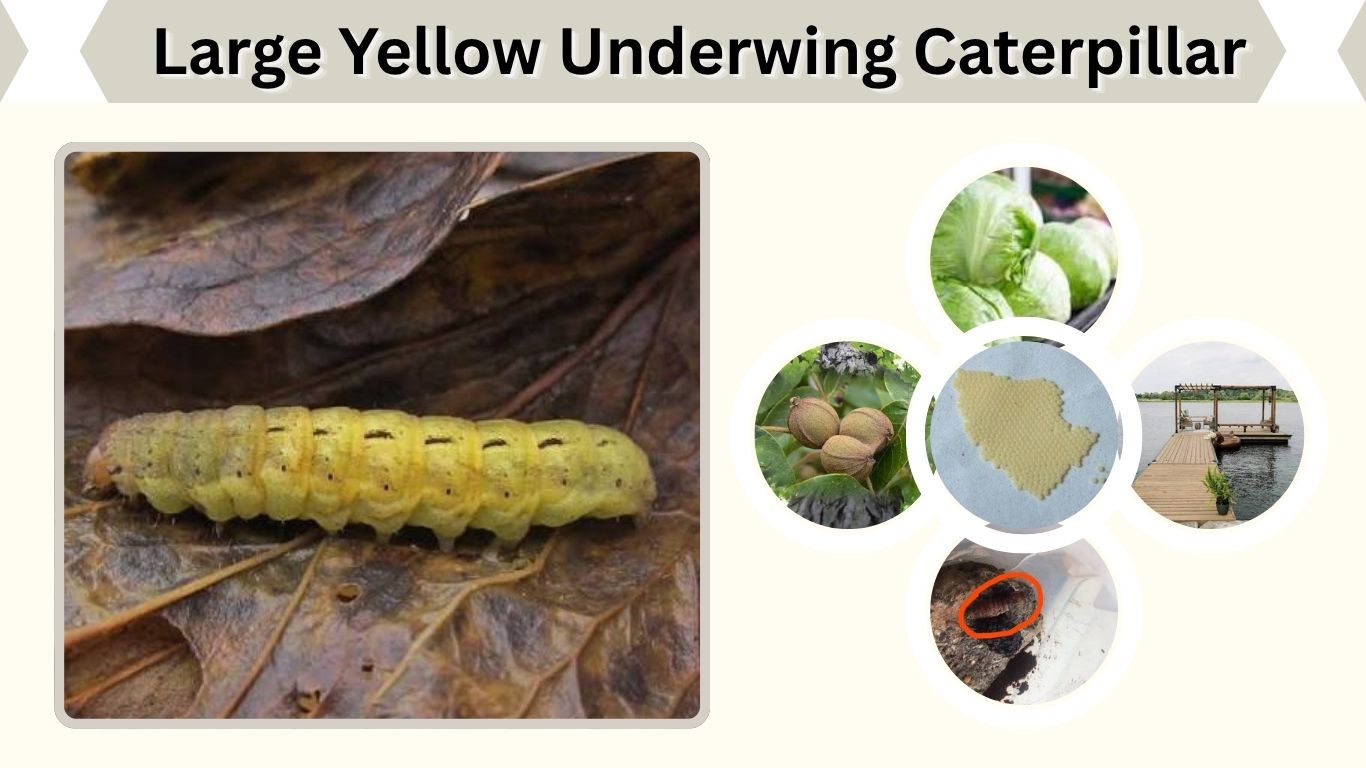
The large yellow underwing caterpillar is the larval stage of the large yellow underwing moth, Noctua pronuba. Often called a cutworm, this caterpillar is usually brown, gray, or greenish rather than bright yellow, despite its name. It spends much of its time near the soil surface and feeds on grasses, garden plants, weeds, and seedlings, especially at night. This guide explains how to identify a yellow underwing caterpillar, what it eats, whether it is poisonous, its life cycle, habitat, garden impact, and basic care.
What Is a Large Yellow Underwing Caterpillar?
The large yellow underwing caterpillar belongs to the moth family Noctuidae. Its common name comes from the adult moth, which has bright yellow-orange hindwings hidden beneath brown forewings. The caterpillar is a widespread plant feeder and commonly behaves like a cutworm, hiding during daylight and emerging after dark to feed close to the ground.
Large Yellow Underwing Caterpillar Identification
Look for these common characteristics:
- Brown, gray, greenish, or occasionally reddish body
- Smooth appearance with very fine hairs
- Several darker markings along the back
- Pale line running along each side
- Brownish head
- Thick cylindrical body
- Caterpillar may curl into a C-shape when disturbed
- Mature larvae can reach around 4–5 cm long
- Usually discovered near soil, grass, or low-growing plants
Color can vary considerably between individual caterpillars, so identification should not rely on color alone.
Why Is It Called Yellow Underwing?
The caterpillar itself is normally not yellow. The name refers to the adult large yellow underwing moth.
When resting, the adult’s brown forewings conceal its colorful hindwings. If disturbed, it suddenly exposes bright yellow-orange hindwings marked with dark bands. This flash of color may temporarily surprise predators and give the moth an opportunity to escape.
Where Do Large Yellow Underwing Caterpillars Live?
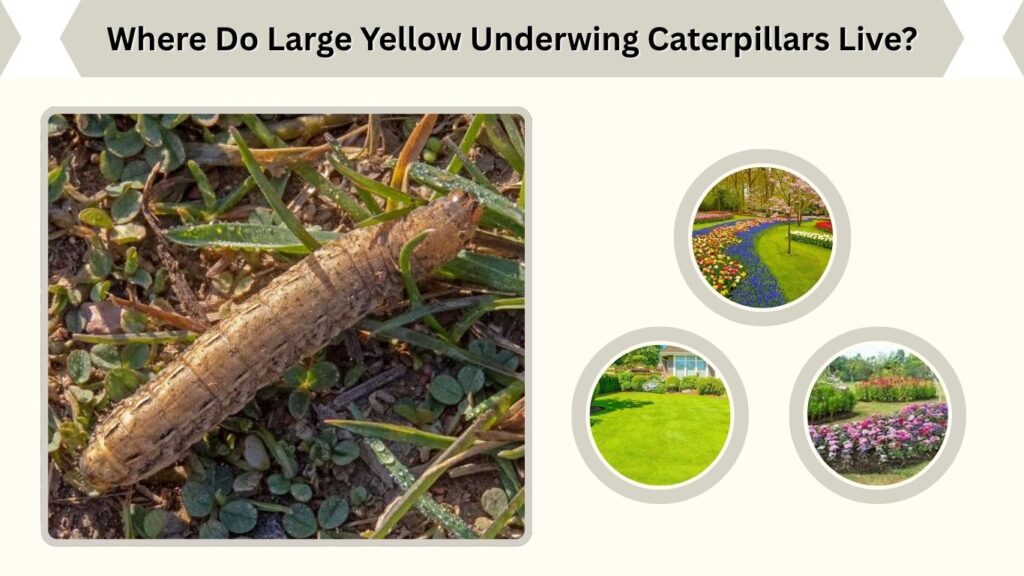
Large yellow underwing caterpillars thrive in a wide range of open and disturbed habitats. Because their host plants are common, they can survive around gardens, farmland, lawns, parks, roadsides, and other grassy areas. During daylight, larvae often remain hidden beneath vegetation, leaf litter, stones, or just below the soil surface before emerging at night.
Common Habitats
You may find them in:
- Gardens
- Lawns
- Flower beds
- Vegetable plots
- Agricultural fields
- Grasslands
- Meadows
- Parks
- Roadside vegetation
- Weedy areas
- Under leaves and garden debris
Their habit of hiding near the ground helps protect them from birds and other daytime predators.
Why Are They Found in Gardens?
Gardens provide both shelter and an abundant food supply. Young vegetables, weeds, grasses, and ornamental plants may all provide suitable food.
Because the larvae feed mainly at night, gardeners may notice damaged plants before finding the caterpillar responsible. Searching around the base of affected plants during evening or early morning can sometimes reveal hiding larvae.
What Do Large Yellow Underwing Caterpillars Eat?
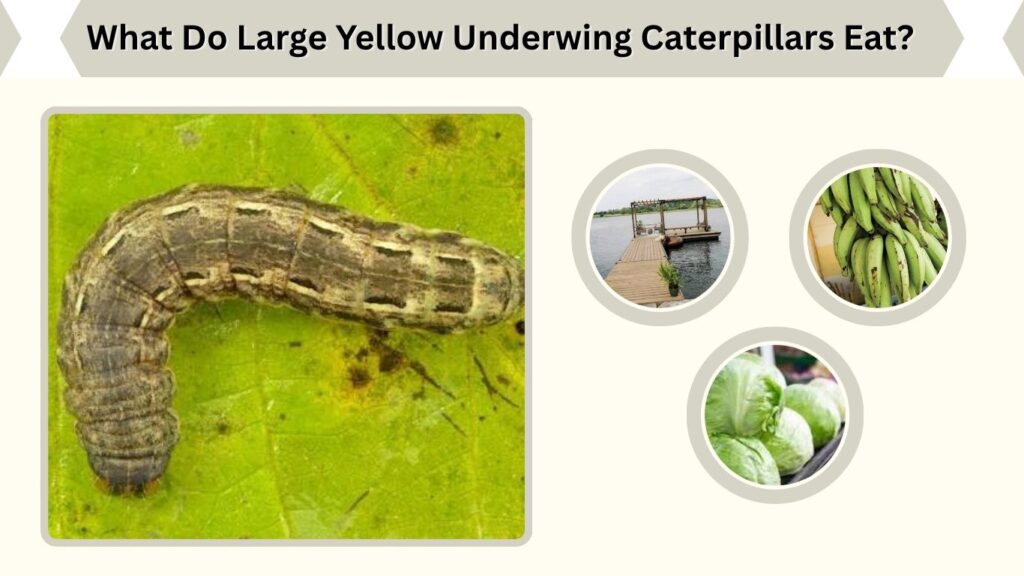
The large yellow underwing caterpillar has a broad diet and can feed on many different plants. This flexibility is one reason the species successfully occupies gardens, farmland, grasslands, and urban environments. Younger larvae may feed on leaves, while larger caterpillars can chew through stems close to ground level like traditional cutworms.
Large Yellow Underwing Caterpillar Food
Common foods include:
- Grasses
- Clover
- Dandelion
- Chickweed
- Dock
- Plantain
- Lettuce
- Cabbage
- Spinach
- Beet leaves
- Young vegetable seedlings
- Various garden weeds
- Ornamental plants
The exact plants eaten depend largely on what is available in the caterpillar’s habitat.
How Do They Feed?
The caterpillars are mainly active at night. They crawl out from protected hiding places and begin chewing leaves, stems, or low vegetation.
Large larvae may damage young plants by chewing through stems close to the soil. A seedling can sometimes collapse even when most of its leaves still look healthy.
Are They Garden Pests?
They can become garden pests when numerous caterpillars are present. Seedlings are particularly vulnerable because a single large caterpillar can remove significant amounts of tender plant material overnight.
Established plants usually tolerate limited leaf feeding better than young seedlings. Hand removal and reducing excessive garden debris can help when only a few caterpillars are present.
Are Large Yellow Underwing Caterpillars Poisonous?
Large yellow underwing caterpillars are not considered poisonous or venomous to humans. They do not possess venomous spines or stinging hairs like some caterpillar species. Their relatively smooth body also means casual contact is unlikely to cause the painful reaction associated with stinging caterpillars.
Can You Touch One?
Touching one gently is unlikely to cause problems for most people. However, handling wild caterpillars unnecessarily is best avoided because they are delicate and may become stressed or injured.
If you need to move one, allow it to crawl onto a leaf, piece of cardboard, or container rather than squeezing its body.
Do Large Yellow Underwing Caterpillars Bite?
They have chewing mouthparts designed for plant material, but they are not known for biting people defensively.
When disturbed, a caterpillar is more likely to curl its body, become still, or attempt to escape. It poses very little direct danger to humans or pets.
Large Yellow Underwing Caterpillar Life Cycle
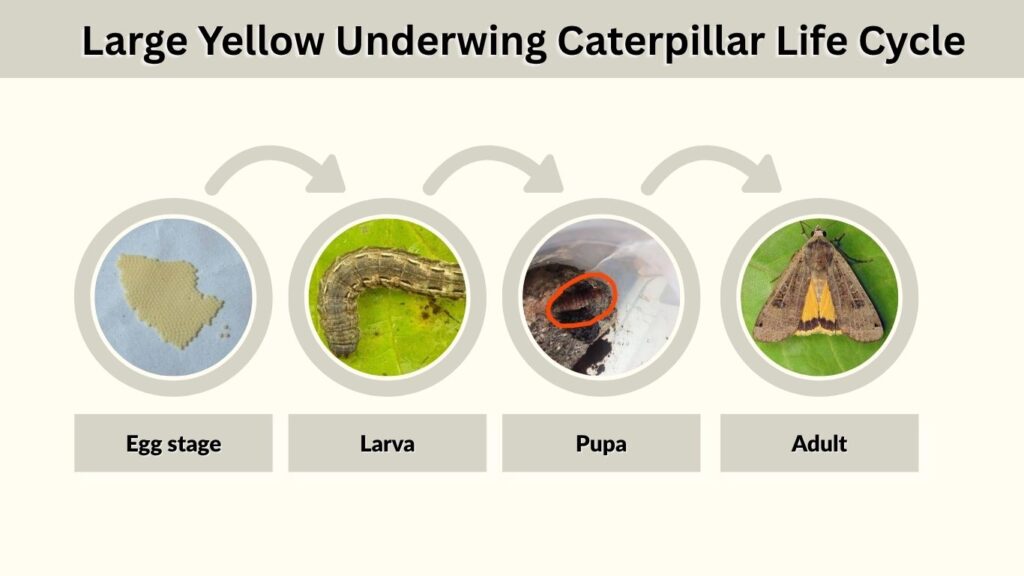
The large yellow underwing undergoes complete metamorphosis, passing through egg, larva, pupa, and adult moth stages. Its ability to continue feeding during relatively cool conditions helps distinguish its seasonal behavior from many other moth species.
Main Life Cycle Stages
The stages include:
- Egg: Females lay groups of eggs on suitable vegetation.
- Young larva: Newly hatched caterpillars begin feeding on leaves.
- Growing larva: Caterpillars molt repeatedly as they become larger.
- Mature larva: Large cutworm-like caterpillars feed mainly at night.
- Pupa: The mature caterpillar forms a pupa in or near the soil.
- Adult moth: A brown moth emerges with striking yellow-orange hindwings.
Caterpillar Development
As a caterpillar grows, it must shed its outer skin several times. Each stage between molts is called an instar.
Younger larvae are smaller and may remain higher on vegetation, whereas older caterpillars often become more strongly associated with the soil surface. Mature larvae eventually stop feeding and prepare to pupate.
Adult Large Yellow Underwing Moth
The adult is considerably more distinctive than the caterpillar. Its forewings are usually brownish, allowing it to blend into bark, soil, or dry vegetation.
When the moth opens its wings, bright yellow-orange hindwings with a dark border become visible. Adults are mainly nocturnal and may be attracted to outdoor lights.
Large Yellow Underwing Caterpillar Care
A large yellow underwing caterpillar can be temporarily kept for observation if provided with fresh food, ventilation, and suitable material for pupation. Because it is a wild insect, the best approach is to recreate conditions similar to those where it was originally found.
Basic Care Requirements
For short-term observation, provide:
- Well-ventilated container
- Fresh leaves from the plant where it was found
- Several types of suitable grasses or weeds
- A layer of pesticide-free soil
- Some dry leaves for shelter
- Moderate natural humidity
- Regular removal of waste
- Fresh food each day
- Protection from direct sunlight
- Enough soil for eventual pupation
Avoid feeding leaves collected from areas recently treated with insecticides or herbicides.
Preparing for Pupation
A mature caterpillar may stop eating and begin wandering around its container. This can indicate that pupation is approaching.
Provide several centimeters of loose soil so it can burrow. Once pupation begins, avoid repeatedly disturbing the soil. The adult moth can later emerge and should be given enough space to expand and dry its wings.
Large vs. Lesser Yellow Underwing Caterpillar
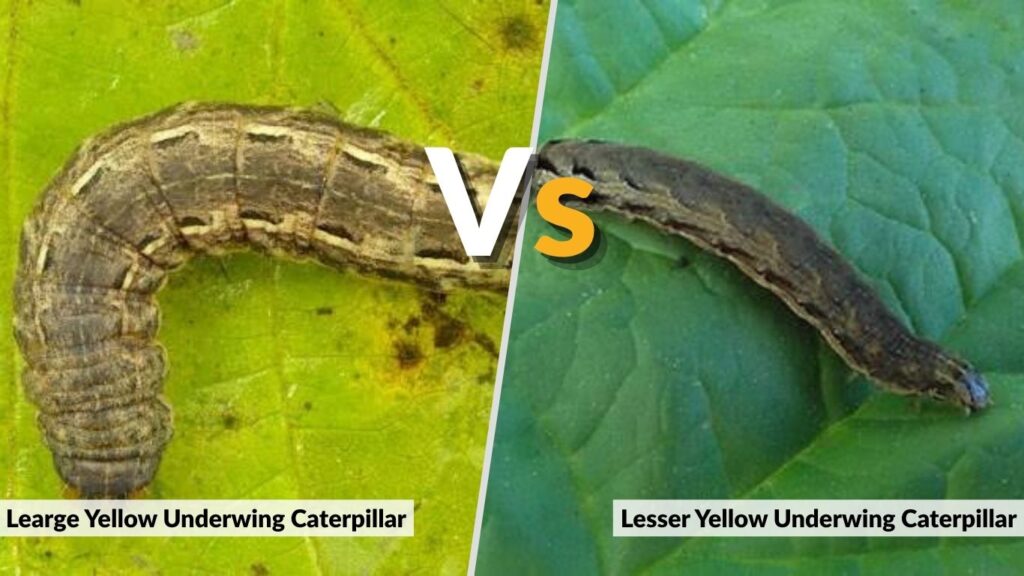
Large and lesser yellow underwing moths are related noctuid species, and their caterpillars can look very similar. Identification based solely on a casual photograph may therefore be difficult. Adult moth characteristics are often more useful for separating the species confidently.
Key Differences to Consider
When trying to identify them, consider:
- Overall caterpillar markings
- Body size
- Side stripes
- Pattern along the back
- Host plant
- Location
- Time of year
- Adult moth appearance if reared
Because larval color can vary, one trait alone is rarely enough for a confident identification.
Interesting Large Yellow Underwing Caterpillar Facts
This caterpillar’s ordinary appearance hides several adaptations that have helped the species become extremely successful.
Quick Facts
- Its scientific name is Noctua pronuba.
- It is commonly described as a cutworm.
- The caterpillar is usually not yellow.
- The adult moth has bright yellow-orange hindwings.
- Caterpillars feed primarily at night.
- They eat many different plant species.
- Mature larvae often hide near or beneath the soil.
- They curl up when disturbed.
- They are not considered venomous.
- They eventually pupate in the soil before becoming moths.
FAQs
1. What does a large yellow underwing caterpillar look like?
It is usually a thick, smooth caterpillar colored brown, gray, greenish, or reddish. Dark markings may run along the back, with lighter lines along the sides. Mature caterpillars commonly reach around 4–5 cm long and often curl into a C-shape when disturbed.
2. Are large yellow underwing caterpillars poisonous?
No. Large yellow underwing caterpillars are not considered poisonous or venomous to humans. They lack dangerous stinging spines and venom glands. They are generally harmless to handle gently, although unnecessary handling should be avoided to prevent injuring the caterpillar.
3. What do large yellow underwing caterpillars eat?
They feed on grasses, weeds, garden plants, vegetable seedlings, clover, dandelion, lettuce, cabbage, and many other plants. Their broad diet allows them to survive in gardens, agricultural fields, lawns, and natural grassy habitats.
4. Does a large yellow underwing caterpillar turn into a moth?
Yes. After completing its larval growth, the caterpillar pupates in or close to the soil. It later emerges as a large yellow underwing moth, which has brown forewings and striking yellow-orange hindwings edged with dark markings.
5. Are yellow underwing caterpillars bad for gardens?
A few caterpillars usually cause limited damage, but larger populations can harm seedlings and vegetable plants. Mature larvae may chew stems near ground level and feed on leaves overnight. Protecting young seedlings and removing caterpillars manually can reduce damage.