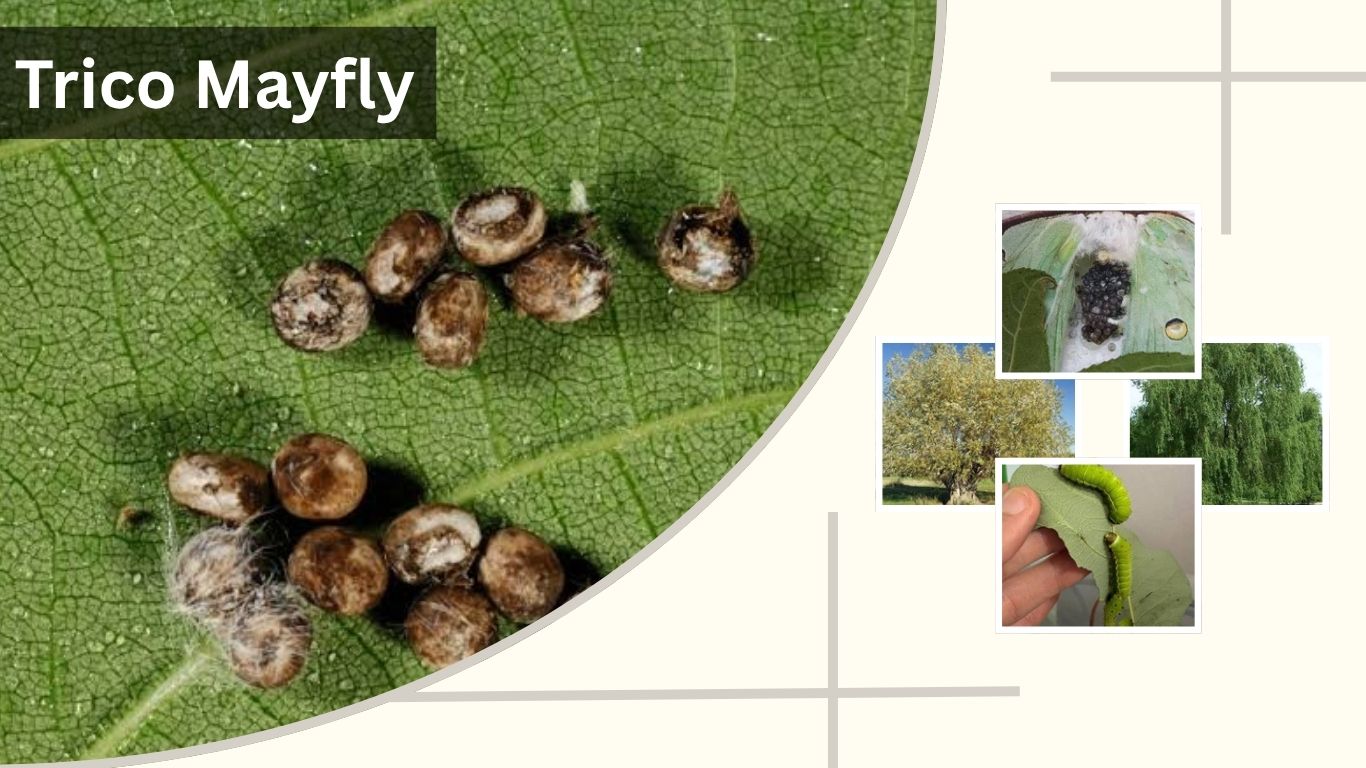
Luna moth eggs are the first stage in the life cycle of one of North America’s most recognizable moths. Female luna moths lay their eggs on or near trees that provide food for newly hatched caterpillars. The eggs are tiny, oval, and usually hatch within one to two weeks under suitable conditions. Understanding where luna moths lay eggs, what the eggs look like, and how to care for them can improve their chances of developing into healthy caterpillars.
What Do Luna Moth Eggs Look Like?
Luna moth eggs are small enough to be overlooked on leaves, branches, or the walls of a rearing container. Their color and texture can change slightly as the caterpillar develops inside.
Identification
- Shape: Rounded or slightly oval
- Size: Approximately 1.5–2 millimeters wide
- Color: White, pale gray, tan, or grayish-brown
- Surface: Smooth or slightly mottled
- Placement: Singly or in small groups
- Appearance before hatching: Often becomes darker
Luna moth eggs may look like tiny gray or white beads attached to a leaf. They do not occur inside a large silk egg sac. Instead, the female attaches each egg directly to a surface with a natural adhesive.
Where Do Luna Moths Lay Their Eggs?
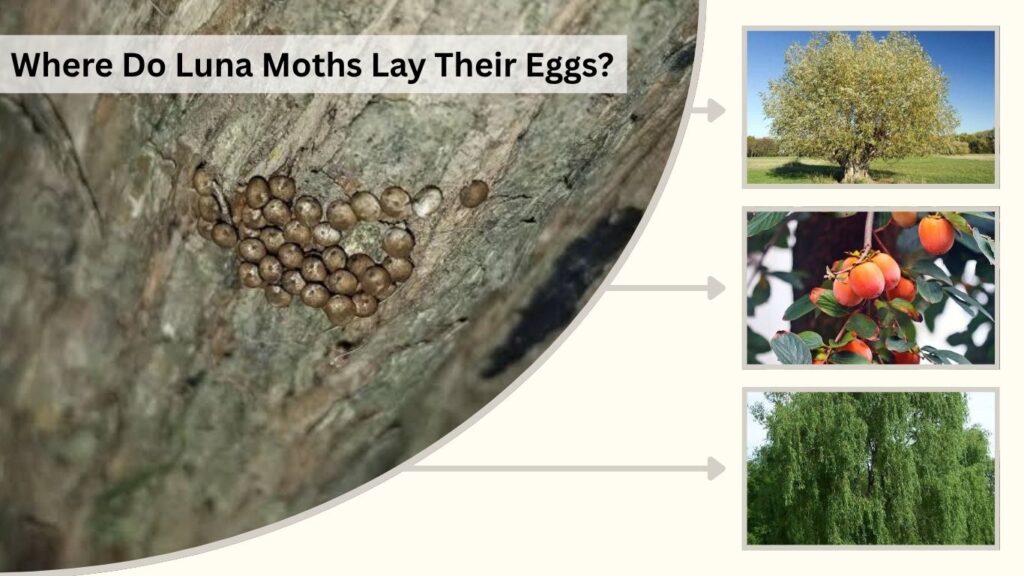
Female luna moths normally place their eggs on suitable host trees. The location allows newly hatched caterpillars to begin feeding without traveling far.
Common Egg-Laying Plants
Luna moths may lay eggs on:
- Hickory
- Walnut
- Sweetgum
- Birch
- Persimmon
- Pecan
- Sumac
- Willow
- Beech
- White oak
The preferred tree varies by region. Sweetgum and hickory are especially important in many southern areas, while birch and walnut may be more commonly used in northern locations.
Egg Placement
A female may lay eggs on the upper or lower surface of a leaf, along a twig, or on nearby vegetation. Captive females may also deposit eggs on mesh, paper, plastic, or the walls of their enclosure.
Finding eggs on an unsuitable surface does not necessarily mean they are unhealthy. After hatching, the caterpillars must simply be moved close to fresh leaves from an appropriate host tree.
How Many Eggs Does a Luna Moth Lay?
A female luna moth may lay approximately 200 to 400 eggs during her short adult life. She usually deposits them over several nights rather than laying all of them at once.
Eggs may be placed individually or in small clusters. Spreading them across different leaves and branches reduces competition between the caterpillars and makes it harder for predators to find the entire group.
Only female luna moths lay eggs. Male luna moths can be recognized by their wider, more strongly feathered antennae and slimmer abdomens.
When Do Luna Moths Lay Eggs?
Egg laying normally begins after mating. A female may start depositing eggs during the following night and continue for several days.
Adult luna moths do not eat because they lack functional mouthparts. Their brief adult stage is devoted to mating and reproduction. Most adults live for about one week, although temperature and activity can affect their exact lifespan.
In warmer parts of their range, luna moths may produce two or more generations each year. Northern populations often produce only one generation during the warmer months.
How Long Do Luna Moth Eggs Take to Hatch?
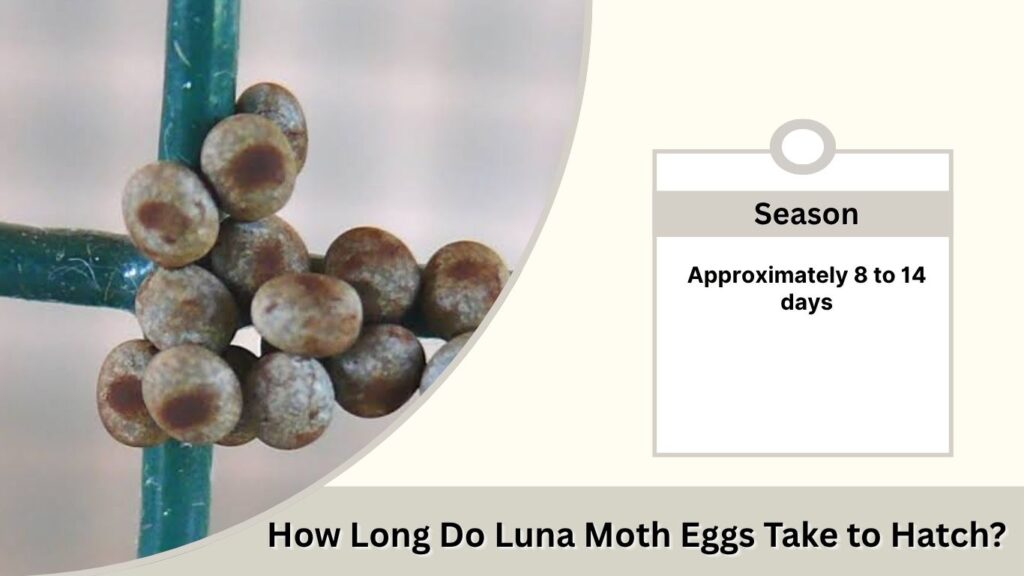
Luna moth eggs usually hatch within approximately 8 to 14 days. Warm, stable conditions may speed up development, while cooler temperatures can delay it.
| Condition | Possible effect |
| Warm, moderate temperature | Faster development |
| Cool environment | Slower hatching |
| Excessive heat | May damage embryos |
| Poor ventilation | Encourages mold |
| Heavy condensation | May cause eggs to rot |
| Fertile, healthy eggs | Gradually darken before hatching |
The eggs should not be opened or squeezed to check their development. A caterpillar will create its own opening when it is ready to emerge.
Signs That Eggs Are About to Hatch
As hatching approaches, the eggs may become darker. In some cases, the developing caterpillar can be seen through the shell.
A newly hatched luna moth caterpillar is very small and may initially appear dark, yellowish, or greenish. It normally begins exploring shortly after leaving the egg.
How to Care for Luna Moth Eggs
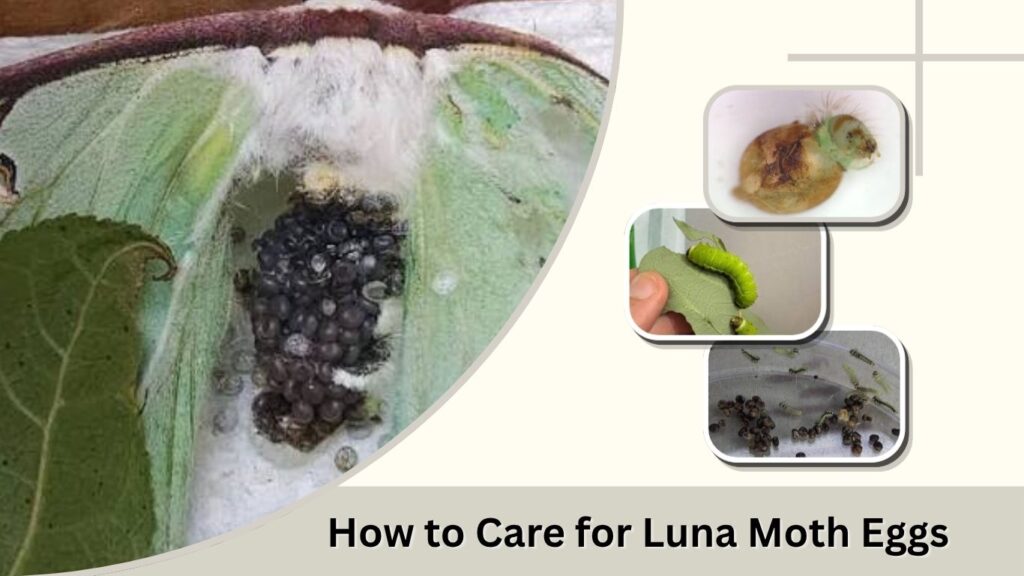
Luna moth eggs require ventilation, moderate humidity, and protection from extreme temperatures. They do not need food until the caterpillars hatch.
Choose a Ventilated Container
Place the eggs in a clean container with small ventilation holes or a fine mesh cover. The openings must allow airflow without being large enough for tiny caterpillars to escape.
A clear plastic container can make the eggs easier to observe. Avoid completely airtight containers because trapped moisture encourages mold.
Control Moisture
Luna moth eggs should not be soaked, misted heavily, or kept on wet paper towels. Normal room humidity is generally sufficient.
Remove heavy condensation from the container. Excess moisture can promote fungal growth and reduce the eggs’ chances of hatching.
Maintain a Stable Temperature
Keep the eggs away from direct sunlight, heaters, air-conditioning vents, and extremely hot windowsills. Normal indoor temperatures are usually suitable.
Avoid refrigerating luna moth eggs in an attempt to make them dormant. In colder climates, luna moths normally survive winter in the pupal stage inside cocoons, not as eggs.
Avoid Unnecessary Handling
Handle the eggs as little as possible. If they must be moved, transfer the surface to which they are attached rather than scraping them off.
Eggs attached to paper or mesh can remain in place until they hatch. The young caterpillars can then be guided onto fresh host leaves.
How to Hatch Luna Moth Eggs
Hatching luna moth eggs successfully depends on preparing food before the caterpillars emerge. Newly hatched larvae should have access to fresh host leaves as soon as possible.
Prepare the Host Plant
Use leaves from the same tree species on which the eggs were found whenever possible. Suitable choices commonly include hickory, walnut, sweetgum, birch, persimmon, and pecan.
The leaves must be:
- Fresh and healthy
- Free from pesticides
- Free from roadside pollution
- Taken from a correctly identified tree
- Replaced before they wilt
Avoid switching repeatedly between different host plants. Caterpillars that begin feeding on one tree species may refuse unfamiliar leaves later.
Transfer Newly Hatched Caterpillars
Place fresh leaves close to the eggs so the caterpillars can crawl onto them naturally. Avoid picking up tiny larvae with your fingers because they are delicate.
A soft paintbrush may be used to move a caterpillar carefully. Do not pull one from a surface if it is holding on firmly.
Raising Luna Moths from Eggs
Once the eggs hatch, the care requirements change. The caterpillars need fresh food, ventilation, cleanliness, and enough room to grow.
Feeding
Provide fresh host leaves daily or whenever the existing foliage begins to dry. Place cut stems in water to keep them fresh, but completely cover the water opening so caterpillars cannot fall inside.
Cleaning
Remove droppings, dried leaves, and uneaten plant material regularly. A dirty enclosure can develop mold or bacteria.
Do not clean while a caterpillar is molting. A molting caterpillar may remain still and attach itself to a leaf or branch for an extended period.
Providing Space
Luna moth caterpillars grow quickly and pass through five larval stages. Overcrowding can cause stress, poor ventilation, and disease.
Separate them into additional enclosures as they increase in size. Mature caterpillars may reach approximately 2½ to 3 inches long.
Fertile vs. Infertile Luna Moth Eggs
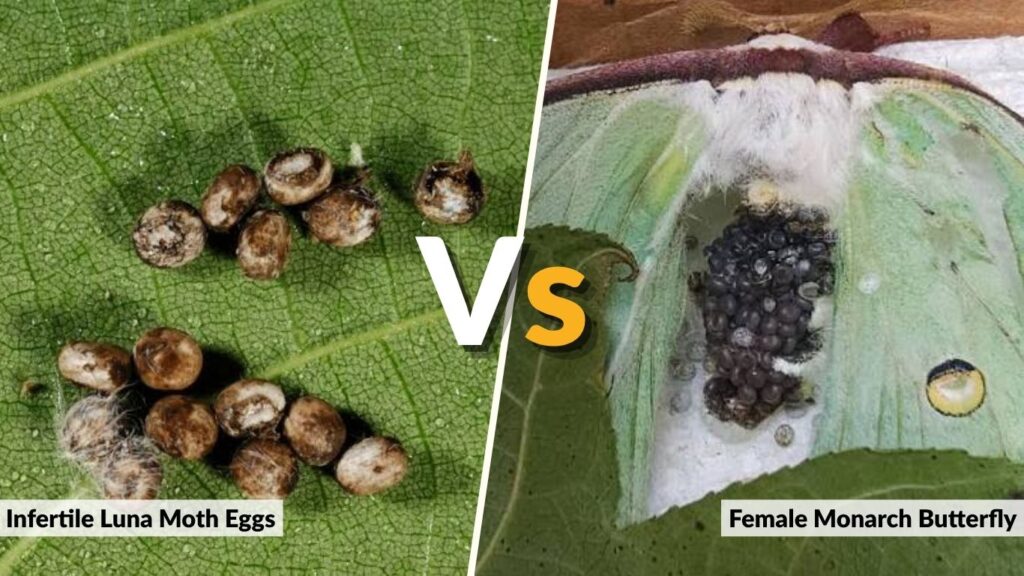
A female luna moth can lay eggs even if she has not mated. However, unfertilized eggs will not develop into caterpillars.
Fertile eggs often darken as the embryo develops. Infertile eggs may remain unchanged, collapse, dry out, or develop mold. Appearance alone cannot always confirm fertility during the first several days.
Allow the eggs at least two weeks under suitable conditions before deciding they are unlikely to hatch. Cooler temperatures may extend the development period.
Buying Luna Moth Eggs
Luna moth eggs are sometimes offered by insect breeders, educational suppliers, or hobbyists. Before purchasing them, check local wildlife and agricultural regulations.
Shipping live insects or eggs across state, provincial, or national borders may require permits. Restrictions help prevent the movement of diseases, parasites, and non-native insect populations.
A responsible seller should provide:
- The moth’s correct scientific name
- The date the eggs were laid
- Confirmation that the female mated
- Recommended host plants
- Shipping and temperature information
- Any required permit details
Avoid releasing captive-raised luna moths outside their natural geographic range.
FAQs
What do luna moth eggs look like?
Luna moth eggs are tiny, rounded or oval objects that may appear white, gray, tan, or grayish-brown. They are usually attached individually or in small groups to leaves and twigs. Fertile eggs often become darker shortly before the caterpillars hatch.
How long do luna moth eggs take to hatch?
Most luna moth eggs hatch in approximately 8 to 14 days. Temperature can affect the timing, with warm conditions generally speeding development and cooler conditions slowing it. Eggs that remain unchanged for more than two weeks may be infertile.
How do you care for luna moth eggs?
Keep the eggs in a clean, ventilated container at a stable indoor temperature. Protect them from direct sunlight, excessive heat, heavy condensation, and mold. Prepare fresh, pesticide-free host leaves before the caterpillars begin hatching.
Where do luna moths lay their eggs?
Female luna moths normally lay eggs on host plants such as hickory, walnut, sweetgum, birch, persimmon, pecan, or sumac. They may place them on leaves, twigs, or nearby surfaces, either individually or in small groups.
Can luna moth eggs remain dormant during winter?
Luna moth eggs are not normally the overwintering stage. In colder regions, the insect usually survives winter as a pupa inside a cocoon. Eggs are expected to develop and hatch relatively soon after they are laid.