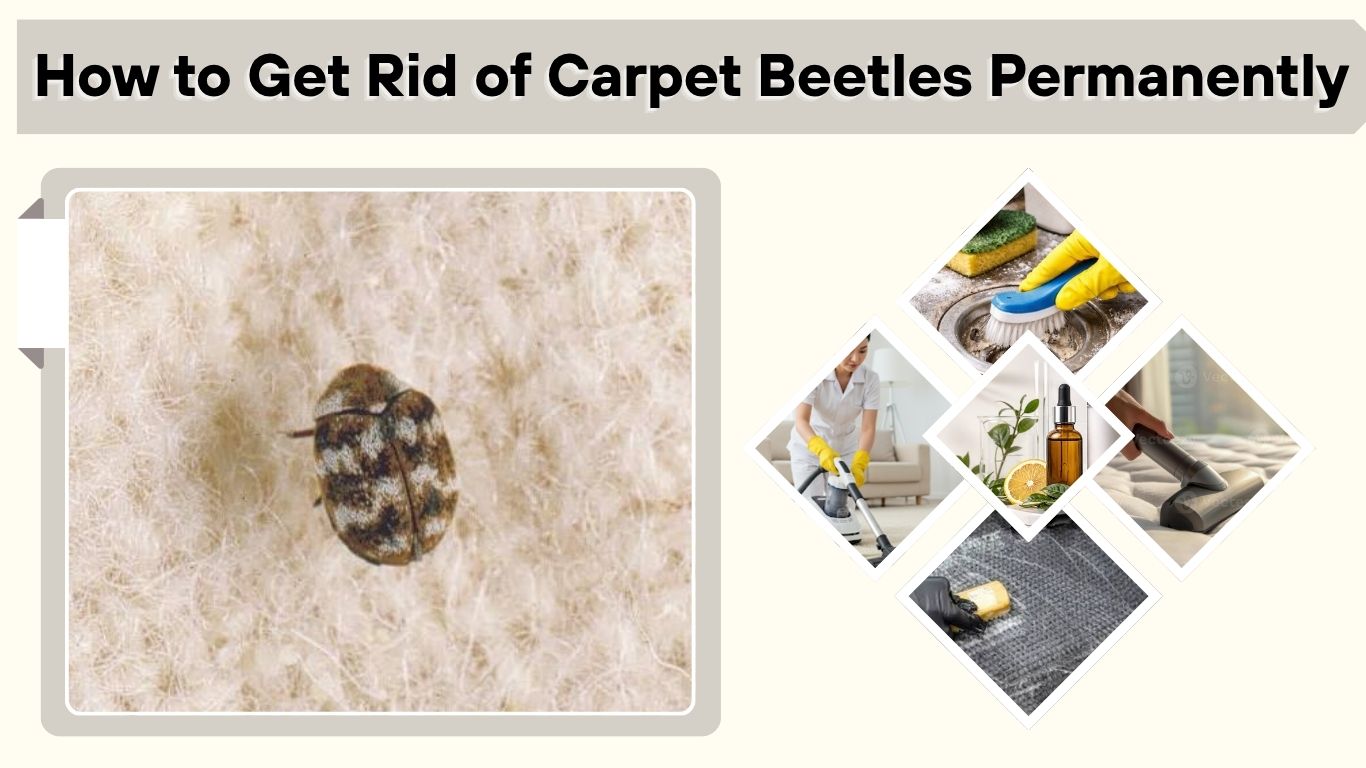
To get rid of carpet beetles, locate what their larvae are eating, remove or treat infested materials, and thoroughly vacuum places where hair, lint, dead insects, and food crumbs collect. Cleaning only visible adult beetles will not solve the problem because the fabric-damaging larvae usually remain hidden beneath furniture, along carpet edges, inside closets, or within stored items. Severe or recurring infestations may require a labeled insecticide or professional pest-control treatment.
Confirm You Have Carpet Beetles
Adult carpet beetles are small, oval insects measuring approximately 2–5 millimeters. Varied carpet beetles have mottled white, yellow, brown, and black scales, while black carpet beetles are usually dark brown or black.
The larvae look completely different. They are elongated, brown or reddish, and covered with bristles. Shed larval skins are often easier to find than living larvae. Adults commonly appear on windows because they are attracted to light, but their presence does not always mean there is an established infestation.
Common Signs of an Infestation
Look for:
- Fuzzy brown larvae
- Empty larval skins
- Irregular holes in wool or silk
- Damage along carpet edges
- Thinning natural-fiber rugs
- Beetles around windowsills
- Damaged feathers, fur, or taxidermy
- Larvae beneath furniture
- Infested pet food or dry pantry products
The larvae—not the adults—cause most household damage. They can feed on wool, fur, feathers, leather, silk, pet hair, lint, dead insects, dried animal material, and some stored foods. Purely synthetic carpets are generally not eaten unless contaminated with animal fibers, food, or body oils.
How to Get Rid of Carpet Beetles Step by Step
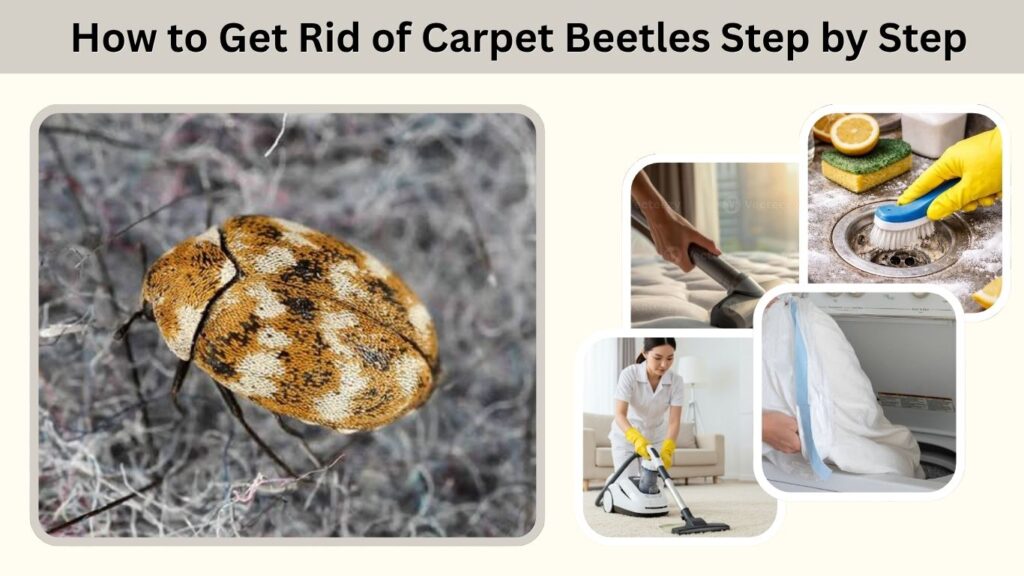
Successful control begins with finding the source. Adult beetles may travel far from the area where larvae are developing, so do not assume that a beetle on a window means the infestation began there.
1. Inspect Likely Breeding Areas
Use a flashlight to inspect dark, undisturbed places, including:
- Under beds and sofas
- Beneath rugs and carpet edges
- Along baseboards
- Inside wardrobes and drawers
- Beneath rarely moved furniture
- Inside heating vents and floor registers
- Around pet sleeping areas
- In stored wool, silk, fur, and feathers
- Inside bags of pet food, grain, spices, and seeds
- In attics containing bird, rodent, bee, or wasp nests
Concentrations of larvae and shed skins usually indicate that the food source is close. Hidden accumulations of pet hair, dead insects, or lint can support an infestation even when no damaged carpet is visible.
2. Vacuum Thoroughly
Vacuuming removes larvae, eggs, shed skins, lint, hair, and dead insects. Pay particular attention to carpet borders and protected spaces that are rarely cleaned.
Vacuum:
- Carpet edges and underneath rugs
- Cracks between floorboards
- Baseboards and corners
- Upholstery seams and folds
- Beneath cushions
- Closets and storage shelves
- Air registers and accessible ducts
- Window tracks and sills
- Under appliances and furniture
Repeat every few days at first, then weekly until activity stops. Empty the vacuum outside immediately or seal and discard the bag because collected larvae may continue developing inside it.
3. Treat Infested Clothes and Fabrics
Wash washable items using the hottest temperature permitted by the care label, then dry them thoroughly. A hot clothes dryer and professional dry cleaning can kill carpet beetle life stages in clothing and fabrics.
Colorado State University Extension reports that temperatures above approximately 130°F maintained for several hours can kill dermestid beetles. Thick or bulky items require enough time for heat to reach their centers.
For delicate items:
- Use professional dry cleaning.
- Seal cleaned garments in insect-proof containers.
- Ask a textile professional about safe heat or freezing treatment.
- Discard heavily damaged, low-value items in sealed bags.
Do not return treated clothing to an infested closet until shelves, cracks, and surrounding areas have been cleaned.
4. Remove the Food Source
Permanent control depends on eliminating materials that support the larvae.
Possible sources include:
| Location | Potential food source |
| Closet | Wool, silk, fur, feathers, hair |
| Living room | Upholstery, rug fibers, crumbs |
| Bedroom | Hair, lint, natural-fiber bedding |
| Kitchen | Pet food, grain, spices, dried foods |
| Attic | Bird nests, dead insects, animal remains |
| Air vents | Hair, lint, trapped insects |
| Garage | Stored fabrics, animal products, rodent nests |
Discard contaminated food and vacuum the storage area. Transfer unaffected dry products to sealed glass, metal, or heavy plastic containers.
5. Clean Beds, Mattresses, and Sofas
Carpet beetles do not live on people or feed on blood. Larvae found near a bed are usually feeding on lint, hair, feathers, wool, or dead insects—not the mattress foam itself.
Remove and wash bedding, vacuum the mattress seams and bed frame, and inspect beneath the bed. For sofas, remove cushions and vacuum seams, folds, the underside, and the floor below.
Carpet beetle larvae have irritating hairs that can cause an itchy dermatitis in sensitive people. They do not bite, so persistent skin marks should not automatically be diagnosed as carpet beetle “bites.”
Getting Rid of Carpet Beetles in a Car
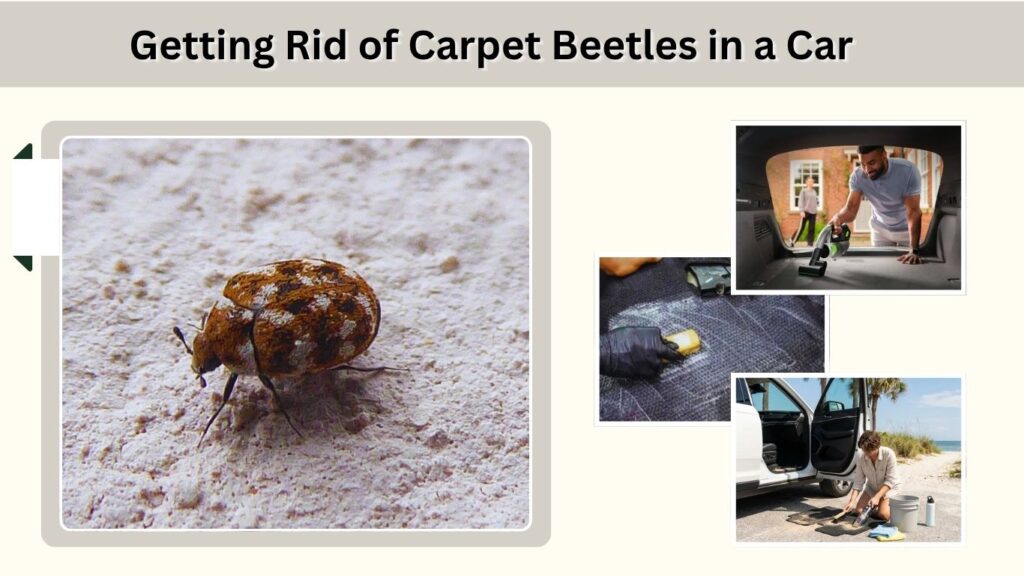
Carpet beetles may enter cars through infested clothing, pet bedding, food, flowers, or stored materials.
To remove them:
- Remove floor mats, seat covers, rubbish, and stored items.
- Vacuum seat seams, carpet edges, the boot, and beneath seats.
- Clean pet hair and food crumbs.
- Wash removable fabrics according to their care labels.
- Dispose of the vacuum contents outside.
- Inspect the vehicle weekly for larvae or shed skins.
Avoid spraying seats, child restraints, ventilation openings, or frequently touched surfaces unless the product label specifically permits that use.
Can You Get Rid of Carpet Beetles Naturally?
The most effective nonchemical methods are source removal, repeated vacuuming, laundering, dry cleaning, heat treatment, and sealed storage. These methods target the larvae and their food rather than merely killing visible adults.
Steam cleaning may help clean carpets and upholstery, but heat must reach the insects to kill them. Do not rely on vinegar, baking soda, cedar, essential oils, or homemade sprays as the main treatment for an established infestation. They may clean or temporarily repel insects without eliminating hidden eggs and larvae.
Should You Use Insecticide?
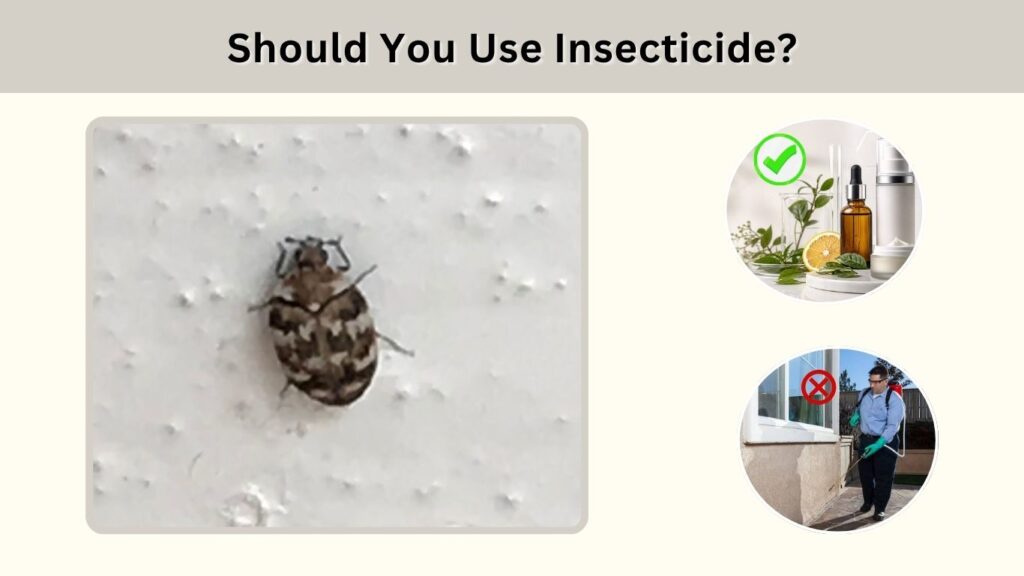
Insecticide should supplement cleaning rather than replace it. Bug bombs and total-release foggers are unlikely to reach larvae hidden beneath carpets, inside fabrics, or behind furniture and are not considered effective carpet beetle control.
When necessary, choose a product specifically labeled for carpet beetles and the intended indoor surface. Depending on the label, treatment may be allowed in:
- Baseboard cracks
- Carpet edges
- Closet corners
- Floor gaps
- Upholstery crevices
- Other nonfood hiding areas
Never spray clothing, bedding, toys, food-storage surfaces, or mattresses unless the label clearly allows it. Keep people and pets away for the stated period and follow every label direction.
Call a pest-control professional when larvae continue appearing after thorough cleaning, the source may be inside walls or ducts, valuable textiles are affected, or the infestation extends through several rooms.
How to Prevent Carpet Beetles From Returning
After eliminating the infestation:
- Store wool and other vulnerable fabrics clean and sealed.
- Vacuum beneath furniture and along carpet edges regularly.
- Remove pet hair and lint from vents and corners.
- Store pet food and dry foods in airtight containers.
- Repair window screens and seal gaps around doors.
- Remove abandoned bird or wasp nests where legally and safely possible.
- Inspect used furniture, rugs, and clothing before bringing them indoors.
- Clean dead insects from windows, attics, and light fixtures.
Adult carpet beetles can fly indoors through unscreened windows, vents, eaves, and small structural gaps, so occasional adults may still appear even after an indoor infestation has been controlled.
FAQs
How long does it take to eliminate carpet beetles?
A small infestation may improve after several weeks of consistent cleaning and source removal. Larger infestations can take longer because hidden larvae develop slowly. Continue inspecting and vacuuming until no adults, larvae, shed skins, or new fabric damage appear for several weeks.
How do I get rid of carpet beetle larvae?
Locate what the larvae are eating, vacuum them and their shed skins, and heat-treat, dry-clean, freeze, or discard infested belongings. Clean underneath furniture, around carpet edges, in closets, and near pet areas where food and lint accumulate.
Can carpet beetles live in your hair?
Carpet beetles do not live on the human body or establish themselves in hair. A larva may accidentally crawl onto a person, and its bristles may irritate sensitive skin. Persistent scalp symptoms should be evaluated for another cause.
Why do carpet beetles keep coming back?
Recurring beetles usually indicate an overlooked food source, such as wool clothing, pet hair, dead insects, stored food, feathers, or an animal nest. Adults may also continue entering through windows, vents, and structural gaps.
Are carpet beetles difficult to eliminate permanently?
They can be persistent when larvae are hidden or several food sources are present. Permanent control is achievable by locating breeding sites, treating infested belongings, removing lint and animal materials, storing vulnerable items securely, and monitoring for renewed activity.