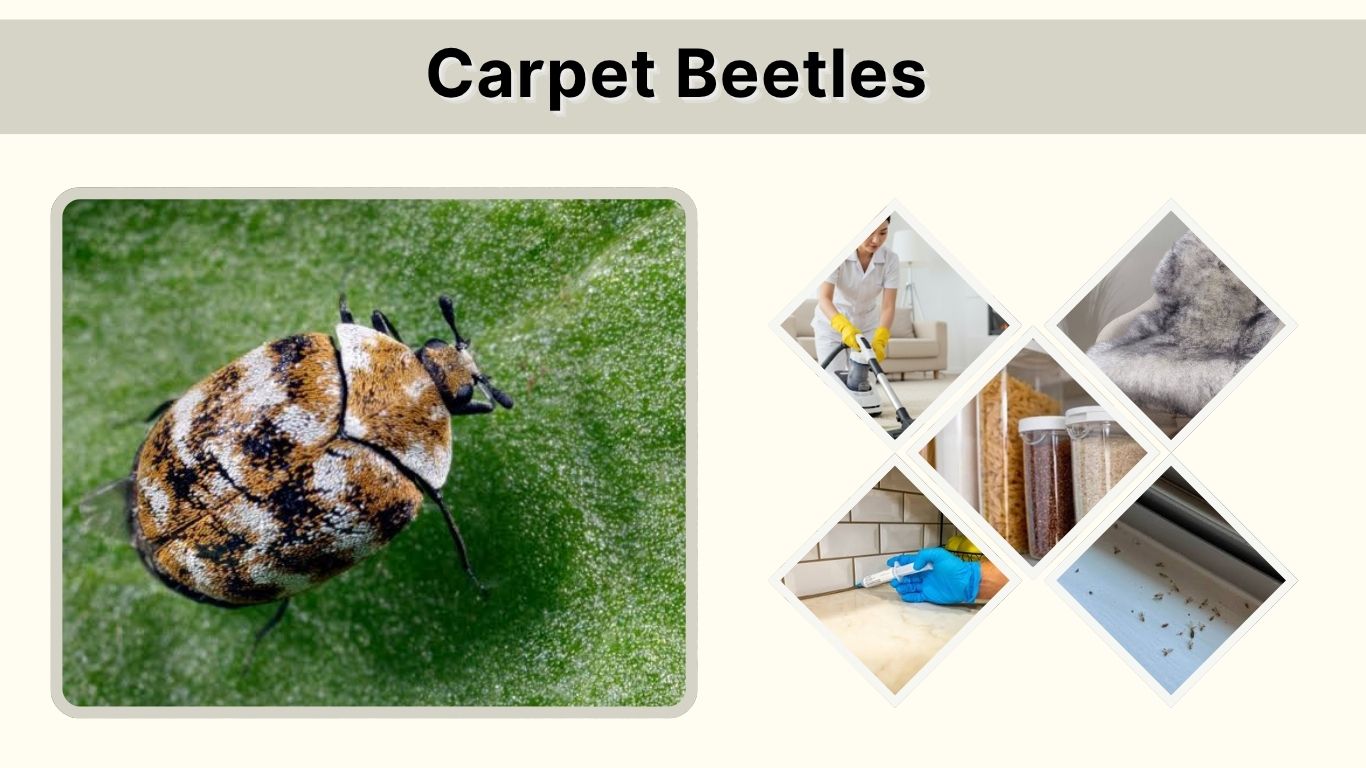
Carpet beetles are tiny household insects whose larvae can damage wool, silk, leather, feathers, carpets, clothing, and upholstered furniture. Adults are usually seen near windows, while the destructive larvae remain hidden beneath furniture, along carpet edges, and inside closets. Carpet beetles do not bite, but contact with larval hairs can cause an itchy rash in sensitive people. Successful removal depends on finding the food source, cleaning hidden areas, treating infested belongings, and preventing adult beetles from entering again.
Carpet Beetle Overview
Carpet beetles belong to the family Dermestidae. Several species can enter homes, but varied, furniture, and black carpet beetles are among the most frequently encountered.
| Feature | Description |
| Adult size | About 1/16–1/4 inch |
| Larval appearance | Brown, segmented, and hairy |
| Common locations | Carpets, closets, furniture, vents, and pantries |
| Main damage | Natural fabrics and animal-based materials |
| Do they bite? | No |
| Can they fly? | Adults can fly |
| Most damaging stage | Larva |
| Main control method | Cleaning and removing the food source |
Finding one adult near a window does not always indicate a serious infestation. Multiple larvae, shed skins, fabric damage, or adults appearing repeatedly are stronger signs of an active problem.
What Do Carpet Beetles Look Like?
Adult carpet beetles and their larvae look completely different. Adults are small, rounded beetles, while larvae resemble tiny hairy caterpillars or fuzzy brown grubs.
Adult Carpet Beetles
Adult carpet beetles are oval or nearly round. Depending on the species, their bodies may be solid black, dark brown, or patterned with white, yellow, brown, and black scales.
Adults are often discovered crawling on windowsills, curtains, walls, or light fixtures because they are attracted to light. They can fly and may enter through open doors, damaged screens, vents, or gaps around windows. Adults normally feed on pollen outdoors rather than damaging household fabrics.
Carpet Beetle Larvae
Carpet beetle larvae are generally longer than adults. They are brown, tan, golden, or nearly black and have stiff hairs covering their segmented bodies.
Some larvae are oval and banded, while black carpet beetle larvae are elongated and carrot-shaped with a long tuft of hair at the rear. As larvae grow, they repeatedly shed their skins. These empty, brown, bristly casings are an important sign of an infestation.
Common Types
- Varied carpet beetle: Small and rounded with mottled white, brown, yellow, and black scales.
- Black carpet beetle: Longer and usually solid black or dark reddish-brown.
- Furniture carpet beetle: Rounded with yellow, white, and black markings.
- Brown carpet beetle: Generally brown and oval, with hairy brown larvae.
These species have similar habits, although their preferred foods and development times may differ.
What Causes Carpet Beetles in a House?
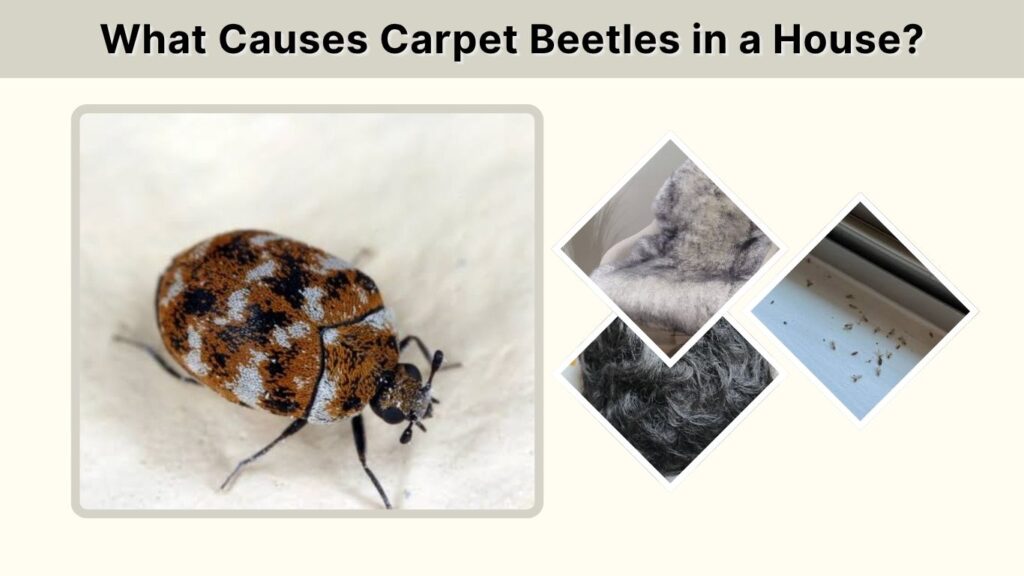
Adult beetles may fly indoors or arrive on cut flowers, plants, secondhand furniture, clothing, rugs, stored food, or animal products. Once inside, females place their eggs near materials that will feed the larvae.
Common food sources include:
- Wool carpets and clothing
- Silk, fur, leather, and feathers
- Pet hair and human hair
- Dead insects in window tracks or light fixtures
- Bird, rodent, bee, or wasp nests
- Dried pet food
- Stored grains and seeds
- Lint beneath furniture and appliances
- Taxidermy and natural-bristle brushes
Carpet beetles thrive in dark, quiet places that are rarely cleaned. Pet hair, food crumbs, dead insects, and lint beneath heavy furniture can support larvae without the homeowner noticing them.
Signs of a Carpet Beetle Infestation
Adults near windows may be the first visible clue, but the presence of larvae and damage provides stronger evidence.
Common Infestation Signs
- Hairy larvae beneath furniture or along baseboards
- Brown shed larval skins
- Irregular holes in wool clothing
- Bare areas on carpets or rugs
- Damage to fur, feathers, silk, or leather
- Small pellets or debris near damaged materials
- Larvae crawling up walls
- Repeated adults appearing on windowsills
Carpet beetle damage commonly occurs in concentrated areas, whereas clothes moth damage may be scattered and accompanied by silk webbing. Carpet beetle larvae leave bristly cast skins but do not produce webbing.
Do Carpet Beetles Bite?
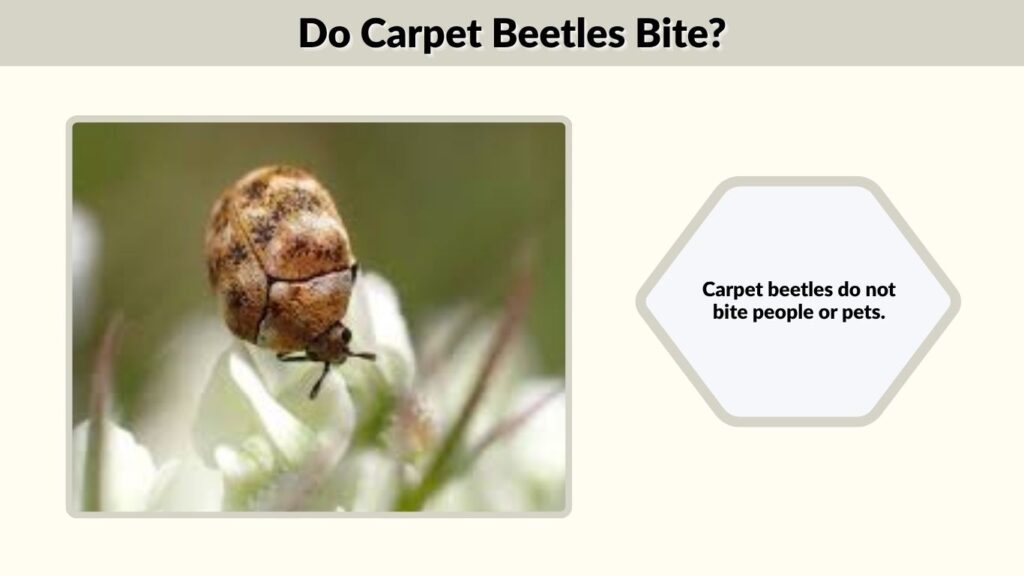
Carpet beetles do not bite people or pets. Adults feed mainly on pollen, while larvae eat dried organic materials rather than blood.
However, the stiff hairs shed by larvae can irritate the skin. Sensitive individuals may develop carpet beetle dermatitis after contacting larvae, shed skins, infested clothing, bedding, or furniture.
What Does a Carpet Beetle Rash Look Like?
A reaction may include:
- Small red bumps
- Intense itching
- Raised welts
- Blister-like spots
- Irritated eyes
- Throat or respiratory irritation
Because the rash may resemble insect bites, fleas, or bed bug reactions, people sometimes believe carpet beetles have bitten them. The irritation is instead caused by contact with larval hairs or insect material.
Wash exposed skin and clothing and avoid scratching. Seek medical advice when the rash is severe, keeps returning, spreads extensively, affects breathing, or does not improve after the infestation is addressed.
How to Get Rid of Carpet Beetles
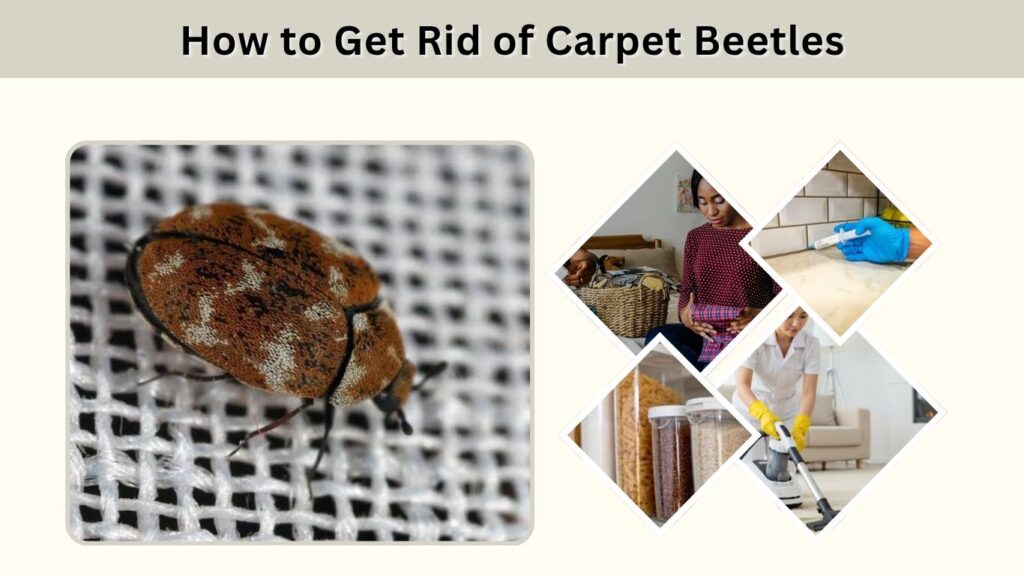
Carpet beetle control begins with finding and eliminating the source. Spraying visible adults without removing infested material will rarely solve the problem.
1. Inspect the Entire Area
Examine carpet edges, closets, drawers, rugs, upholstered furniture, mattresses, air vents, baseboards, pet bedding, stored foods, and spaces beneath appliances.
Also inspect attics, chimneys, wall voids, and roof areas for abandoned bird or animal nests. Dead rodents, insects, or birds hidden inside a building can support large numbers of larvae.
2. Vacuum Thoroughly
Vacuum carpets, rugs, closets, floor cracks, baseboards, furniture seams, vents, and areas beneath heavy furniture. Concentrate on places where hair, lint, crumbs, and dead insects collect.
Empty the vacuum outdoors immediately or seal and discard the bag. Repeat vacuuming regularly until larvae and shed skins stop appearing.
3. Treat Clothing and Fabrics
Wash washable fabrics and dry them using the hottest temperature safe for the material. Dry-clean wool, silk, fur, and other delicate items.
Small infested objects can sometimes be sealed in a bag and frozen for several days. Check whether freezing is safe for the item before treatment. Severely damaged belongings may need to be discarded.
4. Remove Infested Food
Inspect cereals, flour, spices, seeds, dried pet food, and other stored products. Discard infested packages in a sealed outdoor trash container.
Vacuum shelves and cracks before storing replacement food in tightly sealed glass, metal, or durable plastic containers.
5. Seal Entry Points
Repair window screens, install door sweeps, seal exterior cracks, and close gaps around pipes and vents. Remove abandoned bird or wasp nests after confirming they are inactive and removal is permitted.
These measures help prevent adult beetles from flying indoors and laying new eggs.
6. Use Traps for Monitoring
Sticky traps near windows, closets, and suspected activity areas can help locate adult beetles and show whether control efforts are working.
Pheromone traps are species-specific and primarily attract adult males. They are monitoring tools and should not replace cleaning and source removal.
7. Use Insecticide Carefully
Insecticides may help when larvae remain inside inaccessible cracks, carpet edges, or wall voids. Choose a product specifically labeled for indoor carpet beetle control and apply it only where the label permits.
Do not spray clothing, bedding, food, pets, or entire rooms unless the product label specifically allows that use. Keep children and animals away during treatment and until the area is safe for reentry. Sanitation and exclusion can often control infestations without pesticides.
Carpet Beetles in Beds and Mattresses
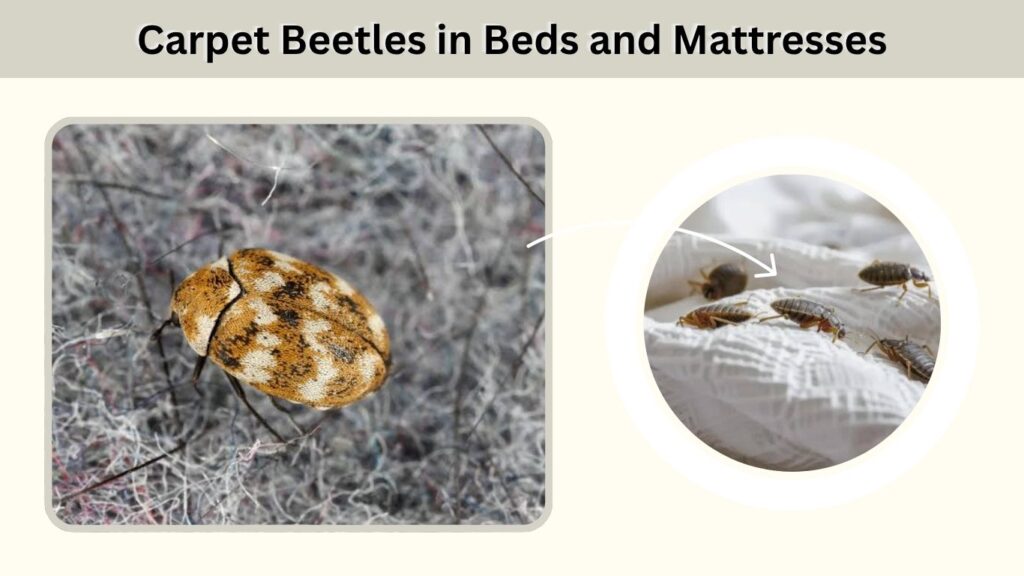
Carpet beetles may be found near a bed, but they do not live on human blood. Larvae may feed on hair, feathers, wool blankets, natural-fiber fabrics, dead insects, or debris beneath the bed.
Carpet Beetle vs. Bed Bug
| Feature | Carpet Beetle | Bed Bug |
| Body | Small beetle or hairy larva | Flat, reddish-brown insect |
| Food | Fabrics and organic debris | Blood |
| Bites | Does not bite | Bites people |
| Main evidence | Shed hairy skins and fabric damage | Blood spots, fecal marks, and bites |
| Common hiding place | Closets, carpet edges, and under furniture | Mattress seams and bed frames |
Finding a carpet beetle larva on a mattress does not automatically mean the mattress is heavily infested. Inspect the bed frame, carpet beneath the bed, wool bedding, stored clothing, and nearby furniture to locate the actual source.
Carpet Beetle Life Cycle
Carpet beetles develop through four stages: egg, larva, pupa, and adult.
Females lay small eggs on or near suitable food. Under warm indoor conditions, eggs may hatch in approximately two weeks. The larval period can last several months or longer, depending on species, temperature, humidity, and food quality.
Larvae are responsible for nearly all household damage. After feeding and molting several times, they find a protected place to pupate. Adults emerge, move toward light, and may fly outdoors to feed on flowers.
FAQs
Are carpet beetles harmful?
Carpet beetles are not poisonous and do not bite. Their larvae can damage valuable fabrics, furniture, stored food, and animal-based materials. Larval hairs can also trigger dermatitis or respiratory irritation in sensitive individuals.
Can carpet beetles fly?
Adult carpet beetles can fly. They commonly enter through windows, doors, vents, and damaged screens or arrive on cut flowers. Larvae cannot fly and remain near suitable food sources.
What kills carpet beetle larvae immediately?
Direct heat, laundering, dry cleaning, freezing suitable small items, vacuuming, and labeled insecticides can kill larvae. However, successful long-term control requires removing their food source and cleaning hidden areas where eggs and larvae remain.
Why do I keep finding carpet beetles?
Repeated sightings usually indicate an overlooked food source, such as wool, pet hair, dead insects, stored food, an animal nest, or a carcass inside a wall or attic. Adults may also continue entering through unsealed openings.
When should I call pest control?
Professional help may be necessary when larvae keep appearing after repeated cleaning, the source is inside a wall or air duct, valuable fabrics are threatened, or the infestation affects several rooms.
The article covers the central topics in the provided material, including larvae, removal, varied and black carpet beetles, bites, infestation signs, and treatment.