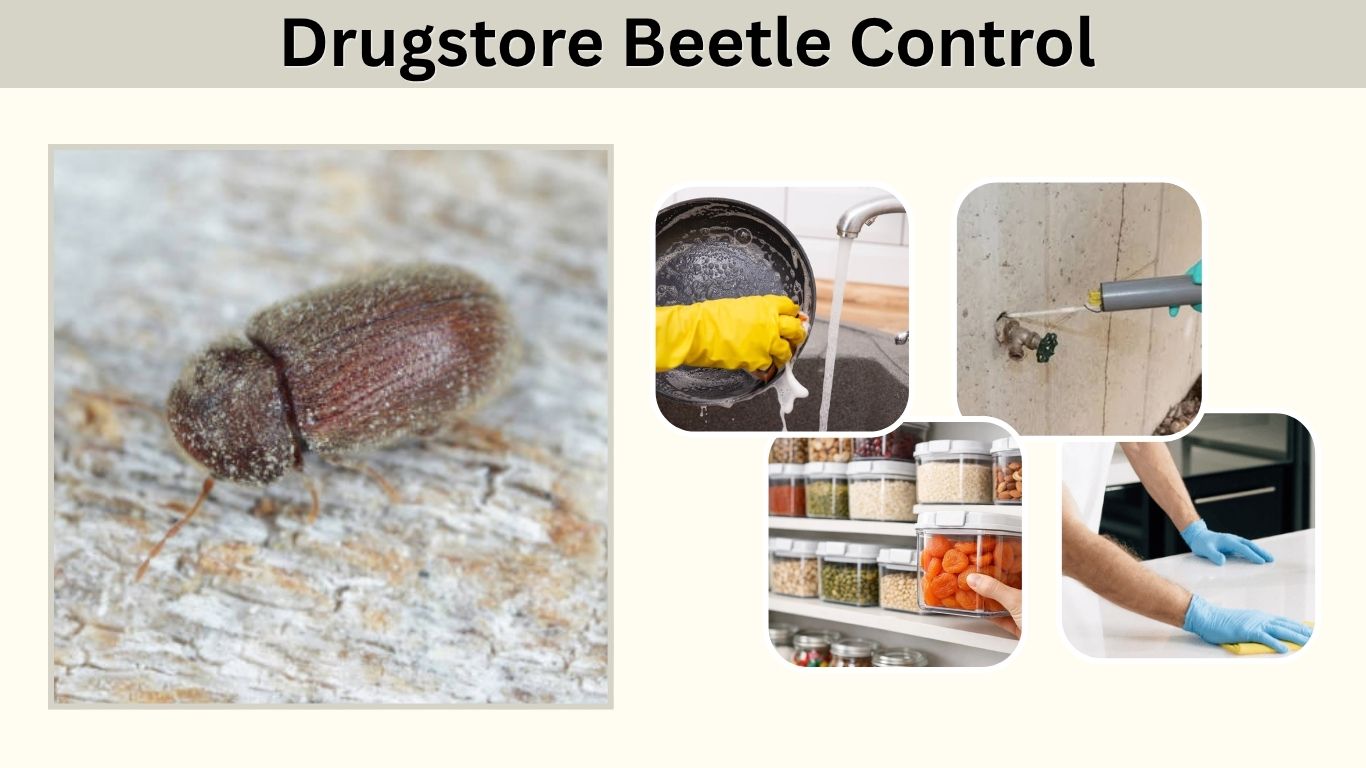
Drugstore beetles are tiny brown pantry pests that infest dried foods, spices, pet food, medicines, books, and other organic materials. Seeing adult beetles on windows, walls, or countertops usually means they have emerged from an infested product and are searching for light.
Effective drugstore beetle control depends on locating and removing every infested item. Spraying visible adults may kill a few beetles, but it will not eliminate eggs, larvae, and pupae hidden inside food packages.
Drugstore Beetle Control at a Glance
| Control step | What to do |
| Confirm the pest | Identify the small, humpbacked brown beetle |
| Locate the source | Inspect all dried foods and organic materials |
| Remove infested items | Seal and discard contaminated products |
| Clean the pantry | Vacuum shelves, corners, holes, and cracks |
| Treat questionable items | Freeze or carefully heat suitable products |
| Protect clean food | Use airtight glass, metal, or heavy plastic containers |
| Monitor activity | Watch windows, shelves, and sticky traps |
| Use chemicals carefully | Avoid routine spraying in food cupboards |
Identify Drugstore Beetles Correctly
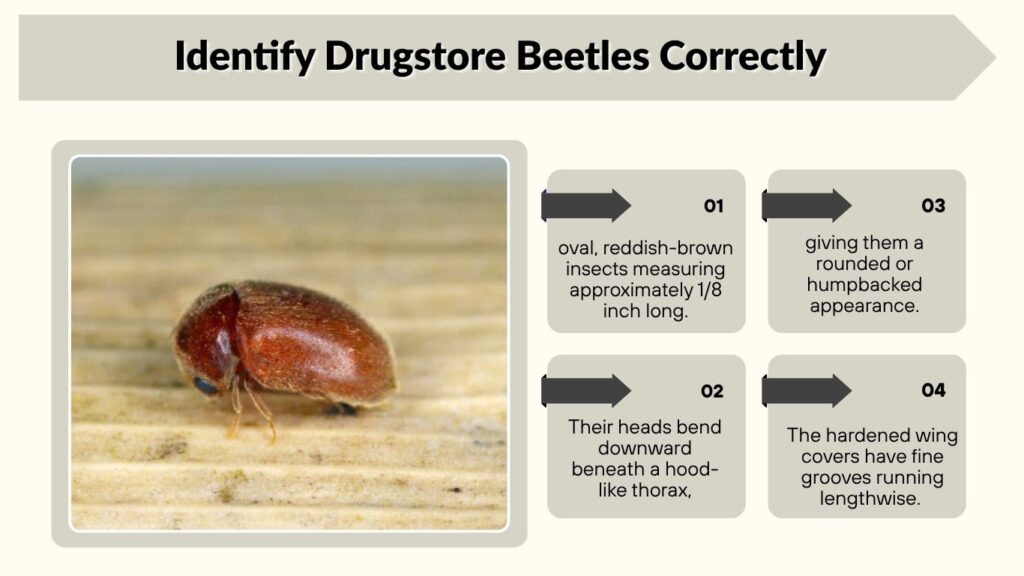
Adult drugstore beetles, Stegobium paniceum, are small, oval, reddish-brown insects measuring approximately 1/8 inch long. Their heads bend downward beneath a hood-like thorax, giving them a rounded or humpbacked appearance.
The hardened wing covers have fine grooves running lengthwise. Adult beetles can fly and are frequently found around windows because they are attracted to light. The larvae are small, curved, cream-colored grubs covered with fine hairs.
Drugstore beetles are easily confused with cigarette beetles. Drugstore beetles have grooved wing covers, while cigarette beetles have smoother wing covers and serrated antennae.
Find the Source of the Infestation
Finding the breeding source is the most important step. Drugstore beetles can reproduce inside both opened and unopened packages. Adults or larvae may enter through folds and seams, while developing insects may chew small holes through paper, cardboard, foil, cellophane, and thin plastic.
Inspect All Dried Foods
Check every susceptible product, including recently purchased packages. Do not assume an unopened item is safe.
Commonly infested foods include:
- Flour and baking mixes
- Rice, pasta, and cereal
- Crackers and cookies
- Herbs and spices
- Tea and powdered drinks
- Nuts and seeds
- Dried fruit
- Chocolate and candy
- Dry pet food
- Birdseed and fish food
- Dried beans and popcorn
Pour questionable products onto a light-colored tray or baking sheet. Look for adult beetles, pale larvae, fine powder, damaged food, small exit holes, or insects moving inside the package.
Check Nonfood Sources
Drugstore beetles can survive in materials that people may not think to inspect. Possible hidden sources include:
- Dried flowers and potpourri
- Decorative seed arrangements
- Tobacco products
- Stored medicines and supplements
- Books and paper containing starch-based glue
- Rodent bait
- Animal treats and dried bones
- Forgotten food inside drawers
- Grain stored by rodents in wall voids
Look first in areas where the largest number of adult beetles appears. Beetles gathering near one window or cabinet may have emerged from a nearby product.
Discard Infested Products
Place heavily infested products in strong plastic bags, seal them securely, and remove them from the house. Leaving the bag in an indoor trash can could allow adult beetles to escape and reinfest clean products.
Food containing live insects, larvae, webbing, unusual powder, or extensive packaging damage should generally be discarded. Pantry pests contaminate more food than they consume, so removing contaminated items is safer than attempting to separate the insects from the food.
Inspect nearby packages because one infested product can spread beetles throughout a pantry or into other rooms.
Clean Cabinets and Food-Storage Areas
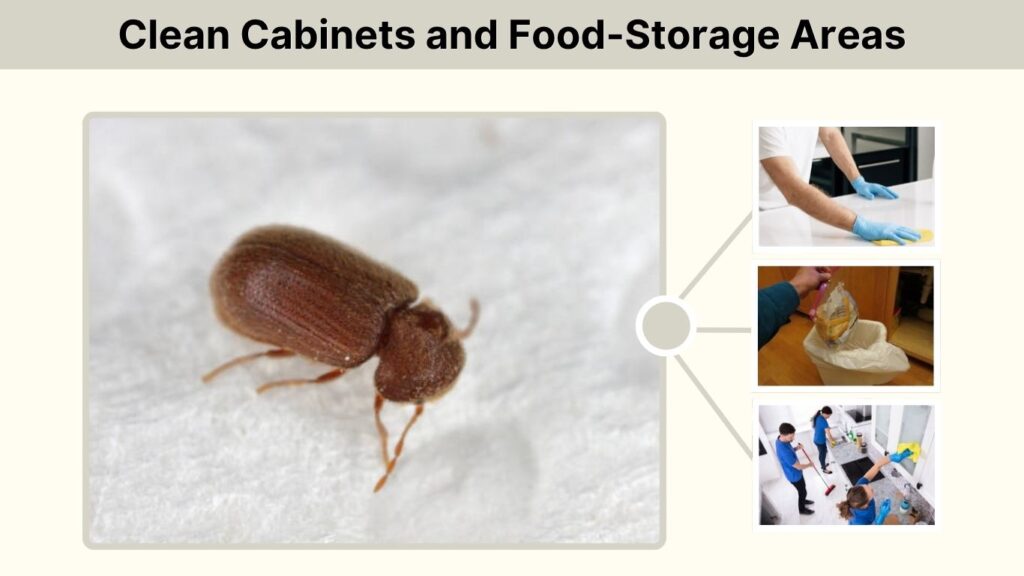
After removing the food, empty the entire cabinet. Use a vacuum cleaner to clean:
- Shelf surfaces
- Corners and edges
- Shelf-support holes
- Cracks around cabinets
- Drawer tracks
- Screw holes
- Spaces beneath shelf liners
- Floor and wall junctions
Vacuuming removes spilled food, larvae, adults, eggs, and debris that could support surviving insects. Empty the vacuum outdoors immediately or seal and discard the bag to prevent beetles from escaping.
Wipe shelves with ordinary soap and water after vacuuming, then allow them to dry completely before returning food. Bleach, ammonia, strong disinfectants, bay leaves, and spearmint gum do not prevent pantry-pest infestations. Strong chemicals may also create a contamination risk when used near food.
Treat Questionable Products With Cold or Heat
Some uninfested-looking products may be worth keeping, especially when they are expensive or difficult to replace. Freezing or carefully heating suitable dry products can kill hidden insect stages.
Freezing Treatment
Place the product in a sealed freezer-safe container or bag. University of Minnesota Extension recommends holding questionable dried products at 0°F, approximately −18°C, for at least four days. Larger or densely packed items may take longer to freeze completely.
Allow the sealed package to return to room temperature before opening it. Keeping it sealed reduces moisture condensation on the food.
Heat Treatment
Suitable dry products can be spread in shallow pans and heated at approximately 130°F, or 54°C, for at least 30 minutes. Do not use this method for foods, medicines, seeds, decorations, or materials that could melt, burn, lose quality, or become unsafe when heated.
Discarding questionable food is usually simpler when you cannot control the temperature accurately.
Store Food in Beetle-Proof Containers
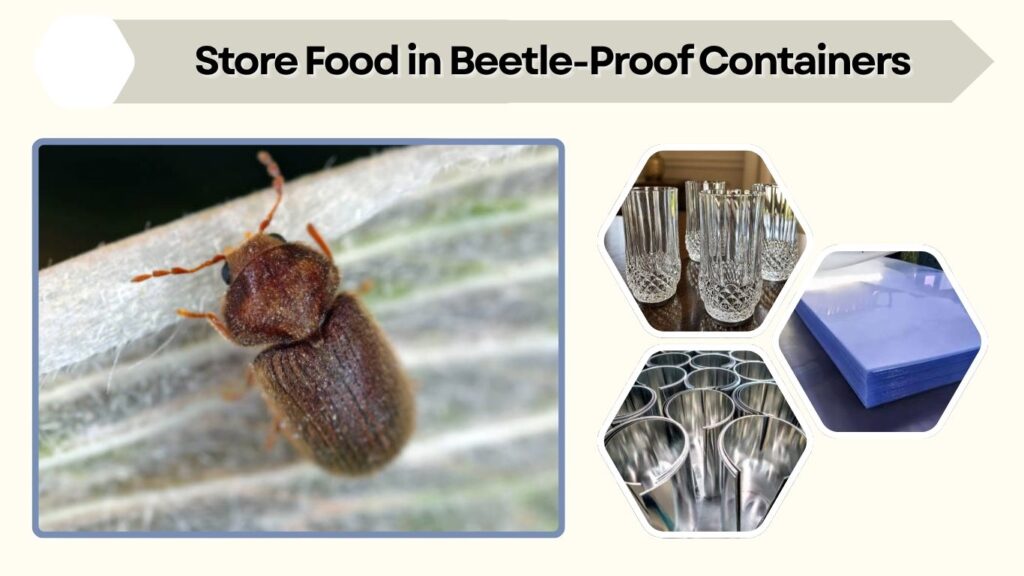
After cleaning, move dried products into tightly sealed containers made from:
- Glass
- Metal
- Heavy, rigid plastic
Thin bags, cardboard boxes, and loosely folded packages do not provide reliable protection. Clear containers make it easier to notice insects before they spread to other foods. Refrigerators and freezers can also protect suitable products.
Label containers with purchase dates and use older products first. Purchase dried food in amounts that can be consumed within a few months, and clean spills immediately. Inspect pet food, birdseed, spices, and bulk foods before bringing them into the pantry.
Do Drugstore Beetle Traps Work?
Pheromone sticky traps designed specifically for drugstore beetles may help detect adult activity and identify areas where beetles are concentrated. However, traps should be used for monitoring rather than as the only control method.
A trap cannot kill larvae developing inside food, spices, decorations, or other materials. Continued trap catches usually mean an overlooked source remains somewhere in the building. Source removal, cleaning, and secure food storage are still necessary.
Drugstore Beetle Chemical Control
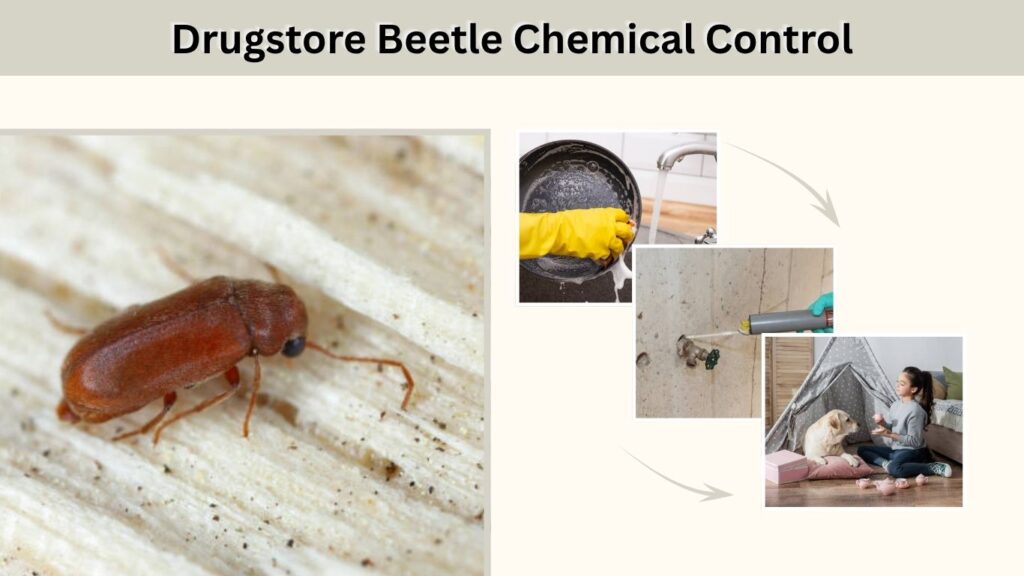
Household insecticides are generally not recommended inside food-storage cupboards. Sprays cannot reach beetles developing inside packages, and killing exposed adults provides only temporary relief when the infested source remains. Food that contacts an insecticide must be discarded.
Never spray pesticides directly onto food, dishes, utensils, shelves holding exposed food, or food-preparation surfaces. Do not use outdoor pesticides indoors, and never apply more product than the label directs.
When a pesticide is considered necessary:
- Remove all food, dishes, and utensils.
- Select a product legally labeled for indoor use and the intended location.
- Apply it only to labeled cracks or crevices.
- Keep children and pets away as instructed.
- Follow every ventilation and reentry direction.
- Wash appropriate food-contact surfaces before reuse.
Chemical treatment should supplement source removal, not replace it. EPA guidance recommends removing food and shelter first and applying pesticides only to targeted locations according to the product label.
When to Call Professional Pest Control
Contact a licensed pest-control professional when beetles continue appearing after all foods and likely materials have been inspected, discarded, treated, and securely stored.
Professional help may also be useful when:
- Beetles are appearing throughout multiple rooms.
- The source may be inside a wall, attic, or crawl space.
- A large commercial pantry or food-storage facility is affected.
- Infested materials cannot be accessed safely.
- Identification between drugstore and cigarette beetles is uncertain.
- Beetles return after repeated cleaning.
Ask the technician to identify and locate the source before applying pesticides. Treating visible beetles without correcting the underlying infestation is unlikely to provide lasting control.
FAQs
What kills drugstore beetles immediately?
Vacuuming or direct physical removal kills visible adult beetles, while freezing or controlled heating can kill hidden stages in suitable products. However, lasting control requires finding and removing the infested food or material.
Can drugstore beetles survive without food?
Adults may continue appearing for a period after the main source is removed because immature beetles were already developing in overlooked products. Inspect all dried foods and nonfood organic materials if activity continues.
Should I spray my pantry for drugstore beetles?
Routine pantry spraying is not recommended. Insecticides cannot kill beetles protected inside packages and may contaminate food-contact areas. Removing the infested source and vacuuming the cupboard are more important.
Do drugstore beetles infest unopened food?
Yes. They can enter through package seams or small openings, and some may chew through paper, cardboard, foil, cellophane, or thin plastic. Inspect unopened packages stored near an infestation.
How do I prevent drugstore beetles from returning?
Store dried products in airtight glass, metal, or rigid plastic containers. Use older food first, avoid keeping forgotten products for long periods, clean spills promptly, and regularly inspect spices, pet food, birdseed, and bulk goods.