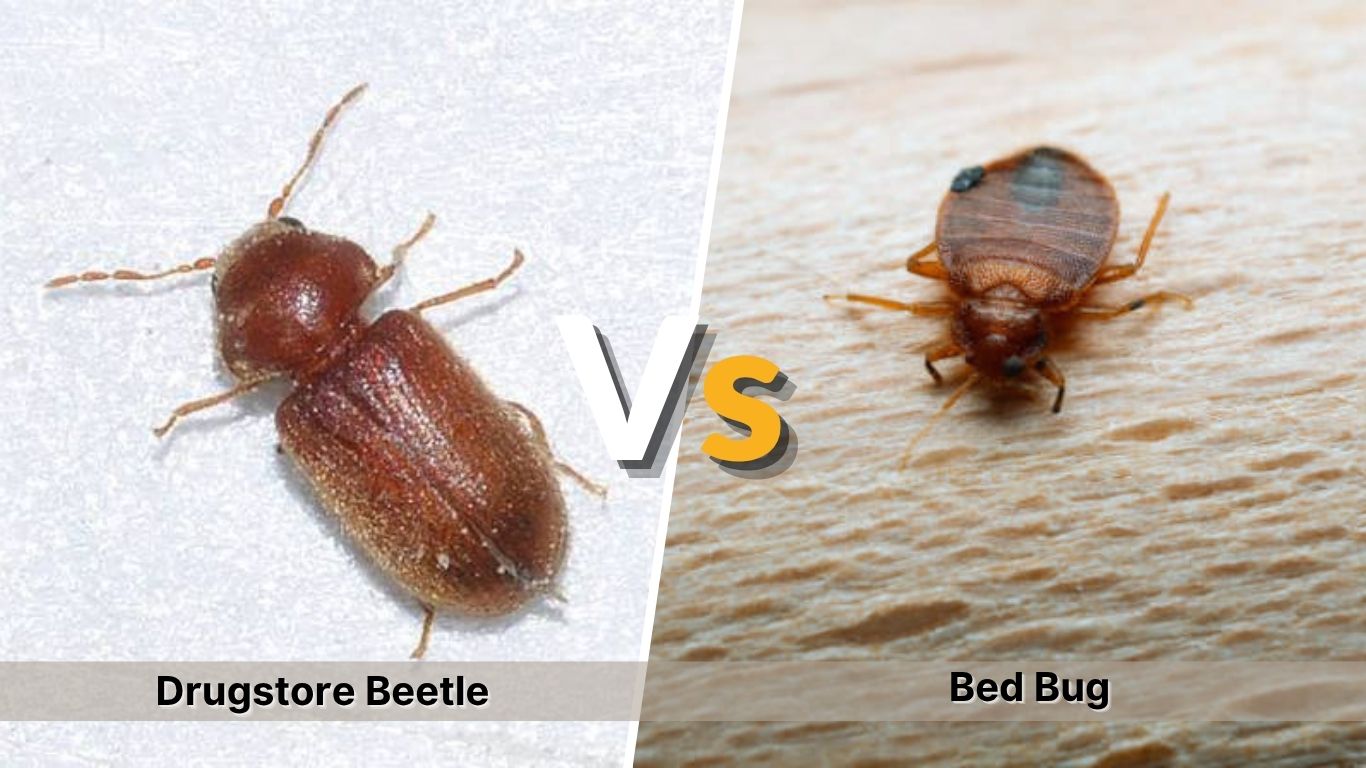
A tiny brown insect crawling across your mattress can immediately raise concerns about bed bugs. However, not every small beetle found in a bedroom is a bed bug. Drugstore beetles sometimes wander away from infested food and appear on beds, windowsills, walls, or floors.
The easiest way to distinguish them is by examining body shape, movement, wings, feeding habits, and infestation signs. Drugstore beetles infest dried products and do not bite, while bed bugs hide near sleeping areas and feed on blood.
Drugstore Beetle vs Bed Bug: Quick Comparison
Drugstore beetles and bed bugs are both small and brown, but they belong to different insect groups and behave very differently.
| Feature | Drugstore beetle | Bed bug |
| Scientific name | Stegobium paniceum | Cimex lectularius |
| Adult size | About 2–3.5 mm | About 5–7 mm |
| Body shape | Rounded and cylindrical | Broad, oval, and flattened |
| Color | Light reddish-brown | Reddish-brown |
| Wings | Present; adults can fly | No functional wings |
| Food | Dried food and stored products | Blood |
| Bites people | No | Yes |
| Main location | Pantry, cabinets, food packages | Mattress, bed frame, furniture |
| Activity | Often attracted to light | Usually hides during daylight |
| Primary evidence | Damaged food packages | Dark spots, skins, eggs, or live bugs |
Adult bed bugs average around 5 millimeters long and have visibly flattened, oval bodies. Drugstore beetles are smaller, more rounded, and associated with stored food rather than human hosts.
What Does a Drugstore Beetle Look Like?
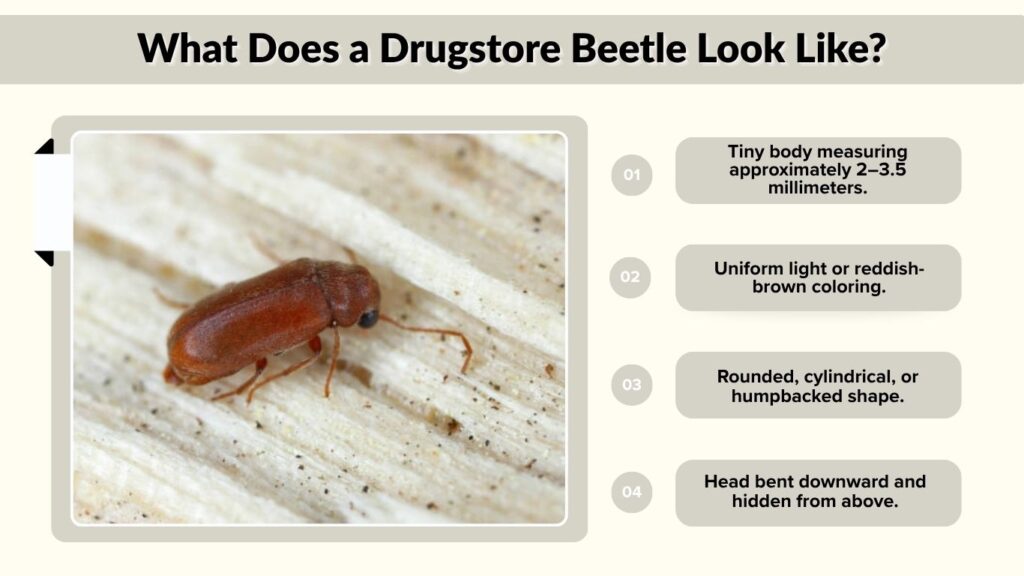
The drugstore beetle is a tiny stored-product pest commonly found in kitchens, pantries, warehouses, and food-storage areas. It may look like a moving brown seed when viewed without magnification.
Drugstore Beetle Identification
Look for the following characteristics:
- Tiny body measuring approximately 2–3.5 millimeters
- Uniform light or reddish-brown coloring
- Rounded, cylindrical, or humpbacked shape
- Head bent downward and hidden from above
- Fine hairs covering the body
- Grooved lines running along the wing covers
- Hard outer shell
- Ability to fly
The beetle’s head is covered by a hood-like section of its body, giving it a rounded appearance from above. Its wing covers have distinct lengthwise grooves that may be visible under magnification.
Drugstore Beetle Larvae
Drugstore beetle larvae look completely different from the adults. They are small, cream-colored, curved grubs with brown heads and fine body hairs.
The larvae cause most of the damage by feeding inside stored products. After developing, they pupate and emerge as adult beetles, sometimes leaving tiny round holes in packaging.
What Does a Bed Bug Look Like?
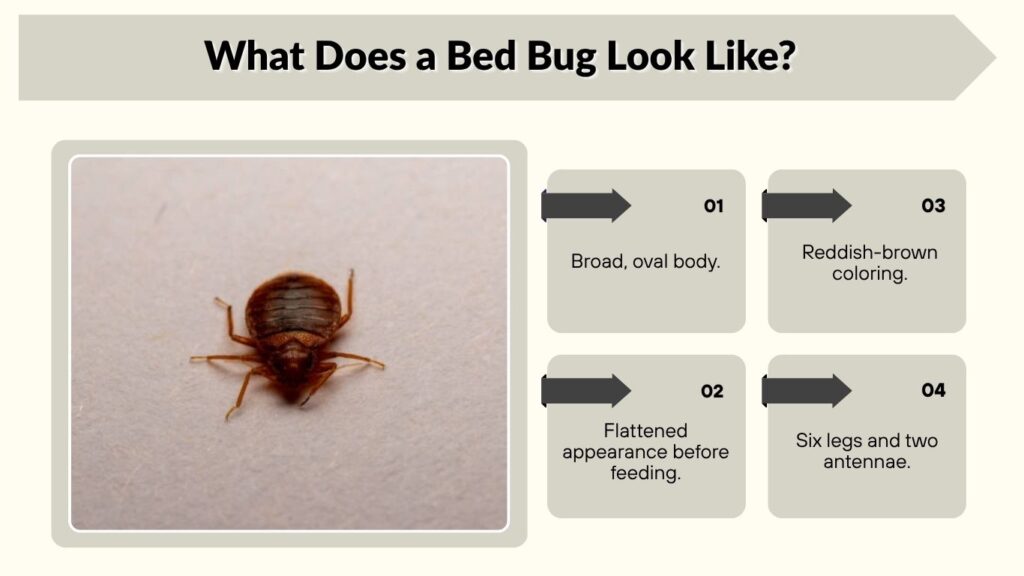
A bed bug has a broad, flattened body that allows it to hide in narrow cracks around beds and furniture. Adults are reddish-brown, wingless, and approximately the size of an apple seed.
Bed Bug Identification
Common identification features include:
- Broad, oval body
- Flattened appearance before feeding
- Reddish-brown coloring
- Six legs and two antennae
- No functional wings
- Visible abdominal segments
- More swollen and elongated body after feeding
Young bed bugs, called nymphs, are smaller and lighter than adults. Recently hatched nymphs may appear pale or almost transparent until they consume blood.
Accurate identification is essential because several household insects can be mistaken for bed bugs, leading to unnecessary or ineffective treatments.
Why Are Drugstore Beetles in My Bed?
Finding a drugstore beetle on your bed does not usually mean it is living in the mattress. Adult beetles can fly and may wander throughout the house after emerging from an infested food source.
They may land on a bed because they are:
- Flying toward a lamp or window
- Wandering from a nearby pantry
- Emerging from food stored in the bedroom
- Coming from dry pet food or birdseed
- Attracted to light-colored bedding
- Crawling from an infested wall void or cabinet
Drugstore beetles do not feed on mattresses, human blood, or ordinary bedding. Their true source is normally a dried food, plant, or animal-based product somewhere in the home.
Products to Inspect
Check these items carefully:
- Flour and baking mixes
- Rice, pasta, and cereal
- Crackers and cookies
- Herbs and spices
- Tea and dried fruit
- Chocolate and candy
- Dry pet food
- Birdseed
- Fish food
- Dried flowers
- Stored medicines or supplements
- Books or paper products containing starch
Drugstore beetles can infest a wide range of stored products, including cereal foods, spices, dried fruit, chocolate, pet food, and birdseed.
Do Drugstore Beetles Bite?
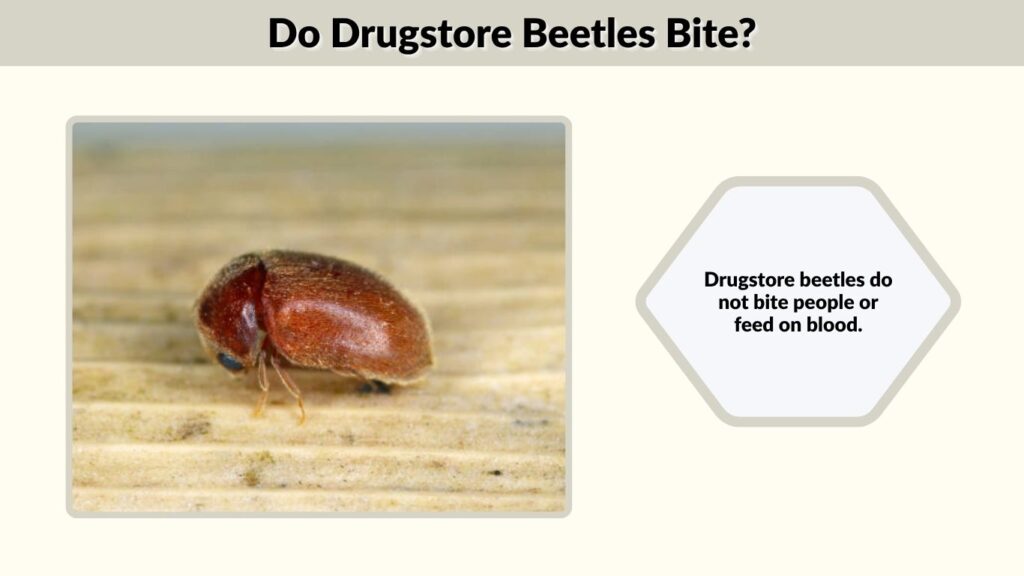
Drugstore beetles do not bite people or feed on blood. They are pantry pests, not parasites.
Finding itchy bumps while seeing a drugstore beetle nearby does not prove the beetle caused them. Possible alternative causes include:
- Bed bugs
- Fleas
- Mosquitoes
- Biting midges
- Mites
- Skin irritation
- Allergic reactions
Bite marks alone cannot reliably confirm bed bugs because skin reactions vary and can resemble other conditions. Physical evidence around the bed is more useful for identification.
Signs of a Bed Bug Infestation
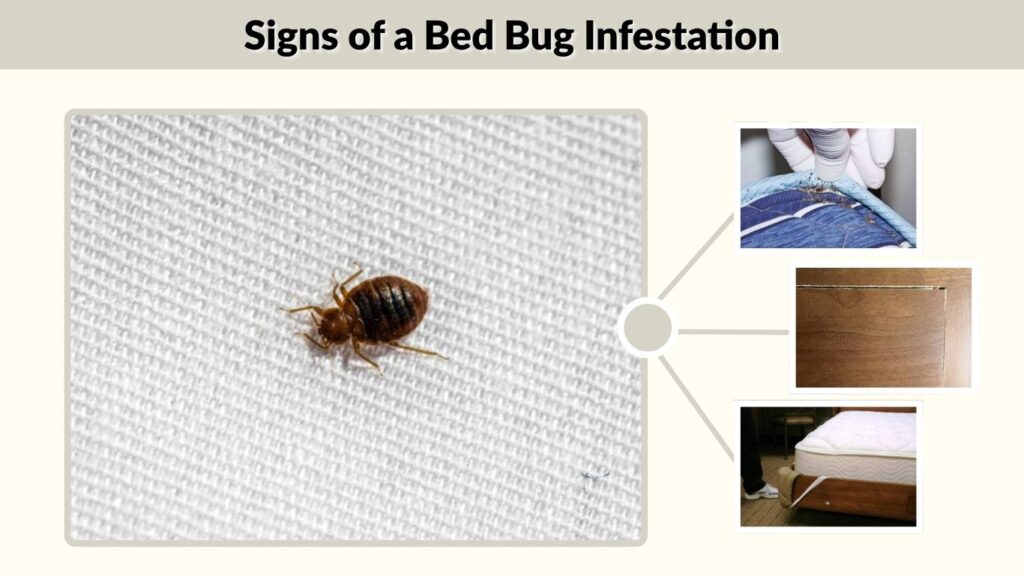
One insect on a mattress should be examined carefully, but additional evidence is needed to confirm an infestation.
Check the Sleeping Area
Inspect:
- Mattress seams and piping
- Box-spring corners
- Bed-frame joints
- Headboard cracks
- Screw holes
- Upholstered furniture
- Baseboards near the bed
- Items stored beneath the mattress
Use a flashlight and look slowly along narrow seams.
Common Bed Bug Evidence
Signs may include:
- Live reddish-brown bugs
- Tiny pale eggs
- Shed translucent skins
- Dark fecal spots
- Rust-colored blood stains
- Sweet or musty odor in severe infestations
- Bugs hiding in mattress or furniture seams
Bed bugs feed on blood and commonly remain close to places where people sleep or rest. Bites may itch, but some people develop little or no visible reaction.
Drugstore Beetle vs Carpet Beetle vs Bed Bug
Carpet beetles are another common source of confusion. Adult carpet beetles may wander across beds, while their hairy larvae can live around carpets, clothing, feathers, and other animal-based materials.
| Feature | Drugstore beetle | Carpet beetle | Bed bug |
| Adult shape | Rounded and cylindrical | Rounded or oval | Flat and oval |
| Typical color | Uniform brown | Black or mottled | Reddish-brown |
| Larvae | Small, pale grubs | Brown and noticeably hairy | Flat, pale nymphs |
| Main food | Stored dry products | Wool, fur, feathers, lint | Blood |
| Can fly | Adults can fly | Adults can fly | No |
| Bites | No | No | Yes |
| Main location | Pantry and food storage | Carpets, closets, fabrics | Beds and furniture |
Carpet beetles do not bite, but hairs from their larvae may irritate sensitive skin. Adult carpet beetles commonly feed outdoors and may enter homes through doors or windows.
How to Get Rid of Drugstore Beetles
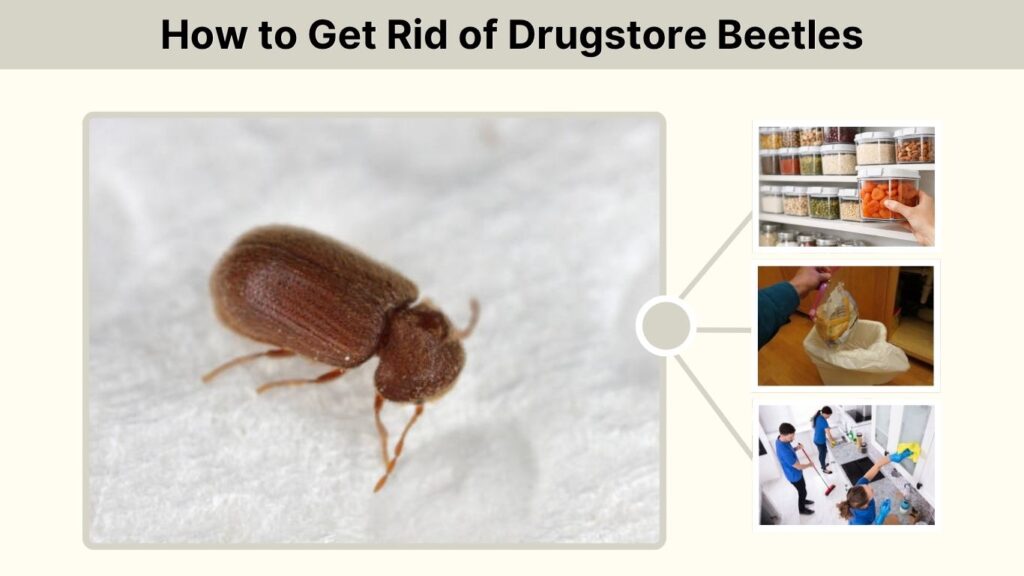
Drugstore beetle control requires finding and removing the infested product. Spraying the beetles seen on your bed will not solve the problem if larvae remain inside food packages.
Find the Source
Inspect all dry goods, including unopened packages. Larvae can enter packaging through tiny gaps, while adults may chew exit holes through paper, cardboard, foil, or thin plastic.
Look for:
- Live beetles or larvae
- Fine powder inside packages
- Webbing or clumped food
- Small holes in packaging
- Damaged grains or seeds
- Beetles around cabinet corners
Clean the Infested Area
Discard heavily infested products in a sealed bag and remove them from the house. Vacuum shelves, cracks, corners, and shelf-support holes thoroughly.
Wipe the shelves clean and empty the vacuum outdoors. Avoid spraying insecticide directly inside food-storage cabinets unless the product label specifically permits that use.
Store replacement food in tightly sealed glass, metal, or heavy plastic containers. Pantry pests will continue developing as long as an overlooked food source remains available.
How to Get Rid of Bed Bugs
Bed bug control is more difficult and should begin only after the insect has been identified correctly.
Useful steps include:
- Reduce clutter around the bed.
- Wash and dry bedding using appropriate high heat.
- Vacuum mattress seams and furniture cracks.
- Install bed bug-proof mattress and box-spring encasements.
- Place monitoring interceptors beneath bed legs.
- Move the bed slightly away from walls.
- Avoid carrying infested furniture into other rooms.
- Contact an experienced pest-control professional.
Do not use random insecticides, outdoor pesticides, rubbing alcohol, or bug bombs on the bed. Pesticide products should be registered and specifically labeled for bed bug control.
FAQs
Can drugstore beetles live in a mattress?
Drugstore beetles do not normally infest mattresses because mattresses do not provide their preferred food. A beetle found there has probably wandered from infested dry food, pet food, birdseed, spices, dried flowers, or another stored product.
Is a drugstore beetle smaller than a bed bug?
Yes. Adult drugstore beetles are generally about 2–3.5 millimeters long, while adult bed bugs are usually around 5–7 millimeters. Drugstore beetles are also more rounded, while unfed bed bugs appear broad and flattened.
Can drugstore beetles fly?
Adult drugstore beetles can fly and are often attracted to light. This behavior explains why they may appear on windowsills, walls, lamps, or beds far from the original infested food package.
Does finding one bed bug mean an infestation?
One correctly identified bed bug should be taken seriously, although it does not reveal the infestation’s size. Inspect the mattress, bed frame, nearby furniture, and baseboards for additional insects, eggs, shed skins, or dark fecal marks.
Should I throw away my mattress?
Do not immediately discard the mattress. A drugstore beetle probably wandered onto it, while many bed bug-infested mattresses can be treated and enclosed. Confirm the insect’s identity before replacing furniture or paying for pest control.