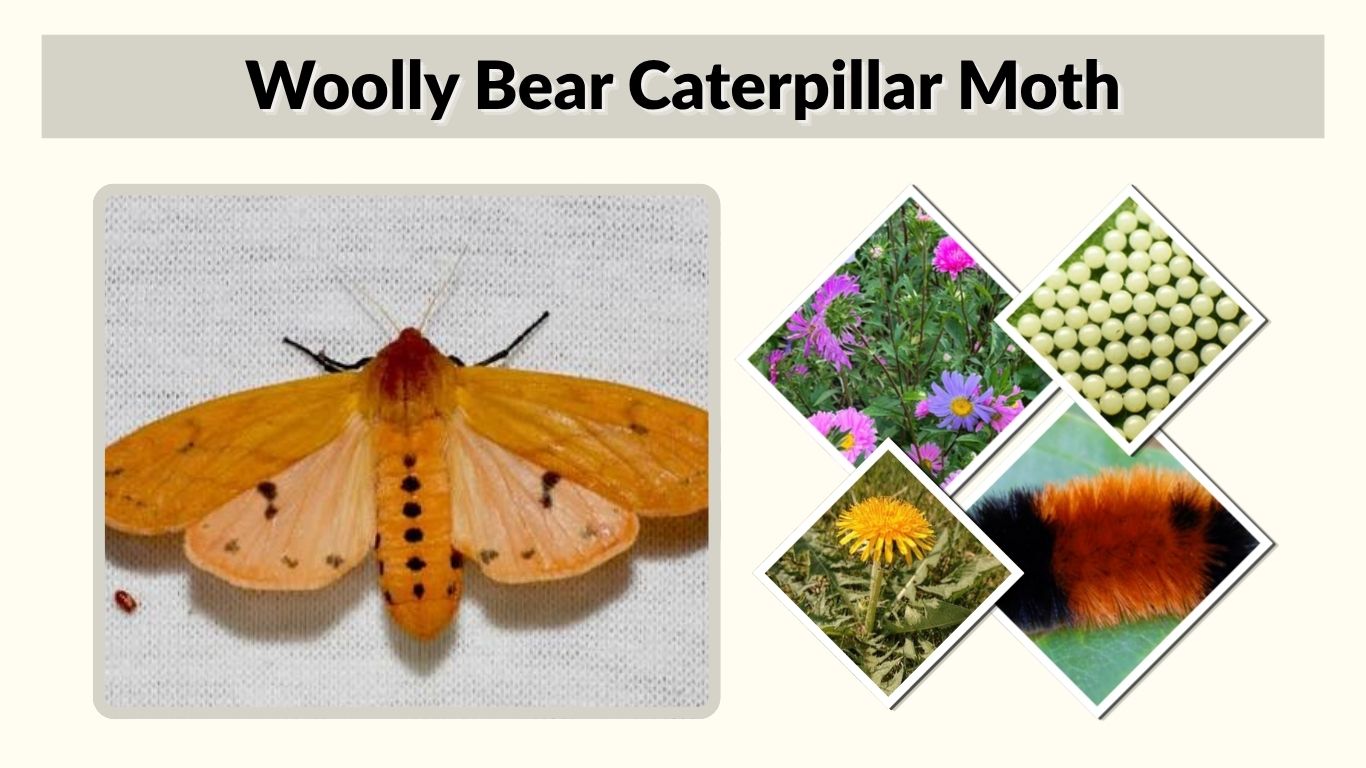
The familiar woolly bear caterpillar eventually becomes the Isabella tiger moth, a pale orange or tan moth scientifically named Pyrrharctia isabella. The caterpillar is best recognized by its rusty-brown middle and black ends, although its coloring changes as it grows. Woolly bears are especially noticeable in autumn when they cross roads and sidewalks searching for protected winter shelter. Despite their bristly appearance, banded woolly bears are not poisonous or venomous and do not possess stinging hairs.
What Moth Does a Woolly Bear Caterpillar Become?
The banded woolly bear caterpillar is the larval stage of the Isabella tiger moth. This species belongs to a large group of moths whose hairy caterpillars are commonly called woolly bears or woolly worms.
Adult Isabella tiger moths are less recognizable than their caterpillars. They are primarily active at night and may be seen resting near outdoor lights during spring and summer.
Isabella Tiger Moth Identification
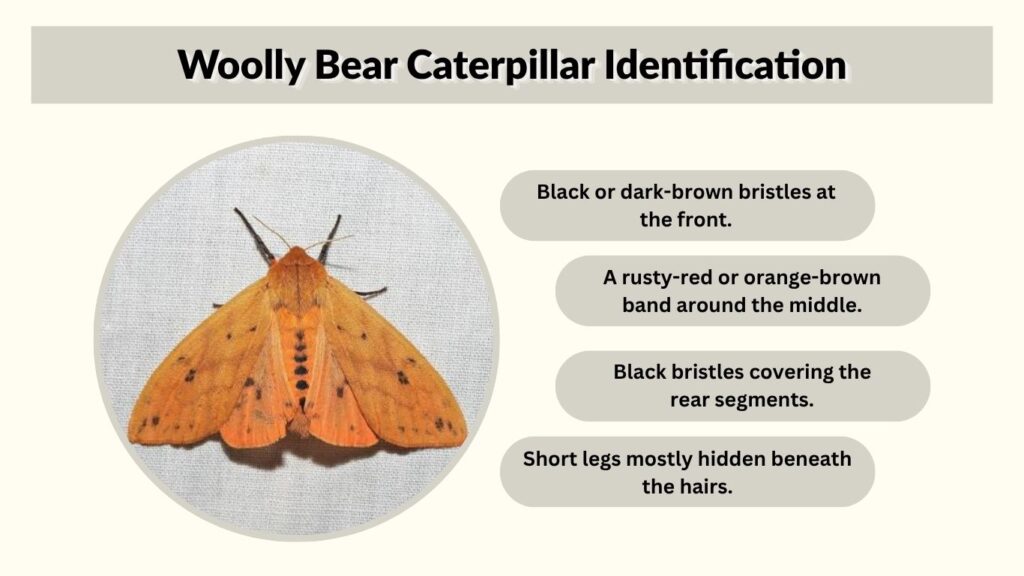
The adult moth usually has:
- Cream, yellowish-tan or pale orange forewings
- Several small black spots on the wings
- A fuzzy orange or tan body
- Pinkish-orange hindwings, especially in females
- A wingspan generally much wider than the caterpillar’s length
Male and female Isabella moths can differ slightly in color. NC State Extension notes that males are generally buff-colored with small black spots, while females may have attractive pink hindwings.
Woolly Bear Caterpillar Identification
A typical banded woolly bear is a thick, densely bristled caterpillar. Mature individuals may reach approximately 1¼ to 2 inches long. They commonly curl into a tight ball when disturbed, using their stiff hairs as protection against predators.
Key Identification Features
- Black or dark-brown bristles at the front
- A rusty-red or orange-brown band around the middle
- Black bristles covering the rear segments
- Short legs mostly hidden beneath the hairs
- A rounded body without long hair pencils or prominent tufts
- A tendency to curl into a ball when touched or threatened
The rusty middle band generally becomes wider as the caterpillar grows. Therefore, two woolly bears found in the same location may have noticeably different amounts of black and brown coloring.
Are Woolly Bear Caterpillars Poisonous?
The banded woolly bear caterpillar is not poisonous, venomous or capable of stinging. Its bristles are defensive structures rather than venom-delivering spines. Reliable extension sources describe this species as harmless or virtually harmless to people.
However, its hairs are stiff and may feel prickly. It is still sensible to avoid repeatedly handling the caterpillar, particularly when you are uncertain about its identification. The name “woolly bear” is used for caterpillars of several moth species, and not every fuzzy caterpillar has the same characteristics.
What to Do After Handling One
Ordinary contact with a correctly identified banded woolly bear generally does not require treatment. Wash your hands with soap and water, avoid touching your eyes and monitor the skin for unexpected irritation. Seek medical advice if significant swelling, persistent discomfort or breathing difficulty develops, as the insect may have been misidentified or the person may be unusually sensitive.
Woolly Bear Caterpillar Moth Life Cycle
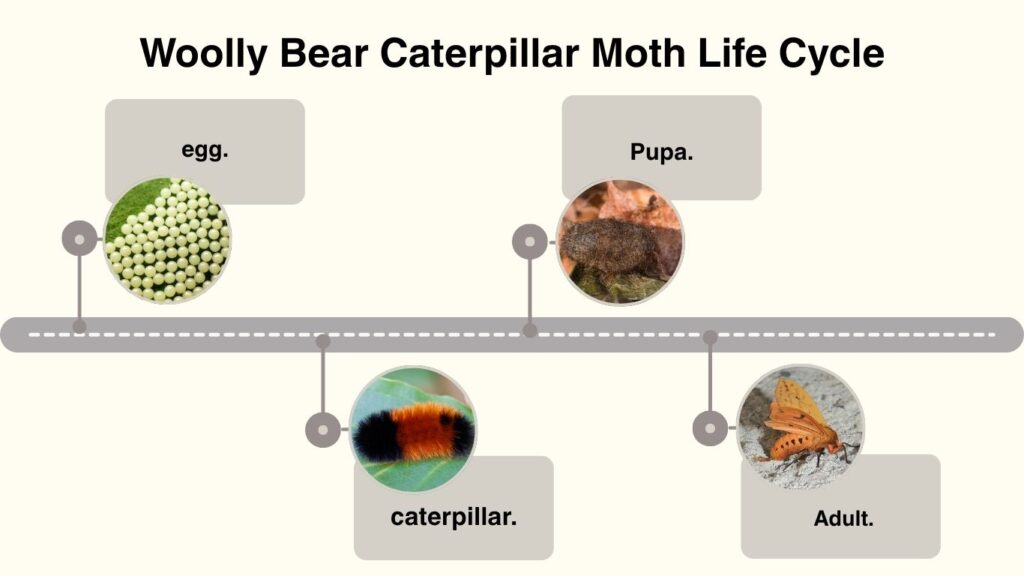
The woolly bear undergoes complete metamorphosis, passing through egg, caterpillar, pupa and adult moth stages. Depending on climate, Isabella tiger moths may complete more than one generation during a warm growing season.
1. Egg
Female Isabella moths place clusters of eggs on vegetation. A single batch may contain 100 or more eggs. The tiny caterpillars emerge after the eggs have developed for several days.
2. Caterpillar
Young woolly bears feed on low-growing vegetation and molt several times. Minnesota DNR reports that they normally pass through four to six growth stages. Their rusty middle band tends to expand as they mature.
3. Winter Dormancy
Woolly bears seen walking across paths in autumn are usually searching for protected shelter beneath logs, loose bark or leaf litter. Late-season caterpillars overwinter in this larval stage and resume activity when temperatures rise.
Their bodies produce protective compounds, including glycerol, that help limit damage during freezing conditions. They are not kept warm by their “fur”; instead, their internal cold adaptations help them survive winter.
4. Cocoon and Pupa
After feeding again in spring, the caterpillar spins a loose silk cocoon that incorporates some of its hairs. Inside, it transforms into a pupa. The adult moth may emerge within approximately one to three weeks under suitable conditions.
5. Adult Moth
The Isabella tiger moth emerges, mates and lays eggs to begin the next generation. Caterpillars produced early in the season may become moths during the same summer, whereas autumn woolly bears usually do not emerge as adults until the following spring.
What Do Woolly Bear Caterpillars and Moths Eat?
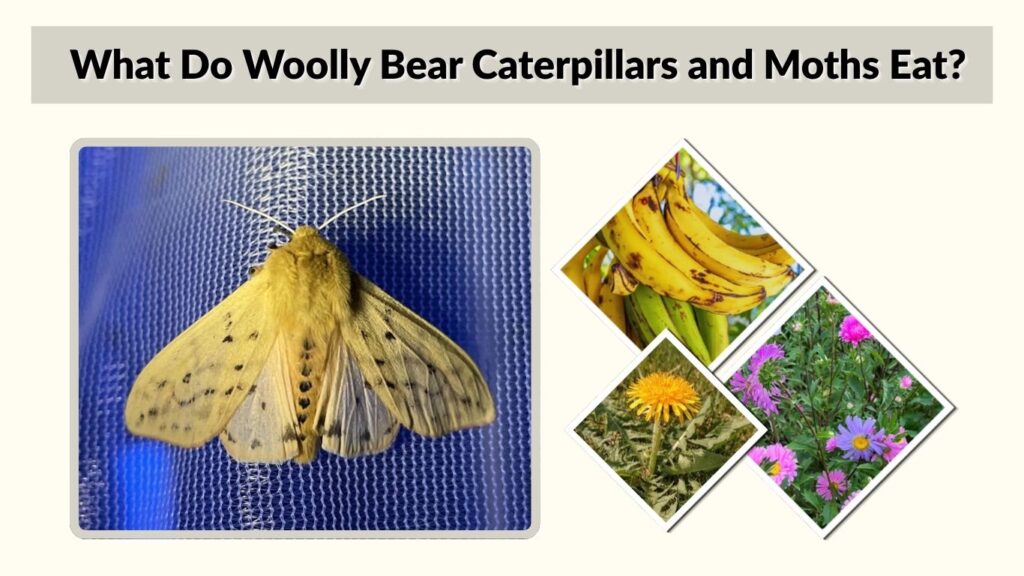
Banded woolly bears feed mainly on common herbaceous plants rather than seriously damaging healthy trees or garden crops. They are broad feeders and may sample several kinds of low vegetation.
Common foods include:
- Dandelion
- Plantain
- Aster
- Goldenrod
- Dock
- Clover
- Grasses and other weeds
Adult Isabella tiger moths may drink nectar from flowers. Because the caterpillars generally feed on widespread weeds and rarely occur in damaging numbers, insecticide treatment is usually unnecessary.
Banded Woolly Bear vs. Giant Leopard Moth Caterpillar
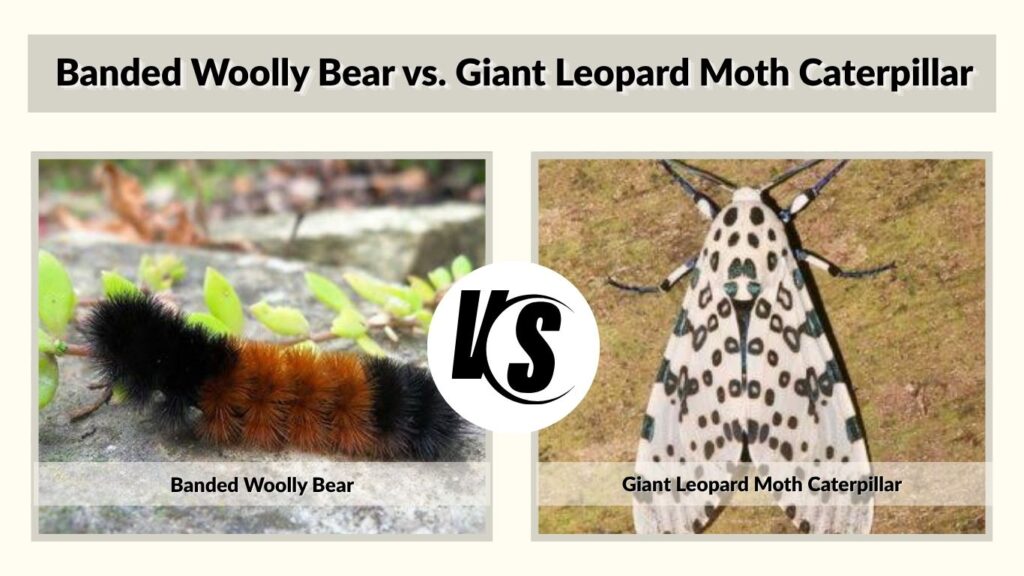
The giant leopard moth caterpillar is sometimes called a giant woolly bear. It is often confused with an all-black banded woolly bear, but the two caterpillars become very different adult moths.
| Feature | Banded woolly bear | Giant leopard moth caterpillar |
| Scientific name | Pyrrharctia isabella | Hypercompe scribonia |
| Main color | Black ends with rusty-brown middle | Mostly solid black |
| Body between bristles | Usually dark | Red or orange bands |
| Typical mature size | About 1¼–2 inches | Often around 2 inches |
| Adult moth | Tan or orange Isabella tiger moth | White moth with black spots |
| Stinging ability | Does not sting | Does not sting |
The giant leopard moth caterpillar’s red or orange rings become most visible when its body stretches or curls. Its adult form is a striking white moth covered with black spots, unlike the muted orange-brown Isabella tiger moth.
Black, Yellow and White Woolly Bear Caterpillars
“Woolly bear” is a general nickname applied to the hairy larvae of several tiger moth species. Consequently, a yellow, white or entirely black caterpillar may not be a color form of the familiar banded woolly bear.
Yellow Woolly Bear
The yellow woolly bear is usually the caterpillar of the Virginian tiger moth, Spilosoma virginica. Its hairs can range from pale cream and yellow to reddish-brown or nearly black, making color alone unreliable for identification.
All-Black Woolly Bear
A nearly black caterpillar might be a banded woolly bear with a narrow brown section, but it could also be a giant leopard moth caterpillar or another tiger moth species. Look for hidden red rings, overall size and the arrangement of the bristles before deciding.
White Woolly Bear
White or pale fuzzy caterpillars are generally different species rather than Isabella tiger moth caterpillars. Some white caterpillars possess hairs that can irritate skin, so an unidentified specimen should not be handled based only on the belief that all “woolly bears” are harmless.
Can Woolly Bears Predict Winter Weather?
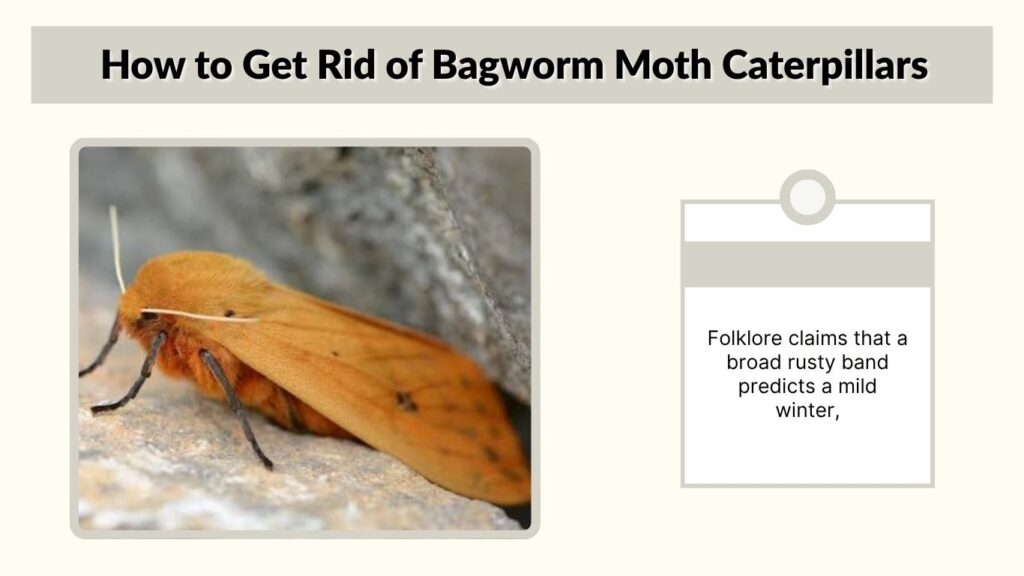
Folklore claims that a broad rusty band predicts a mild winter, while wider black ends indicate a severe one. This is a popular tradition rather than a reliable weather forecast.
The band proportions are influenced primarily by the caterpillar’s age and growth. As the woolly bear molts, black hairs are gradually replaced by orange hairs, causing older caterpillars to appear browner through the middle. Individual variation and growing conditions may also affect appearance.
The Arctic Woolly Bear Moth
The Arctic woolly bear, Gynaephora groenlandica, is a separate species from the common banded woolly bear. It lives in the High Arctic, where extremely short summers greatly limit feeding and growth.
Rather than completing its development within one season, the Arctic caterpillar may remain in its larval stage for several years. It feeds during brief warm periods and enters dormancy for most of each year. This slow-growing Arctic species should not be confused with the Isabella tiger moth caterpillar commonly seen crossing North American roads in autumn.
FAQs
What is a woolly bear caterpillar moth called?
The common black-and-rust banded woolly bear becomes the Isabella tiger moth. Its scientific name is Pyrrharctia isabella. Because several other tiger moth caterpillars are also called woolly bears, identifying the caterpillar’s color pattern is important.
How long does it take a woolly bear to become a moth?
The timing depends on the season. Caterpillars found early in the growing season may pupate and emerge within the same summer. Those found in autumn usually overwinter as caterpillars, pupate during spring and emerge as Isabella tiger moths afterward.
Does a woolly bear caterpillar make a cocoon?
Yes. After completing its larval growth, it creates a loose silk cocoon containing some of its own bristles. The caterpillar becomes a pupa inside the cocoon before emerging as an adult moth.
Is an all-black woolly bear poisonous?
An all-black caterpillar is not necessarily the common banded woolly bear. It may be a giant leopard moth caterpillar or another species. Giant leopard moth caterpillars do not sting, but unidentified hairy caterpillars should be observed without direct handling.
Do woolly bear caterpillars damage gardens?
Banded woolly bears feed on many common weeds, grasses and low-growing plants, but they rarely cause significant garden damage. Extension guidance generally recommends leaving them alone rather than applying insecticides.