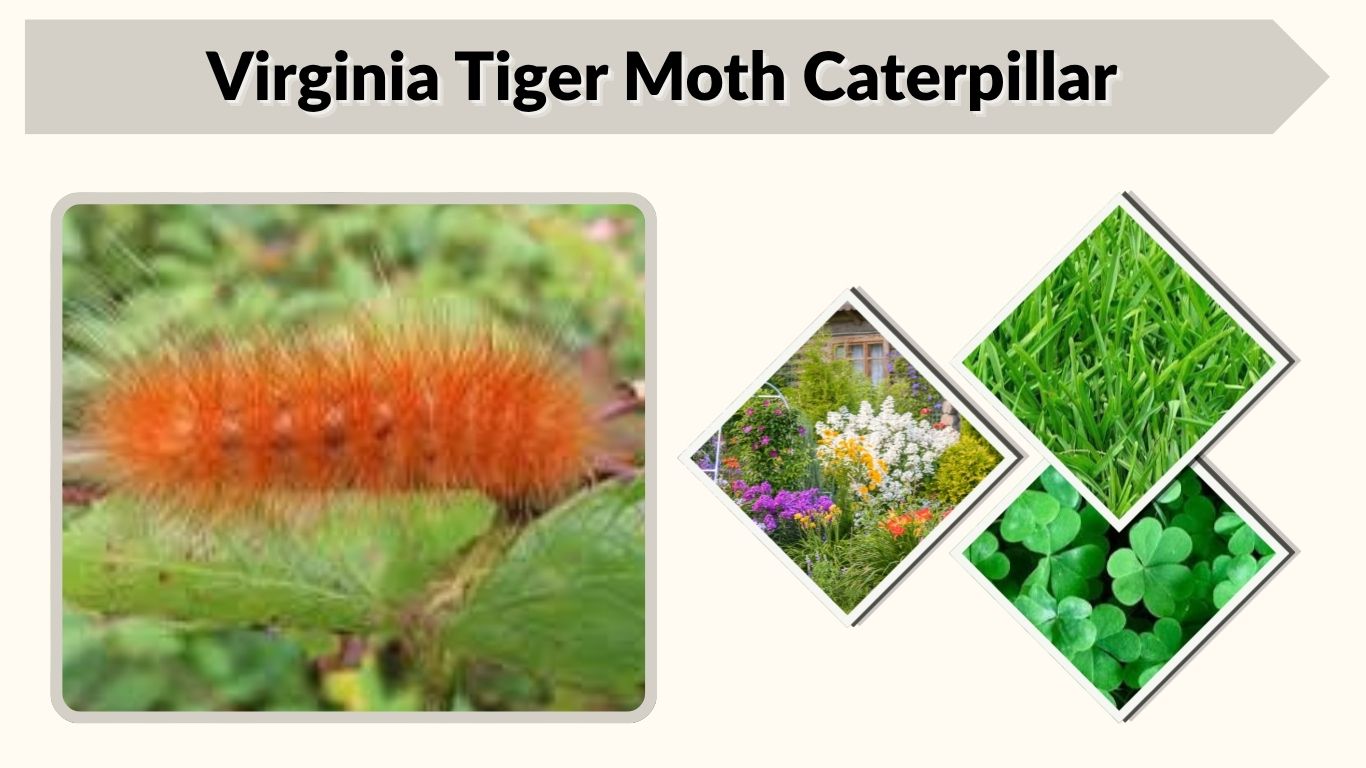
The Virginia tiger moth caterpillar, more correctly called the Virginian tiger moth caterpillar, is the larval stage of Spilosoma virginica. It is also known as the yellow bear caterpillar because many individuals are pale yellow, creamy white, orange-yellow, or light brown. Although its fuzzy body may look dangerous, this caterpillar is not a true stinging caterpillar. It may irritate sensitive skin, but it does not inject venom. It feeds on many low-growing plants and is often found in gardens, fields, lawns, and weedy areas.
What Is a Virginia Tiger Moth Caterpillar?
The Virginia tiger moth caterpillar is a hairy caterpillar that later becomes the Virginian tiger moth, a mostly white moth with small dark spots. It belongs to the tiger moth group and is common in many parts of North America.
The caterpillar is often noticed on garden plants, weeds, grasses, and vegetable crops. It is sometimes confused with other fuzzy caterpillars, especially woolly bears and fall webworms. The name “yellow bear” is commonly used because its hairs often look yellowish or creamy.
Virginia vs Virginian Tiger Moth Caterpillar
Many people search for “Virginia tiger moth caterpillar,” but the common name is usually written as Virginian tiger moth. Both names are often used online to refer to the same caterpillar, Spilosoma virginica.
| Search Name | Meaning |
| Virginia tiger moth caterpillar | Common search variation |
| Virginian tiger moth caterpillar | More standard common name |
| Yellow bear caterpillar | Common larval name |
| White Virginian tiger moth caterpillar | Pale form of the caterpillar |
| Spilosoma virginica | Scientific name |
Virginia Tiger Moth Caterpillar Identification
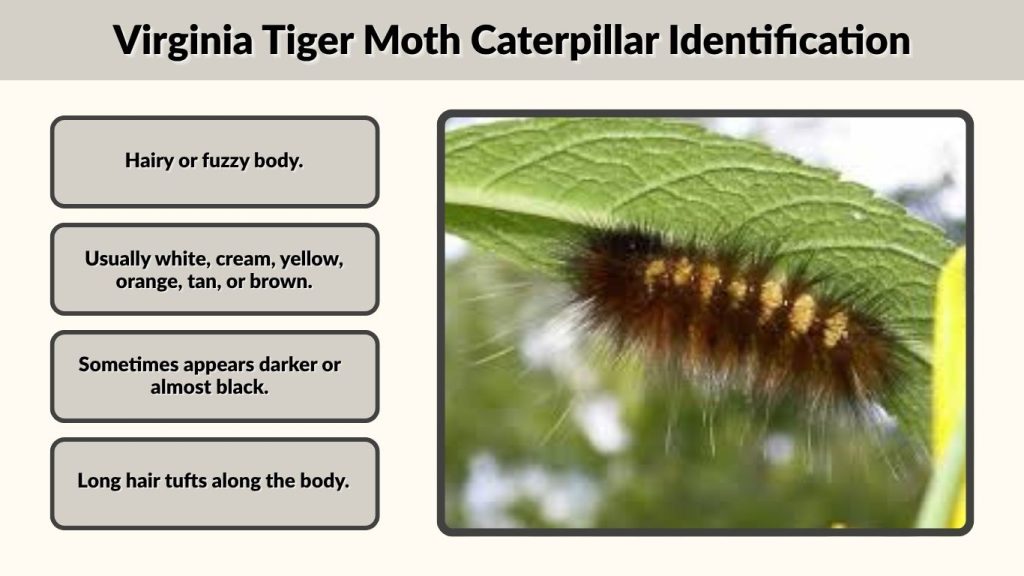
The Virginian tiger moth caterpillar can vary a lot in color. Some are nearly white, some are pale yellow, and others may be rusty orange, tan, brown, or even dark. Younger caterpillars may look yellow-green with fewer hairs, while older ones become denser and fuzzier.
Identification Features
- Hairy or fuzzy body
- Usually white, cream, yellow, orange, tan, or brown
- Sometimes appears darker or almost black
- Long hair tufts along the body
- Soft caterpillar body under the hairs
- Often found on low plants, weeds, and garden crops
- Adult moth is mostly white with small black spots
The caterpillar’s color alone is not enough for perfect identification because it changes with age and varies between individuals.
Is the Virginia Tiger Moth Caterpillar Poisonous?
The Virginia tiger moth caterpillar is not considered poisonous or venomous. Its hairs are not true stinging hairs, and it does not inject venom. However, the bristles can irritate some people’s skin, especially if the caterpillar is handled roughly.
So, it is best to avoid bare-hand handling. If you need to move one from a plant or walkway, use a leaf, small stick, paper, or gloves.
Safety Notes
- It is not venomous.
- It does not sting like a saddleback or puss caterpillar.
- It may cause mild skin irritation.
- It is not dangerous to most people.
- Children should be taught not to rub fuzzy caterpillars on the skin.
- Pets usually avoid hairy caterpillars, but eating one may cause mild mouth irritation.
Does the Virginia Tiger Moth Caterpillar Sting?
No, the Virginia tiger moth caterpillar does not truly sting. People may describe the hairs as “sting-like” because the bristles can feel prickly or irritating, but this is not the same as venomous spines.
If you touch one and feel itching, wash the area with soap and water. Avoid scratching, and monitor the skin if you are sensitive to insect hairs.
Virginia Tiger Moth Caterpillar Host Plants
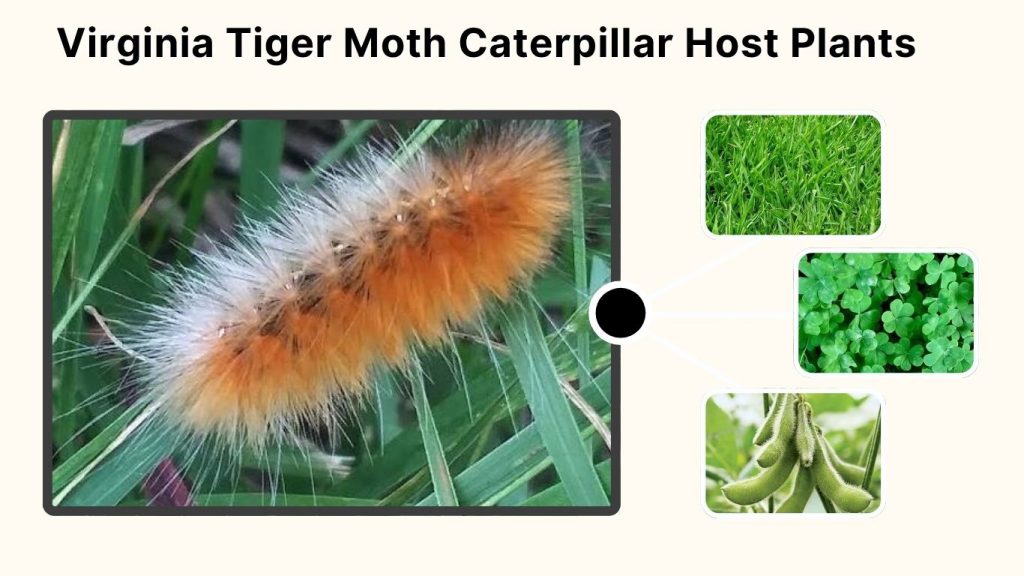
The Virginian tiger moth caterpillar is a generalist feeder. This means it can eat many types of plants instead of depending on one host plant. NatureServe describes the larvae as feeding on a wide range of low-growing plants, including grasses and clover.
Common Host Plants and Foods
- Grass
- Clover
- Dandelion
- Plantain
- Cabbage
- Lettuce
- Corn
- Soybean
- Weeds
- Low-growing herbaceous plants
- Garden vegetables
- Leaves of various wild plants
Because it eats many plants, it can survive in lawns, gardens, fields, roadsides, and meadows.
Virginia Tiger Moth Caterpillar Diet
The diet of a Virginia tiger moth caterpillar is mostly leaves and soft plant material. It may skeletonize leaves, which means it eats the soft tissue while leaving some veins behind. NatureServe notes that the larvae can act as defoliators and may damage crops when late-summer caterpillars become abundant.
In small numbers, they are usually not a serious problem. A few caterpillars on weeds or wild plants can simply be left alone. In vegetable gardens, however, several caterpillars on the same plant may cause noticeable leaf damage.
Virginia Tiger Moth Caterpillar Eating Cabbage
Virginia tiger moth caterpillars may feed on cabbage and other garden plants. If you see a fuzzy white or yellow caterpillar eating cabbage leaves, it may be a Virginian tiger moth caterpillar, though cabbage worms and other caterpillars can also damage cabbage.
For a small garden, hand removal is usually enough. Use gloves or a leaf to move the caterpillar to a weedy area away from vegetables. Avoid unnecessary spraying because many caterpillars and moths support birds, parasitoid wasps, and other wildlife.
White Virginian Tiger Moth Caterpillar
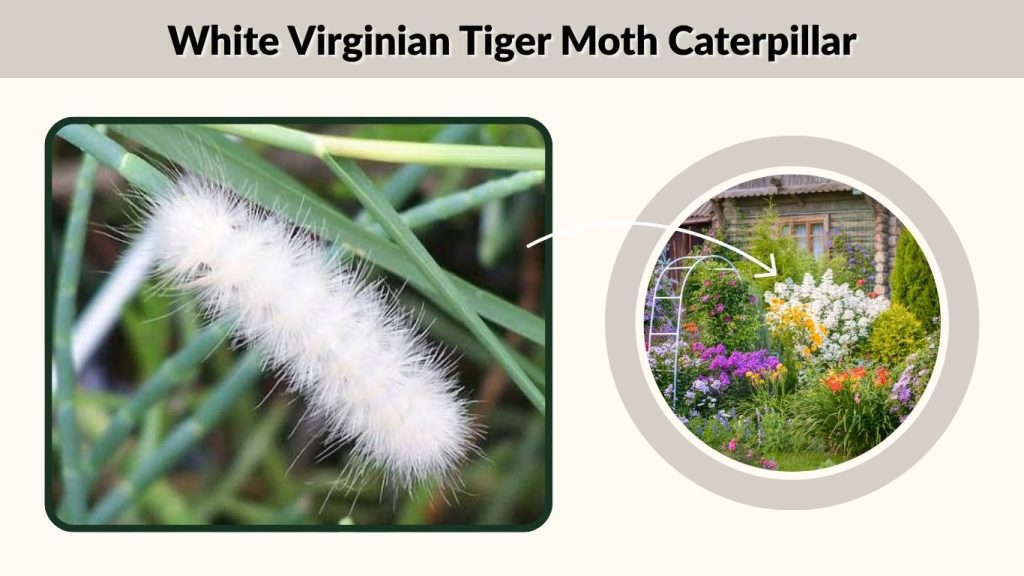
A white Virginian tiger moth caterpillar is usually just a pale color form of the same species. This caterpillar can range from pale cream to yellow, orange, brown, or darker shades. Some individuals are so pale that they look almost white.
White or pale caterpillars may be found on leaves, stems, garden plants, and low vegetation. The adult moth is also mostly white, which makes the pale caterpillar form easier to associate with the adult stage.
Virginia Tiger Moth From Black Caterpillar
Some Virginian tiger moth caterpillars can appear very dark, especially compared with pale yellow individuals. A dark or black-looking caterpillar may still be Spilosoma virginica, but identification should be based on body shape, hair pattern, location, host plant, and adult emergence if you are raising it for observation.
Because many fuzzy caterpillars are black or dark brown, avoid identifying it by color alone.
Different Stages of Virginia Tiger Moth Caterpillar
The caterpillar changes as it grows. Young larvae may be smaller, less hairy, and lighter yellow-green. Older larvae become larger, fuzzier, and more bristly. Color may shift from pale yellow to cream, orange, tan, brown, or dark.
Growth Stages
- Egg stage on leaves
- Young caterpillar with fewer hairs
- Older fuzzy caterpillar
- Wandering caterpillar searching for a pupation or winter site
- Cocoon stage
- Adult white tiger moth
Virginian Tiger Moth Caterpillar Life Cycle
The Virginian tiger moth has a complete life cycle: egg, larva, pupa, and adult. BugGuide shows the main stages as eggs, caterpillar, pupa, pupa in cocoon, and adult.
| Life Stage | What Happens |
| Egg | Female moth lays eggs on the underside of leaves |
| Caterpillar | Larva feeds on leaves and grows |
| Cocoon | Caterpillar spins a protective cocoon |
| Pupa | It changes inside the cocoon |
| Adult moth | White moth emerges, mates, and lays eggs |
Minnesota Seasons notes that females may lay groups of 20 to 100 yellow eggs under leaves, and the caterpillar later spins a cocoon. The last generation of the year overwinters as larvae.
Virginian Tiger Moth Caterpillar Cocoon
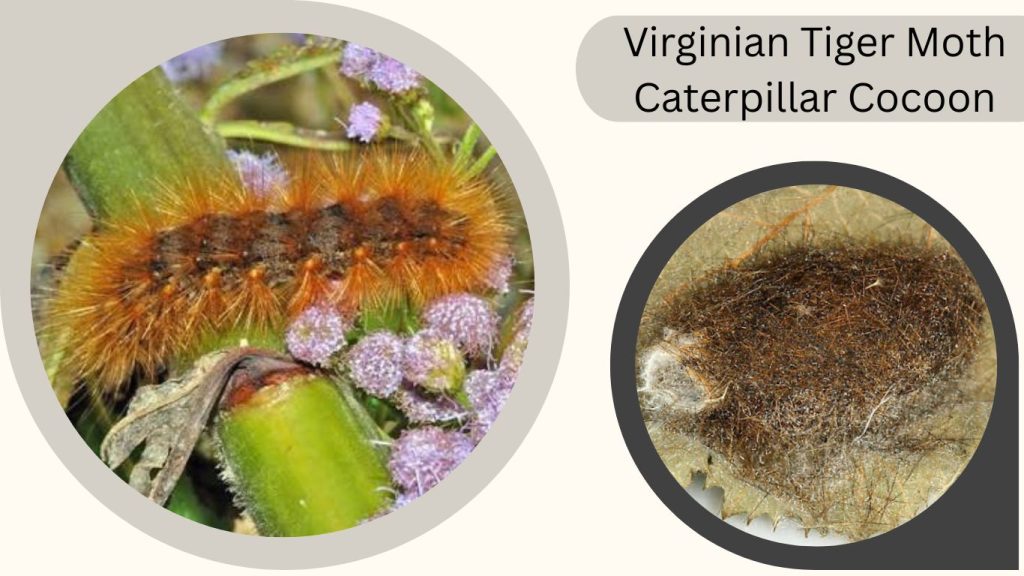
When ready to pupate, the caterpillar spins a cocoon. Like many hairy tiger moth caterpillars, it may use some of its own hairs in the cocoon. The cocoon protects the pupa while it changes into the adult moth.
Depending on the season and climate, the moth may emerge after a few weeks, or the caterpillar may overwinter before completing development.
Virginia Tiger Moth Caterpillar Care
If you want to observe one temporarily, keep the setup simple and close to nature. A ventilated container, fresh leaves from the plant where you found it, and a bit of dry leaf litter are usually enough.
Basic Care Tips
- Use a container with air holes.
- Feed leaves from the plant it was already eating.
- Replace wilted leaves often.
- Add dry leaf litter or paper towel.
- Keep the container out of direct sun.
- Do not overhandle the caterpillar.
- Release it near where it was found when possible.
If it is found in fall, avoid keeping it in a warm indoor room for too long because this may disrupt its natural seasonal cycle.
Virginian Tiger Moth Caterpillar Control
Control is usually not needed unless many caterpillars are damaging vegetables, ornamentals, or crops. In home gardens, the easiest method is hand removal with gloves.
For larger infestations, check the plants regularly and remove egg clusters or young larvae early. Encourage birds, beneficial insects, and natural predators by avoiding broad-spectrum insecticides.
Simple Control Methods
- Handpick caterpillars with gloves.
- Move them to weeds or wild areas.
- Remove badly damaged leaves.
- Use row covers for vulnerable vegetables.
- Keep gardens weed-managed if caterpillars are abundant.
- Avoid spraying unless damage is serious.
FAQs
Is the Virginia tiger moth caterpillar poisonous?
No, the Virginia tiger moth caterpillar is not poisonous or venomous. Its hairs are not true stinging hairs. However, they can irritate sensitive skin, so it is better to avoid handling the caterpillar with bare hands.
What does a Virginia tiger moth caterpillar eat?
It eats leaves from many low-growing plants, including grasses, clover, dandelion, weeds, cabbage, lettuce, and other garden plants. It is a generalist feeder, which means it can use many host plants instead of one specific plant.
What caterpillar turns into a Virginian tiger moth?
The yellow bear caterpillar turns into the Virginian tiger moth, Spilosoma virginica. This caterpillar may be white, yellow, orange, tan, brown, or dark. The adult moth is mostly white with small black spots.
Does the Virginian tiger moth caterpillar sting?
No, it does not truly sting. The hairs can feel prickly and may cause mild irritation, but they do not inject venom. Use gloves, paper, or a leaf if you need to move one safely.
How do you control Virginia tiger moth caterpillars?
For small gardens, remove them by hand with gloves and move them away from valuable plants. Row covers can protect vegetables. Control is usually unnecessary unless there are many caterpillars causing visible leaf damage.