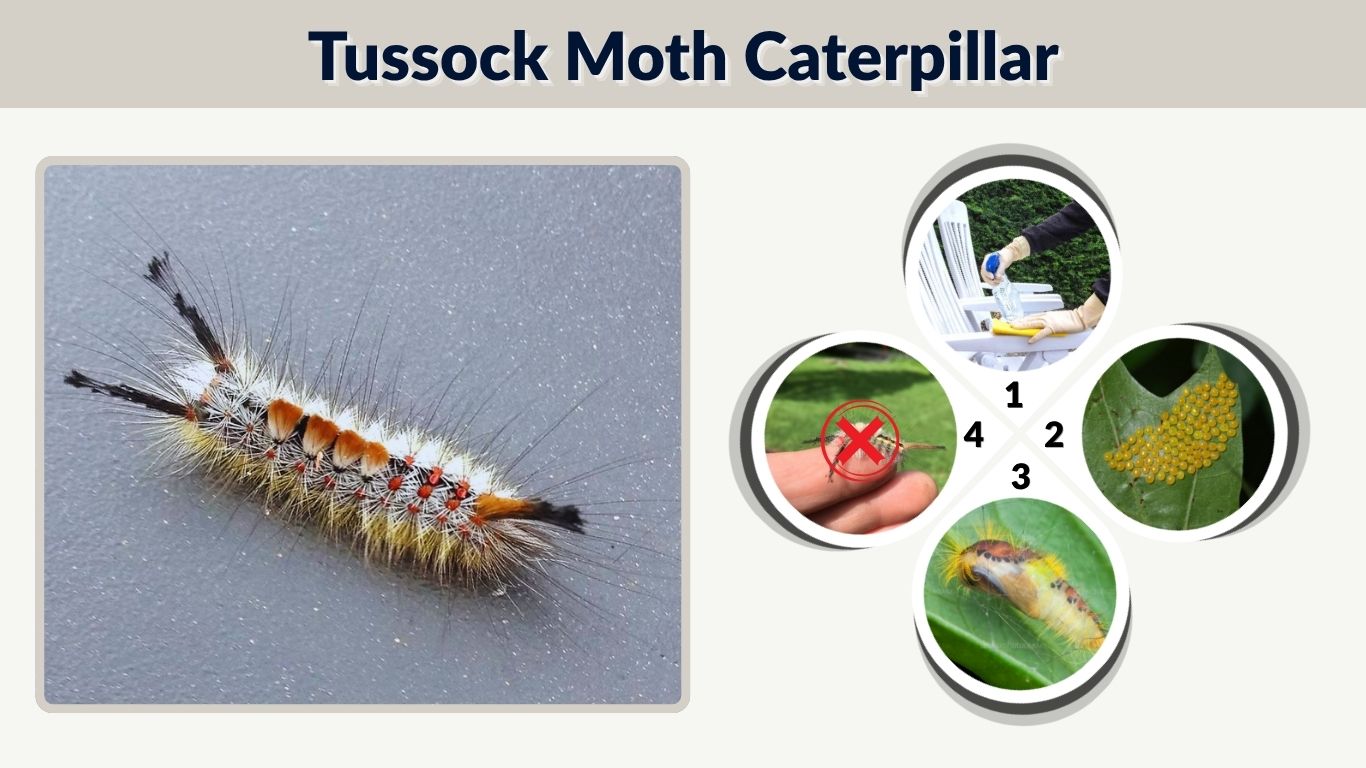
Tussock moth caterpillars look soft, colorful, and almost toy-like, but they are best admired without touching. These fuzzy caterpillars are found on trees, shrubs, milkweed, and ornamental plants across many regions. Some species can irritate skin, damage foliage, or alarm homeowners when they appear in large numbers. This guide explains how to identify them, whether they are poisonous, what to do after contact, and when control is necessary.
What Is a Tussock Moth Caterpillar?
A tussock moth caterpillar is the larval stage of a tussock moth. These caterpillars are known for dense hairs, raised brush-like tufts, and long hair pencils that may stick out from the front or rear of the body.
Many people search for them after seeing a white, yellow, black, orange, or banded fuzzy caterpillar crawling on a tree, porch, driveway, or garden plant. The word “tussock” refers to clumps or tufts, which describes the caterpillar’s appearance well.
Common Features
Most tussock moth caterpillars share a few traits:
- Hairy or fuzzy bodies
- Tufts or “brushes” along the back
- Long black, white, or orange hair pencils
- Bright warning colors in some species
- A tendency to feed on leaves or needles
Not every fuzzy caterpillar is a tussock moth, but many of the most recognizable fuzzy caterpillars in yards and forests belong to this group or closely related moth groups.
Are Tussock Moth Caterpillars Poisonous?
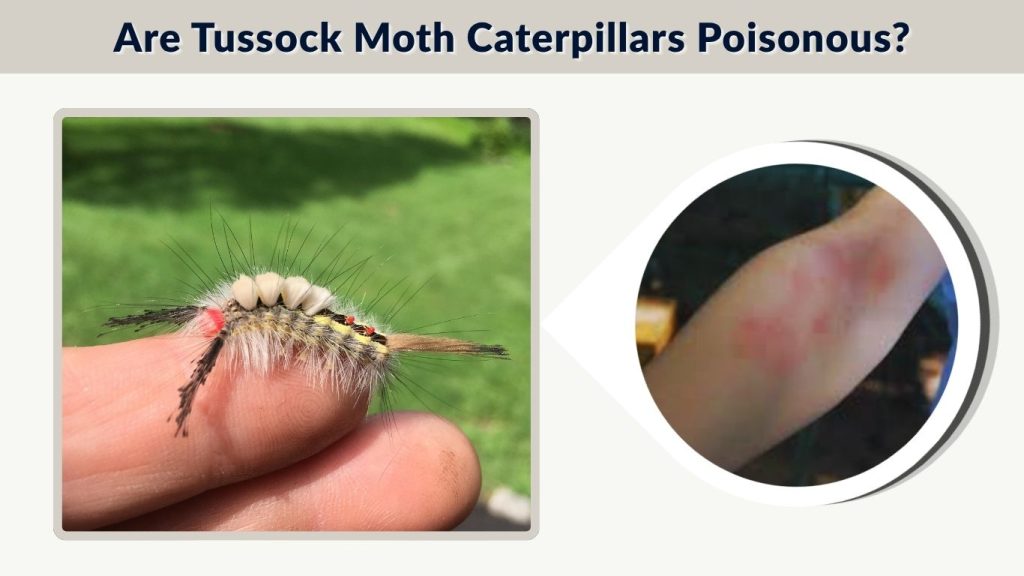
Tussock moth caterpillars are not poisonous in the way a toxic plant or contaminated food is poisonous. The bigger concern is their hairs. Many species have irritating setae, which are fine hair-like structures used for defense.
When these hairs touch skin, they may break off or lodge in the skin and cause irritation. That is why people often describe the reaction as a sting, rash, burn, or allergic reaction.
Poisonous vs Venomous vs Irritating
The terms are often mixed up online, so here is a simple distinction:
| Concern | What It Means | Tussock Moth Caterpillar Risk |
| Poisonous | Harmful if eaten or absorbed | Usually not the main concern for people |
| Venomous | Injects venom through a bite or sting | Most do not sting like bees or wasps |
| Irritating | Hairs trigger skin reaction | Common concern with several species |
| Allergenic | Sensitive people react more strongly | Possible in children or sensitive individuals |
So, is the tussock moth caterpillar poisonous? For most people, the practical answer is: avoid touching it because the hairs can cause irritation, not because it actively bites or injects venom.
Tussock Moth Caterpillar Rash and Sting Symptoms
A tussock moth caterpillar rash can happen after direct contact with the caterpillar or sometimes after touching cocoons, shed hairs, clothing, furniture, or outdoor surfaces where hairs are present.
Symptoms vary from mild to uncomfortable depending on the person, the species, and the amount of contact.
Common Symptoms
A reaction may include:
- Itching
- Red bumps
- Burning or stinging feeling
- Mild swelling
- Tenderness
- Rash in a line or patch
- Irritated eyes if hairs are transferred to the face
Children are more likely to touch fuzzy caterpillars out of curiosity, so rashes are sometimes reported around schools, parks, and yards.
What to Do After Contact
If you touch a tussock moth caterpillar, avoid scratching. Scratching can push hairs deeper into the skin and make irritation worse.
A basic response includes:
- Wash the area gently with soap and water.
- Use tape to lift loose hairs from the skin.
- Apply a cold compress for discomfort.
- Use an over-the-counter anti-itch product if appropriate.
- Wash clothing that may contain hairs.
- Seek medical help for severe swelling, eye exposure, breathing trouble, or worsening symptoms.
Most reactions are temporary, but severe allergic responses should be treated seriously.
Common Types of Tussock Moth Caterpillars
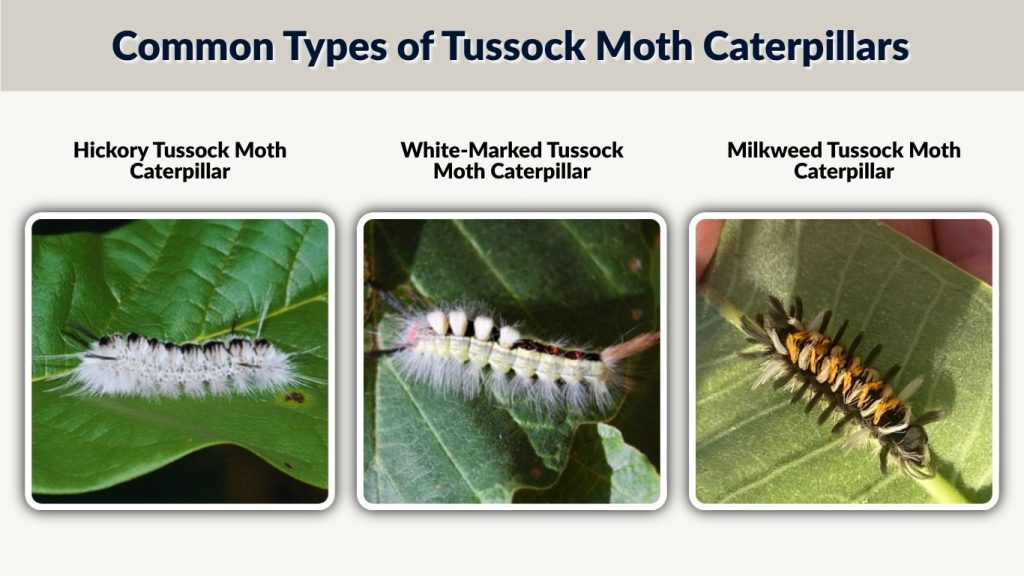
There are many tussock moth caterpillar species, and common names can overlap by region. Identification often depends on color, host plant, season, and location.
Hickory Tussock Moth Caterpillar
The hickory tussock moth caterpillar is one of the most searched species because of its white-and-black fuzzy appearance. It is often seen in late summer and fall.
It usually has a white body with black markings and longer black hair pencils. It feeds on hardwood trees such as hickory, walnut, ash, elm, maple, and oak. Many people search for “hickory tussock moth caterpillar rash,” “hickory tussock moth caterpillar sting,” and “is the hickory tussock moth caterpillar poisonous” because contact can irritate sensitive skin.
Avoid handling it, even if it looks soft.
White-Marked Tussock Moth Caterpillar
The white-marked tussock moth caterpillar is another common species in North America. It is easy to notice because of its red head, white or pale brush-like tufts, dark body markings, and long hair pencils.
This species feeds on many trees and shrubs, including oak, cherry, willow, hackberry, and ornamental plants. Because it may appear in yards, schools, and urban landscapes, it often causes concern when children find it.
Searches like “white marked tussock moth caterpillar poisonous,” “white-marked tussock moth caterpillar sting,” and “white marked tussock moth caterpillar rash” all relate to the same issue: irritating hairs.
Milkweed Tussock Moth Caterpillar
The milkweed tussock moth caterpillar is often found on milkweed plants. It may appear in groups when young and later become orange, black, and white with thick tufts.
Many gardeners ask whether the milkweed tussock moth caterpillar is good or bad. In most native gardens, it is better viewed as part of the ecosystem. It feeds on milkweed, just like monarch caterpillars, but it usually does not mean the plant is ruined.
Milkweed tussock moth caterpillars can chew leaves heavily when abundant, but milkweed often regrows. If your goal is a wildlife-friendly garden, leave some for them and some for monarchs.
Banded and Sycamore Tussock Moth Caterpillars
Banded tussock moth caterpillars and sycamore tussock moth caterpillars are often confused because both can be pale, hairy, and found on trees. The sycamore tussock moth caterpillar is associated with sycamore and London plane trees, while banded tussock moth caterpillars may feed on several hardwoods.
People often search “banded tussock moth caterpillar dangerous,” “sycamore tussock moth caterpillar poisonous,” and “sycamore tussock moth caterpillar rash.” As with many fuzzy caterpillars, the safest rule is not to touch them with bare hands.
Douglas-Fir Tussock Moth Caterpillar
The Douglas-fir tussock moth caterpillar is more important as a tree pest. It feeds on Douglas-fir, true firs, and spruce. During outbreaks, caterpillars can defoliate branches or whole trees, especially when trees are already stressed.
Searches such as “Douglas fir tussock moth caterpillar poisonous,” “Douglas-fir tussock moth caterpillar warning,” and “fir tussock moth caterpillar sting” often combine two concerns: tree damage and human irritation. The main landscape concern is defoliation, while the human concern is avoiding contact with the hairs.
Should I Kill Tussock Moth Caterpillars?
You do not always need to kill tussock moth caterpillars. Many are native insects and serve as food for birds, parasitoids, spiders, and other wildlife. A few caterpillars on a tree or milkweed patch are usually not a major problem.
However, control may be reasonable when there are large numbers, repeated defoliation, caterpillars near children’s play areas, or heavy feeding on valuable ornamental trees.
When to Leave Them Alone
Consider leaving them alone when:
- Only a few caterpillars are present.
- They are on native host plants.
- They are feeding on milkweed in a wildlife garden.
- The tree is healthy and damage is minor.
- They are not near doors, patios, schools, or play areas.
When Control Makes Sense
Control may be needed when:
- Caterpillars are dropping from trees around people.
- A child or pet is likely to touch them.
- Valuable trees are being heavily defoliated.
- Outbreaks happen for more than one season.
- Cocoons are attached to outdoor furniture, walls, or playground equipment.
The goal should be safe, targeted control, not unnecessary spraying.
How to Get Rid of Tussock Moth Caterpillars Safely
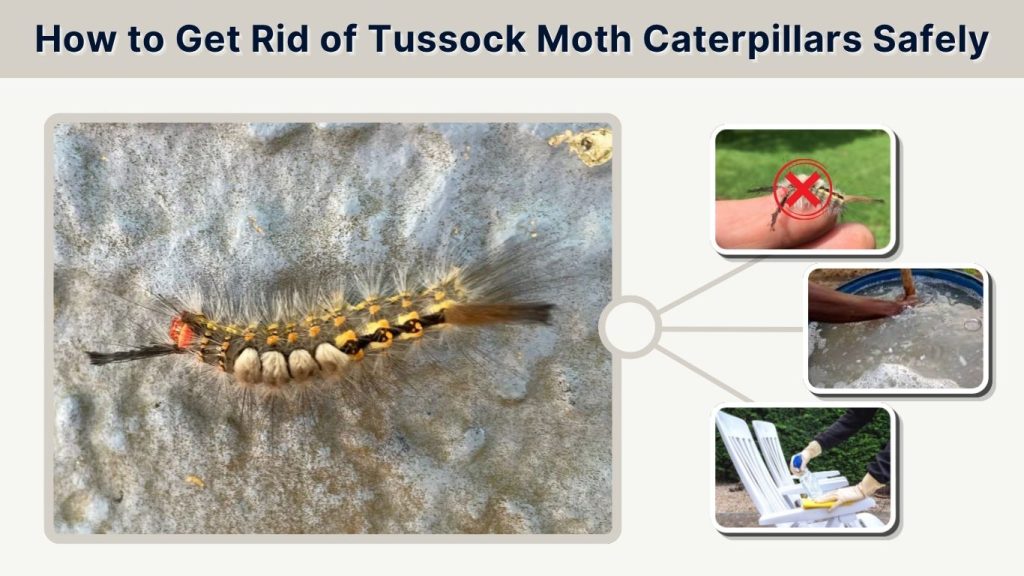
If you need to manage tussock moth caterpillars, start with the least risky method. Avoid crushing them with bare hands because the hairs can still irritate skin.
Safe Removal Methods
Use these steps for small infestations:
- Wear gloves, long sleeves, and eye protection.
- Pick caterpillars up with a tool, not bare hands.
- Drop them into soapy water if removal is necessary.
- Remove cocoons from outdoor furniture, siding, or play structures.
- Wash exposed surfaces where hairs may remain.
- Keep children and pets away during cleanup.
For trees, inspect leaves, branches, trunks, and nearby structures. Some species lay egg masses near old cocoons, so removing cocoons can reduce future numbers.
Natural and Cultural Control
Healthy landscapes often handle tussock moth caterpillars naturally. Predators, parasitoids, disease, and weather can reduce populations. In many outbreaks, numbers decline after a season or two.
You can support natural control by avoiding broad-spectrum insecticides, keeping trees watered during drought, and improving tree health with proper mulching and pruning.
Insecticide Options
For serious outbreaks on valuable trees, contact a local extension office, arborist, or pest management professional. Timing matters because caterpillars are easier to control when young. Spraying mature, hairy caterpillars is often less effective and may increase exposure to irritating hairs.
Always follow product labels and avoid treating flowering plants where pollinators are active.
Tussock Moth Caterpillar Life Cycle
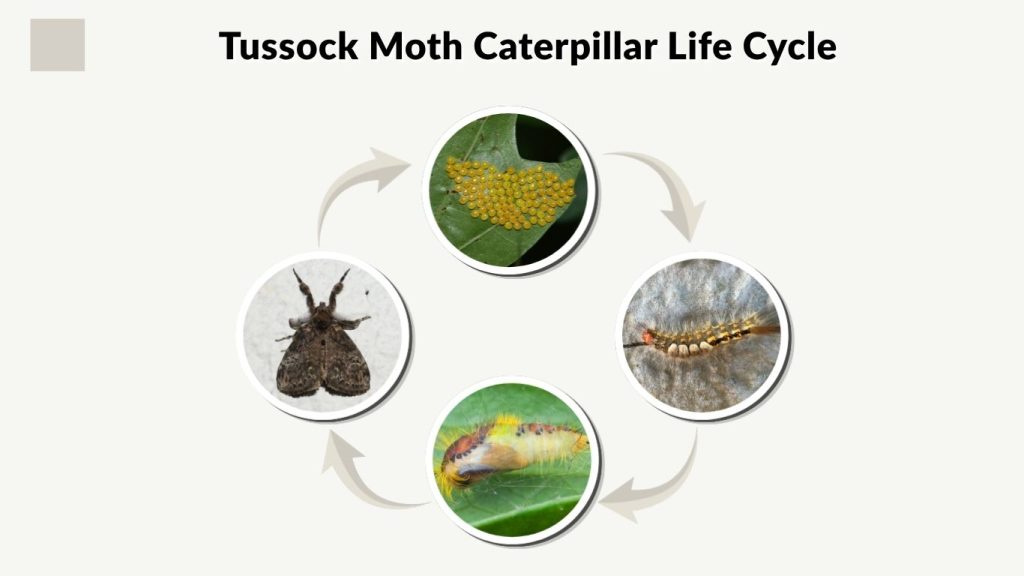
Tussock moths go through complete metamorphosis: egg, caterpillar, pupa, and adult moth. The caterpillar stage is the one most people notice because it feeds actively and has visible hairs.
Egg Stage
Many species overwinter as eggs. Eggs may be laid in masses on trees, bark, outdoor objects, or near the female’s cocoon. In some species, the female moth is wingless or weak-flying and lays eggs close to where she emerged.
Caterpillar Stage
The caterpillars hatch and begin feeding on leaves or needles. Young caterpillars may feed together, while older ones spread out. This is the stage that causes rashes in people and damages plants.
Cocoon and Adult Stage
When mature, the caterpillar spins a cocoon. The cocoon may contain irritating hairs, so it should not be handled barehanded. Adult moths emerge later, mate, and lay eggs to continue the cycle.
Regional Concerns: Florida, Georgia, Maine, Ohio, Wisconsin and California
Searches for “tussock moth caterpillar Florida,” “tussock moth caterpillar Georgia,” “tussock moth caterpillar Maine,” “tussock moth caterpillar Ohio,” “tussock moth caterpillar Wisconsin,” and “tussock moth caterpillar California” show that this is a widespread concern.
The exact species depends on the region. In the eastern United States, hickory tussock moth and white-marked tussock moth caterpillars are common concerns. In western and mountain regions, Douglas-fir tussock moth caterpillars may be more important on conifers. In Florida and other warm areas, live oak and other oak-feeding tussock moth caterpillars may be noticed when they drop from trees.
Because species vary by location, local extension resources are often the best place to confirm identification and control timing.
Are Tussock Moth Caterpillars Dangerous to Pets?
Dogs and cats may sniff, paw, or mouth fuzzy caterpillars. The hairs can irritate the mouth, nose, lips, or paws. While most encounters are not life-threatening, pets may drool, paw at the mouth, vomit, or act uncomfortable after contact.
If a pet eats or chews a tussock moth caterpillar, call a veterinarian for guidance, especially if symptoms appear. Do not try to identify risk only by color because several hairy caterpillars can irritate animals.
FAQs
Are tussock moth caterpillars poisonous?
Tussock moth caterpillars are usually not poisonous in the usual sense, but many have irritating hairs that can cause itching, redness, or a rash. The safest approach is to avoid touching any fuzzy tussock moth caterpillar with bare hands.
What does a tussock moth caterpillar rash look like?
A rash may look like red bumps, itchy patches, mild swelling, or irritated skin where the caterpillar touched you. Some people feel a stinging or burning sensation. Reactions vary, and sensitive people may have stronger symptoms than others.
Can a hickory tussock moth caterpillar sting you?
It does not sting like a bee or wasp, but its hairs can irritate skin and feel like a sting. The hickory tussock moth caterpillar is best handled with gloves or avoided entirely, especially by children.
Is the milkweed tussock moth caterpillar good or bad?
The milkweed tussock moth caterpillar is a native milkweed feeder and is usually not a serious problem. It may chew leaves, especially in groups, but it also belongs in native ecosystems. In pollinator gardens, it is often best to leave it alone.
How do I get rid of tussock moth caterpillars?
Wear gloves and remove small numbers by hand with a tool, then place them in soapy water if control is necessary. Remove cocoons carefully, keep children away, and avoid broad spraying unless a serious outbreak threatens valuable trees.