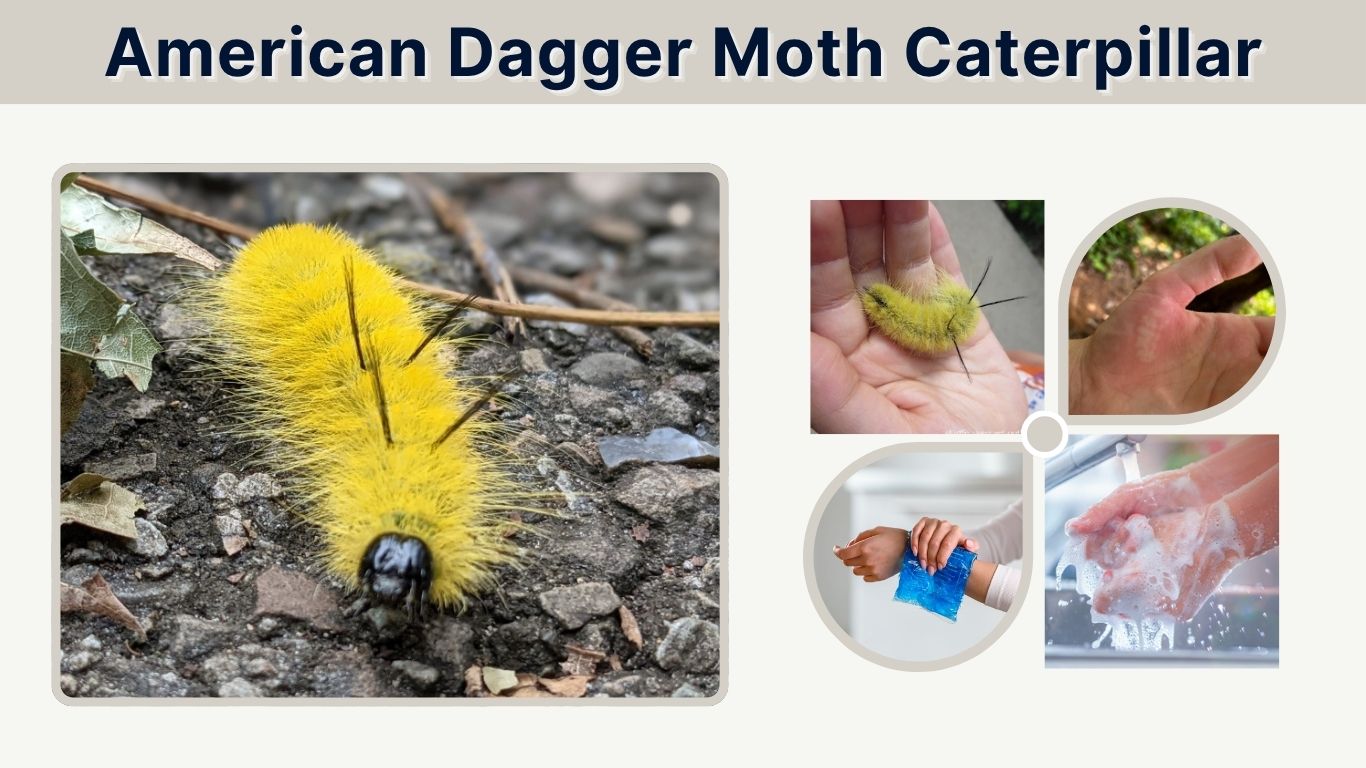
The American dagger moth caterpillar is one of those insects that looks soft, bright, and harmless at first glance. Its fluffy yellow or white body often makes people curious enough to touch it, but that is exactly what you should avoid. While it is not aggressive, its irritating hairs can cause burning, itching, redness, and a rash in people and pets.
What Is an American Dagger Moth Caterpillar?
The American dagger moth caterpillar is the larval stage of the American dagger moth, scientifically known as Acronicta americana. It is a hairy caterpillar commonly found in parts of North America, especially around hardwood trees, wooded areas, parks, yards, and forest edges.
It is best known for its fuzzy body and long black hair-like tufts. These tufts may look decorative, but they are the reason people are warned not to handle it. The caterpillar does not chase, jump, or attack. The problem usually starts when someone brushes against it, picks it up, or accidentally touches it while gardening, hiking, or playing outside.
You may see this caterpillar crawling on tree trunks, sidewalks, patios, lawns, or near the base of host trees. Mature caterpillars often leave trees when they are ready to find a protected place to spin a cocoon.
What Does the American Dagger Moth Caterpillar Look Like?
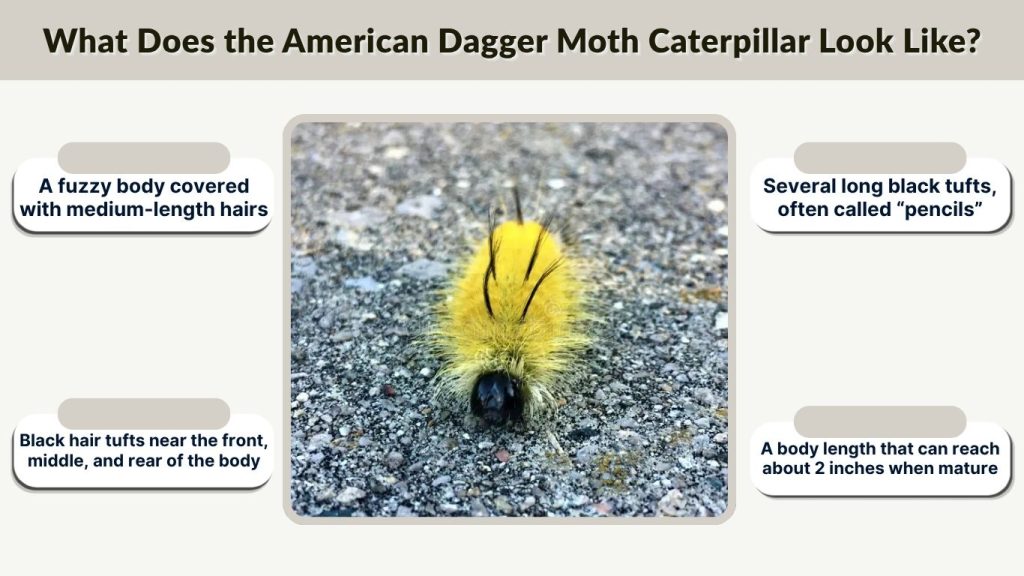
American dagger moth caterpillars are usually easy to notice because of their pale, fuzzy appearance. Many are bright yellow when younger, while older ones may look pale yellow, yellow-green, creamy white, or almost white.
Key identification features include:
- A fuzzy body covered with medium-length hairs
- Several long black tufts, often called “pencils”
- Black hair tufts near the front, middle, and rear of the body
- A body length that can reach about 2 inches when mature
- A soft-looking appearance that should not be touched
The adult American dagger moth looks very different. It is a grayish-white moth with faint black markings on the wings. The name “dagger moth” comes from wing markings that can resemble dagger shapes. Most people, however, search for the caterpillar because it is more colorful and more likely to be noticed during outdoor activity.
Is the American Dagger Moth Caterpillar Poisonous?
The American dagger moth caterpillar is commonly described as poisonous or venomous online, but the safest way to explain it is this: it can cause an irritating skin reaction if touched. The hairs or bristles can break off and become embedded in the skin, leading to a burning, stinging, or itchy rash.
It is not poisonous in the same way that a toxic plant or chemical is poisonous. It does not need to be eaten or injected to cause a reaction. Most problems happen through direct skin contact with the hairs.
For humans, touching the caterpillar may cause:
- Burning or stinging sensation
- Redness around the contact area
- Itching or irritation
- Raised bumps, welts, or rash
- Mild swelling
- Discomfort that may last hours or longer
Some people may react more strongly than others. Children, people with sensitive skin, and anyone with allergies may experience more noticeable irritation.
Does the American Dagger Moth Caterpillar Sting or Bite?
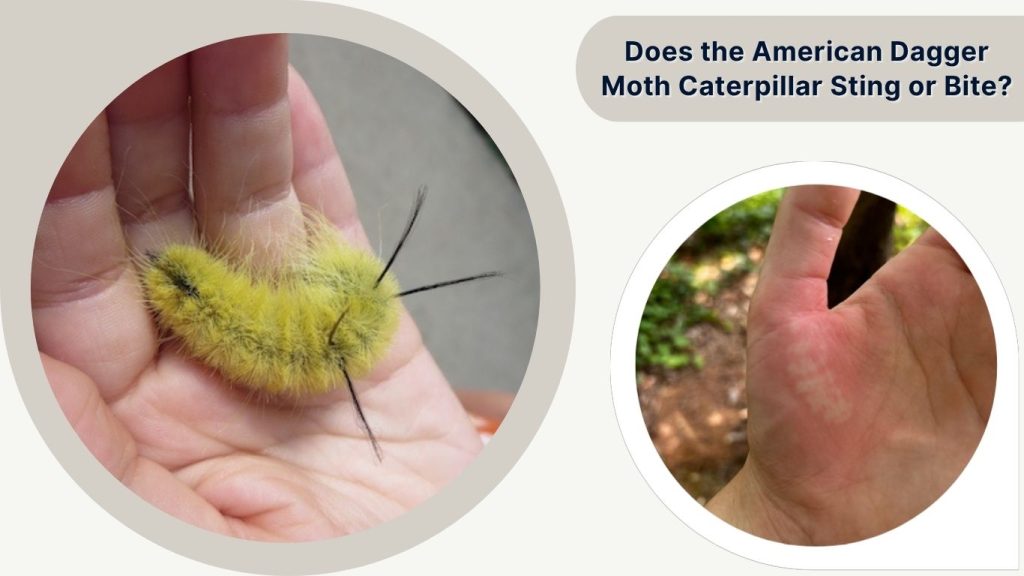
The American dagger moth caterpillar does not bite people in the normal sense. It does not have a harmful bite like a spider or ant. When people say it “stings,” they are usually describing the painful feeling caused by the caterpillar’s irritating hairs.
The sting-like reaction happens when the hairs touch skin. These tiny hairs can break off and irritate the surface of the skin or become lodged in it. That is why rubbing or scratching the area can make symptoms worse.
Avoid these common mistakes after contact:
- Do not scratch the rash
- Do not rub the area with a towel
- Do not touch your eyes after contact
- Do not pick up the caterpillar with bare hands
- Do not let children handle it for photos or play
The best approach is simple: admire it from a distance and leave it alone.
Skin Reaction From an American Dagger Moth Caterpillar
A skin reaction from an American dagger moth caterpillar can appear quickly after contact. Some people feel the burning or stinging sensation right away, while others notice redness and itching a little later.
The rash may look like small red bumps, hives, or an irritated patch of skin. In some cases, the area may feel warm or tender. The reaction is usually local, meaning it appears where the caterpillar touched the skin.
Common symptoms include:
- Immediate stinging or burning
- Itchy red rash
- Small bumps or welts
- Mild swelling
- Tenderness or skin sensitivity
- Irritation that worsens after scratching
Most mild reactions improve with basic first aid. However, a severe allergic reaction needs urgent medical care. Seek help quickly if there is trouble breathing, swelling of the face or throat, dizziness, widespread hives, eye involvement, or symptoms that continue to worsen.
American Dagger Moth Caterpillar Rash Treatment
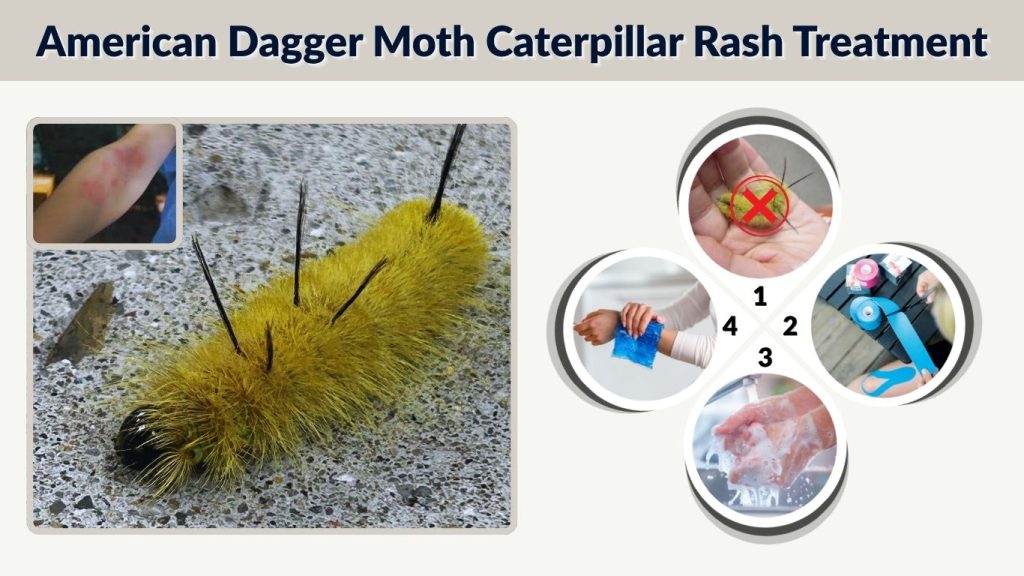
If you accidentally touch an American dagger moth caterpillar, act gently and quickly. The goal is to remove any irritating hairs without pushing them deeper into the skin.
Try these first-aid steps:
- Remove the caterpillar without using bare hands. Use a stick, leaf, paper, or gloves.
- Apply adhesive tape to the affected skin and lift it off to remove tiny hairs.
- Repeat with fresh tape several times if needed.
- Wash the area with soap and cool water.
- Apply a cold compress to reduce burning or swelling.
- Use an over-the-counter anti-itch cream or antihistamine if appropriate.
- Avoid scratching, rubbing, or covering the area with tight clothing.
If the rash is severe, spreads widely, affects the eyes or mouth, or does not improve, contact a healthcare professional. For children, pets, or anyone with allergy symptoms, it is better to be cautious.
Is the American Dagger Moth Caterpillar Poisonous to Dogs?
The American dagger moth caterpillar may irritate dogs if they sniff, lick, step on, or eat it. Dogs are naturally curious, so they may investigate a fuzzy caterpillar before owners notice. The hairs can irritate the mouth, nose, paws, or skin.
Possible signs in dogs include:
- Pawing at the mouth or face
- Drooling
- Whining or discomfort
- Redness around the mouth
- Vomiting after eating one
- Licking paws or skin
- Swelling or irritation
If your dog touched one, gently check the affected area and prevent more licking. If the caterpillar was eaten, or if your dog has swelling, vomiting, breathing trouble, or ongoing distress, call a veterinarian. Do not try to treat serious pet reactions at home without veterinary guidance.
Cats may also react if they bat at or bite the caterpillar. The same caution applies: keep pets away and contact a vet if symptoms appear.
What Does the American Dagger Moth Caterpillar Eat?
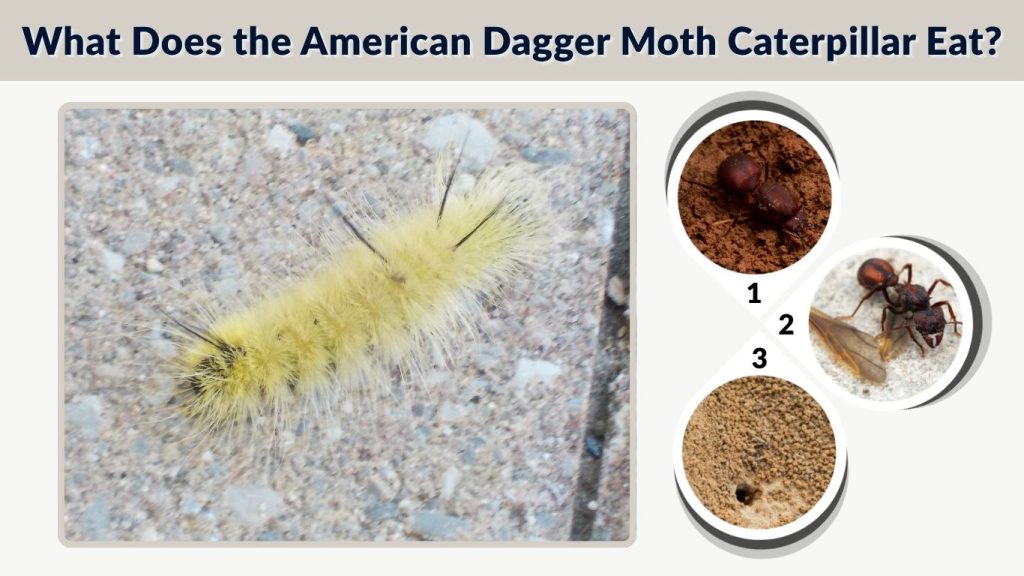
American dagger moth caterpillars feed on leaves from many hardwood trees. This broad diet is one reason they can appear in many yards, parks, and wooded neighborhoods.
Common host plants include:
- Maple
- Oak
- Elm
- Ash
- Willow
- Alder
- Birch
- Hickory
- Walnut
- Sycamore
- Poplar
- Basswood
They usually do not become major household pests. In many cases, people find only one or two caterpillars at a time. They may chew leaves, but a few caterpillars rarely cause serious damage to healthy mature trees.
American Dagger Moth Caterpillar Life Cycle
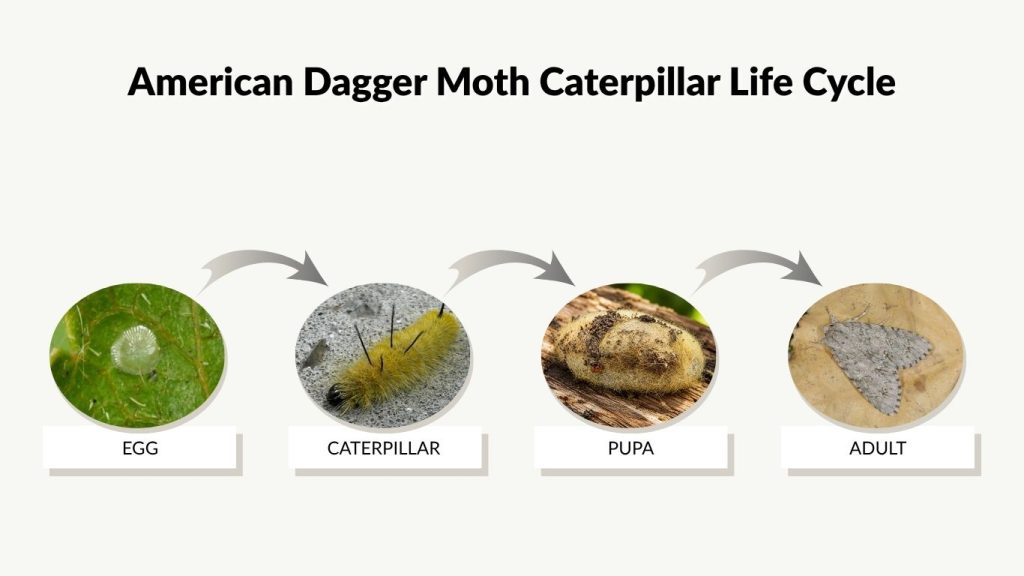
The American dagger moth begins as an egg laid on or near host plants. After hatching, the larva feeds on leaves and grows through several stages. During this caterpillar stage, it develops the fuzzy body and black bristle tufts that make it easy to recognize.
As it matures, the caterpillar eventually leaves the tree to find a safe place to pupate. It spins a cocoon in a protected location, such as leaf litter, bark crevices, or sheltered ground-level areas. After pupation, it becomes an adult moth.
The basic life cycle includes:
- Egg laid on host plant leaves
- Caterpillar feeds and grows
- Mature larva searches for a cocoon site
- Pupa develops inside the cocoon
- Adult moth emerges
In many areas, caterpillars are seen from summer into fall. Adult moths are often active from spring through early autumn, depending on location and climate.
Where Are American Dagger Moth Caterpillars Found?
American dagger moth caterpillars are associated with hardwood trees and deciduous landscapes. They can appear in forests, woodlands, parks, backyards, school grounds, gardens, and tree-lined neighborhoods.
Search interest from states such as Michigan, Wisconsin, Illinois, Maryland, Ohio, Massachusetts, Georgia, and New York shows that many people notice them across a wide range of North America. They are also searched in relation to Ontario, which suggests interest from parts of Canada as well.
You are most likely to spot one:
- Near maple, oak, elm, willow, or ash trees
- On sidewalks below trees
- Crawling across lawns or patios
- In wooded backyards
- During late summer or fall
- When mature caterpillars are looking for cocoon sites
Because they may be found on the ground, children and pets are more likely to encounter them accidentally.
How to Get Rid of American Dagger Moth Caterpillars Safely
In most cases, you do not need major pest control for American dagger moth caterpillars. If you only see one, the safest method is to relocate it without touching it directly or simply leave it alone if it is not in a high-traffic area.
Safe handling tips include:
- Wear thick gloves if removal is necessary
- Use cardboard, a stick, or a small container
- Move it away from walkways, play areas, and pet spaces
- Do not crush it with bare skin exposed
- Wash tools or gloves after contact
- Teach children not to touch fuzzy caterpillars
If many caterpillars are causing noticeable tree damage, contact a local extension office, arborist, or pest professional. Avoid unnecessary insecticide use, especially around pollinator plants, pets, and children.
Should You Kill an American Dagger Moth Caterpillar?
You usually do not need to kill an American dagger moth caterpillar. It is part of the local ecosystem and becomes a moth that contributes to the food web. Birds, predators, and natural cycles help manage populations.
However, it is reasonable to remove the caterpillar from places where people or pets may touch it. A caterpillar on a playground, porch, pet area, or busy walkway should be moved carefully. The goal is risk reduction, not panic.
The best rule is simple: do not handle it, do not let pets play with it, and do not encourage children to touch it.
FAQs
Is the American dagger moth caterpillar poisonous to humans?
It can cause an irritating skin reaction, but it is not dangerous to most people if left alone. The main risk comes from touching its hairs, which may cause burning, itching, redness, or a rash. People with allergies or sensitive skin may react more strongly.
What happens if you touch an American dagger moth caterpillar?
You may feel a stinging or burning sensation followed by redness, itching, bumps, or swelling. Use tape to lift off tiny hairs, wash the area with soap and water, and apply a cold compress. Avoid scratching because it can worsen irritation.
Can an American dagger moth caterpillar hurt dogs?
Yes, it may irritate a dog’s mouth, nose, paws, or skin. If your dog licks, bites, or eats one, watch for drooling, pawing, vomiting, swelling, or distress. Call a veterinarian if symptoms are serious, persistent, or involve breathing problems.
What does an American dagger moth caterpillar turn into?
It turns into the American dagger moth, a grayish-white moth with faint black markings on its wings. The caterpillar feeds on hardwood leaves, spins a cocoon when mature, pupates, and later emerges as an adult moth.
What should I do if I find one in my yard?
Leave it alone if it is away from people and pets. If it is near a walkway, play area, or pet space, move it carefully using gloves, cardboard, or a container. Do not touch it with bare hands, and teach children to avoid fuzzy caterpillars.