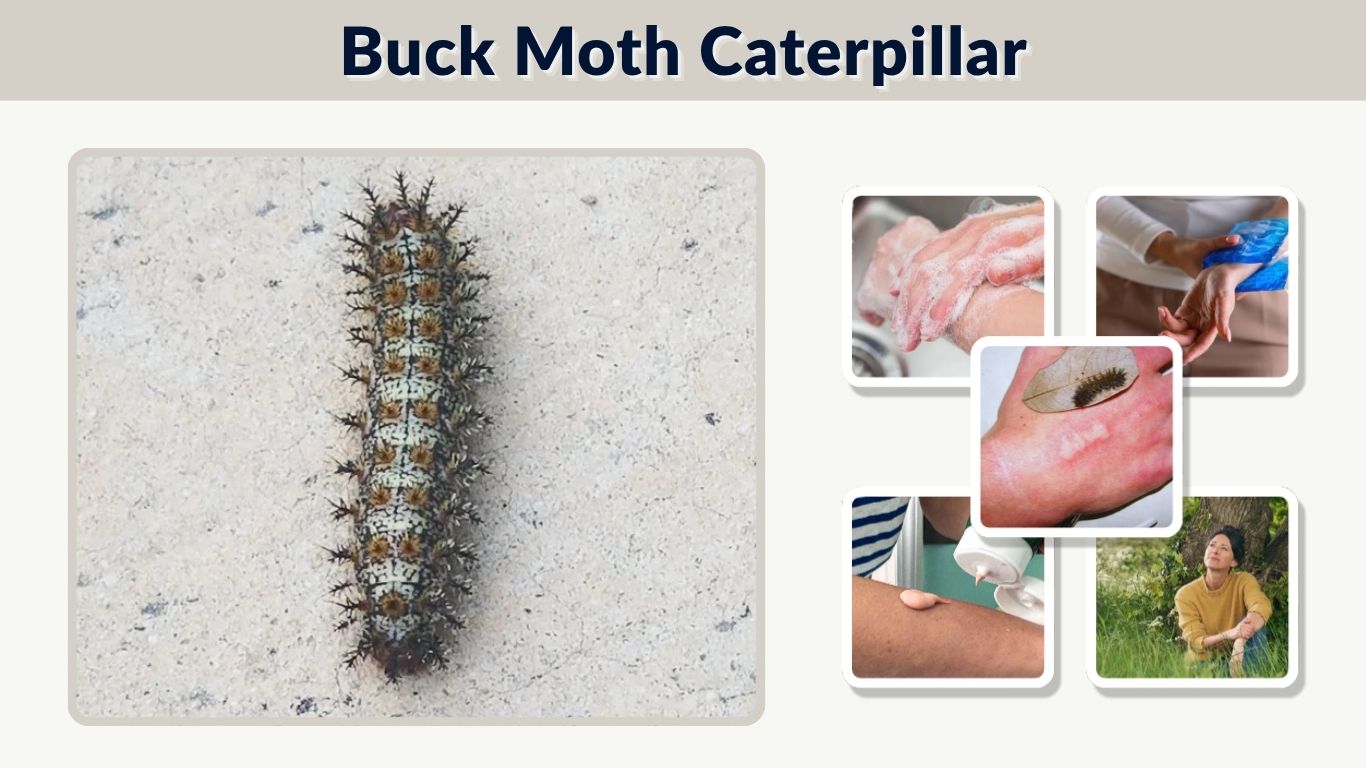
Buck moth caterpillars are easy to notice and hard to forget if you touch one. These dark, spiny caterpillars are best known for their painful sting, especially in areas with oak trees. Homeowners, parents, pet owners, and gardeners often search for them during spring because they can drop from trees, crawl across patios, and appear in lawns or outdoor spaces.
Quick Facts About Buck Moth Caterpillars
Buck moth caterpillars are the larval stage of buck moths, commonly associated with oak trees. They are not aggressive, but their defensive spines can cause a painful reaction when brushed, stepped on, or handled.
Key Things to Know
- Buck moth caterpillars have venomous, branched spines.
- They are often dark or black with white specks and reddish or orange markings.
- They commonly feed on oak leaves.
- Stings can feel sharp, burning, or similar to a bee sting.
- They are most often a seasonal outdoor problem, not a structural pest.
How to Identify a Buck Moth Caterpillar
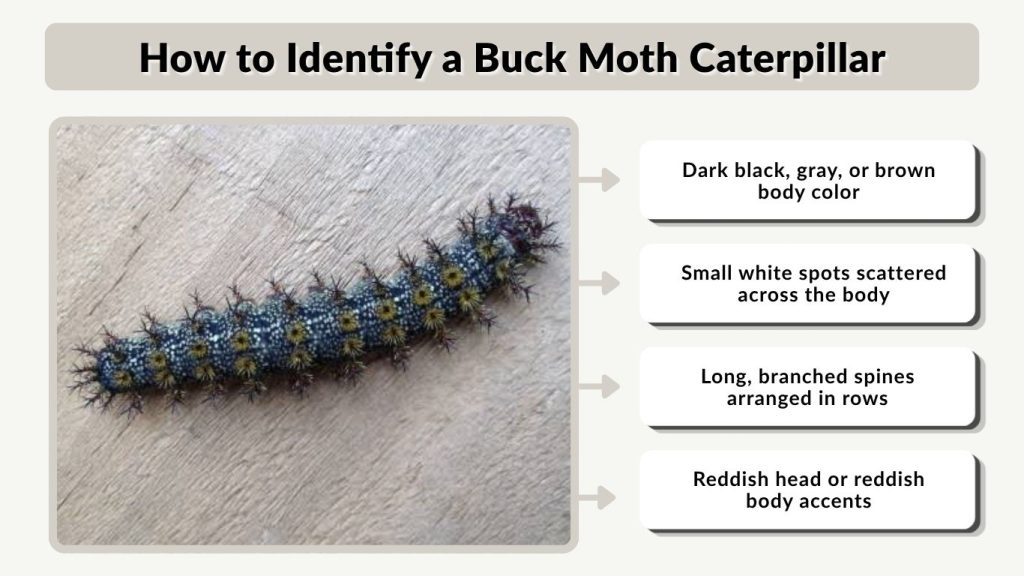
Identifying a buck moth caterpillar is important because many hairy or spiny caterpillars look similar. The safest rule is simple: do not touch any spiny caterpillar unless you are certain it is harmless.
Common Appearance
A typical buck moth caterpillar has a dark body covered with small white spots. It may have a reddish head and rows of stiff, branching black spines. Some individuals also show orange, yellow, or brownish markings around the spine bases.
Mature larvae are usually large enough to be noticed on tree trunks, sidewalks, porches, or plants. Young caterpillars may gather in groups, while older ones are more likely to be seen alone.
Identification Checklist
Look for these signs:
- Dark black, gray, or brown body color
- Small white spots scattered across the body
- Long, branched spines arranged in rows
- Reddish head or reddish body accents
- Activity around oak trees
- Spring or early summer appearance in many regions
Buck Moth Caterpillar vs Other Spiny Caterpillars
Not every spiny caterpillar is a buck moth caterpillar. Io moth caterpillars, saddleback caterpillars, puss caterpillars, and spiny elm caterpillars may also be found in some areas. Some sting, some do not, and some require different management. When in doubt, avoid contact and photograph the caterpillar from a safe distance for identification.
| Feature | Buck Moth Caterpillar | Why It Matters |
| Body color | Usually dark with white specks | Helps separate it from many green caterpillars |
| Spines | Branched, stiff, and venomous | Main cause of painful stings |
| Common host | Oak trees | Explains why they appear under live oaks and other oaks |
| Season | Often spring into early summer | Helps predict when to watch for them |
| Risk | Painful contact sting | Avoid handling, sitting, or walking barefoot near them |
Buck Moth Caterpillar Sting Symptoms
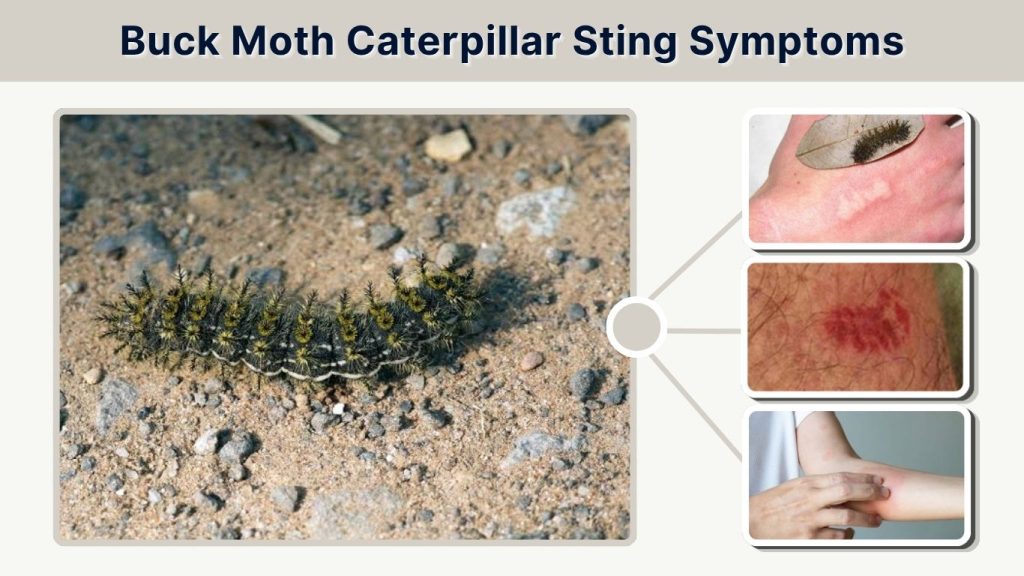
A buck moth caterpillar sting happens when the skin contacts the caterpillar’s spines. The caterpillar does not bite in the way an insect with jaws might bite a person. Instead, the spines can break or press into the skin and release irritating venom.
What a Sting Can Feel Like
Symptoms may begin quickly after contact. The most common feeling is sudden pain, burning, or stinging. Some people also develop redness, swelling, itching, or a raised rash where the spines touched the skin.
Possible Symptoms
Common symptoms include:
- Sharp or burning pain
- Redness around the sting area
- Itching or tenderness
- Swelling or small welts
- Skin irritation that lasts for hours or longer
- Nausea or stronger discomfort in sensitive individuals
Most stings are uncomfortable rather than dangerous, but reactions vary. Children, people with allergies, and pets may need closer attention after contact.
Buck Moth Caterpillar Sting Treatment
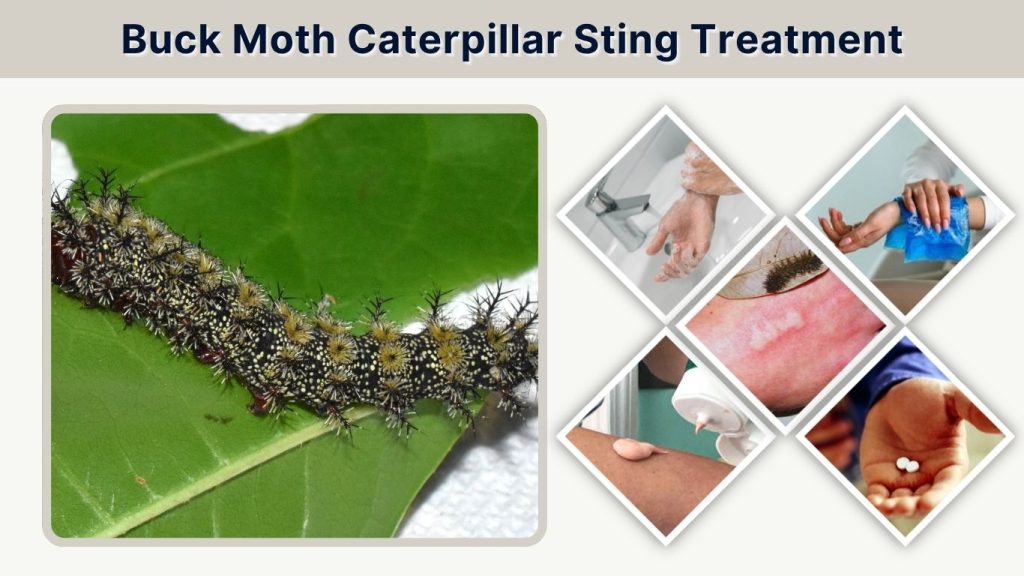
Treating a buck moth caterpillar sting starts with removing the spines and calming the skin. Do not rub the area hard, because rubbing may push tiny spines deeper into the skin.
First Aid Steps
Use these steps after a sting:
- Move away from the caterpillar and check clothing or skin for more spines.
- Place tape gently over the sting area and lift it off to remove loose spines.
- Wash the area with soap and water.
- Apply a cold compress to reduce pain and swelling.
- Use an anti-itch cream or oral antihistamine if appropriate.
- Take an over-the-counter pain reliever if needed and safe for you.
When to Get Medical Help
Seek medical advice if symptoms are severe, spreading, or not improving. Get urgent help if there is trouble breathing, swelling of the face or throat, dizziness, widespread hives, or signs of a serious allergic reaction.
You should also contact a healthcare provider if the sting affects a young child, if pain is intense, or if the area appears infected later.
Buck Moth Caterpillar Sting Pictures and Image Searches
Searches for “buck moth caterpillar sting pictures,” “buck moth caterpillar sting images,” and “buck moth caterpillar rash” show that many people want to compare their skin reaction with online photos. Pictures can be useful, but they should not replace medical judgment.
What Pictures Can and Cannot Tell You
Images may help you recognize redness, swelling, or welts after contact. However, skin reactions can look different from person to person. A mild sting on one person may look more dramatic on another, especially if the skin is sensitive or scratched.
Use pictures for general comparison only. If symptoms are severe or unusual, get medical help instead of relying on images alone.
Are Buck Moth Caterpillars Poisonous?
Buck moth caterpillars are often described as poisonous or venomous because their spines can deliver irritating venom when touched. They are not dangerous because they chase people or attack. The risk comes from accidental contact.
Poisonous vs Venomous
In everyday language, people often say “poisonous buck moth caterpillar.” More accurately, the caterpillar is venomous because the irritating material is delivered through spines. Either way, the safety advice is the same: do not touch it.
Buck Moth Caterpillar Life Cycle
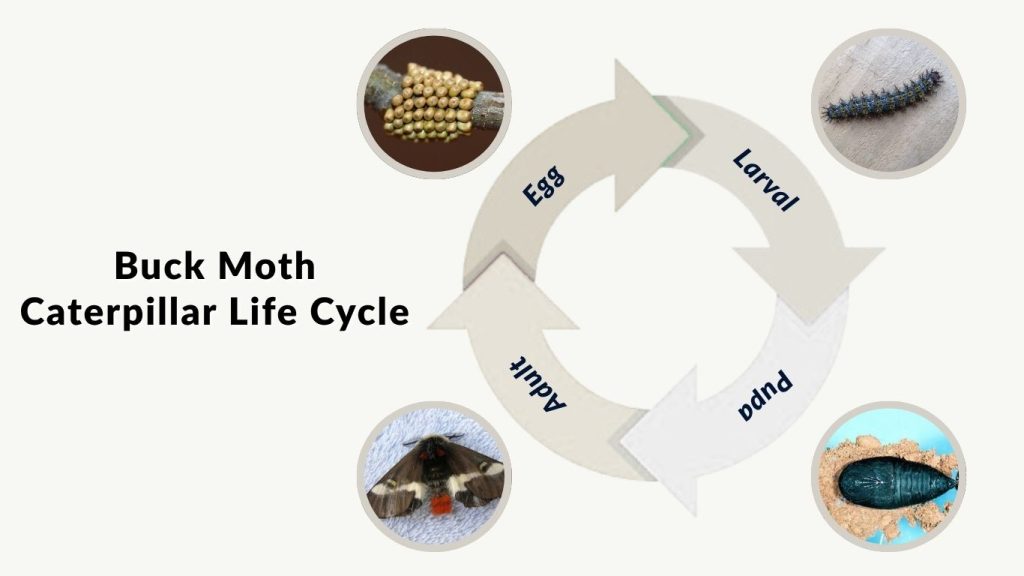
Buck moths go through complete metamorphosis: egg, caterpillar, pupa, and adult moth. The caterpillar stage is the part most people notice because it crawls on trees, sidewalks, lawns, and outdoor furniture.
From Egg to Adult Moth
Adult buck moths lay eggs, often around twigs. The eggs overwinter and hatch when conditions become favorable in spring. Young caterpillars feed on host plants, and as they grow, they become larger and more visible. Eventually, the caterpillars move away to pupate before emerging later as adult moths.
What Does a Buck Moth Caterpillar Turn Into?
A buck moth caterpillar turns into an adult buck moth. Adult buck moths are dark, sturdy moths often seen flying during the day. Their appearance is very different from the spiny caterpillar stage.
Where Buck Moth Caterpillars Are Found
Buck moth caterpillars are found in several parts of the eastern and southern United States. Searches for “buck moth caterpillar Louisiana,” “buck moth caterpillar New Orleans,” and “buck moth caterpillar Texas” are common because these areas have many oak trees and seasonal caterpillar activity.
Louisiana and New Orleans
In Louisiana and New Orleans, buck moth caterpillars are closely associated with spring and live oak trees. They may fall from branches, crawl across sidewalks, or appear near parks, yards, schools, and festival areas.
Texas and Other Southern Areas
In Texas and nearby regions, they are also associated with oaks. Their presence may vary by local habitat, weather, and host tree availability.
Buck Moth Caterpillar Control
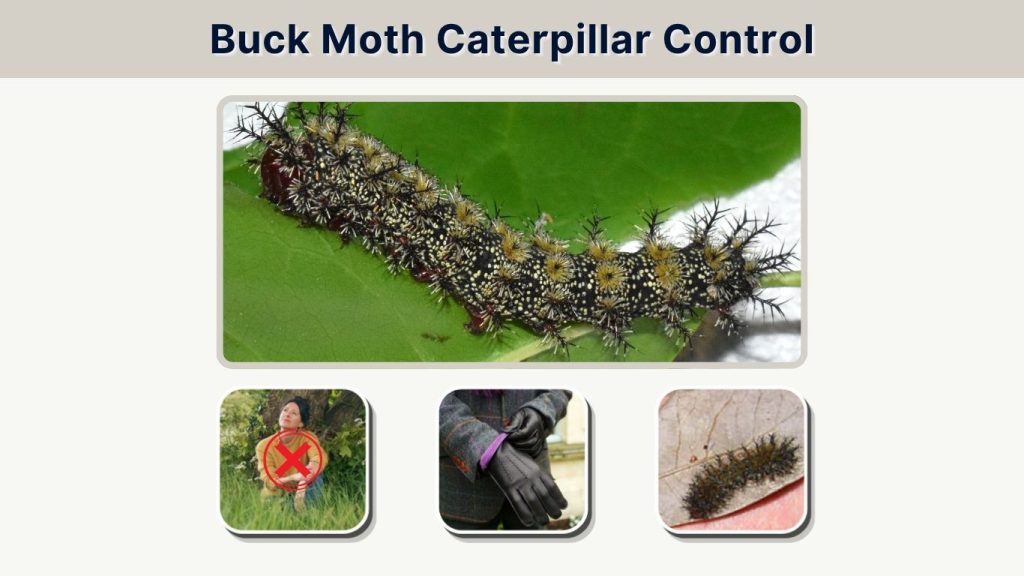
Buck moth caterpillar control is mainly about prevention, avoidance, and reducing contact in high-use areas. In many cases, they do not cause enough tree damage to justify aggressive treatment. The bigger concern is human and pet safety.
How to Reduce Contact
Practical control steps include:
- Avoid sitting directly under infested oak trees during peak season.
- Wear gloves, long sleeves, and closed shoes when gardening.
- Check outdoor furniture, porches, and play areas before use.
- Teach children not to touch fuzzy or spiny caterpillars.
- Keep pets away from areas where caterpillars are crawling.
- Remove individual caterpillars with tools, never bare hands.
Should You Spray for Buck Moth Caterpillars?
Some people search for “buck moth caterpillar spray” or “how to get rid of buck moth caterpillars.” Spraying may be considered when caterpillars are numerous in a high-traffic area, but it should be done carefully and according to local guidance.
For large trees, repeated infestations, or public spaces, a licensed pest control professional or local extension office can help identify the caterpillar and choose the safest management option.
Buck Moth Caterpillar Stings on Dogs
Dogs may be stung if they step on, sniff, or mouth a buck moth caterpillar. Paws, noses, and lips are common contact points because dogs explore outdoor areas close to the ground.
What Pet Owners Should Watch For
A dog may lick or chew at the sting area, limp, whine, paw at the face, or act suddenly uncomfortable. If your dog shows swelling, vomiting, breathing trouble, extreme pain, or unusual behavior, contact a veterinarian.
To reduce risk, check yards and walking paths during peak season, especially under oak trees.
FAQs
What should I do after a buck moth caterpillar sting?
Move away from the caterpillar, remove loose spines with tape, wash the area with soap and water, and apply a cold compress. Avoid rubbing the sting site. Use an anti-itch product or pain reliever if appropriate. Seek medical help for severe pain, spreading swelling, or allergic symptoms.
Is a buck moth caterpillar poisonous?
People often call buck moth caterpillars poisonous, but venomous is more accurate. Their branched spines can inject irritating venom when touched. They do not attack people, but accidental contact can cause a painful sting, redness, itching, swelling, and skin irritation.
What does a buck moth caterpillar look like?
A buck moth caterpillar is usually dark or black with small white spots, a reddish head, and rows of stiff branched spines. Some have orange, yellow, or brown markings near the spines. They are often found near oak trees during spring.
How long does a buck moth caterpillar sting last?
The pain may begin immediately and can last for hours. Redness, itching, or tenderness may continue longer depending on the person and the amount of contact. If symptoms worsen, spread, or do not improve, contact a healthcare provider.
How do I get rid of buck moth caterpillars?
Start by avoiding contact and removing individual caterpillars with tools, not bare hands. Keep children and pets away from infested areas. For heavy activity around homes, schools, or public spaces, ask a licensed pest professional or local extension office about safe control options.