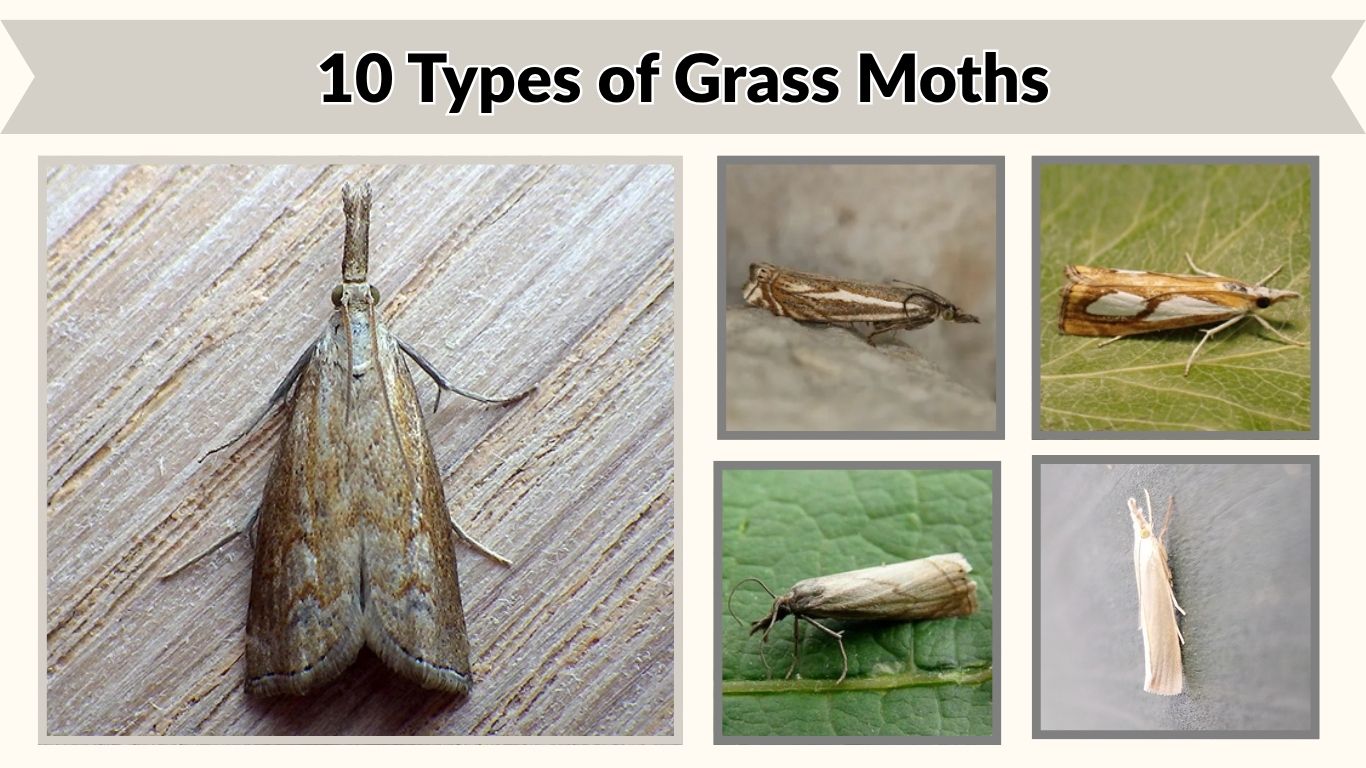
Grass moths are small, delicate moths often seen in lawns, meadows, gardens, wetlands, and other grassy habitats. Many belong to the grass-veneer group and have narrow bodies, pale brown wings, and streaked patterns that help them blend with grass stems. Although they are easy to overlook, these moths play an important role in natural ecosystems. Their larvae usually feed on grasses, while adults are often active at dusk or night. This guide explains ten common types of grass moths, including their identification, habitat, behavior, lifecycle, and FAQs.
1. Garden Grass-veneer
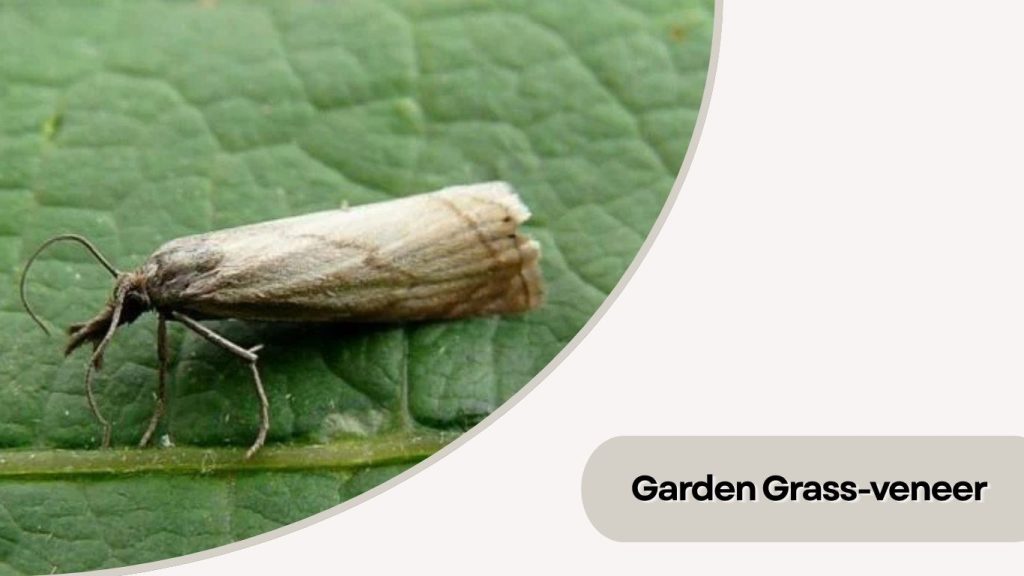
The Garden Grass-veneer is a small grass moth commonly found in grassy places such as lawns, meadows, gardens, and rough grassland. Its scientific name is Chrysoteuchia culmella. This moth is often seen in summer, especially when disturbed from grass during the day. It is considered one of the common grass moths in Britain and Europe.
Identification
- Small, narrow-bodied grass moth.
- Wingspan is usually around 20 mm.
- Forewings are pale straw, brownish, or yellowish-brown.
- One or two angled cross-lines may appear on the forewings.
- Metallic golden fringe can be seen along the forewing edges.
- Often rests lengthwise or head-down on grass stems.
- Its slim shape helps it blend with dry grass and seed heads.
Habitat and Distribution
The Garden Grass-veneer mainly lives in grassy habitats. It can be found in lawns, gardens, rough meadows, grasslands, and places where even small patches of grass grow. This moth is widespread in Britain and is also found across Europe. Because it can live in both natural grasslands and human-managed grassy areas, it is often seen around gardens and parks.
Behavior and Diet
Adult Garden Grass-veneers are usually active during the warmer months, especially in June and July. During the day, they rest on grass stems and may fly up quickly when disturbed. The larvae feed on grasses, especially around the bases of grass stems. Adults are night-flying moths, but they are often noticed in daytime because they are easily flushed from grass.
Lifecycle
Like other moths, the Garden Grass-veneer passes through egg, larva, pupa, and adult stages. The larval stage develops hidden among grasses, where it feeds on plant material. After pupation, the adult moth emerges in summer. The adult stage is most commonly recorded during June and July, depending on location and weather conditions.
2. Inlaid Grass-veneer
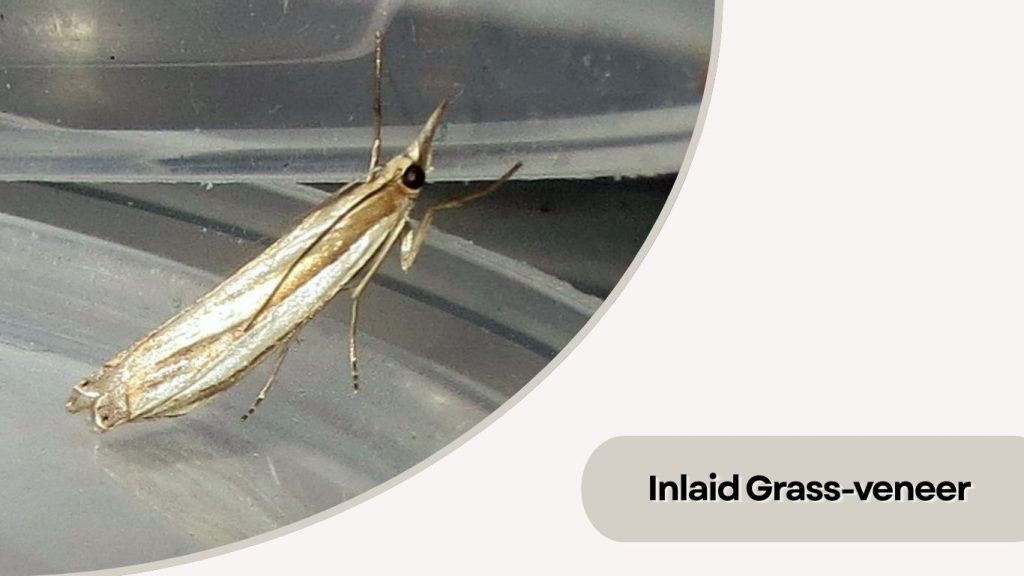
The Inlaid Grass-veneer is a small grass moth with the scientific name Crambus pascuella. It is also known as the White-banded Grass-moth. This moth is commonly seen in grassy places, especially during summer. It belongs to the family Crambidae and is known for its narrow resting posture and pale streaked forewings.
Identification
- Small, slim grass moth.
- Wingspan is usually around 20–26 mm.
- Forewings are brownish or ochre-colored.
- A thick white lengthwise streak runs along the forewing.
- Pale hindwings are usually visible when it flies.
- Wings are held close to the body when resting.
- Often confused with similar grass-veneer moths, but the strong white forewing streak helps identify it.
Habitat and Distribution
The Inlaid Grass-veneer is mainly found in grassland and other grassy habitats. It may also appear in meadows, gardens, field edges, and open areas where grasses grow. The species is widespread in the UK and also occurs across Europe and parts of Asia Minor. Because it depends on grasses, it is most often recorded in places with natural or semi-natural vegetation.
Behavior and Diet
Adult Inlaid Grass-veneers are usually active from late spring to summer, often from May to August. They are attracted to light and can also be disturbed from vegetation during the day. The larvae feed on grasses, including species such as Poa and Festuca. Adult moths are not harmful to people or pets.
Lifecycle
The Inlaid Grass-veneer completes its lifecycle through egg, larva, pupa, and adult stages. The larvae live close to grass roots and may feed within a small silken tube or shelter. After feeding and growing, they pupate and later emerge as adult moths in the warmer months. In many areas, the adult flight period is mainly from May to August.
3. Satin Grass-veneer
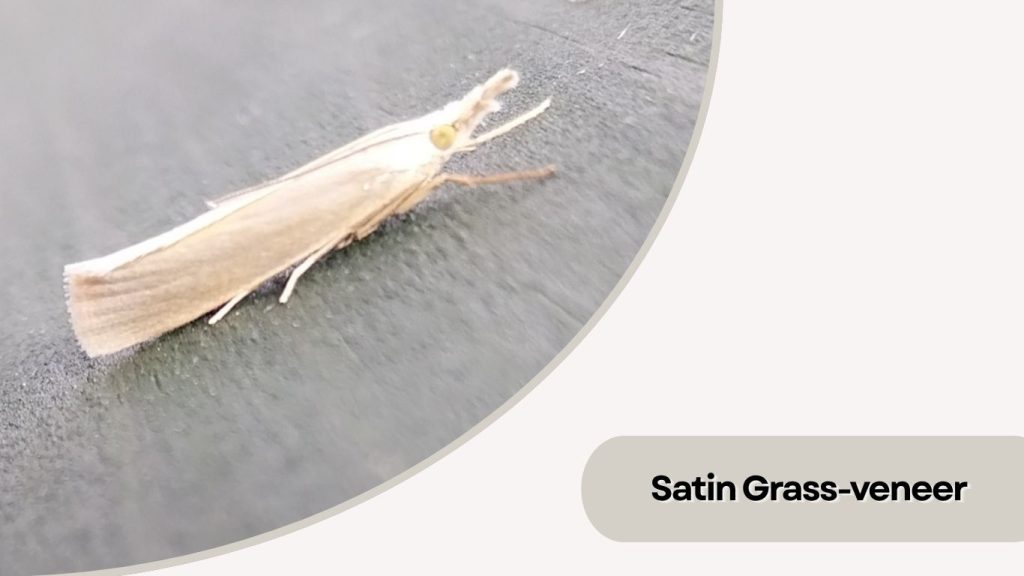
The Satin Grass-veneer is a delicate grass moth with the scientific name Crambus perlella. It is also called the Satin Grass-moth. This moth is known for its smooth, creamy-white wings with a soft satin-like shine. It is commonly found in grassy habitats and is often disturbed from grass during the day.
Identification
- Small and slender grass moth.
- Forewing length is usually around 11–14 mm.
- Wings are creamy white or shiny whitish.
- Wings may have a silky or satin-like appearance.
- Most individuals have very few obvious markings.
- Some forms may show a white lengthwise streak and extra streaking near the lower forewing.
- When resting, it holds its wings close to the body, giving it a narrow shape.
Habitat and Distribution
The Satin Grass-veneer is mostly found in grassland, gardens, woodland rides, heathland, fens, downland, sand dunes, and other places where grasses grow. It is a common species in Britain and is widely recorded in many grassy areas. Because it can live in both natural and managed habitats, it may be seen in gardens as well as open countryside.
Behavior and Diet
Adult Satin Grass-veneers are often disturbed from grass stems during the day. They fly from dusk and may later come to light. The larvae feed on grasses, including Wavy Hair-grass, Sheep’s-fescue, and other grass species. The larva may feed from a silk gallery near the base of grass stems.
Lifecycle
The Satin Grass-veneer develops through the normal moth stages of egg, larva, pupa, and adult. The larval stage is spent among grasses, where it feeds and remains hidden. Adults are mainly seen from June to August, although flight periods can vary slightly by region and weather.
4. Hook-streak Grass-veneer
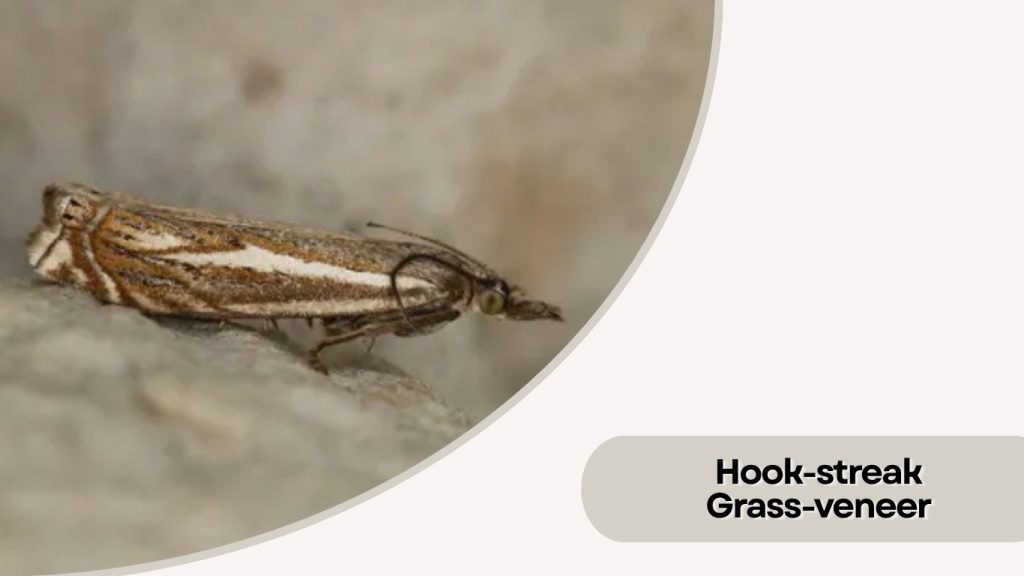
The Hook-streak Grass-veneer is a small grass moth with the scientific name Crambus lathoniellus. It is a well-patterned species often found in grassy areas. Like many grass-veneer moths, it has a slim body and rests closely against grass stems, making it easy to overlook until it is disturbed. It is also known by another common name, Meadow Grass-moth.
Identification
- Small, narrow grass moth.
- Wingspan is usually about 18–22 mm.
- Forewings are brownish or ochre-brown.
- A white lengthwise streak runs along the forewing.
- The white streak widens into a tooth-like or hooked shape near the base.
- Metallic-looking fringes may appear along the wing edges.
- Often rests in a rolled or narrow posture on grass stems.
Habitat and Distribution
The Hook-streak Grass-veneer mainly lives in grassland and other grassy habitats. It can be found in meadows, field edges, rough grass, and similar open places where grasses grow. The species is recorded across Britain and is also found more widely in Europe and parts of Asia. Because it depends on grasses, it is most often seen in places with natural or semi-natural grassy vegetation.
Behavior and Diet
Adult Hook-streak Grass-veneers are attracted to light and are also commonly disturbed from vegetation during the day. They usually fly during the warmer months, especially from May to early August in many British records. The larvae feed on grasses, staying hidden close to the plant base where they are protected among the stems and roots.
Lifecycle
The Hook-streak Grass-veneer develops through the typical moth stages of egg, larva, pupa, and adult. The larva lives among or above the roots of grasses, often within a silken gallery. After feeding and growing, it pupates before emerging as an adult moth. Adults are most commonly recorded from late spring through summer, with the exact flight period depending on the region and weather.
5. Pearl Grass-veneer
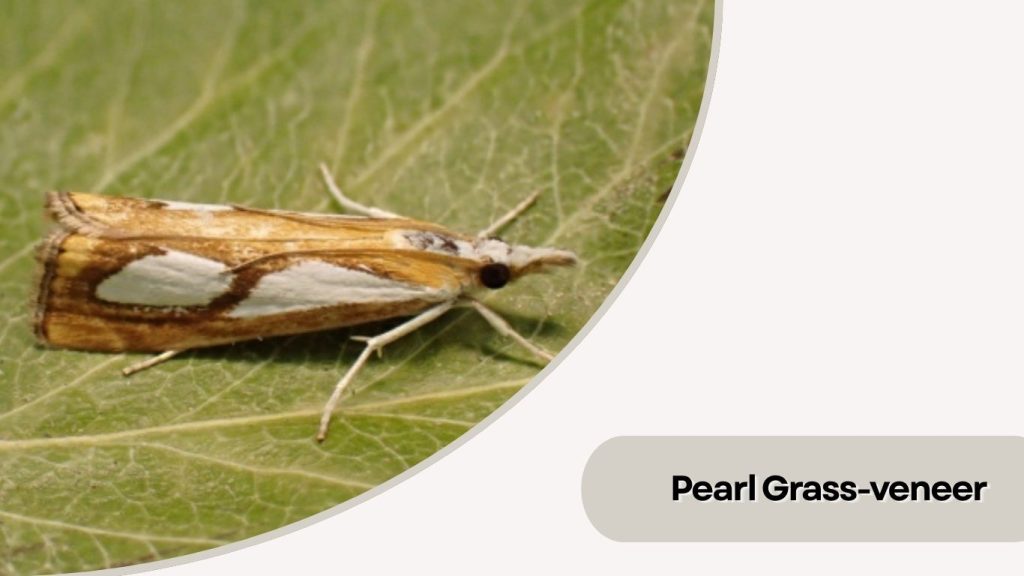
The Pearl Grass-veneer is a small grass moth with the scientific name Catoptria pinella. It is an attractive micro moth from the family Crambidae. This species is known for its pale markings and narrow resting shape. It is usually linked with damp grassy places, including wetlands, marshes, fens, and boggy heathland.
Identification
- Small, slim grass moth.
- Wingspan is usually around 12–16 mm.
- Forewings are orange-brown or warm brown.
- A broad white lengthwise stripe runs along the forewing.
- The white stripe is broken by a darker brown streak.
- Wings are held close to the body when resting.
- Adults are generally distinctive compared with many similar grass-veneer moths.
Habitat and Distribution
The Pearl Grass-veneer prefers damp habitats. It is often found around wetlands, heathland, marshes, fens, and other moist grassy areas. The species is found in Europe, North Africa, and western Asia. In Britain, it is recorded in many areas, though it may be more local in some regions because of its connection with wetland grasses and sedges.
Behavior and Diet
Adult Pearl Grass-veneers usually fly at night and are attracted to light. During the day, they may rest in vegetation or nearby trees. The larvae feed on wetland grasses and sedges, which explains why this moth is usually associated with damp habitats rather than dry lawns or open dry grassland.
Lifecycle
The Pearl Grass-veneer develops through egg, larva, pupa, and adult stages. The larva lives hidden among grasses or sedges in damp habitats, feeding before pupating. Adults are mainly seen from late June to August, although some records may extend from June into September depending on the region and conditions.
6. Agriphila Grass Moth
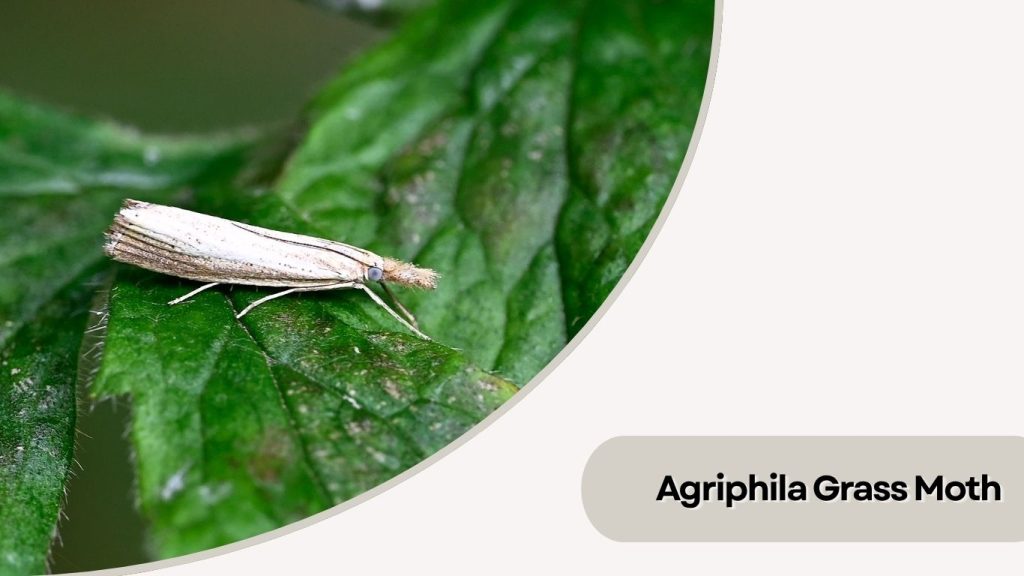
The Agriphila Grass Moth is a small grass moth from the genus Agriphila. These moths are often seen in grassy places such as lawns, fields, meadows, and roadsides. They usually have narrow wings, a slim body, and pale brown or straw-colored patterns that help them blend well with dry grass.
Identification
- Small, narrow-bodied grass moth.
- Wings are usually pale brown, straw-colored, or yellowish-brown.
- Forewings often have a pale lengthwise streak.
- Some species show darker lines or speckled markings.
- Wings are held close around the body when resting.
- Often rests low in grass during the day.
- Easily disturbed from lawns, meadows, and grassy edges.
Habitat and Distribution
Agriphila grass moths are commonly found in open grassy habitats. They may live in meadows, lawns, pastures, roadside verges, field margins, and rough grassland. Some species can also appear in gardens and parks where grasses are available. Their distribution depends on the exact species, but many Agriphila moths are widespread in Europe and other temperate regions.
Behavior and Diet
Adult Agriphila grass moths are usually active in summer and early autumn. During the day, they often hide among grass stems and fly up quickly when disturbed. Many species are also attracted to light at night. The larvae mainly feed on grasses, often staying close to the base of the plant where they remain hidden and protected.
Lifecycle
Agriphila grass moths pass through the usual moth stages of egg, larva, pupa, and adult. The larvae live among grasses and feed near the roots or lower stems. After growing, they pupate in a sheltered place within the grassy habitat. Adults usually emerge during the warmer months, with many species flying from midsummer into early autumn.
7. Striped Grass-veneer
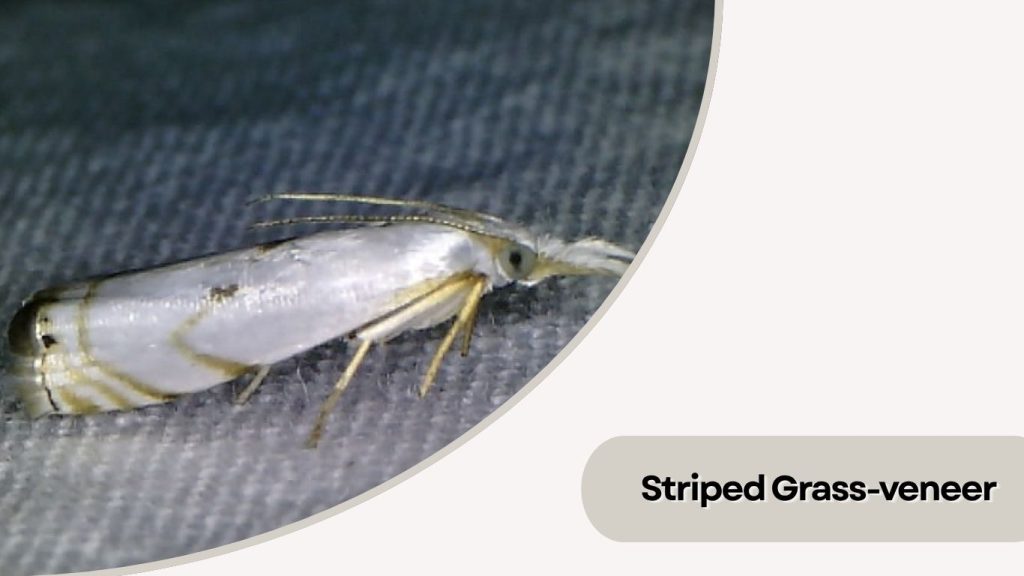
The Striped Grass-veneer is a small grass moth with the scientific name Agriphila tristella. It is also widely known as the Common Grass-veneer. This moth is often found in grassy habitats and is fairly easy to notice when it flies up from grass during the day. Its pale lengthwise wing streak, which branches near the wing tip, is one of its key features.
Identification
- Small, narrow grass moth.
- Wingspan is usually about 25–30 mm.
- Forewings are brownish, straw-colored, or yellowish-brown.
- A pale yellowish or creamy streak runs lengthwise along the forewing.
- The streak branches into several “fingers” near the wing tip.
- Wings are held close around the body when resting.
- Often disturbed from tall grass during the day.
Habitat and Distribution
The Striped Grass-veneer lives mainly in grassy places. It can be found in grasslands, meadows, gardens, heathland, wasteground, and calcareous downland. It is common throughout Britain and is also found across Europe and parts of Asia. Because it uses grasses as larval food plants, it is most often seen where grasses grow in thick or open patches.
Behavior and Diet
Adult Striped Grass-veneers are nocturnal and often come to light. They may also be flushed from grass during the day, especially in summer. The larvae feed on grasses, usually near the base of stems. In some records, the larva feeds from a vertical silk gallery built along the lower part of a grass stem.
Lifecycle
The Striped Grass-veneer develops through egg, larva, pupa, and adult stages. The larva stays hidden among grasses while feeding near the stem base. After growing, it pupates in a sheltered position within the grassy habitat. Adults usually fly from June to September, with many records occurring in July and August.
8. Silver-striped Grass-veneer
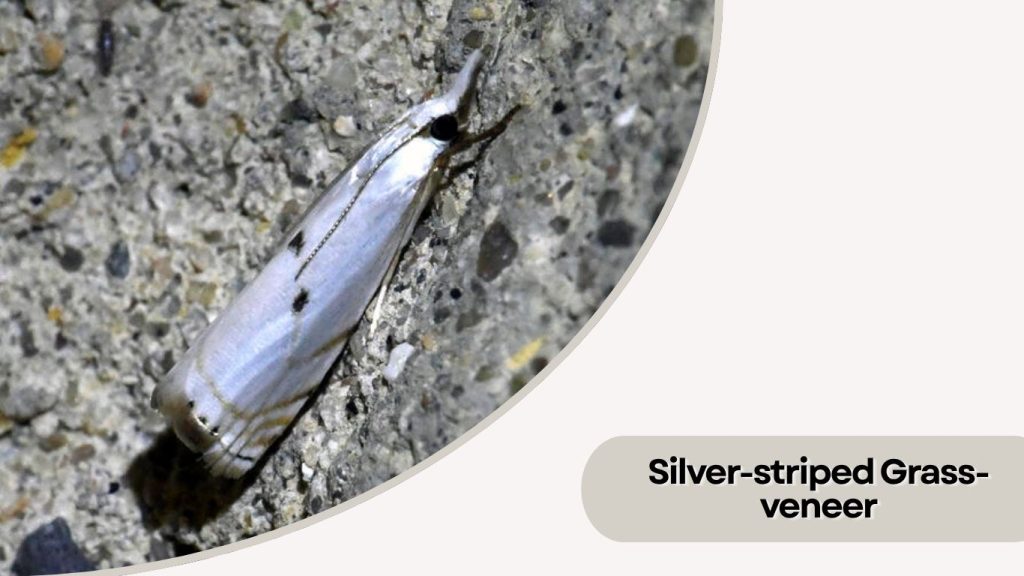
The Silver-striped Grass-veneer is a small grass moth with the scientific name Crambus pratella. It is known for the bright pale or silvery streak running along its forewings. This species is commonly found in grassy habitats and is often noticed when it flies up from vegetation during the day.
Identification
- Small, slender grass moth.
- Wingspan is usually around 20–25 mm.
- Forewings are brown, ochre, or straw-colored.
- A clear silvery-white lengthwise stripe runs along the forewing.
- The stripe may appear broad and shiny in fresh individuals.
- Wings are held close to the body when resting.
- Often rests on grass stems, where its narrow shape helps it blend in.
Habitat and Distribution
The Silver-striped Grass-veneer is mainly found in grassy places such as meadows, rough grassland, woodland rides, field edges, and gardens. It is widely recorded across Britain and parts of Europe. Because its larvae depend on grasses, the moth is most often found in areas where grasses grow thickly or remain undisturbed.
Behavior and Diet
Adult Silver-striped Grass-veneers are usually active in summer. They may fly at night and can also be disturbed from grass during the day. The larvae feed on grasses, living close to the lower stems or roots where they remain hidden. Adults may come to light, especially in suitable grassy areas.
Lifecycle
The Silver-striped Grass-veneer develops through egg, larva, pupa, and adult stages. The larva feeds among grasses before pupating in a sheltered place near the ground. Adults are generally seen from late spring through summer, depending on local weather and habitat conditions.
9. Yellow Grass-veneer
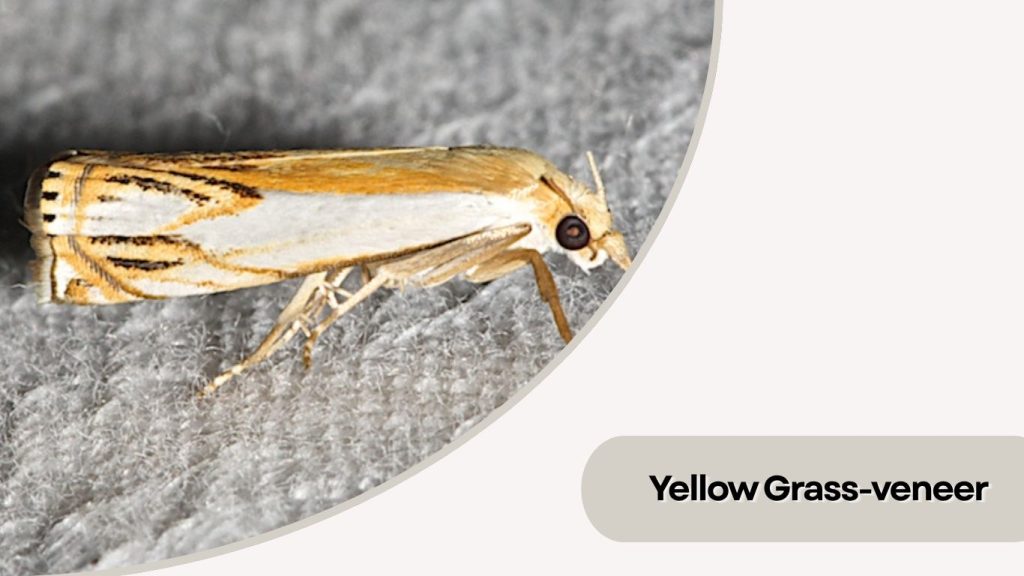
The Yellow Grass-veneer is a small grass moth often associated with dry grassy places. It is commonly treated as Agriphila geniculea, though this species is also widely known as the Elbow-striped Grass-veneer. It has a narrow resting shape and straw-brown coloring that helps it blend into dry grass stems. This moth is usually seen from midsummer into autumn.
Identification
- Small, slim grass moth.
- Wingspan is usually around 20–26 mm.
- Forewings are straw-colored, yellowish-brown, or pale brown.
- Forewings often show two strongly curved cross-lines.
- The curved lines may look like elbow-shaped marks.
- Some individuals have faint or less visible markings.
- Wings are held close to the body when resting.
Habitat and Distribution
The Yellow Grass-veneer is mainly found in dry grassy habitats. It occurs in dry pastures, short grassland, sand dunes, gardens, and similar open places where fine grasses grow. It is present in suitable habitats across much of Britain, except the far north, and is also found in much of Europe and parts of North Africa.
Behavior and Diet
Adult Yellow Grass-veneers usually fly from July to October. They are active around dusk and may come to light at night. During the day, they rest among grasses and may fly up quickly when disturbed. The larvae feed on short fine grasses, especially Sheep’s-fescue, and live close to the base of the grass stems.
Lifecycle
The Yellow Grass-veneer develops through egg, larva, pupa, and adult stages. The larva is found from late September to early May and spends winter in the larval stage. It lives in a light silken gallery mixed with pale frass at the base of small grasses. After feeding and developing, it pupates before the adult moth appears in summer and autumn.
10. Meadow Grass-veneer
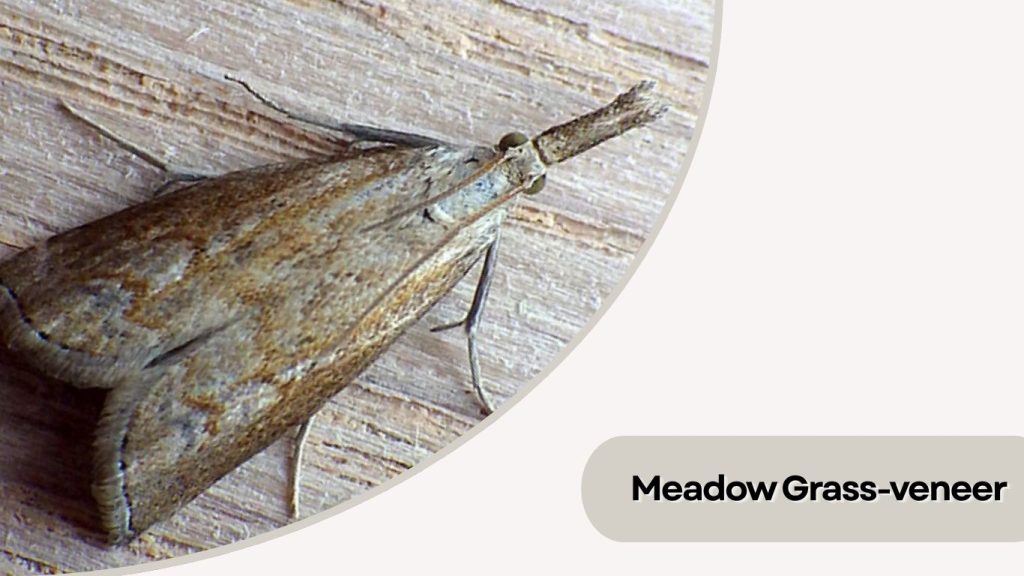
The Meadow Grass-veneer is a small grass moth that belongs to the grass-veneer group. It is usually found in meadows, rough grassland, field margins, and other grassy places. Like many grass moths, it has narrow wings and a slim resting shape, which helps it hide among grass stems during the day.
Identification
- Small, slender grass moth.
- Wings are usually pale brown, straw-colored, or yellowish-brown.
- Forewings may show pale lengthwise streaks or darker cross-lines.
- Body is narrow and grass-like in appearance.
- Wings are held tightly around the body when resting.
- Often rests low among grasses.
- Flies up quickly when disturbed from vegetation.
Habitat and Distribution
The Meadow Grass-veneer is mainly associated with grassy habitats. It can be found in meadows, pastures, rough grassland, field edges, lawns, and open countryside where grasses grow. Because grass moths rely heavily on grasses for larval food, this moth is most often seen in places with plenty of grasses and low vegetation.
Behavior and Diet
Adult Meadow Grass-veneers are often active during the warmer months. They may rest quietly in grass during the day and fly when disturbed. Many grass-veneer moths are also active at dusk or night and may come to light. The larvae feed on grasses, usually close to the roots or lower stems where they remain hidden.
Lifecycle
The Meadow Grass-veneer develops through four main stages: egg, larva, pupa, and adult. The larvae live among grasses and feed near the base of the plants. After the larval stage, they pupate in a protected spot close to the ground. Adults emerge during the main flight season, usually in late spring or summer depending on local conditions.
FAQs
What is a Meadow Grass-veneer?
A Meadow Grass-veneer is a small grass moth commonly found in grassy habitats such as meadows, lawns, field edges, and rough grassland. It has a narrow body and rests close to grass stems, which helps it stay hidden during the day.
Where can Meadow Grass-veneers be found?
Meadow Grass-veneers are usually found in places where grasses grow well. Common habitats include meadows, pastures, gardens, roadside verges, field margins, and open countryside. They are most often seen in warm months when adults fly or rest among grass stems.
What do Meadow Grass-veneers eat?
The larvae mainly feed on grasses, especially near the base of grass stems or roots. Adult moths may take nectar or moisture, but they are more commonly noticed because they fly up from grass when disturbed during the day.
Are Meadow Grass-veneers harmful?
Meadow Grass-veneers are not harmful to people or pets. They are part of the natural grassland ecosystem. Their larvae feed on grasses, but they usually do not cause serious damage in ordinary gardens or natural grassy areas.
When are Meadow Grass-veneers most active?
Adults are usually active during the warmer months, especially in late spring and summer. They may rest in grass during the day and fly at dusk or night. Some may also come to light, depending on the species and local conditions.