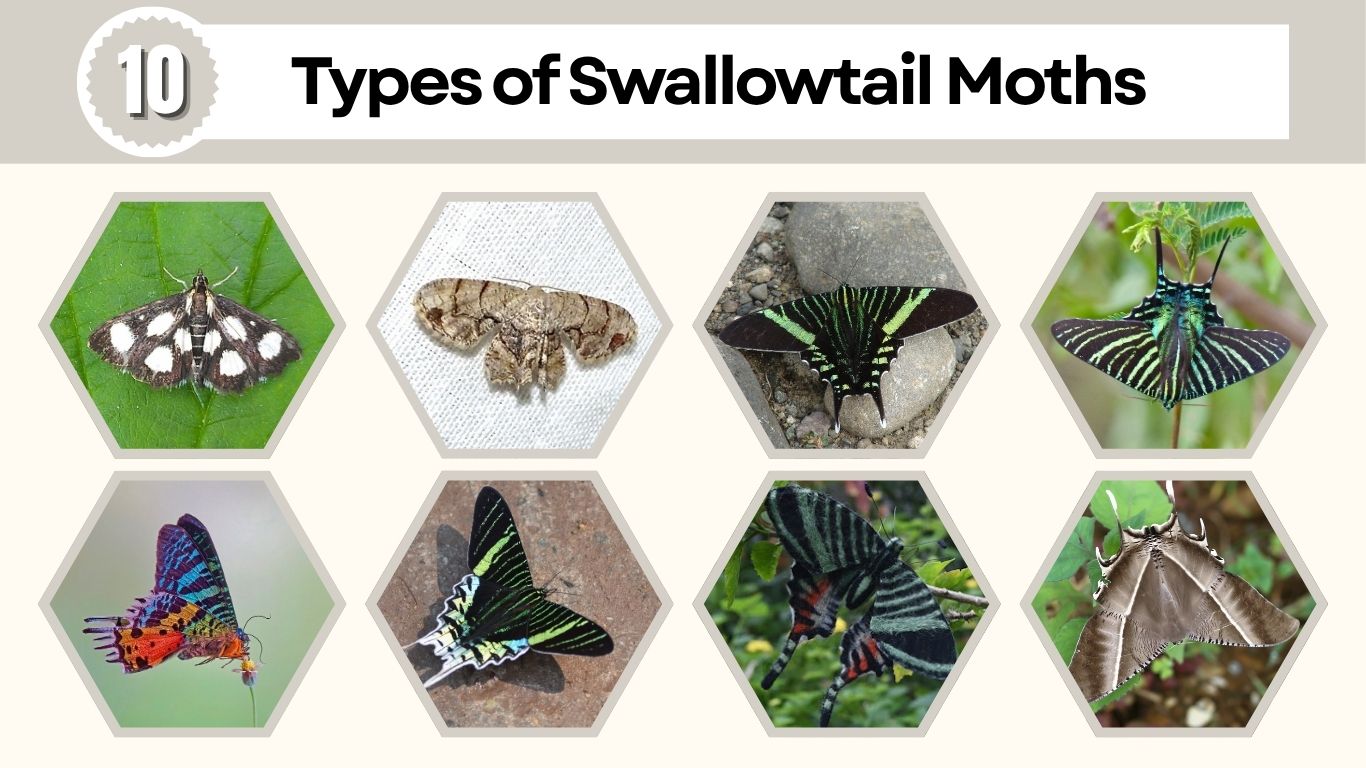
Swallowtail moths are beautiful moths known for their butterfly-like shape, colorful wings, and tail-like hindwing extensions. Many of them belong to the family Uraniidae and are active during the day, which makes them look even more like butterflies. These moths live in tropical forests, woodland edges, gardens, and other plant-rich habitats. Their caterpillars feed on specific host plants, while adults may visit flowers for nectar. This guide explores ten types of swallowtail moths, including their identification, habitat, behavior, lifecycle, and common questions.
1. Madagascan Sunset Moth
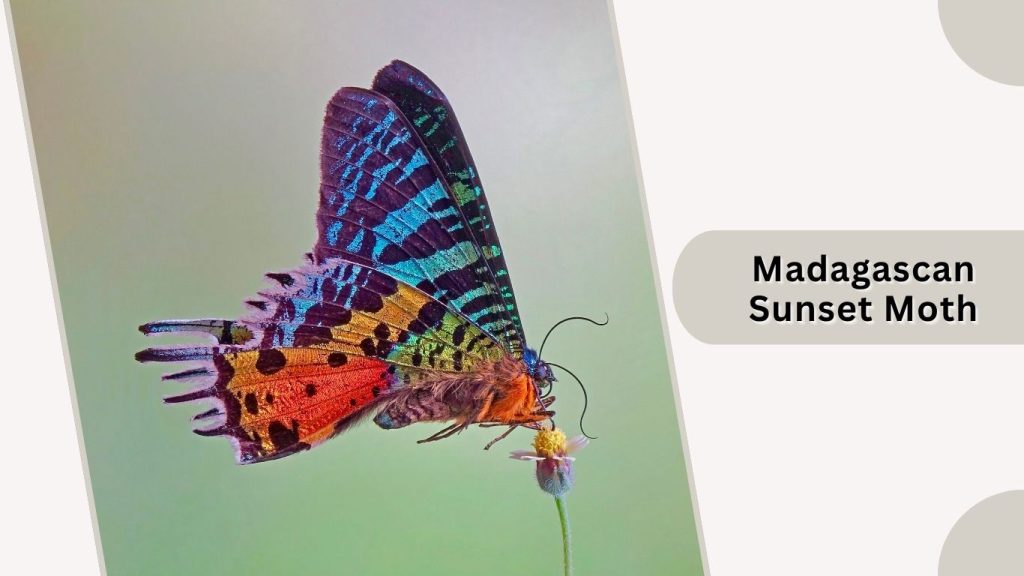
The Madagascan Sunset Moth is one of the most colorful and famous swallowtail-like moths in the world. Its scientific name is Chrysiridia rhipheus, and it belongs to the family Uraniidae. Although it looks similar to a butterfly because of its bright wings and tail-like hindwings, it is a true moth. This species is native to Madagascar and is admired for its shining green, blue, red, orange, and black wing patterns.
Identification
- Bright, colorful moth with a butterfly-like appearance.
- Wingspan is usually around 7–9 cm, though some individuals may be larger.
- Wings show iridescent green, blue, red, orange, yellow, and black colors.
- Hindwings have tail-like extensions, giving it a swallowtail-like look.
- Wing edges often have a pale or whitish fringe.
- Colors may appear to change depending on the light angle.
- It is active during the day, unlike many typical moths.
Habitat and Distribution
The Madagascan Sunset Moth is endemic to Madagascar, meaning it naturally occurs only on that island. It can be found in different forested habitats, including tropical rainforest, deciduous forest, and areas where its larval host plants grow. Its close link with Madagascar’s unique plant life makes it an important example of the island’s rich biodiversity.
Behavior and Diet
Unlike many moths, the Madagascan Sunset Moth is active in daylight. Its bright colors are not only beautiful but may also warn predators that it is unpleasant or toxic to eat. Adult moths visit flowers for nectar, while the caterpillars feed mainly on plants from the genus Omphalea. These host plants play a major role in the moth’s survival and distribution.
Lifecycle
The lifecycle begins when females lay eggs on Omphalea leaves. After hatching, the caterpillars feed on the plant and grow through several stages before pupating. The adult moth then emerges with its famous bright wings. In Madagascar, generations may occur throughout the year, although population numbers can vary by season, food availability, and local conditions.
2. Green-banded Urania
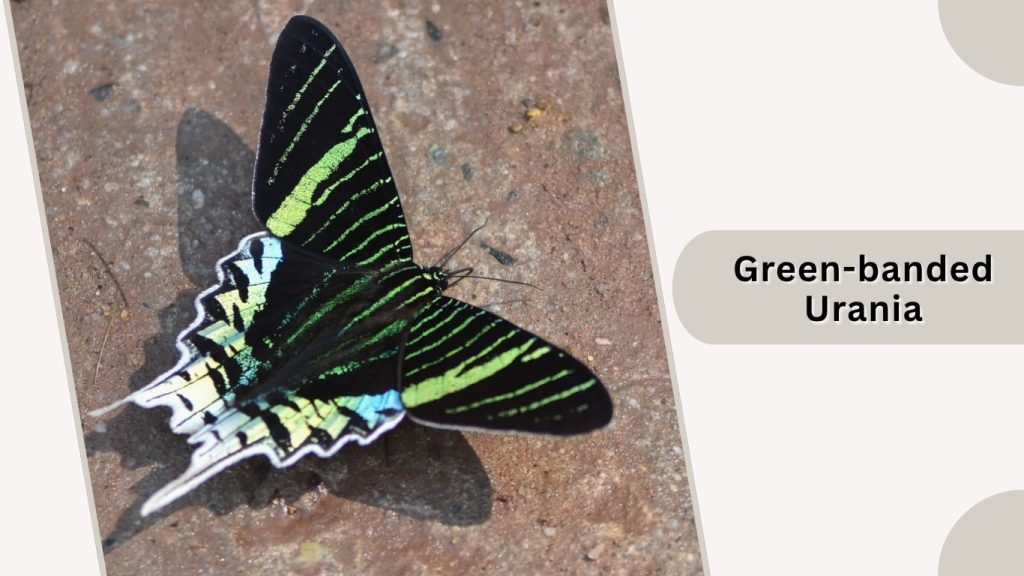
The Green-banded Urania is a colorful swallowtail-like moth known for its dark wings crossed by bright green bands. Its scientific name is Urania leilus, and it belongs to the family Uraniidae. This moth is often mistaken for a butterfly because it flies during the day and has a bold, tropical appearance. It is found in parts of South America, especially in rainforest regions where its host plants grow.
Identification
- Medium-sized, brightly marked moth.
- Wings are mostly black or very dark brown.
- Bright green bands run across the forewings and hindwings.
- Hindwings have tail-like extensions, giving a swallowtail-like shape.
- Wings may show a slight metallic or iridescent shine.
- Usually flies during the day.
- Its bold green-and-black pattern makes it easy to recognize.
Habitat and Distribution
The Green-banded Urania is mainly found in tropical South America. It occurs in rainforest habitats, forest edges, river areas, and other warm places where suitable host plants are available. Because it depends on forest ecosystems, it is most often seen in humid, plant-rich environments rather than open dry habitats.
Behavior and Diet
This moth is diurnal, meaning it is active during the day. Adults fly strongly and may visit flowers for nectar. Like other uraniid moths, its bright colors may help warn predators that it is not a good food choice. The larvae feed on host plants, especially members of the Omphalea genus, which are important for their growth and survival.
Lifecycle
The Green-banded Urania develops through four main stages: egg, larva, pupa, and adult. Females lay eggs on suitable host plants, and the caterpillars feed on the leaves after hatching. Once fully grown, the larva forms a pupa in a protected place. The adult moth later emerges and continues the cycle by finding food, mates, and host plants for the next generation.
3. Jamaican Sunset Moth
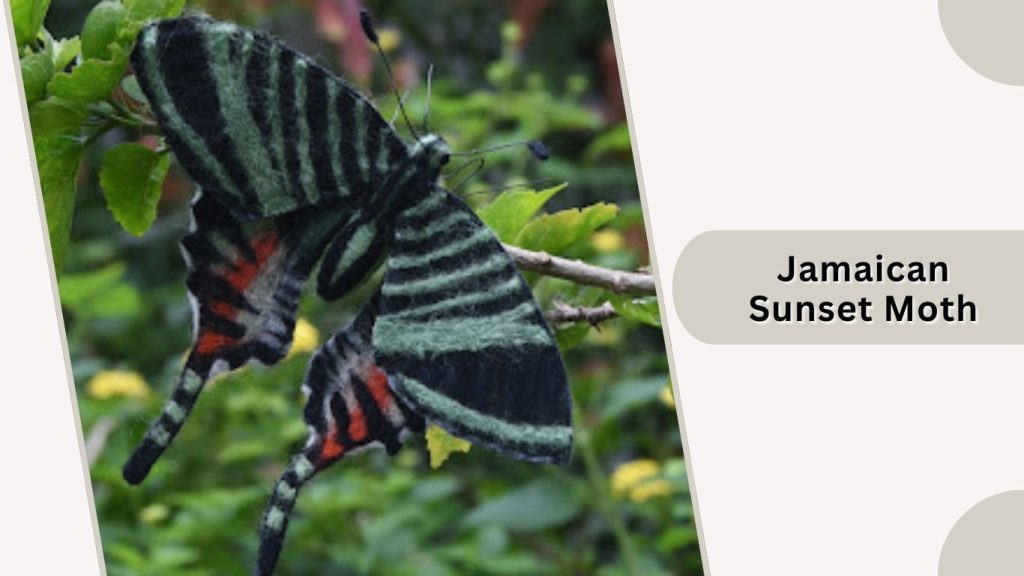
The Jamaican Sunset Moth is a colorful swallowtail-like moth known for its bright tropical appearance. It belongs to the uraniid moth group, which includes several day-flying moths that resemble butterflies. Like other sunset moths, it may show bold bands, dark wing areas, and shining colors that help make it one of the more attractive moths in its habitat.
Identification
- Bright, butterfly-like moth.
- Wings are usually dark with colorful markings.
- May show green, blue, yellow, or orange bands depending on the individual.
- Hindwings can have tail-like extensions.
- Wings may appear glossy or slightly iridescent.
- Active during the day.
- Often confused with butterflies because of its shape and flight style.
Habitat and Distribution
The Jamaican Sunset Moth is associated with tropical habitats, especially warm forested areas where suitable food plants grow. As its name suggests, it is linked with Jamaica and Caribbean environments. It is most likely to be found in areas with rich vegetation, forest edges, and places where host plants are available for caterpillars.
Behavior and Diet
This moth is generally active in daylight, which makes it more noticeable than many night-flying moths. Adults may visit flowers for nectar, while caterpillars feed on specific host plants. Its bright wing colors may also act as a warning signal to predators, helping protect the moth from being eaten.
Lifecycle
The Jamaican Sunset Moth follows the normal moth lifecycle of egg, larva, pupa, and adult. Females lay eggs on suitable host plants. After hatching, the caterpillars feed on leaves until they are ready to pupate. Once development is complete, the adult moth emerges and begins searching for nectar, mates, and host plants for the next generation.
4. Boisduval’s Urania
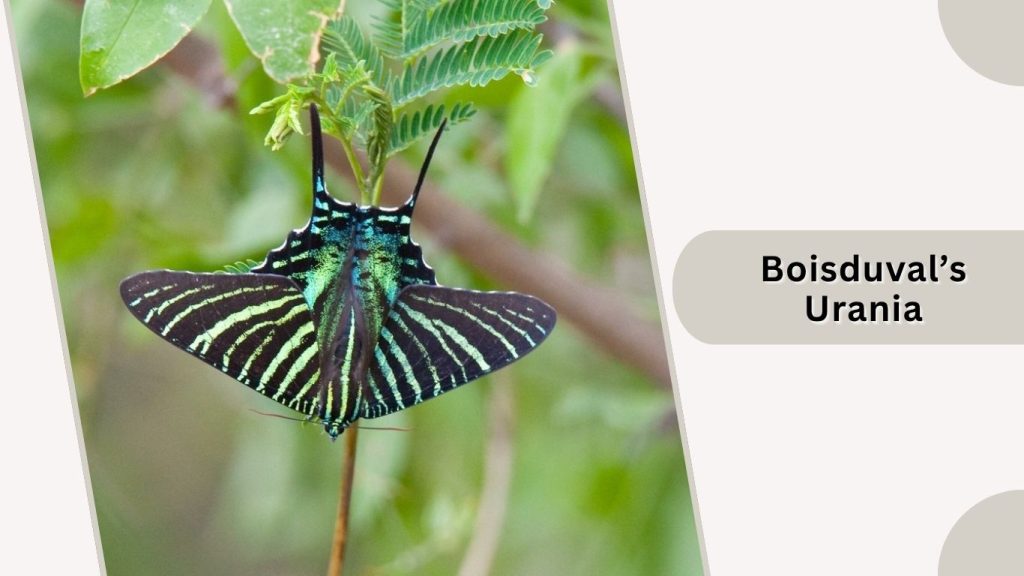
The Boisduval’s Urania is a striking day-flying moth with the scientific name Urania boisduvalii. It belongs to the family Uraniidae, the same group as several colorful swallowtail-like moths. This species is found in Cuba and is known for its butterfly-like flight, dark wings, and bright greenish bands. It may also move between areas where its host plants grow.
Identification
- Medium-sized, butterfly-like moth.
- Wings are mostly dark brown or blackish.
- Bright green or greenish bands cross the wings.
- Hindwings have pointed, tail-like extensions.
- Wings may show a shiny or iridescent appearance.
- Active during the day, unlike many moths.
- Its dark wings and bright bands give it a swallowtail-like look.
Habitat and Distribution
Boisduval’s Urania is native to Cuba and is found throughout the island. It is associated with areas where its larval host plants grow, especially plants in the genus Omphalea. Because these plants are not evenly spread everywhere, the moth may appear more commonly in certain forested or plant-rich areas. Some studies suggest it may be migratory, with possible movement routes mainly along Cuba’s western and eastern coastal regions.
Behavior and Diet
This moth is active during daylight and flies more like a butterfly than a typical night moth. Adult Boisduval’s Uranias may visit flowers for nectar, while the larvae are specialist feeders on Omphalea hypoleuca and Omphalea trichotoma. The caterpillars can tolerate toxins in these plants, and those chemicals may help protect the adult moth from predators such as birds.
Lifecycle
The lifecycle of Boisduval’s Urania includes egg, larva, pupa, and adult stages. Females usually lay single eggs on separate host-plant leaves, although egg clutches have also been recorded. After hatching, the caterpillars feed on Omphalea leaves and may prefer the fruit of Omphalea trichotoma. When fully grown, the larva pupates before emerging as a colorful adult moth.
5. Ripheus Swallowtail Moth
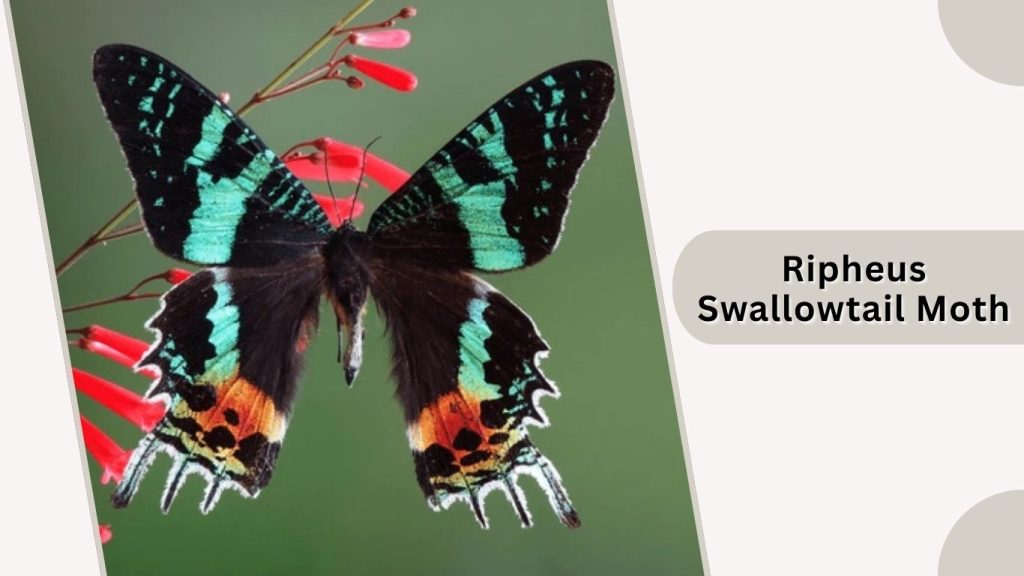
The Ripheus Swallowtail Moth refers to the colorful moth Chrysiridia rhipheus, better known as the Madagascan Sunset Moth. It was once placed in the butterfly genus Papilio because of its swallowtail-like shape, bright colors, and tail-like hindwings. Today, it is recognized as a day-flying moth in the family Uraniidae and is native to Madagascar.
Identification
- Bright, butterfly-like moth with very colorful wings.
- Wingspan is usually about 7–9 cm.
- Wings show iridescent green, blue, red, orange, and black markings.
- Hindwings have several tail-like extensions.
- Wing edges have pale or whitish fringes.
- Often appears different in color depending on light angle.
- Active during the day, unlike many other moths.
Habitat and Distribution
The Ripheus Swallowtail Moth is endemic to Madagascar, where it occurs in areas connected with its larval host plants. It is found in different parts of the island and is especially associated with habitats where Omphalea plants grow. Because its caterpillars depend on these plants, the moth’s movement and local abundance are strongly linked to host-plant availability.
Behavior and Diet
This moth is active during daylight and is often compared with butterflies because of its strong flight and vivid wing colors. Its bright coloring works as a warning signal to predators, as the moth can be toxic or unpleasant to eat. Adult moths may visit flowers for nectar, while the caterpillars feed on Omphalea leaves.
Lifecycle
The lifecycle includes egg, larva, pupa, and adult stages. Females lay eggs on the underside of Omphalea leaves. After hatching, the caterpillars feed on the host plant and grow before pupating. Adult moths may be present throughout the year in Madagascar, with population peaks often recorded from March to August.
6. Walker’s Urania
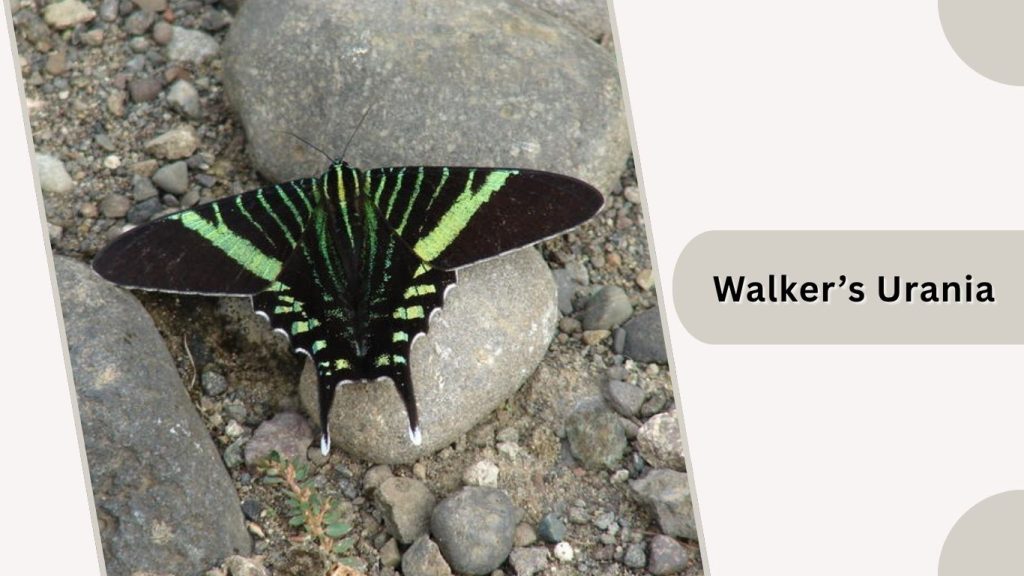
The Walker’s Urania is a swallowtail-like moth belonging to the family Uraniidae. Like other uraniid moths, it has a butterfly-like appearance, narrow body, and attractive wing pattern. It is usually associated with tropical forest habitats, where its caterpillar host plants grow. This moth is less commonly discussed than the Madagascan Sunset Moth or Green-banded Urania, but it still belongs to the same fascinating group of colorful day-flying moths.
Identification
- Medium-sized swallowtail-like moth.
- Wings are usually dark with pale or greenish markings.
- Hindwings may have pointed or tail-like extensions.
- Body is slender and moth-like.
- Wings may show a slight metallic or glossy appearance.
- Often resembles a butterfly when flying.
- Its overall pattern helps separate it from plain night-flying moths.
Habitat and Distribution
Walker’s Urania is generally linked with warm tropical habitats. It may occur in forests, forest edges, and plant-rich areas where larval food plants are available. Like many uraniid moths, its distribution is closely connected to the availability of suitable host plants. Because of this, it may be more local in areas where those plants are common.
Behavior and Diet
Walker’s Urania is likely to show the active, butterfly-like behavior typical of many uraniid moths. Adults may fly during the day and visit flowers for nectar. The larvae feed on host plants, using leaves as their main food source. Bright or contrasting wing patterns may also help warn predators that the moth is not suitable prey.
Lifecycle
The lifecycle of Walker’s Urania follows the normal moth pattern of egg, larva, pupa, and adult. Females lay eggs on suitable host plants. After hatching, the caterpillars feed on the leaves and grow through several stages. When mature, they pupate in a protected place before emerging as adult moths that continue the cycle.
7. Brown Scoopwing
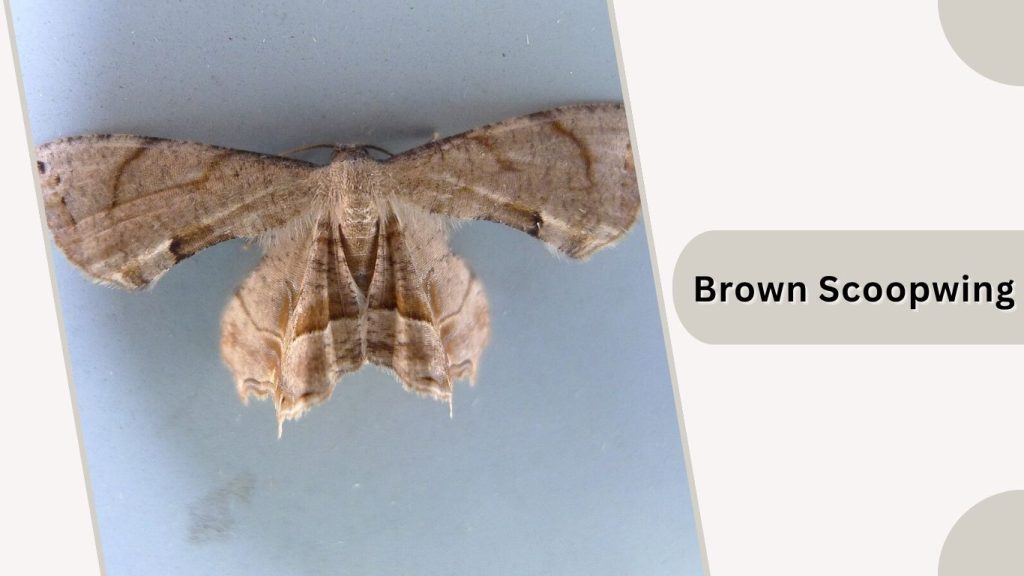
The Brown Scoopwing is a North American swallowtail moth with the scientific name Calledapteryx dryopterata. It belongs to the family Uraniidae and is the only species in the genus Calledapteryx. This moth is found mainly in eastern North America, especially in places where its larval host plants are available. Its brown coloring and unusual wing posture give it a different appearance from the brighter uraniid moths.
Identification
- Medium-sized swallowtail moth.
- Wings are mostly brown or tan.
- Forewings may show subtle darker markings.
- Hindwings have a slightly scooped or folded appearance.
- The body is slender and moth-like.
- Often rests with a distinctive wing posture.
- Less colorful than many tropical uraniid moths.
Habitat and Distribution
The Brown Scoopwing is found in eastern North America, especially in the eastern United States. It is associated with terrestrial habitats where shrubs and host plants grow. In Massachusetts records, its larval host plants include nannyberry and withe-rod, both species of Viburnum. This connection suggests that it is often found near woodland edges, shrublands, and other habitats where these plants occur.
Behavior and Diet
Adult Brown Scoopwings are active during the warmer months. Records from Massachusetts show adults from May to June and again from July to September. The larvae feed on Viburnum species such as nannyberry and withe-rod. Adults are not usually considered pests and are mainly noticed by moth watchers or people observing insects around wooded and shrubby habitats.
Lifecycle
The Brown Scoopwing develops through egg, larva, pupa, and adult stages. Females lay eggs near suitable host plants, and the caterpillars feed on Viburnum leaves after hatching. When mature, the larvae pupate in a protected place before emerging as adults. In suitable areas, adults may appear in more than one seasonal flight period.
8. Gray Scoopwing
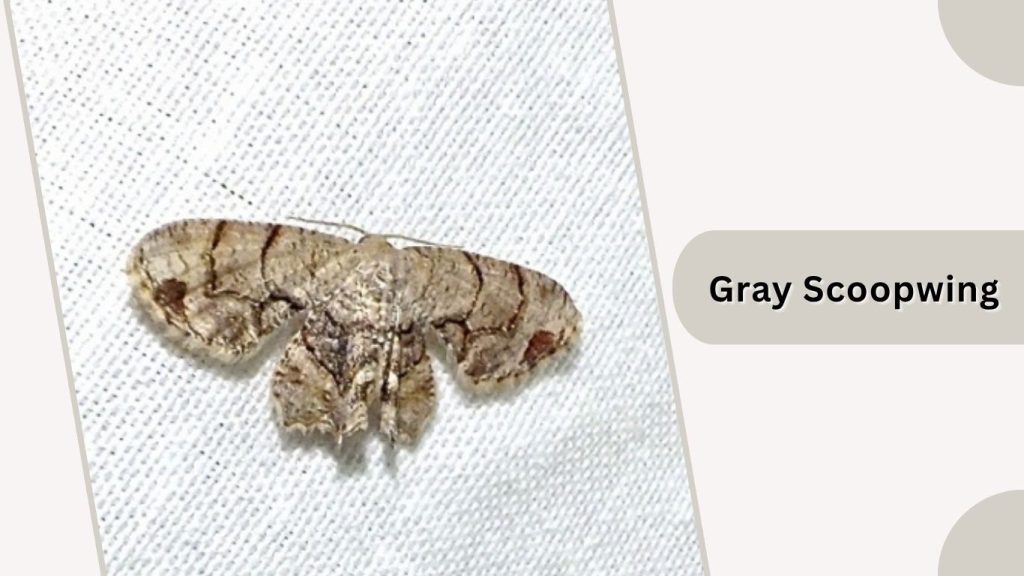
The Gray Scoopwing is a small swallowtail moth with the scientific name Callizzia amorata. It belongs to the family Uraniidae and is found in North America. This moth is called a “scoopwing” because of the unusual way its hindwings are creased and held, creating a scooped look. Its gray, black, white, and ivory coloring helps it blend into bark, leaves, and other natural surfaces.
Identification
- Small swallowtail moth.
- Adult length is usually around 10–11 mm.
- Wings are gray, black, white, and ivory.
- Forewings may show a dark-edged triangular mark.
- Hindwings are creased and held close to the abdomen.
- Wings can look curved, scalloped, or scoop-shaped.
- Less colorful than tropical uraniid moths but still distinctive.
Habitat and Distribution
The Gray Scoopwing is found across North America, including parts of the United States, Canada, and Mexico. Its range extends widely from western areas such as California and British Columbia to eastern areas such as Florida and Nova Scotia. It is usually associated with terrestrial habitats where suitable host plants and sheltered resting places are available.
Behavior and Diet
Adult Gray Scoopwings are generally seen from spring through late summer, though records may vary by region. In the eastern part of the continent, adults may appear in early spring, while western records often peak later. The larvae feed on plants such as honeysuckle and snowberry, making these host plants important for the moth’s development.
Lifecycle
The Gray Scoopwing develops through the usual moth stages of egg, larva, pupa, and adult. Females lay eggs near suitable host plants, and the caterpillars feed on leaves after hatching. Once mature, the larvae pupate in a protected place before emerging as adult moths. Adults have been reported from February to October, with many sightings from May to August.
9. White-spotted Swallowtail Moth
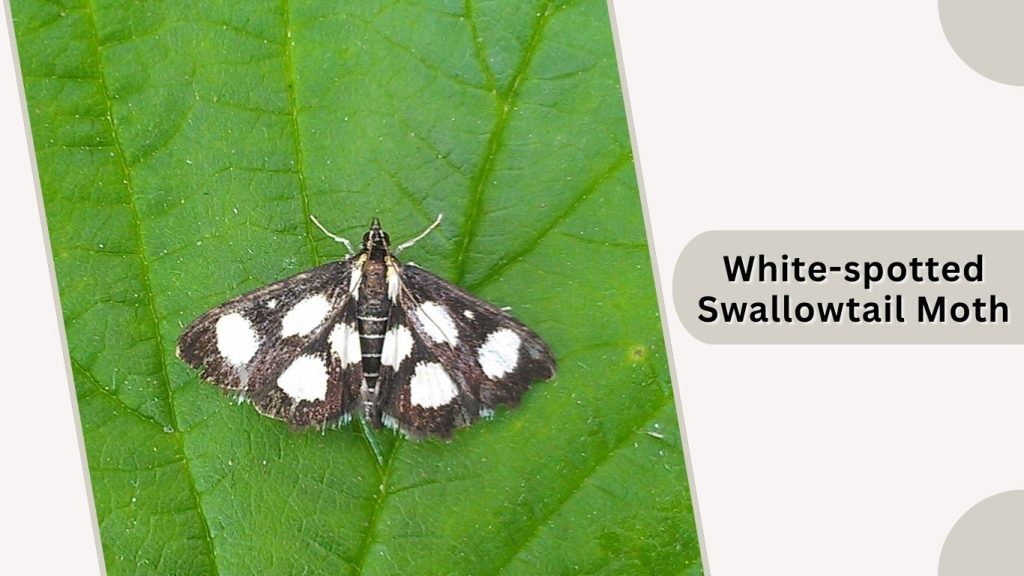
The White-spotted Swallowtail Moth is a swallowtail-like moth known for its dark wings marked with pale or white spots. Like other moths in this group, it may resemble a butterfly because of its wing shape, slim body, and active flight style. Its contrasting wing pattern helps it stand out from many plain-colored moths.
Identification
- Medium-sized swallowtail-like moth.
- Wings are usually dark brown or blackish.
- Pale or white spots appear on the wings.
- Hindwings may have pointed or tail-like extensions.
- Body is slender and narrow.
- Wings may look slightly glossy in good light.
- Its white-spotted pattern helps separate it from similar moths.
Habitat and Distribution
The White-spotted Swallowtail Moth is generally associated with warm forested habitats, woodland edges, and plant-rich areas. It is most likely to occur where suitable larval host plants grow. Like many swallowtail-like moths, its local presence depends strongly on food plant availability and suitable shelter.
Behavior and Diet
Adult White-spotted Swallowtail Moths may fly during the day or around dusk, depending on the species and habitat. Adults may visit flowers for nectar, while the caterpillars feed on leaves of suitable host plants. Its pale-spotted wing pattern may help with recognition, camouflage, or warning against predators.
Lifecycle
The White-spotted Swallowtail Moth develops through egg, larva, pupa, and adult stages. Females lay eggs on or near host plants. After hatching, the caterpillars feed on leaves and grow through several stages before pupating. The adult moth later emerges, mates, and continues the lifecycle.
10. Tropical Swallowtail Moth
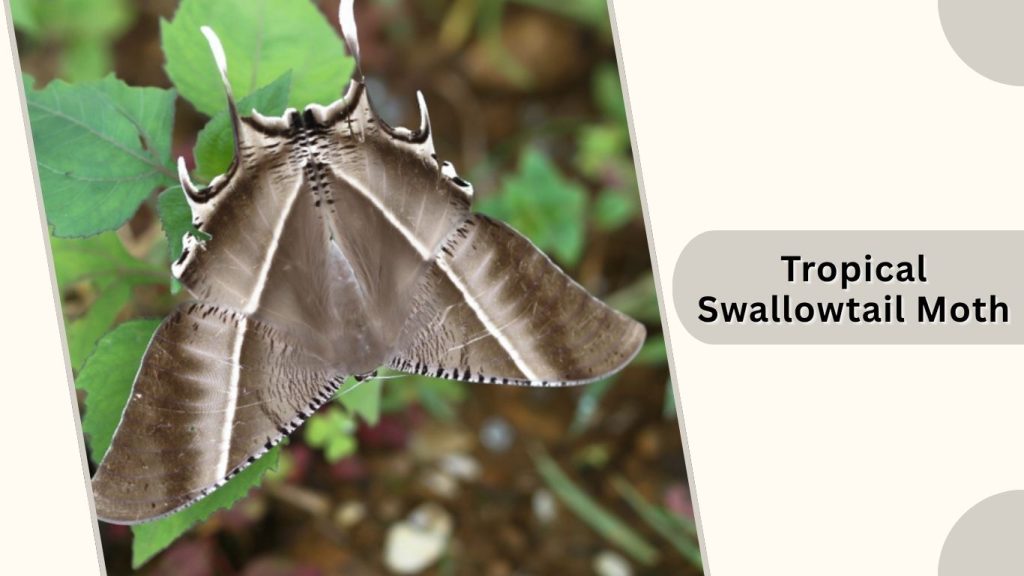
The Tropical Swallowtail Moth is a butterfly-like moth found in warm tropical regions. It is known for its graceful wing shape, slim body, and colorful or contrasting markings. Like many swallowtail-like moths, it may have tail-like extensions on the hindwings, giving it an appearance similar to swallowtail butterflies.
Identification
- Medium-sized swallowtail-like moth.
- Wings may be dark, bright, or patterned depending on the species.
- Hindwings often have tail-like extensions.
- Body is usually slim and narrow.
- Wing markings may include bands, spots, or metallic-looking colors.
- Often resembles a butterfly in shape and movement.
- Usually more colorful than many ordinary night-flying moths.
Habitat and Distribution
The Tropical Swallowtail Moth is generally found in warm habitats such as tropical forests, forest edges, gardens, and areas with rich vegetation. It is most common where suitable host plants grow for the caterpillars. Because tropical habitats support many flowering plants, adults may be seen around forest openings and nectar sources.
Behavior and Diet
Adult Tropical Swallowtail Moths may be active during the day or around dusk, depending on the species. They may visit flowers for nectar and fly with a butterfly-like movement. The larvae feed on leaves of suitable host plants, which are important for their growth and survival.
Lifecycle
The Tropical Swallowtail Moth follows the normal moth lifecycle of egg, larva, pupa, and adult. Females lay eggs on host plants, and the caterpillars feed on leaves after hatching. When fully grown, the larvae pupate in a protected place. The adult moth later emerges, mates, and begins the cycle again.
FAQs
What is a Tropical Swallowtail Moth?
A Tropical Swallowtail Moth is a butterfly-like moth found in warm tropical regions. It often has colorful or contrasting wings, a slim body, and tail-like hindwing extensions that make it resemble swallowtail butterflies.
Where do Tropical Swallowtail Moths live?
Tropical Swallowtail Moths usually live in tropical forests, forest edges, gardens, and plant-rich areas. They are most common in places where suitable host plants grow for their caterpillars and flowering plants are available for adults.
What do Tropical Swallowtail Moths eat?
Adult Tropical Swallowtail Moths may feed on flower nectar. Their caterpillars feed on leaves of suitable host plants. The exact food plant depends on the species and local habitat where the moth lives.
Are Tropical Swallowtail Moths butterflies?
No, Tropical Swallowtail Moths are moths, not butterflies. However, some species look very similar to butterflies because they may fly during the day, have bright markings, and possess tail-like extensions on their hindwings.
Are Tropical Swallowtail Moths harmful?
Tropical Swallowtail Moths are not harmful to humans or pets. They are part of natural ecosystems and help support biodiversity. Their caterpillars feed on plants, but they are not usually considered serious pests in most natural habitats.