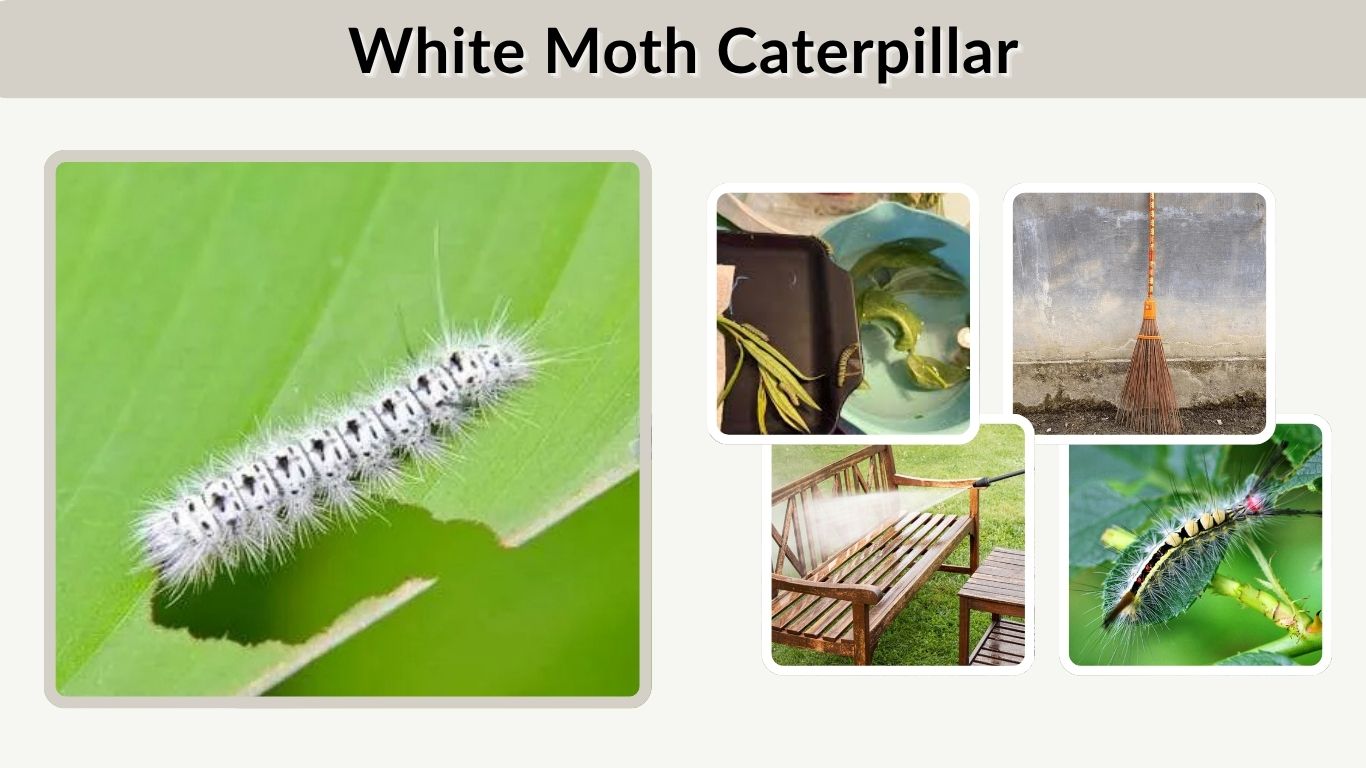
A white moth caterpillar can look soft, harmless, or even cute, but some species have irritating hairs that can cause itching, redness, or a painful rash. Others are harmless plant-feeders that are often mistaken for dangerous caterpillars. This guide explains how to identify common white caterpillars, which ones may sting, what they eat, and how to handle them safely around your home, garden, kids, and pets.
What Is a White Moth Caterpillar?
A white moth caterpillar is not one single species. It is a general description people use for pale, fuzzy, striped, or white-bodied caterpillars that later turn into moths. Some are tussock moth caterpillars, some are sphinx moth caterpillars, and others belong to tiger moth, dagger moth, flannel moth, or prominent moth groups.
Because many caterpillars change color as they grow, identification should not rely on color alone. Look at body shape, hair tufts, black markings, host plants, season, and whether the caterpillar has a tail horn or dense fuzzy hairs.
Common White Caterpillars People Notice
The most searched white caterpillars include:
- White-marked tussock moth caterpillar
- Hickory tussock moth caterpillar
- White-lined sphinx moth caterpillar
- White flannel moth caterpillar
- American dagger moth caterpillar
- White ermine moth caterpillar
- White satin moth caterpillar
- White cedar moth caterpillar
Many of these caterpillars appear on trees, shrubs, garden plants, porches, fences, playgrounds, or outdoor furniture.
White-Marked Tussock Moth Caterpillar
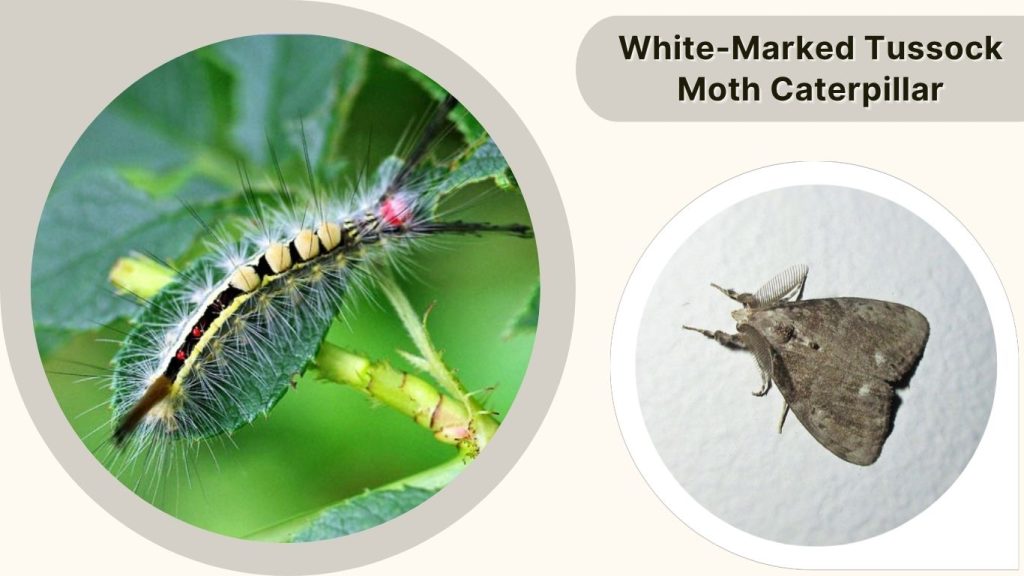
The white-marked tussock moth caterpillar is one of the most recognizable white and black fuzzy caterpillars. Its scientific name is Orgyia leucostigma. It often has a bright red or orange head, pale yellow or white tufts along the back, black hair pencils, and a patterned body.
This caterpillar is commonly found on trees and shrubs, including oak, maple, elm, apple, willow, and other broadleaf plants. It may also wander across decks, sidewalks, siding, and outdoor play areas when looking for a place to pupate.
Is the White-Marked Tussock Moth Caterpillar Poisonous?
The white-marked tussock moth caterpillar is better described as irritating rather than poisonous. It does not bite like an insect with jaws designed to attack humans, and it is not poisonous in the way a toxic mushroom is poisonous. However, its hairs can irritate skin.
When touched, the tiny hairs may break off and cause:
- Itching
- Redness
- Burning feeling
- Raised welts
- Mild swelling
- Rash-like bumps
Children may be more likely to react because they are curious and may pick up fuzzy caterpillars. The cocoon may also contain irritating hairs, so avoid touching empty cocoons with bare hands.
White Hickory Tussock Moth Caterpillar
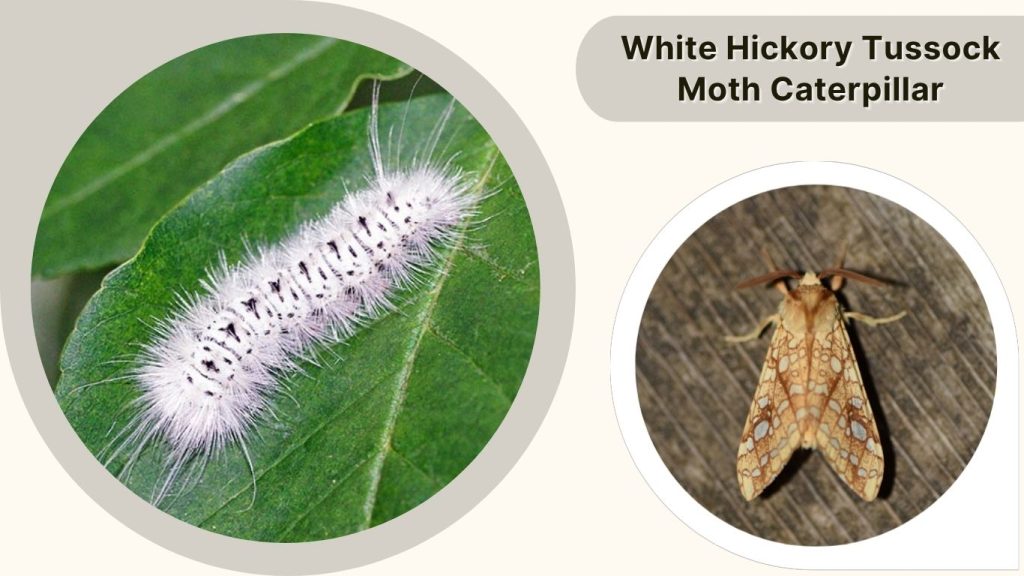
The white hickory tussock moth caterpillar is another common white fuzzy caterpillar. It usually has a white body, black markings, and long black hair tufts near the front and rear. It is often seen in late summer or fall.
Despite its attractive appearance, it should not be handled. The hairs can cause skin irritation in sensitive people. Some people develop only mild itching, while others may get a more noticeable rash.
Hickory Tussock vs. White-Marked Tussock
These two caterpillars are often confused because both are fuzzy and can be white or pale. The white-marked tussock usually has a more obvious red head and brush-like tufts on the back. The hickory tussock tends to look more evenly white with black markings and longer black hair pencils.
| Caterpillar | Key Features | Can Cause Rash? | Common Concern |
|---|---|---|---|
| White-marked tussock moth caterpillar | Red head, pale back tufts, black hair pencils | Yes | Sting, rash, poisonous questions |
| Hickory tussock moth caterpillar | White fuzzy body, black stripe/tufts | Yes | Rash and skin irritation |
| White-lined sphinx caterpillar | Smooth body, rear horn, variable colors | Usually no | Host plants and diet |
| White flannel moth caterpillar | Fuzzy look with hidden spines | Yes, can be painful | Sting treatment |
| American dagger moth caterpillar | Pale yellow-white hairs, black pencils | Yes | Skin irritation |
White-Lined Sphinx Moth Caterpillar
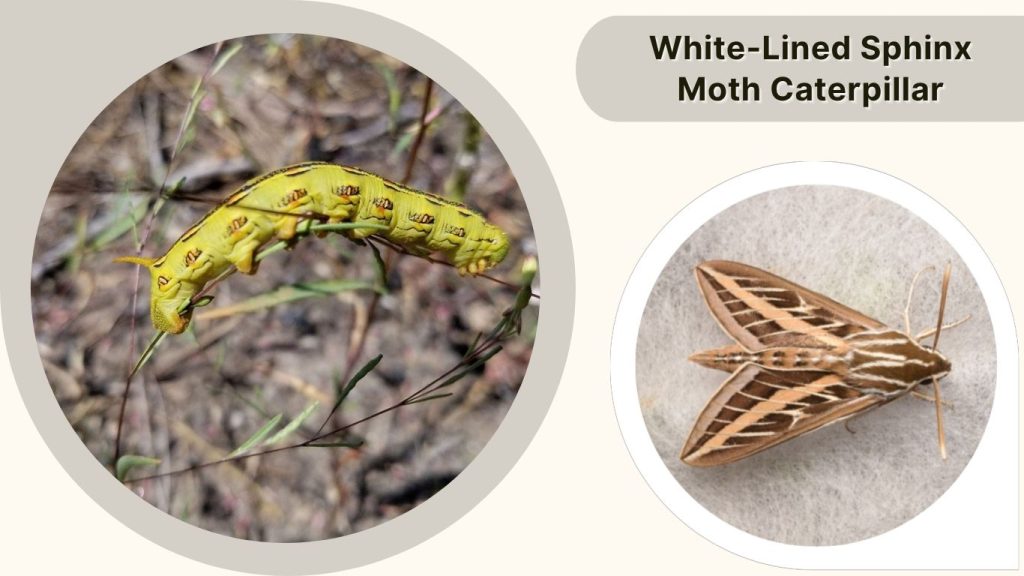
The white-lined sphinx moth caterpillar is different from most fuzzy white caterpillars. It is often called a hornworm because it has a pointed horn at the rear of its body. Its color can vary widely. Some are green, some are dark, and some may look striped or pale.
These caterpillars feed on many plants and can sometimes appear in large numbers. They may eat leaves of garden plants, wildflowers, weeds, and ornamentals. The adult moth is often called a hummingbird moth because it hovers near flowers while feeding on nectar.
Is the White-Lined Sphinx Caterpillar Poisonous?
The white-lined sphinx caterpillar is generally not considered poisonous or dangerous to people. The rear horn may look threatening, but it is not a stinger. The main issue is plant feeding, especially if many caterpillars appear at once.
Avoid handling it roughly, but it is not in the same risk category as flannel moth caterpillars or some hairy tussock caterpillars.
White Flannel Moth Caterpillar
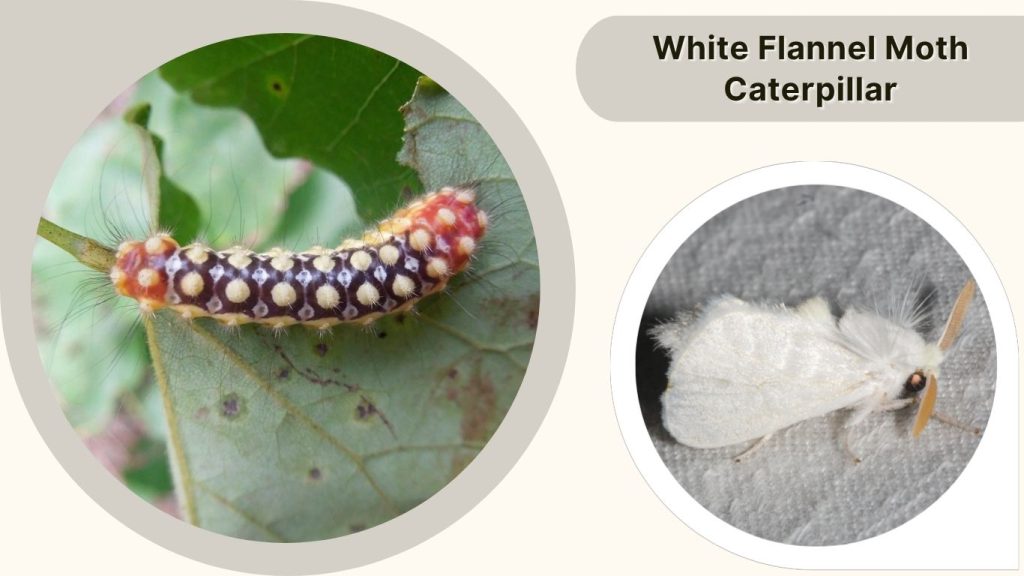
The white flannel moth caterpillar deserves extra caution. Flannel moth caterpillars may look soft and furry, but some have venomous spines hidden beneath their hairs. Contact can cause a painful sting.
Symptoms can include sharp pain, redness, swelling, burning, and tenderness. More sensitive individuals may experience stronger reactions. Because the spines can be hidden, never assume a fuzzy caterpillar is safe to touch.
What to Do After a White Caterpillar Sting or Rash
If you touched a white fuzzy caterpillar and your skin starts itching or burning, act quickly but calmly.
- Do not rub the area, because rubbing may push hairs deeper into the skin.
- Use tape to gently lift off loose hairs or spines.
- Wash the area with soap and cool water.
- Apply a cold compress to reduce burning or swelling.
- Use an over-the-counter anti-itch cream if appropriate.
- Seek medical help for severe pain, swelling, trouble breathing, eye contact, or symptoms in a child.
For pets, call a veterinarian if your dog or cat mouths, eats, or paws at a hairy caterpillar and then drools, vomits, swells, or acts distressed.
American Dagger Moth Caterpillar
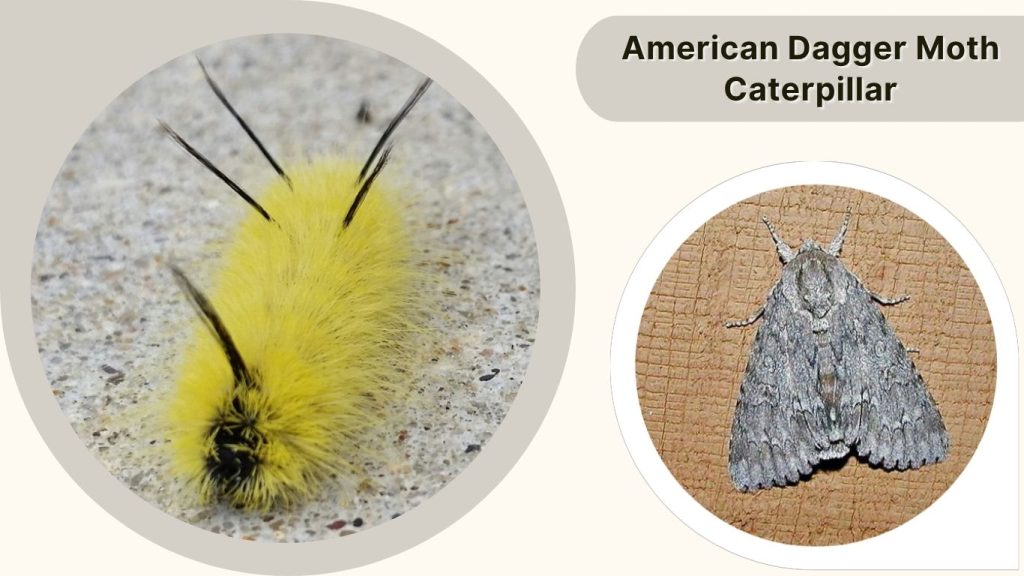
The American dagger moth caterpillar is often pale yellow, cream, or whitish and covered in long hairs. It may have several longer black hair pencils that make it look dramatic. It feeds on trees such as oak, maple, ash, elm, and other hardwoods.
Many people search for “white American dagger moth caterpillar” because its pale color can make it look like a white fuzzy caterpillar. Like tussock caterpillars, it is best left alone. Its hairs may irritate skin, especially in sensitive individuals.
Other White Moth Caterpillars
Not every white moth caterpillar is dangerous. Some are mostly harmless plant-feeders, while others can cause mild to painful reactions. Identification matters.
White Ermine Moth Caterpillar
The white ermine moth caterpillar is more common in parts of Europe and the UK. It is usually dark and hairy rather than purely white, but people often search for it because the adult moth is white. The caterpillars feed on a range of low-growing plants.
White Satin Moth Caterpillar
The white satin moth caterpillar is usually darker with pale markings, while the adult moth is bright white. It can feed on poplar, willow, and related trees. In some areas, it can become a noticeable landscape pest.
White Cedar Moth Caterpillar
The white cedar moth caterpillar is searched often in relation to control and whether it is poisonous. It is known for feeding on white cedar and related plants. Large numbers may defoliate trees, so management is usually focused on plant protection rather than human health.
White Cabbage Moth Caterpillar
People often use “white cabbage moth caterpillar” when they mean cabbage white butterfly caterpillars. These are the green caterpillars that feed on cabbage, broccoli, kale, and other brassicas. They are not fuzzy white caterpillars, but they are common garden pests.
What Do White Moth Caterpillars Eat?
Diet depends on the species. Some feed on shade trees, some on garden plants, and some on weeds or wildflowers. The host plant can be one of the best clues for identification.
Common host plants may include:
- Oak, maple, elm, willow, ash, and hickory
- Apple and other fruit trees
- Poplar, cottonwood, and willow
- Cabbage-family vegetables
- Wildflowers and garden ornamentals
- White cedar and related trees
If you find a caterpillar on a plant, take a photo of both the insect and the leaves. This makes identification easier.
How to Get Rid of White Moth Caterpillars Safely
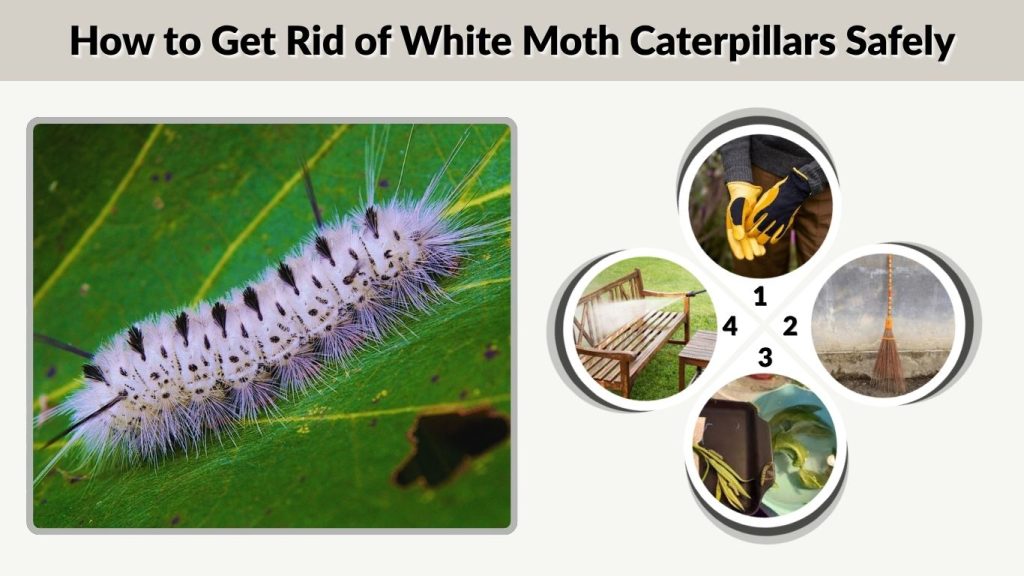
Most white caterpillars do not require aggressive control unless they are causing plant damage or appearing in large numbers around children, pets, or outdoor seating areas. Avoid crushing or brushing hairy caterpillars with bare hands because hairs may transfer to skin or surfaces.
Safe Removal Steps
Use a cautious, low-contact approach:
- Wear gloves, long sleeves, and eye protection.
- Use a stick, leaf, broom, or dustpan to move caterpillars.
- Drop them into soapy water if control is necessary.
- Remove cocoons with gloves, not bare fingers.
- Wash outdoor furniture, railings, and toys if caterpillars have been crawling nearby.
- Prune heavily infested small branches when practical.
For valuable trees or heavy infestations, contact a local extension office, arborist, or pest professional for region-specific advice.
Are White Moth Caterpillars Dangerous to Dogs?
Some white moth caterpillars can irritate a dog’s mouth, nose, paws, or stomach if touched or eaten. Dogs are curious and may sniff, lick, or chew fuzzy caterpillars. The risk depends on the caterpillar species and the dog’s sensitivity.
Watch for:
- Drooling
- Pawing at the mouth
- Vomiting
- Swelling around the lips or face
- Whining or restlessness
- Red skin or rash
- Trouble breathing
A mild exposure may only cause temporary irritation, but severe symptoms should be treated as urgent. Contact a veterinarian if your pet shows strong discomfort or you suspect it ate a stinging caterpillar.
How to Identify a White Caterpillar Without Touching It
The safest way to identify a white caterpillar is to observe it without handling it. Take clear photos from the side and top, including the plant it was found on.
Look for these features:
- Is the body fuzzy, smooth, striped, or spotted?
- Does it have a red or orange head?
- Are there black hair pencils at the front or rear?
- Does it have a horn at the back?
- What plant is it eating?
- What season and location did you find it in?
- Is it alone or part of a large group?
A smooth caterpillar with a rear horn is more likely to be a sphinx moth caterpillar. A fuzzy caterpillar with tufts, black pencils, or a red head may be a tussock moth or dagger moth caterpillar.
FAQs
Is a white moth caterpillar poisonous?
Some white moth caterpillars can irritate skin, but “poisonous” is not always the best word. Tussock and dagger moth caterpillars may cause rashes from irritating hairs. Flannel moth caterpillars can have venomous spines. Smooth hornworms, such as white-lined sphinx caterpillars, are usually less concerning to people.
Does a white-marked tussock moth caterpillar sting?
It does not sting like a bee, but its hairs can act like tiny irritants. Touching the caterpillar or its cocoon may cause itching, redness, burning, or raised bumps. Sensitive people and children may react more strongly, so it is best not to handle it.
What does a white-lined sphinx moth caterpillar eat?
White-lined sphinx caterpillars feed on many plants, including wildflowers, weeds, ornamentals, and some garden plants. They are known for having a rear horn and variable colors. When numerous, they may noticeably chew leaves, but they are not usually dangerous to humans.
How do you treat a white caterpillar rash?
Remove hairs gently with tape, wash the area with soap and cool water, and apply a cold compress. Avoid scratching or rubbing. Anti-itch cream or an oral antihistamine may help some people. Seek medical care for severe pain, swelling, eye exposure, breathing problems, or a strong reaction in a child.
Should I kill white fuzzy caterpillars in my yard?
Not always. Many become moths that are part of the local ecosystem. Remove them only if they are causing plant damage or creating a safety issue near children, pets, or outdoor living spaces. Use gloves and tools rather than bare hands, especially with fuzzy or hairy caterpillars.