The Isabella tiger moth caterpillar is one of the most recognizable fuzzy caterpillars in North America. Commonly called the woolly bear caterpillar, this insect is famous for its black and brown banded body and its connection to winter weather folklore. These caterpillars are often seen crawling across roads, gardens, fields, and forest edges during fall. Although their hairy appearance may seem intimidating, they are generally harmless to humans and play an important role in the moth life cycle.
People are often curious about whether Isabella tiger moth caterpillars are poisonous, what they eat, and how they survive cold winters. Understanding their habitat, behavior, diet, and life cycle can help nature enthusiasts safely observe these interesting caterpillars.
What Is an Isabella Tiger Moth Caterpillar?
The Isabella tiger moth caterpillar is the larval stage of the Isabella tiger moth, scientifically known as Pyrrharctia isabella. This fuzzy caterpillar later transforms into an orange-yellow tiger moth after completing its development.
Scientific Name and Classification
- Scientific name: Pyrrharctia isabella
- Member of the tiger moth family
- Caterpillar stage of a moth
- Belongs to the order Lepidoptera
- Common across North America
Why It Is Called a Woolly Bear
The nickname “woolly bear” comes from the caterpillar’s thick fuzzy bristles and rounded appearance. Its black ends and reddish-brown middle band create the classic woolly bear pattern recognized by many people.
Isabella Tiger Moth Overview
Adult Isabella tiger moths are orange-yellow moths with small dark markings on their wings. The caterpillar stage is much more commonly noticed because woolly bears are active on the ground during autumn months.
Isabella Tiger Moth Caterpillar Identification
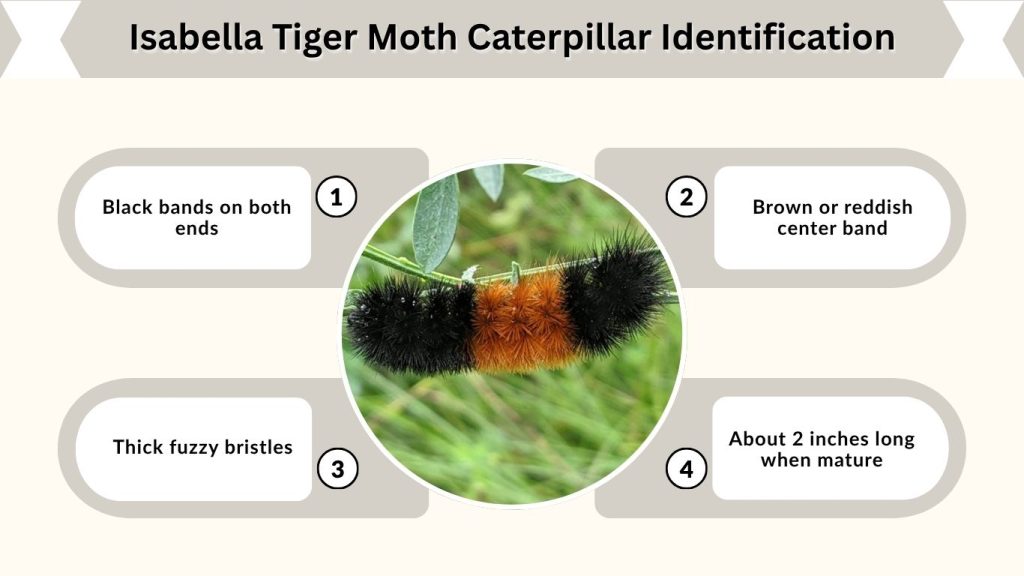
Woolly bear caterpillars are easy to recognize because of their fuzzy appearance and unique color bands. Although colors may vary slightly, most share the same thick hairy body structure.
Size and Color
- Black bands on both ends
- Brown or reddish center band
- Thick fuzzy bristles
- About 2 inches long when mature
- Rounded segmented body
Distinctive Features
These caterpillars have dense hair-like bristles that help protect them from predators. When disturbed, they often curl into a tight ball to shield their softer underside from danger.
How to Identify Woolly Bear Caterpillars
Woolly bears move slowly across the ground and are commonly seen during fall searching for overwintering locations. Their dark fuzzy appearance makes them stand out among leaves and grass.
Isabella Tiger Moth Caterpillar Habitat
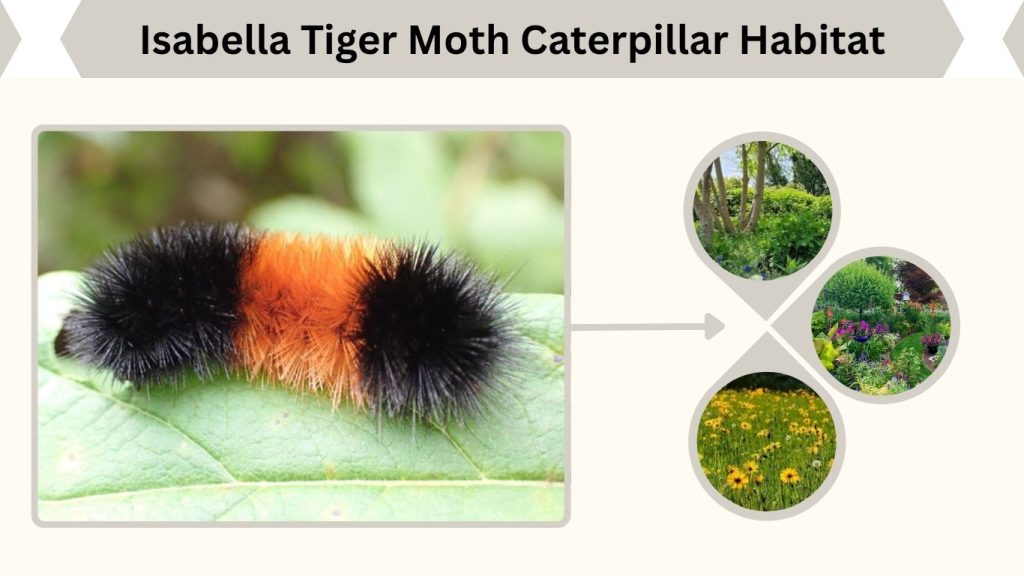
These caterpillars live in many natural environments where grasses, weeds, and low-growing plants are abundant. They are highly adaptable and can survive in both wild and suburban habitats.
Natural Habitat
- Meadows and grassy fields
- Gardens and parks
- Forest edges
- Roadsides and trails
- Open weedy areas
Habitat Range in the United States
Isabella tiger moth caterpillars are widely distributed throughout most of the United States and southern Canada. They are especially common during cooler fall weather when they become more active outdoors.
Where They Hide During Winter
During winter, woolly bear caterpillars shelter beneath leaf litter, logs, rocks, bark, and protected crevices. These hidden locations help protect them from harsh weather conditions.
Isabella Tiger Moth Caterpillar Diet
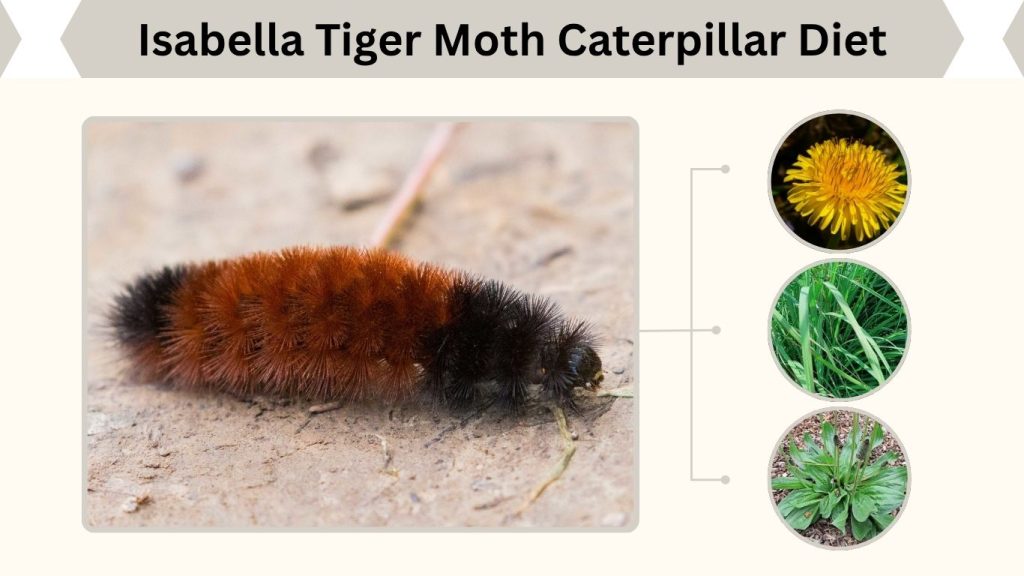
Woolly bear caterpillars feed mainly on low-growing plants, weeds, and grasses. Their diet is broad, allowing them to survive in many different habitats throughout their range.
What Do Isabella Tiger Moth Caterpillars Eat?
- Dandelions
- Grass leaves
- Clover plants
- Plantain weeds
- Wildflowers and garden weeds
Favorite Food Plants
These caterpillars prefer soft leafy plants growing close to the ground. They commonly feed on weeds and wild vegetation found in fields, gardens, and roadside habitats.
Feeding Behavior
Woolly bear caterpillars are slow-moving grazers that feed steadily on leaves and plant material. They are often more active during cooler periods and may feed at night to avoid predators.
Isabella Tiger Moth Caterpillar Life Cycle
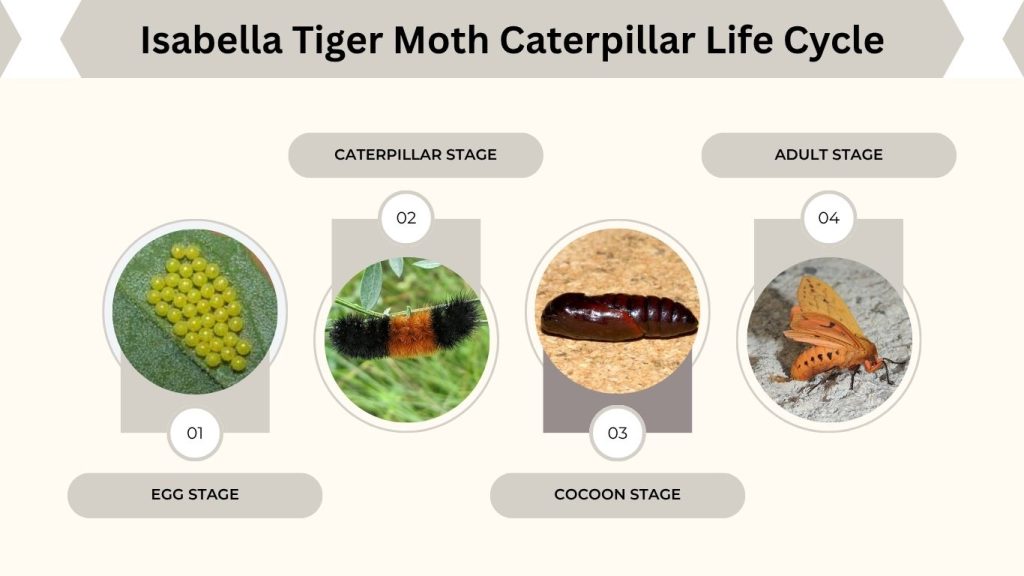
The life cycle of the Isabella tiger moth includes several stages, beginning with eggs and ending with the adult moth. The fuzzy woolly bear stage is only one part of this complete transformation.
Egg Stage
- Eggs laid on host plants
- Tiny larvae hatch from eggs
- Early caterpillars begin feeding
- Rapid growth after hatching
- Multiple molts during development
Caterpillar and Cocoon Stage
As woolly bears mature, they continue feeding and growing before eventually forming cocoons. Inside the cocoon, the caterpillar transforms into the adult Isabella tiger moth.
Adult Isabella Tiger Moth
Adult Isabella tiger moths emerge with orange-yellow wings and darker markings. Their primary role is reproduction, beginning the next generation of woolly bear caterpillars.
Isabella Tiger Moth Caterpillar in Winter
Woolly bear caterpillars are famous for their ability to survive freezing winter temperatures. Their winter survival adaptations make them one of the most interesting cold-tolerant caterpillars in North America.
How Woolly Bears Survive Cold Weather
- Freeze-tolerant body fluids
- Slow winter metabolism
- Protective overwintering shelters
- Curling behavior for defense
- Hidden locations beneath leaves
Winter Prediction Myth
Many people believe the width of the brown band predicts the severity of winter weather. According to folklore, wider brown bands suggest a milder winter, while narrower bands suggest harsher cold conditions.
Seasonal Behavior
During fall, woolly bear caterpillars actively search for protected overwintering sites. They remain mostly inactive through winter before becoming active again when temperatures warm during spring.
Is the Isabella Tiger Moth Caterpillar Poisonous?
Many people wonder whether woolly bear caterpillars are dangerous because of their thick fuzzy hairs. Fortunately, Isabella tiger moth caterpillars are generally harmless and are not considered poisonous.
Are Woolly Bear Caterpillars Dangerous?
- Non-poisonous caterpillars
- Usually harmless to humans
- Safe to observe carefully
- Rarely cause strong reactions
- Not venomous or toxic
Caterpillar Bristles and Skin Irritation
Although they are not poisonous, some sensitive individuals may experience mild skin irritation after touching the bristles. Slight itching or redness may occasionally occur in people with sensitive skin.
Safe Ways to Observe Caterpillars
It is best to handle woolly bear caterpillars gently and avoid squeezing them. Washing hands after handling insects can help reduce minor irritation risks.
Isabella Tiger Moth Caterpillar Care
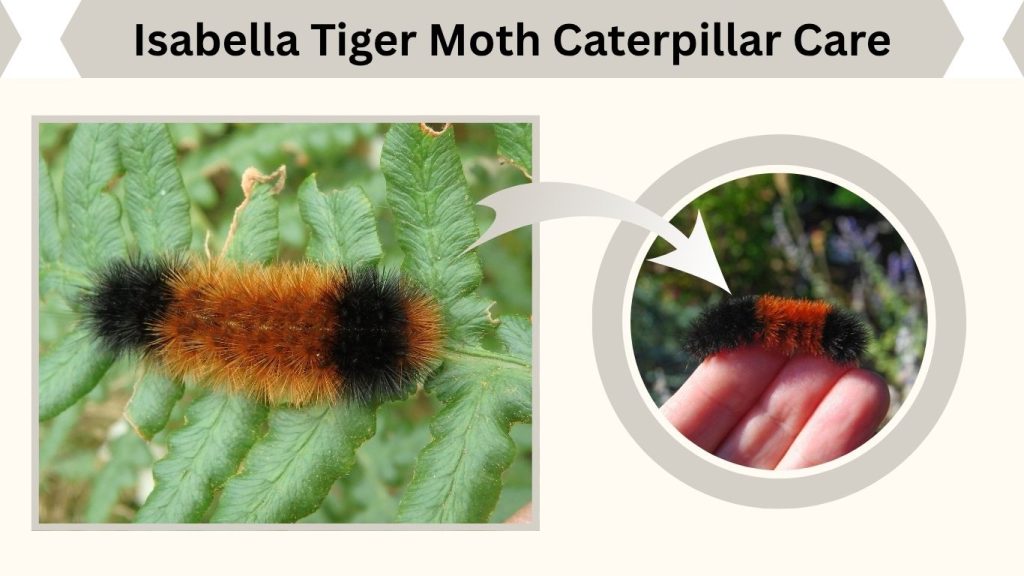
Some people temporarily keep woolly bear caterpillars for observation before releasing them. Providing proper food and a safe environment helps support healthy development.
Housing and Container Setup
- Ventilated container with airflow
- Leaves and twigs for shelter
- Dry leaf litter for hiding
- Avoid excessive moisture
- Keep away from direct sunlight
Feeding Captive Caterpillars
Fresh untreated leaves should be replaced regularly to provide proper nutrition. Pesticide-free plants are important because chemicals may harm the caterpillar during feeding.
Preparing for Pupation
As the caterpillar prepares to pupate, it becomes less active and searches for protected areas. Dry leaves and quiet surroundings help support successful cocoon formation.
Predators and Survival Adaptations
Despite their fuzzy appearance, woolly bear caterpillars face many predators in nature. Their defensive behaviors and physical adaptations improve their chances of survival.
Natural Predators
- Birds searching for insects
- Spiders and predatory insects
- Small mammals
- Parasitoid wasps
- Reptiles and amphibians
Defensive Adaptations
Their dense fuzzy bristles discourage some predators from attacking. Curling into a tight ball also protects vulnerable body parts when the caterpillar feels threatened.
Survival Strategies
Woolly bears survive by hiding during winter, feeding on many plant species, and using camouflage among leaves and grass to avoid predators in natural habitats.
Common Myths About Woolly Bear Caterpillars
Woolly bear caterpillars are surrounded by myths and folklore, especially involving winter weather predictions. Some common beliefs are based more on tradition than science.
Myth: Band Colors Predict Winter Exactly
The famous winter prediction story is part of folklore rather than proven science. Band colors mainly depend on age, growth stage, and environmental conditions instead of future weather.
Myth: Woolly Bears Are Poisonous
Many fuzzy caterpillars can cause irritation, but Isabella tiger moth caterpillars are generally harmless. Their hairs are not venomous, although sensitive skin may react mildly after contact.
Myth: They Become Butterflies
Woolly bear caterpillars actually become moths, not butterflies. After pupation, they emerge as Isabella tiger moths with orange-yellow wings and darker markings.
FAQs
What does an Isabella tiger moth caterpillar eat?
Isabella tiger moth caterpillars mainly feed on grasses, dandelions, clover, plantain weeds, and other low-growing plants. They commonly graze on soft leafy vegetation found in gardens, fields, and roadsides.
Is the woolly bear caterpillar poisonous?
No, woolly bear caterpillars are not considered poisonous or venomous. However, some people with sensitive skin may experience mild irritation or itching after touching the fuzzy bristles.
How do woolly bear caterpillars survive winter?
Woolly bear caterpillars survive winter by hiding beneath leaves, logs, and protected crevices. Their bodies can tolerate freezing temperatures because they produce protective chemicals that help prevent cell damage.
What does the Isabella tiger moth look like?
Adult Isabella tiger moths have orange-yellow wings with small dark markings and a fuzzy body. The caterpillar stage, known as the woolly bear, is much more commonly recognized.
Do woolly bear caterpillars really predict winter weather?
The belief that woolly bear band colors predict winter severity is a popular folklore tradition. Scientists generally consider the band colors more related to age and environmental conditions than weather forecasting.