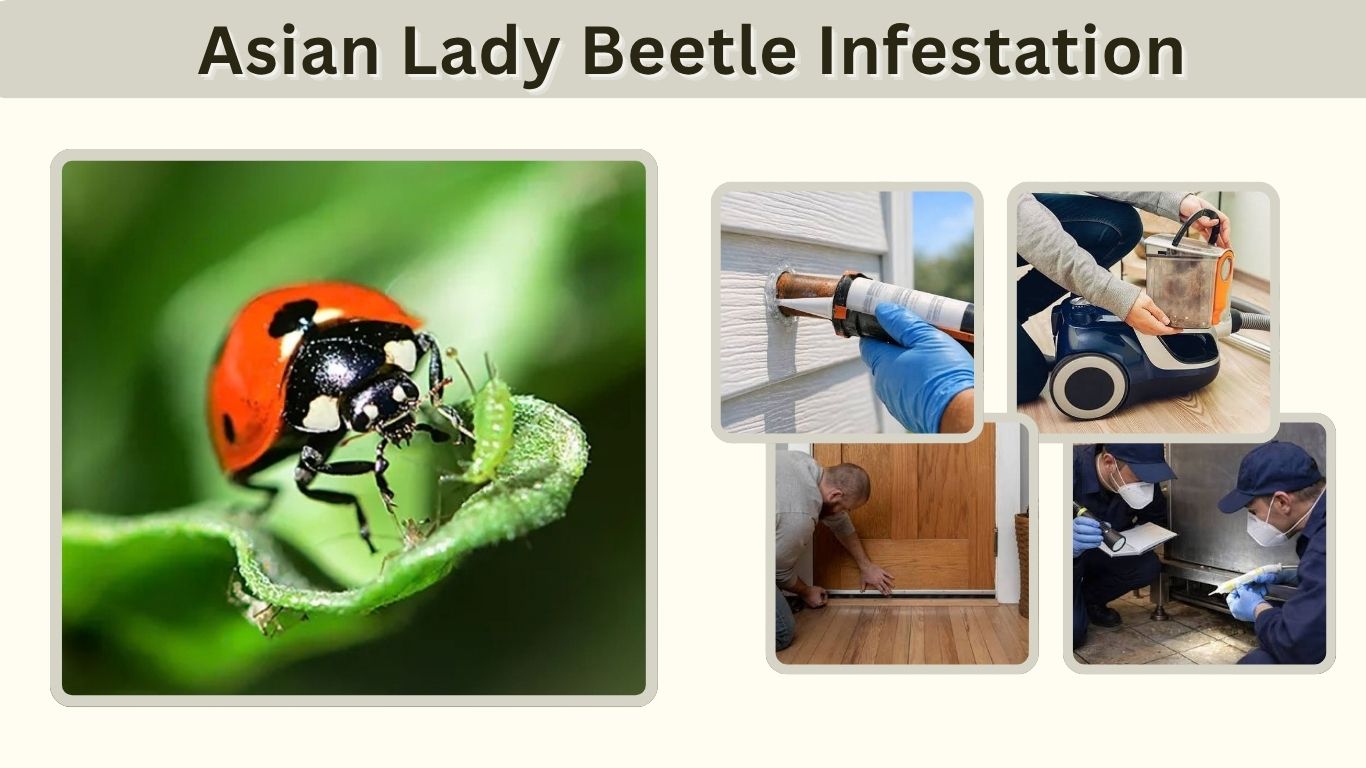
An Asian lady beetle infestation usually becomes noticeable when dozens or even hundreds of beetles gather around windows, ceilings, attics, siding, or other parts of a home. Multicolored Asian lady beetles (Harmonia axyridis) commonly enter buildings during fall while searching for protected places to overwinter. Although they do not reproduce indoors or damage wood, food, or fabrics, large numbers can create odor, staining, occasional bites, and allergy concerns. Understanding what causes an infestation and how to control it can help prevent recurring problems.
What Is an Asian Lady Beetle Infestation?
An infestation occurs when large numbers of multicolored Asian lady beetles gather on or inside a building. Unlike insects such as cockroaches, these beetles usually are not breeding inside the house. Instead, adults enter through exterior openings during fall and spend winter in protected cavities. Warm indoor temperatures may later cause some to emerge into living areas.
Signs of an Asian Lady Beetle Infestation
Common signs include:
- Large clusters around windows and doors
- Beetles crawling across ceilings or walls
- Groups gathering in attics or wall voids
- Orange, yellow, or red beetles appearing on sunny winter days
- Yellowish stains on curtains, walls, or furniture
- A noticeable unpleasant odor when beetles are disturbed
- Heavy concentrations on sunny exterior walls during fall
Asian lady beetles are usually about one-third of an inch long and vary considerably in color and number of spots. A dark M- or W-shaped marking behind the head is one of the most useful identification features.
Do Asian Lady Beetles Infest Homes?
Yes, although “infest” can be slightly misleading. They invade structures for shelter rather than using houses as year-round breeding sites.
University of Minnesota Extension notes that Asian lady beetles do not reproduce indoors. Beetles appearing during winter and spring generally entered during the previous fall and remained hidden in attics, wall voids, and similar sheltered locations.
What Causes an Asian Lady Beetle Infestation?
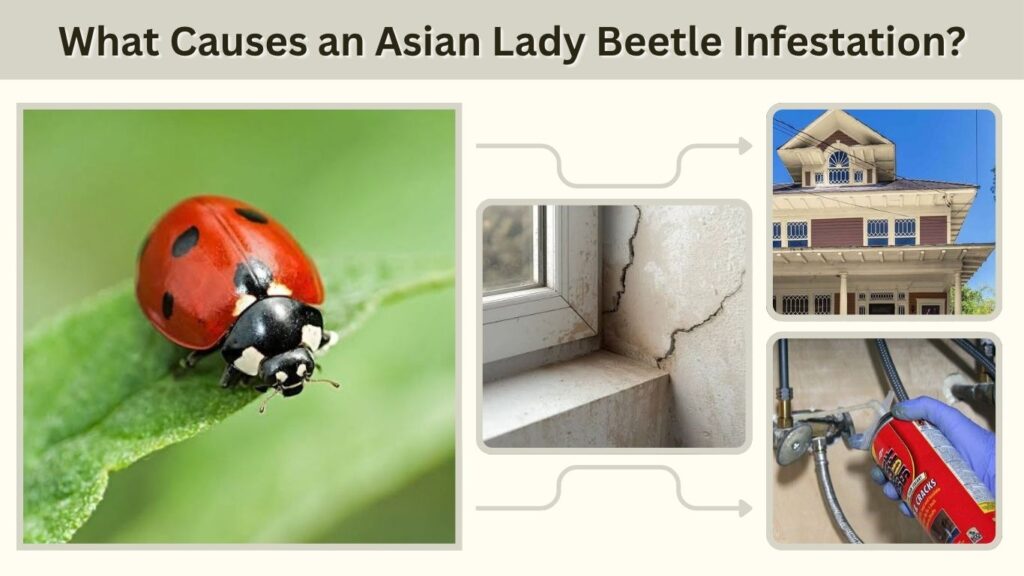
Asian lady beetle home infestations are strongly associated with their overwintering behavior. As temperatures begin falling, adults leave feeding areas and search for protected locations. Buildings can resemble natural overwintering sites, particularly when they contain numerous small cracks and warm, sun-exposed surfaces that attract gathering beetles.
Why Do They Enter Houses?
Several conditions can contribute to large invasions:
- Cracks around windows and doors
- Openings beneath siding or fascia
- Gaps around utility pipes and cables
- Damaged window or vent screens
- Openings around soffits and rooflines
- Poorly sealed garage doors
- Warm south- or west-facing exterior walls
The beetles can enter openings as small as about 1/8 inch, making seemingly insignificant exterior gaps potential access points.
Why Are There So Many at Once?
Asian lady beetles naturally aggregate during autumn. A suitable overwintering location can therefore attract hundreds or even thousands of adults.
Penn State Extension notes that tens of thousands may sometimes congregate in attics, ceilings, and wall voids. Once beetles have selected a building, warm winter days can wake individuals and cause them to travel toward windows and other lighted areas.
Asian Lady Beetle Infestation in the House
An Asian lady beetle infestation in a house is usually most obvious around windows because beetles emerging from hidden spaces are attracted to light. They may also appear around ceiling fixtures, doors, baseboards, vents, and other openings connected to wall cavities. Their presence does not mean they are consuming or damaging the building.
Do Asian Lady Beetles Damage a House?
Asian lady beetles do not normally eat wood, clothing, stored food, or structural materials. They also do not establish typical indoor breeding populations.
The main problems are their numbers, occasional biting, odor, and yellow defensive fluid. When disturbed or crushed, the beetles can release this foul-smelling liquid, which may stain light-colored surfaces. Large indoor populations may also aggravate allergies in susceptible people.
Why Do They Keep Appearing in Winter?
Once beetles enter wall voids or an attic, some remain dormant while others become active whenever temperatures rise.
Heat from the building or a sunny winter day may cause individual beetles to move toward interior rooms. This can make it seem as though a new infestation is developing even though the insects have been inside the structure since autumn.
How to Get Rid of an Asian Lady Beetle Infestation
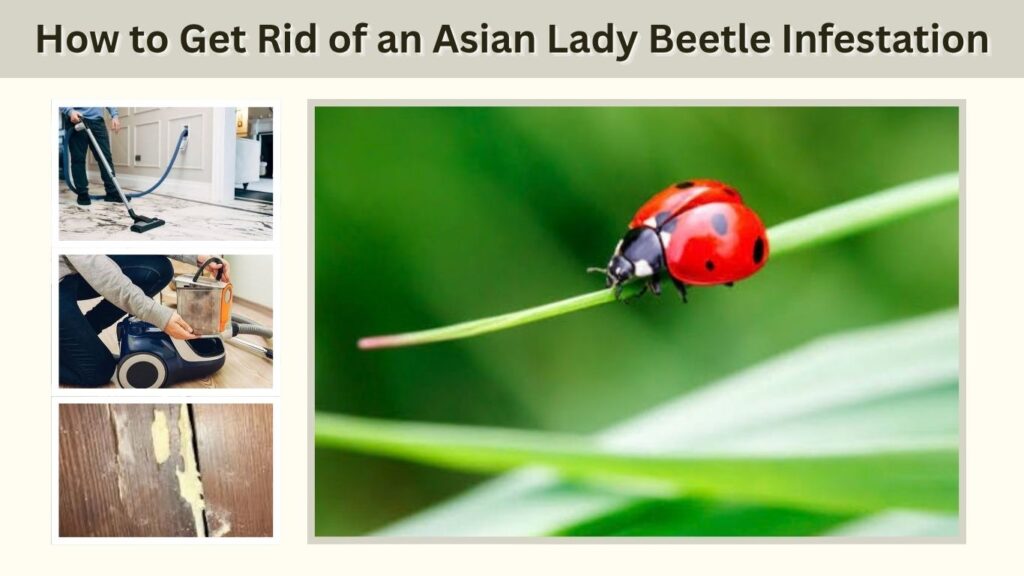
Once Asian lady beetles have entered a house, physical removal is generally more useful than repeatedly spraying visible insects. The hidden beetles may remain inside inaccessible cavities, so killing the few individuals visible in a room does not eliminate those behind walls. Prevention before the autumn migration is therefore the most effective long-term approach.
Removing Asian Lady Beetles Indoors
For beetles already inside:
- Vacuum visible individuals and clusters
- Avoid crushing them against walls or furniture
- Empty or secure the vacuum contents after collection
- Check windows, trim, vents, and baseboards for emergence points
- Temporarily seal interior cracks where beetles are entering rooms
- Clean stained areas carefully after beetles have been removed
Vacuuming is recommended by multiple university extension programs because it removes beetles without causing as much staining as crushing them.
Should You Spray Beetles Inside the House?
Indoor sprays usually provide poor long-term control. Beetles hidden inside wall voids can continue emerging after visible insects are killed.
Penn State also warns that killing large numbers inside inaccessible spaces may leave dead insects that could become food for other household pests. Foggers and similar room treatments therefore do not solve the underlying entry problem.
How to Stop Asian Lady Beetle Infestations
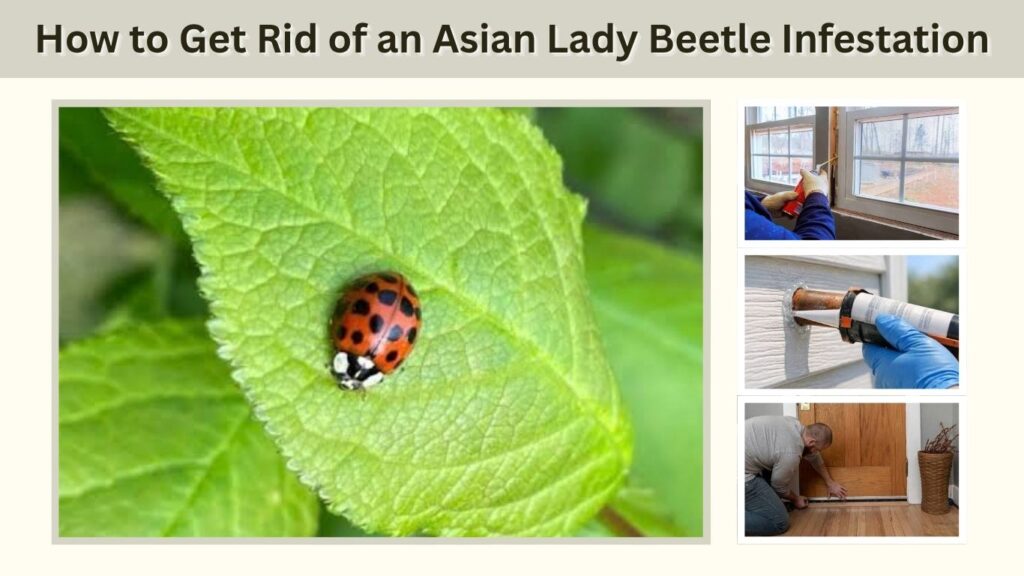
Preventing entry is the best form of Asian lady beetle infestation treatment. Exclusion work should ideally be completed before beetles begin gathering on buildings in autumn. Homes that experience infestations repeatedly should receive particular attention around the roofline, windows, doors, vents, siding, utility penetrations, and other exterior openings.
Prevention Steps
Useful preventive measures include:
- Caulk cracks around window and door frames
- Seal openings around utility pipes and cables
- Repair torn window and door screens
- Screen attic, soffit, and exhaust vents
- Install or replace exterior door sweeps
- Seal gaps beneath fascia and siding
- Check garage doors for large openings
- Complete repairs before autumn migration begins
Exterior pesticide barriers may sometimes be considered before beetles begin entering, but products must be legally labeled for the location and used exactly according to label directions. For large or recurring infestations, a licensed pest-control professional can assess possible entry points and appropriate exterior treatment.
Asian Lady Beetle Infestation Outside
Seeing hundreds of Asian lady beetles outdoors does not always indicate a harmful infestation. During spring and summer, adults and larvae are useful predators that consume aphids, scales, mites, and other small insects. Problems usually begin when adults congregate on buildings during autumn in preparation for overwintering.
Why Are They Covering the Outside of My House?
Buildings receiving strong afternoon sunlight are particularly attractive during fall migration. Large numbers may collect on light-colored siding, windows, roofs, and exterior walls before finding cracks through which they can enter.
Their appearance outside can therefore serve as an early warning. Sealing accessible openings before migration peaks can substantially reduce the number that eventually reach interior wall spaces.
Can Asian Lady Beetle Larvae Infest a House?
An Asian lady beetle larvae infestation indoors is unusual because these beetles normally reproduce outdoors. Adults overwinter in houses but do not establish breeding populations there. Eggs and larvae are normally associated with plants where aphids and other suitable prey are available.
What Do Asian Lady Beetle Larvae Look Like?
Larvae look very different from adult lady beetles. They are elongated and somewhat alligator-shaped, usually dark gray or black with orange markings and small projections along the body.
They are beneficial predators rather than household pests. If larvae are found outdoors on plants containing aphids, they generally do not require control.
When Is Professional Infestation Control Useful?

Most small indoor invasions can be handled with vacuuming and exterior sealing. Professional help becomes more useful when beetles repeatedly appear in very large numbers or when inaccessible construction gaps make exclusion difficult. A pest-management professional can also inspect the exterior and identify locations where beetles are entering before the next autumn migration.
When to Consider Professional Help
Professional assessment may be worthwhile when infestations recur every year, large numbers occupy attics or wall voids, exterior entry points cannot be identified, or allergy concerns make handling clusters difficult.
The goal should generally be preventing beetles from entering, rather than attempting to eliminate beneficial outdoor populations.
FAQs
Asian lady beetle infestations can appear suddenly because adults naturally gather in large groups before winter. The insects may then remain hidden for months, creating repeated indoor appearances. Understanding their seasonal behavior makes prevention and control much easier.
1. What causes an Asian lady beetle infestation?
Most household infestations begin when adult beetles seek protected overwintering locations in autumn and enter through cracks around windows, doors, siding, roofs, vents, and utility openings.
2. How do I get rid of Asian lady beetles in my house?
Vacuum visible beetles rather than crushing them, then identify and seal potential entry points. Indoor pesticide applications generally provide limited long-term benefit once beetles are inside wall voids.
3. Will Asian lady beetles multiply inside my house?
No. They normally do not reproduce indoors. Beetles appearing through winter and spring generally entered during the previous fall.
4. How long can an Asian lady beetle infestation last?
Beetles may remain hidden throughout winter and emerge intermittently on warm, sunny days. Activity often increases again as temperatures rise and surviving adults attempt to leave buildings in spring.
5. What is the best way to prevent another infestation?
Exterior exclusion is the most effective method. Seal cracks and gaps, repair screens, protect vents, and improve door seals before the autumn migration period begins.