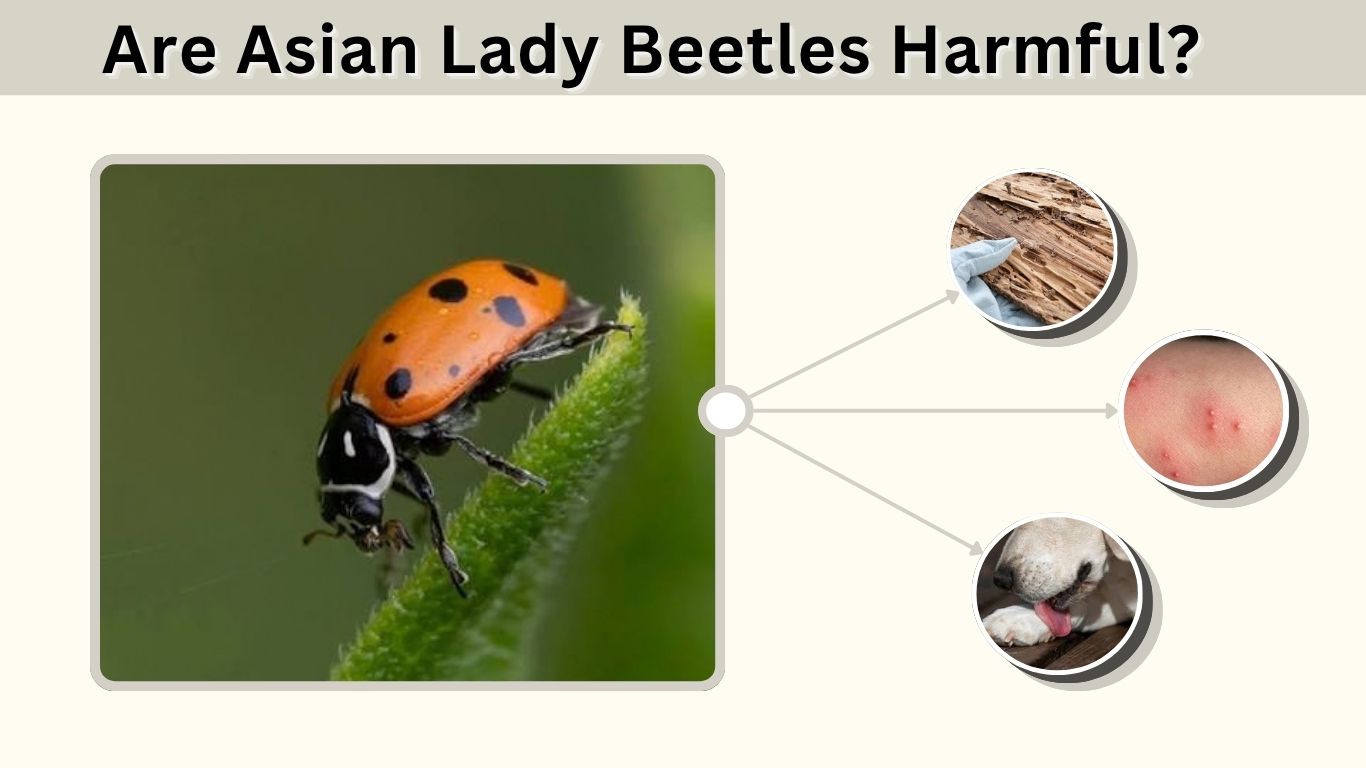
Are Asian lady beetles harmful? In most situations, multicolored Asian lady beetles are more of a nuisance than a serious danger. They can occasionally bite people, trigger allergies, stain household surfaces, and cause irritation if pets eat them. However, they do not sting, transmit diseases, or normally damage healthy plants. In fact, they are effective predators of aphids and other garden pests. Problems become more noticeable when large numbers enter homes during fall or when curious dogs or cats attempt to eat them.
Why Are Asian Lady Beetles Considered Harmful?
The multicolored Asian lady beetle, Harmonia axyridis, was introduced outside its native Asian range partly because it is an effective predator of agricultural pests. However, its tendency to gather in large numbers inside buildings and compete with native lady beetles has created problems. Whether these beetles are harmful depends largely on where they occur and who encounters them.
Problems Caused by Asian Lady Beetles
Potential problems include:
- Occasional bites or pinches to human skin
- Allergic reactions in sensitive individuals
- Yellow stains on walls, curtains, or furniture
- Strong defensive odor when disturbed
- Mouth irritation when pets eat numerous beetles
- Competition with some native lady beetle species
- Large indoor infestations during fall and winter
Their yellow defensive fluid, called hemolymph, is released from leg joints when the beetle feels threatened. It has a strong smell and can stain light-colored surfaces.
Are Asian Lady Beetles Poisonous?
Asian lady beetles are not generally considered poisonous to people simply through normal contact, and they are not venomous. They cannot sting.
However, their defensive chemicals can be irritating. A beetle may also bite exposed skin with its chewing mouthparts, producing a brief pinprick sensation. These bites are usually minor rather than medically serious.
Are Asian Lady Beetles Harmful to Humans?
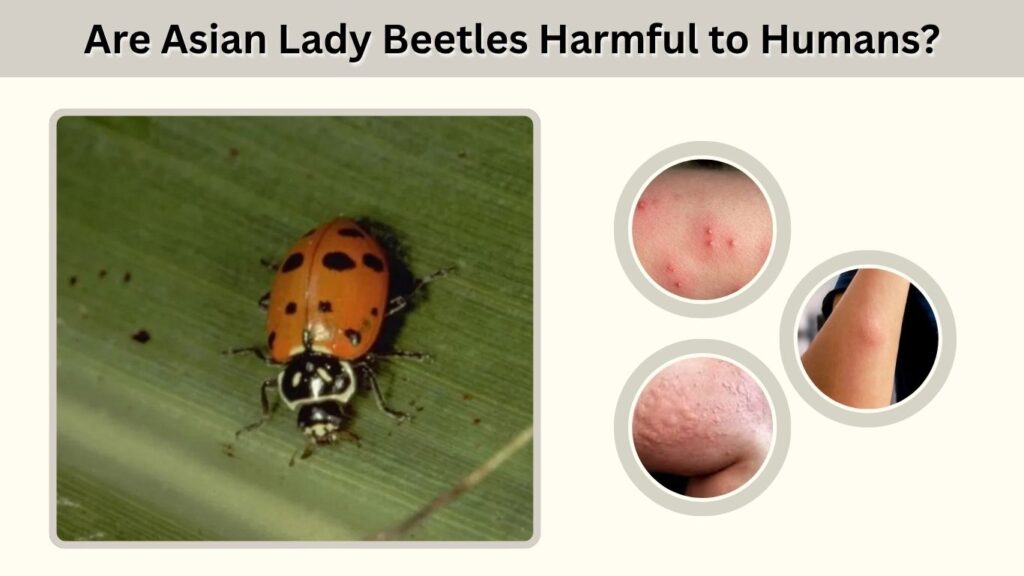
For most people, Asian lady beetles pose little direct danger. They do not feed on humans and are not known to transmit diseases. Problems are more commonly associated with large indoor infestations, where people may repeatedly encounter living beetles, shed insect material, and defensive secretions. Some individuals can develop allergic reactions after substantial exposure.
Can Asian Lady Beetles Bite Humans?
Yes. Asian lady beetles occasionally bite or pinch people with their mouthparts, particularly when they are searching for moisture or food.
The sensation may feel like a small pinprick. University of Minnesota Extension notes that some individuals can bite hard enough to break the skin, but discomfort is generally minor and short-lived.
Can They Cause Allergies?
Large indoor populations can cause allergic reactions in some people. Reported problems include eye irritation, nasal symptoms, asthma, and skin reactions.
Penn State Extension also notes associations between lady beetle exposure and rhinoconjunctivitis, asthma, and facial swelling in susceptible individuals. Anyone experiencing significant breathing difficulty or another serious reaction should seek medical attention.
Are Asian Lady Beetles Harmful to Dogs?
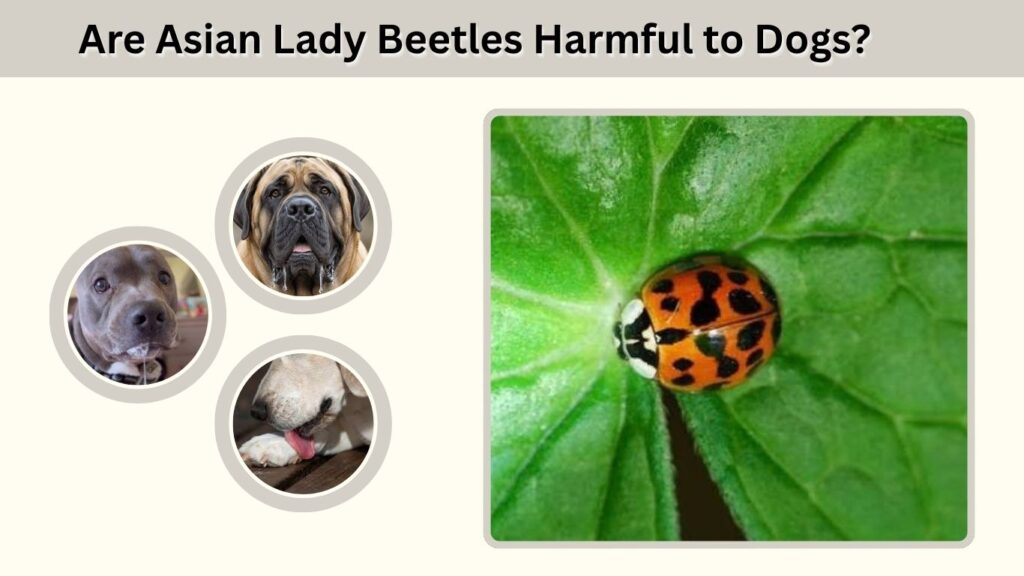
Asian lady beetles can be harmful to dogs when a dog eats or holds multiple beetles in its mouth, although serious cases appear uncommon. The beetles release foul-tasting defensive fluid when attacked. This material can irritate oral tissues, and their rounded shells may occasionally become lodged against the roof of a dog’s mouth.
Signs of a Problem in Dogs
Watch for symptoms such as:
- Excessive drooling
- Pawing at the mouth
- Foaming around the mouth
- Bad odor from the mouth
- Reluctance to eat
- Visible beetles attached inside the mouth
- Vomiting or diarrhea
- Redness or sores inside the mouth
A dog eating one beetle is very different from encountering a large cluster. Reported veterinary problems have generally involved dogs that had multiple beetles in their mouths.
What Should You Do?
If you notice beetles inside your dog’s mouth, do not ignore significant irritation or large numbers of insects. Contact a veterinarian if beetles appear stuck, your dog is repeatedly drooling or vomiting, refuses food, develops mouth sores, or otherwise appears unwell.
Preventing dogs from investigating large beetle clusters is easier than dealing with oral irritation afterward.
Are Asian Lady Beetles Harmful to Cats?
There is much less published information about serious Asian lady beetle encounters in cats than in dogs. A cat that merely touches or watches one is unlikely to be harmed. Eating beetles could expose the animal to the same bitter defensive chemicals responsible for their unpleasant odor and taste.
What Happens If a Cat Eats One?
A small accidental ingestion may cause no noticeable problem, but mouth irritation, drooling, vomiting, or gastrointestinal discomfort could potentially occur because of the beetle’s defensive secretions.
If a cat consumes numerous beetles or develops persistent drooling, vomiting, difficulty swallowing, loss of appetite, or abnormal behavior, contacting a veterinarian is appropriate. Avoid intentionally allowing pets to play with large indoor beetle aggregations.
Are Asian Lady Beetles Harmful to Plants?
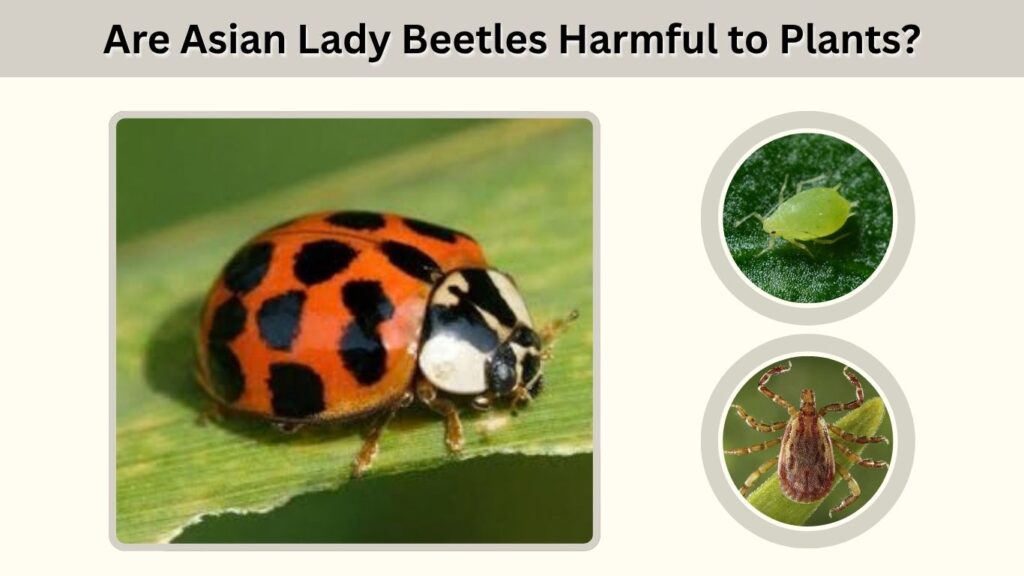
Asian lady beetles are generally beneficial rather than harmful to plants. Both adults and larvae feed heavily on aphids and other soft-bodied insects that damage garden and agricultural plants. For this reason, they have historically been valued as biological control agents.
Benefits in Gardens
Asian lady beetles commonly prey on:
- Aphids
- Scale insects
- Mites
- Insect eggs
- Other small soft-bodied arthropods
By reducing these pests, the beetles can indirectly protect leaves, stems, and new plant growth.
Asian lady beetle larvae may look intimidating because they are dark, elongated, and covered with small spines, but University of Minnesota Extension describes them as harmless to people and plants and important predators of aphids.
Can They Damage Fruit?
They generally do not attack healthy plants like typical plant-feeding beetles. However, when preferred prey becomes scarce, adults may feed on ripe or damaged fruit.
Apples that already have wounds and late-season grapes can attract them. Large numbers in grape clusters can also create problems during wine production because crushed beetles release foul-tasting defensive compounds.
Are Asian Lady Beetles Harmful Indoors?
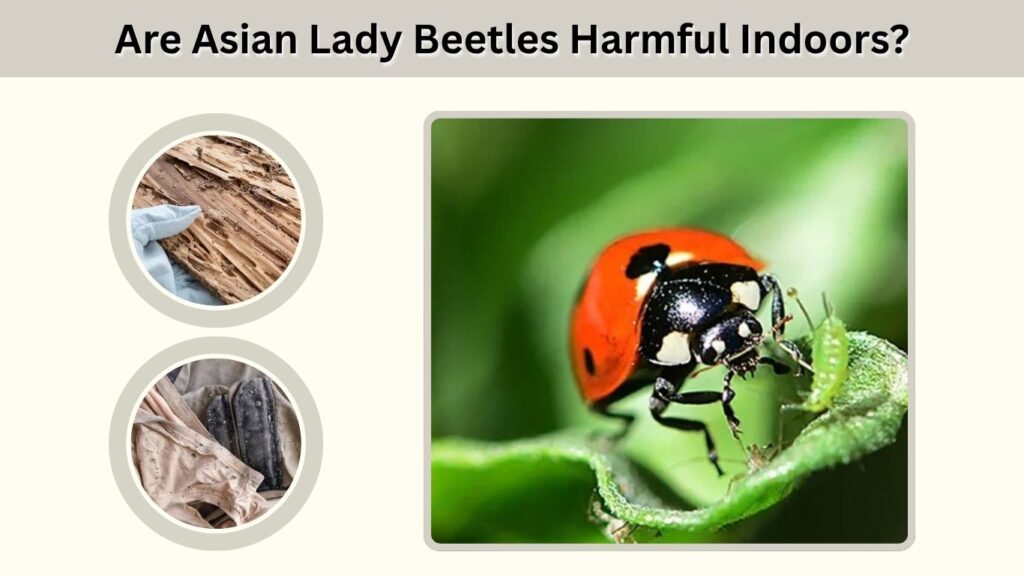
Inside a home, Asian lady beetles are primarily nuisance pests. They often enter buildings in autumn while searching for protected overwintering locations. Large groups may remain inside walls, ceilings, attics, and window frames and then become active during warm winter or spring days.
Do They Damage the House?
Asian lady beetles generally do not:
- Eat wood
- Damage structural lumber
- Destroy clothing
- Feed on stored food
- Reproduce continuously indoors
- Bore into furniture
Their main household problems are staining, odor, occasional bites, allergies, and sheer numbers. Crushing them can make staining and odor worse because it causes defensive fluid to be released.
How to Remove Them Indoors
Vacuuming is one of the simplest methods for removing indoor beetles. Sealing openings around windows, doors, siding, pipes, vents, and rooflines can help reduce future entry.
Penn State Extension describes mechanical exclusion as the best approach for preventing these beetles from invading buildings.
Are Asian Lady Beetle Larvae Harmful?
Asian lady beetle larvae look dramatically different from adults. They have elongated, alligator-like bodies that are dark gray or black with orange markings and small projections. Their unusual appearance sometimes causes homeowners to assume they are dangerous garden pests.
Are the Larvae Dangerous?
No. Asian lady beetle larvae are not harmful to people or plants under normal circumstances.
They spend much of their time searching vegetation for aphids and similar prey. Their appetite for plant pests makes them beneficial predators during spring and summer.
Are Asian Lady Beetles Harmful to the Environment?
The answer is more complicated environmentally. Asian lady beetles can provide useful biological pest control, but Harmonia axyridis is non-native in many regions and has become extremely abundant. Scientists have linked its spread with declines in some native lady beetle species, although multiple environmental factors can contribute to those changes.
Why Can They Become a Problem?
Asian lady beetles compete with native predators for aphids and other food. They may also prey on the eggs or immature stages of other insects.
This means the same characteristics that make them successful biological-control insects—high appetite, adaptability, and rapid spread—can also make them disruptive where they have been introduced.
FAQs
Asian lady beetles have both beneficial and undesirable characteristics. Outdoors, they often provide excellent natural pest control. Indoors, large populations can become annoying, and pets may experience irritation after eating them. These frequently asked questions summarize the most important safety concerns.
1. Are Asian lady beetles harmful to humans?
Usually not seriously. They cannot sting and do not transmit diseases, but they occasionally bite and may trigger allergic reactions in susceptible people.
2. Are Asian lady beetles harmful to dogs?
They can be if a dog eats or holds multiple beetles in its mouth. Defensive chemicals may irritate oral tissues, and beetles can occasionally become lodged against the roof of the mouth.
3. Are Asian lady beetles harmful to cats?
Normal contact is unlikely to cause harm. Eating beetles could potentially cause mouth or stomach irritation, so persistent symptoms after ingestion should be discussed with a veterinarian.
4. Are Asian lady beetles harmful to gardens?
Generally, no. They are beneficial predators that consume aphids and other plant pests, although adults sometimes feed on already-damaged ripe fruit when their preferred prey is scarce.
5. Should I kill Asian lady beetles in my house?
Usually there is no need to use indoor insecticides. Vacuum visible beetles and seal exterior cracks and openings to reduce future invasions. Avoid crushing them because their defensive fluid can create odor and stains.