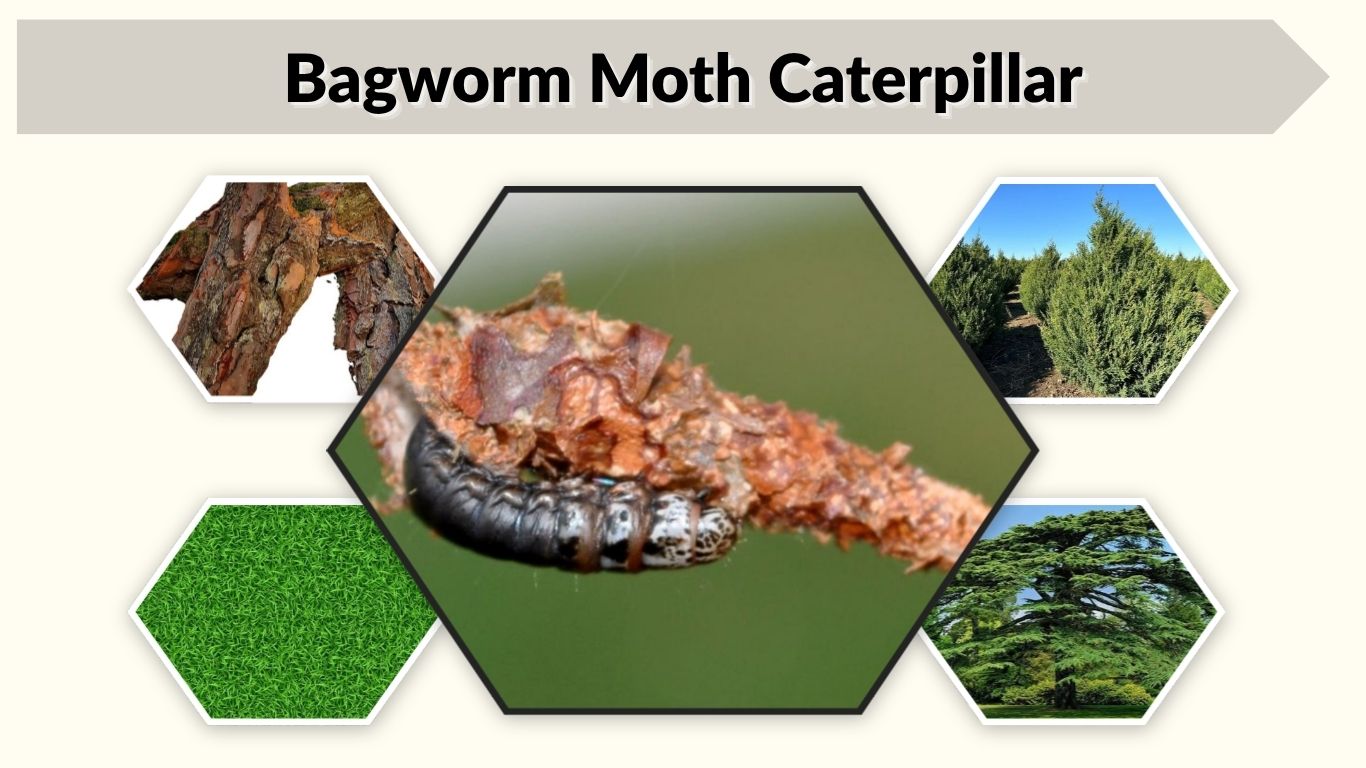
The bagworm moth caterpillar is one of the most unusual caterpillars because it carries a tiny protective “house” made from silk, leaves, twigs, bark, or other nearby materials. Some cases look like rough cones, while others can look like miniature log cabins. These caterpillars are fascinating, but some species can also damage juniper, arborvitae, cedar, pine, and other landscape plants when populations grow large.
What Is a Bagworm Moth Caterpillar?
A bagworm moth caterpillar is the larval stage of a moth in the family Psychidae. Its name comes from the portable bag or case it builds and carries while feeding. The case protects the soft caterpillar from predators, weather, and disturbance.
Quick Identification
- Small caterpillar living inside a hanging or moving case
- Case made from silk and plant debris
- Bags may look cone-shaped, spindle-shaped, twig-covered, or leaf-covered
- Often found on evergreen shrubs, trees, fences, walls, and outdoor structures
- Mature bags may reach about 1–2 inches in common landscape species
Is It Really a Worm?
No. A bagworm is not a true worm. It is a caterpillar, meaning it is the larval stage of a moth. The “worm” name is common because the caterpillar body is soft and worm-like before it becomes an adult moth.
Bagworm Moth Caterpillar House
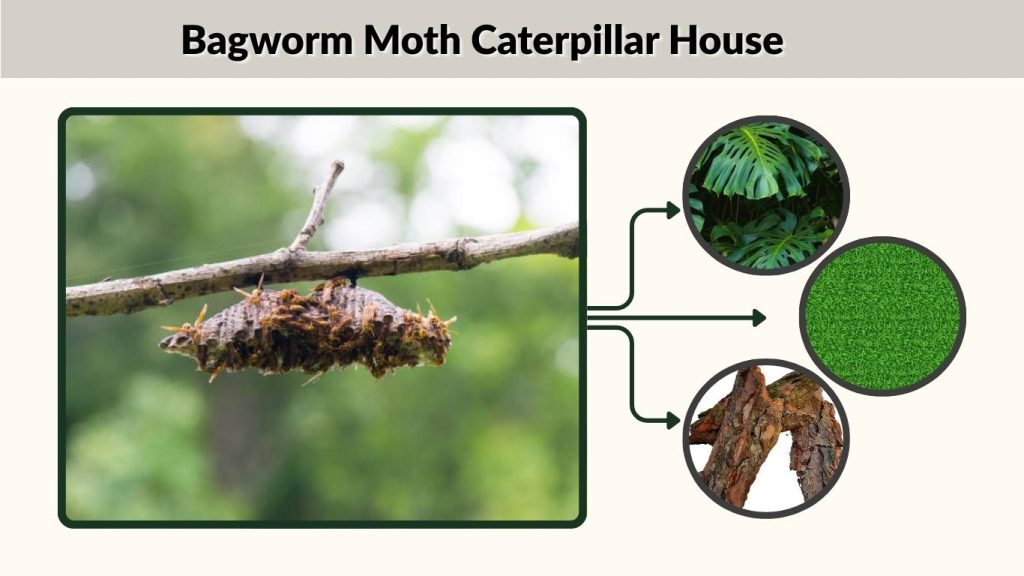
The “house” is the most interesting feature of the bagworm moth caterpillar. The young larva begins building soon after hatching. It spins silk and attaches bits of plant material to the outside, creating camouflage that matches its surroundings.
What Is the House Made Of?
Bagworm cases may include:
- Silk
- Leaves
- Pine needles
- Bark pieces
- Grass
- Sand or soil
- Small twigs
- Lichen or plant fragments
The material depends on the species and the habitat. A bagworm feeding on juniper may have a case covered with juniper pieces, while one living near dry twigs may build a much woodier-looking case.
Bagworm Moth Caterpillar Log Cabin: Is It Real?
Yes, photos of bagworm moth caterpillars with tiny “log cabin” cases can be real, but they do not represent every bagworm species. Snopes reviewed the viral “little log cabin” claim and rated the image as genuine. Some species, such as Clania crameri, are known for arranging small sticks into an organized case that can look like a miniature cabin.
Can a Bagworm Caterpillar Live Without Its House?
A bagworm moth caterpillar depends heavily on its case. The case protects it while it feeds, rests, and pupates. If the caterpillar is removed from the case, it becomes exposed and vulnerable. In normal life, the caterpillar keeps enlarging and repairing its case as it grows.
Life Cycle of the Bagworm Moth Caterpillar
Bagworms go through egg, larva, pupa, and adult moth stages. The damaging stage is the caterpillar stage because that is when they feed on leaves and needles.
| Stage | What Happens |
| Egg | Eggs overwinter inside the female’s old bag in many common species |
| Larva | Young caterpillars hatch and begin feeding while building bags |
| Pupa | Mature caterpillars attach the bag and transform inside it |
| Adult | Males become flying moths; females of many species stay wingless inside the bag |
When Do Bagworms Hatch?
Timing depends on climate and location. In central Maryland, for example, eggs often hatch around May, and the caterpillars continue growing through summer. They usually complete growth by late summer or early fall.
Male vs Female Bagworm Moths
Adult males usually have wings and fly to find females. In many bagworm species, adult females are wingless or remain inside the bag. After mating, females may lay eggs inside the same protective case, allowing the next generation to start from the old bag.
Where Do Bagworm Moth Caterpillars Live?
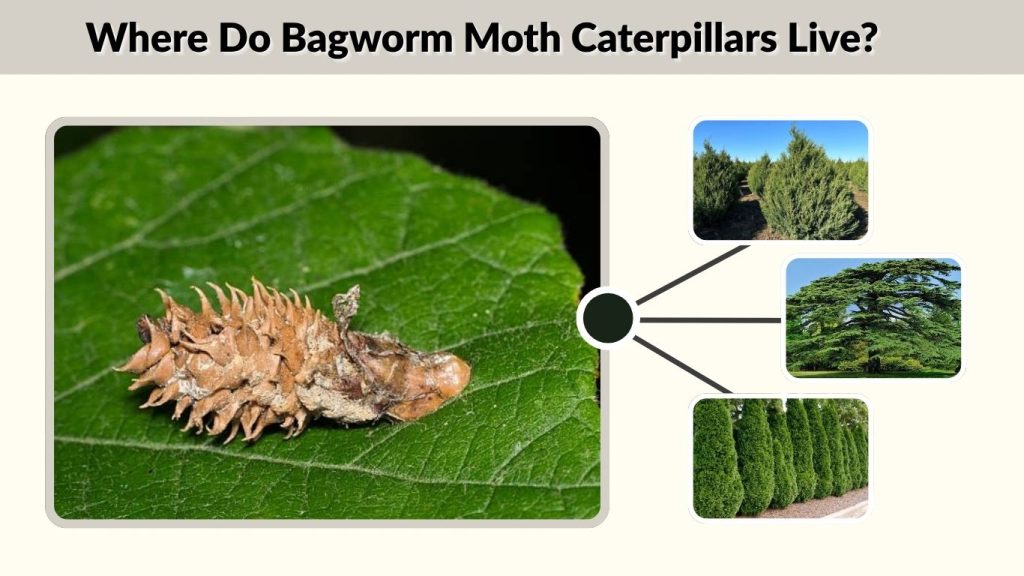
Bagworm moth caterpillars occur in many parts of the world. They are found on trees, shrubs, rocks, fences, buildings, and other outdoor surfaces. Their exact location depends on species, climate, and food plants.
Common Host Plants
Bagworms are often noticed on landscape plants because their feeding can cause visible brown patches. Common hosts include:
- Juniper
- Arborvitae
- Cedar
- Pine
- Spruce
- Cypress
- Maple
- Oak
- Willow
- Sycamore
The evergreen bagworm moth, Thyridopteryx ephemeraeformis, is a well-known species that feeds on many evergreen and deciduous trees.
Bagworm Moth Caterpillar on a House or Building
Searches like “bagworm moth caterpillar house,” “building,” or “home” often come from people finding small cases attached to walls, porches, cabins, or fences. In many cases, the caterpillar is using the structure as a resting or pupation site, not eating the building itself. However, if nearby shrubs are infested, those plants may be the real food source.
Bagworm Moth Caterpillar Damage
A few bagworms may go unnoticed, but heavy infestations can defoliate shrubs and trees. Evergreens are especially vulnerable because they may not regrow lost needles quickly. Repeated or severe feeding can weaken or kill small trees and shrubs.
Signs of Infestation
- Brown, cone-like bags hanging from branches
- Dead-looking patches on evergreens
- Chewed leaves or missing needles
- Bags attached tightly to twigs in late summer or fall
- Many cases clustered on one shrub or tree
| Sign | What It Means |
| Small moving bags | Young caterpillars are actively feeding |
| Large hanging bags | Caterpillars are mature or pupating |
| Brown evergreen tips | Feeding damage may already be visible |
| Many old bags in winter | Eggs may be inside and hatch next season |
How to Get Rid of Bagworm Moth Caterpillars
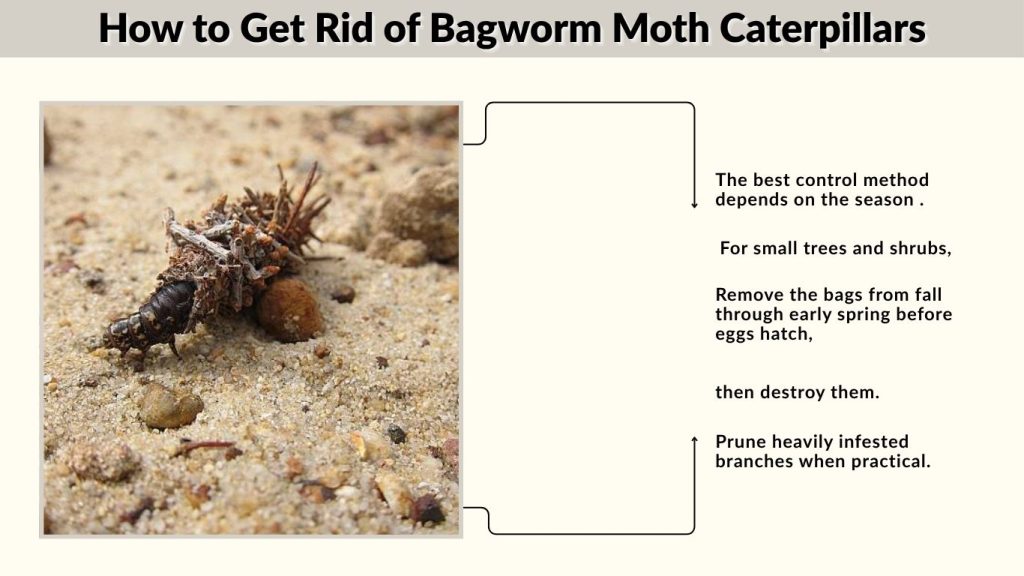
The best control method depends on the season and the size of the infestation. Early action works better because young caterpillars are easier to manage than mature ones.
Remove Bags by Hand
For small trees and shrubs, handpicking is one of the simplest methods. Remove the bags from fall through early spring before eggs hatch, then destroy them. Nebraska Extension recommends removing bags before egg hatch begins because overwintering eggs can remain inside the bags.
Use Bt or Other Early-Season Treatments
For larger infestations, treatments are most effective when caterpillars are young and actively feeding. Bacillus thuringiensis var. kurstaki is often used against young caterpillars, but it works best when applied early. Mature bagworms are harder to control because their bags protect them.
Prune and Monitor Host Plants
Prune heavily infested branches when practical. Check juniper, arborvitae, cedar, and other evergreens in spring and early summer. If you see tiny bags moving on the plant, treat quickly before they grow larger.
Are Bagworm Moth Caterpillars Dangerous?
Bagworm moth caterpillars are not dangerous to people in the way stinging caterpillars can be. The main problem is plant damage. They may look strange on walls or houses, but the biggest concern is usually nearby trees and shrubs.
Should You Touch Them?
You can remove the bags by hand, but gloves are a good idea when working with outdoor insects, plant debris, and damaged branches. If you are sensitive to insects or plant material, avoid direct skin contact.
FAQs
What does a bagworm moth caterpillar eat?
Most bagworm moth caterpillars eat leaves or needles from trees and shrubs. Common host plants include juniper, arborvitae, cedar, pine, spruce, maple, oak, and willow. Some species have specific plant preferences, while others feed on many different plants.
Is the bagworm moth caterpillar log cabin real?
Yes, some bagworm moth caterpillars can make cases that look like tiny log cabins. Viral photos are based on real bagworm behavior, although not every species builds such neat twig structures. Many common bagworms make rougher cases from leaves, needles, and plant debris.
Why is a bagworm moth caterpillar on my house?
It may be resting, pupating, or attached to an outdoor surface near its host plant. Bagworms usually feed on plants, not houses. Check nearby shrubs, evergreens, and trees for more bags, because the real infestation may be on the plants.
How do I kill bagworm moth caterpillars naturally?
For small infestations, remove the bags by hand and destroy them before eggs hatch. This is most useful from fall through early spring. For young active caterpillars, Bt may help when applied early, but mature bagworms are harder to control.
Are bagworm moth caterpillars bad for evergreen trees?
Yes, heavy infestations can damage evergreen trees and shrubs. Juniper, arborvitae, cedar, pine, and spruce may turn brown after feeding damage. Small or stressed plants are more likely to suffer serious injury if many bagworms are present.