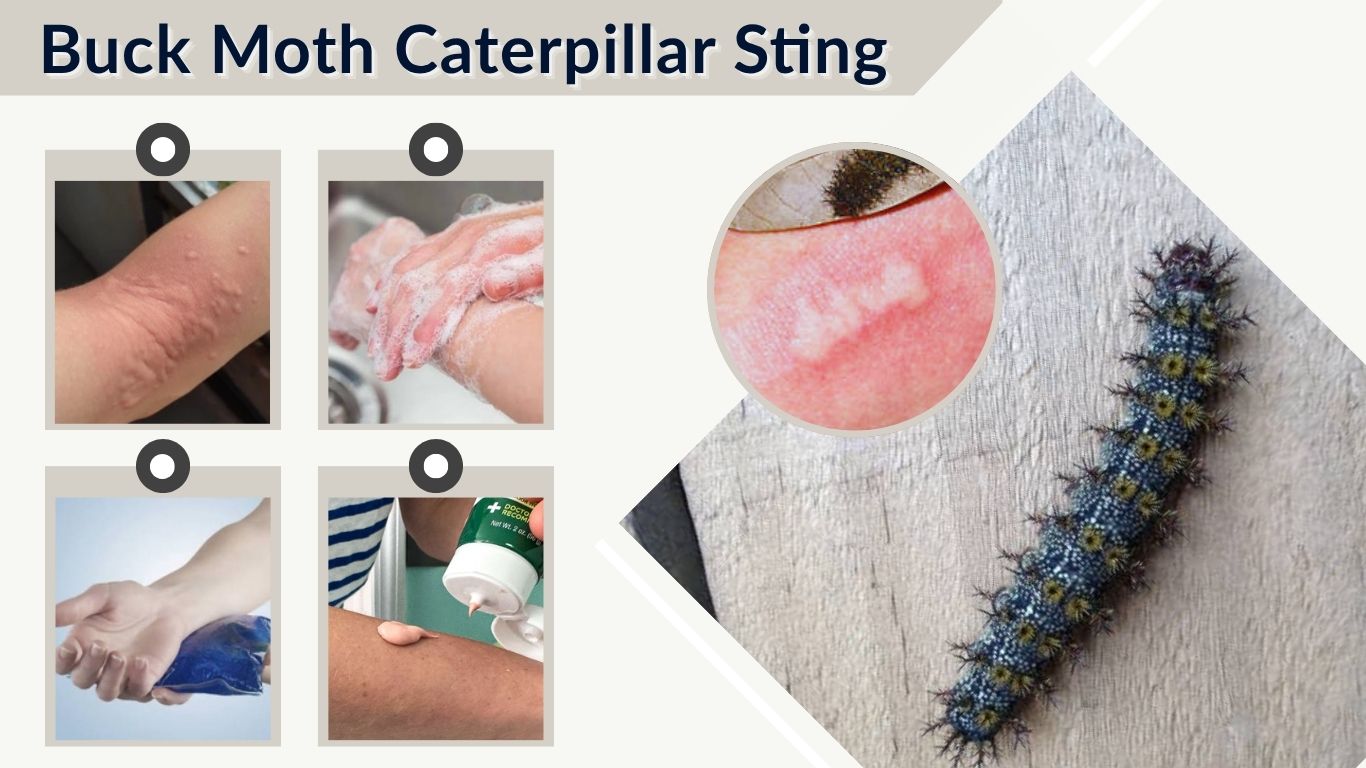
A buck moth caterpillar sting can be painful, surprising, and worrying if you do not know what touched your skin. These spiny caterpillars are common around oak trees in many southern and eastern areas, especially during spring. Their venomous spines can cause burning pain, redness, swelling, itching, and skin irritation. Knowing what to do quickly can help reduce discomfort and prevent further irritation.
What Is a Buck Moth Caterpillar Sting?
A buck moth caterpillar sting happens when your skin touches the caterpillar’s sharp, branching spines. The caterpillar does not bite like a mosquito, ant, or spider. Instead, its spines can break against the skin and release irritating venom.
This is why many people search for terms like “buck moth caterpillar bite,” but “sting” is the more accurate word. The pain usually starts quickly after contact and may feel like a bee sting, burning rash, or sharp prickling sensation.
Why Buck Moth Caterpillars Sting
Buck moth caterpillars sting as a defense mechanism. They are slow-moving insects and cannot run away quickly from birds, animals, or people. Their spines help protect them from being eaten or handled.
The problem is that people often touch them by accident. A caterpillar may fall from an oak tree, crawl across outdoor furniture, or hide in grass where someone steps or sits.
Are Buck Moth Caterpillar Stings Dangerous?
Most buck moth caterpillar stings are painful but not life-threatening. However, the reaction can vary from person to person. Some people only have mild redness and burning, while others may experience stronger swelling, intense pain, or allergic-type symptoms.
Children, older adults, people with sensitive skin, and people with a history of allergic reactions should be watched more carefully.
Buck Moth Caterpillar Sting Symptoms
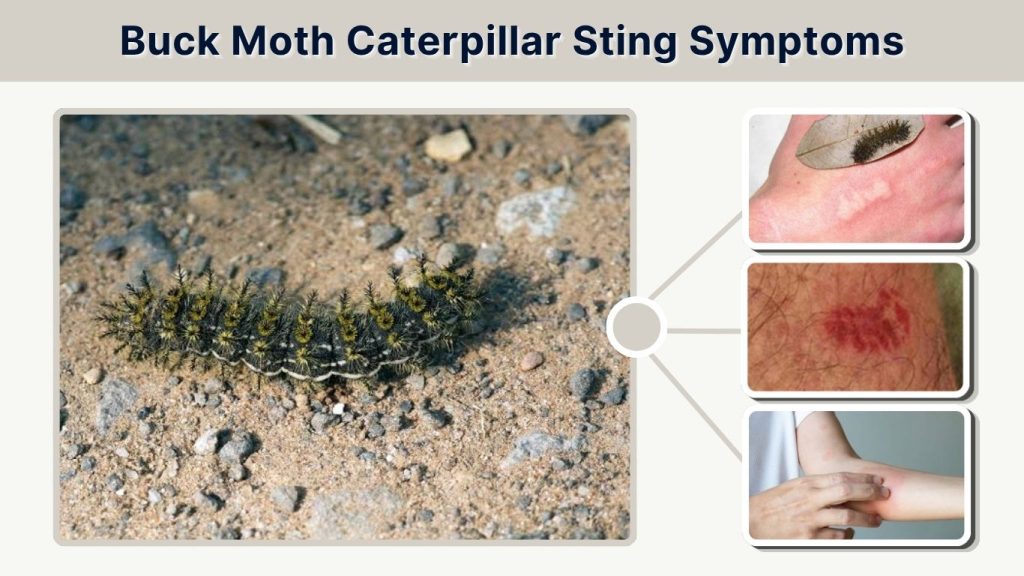
Symptoms usually begin soon after contact. The exact reaction depends on how many spines touched the skin, where the sting happened, and how sensitive the person is.
Common Sting Symptoms
The most common buck moth caterpillar sting symptoms include:
- Sudden sharp pain
- Burning or stinging feeling
- Redness around the contact area
- Itching or skin irritation
- Swelling or raised bumps
- Tenderness when touched
- Rash-like marks
- Small welts or inflamed spots
Some people may also feel pain spreading beyond the sting area. For example, a sting on the hand may cause discomfort up the arm. This does not always mean the reaction is dangerous, but it can be very uncomfortable.
Bad Buck Moth Caterpillar Sting Symptoms
A bad buck moth caterpillar sting may cause stronger swelling, intense pain, or a larger rash. In some cases, symptoms may last longer than expected.
Watch for signs such as:
- Severe swelling
- Pain that keeps getting worse
- Redness spreading away from the sting
- Blistering
- Dizziness
- Nausea
- Trouble breathing
- Swelling of the lips, face, tongue, or throat
Breathing trouble, facial swelling, faintness, or widespread hives may signal a serious allergic reaction. In that case, seek emergency medical help.
Buck Moth Caterpillar Sting Pictures and Images
Many people search for “buck moth caterpillar sting pictures” or “buck moth caterpillar sting images” because they want to compare their skin reaction. Pictures can help you understand what a sting may look like, but they cannot confirm how serious your reaction is.
What a Sting May Look Like
A buck moth caterpillar skin sting may appear as red patches, small raised bumps, swelling, or irritated streaks where the spines touched. If the caterpillar brushed across the skin, the marks may appear in a line or cluster.
The rash may look mild at first and become more noticeable later. In sensitive people, the affected area may become warm, swollen, and very itchy.
Why Pictures Can Be Misleading
Not everyone reacts the same way. One person may have a small red mark, while another may develop large welts. Skin tone, scratching, sting location, and allergic sensitivity can all change how the reaction looks.
Use images for general comparison only. If your symptoms are severe, spreading, or unusual, do not rely on pictures. Get medical advice.
Buck Moth Caterpillar Sting Treatment
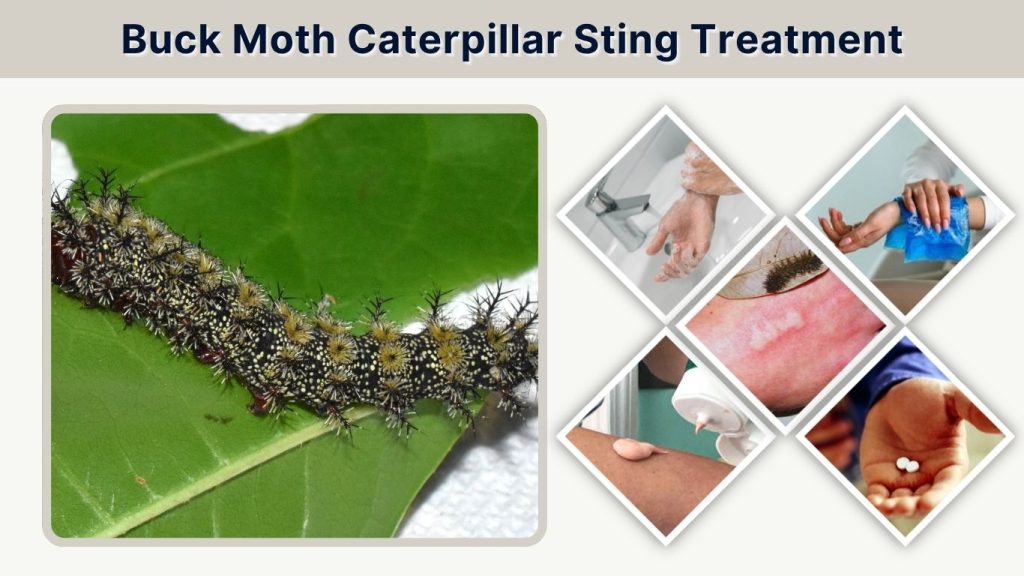
Fast first aid can reduce pain and help remove irritating spines from the skin. The most important step is to avoid rubbing the area because rubbing may push tiny spines deeper.
First Aid Steps
Follow these steps for buck moth caterpillar sting treatment:
- Move away from the caterpillar.
- Do not touch the caterpillar with bare hands.
- Check the skin and clothing for loose spines.
- Wash the sting area gently with soap and water.
- Use adhesive tape to lift remaining spines from the skin.
- Apply a cold compress to reduce pain and swelling.
- Use an anti-itch cream if needed.
- Take an over-the-counter pain reliever if safe for you.
- Watch for signs of allergic reaction.
Tape can help remove tiny spines that may still be stuck in the skin. Press the tape gently over the sting area, then lift it off. Do not scrub hard.
Buck Moth Caterpillar Sting Remedy at Home
A home remedy can help with mild symptoms, but it should not replace medical care for severe reactions. A cold compress is one of the safest and simplest options. It can reduce burning, swelling, and tenderness.
For itching, some people use calamine lotion or hydrocortisone cream. An oral antihistamine may help if itching is bothersome, but always follow label directions and avoid medicines that are not safe for you.
What Not to Do
Avoid these mistakes after a buck moth caterpillar sting:
- Do not rub or scratch the area.
- Do not squeeze the sting site.
- Do not apply heat right away.
- Do not handle the caterpillar barehanded.
- Do not ignore breathing trouble or facial swelling.
- Do not assume all rashes are harmless.
Scratching can make irritation worse and may increase the risk of skin infection.
Buck Moth Caterpillar Sting Treatment at a Glance
| Problem | What to Do | When to Get Help |
| Mild pain or burning | Wash the area and apply a cold compress | If pain becomes severe |
| Visible spines | Remove gently with adhesive tape | If spines cannot be removed |
| Itching or rash | Use anti-itch cream or antihistamine if appropriate | If rash spreads quickly |
| Swelling | Use cold compresses and monitor | If swelling is severe or near the face |
| Allergic reaction signs | Stop activity and seek urgent help | Immediately for breathing trouble or facial swelling |
Allergic Reaction to Buck Moth Caterpillar Sting
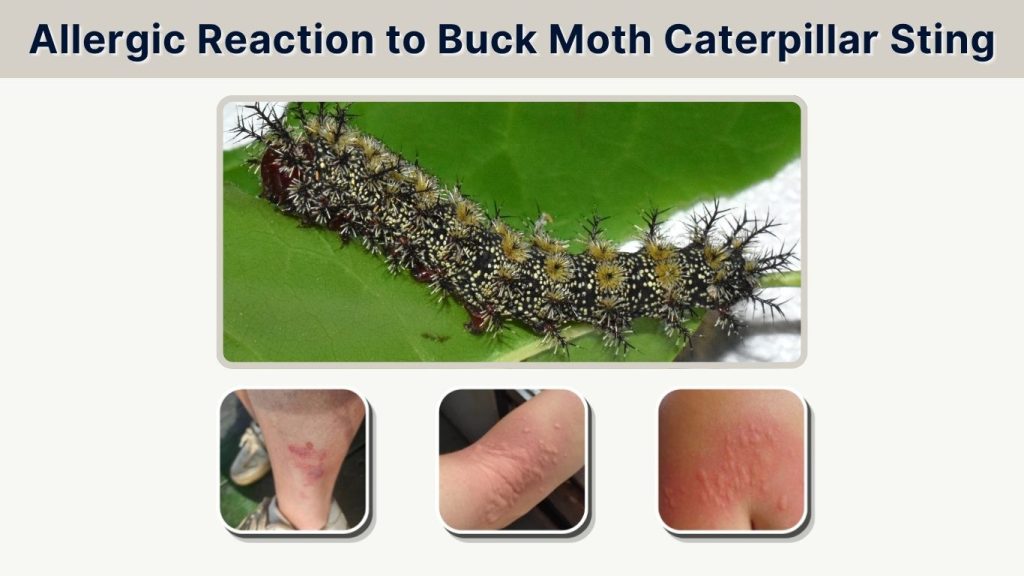
An allergic reaction to a buck moth caterpillar sting can range from mild itching to serious symptoms. Most people experience local skin irritation, but some may react more strongly.
Mild Allergic-Type Reaction
A mild reaction may include itching, redness, swelling, and small welts. These symptoms may stay near the sting area and gradually improve with basic care.
Severe Reaction Warning Signs
Get urgent medical help if any of these symptoms appear:
- Trouble breathing
- Wheezing
- Tightness in the throat or chest
- Swelling of the face, lips, tongue, or throat
- Dizziness or fainting
- Rapidly spreading hives
- Vomiting with weakness or distress
These symptoms may suggest a serious allergic reaction and should not be ignored.
How Long Does a Buck Moth Caterpillar Sting Last?
A buck moth caterpillar sting may hurt immediately and then slowly improve. Mild pain may fade within a few hours, but redness, swelling, or itching can last longer. In stronger reactions, tenderness and swelling may remain for several days.
If the area becomes more painful after a day or two, feels hot, develops pus, or continues to spread, contact a healthcare provider. Those may be signs of infection or a stronger reaction.
Buck Moth Caterpillar Sting on a Dog
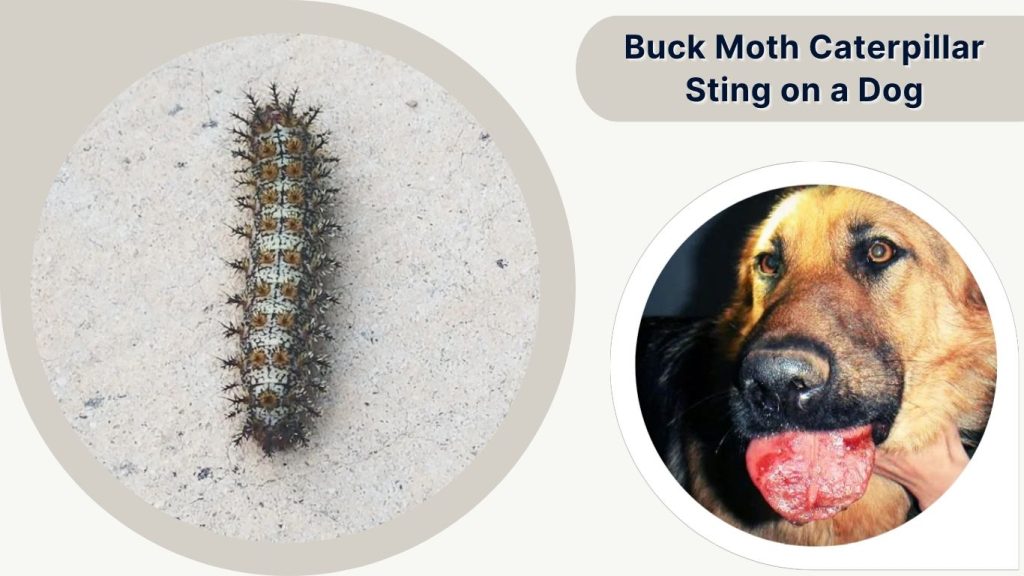
Dogs can also be stung by buck moth caterpillars. This may happen when a dog steps on one, sniffs it, licks it, or tries to eat it. Paws, noses, lips, and mouths are common contact areas.
Signs Your Dog May Have Been Stung
Watch for these symptoms:
- Limping
- Licking or chewing one paw
- Pawing at the face
- Sudden whining
- Drooling
- Swelling around the mouth or nose
- Refusing food
- Vomiting
- Unusual restlessness
If your dog has swelling around the face, vomiting, breathing trouble, or extreme discomfort, call a veterinarian. Do not try to remove spines from inside the mouth without professional guidance, especially if your dog is distressed.
How to Protect Pets
During buck moth caterpillar season, check patios, lawns, sidewalks, and areas under oak trees before letting pets roam. Avoid letting dogs sniff or chew unknown caterpillars. In high-risk areas, short supervised walks may be safer than letting pets run under trees.
Stinging Buck Moth Caterpillar Season
Buck moth caterpillars are most often noticed in spring when they feed on host trees and move around outdoor areas. They are commonly associated with oak trees and may appear in yards, parks, school grounds, and sidewalks.
In places where they are common, people may notice them falling from trees or crawling across outdoor furniture. This is why stings often happen during outdoor activities such as gardening, walking, playing, or sitting under trees.
Where Stings Often Happen
Common contact areas include:
- Hands
- Arms
- Feet
- Legs
- Neck
- Back
- Face
- Dog paws or noses
People may get stung while picking up yard items, leaning against a tree, sitting on outdoor furniture, or walking barefoot.
How to Prevent Buck Moth Caterpillar Stings
Prevention is the best way to avoid pain. Since the caterpillars do not chase people, most stings happen by accidental contact.
Safety Tips
Use these tips during caterpillar season:
- Do not touch spiny or hairy caterpillars.
- Wear gloves while gardening.
- Wear closed-toe shoes outside.
- Check outdoor chairs before sitting.
- Keep children from playing with caterpillars.
- Avoid sitting directly under infested oak trees.
- Shake out towels, blankets, and clothing left outside.
- Keep pets away from crawling caterpillars.
What to Teach Children
Children may be curious about unusual caterpillars, especially if they look colorful or fuzzy. Teach them not to touch any caterpillar unless an adult says it is safe. A simple rule works best: if it has hairs, spikes, or bright colors, leave it alone.
When to Call a Doctor
Most mild stings can be managed at home, but medical care is sometimes needed. Call a healthcare provider if pain is severe, symptoms last longer than expected, or the sting affects a sensitive area such as the eyes, mouth, or throat.
Seek urgent help for breathing problems, facial swelling, fainting, widespread hives, or rapidly worsening symptoms.
FAQs
What should I do for a buck moth caterpillar sting?
Wash the area gently with soap and water, use adhesive tape to remove remaining spines, and apply a cold compress. Avoid rubbing or scratching. Anti-itch cream or an oral antihistamine may help with itching. Get medical help if symptoms are severe or allergic signs appear.
What does a buck moth caterpillar sting look like?
A sting may look like redness, swelling, small bumps, welts, or a rash where the spines touched the skin. Some marks may appear in a line or cluster. Pictures can help with comparison, but symptoms vary from person to person.
How do you treat a buck moth caterpillar sting at home?
For mild stings, remove spines with tape, wash the area, apply a cold compress, and use an anti-itch product if needed. Do not rub the skin. Monitor the reaction and seek medical advice if swelling spreads, pain worsens, or allergic symptoms occur.
Can a buck moth caterpillar sting cause an allergic reaction?
Yes, some people may have an allergic-type reaction. Mild reactions can include itching, swelling, and redness. Severe warning signs include trouble breathing, swelling of the face or throat, dizziness, or widespread hives. These symptoms need urgent medical attention.
Can a buck moth caterpillar sting a dog?
Yes. Dogs can be stung if they step on, sniff, lick, or bite a buck moth caterpillar. Watch for limping, licking, drooling, swelling, whining, or vomiting. Call a veterinarian if your dog shows strong pain, mouth swelling, breathing trouble, or unusual behavior.