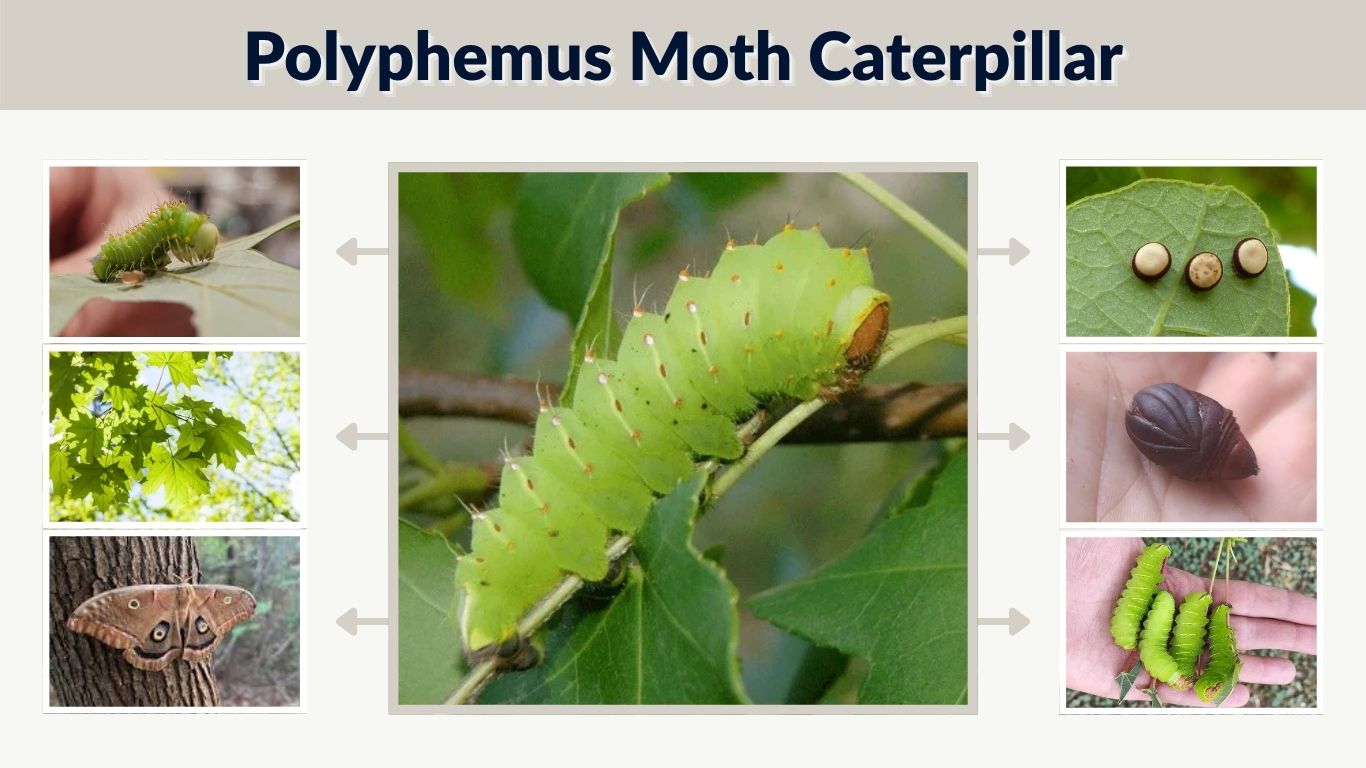
The polyphemus moth caterpillar is the larval stage of one of North America’s most impressive giant silk moths. It starts small, grows into a plump green caterpillar, then spins a tough silk cocoon before emerging as a large tan moth with dramatic eyespots. This guide explains how to identify it, what it eats, whether it is poisonous, how to care for one, and how it differs from a luna moth caterpillar.
What Is a Polyphemus Moth Caterpillar?
The polyphemus moth caterpillar is the caterpillar of Antheraea polyphemus, a large silk moth in the family Saturniidae. The adult moth is famous for its large hindwing eyespots, which are linked to the name Polyphemus, the one-eyed Cyclops from Greek mythology.
As a caterpillar, this species looks very different from the adult moth. Mature larvae are usually bright green, thick-bodied, and smooth compared with fuzzy caterpillars. They may have small colored bumps, pale markings, and fine hairs along the body. A full-grown polyphemus moth caterpillar can reach around 3 inches long, making it one of the more noticeable caterpillars on trees and shrubs.
Quick Identification Features
A polyphemus moth caterpillar is usually recognized by its:
- Large, plump green body
- Rounded segments with small bumps or tubercles
- Fine, short hairs rather than dense fuzz
- Yellowish or pale side markings
- Brownish head in some stages
- Habit of feeding on deciduous tree leaves
Young caterpillars may look different from mature ones. Early instars can be smaller and less vivid, while later instars become larger, greener, and easier to identify.
Is the Polyphemus Moth Caterpillar Poisonous?
The polyphemus moth caterpillar is not generally considered poisonous or dangerous to humans. It does not have the painful venomous spines found on some hazardous caterpillars. Unlike stinging caterpillars such as saddleback caterpillars or puss caterpillars, the polyphemus caterpillar is not known for delivering a sting.
However, this does not mean it should be handled carelessly. Caterpillars are delicate, and rough handling can injure them. Some people may also have mild skin sensitivity after touching insects or plant material. The safest approach is to observe it without picking it up unless you need to move it out of harm’s way.
Can It Bite or Sting?
A polyphemus moth caterpillar does not sting. It may have tiny mouthparts for chewing leaves, but it is not a biting threat to people. If disturbed, it is more likely to remain still, grip the leaf, or react defensively rather than attack.
If you need to move one, use a leaf, twig, or small container. Avoid squeezing the body, because large silk moth caterpillars are soft and can be injured easily.
Polyphemus Moth Caterpillar Identification Table
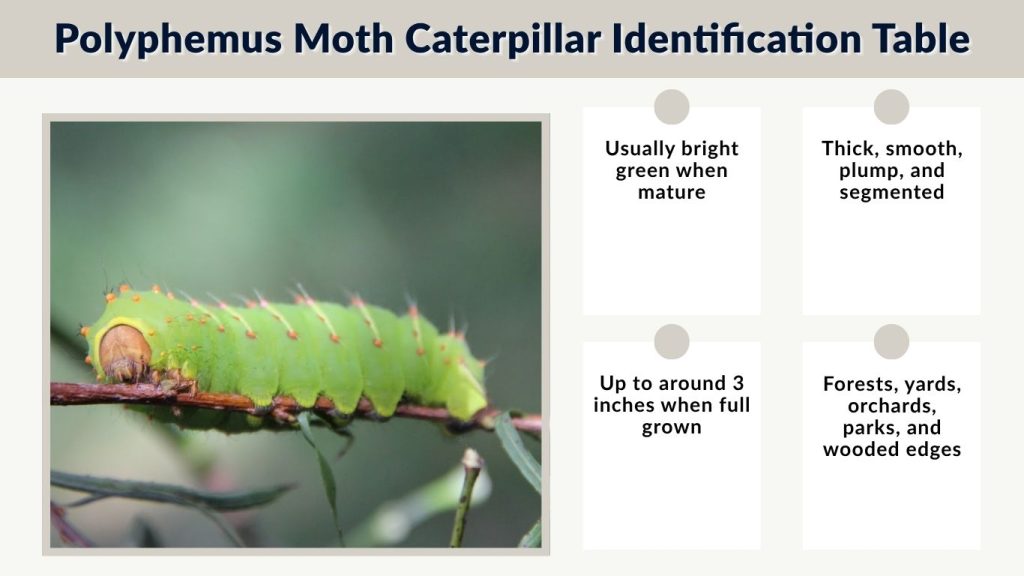
| Feature | Polyphemus Moth Caterpillar |
| Scientific name | Antheraea polyphemus |
| Adult form | Polyphemus moth, a large tan silk moth with eyespots |
| Caterpillar color | Usually bright green when mature |
| Body type | Thick, smooth, plump, and segmented |
| Size | Up to around 3 inches when full grown |
| Sting risk | Not a stinging caterpillar |
| Main diet | Leaves of many deciduous trees and shrubs |
| Cocoon | Tough silk cocoon, often wrapped in a leaf |
| Adult feeding | Adult moths do not feed |
| Common habitat | Forests, yards, orchards, parks, and wooded edges |
What Does a Polyphemus Moth Caterpillar Eat?
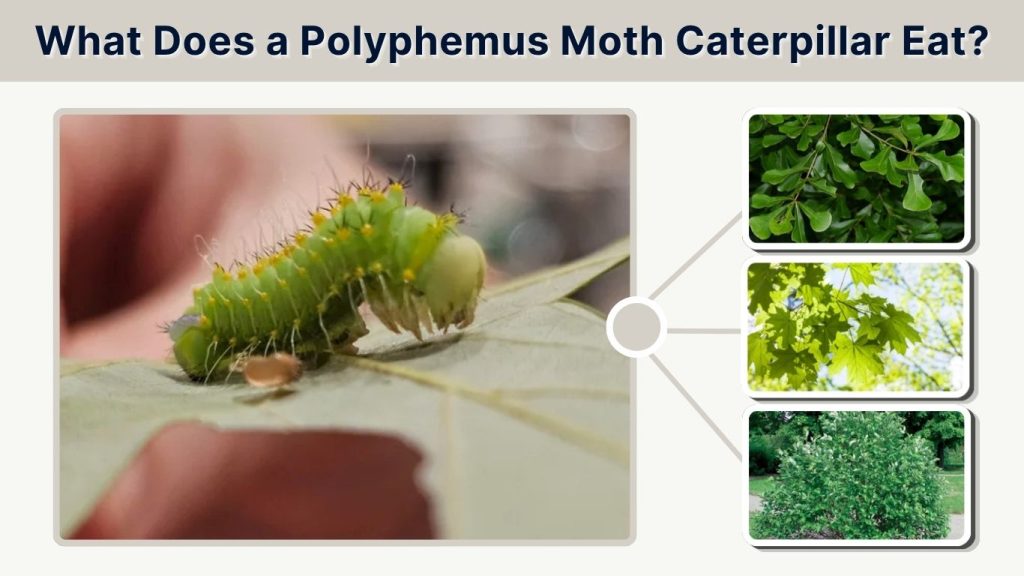
Polyphemus moth caterpillars eat leaves from many deciduous trees and shrubs. They are polyphagous, meaning they can use a variety of host plants rather than depending on only one species.
Common host plants include oak, maple, birch, willow, elm, hickory, apple, cherry, plum, dogwood, rose, and other woody plants. In the wild, the female moth lays eggs on suitable host leaves, and the caterpillars begin feeding soon after hatching.
Common Host Plants
Polyphemus moth caterpillars may feed on:
- Oak
- Maple
- Birch
- Willow
- Elm
- Hickory
- Apple
- Cherry
- Plum
- Dogwood
- Rose
- Walnut
- Beech
- Pear
If you are caring for a caterpillar, the best food is usually the plant it was found on. Caterpillars may not always switch easily from one host plant to another, especially after they have already been feeding on a particular type of leaf.
Do Adult Polyphemus Moths Eat?
Adult polyphemus moths do not eat. Like many giant silk moths, adults have reduced mouthparts and live off the energy stored during the caterpillar stage. Their adult life is short and focused mainly on mating and reproduction.
This is why the caterpillar stage is so important. The larva must eat enough leaves to support growth, cocoon formation, pupation, and the adult moth’s brief life.
Polyphemus Moth Caterpillar Life Cycle
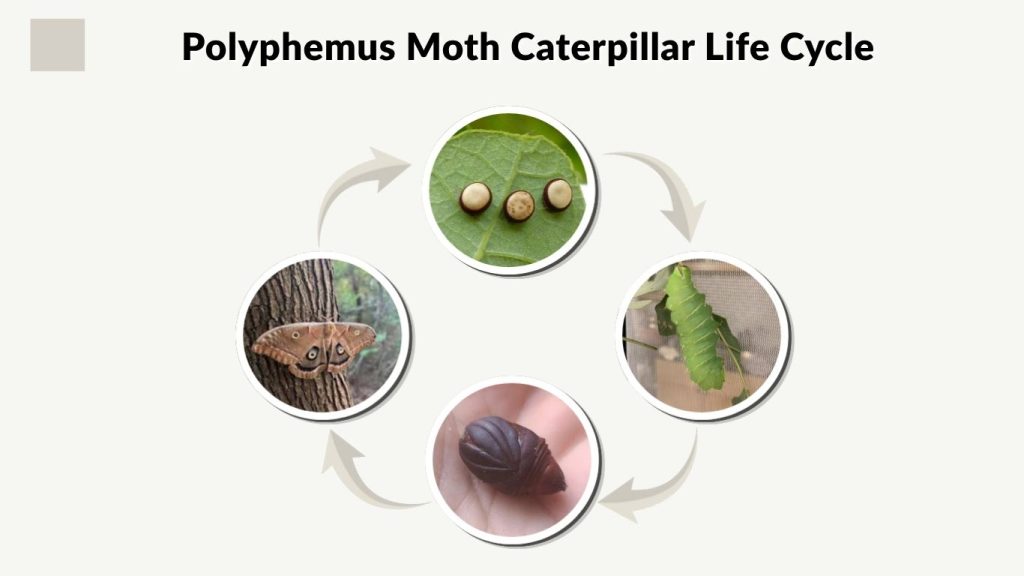
The polyphemus moth has a complete life cycle with four main stages: egg, caterpillar, pupa, and adult moth. The timing can vary depending on climate, temperature, and region. In warmer areas, there may be more than one generation per year, while colder areas may have fewer.
The caterpillar stage is the main feeding stage. The adult moth stage is shorter and focused on reproduction.
Egg Stage
Female polyphemus moths lay eggs on host plant leaves. Eggs are often laid singly or in small groups. After a period of development, tiny caterpillars hatch and begin feeding.
Newly hatched larvae may eat part of the eggshell before moving on to fresh leaves. This gives them an immediate source of nutrients before they begin regular feeding.
Caterpillar Stage
The caterpillar grows through several instars, which are growth stages between molts. As it grows, it sheds its old skin and becomes larger. Mature larvae are green, thick-bodied, and strong leaf feeders.
During this stage, the caterpillar eats heavily. A full-grown polyphemus caterpillar may consume entire leaves, especially as it nears the end of the larval stage.
Cocoon and Pupa Stage
When the caterpillar is fully grown, it spins a silk cocoon. The cocoon is often attached to or wrapped in a leaf. In many cases, the leaf falls to the ground with the cocoon inside, where the pupa remains protected.
Inside the cocoon, the caterpillar changes into a pupa. Later, the adult moth develops and eventually emerges. If the cocoon forms late in the season, it may overwinter and hatch the following spring or summer.
Adult Moth Stage
The adult polyphemus moth is large, tan to brown, and has striking eyespots on the hindwings. These eyespots may help startle predators. Adult moths are mostly active at night and may be attracted to lights.
Adults do not live long because they do not feed. Their main goal is to find a mate and reproduce.
Polyphemus Moth Caterpillar Cocoon: What to Know
The cocoon is one of the most searched parts of the polyphemus moth life cycle. A mature caterpillar spins silk around itself, often using a leaf as part of the structure. The result is a firm, oval cocoon that protects the pupa inside.
If you find a cocoon in leaf litter, do not assume it is dead. Polyphemus moth cocoons can remain inactive for months, especially through winter. The moth may emerge when conditions are warm enough.
How Long Is the Cocoon Phase?
The cocoon phase can last several weeks or several months. If the caterpillar pupates during the active season, the adult may emerge relatively soon. If it pupates late in the year, the pupa may overwinter and emerge the next season.
Temperature, day length, and regional climate all affect timing. For this reason, there is no single exact number of days that applies to every polyphemus moth caterpillar.
How to Care for a Polyphemus Moth Caterpillar
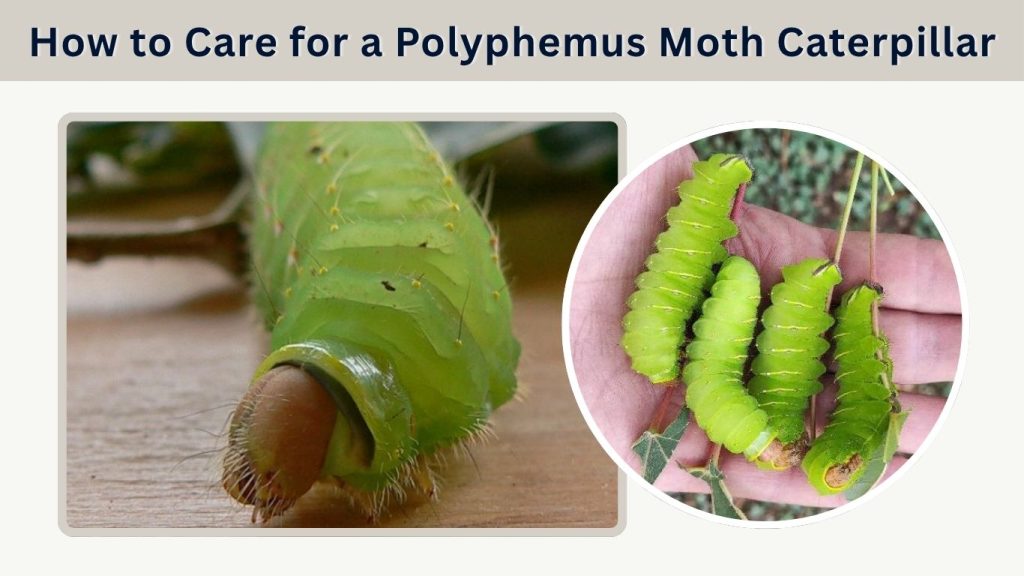
Many people find a polyphemus moth caterpillar and want to raise it. This can be educational, but it must be done carefully. The caterpillar needs fresh host leaves, ventilation, cleanliness, and a safe place to pupate.
The most important rule is to feed it the same type of leaves it was already eating. A sudden switch to a different plant may cause feeding problems.
Basic Care Tips
To care for a polyphemus moth caterpillar:
- Use a clean, ventilated container
- Provide fresh leaves from the host plant daily
- Keep leaves from drying out too quickly
- Remove old leaves and droppings regularly
- Avoid direct sunlight and overheating
- Do not add a water dish
- Provide dry leaves or paper for cocoon formation
- Keep the cocoon in outdoor-like seasonal conditions
A water dish is unnecessary and dangerous because caterpillars can drown. They get moisture from fresh leaves.
Caring for the Cocoon
Once the caterpillar spins a cocoon, avoid disturbing it. Keep it in a ventilated container with moderate humidity, but do not make it wet. Too much moisture can encourage mold.
If the cocoon is overwintering, it should not be kept in a warm indoor room all winter. Warm indoor conditions may cause the moth to emerge too early, when it cannot survive or find a mate outdoors. A sheltered outdoor or garage-like setting may be more natural, as long as it is protected from predators and extreme dryness.
Polyphemus Moth Caterpillar vs Luna Moth Caterpillar
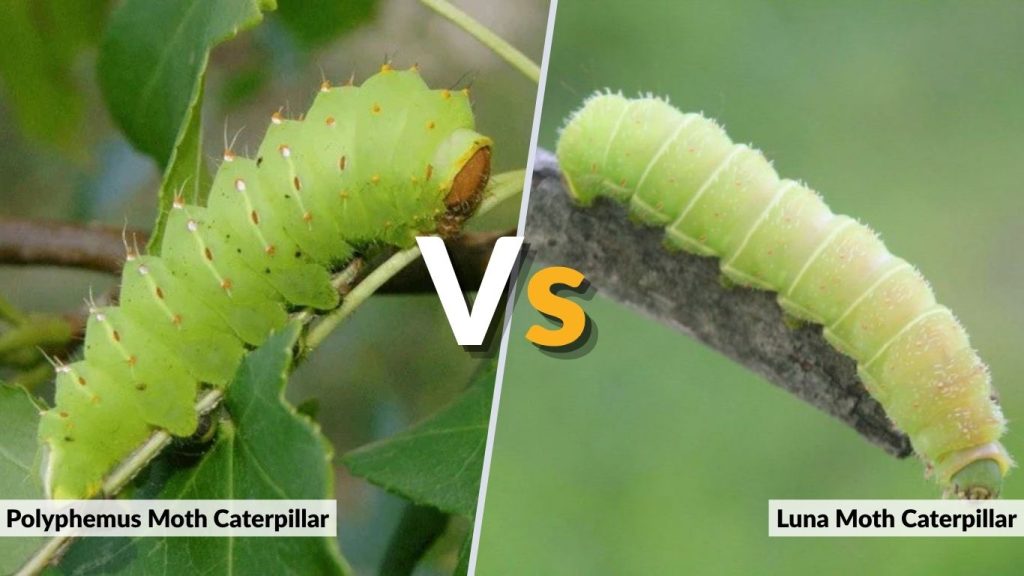
Polyphemus moth caterpillars and luna moth caterpillars are often confused because both are large green caterpillars from the giant silk moth family. They also feed on tree leaves and have similar smooth, plump bodies.
However, they turn into very different adult moths. The polyphemus moth is tan or brown with large eyespots, while the luna moth is pale green with long tail-like extensions on the hindwings.
Key Differences
The main differences include:
- Polyphemus caterpillars often look thicker and more rounded.
- Luna moth caterpillars are also green but may appear smoother and more evenly colored.
- Polyphemus moths make tan-brown adults with bold eyespots.
- Luna moths become pale green adults with long tails.
- Host plants can overlap, but luna moths often use walnut, sweetgum, birch, persimmon, and related trees depending on region.
- Polyphemus cocoons are often wrapped in leaves and may be found in leaf litter.
Because both species are variable, caterpillar identification is not always easy from color alone. The host plant, body markings, location, and adult moth appearance are all helpful clues.
Is a Polyphemus Moth Caterpillar a Garden Friend or Foe?
A polyphemus moth caterpillar may chew leaves, but it is usually not a serious garden pest. These caterpillars are normally found as individuals or in low numbers. They are more of a natural curiosity than a major threat to trees or shrubs.
Large caterpillars can remove noticeable leaf tissue, but healthy trees usually tolerate this feeding. In most cases, there is no need for pesticide control.
What to Do If You Find One
If you find one in your yard:
- Leave it alone if it is on a suitable host plant
- Move it gently only if it is in danger
- Avoid spraying pesticides
- Keep pets and children from handling it roughly
- Take photos for identification before disturbing it
If it is eating a prized small plant, relocate it to the same type of host plant nearby. Do not move it to a random plant unless you know it can feed on that species.
Polyphemus Moth Caterpillar Habitat and Range
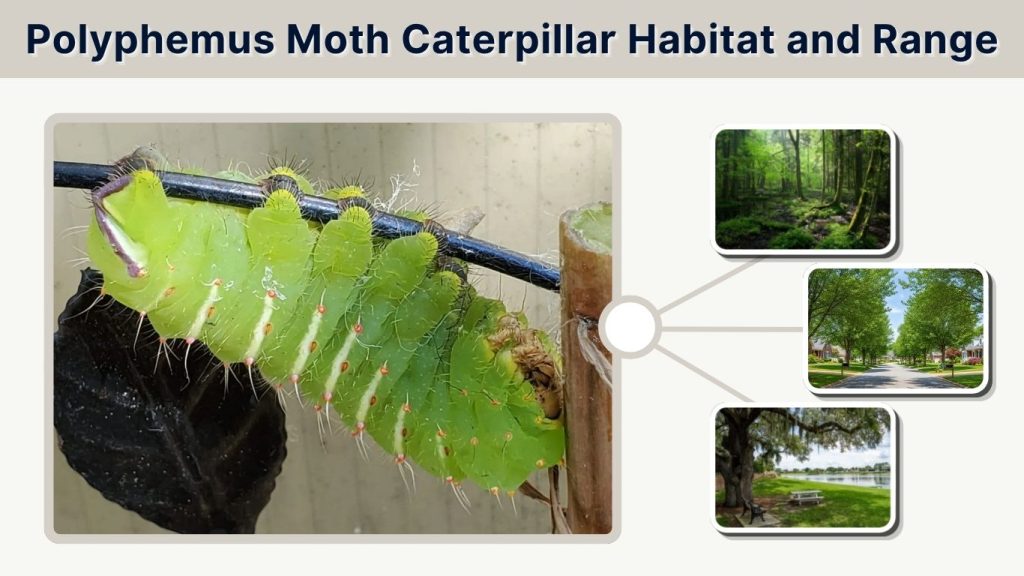
The polyphemus moth is widespread across much of North America. It can be found in forests, wooded neighborhoods, parks, orchards, wetlands, and suburban yards where host trees and shrubs are available.
Because the caterpillars feed on many woody plants, they can live in both natural and human-shaped landscapes. You may find them on trees in backyards, along woodland edges, or near lights where adult moths have been active.
When Are They Most Often Seen?
Polyphemus moth caterpillars are often noticed during the warmer months when host plants have leaves. Mature caterpillars may be seen later in the season as they finish feeding and search for a place to spin a cocoon.
Adult moths are nocturnal, so people often see them near porch lights, garages, or windows at night.
FAQs
Is a polyphemus moth caterpillar poisonous?
No, the polyphemus moth caterpillar is not generally considered poisonous or venomous to humans. It does not have stinging spines. Still, it is best to avoid rough handling because caterpillars are delicate and some people may have mild skin sensitivity.
What does a polyphemus moth caterpillar eat?
It eats leaves from many deciduous trees and shrubs, including oak, maple, birch, willow, elm, hickory, apple, cherry, plum, dogwood, rose, and walnut. If raising one, feed it the same host plant it was found on.
How do you care for a polyphemus moth caterpillar?
Keep it in a clean, ventilated container with fresh host leaves every day. Remove droppings and old leaves regularly. Do not use a water dish. When it is ready to pupate, provide dry leaves or paper so it can spin a secure cocoon.
How long does a polyphemus moth stay in its cocoon?
The cocoon stage may last weeks or months, depending on season and temperature. If the caterpillar spins a cocoon late in the year, it may overwinter and emerge the following spring or summer when conditions are suitable.
How is a polyphemus caterpillar different from a luna moth caterpillar?
Both are large green silk moth caterpillars, but they become different adults. A polyphemus caterpillar becomes a tan-brown moth with large eyespots, while a luna moth caterpillar becomes a pale green moth with long hindwing tails.