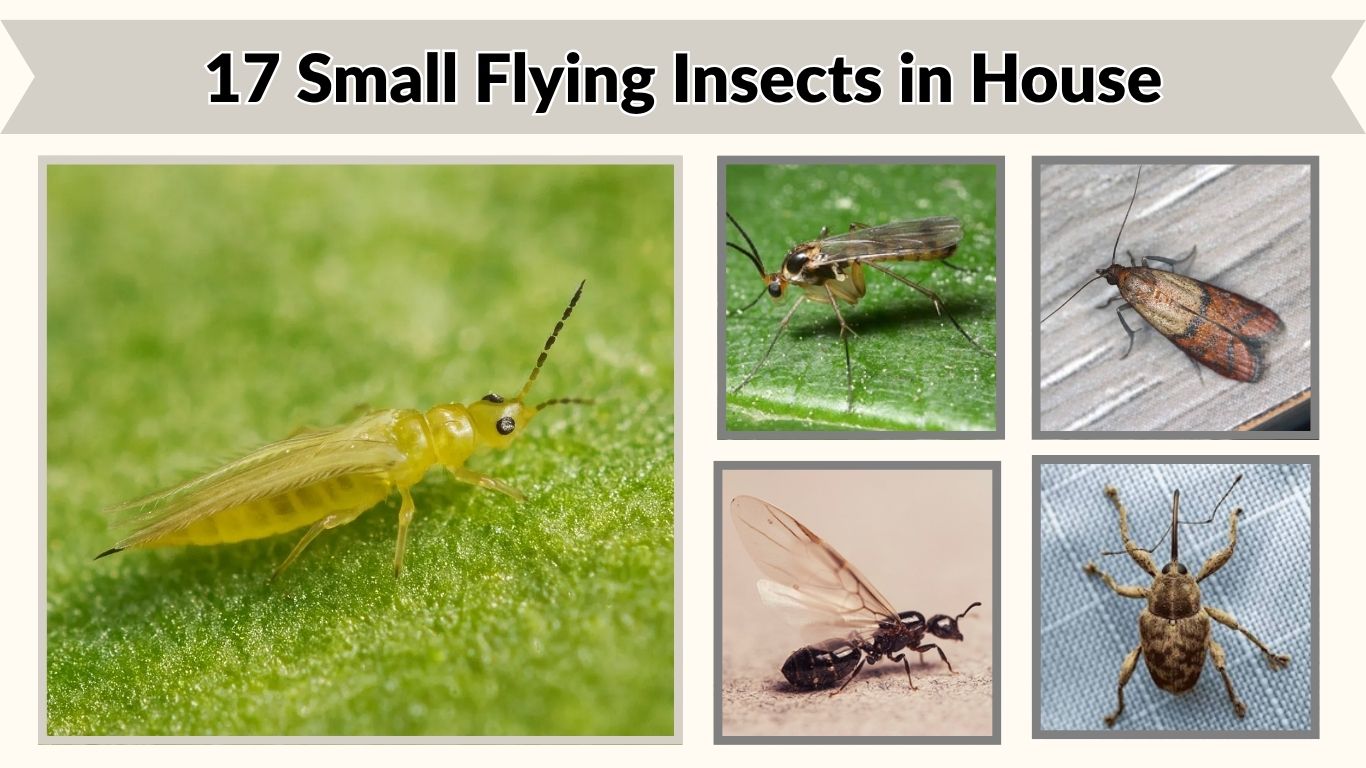
Small flying insects in house areas can appear in kitchens, bathrooms, bedrooms, drains, plants, and pantry spaces. Some are small black flying insects, while others may be white, brown, green, or gray. Identifying them early helps you understand where they come from, why they enter, and how to get rid of small flying insects before they spread indoors.
1. Fruit Fly
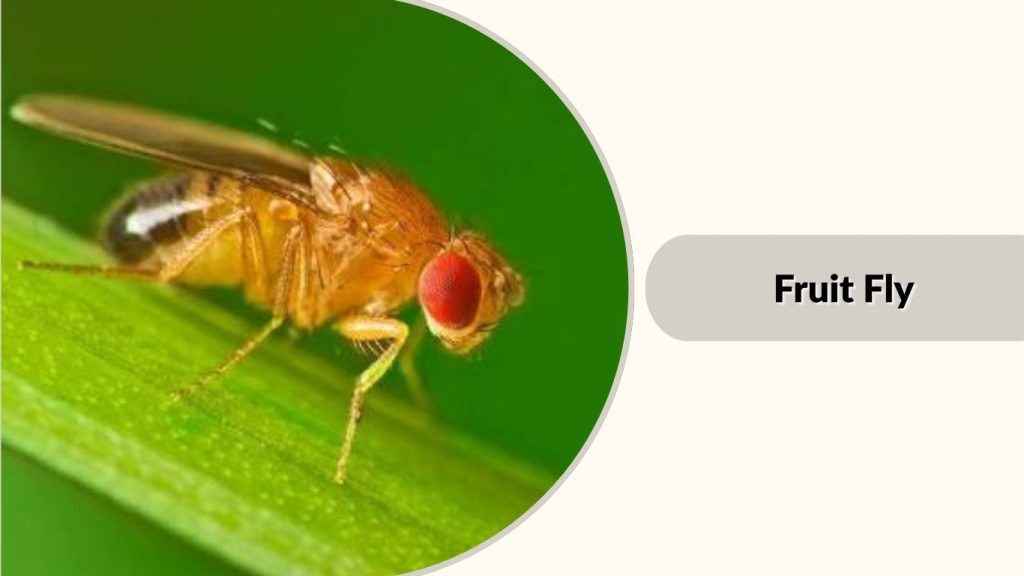
Fruit flies are one of the most common small flying insects in house areas, especially in kitchens. They are usually seen around ripe fruits, vegetables, trash bins, drains, and food waste. These tiny insects multiply quickly, so a few fruit flies can turn into a bigger problem within a short time.
Characteristics
- Very small flying insect with a tan or brown body
- Often has red eyes
- Usually flies around fruit, juice, and food scraps
- Attracted to sweet, ripe, or fermented items
- Common in kitchens and dining areas
- Reproduces quickly in warm indoor places
Where Fruit Flies Are Found
Fruit flies are mostly found in kitchens, fruit bowls, trash cans, compost bins, and near dirty dishes. They may also appear around sink drains, empty bottles, soda cans, and food containers. If you see small flying insects in kitchen areas, fruit flies are often one of the first insects to check.
Why Fruit Flies Enter Houses
Fruit flies enter houses because they are attracted to ripe fruits, rotting vegetables, spilled drinks, and food waste. Sometimes their eggs are already on fruits brought from markets. Warm indoor conditions help them grow fast, especially when food is left uncovered.
How to Control Fruit Flies
To get rid of fruit flies, remove overripe fruits and clean food spills quickly. Keep trash bins covered and empty them often. Wash bottles and cans before throwing them away. Store fruits in the refrigerator or sealed containers to prevent these small flying insects from breeding indoors.
2. Fungus Gnat
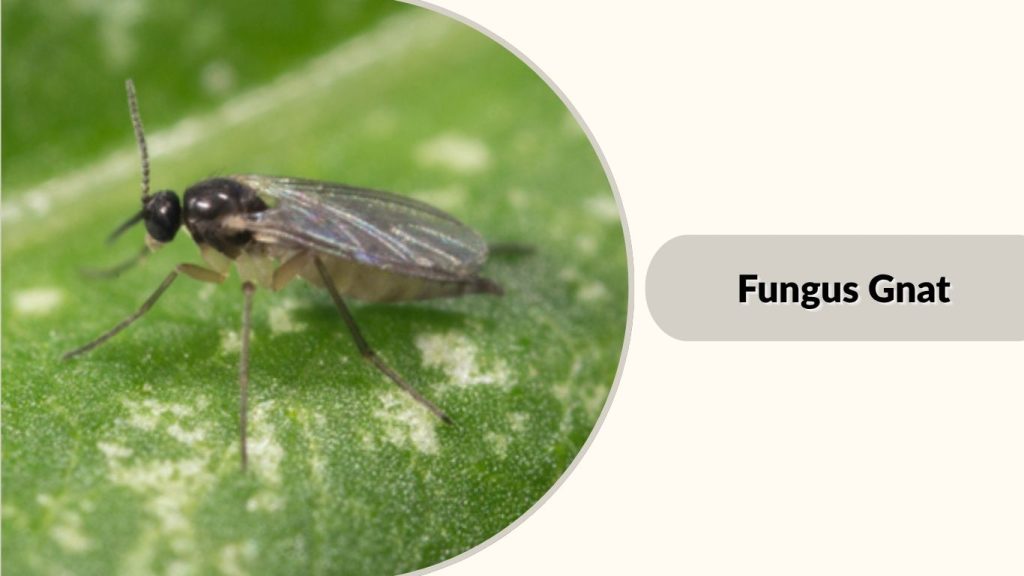
Fungus gnats are tiny black flying insects often found around indoor plants. They look like small mosquitoes but usually do not bite people. These insects are common in homes with overwatered plants because their larvae live in moist soil and feed on fungi and decaying organic matter.
Characteristics
- Small black flying insect with a thin body
- Long legs and mosquito-like appearance
- Weak flyer, usually near plant pots
- Larvae live in damp potting soil
- Attracted to overwatered indoor plants
- Usually harmless to humans but annoying indoors
Where Fungus Gnats Are Found
Fungus gnats are usually found around houseplants, plant pots, damp soil, windows, and nearby walls. Adult gnats fly close to the soil surface, while larvae stay hidden in the top layer of wet soil. If you notice small black flying insects on plants, fungus gnats are likely the reason.
Why Fungus Gnats Enter Houses
Fungus gnats often enter homes through infested potting soil or new indoor plants. They become common when plants are watered too much and the soil stays wet for a long time. Moist soil, dead leaves, and organic potting mix create a perfect breeding place.
How to Control Fungus Gnats
To control fungus gnats, let the top layer of soil dry before watering again. Avoid overwatering indoor plants and remove dead leaves from pots. Sticky traps can catch adult gnats. For a serious problem, changing the soil or treating the larvae can help reduce these small flying insects in houseplants.
3. Drain Fly
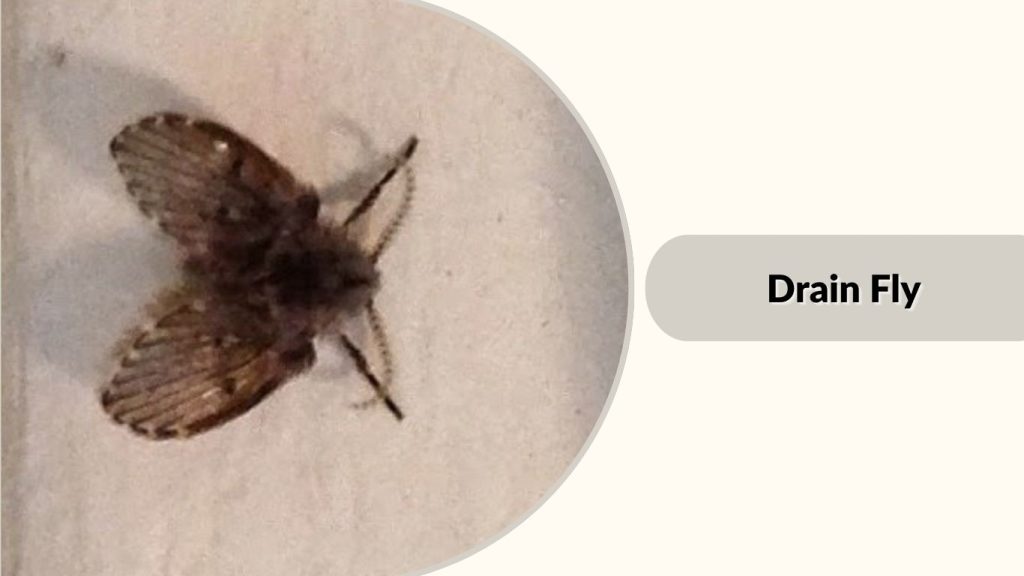
Drain flies are small flying insects in house drains, bathrooms, and kitchens. They have a fuzzy, moth-like body and usually rest on walls near sinks, showers, and floor drains. These insects are not usually harmful, but they can become annoying when they breed inside dirty or wet pipes.
Characteristics
- Small moth-like flying insect
- Fuzzy body and wings
- Usually gray, brown, or dark colored
- Weak flyer and moves slowly
- Common near drains and wet areas
- Attracted to slime, sludge, and organic buildup
Where Drain Flies Are Found
Drain flies are commonly found in bathrooms, kitchens, laundry rooms, basements, and near floor drains. They often rest on tiles, walls, sinks, tubs, and shower areas. If you see small flying insects in bathroom spaces, dirty drains are one of the first places to check.
Why Drain Flies Enter Houses
Drain flies appear when drains contain wet organic matter. Soap scum, food waste, hair, grease, and pipe slime can create a good breeding place. Unused drains, leaking pipes, and standing water can also attract these small flying insects indoors.
How to Control Drain Flies
To control drain flies, clean the inside of drains deeply with a brush. Pouring cleaner on the surface may not remove the breeding source. Fix leaks, remove standing water, and keep sinks and shower areas dry to reduce these small flying insects in house drains.
4. House Fly
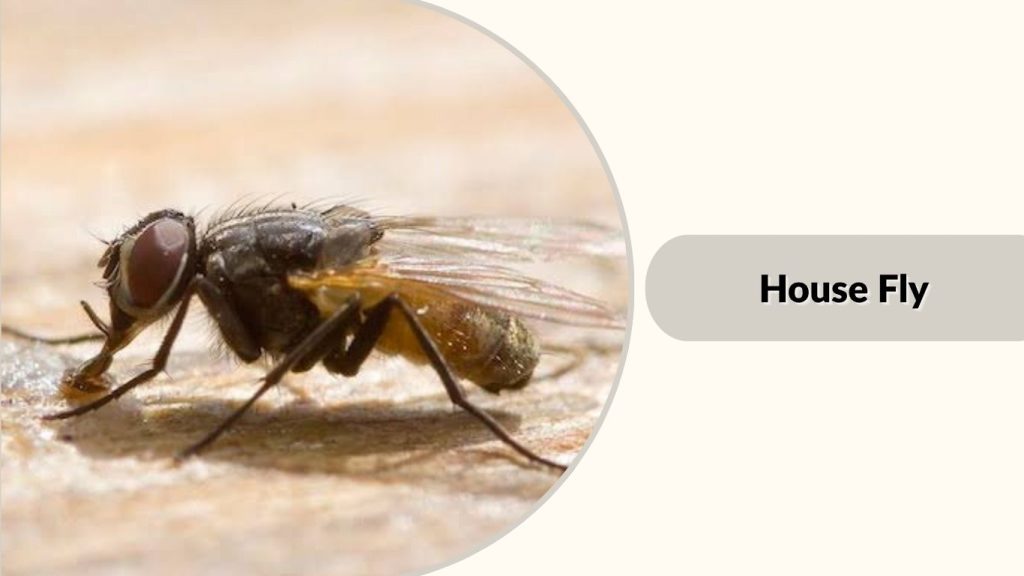
House flies are common small flying insects that can enter homes through open doors, windows, and gaps. They are usually seen around food, garbage, and dirty surfaces. Although they are larger than some tiny flies, young or small house flies may still look like small flying insects in house areas.
Characteristics
- Small to medium flying insect
- Gray body with dark stripes on the back
- Large reddish eyes
- Fast and active flyer
- Attracted to food, trash, and waste
- Can spread germs from dirty surfaces
Where House Flies Are Found
House flies are often found in kitchens, dining rooms, trash areas, bathrooms, and near doors or windows. They may land on food, countertops, garbage bins, and pet waste. They are also common around outdoor trash, drains, and compost areas before entering the house.
Why House Flies Enter Houses
House flies enter houses looking for food, warmth, and shelter. Open food, uncovered trash, dirty dishes, and pet waste can attract them. They may also come inside when doors and windows are left open, especially during warm weather.
How to Control House Flies
To control house flies, keep food covered and remove trash regularly. Clean spills, dishes, and surfaces quickly. Use screens on doors and windows to stop entry. Reducing garbage and waste around the home can help prevent these small flying insects from returning.
5. Phorid Fly
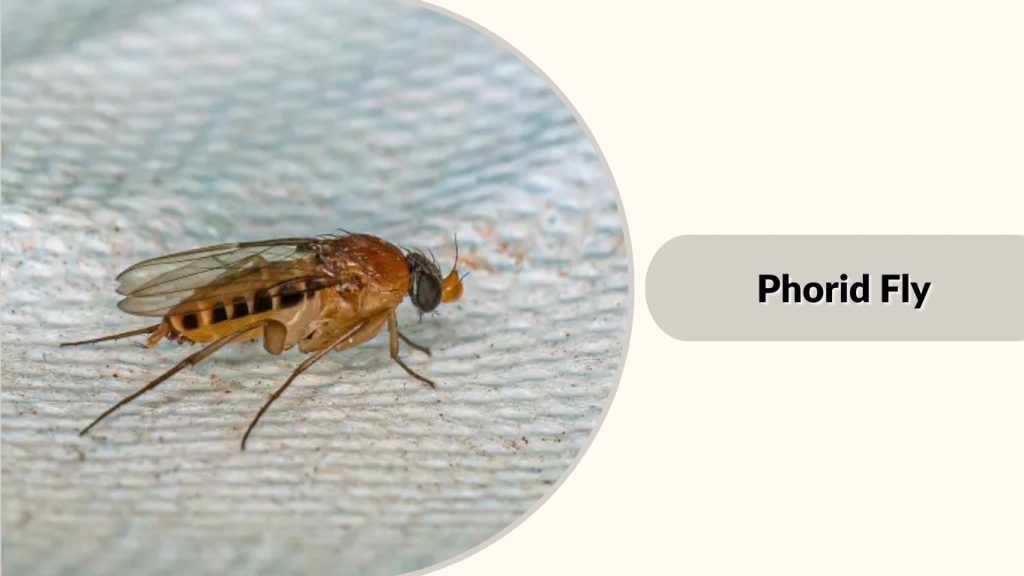
Phorid flies are tiny flying insects that may look like fruit flies, but they often move in a quick, running pattern on surfaces. They are commonly found near drains, garbage, rotting food, and damp organic matter. These small flying insects can become a problem in kitchens and bathrooms.
Characteristics
- Very small flying insect
- Usually tan, brown, or black
- Humpbacked body shape
- Runs quickly before flying
- Attracted to decaying organic matter
- Common near drains and dirty areas
Where Phorid Flies Are Found
Phorid flies are often found in kitchens, bathrooms, trash bins, drains, and damp floors. They may also appear near rotting vegetables, old food, leaking pipes, and dirty mop areas. If small flying insects in kitchen areas are not fruit flies, phorid flies may be another possibility.
Why Phorid Flies Enter Houses
Phorid flies enter or appear in houses when decaying matter is present. Food waste, drain buildup, dead insects, moisture, and hidden organic dirt can support their breeding. They are also attracted to wet areas that are not cleaned properly.
How to Control Phorid Flies
To control phorid flies, find and remove the breeding source. Clean drains, trash bins, floors, and hidden damp areas carefully. Throw away rotting food and repair leaks. Once the organic matter is removed, these small flying insects usually decrease quickly.
6. Moth Fly
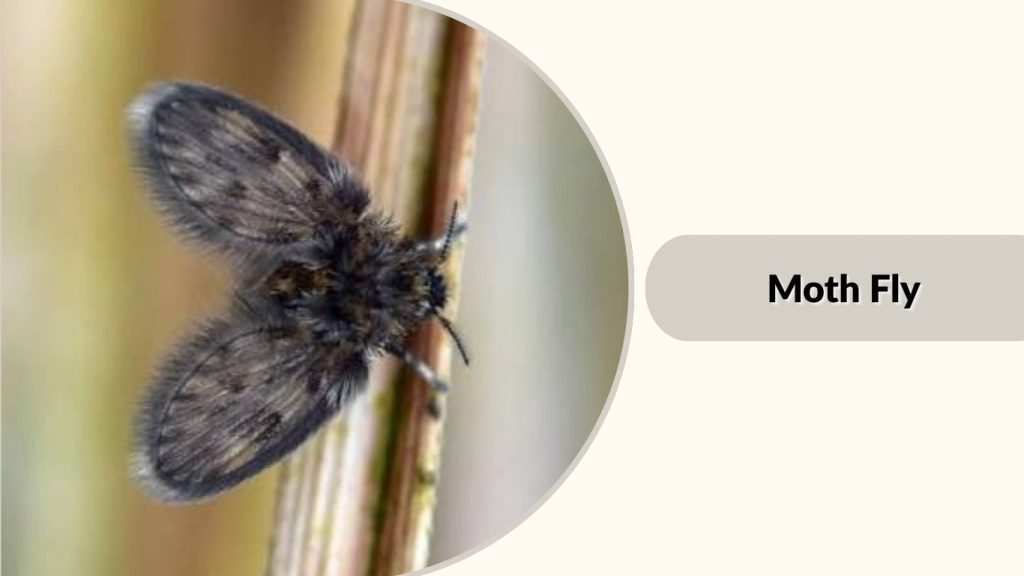
Moth flies are small moth-like flying insects that are often confused with drain flies. They have hairy wings and usually stay close to damp places. These insects are common in bathrooms, kitchens, and basements where moisture and organic buildup are present.
Characteristics
- Small flying insect with moth-like wings
- Fuzzy or hairy appearance
- Gray, brown, or dark colored body
- Weak flyer and often rests on walls
- Attracted to damp organic matter
- Common near sinks, drains, and wet floors
Where Moth Flies Are Found
Moth flies are usually found near bathroom drains, kitchen sinks, shower areas, laundry rooms, and basement drains. They may rest on walls, tiles, mirrors, and wet surfaces. Their larvae usually live in slimy buildup inside drains or other damp areas.
Why Moth Flies Enter Houses
Moth flies appear when there is moisture and organic waste indoors. Dirty drains, leaking pipes, standing water, and wet debris can attract them. Homes with unused drains or poor ventilation may also notice more of these small flying insects in bathroom areas.
How to Control Moth Flies
To control moth flies, remove slime and dirt from drains and wet surfaces. Scrub pipes where possible and keep bathrooms dry. Fix leaking pipes and improve ventilation. Regular drain cleaning can help stop these small flying insects from breeding indoors.
7. Whitefly
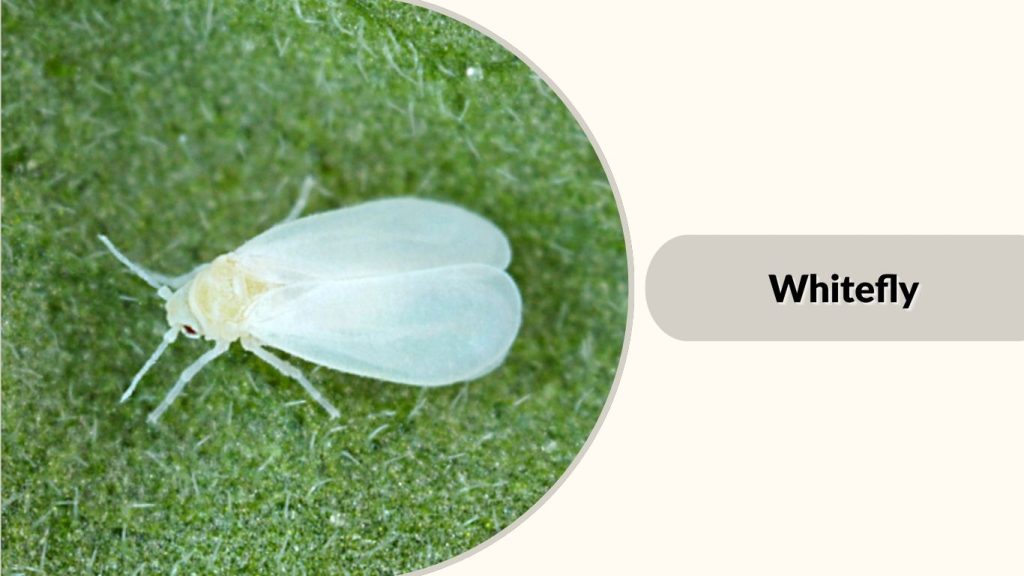
Whiteflies are small white flying insects often found on indoor and outdoor plants. They gather under leaves and fly up when the plant is touched. These insects feed on plant sap and can weaken houseplants if they are not controlled early.
Characteristics
- Small white flying insect
- Powdery or dusty-looking wings
- Usually found under plant leaves
- Flies up when plants are disturbed
- Feeds on plant sap
- Can cause yellow leaves and weak growth
Where Whiteflies Are Found
Whiteflies are commonly found on houseplants, garden plants, greenhouse plants, and the underside of leaves. Indoors, they may appear near windows, plant stands, and bright areas. If you notice small white flying insects on plants, whiteflies are a common cause.
Why Whiteflies Enter Houses
Whiteflies usually enter homes through infested plants brought from nurseries, gardens, or outdoor areas. They spread when indoor plants are kept close together. Warm indoor conditions help them survive and reproduce on plant leaves.
How to Control Whiteflies
To control whiteflies, inspect the underside of leaves and remove heavily infested leaves. Wipe leaves gently or spray plants with water to reduce adults and eggs. Sticky traps can catch flying adults. Keeping plants healthy and separated can help prevent these small white flying insects from spreading.
8. Flying Ant
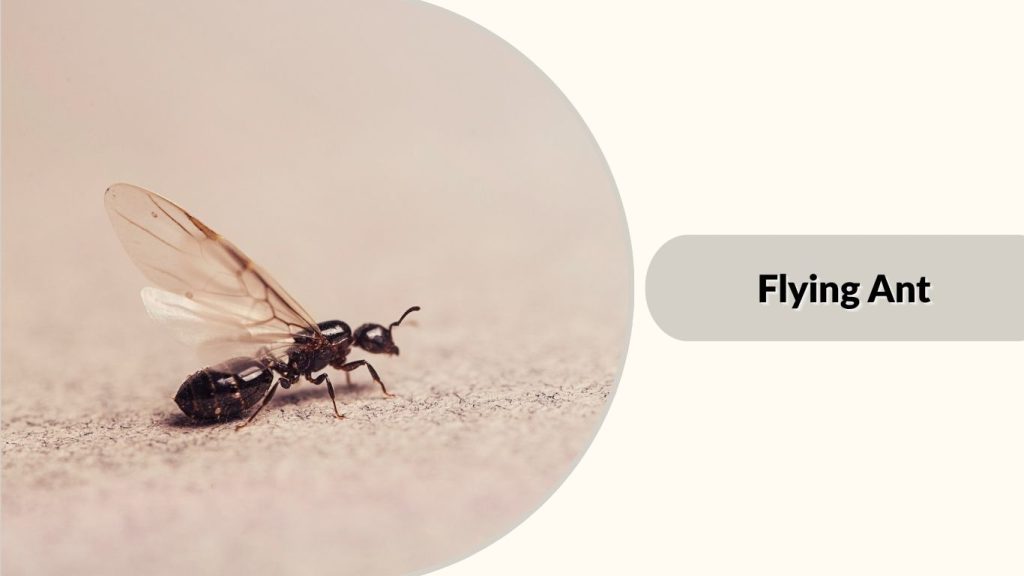
Flying ants are small flying insects in house spaces that usually appear during mating season. They look like regular ants but have wings. Many people confuse them with termite swarmers, so checking their body shape is important for small flying insect identification.
Characteristics
- Small flying insect with two pairs of wings
- Bent antennae
- Narrow waist between body parts
- Usually black, brown, or reddish
- Often appears in groups or swarms
- Attracted to light, windows, and warm indoor areas
Where Flying Ants Are Found
Flying ants are often found near windows, doors, lights, walls, and floors. They may also appear in kitchens, bathrooms, basements, and near cracks where ants already travel. If you see small black flying insects in house areas, flying ants may be one possible cause.
Why Flying Ants Enter Houses
Flying ants may enter homes through open doors, windows, vents, or cracks. Sometimes they come from an indoor ant nest hidden inside walls or floor gaps. They appear when mature ants leave the colony to mate and start new nests.
How to Control Flying Ants
To control flying ants, seal cracks and close entry points around doors and windows. Clean food crumbs and moisture sources that attract ants. If they keep appearing indoors, inspect for a hidden ant nest and treat the main colony.
9. Termite Swarmer
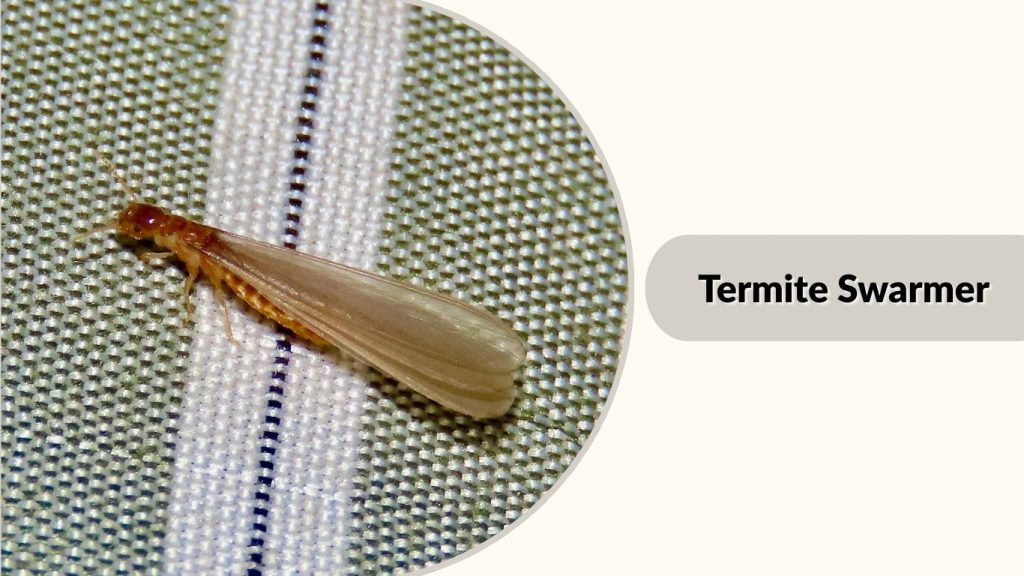
Termite swarmers are small flying insects that can be a serious warning sign inside a house. They are reproductive termites that leave a colony to start new colonies. Finding them indoors may mean termites are living nearby or inside wooden parts of the home.
Characteristics
- Small flying insect with straight antennae
- Thick waist and soft body
- Four wings of equal size
- Usually pale brown, dark brown, or black
- Often sheds wings after swarming
- Attracted to light and windows
Where Termite Swarmers Are Found
Termite swarmers are commonly found near windows, doors, lights, wooden floors, and wall cracks. Their discarded wings may collect on window sills, floors, or near baseboards. If small flying insects in house areas leave many wings behind, termite swarmers should be checked carefully.
Why Termite Swarmers Enter Houses
Termite swarmers may come from an outdoor colony or an indoor termite infestation. Moist wood, soil contact, cracks, and hidden wooden damage can support termites. Warm and humid conditions often trigger swarming.
How to Control Termite Swarmers
To control termite swarmers, remove moisture problems and avoid wood-to-soil contact around the house. However, seeing swarmers indoors often needs professional termite inspection. Killing only the flying insects will not remove the hidden colony.
10. Carpet Beetle
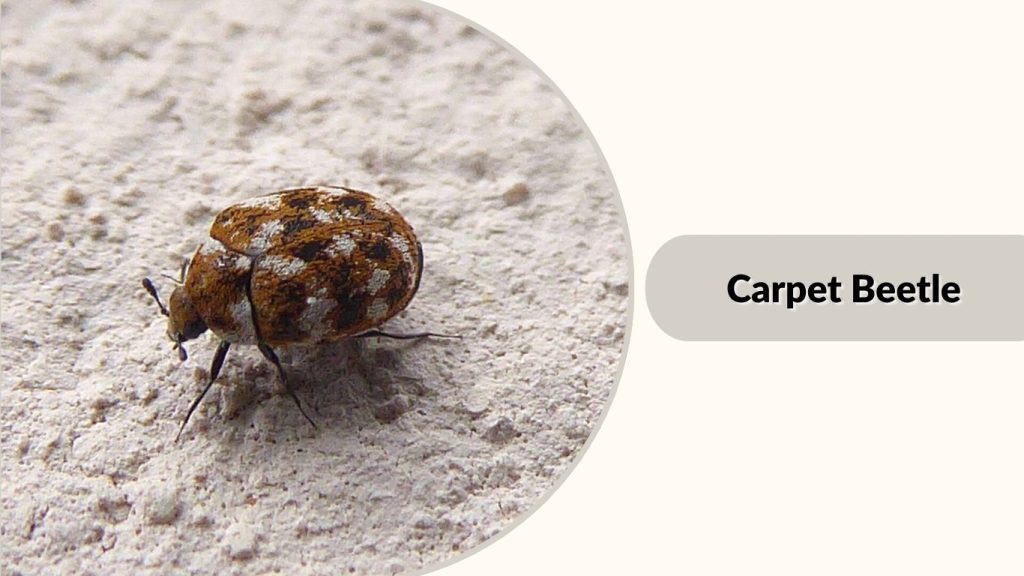
Carpet beetles are small flying insects that may enter homes and damage natural fabrics. Adult carpet beetles often fly toward windows and lights, while their larvae usually cause the most damage. They are common in carpets, closets, furniture, and stored clothes.
Characteristics
- Small round or oval flying beetle
- May be black, brown, white, yellow, or patterned
- Adults often fly toward light
- Larvae are hairy and worm-like
- Feeds on wool, silk, fur, feathers, and lint
- Can damage carpets, clothes, and furniture
Where Carpet Beetles Are Found
Carpet beetles are found in closets, carpets, drawers, furniture, curtains, storage boxes, and under rugs. Adults may appear near windows, while larvae hide in dark areas with dust, pet hair, lint, or fabric. They may be noticed as small flying insects in bedroom or living room areas.
Why Carpet Beetles Enter Houses
Carpet beetles enter homes through open windows, doors, flowers, old furniture, or infested fabric. They are attracted to natural fibers, animal hair, dead insects, and stored clothing. Poor cleaning in hidden corners can help them spread.
How to Control Carpet Beetles
To control carpet beetles, vacuum carpets, closets, baseboards, and furniture often. Wash or dry-clean stored clothing before storage. Keep wool, silk, and fur items in sealed containers. Remove lint, pet hair, and damaged fabric to reduce their food source.
11. Clothes Moth
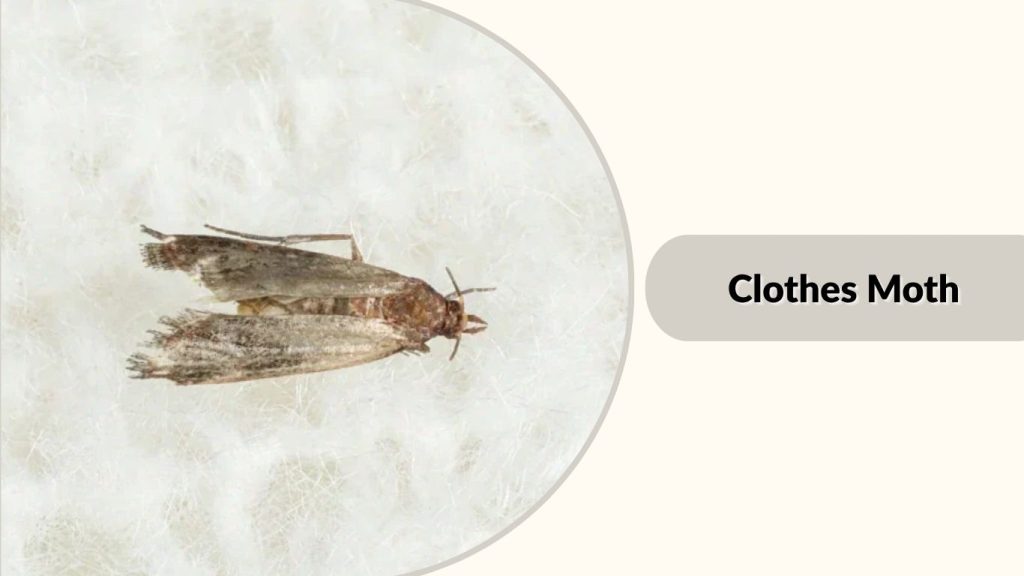
Clothes moths are small flying insects that can damage clothing and fabric. Adult moths do not usually cause the damage; their larvae feed on natural fibers. They prefer dark, quiet places such as closets, drawers, storage boxes, and wardrobes.
Characteristics
- Small tan or beige flying insect
- Narrow wings folded over the body
- Weak flyer and avoids bright light
- Larvae feed on wool, silk, fur, and feathers
- Often found in dark storage areas
- Can leave holes in clothes and fabric
Where Clothes Moths Are Found
Clothes moths are commonly found in closets, wardrobes, drawers, carpets, blankets, and stored fabric. They may hide in dark corners, under furniture, or inside boxes. If small flying insects in bedroom closets appear with fabric damage, clothes moths may be the reason.
Why Clothes Moths Enter Houses
Clothes moths may enter through infested clothes, rugs, blankets, or secondhand fabric items. They are attracted to natural fibers, sweat, body oils, food stains, and dirty clothing. Long-stored clothes are more likely to become infested.
How to Control Clothes Moths
To control clothes moths, wash or dry-clean clothes before storing them. Vacuum closets, drawers, and carpet edges regularly. Store wool and silk items in sealed bags or containers. Throw away badly damaged items and keep storage areas dry and clean.
12. Pantry Moth
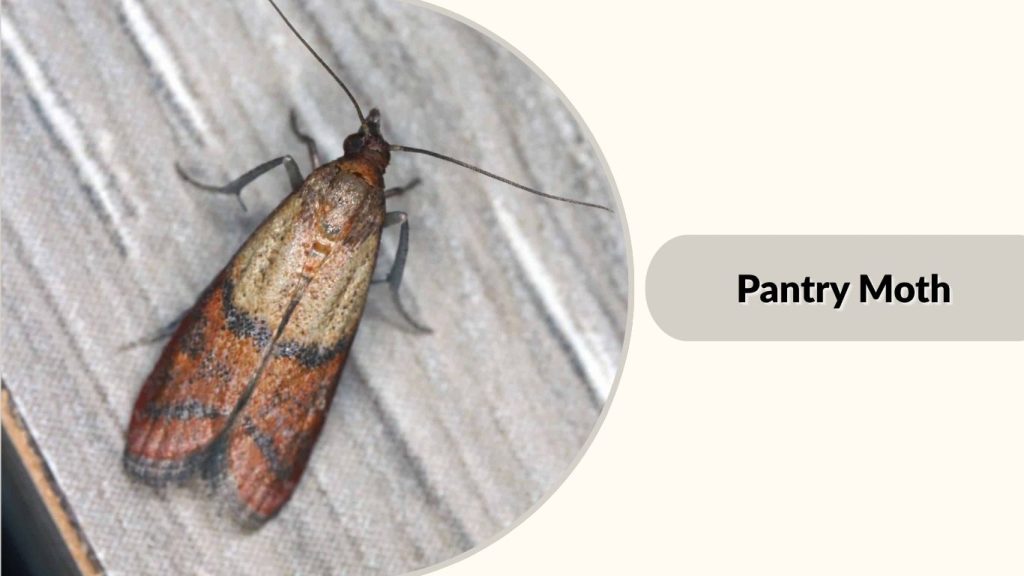
Pantry moths are small flying insects commonly found in kitchens and food storage areas. They infest dry foods such as rice, flour, cereal, nuts, seeds, and pet food. Adult moths fly around cabinets, while larvae usually live inside food packages.
Characteristics
- Small brown or gray flying insect
- Often has two-toned wings
- Common around kitchen cabinets and pantry shelves
- Larvae look like tiny cream-colored worms
- Infests dry stored food
- May leave webbing inside food packages
Where Pantry Moths Are Found
Pantry moths are often found in kitchens, pantries, cabinets, food containers, and storage shelves. They may fly near lights or crawl around food packages. If you see small brown flying insects in house kitchen areas, pantry moths should be checked.
Why Pantry Moths Enter Houses
Pantry moths usually enter homes through already infested food products. Eggs or larvae may be hidden inside grains, flour, cereal, birdseed, nuts, or pet food. Once inside, they can spread from one package to another.
How to Control Pantry Moths
To control pantry moths, inspect dry food and throw away infested packages. Clean pantry shelves, cracks, and corners carefully. Store grains, flour, and cereal in airtight containers. Freezing new dry foods for a few days can help prevent future infestations.
13. Mosquito
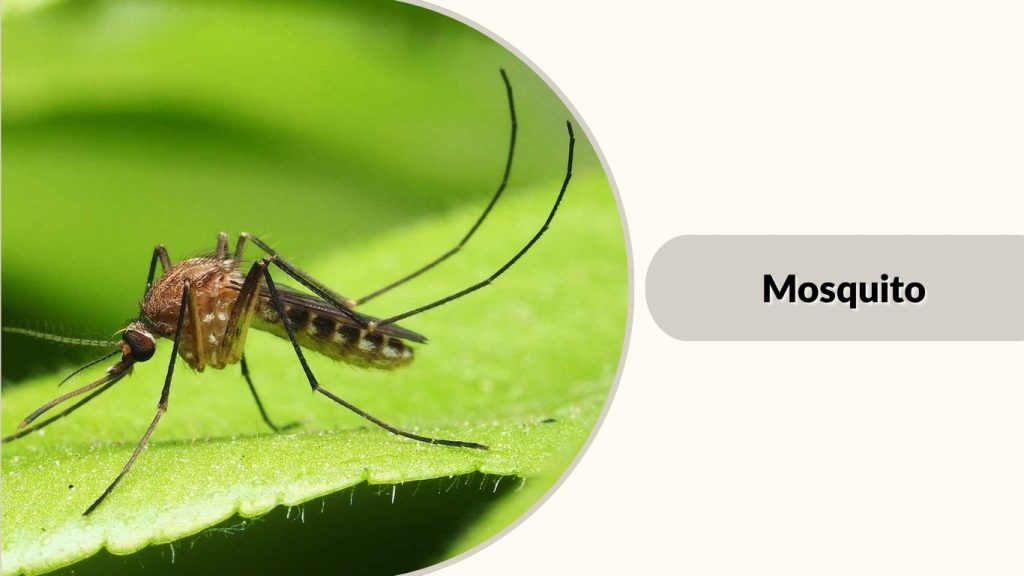
Mosquitoes are small flying insects that can bite people and animals inside the house. They are often active in the evening or at night and may enter through open doors, windows, vents, or gaps. If you notice small flying insects that bite, mosquitoes are one of the most common possibilities.
Characteristics
- Small flying insect with long legs
- Thin body and narrow wings
- Usually gray, brown, or black
- Females bite and feed on blood
- Often active in warm and humid areas
- Makes a high-pitched buzzing sound
Where Mosquitoes Are Found
Mosquitoes are commonly found in bedrooms, bathrooms, kitchens, balconies, and near windows. They also stay around standing water, flower pots, buckets, drains, and outdoor containers. Inside the house, they may hide in dark corners, under furniture, or behind curtains during the day.
Why Mosquitoes Enter Houses
Mosquitoes enter houses looking for warmth, shelter, and blood meals. Standing water near or inside the home helps them breed. Open doors, broken window screens, and damp indoor areas can make it easier for these small flying biting insects to come inside.
How to Control Mosquitoes
To control mosquitoes, remove standing water from buckets, trays, plant pots, and drains. Keep doors and windows screened or closed. Use fans in sleeping areas because mosquitoes are weak flyers. Cleaning damp areas can also reduce small flying insects in house spaces.
14. Biting Midge
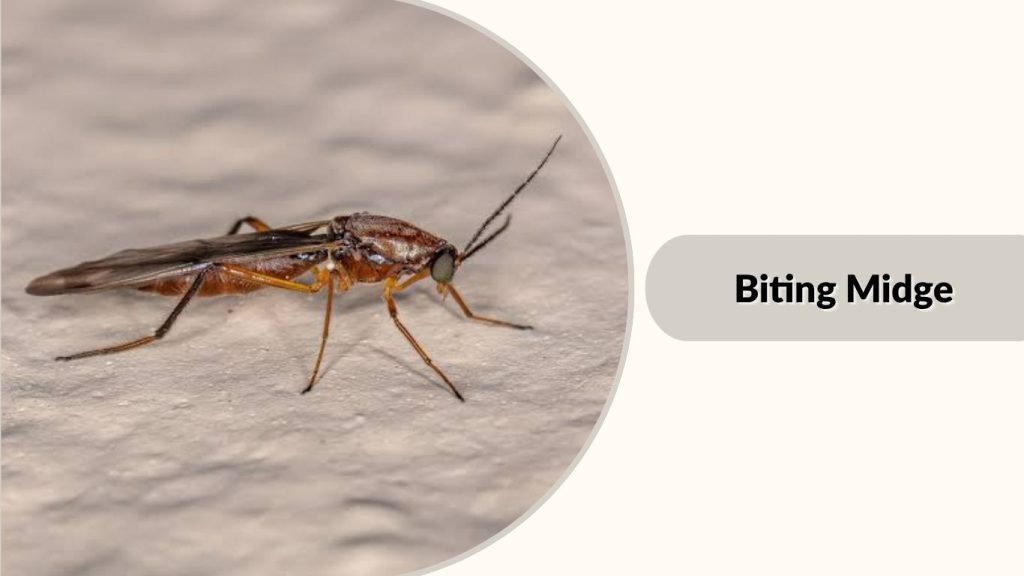
Biting midges are very small flying insects that bite humans and animals. They are sometimes called no-see-ums because they are hard to notice. These insects can enter homes through tiny gaps and screens, especially in warm, damp, or grassy areas.
Characteristics
- Very small flying biting insect
- Usually gray, brown, or black
- Tiny enough to pass through some screens
- Bites can cause itching or irritation
- Often active near dawn or dusk
- Attracted to moisture and outdoor lights
Where Biting Midges Are Found
Biting midges are often found near windows, doors, lights, balconies, gardens, lawns, and damp outdoor areas. Indoors, they may appear in bedrooms or living rooms after entering from outside. If you see very small flying insects that bite, biting midges may be the cause.
Why Biting Midges Enter Houses
Biting midges enter houses when outdoor conditions support their breeding. Wet soil, lawns, ponds, drains, and damp vegetation can attract them. They may fly indoors through open windows, doors, vents, or small screen holes, especially when lights are on.
How to Control Biting Midges
To control biting midges, repair screens and seal small gaps around doors and windows. Reduce outdoor standing water and damp areas near the house. Keep lights away from open windows when possible. Using fine mesh screens can help block these tiny flying biting insects.
15. Gnat
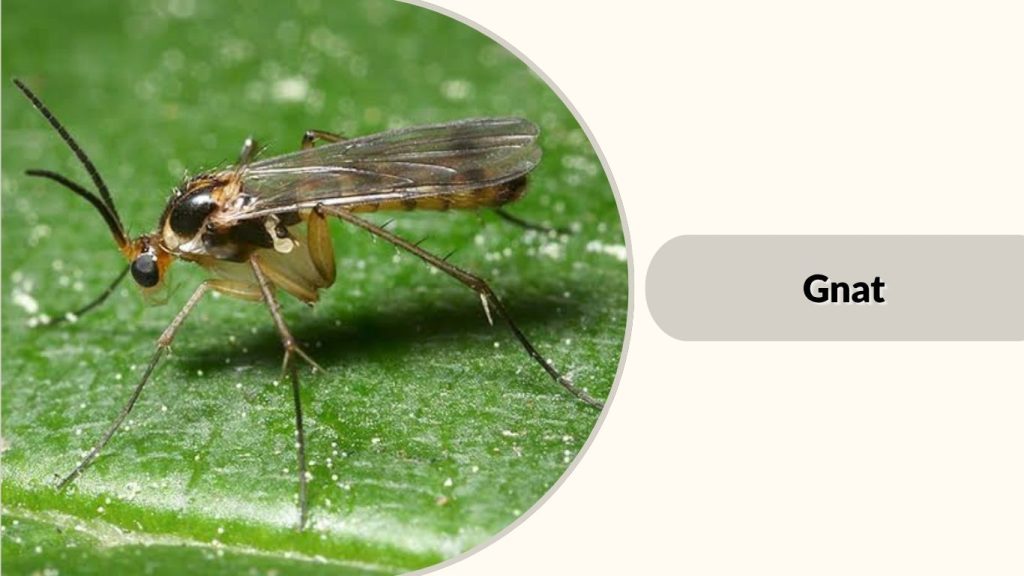
Gnats are a general name for several small flying insects found inside and outside homes. Many people use the word gnat for tiny flies around plants, drains, fruit, or lights. Because different gnats have different causes, proper small flying insect identification is important.
Characteristics
- Very small flying insect
- May be black, brown, gray, or tan
- Often flies in groups or near moisture
- Some types bite, but many do not
- Attracted to plants, drains, fruit, or lights
- Weak flyer and often stays near breeding places
Where Gnats Are Found
Gnats may be found in kitchens, bathrooms, bedrooms, plant pots, drains, trash bins, and near windows. Fungus gnats stay around soil, while fruit-related gnats gather near ripe food. If small flying insects in house areas appear in different rooms, gnats may be the general category.
Why Gnats Enter Houses
Gnats enter or appear indoors because of moisture, food waste, damp soil, drains, or rotting organic matter. Overwatered plants, dirty sink drains, uncovered trash, and spilled drinks can attract them. Some gnats may also fly indoors from lawns or gardens.
How to Control Gnats
To control gnats, first find where they are breeding. Let plant soil dry, clean drains, remove rotten food, and empty trash often. Sticky traps can help catch adults, but removing the source is the most important step to reduce small flying insects indoors.
16. Aphid
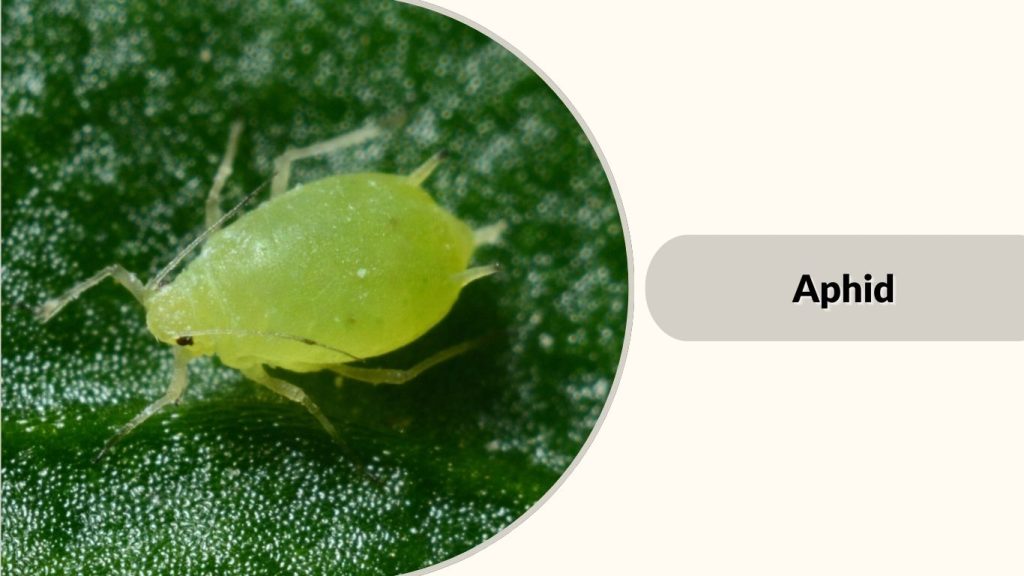
Aphids are small soft-bodied insects often found on plants. Some aphids have wings and may look like small green flying insects or small black flying insects. They feed on plant sap and can weaken indoor plants, garden plants, and greenhouse plants if they spread.
Characteristics
- Small soft-bodied insect
- May be green, black, yellow, brown, or red
- Some adults have wings
- Usually gathers on new plant growth
- Feeds on plant sap
- Can leave sticky honeydew on leaves
Where Aphids Are Found
Aphids are mostly found on houseplants, garden plants, young shoots, flower buds, and the underside of leaves. Indoors, they may appear near windows or plant shelves. If you notice small green flying insects near plants, aphids can be one possible reason.
Why Aphids Enter Houses
Aphids often enter homes on infested plants brought from nurseries, gardens, or balconies. Winged aphids may also fly in through windows or doors. Warm indoor conditions and tender plant growth can help them survive and multiply quickly.
How to Control Aphids
To control aphids, inspect plant leaves and stems regularly. Wipe small groups away with a damp cloth or spray plants gently with water. Remove badly infested leaves and keep plants separated. Controlling aphids early helps prevent these small flying insects from spreading to other plants.
17. Thrips
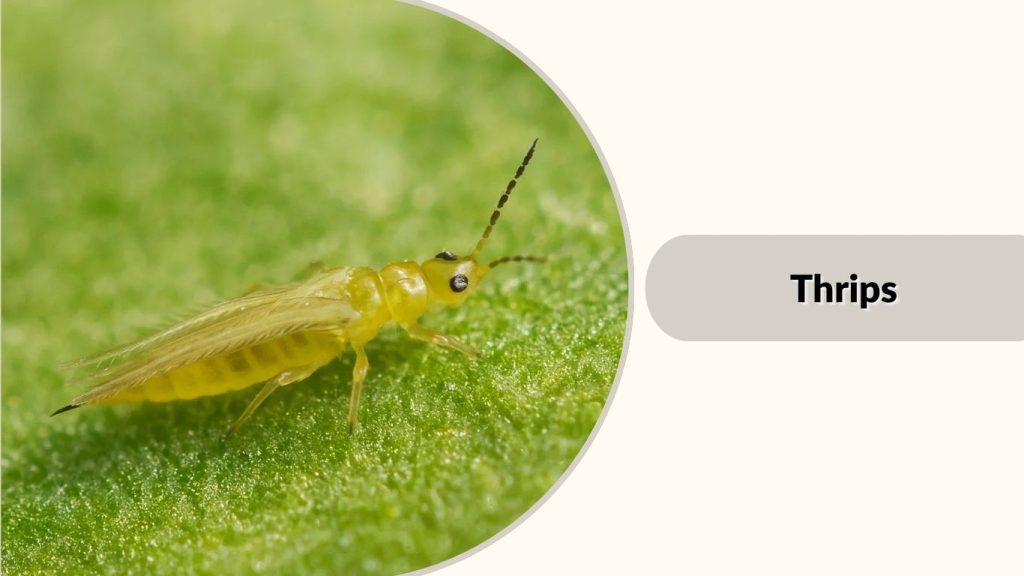
Thrips are tiny insects that may appear as small black, yellow, or brown flying insects around plants. They are very slender and difficult to see clearly without close inspection. Thrips feed by scraping plant tissue, which can cause silver marks, spots, or damaged leaves.
Characteristics
- Very tiny slender insect
- May be black, yellow, brown, or pale
- Some have narrow fringed wings
- Often jumps or flies short distances
- Feeds on flowers, leaves, and plant tissue
- Can cause silvery streaks or leaf damage
Where Thrips Are Found
Thrips are commonly found on houseplants, flowers, garden plants, greenhouse plants, and the underside of leaves. Indoors, they may appear near windows, plant stands, or bright areas. If small flying insects on plants are hard to identify, thrips may be one of the options.
Why Thrips Enter Houses
Thrips usually enter homes through infested plants, cut flowers, or outdoor garden plants brought inside. Winged thrips may also come through open windows or doors. Dry indoor conditions and crowded plants can help them spread from one plant to another.
How to Control Thrips
To control thrips, isolate infested plants and remove damaged leaves or flowers. Rinse plants gently and check the undersides of leaves. Sticky traps can catch flying adults. Keeping plants healthy, clean, and spaced apart can reduce these tiny flying insects indoors.